
Turn On the Bright Lights — How New York City’s Eckhart Beer Co. is Making the Old New Again
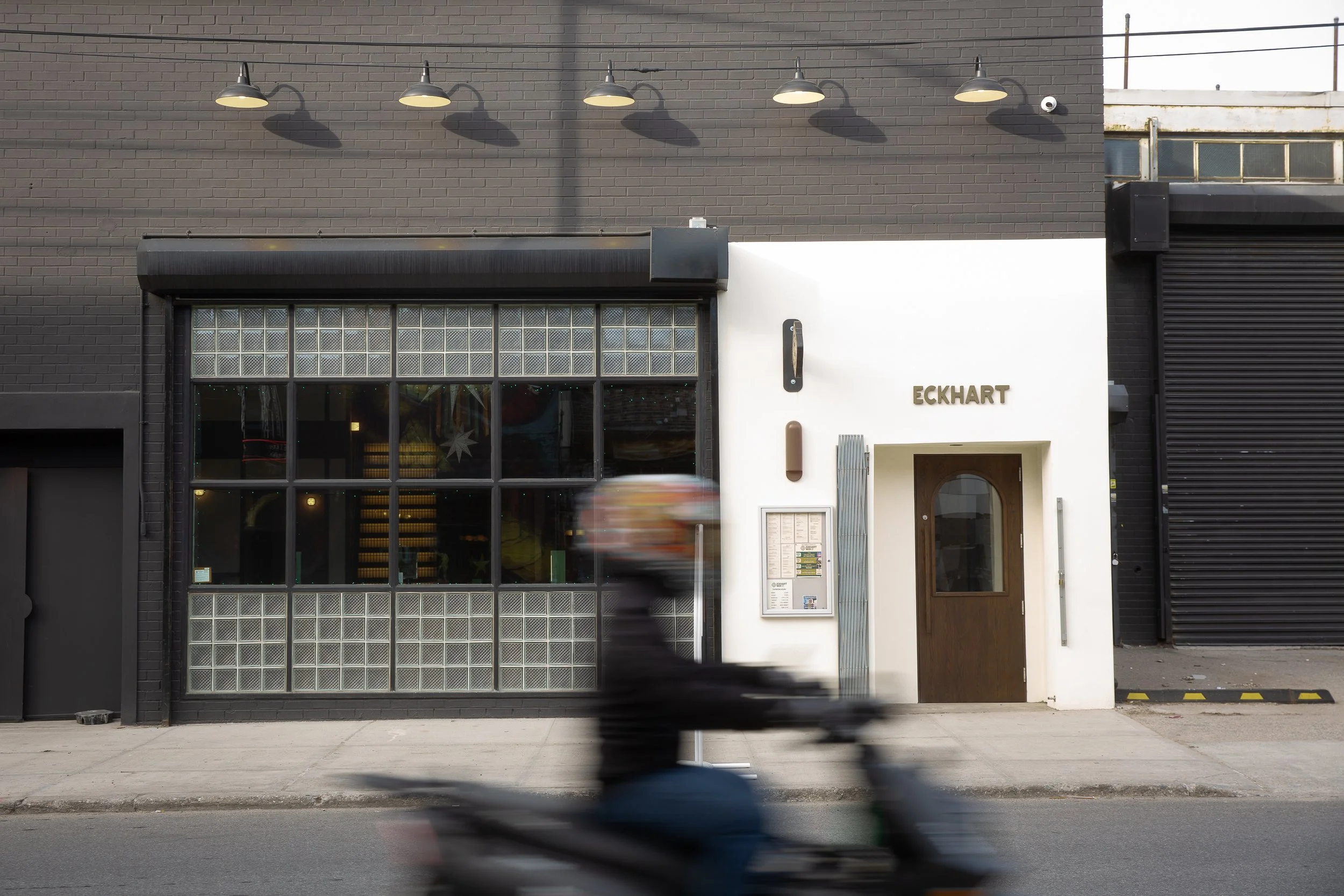
If you’ve been into beer for a while, then you’re probably getting used to saying goodbye. In 2025, more breweries in the U.S. closed than opened, and the same was true in 2024. New York City was no exception, having lost four breweries last year: 18th Ward, Five Boroughs, Torch & Crown, and most recently, Alewife. Yet amidst the doom and gloom, one bright new spot made it onto the map last year, and in my own neighbourhood of Bushwick, no less. That brewery is Eckhart Beer Co.



Some might say that, in this climate, opening a brewery at all is just fighting against the tide. But I’d argue that a trend-agnostic brewery that’s not clamouring to be the Next Big Thing—that just wants to make really good beer—is exactly what’s needed.
Although Eckhart started brewing in 2022, its taproom only opened this past September. As a brewery focused on traditional European lagers, it’s offering something different from most of the city’s other beer businesses. It also distinguishes itself with a kitchen serving beer-centric food, led by a team who bring Michelin-starred experience.
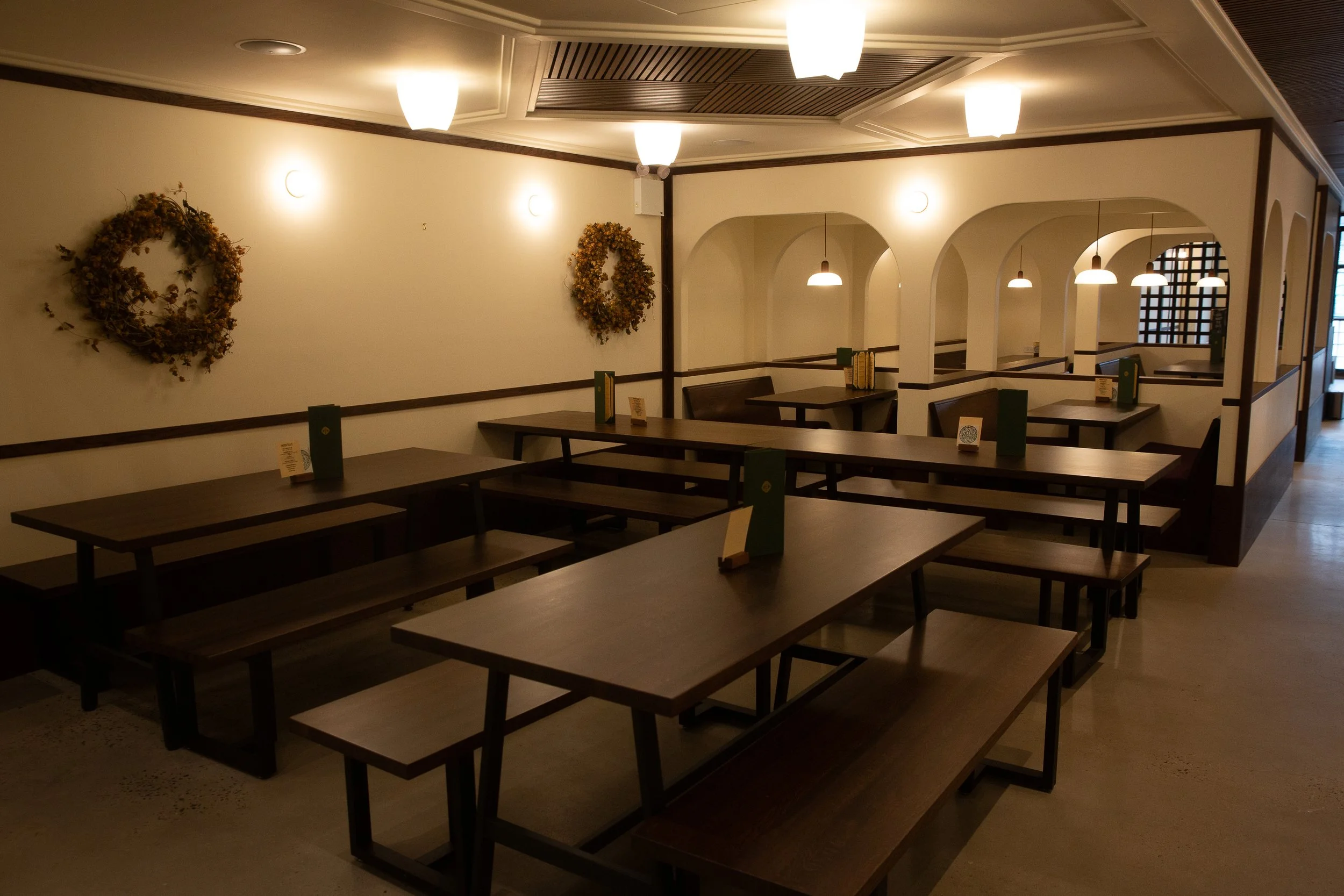
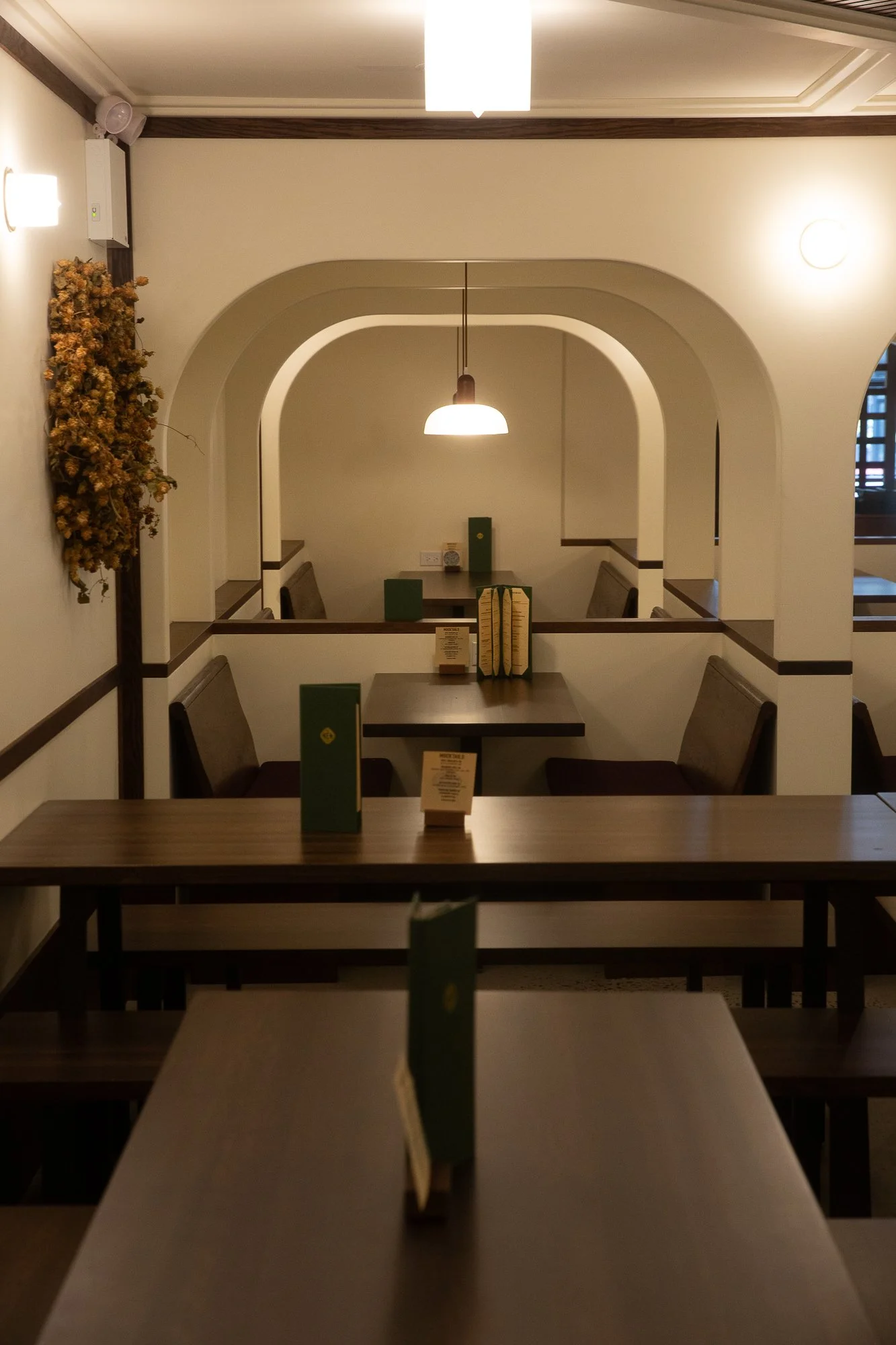
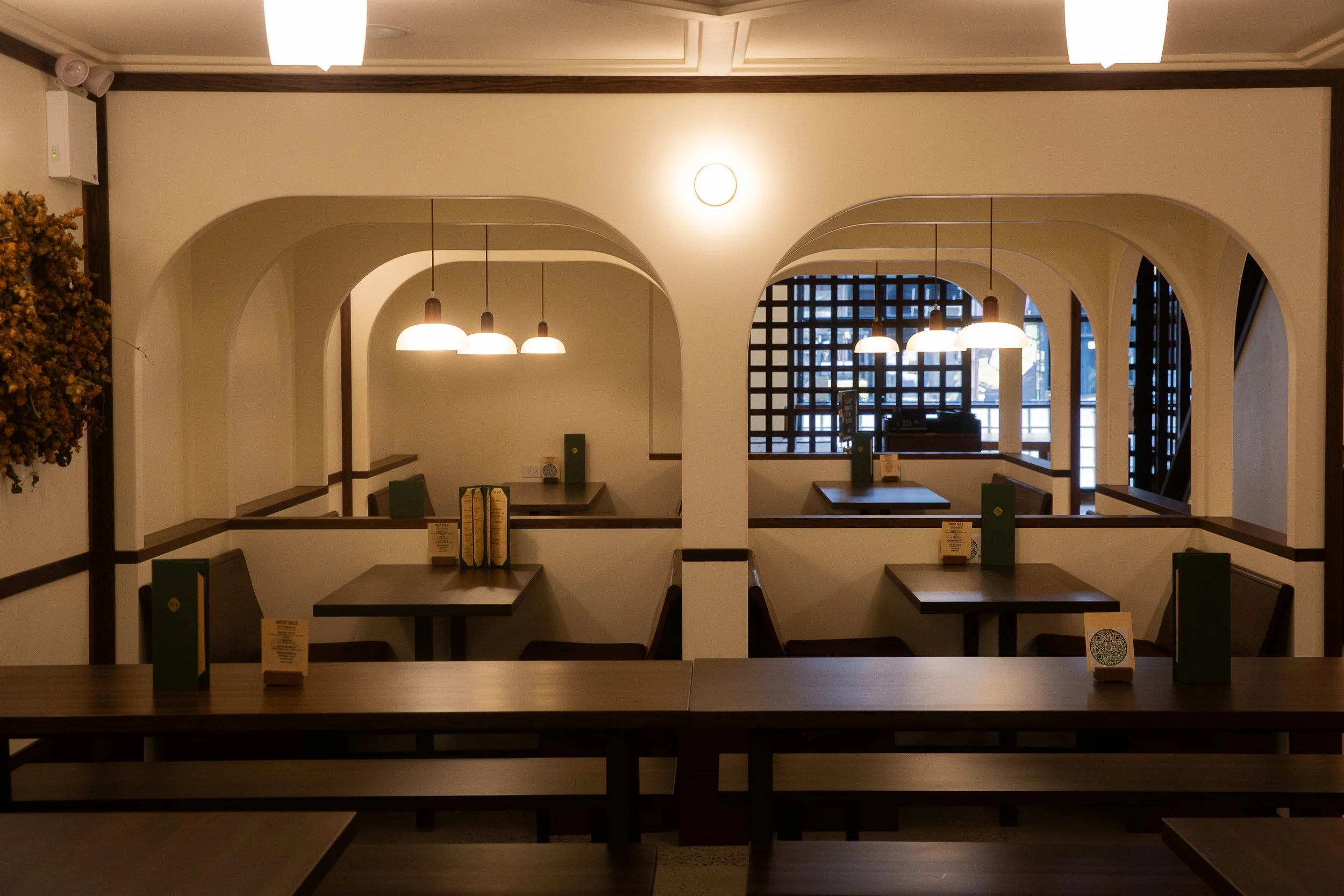
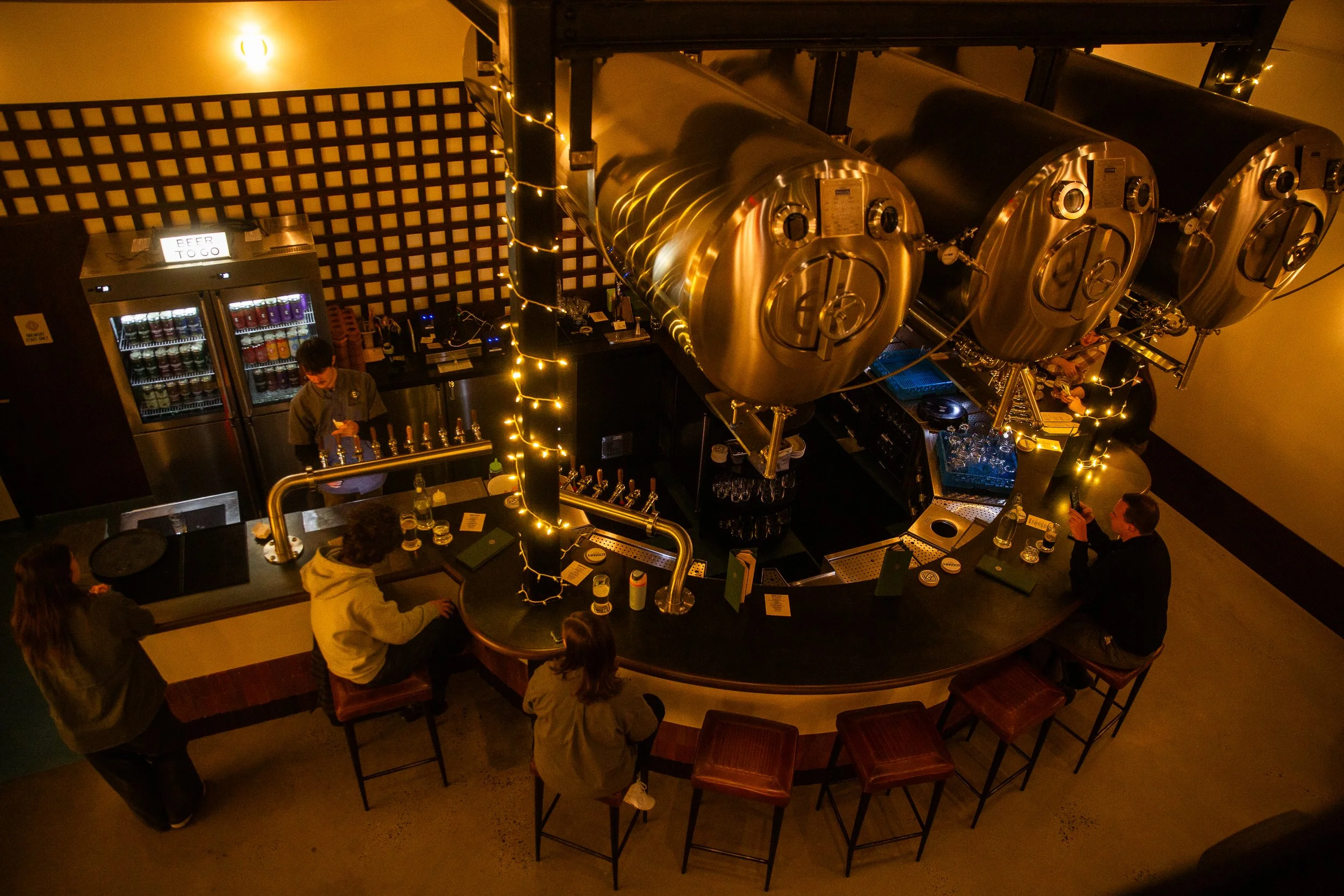
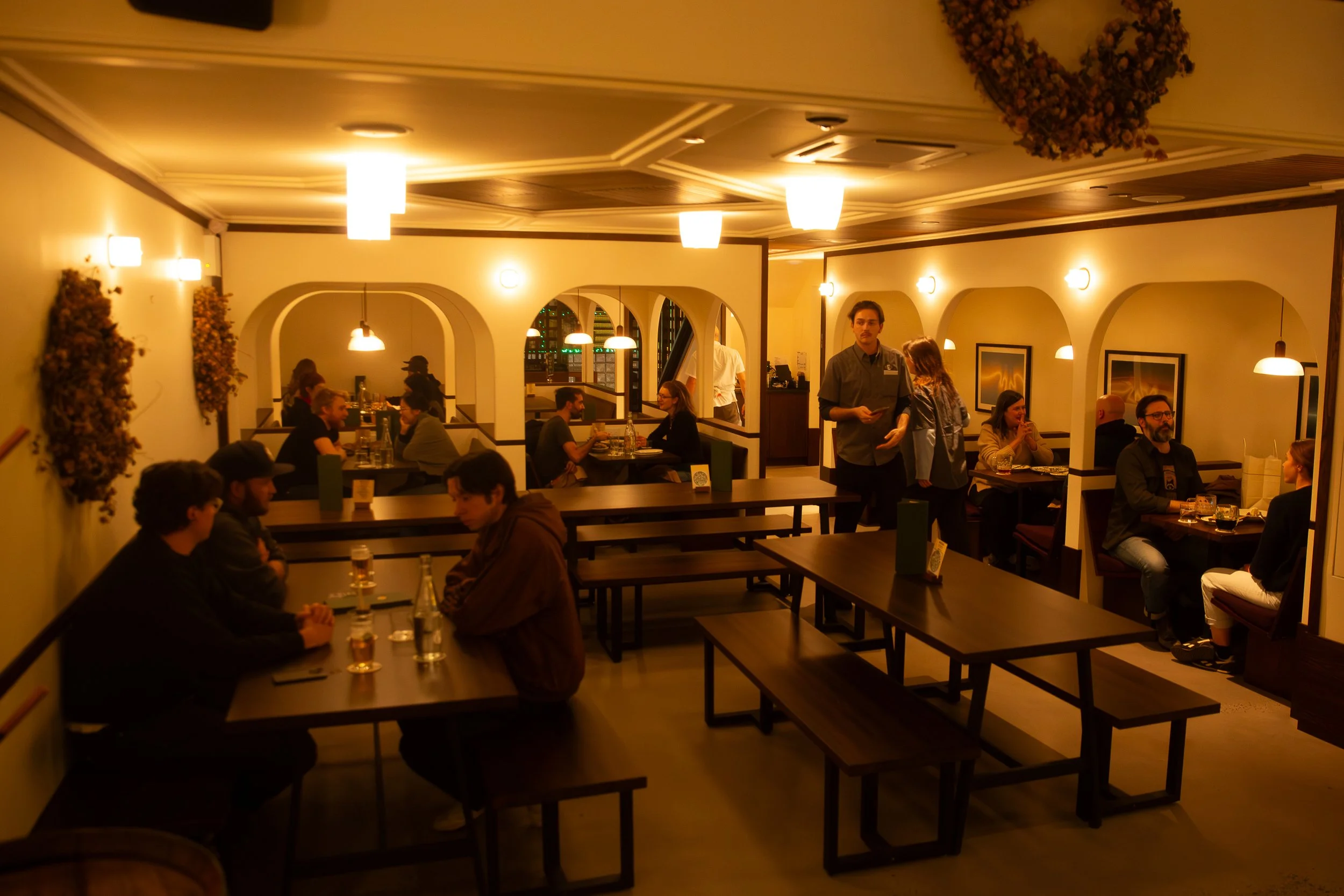
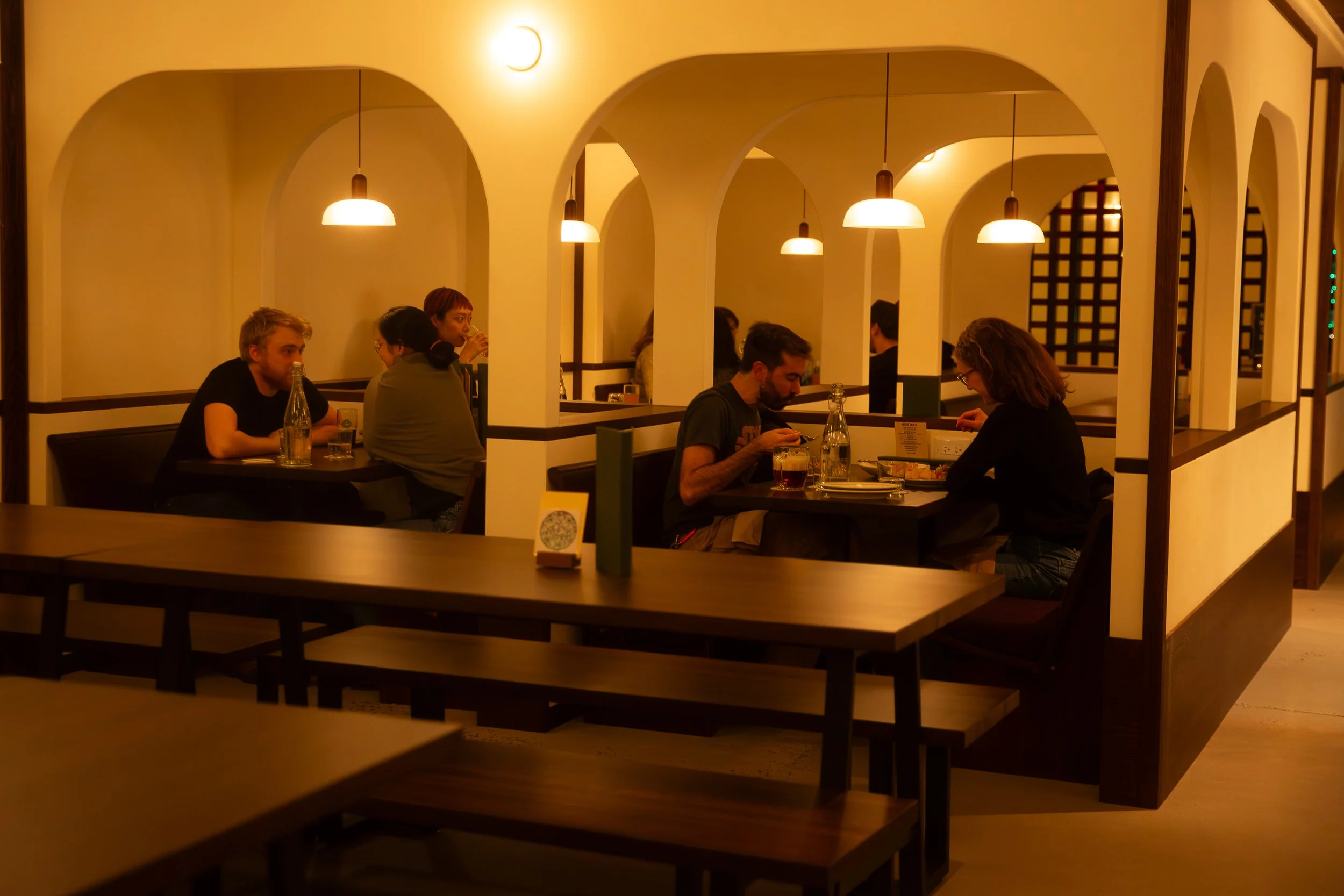
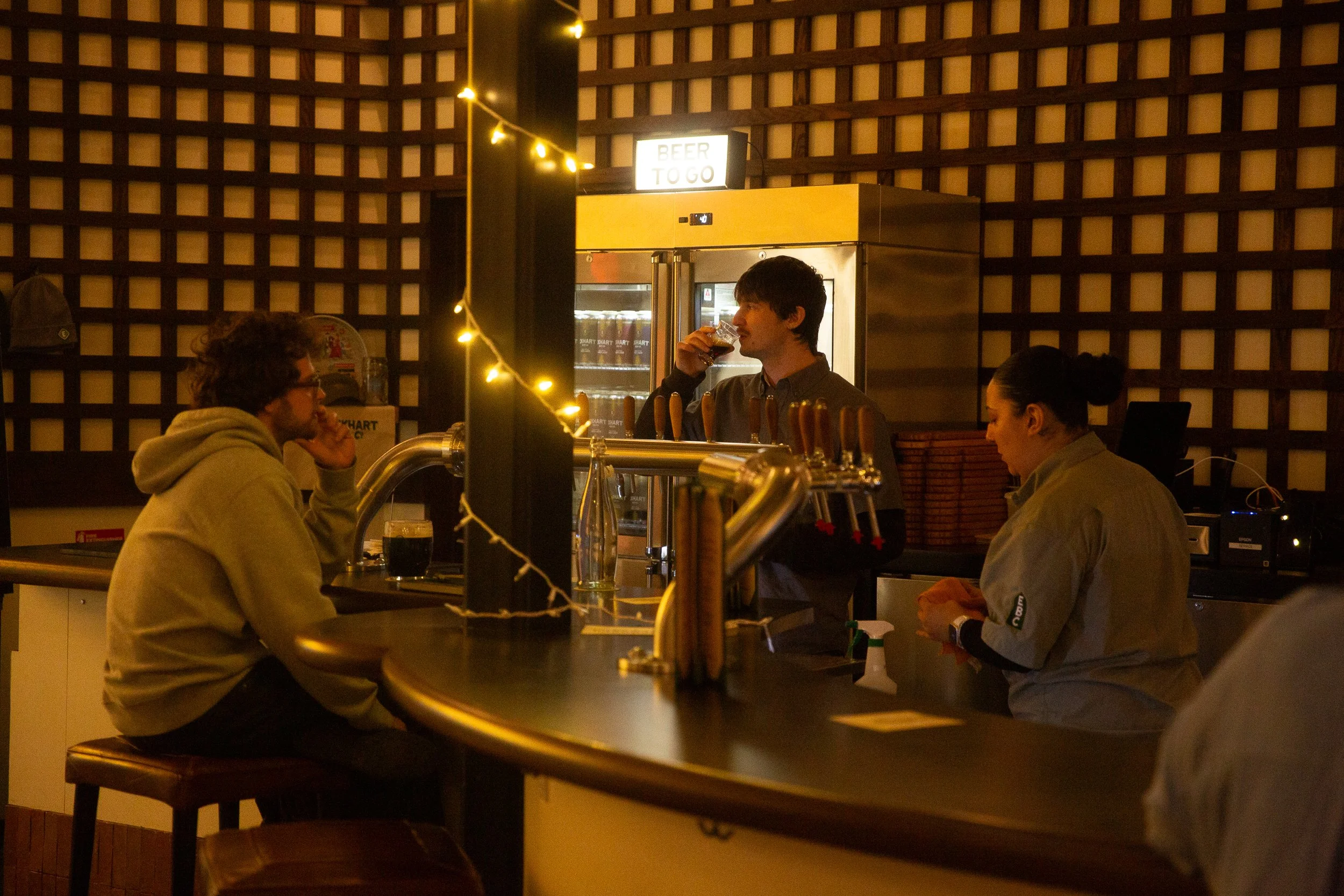
Its interior, designed to reference a traditional Bavarian beer hall, has three distinct areas: In the front is a fairly open seating area, the “biergarten”; there’s a section of tables with benches that are ideal for those having a meal; and in the back is the bar, where solo drinkers can peek through the windows to see what’s going on inside the brewery.

Photography by Nick Deveau
Nick Meyer, Eckhart’s founder, comes from a fine dining background. He worked as a sous chef at the three-Michelin-starred Eleven Madison Park under Daniel Humm, and also cooked at Blue Hill at Stone Barns, located north of the city in Tarrytown. Additionally, he spent several years teaching at the International Culinary Center in New York City. But during the pandemic, his focus turned to homebrewing. In lieu of perfecting his own sourdough bread, he developed a fixation on European-style lagers.
“I started really getting into lagers, trying to brew them at home, running into complete frustration almost every time I brewed one,” Nick tells me. “I was just like, ‘Wow, you really can’t brew one of these at home that tastes at all like what you get commercially.’”
He saw a gap in the market for locally brewed lagers that were faithful to time-tested German and Czech brewing practices. As the idea for Eckhart began to form, he took inspiration from the small handful of East Coast breweries—including Schilling Beer Co. in New Hampshire and Notch Brewing in Massachusetts—that share a similar ethos.
Part of Nick’s lager obsession comes from the fact that these styles demand precision. Broadly speaking, lagers tend to be less forgiving to brew than ales, with little room for flaws to hide.
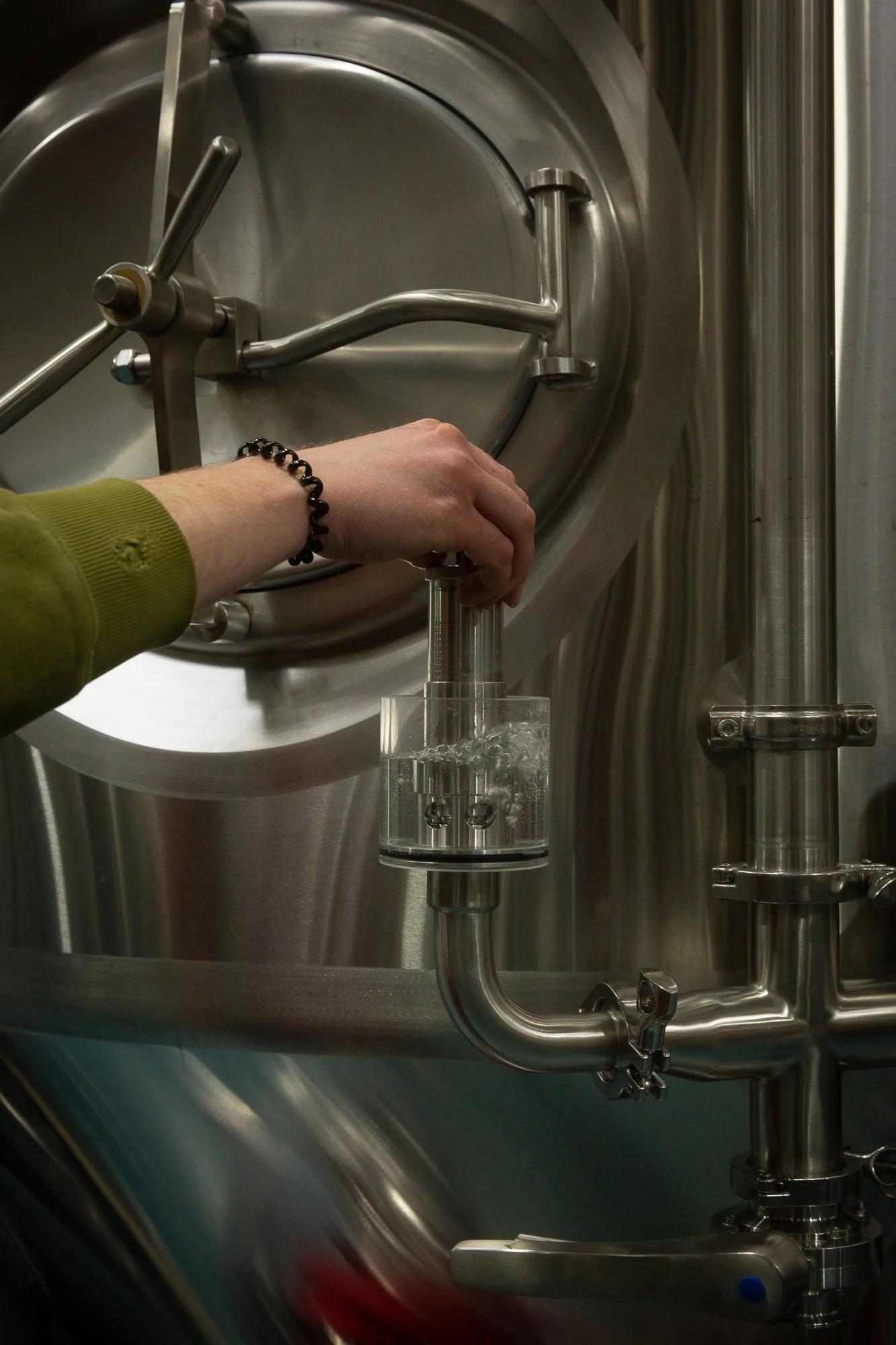
“Because you’re fermenting them cold, you’re really on a razor’s edge with the yeast,” he says. “Lager yeast likes colder temperatures, but it still is one of those things where you have to make sure it’s really happy. Your margin for error is much smaller, and any small irregularity in fermentation will come through very obviously.”
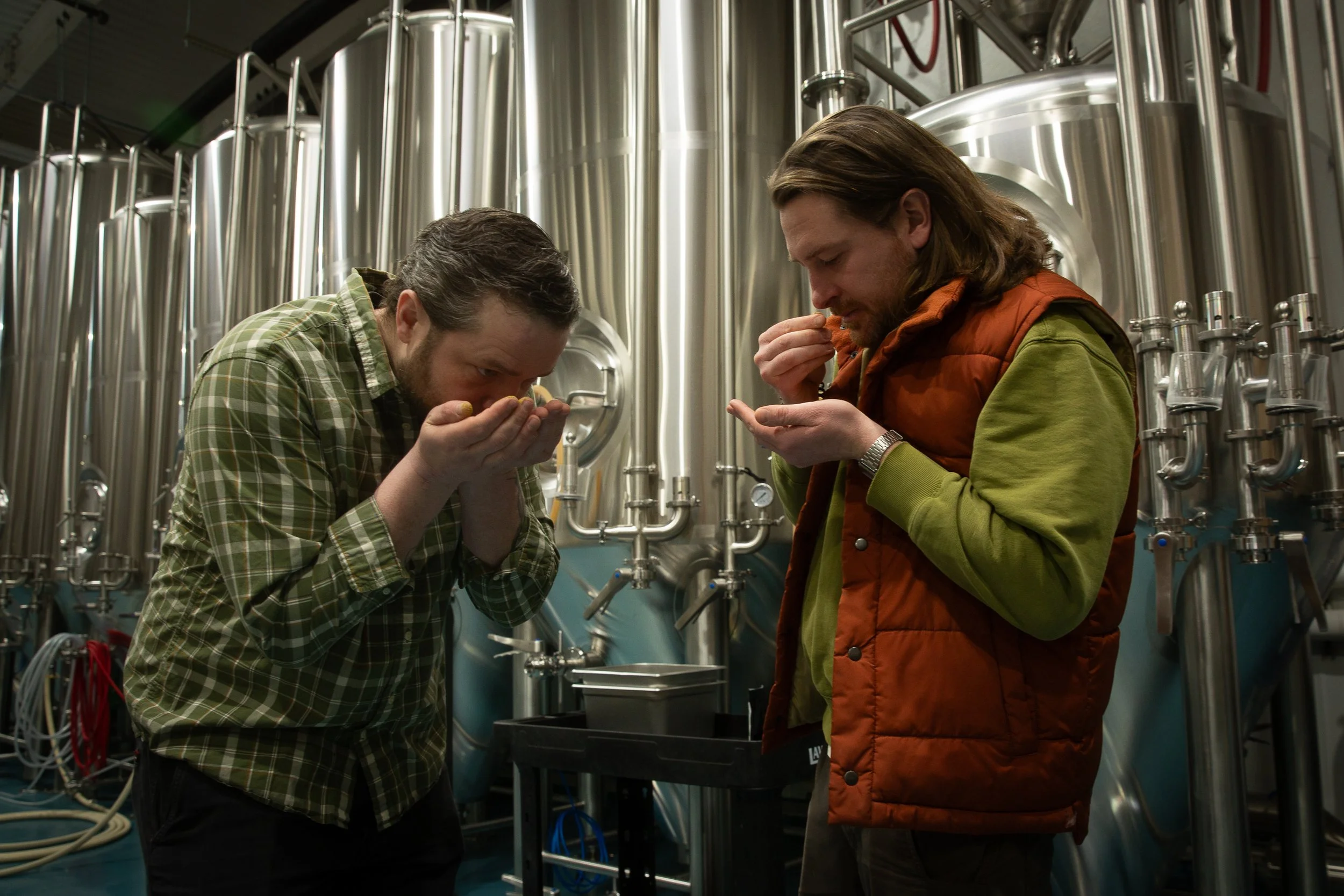
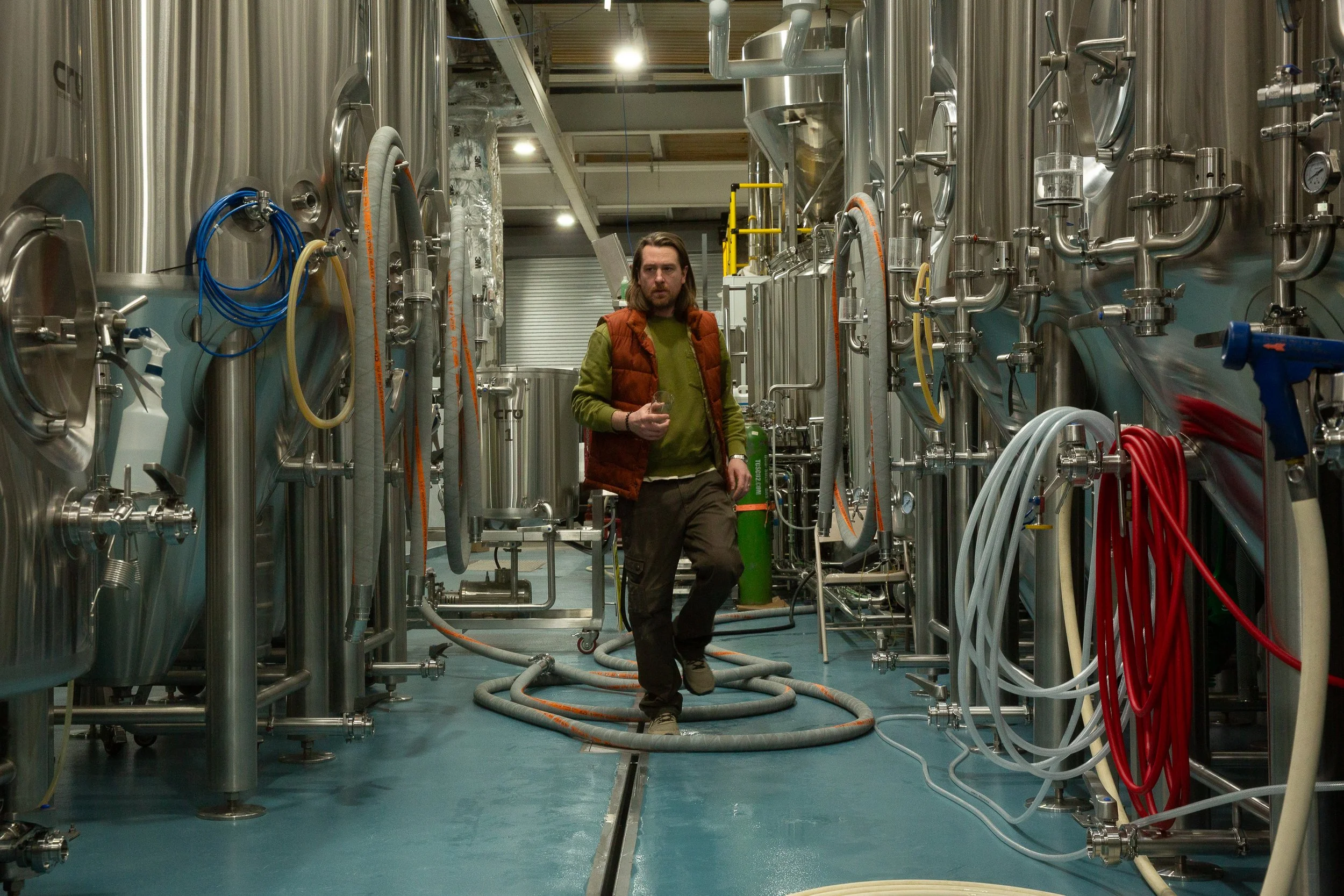
If anyone is up to the challenge, it’s head brewer Adam Wolfe, who holds a diploma from the Institute of Distilling and Brewing and has years of international brewing experience, including a period spent studying lagers in Munich. It’s a testament to Adam’s skill and similar sensibility, Nick says, that formulating the brewery’s core range was a surprisingly quick process.
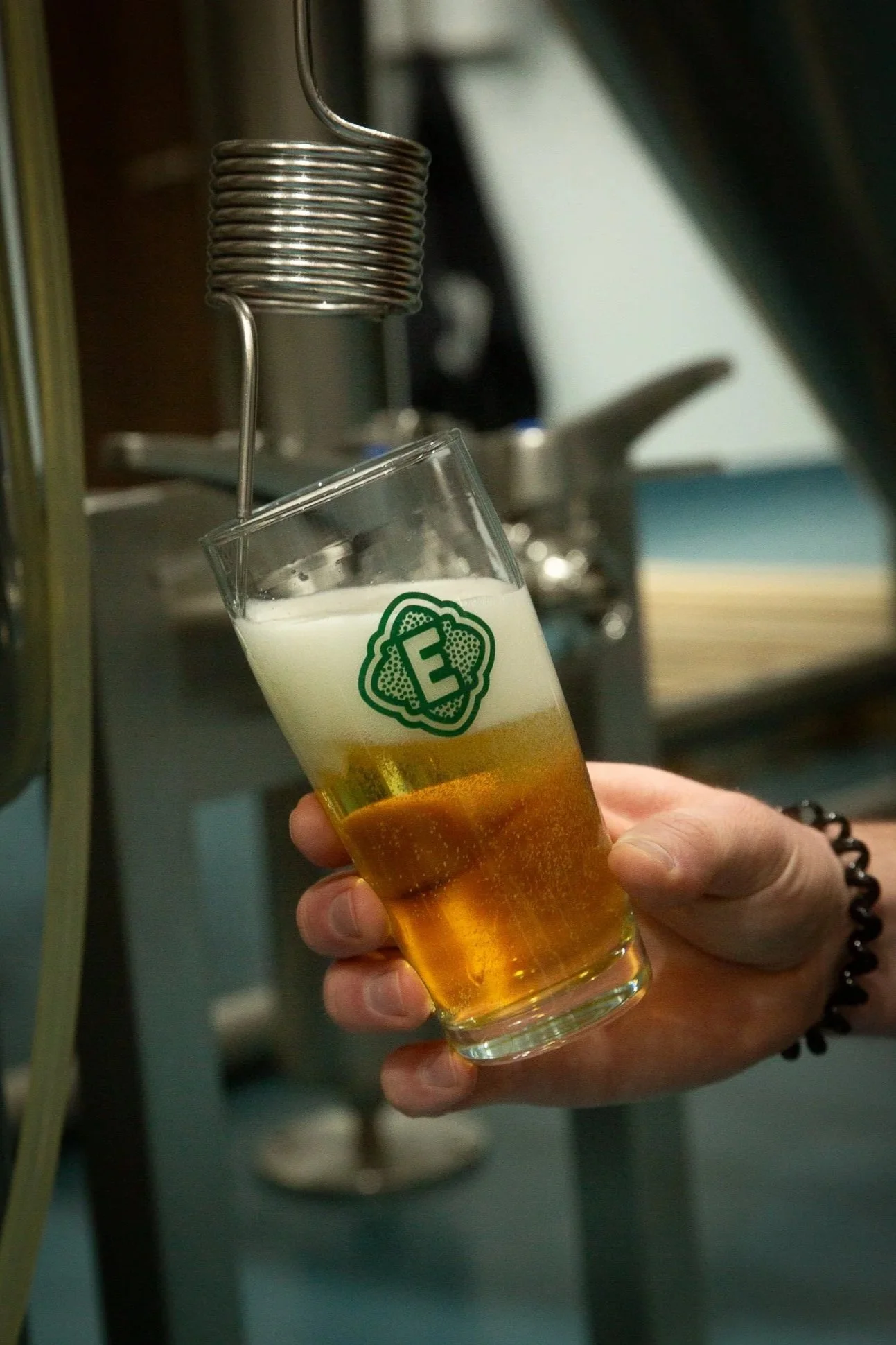
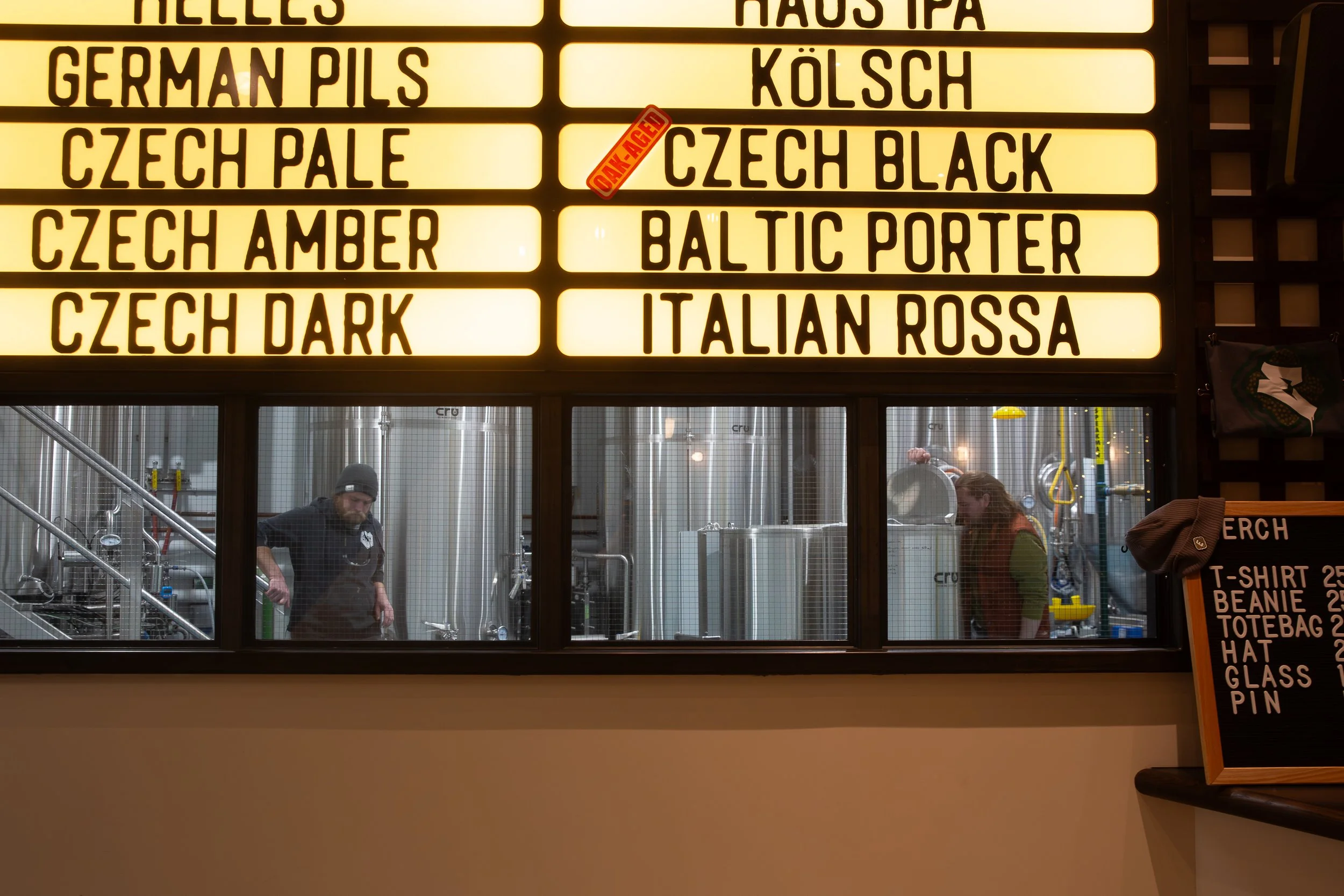
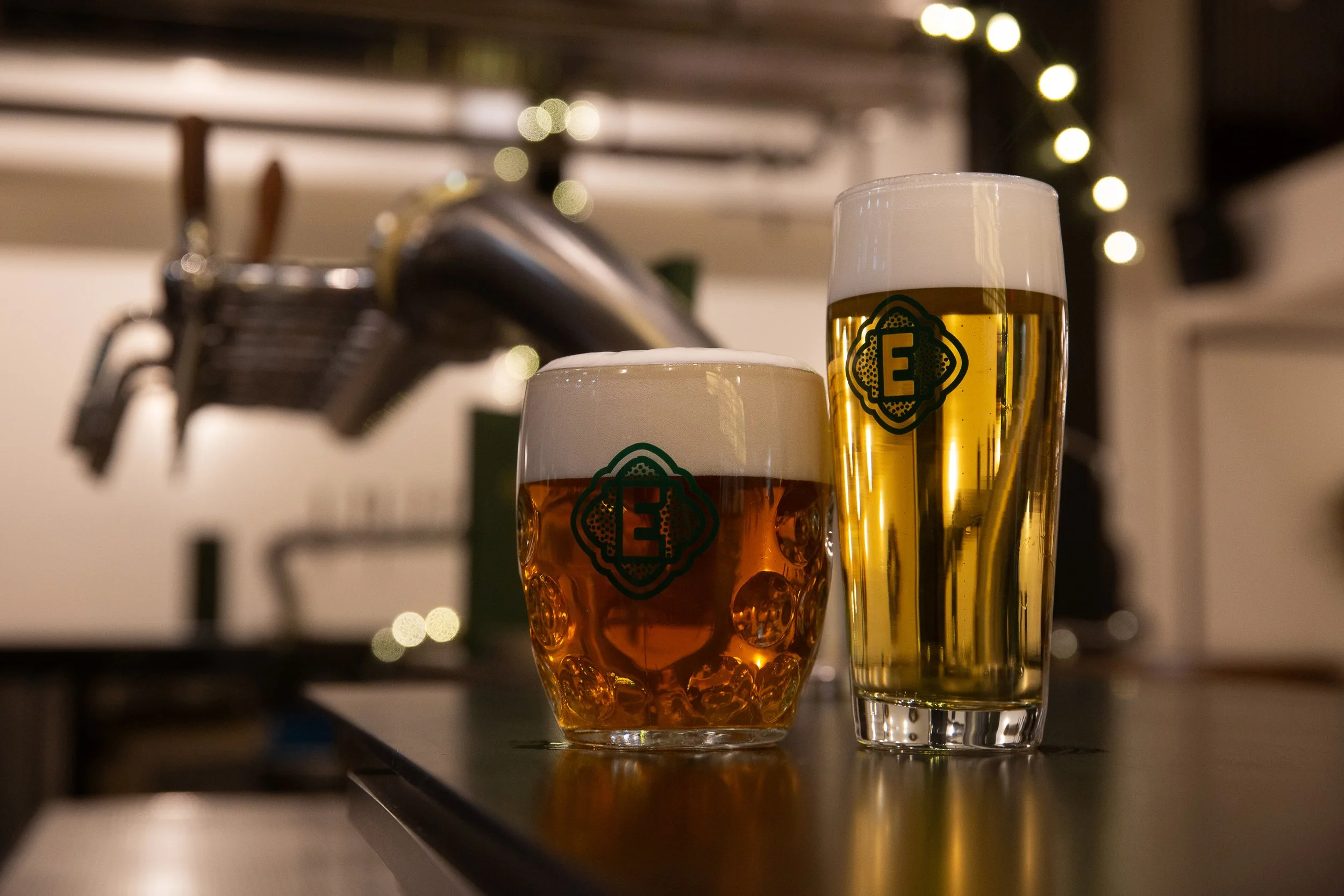
Eckhart’s starting lineup includes five lagers: a Czech-style amber, a Czech-style dark, a Czech-style pale, a German-style helles, and a German-style pils. They’re all delicious, but the Czech pale is in my personal top spot: It’s complex and balanced, with robust carbonation providing enough of a bite to offset its soft, rounded malt character.
““We’re trying to create an environment where you can sit for an extended period of time and have a few beers and not be completely blotto after an hour and a half.””
Beyond its core range, Eckart sees its lager focus as less of a boundary and more of an anchor. It has several other styles in rotation, including a kölsch-style beer and an altbier. While both styles use ale yeast rather than lager yeast, Nick considers them to be “within the lager tradition” due to their long maturation period spent at low temperatures. Eckhart also recently released a brilliantly refreshing Italian red lager, appropriately called Rossa, in collaboration with fellow New Yorkers Other Half Brewing Co. and DeCicco & Sons, a family-owned grocer with locations across lower New York State.
And, of course, Eckhart also makes an IPA. “Because you have to do an IPA, right?” Nick says. That said, don’t expect it to taste like an afterthought—Haus IPA is made with just as much intentionality as the rest of Eckhart’s range. It’s properly bitter, featuring notes of perfume-y mangoes, straight-faced pine, and the welcoming herbal musk of Washington Square Park on a Friday afternoon. Nick names The Alchemist in Vermont as a personal favourite brewery, and a reference point for Eckhart’s own IPA.
But as meticulous as the brewery’s beers are, its food menu is just as much of a draw. In fact, it’s the first thing several locals mention when I ask if they’ve been to Eckhart yet.
“If you ever visit the brewery, the food is also absolutely amazing … way above and beyond,” says James Rutuelo, owner of Heart of Gold, a beer bar in Astoria, Queens.
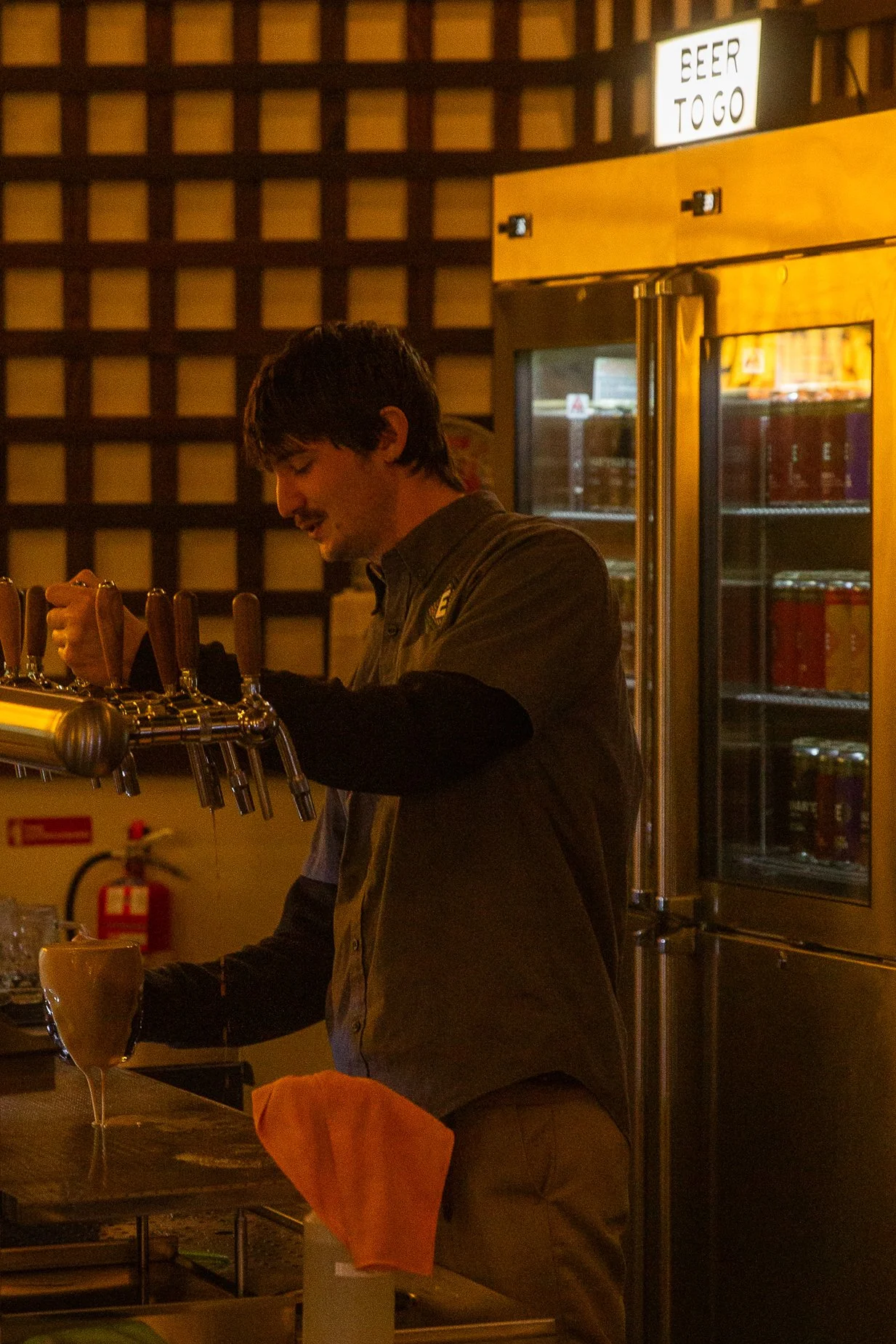
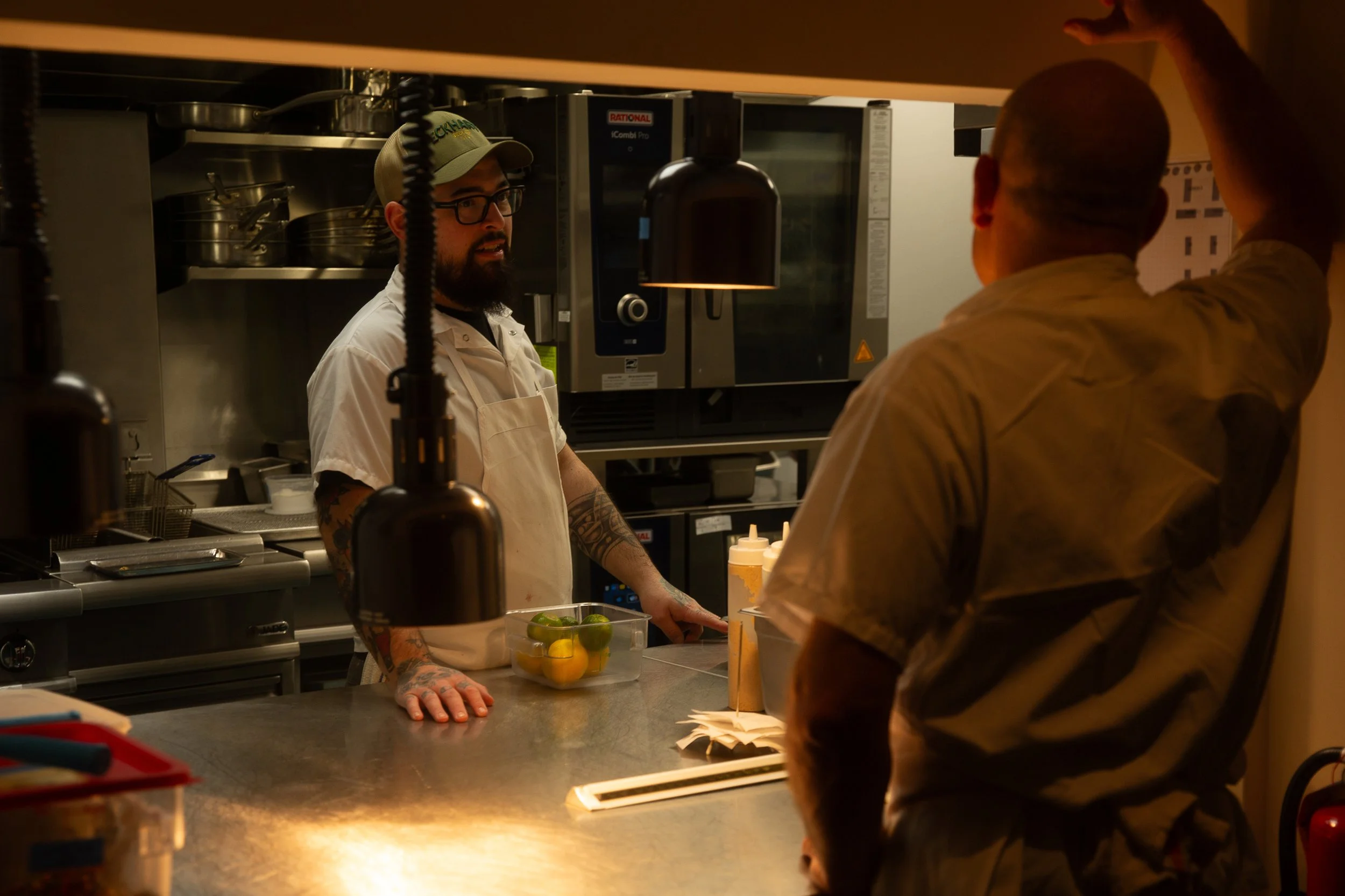
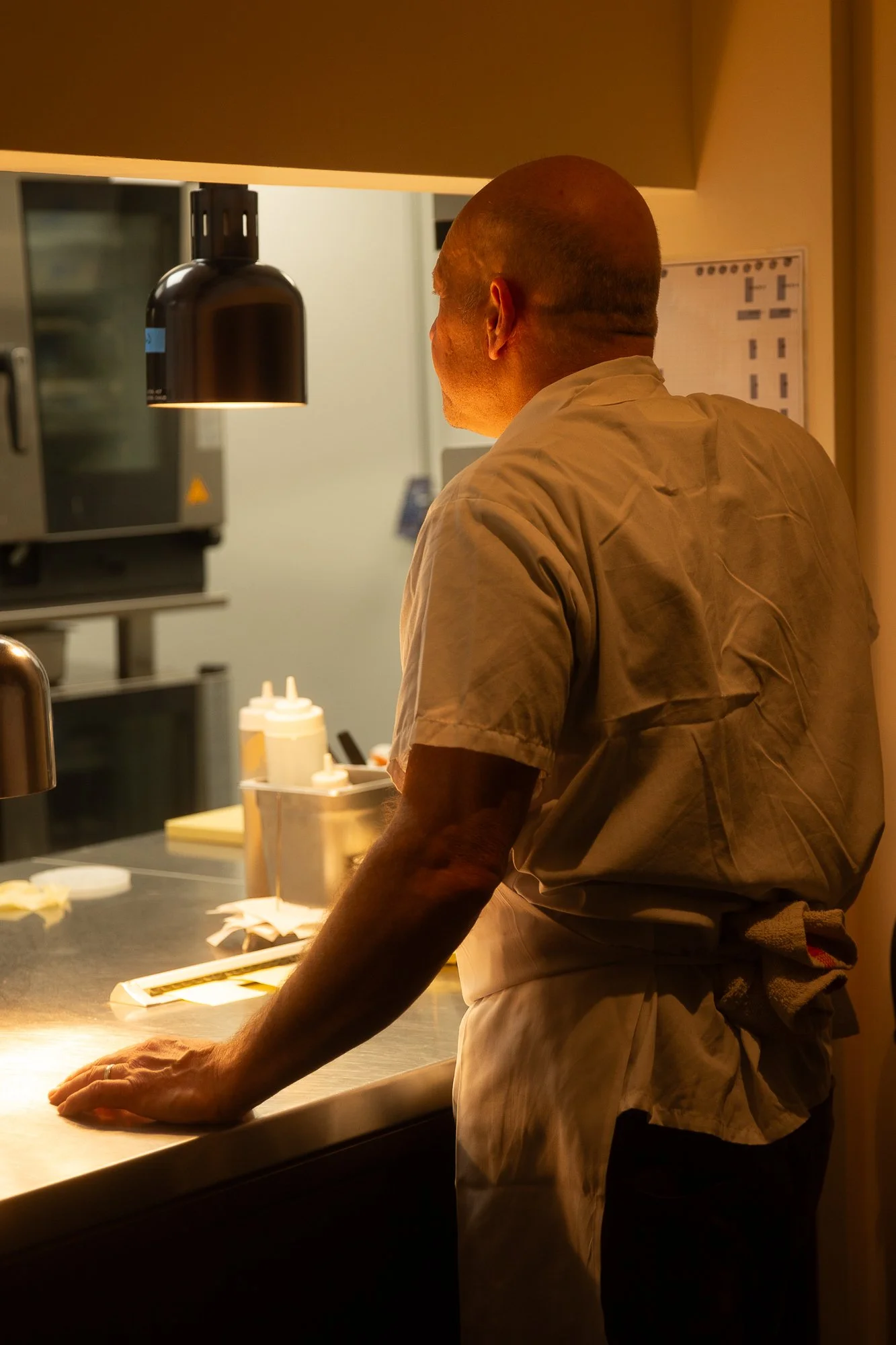
The kitchen, headed by executive chef Frederick Maurer, is a bit more upmarket than what the typical taproom offers—hardly a surprise, given Nick’s Michelin-starred background.
The menu focuses primarily on Central European dishes that match the beers’ origins. There is a brat plate, and spaetzle gratin, and kartoffelpuffer (German-style potato pancakes), which you can order fried in oil or beef tallow. But there’s also a falafel dog, an Italian cold cuts sandwich, and a Moroccan-spiced ratatouille with vegan lemon yogurt. The variety of cultural influences feels very reflective of the brewery’s New York City context.
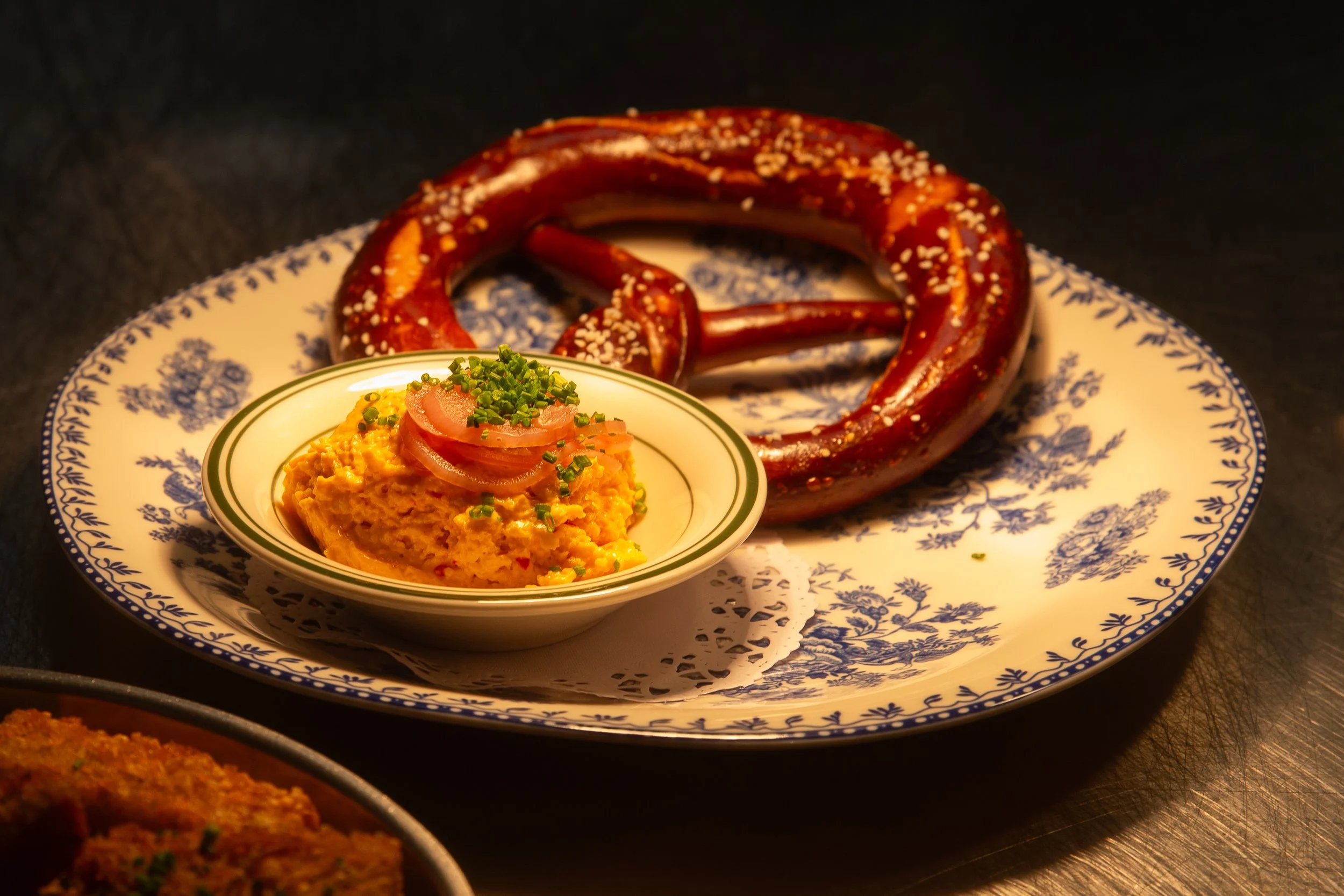
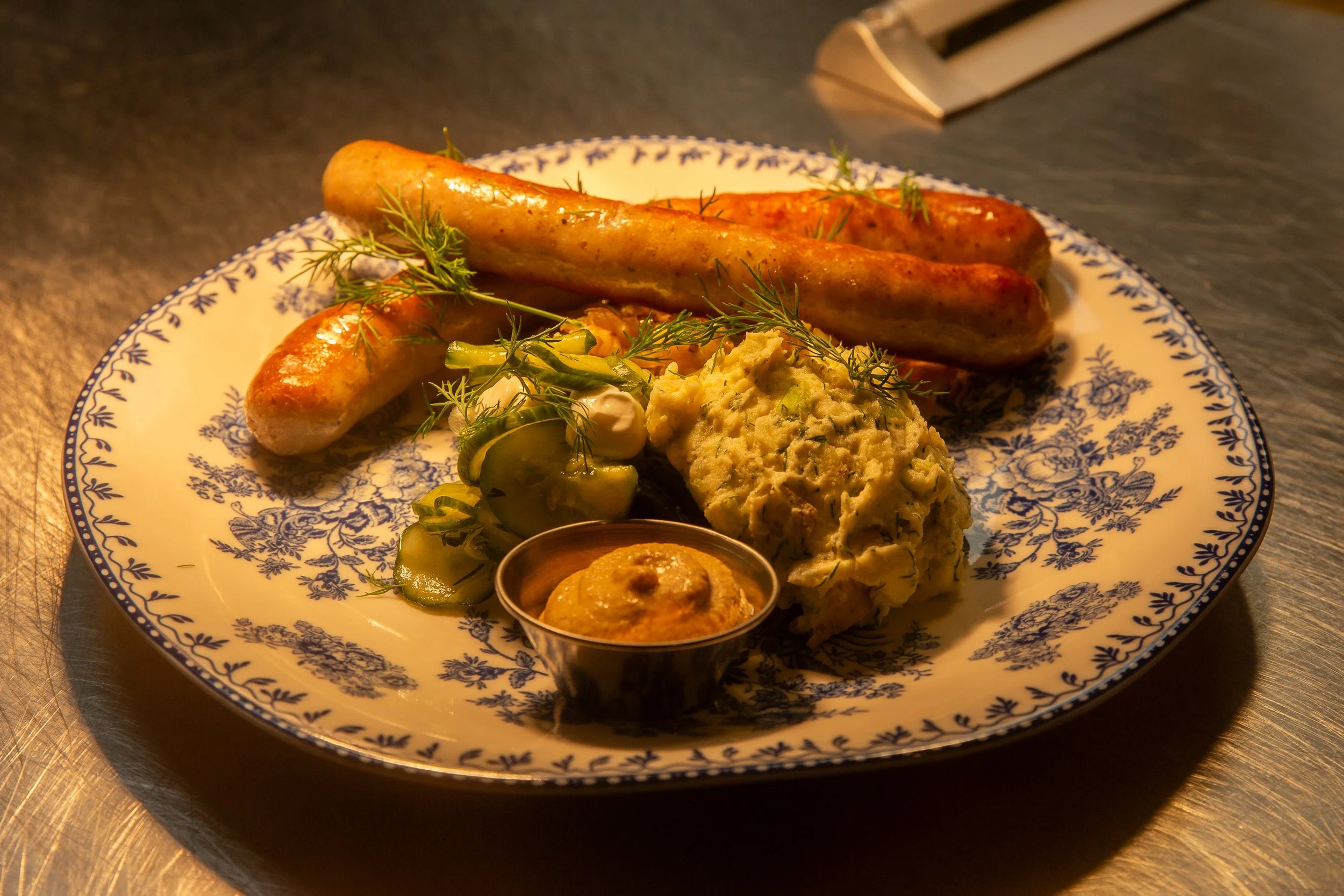
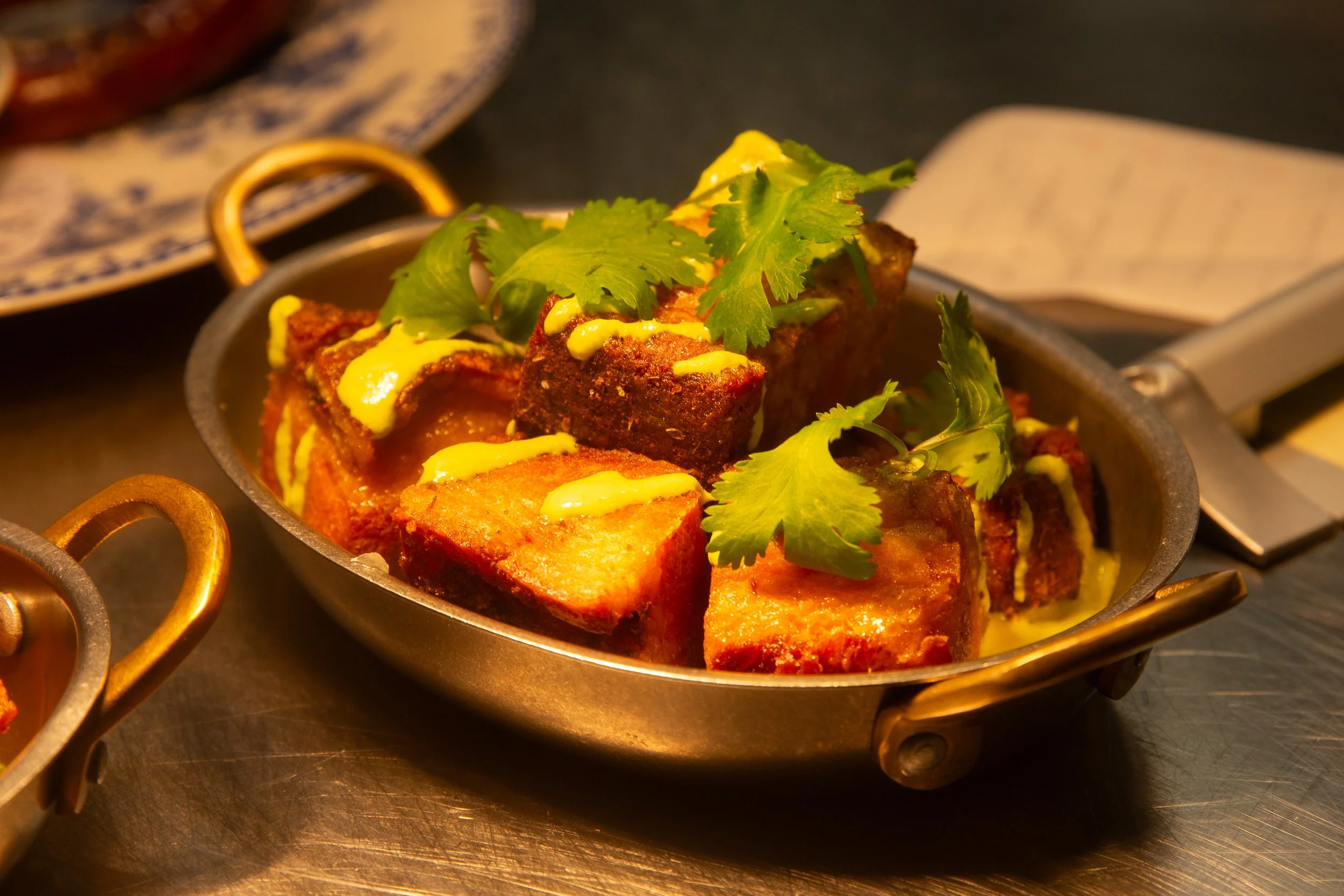
“I wanted to offer food that supports the beer. It didn’t have to be Central European per se, but that felt like a natural foundation,” Frederick says. “There are great lagers from all corners of the world, so I didn’t necessarily want to exclude any type of cuisine, but I wanted to make sure that what we do offer was unique to Eckhart, and that it would be executed in a way that felt genuine.”
***
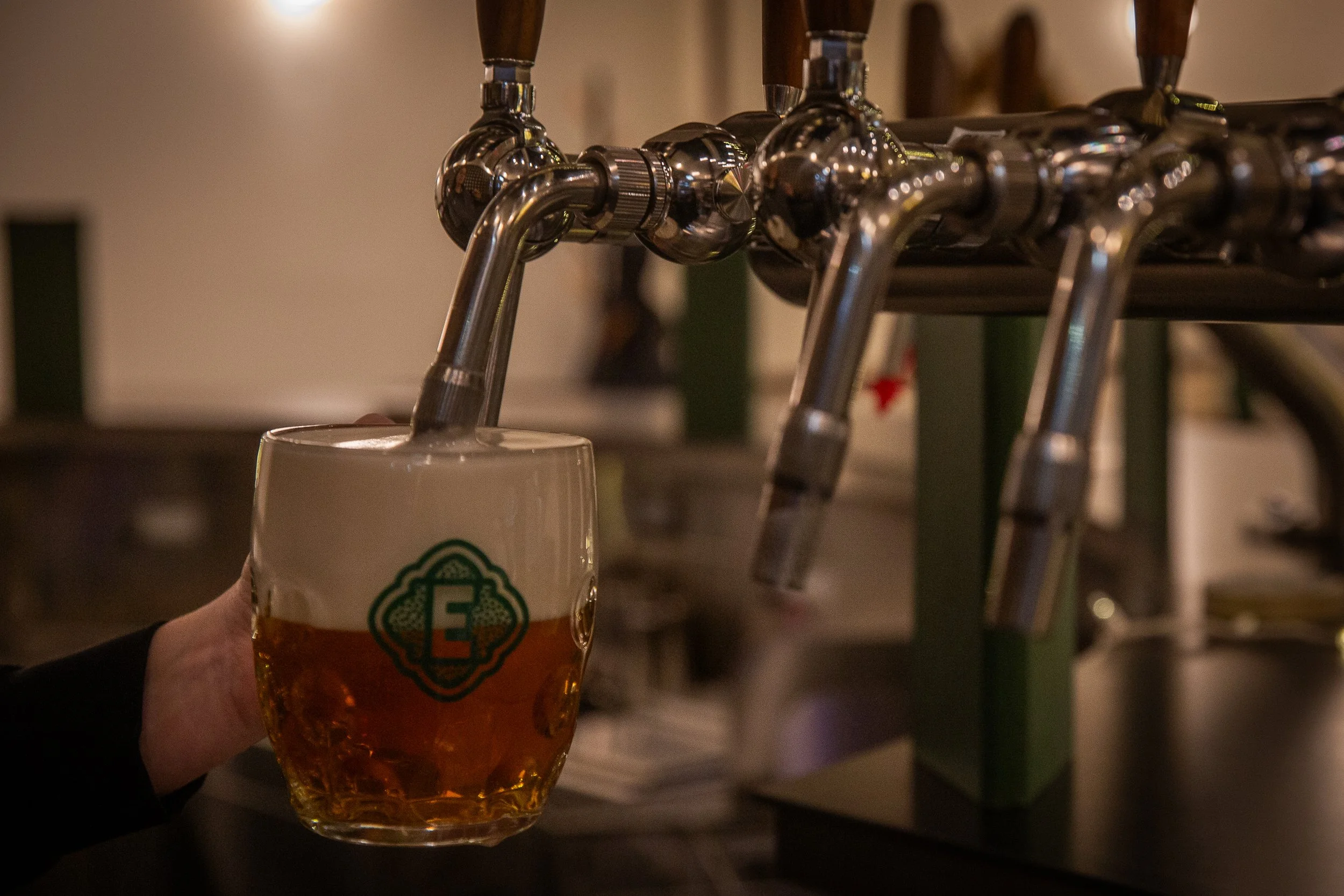
It might be absurd to suggest that a brewery focused on European-style lagers is following trends, but Eckhart has certainly arrived at an opportune moment. For the past few years, Czech brewing influences have become more prominent among American breweries. Many now have Lukr side-pour taps installed, which pour beer with a thick, creamy head. Some also offer traditional Czech pours, like the milk pour, or mlíko (a glass that mostly consists of foam).
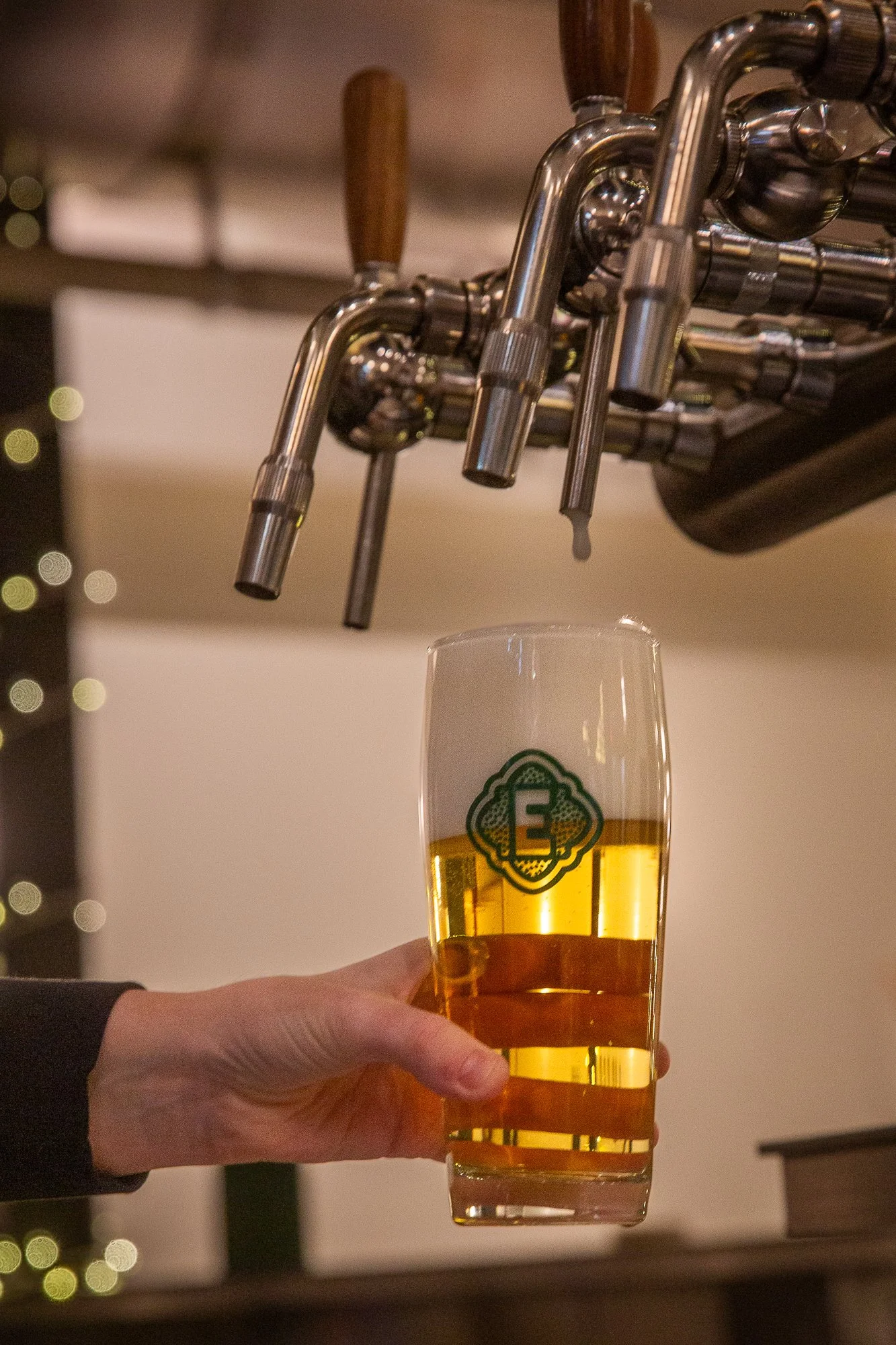
Eckhart, naturally, pours all of its Czech styles on Lukr taps, and it also offers all three of the typical, foam-dense Czech pour styles, complete with little diagrams in the menu for curious drinkers. You don’t have to review the details before ordering—if you just ask for the Czech pale, for instance, it’ll come in a standard, mostly-beer pour—but they’re there for those who are interested.
Eckhart has also started offering traditional Cologne-inspired kölsch service once a month, featuring both its kölsch and its altbier. The service style “started at the end of the 19th century and developed to what it is today right after World War II, when smaller glasses helped to ensure that the beer stayed cool and fresh before you could finish it,” Markus Raupach, founder of the German Beer Academy and a WSET beer educator, explains.
If you’ve ever regrettably choked down the last, warm sips of a pint, you can understand the appeal of cold beer flowing continuously. Plus, on busy Saturday evenings, it’s nice to eliminate the need to get up and go to the bar to order each round.
“The format also encourages socialising and frequent rounds,” Markus tells me. “In traditional Cologne trinkhallen (beer halls) and brauhäusern (brewhouses), kölsch is served by a köbes, a blue-clad waiter with a dry wit and efficient manner.” At Eckhart, servers wear green, not blue, but they’re certainly efficient and personable, making it easy to stay for, oh, seven or eight rounds. During a recent visit, just as I was telling my drinking companion that this would be our last round, Nick happened to walk by, teasing, “You say that now.” Like the coasters say, one kölsch leads to another. (It also, in my experience, leads to karaoke.)
***
As journalist Dave Infante wrote for VinePair last year, what’s happening to craft beer isn’t the death of the industry—it’s just that the hype is finally receding after the boom period of the 2010s. That era saw an oversaturation of a particular kind of brewery: Think those with industrial-chic taprooms and beer-nerd-baiting menus featuring every possible combination of Citra and Mosaic hops.
Last year, when trying to answer the question of “why craft beer is declining in popularity,” Kyle Phillippi wrote for Vice that, “Personally, I’ve found myself waning on IPAs. Instead, I’ll opt for more cost-effective beers as well as just cutting back altogether from overindulging.”
For me, this belies the actual problem: the perception of craft beer and breweries as a niche hobby for hopheads who like beer that tastes like angry pine cones. IPAs aren’t the only kind of “craft” beer! Indulging doesn’t have to mean overindulging!
““They create sincere takes on European classic styles that are underrepresented in the US market, and they do so well.””
As Nick says, “We’re trying to create an environment where you can sit for an extended period of time and have a few beers and not be completely blotto after an hour and a half, because you’ve been drinking 8% IPAs.” Tradition-minded, lager-loving breweries like Eckhart might be the perfect solution to whatever brewery fatigue people may actually be experiencing.
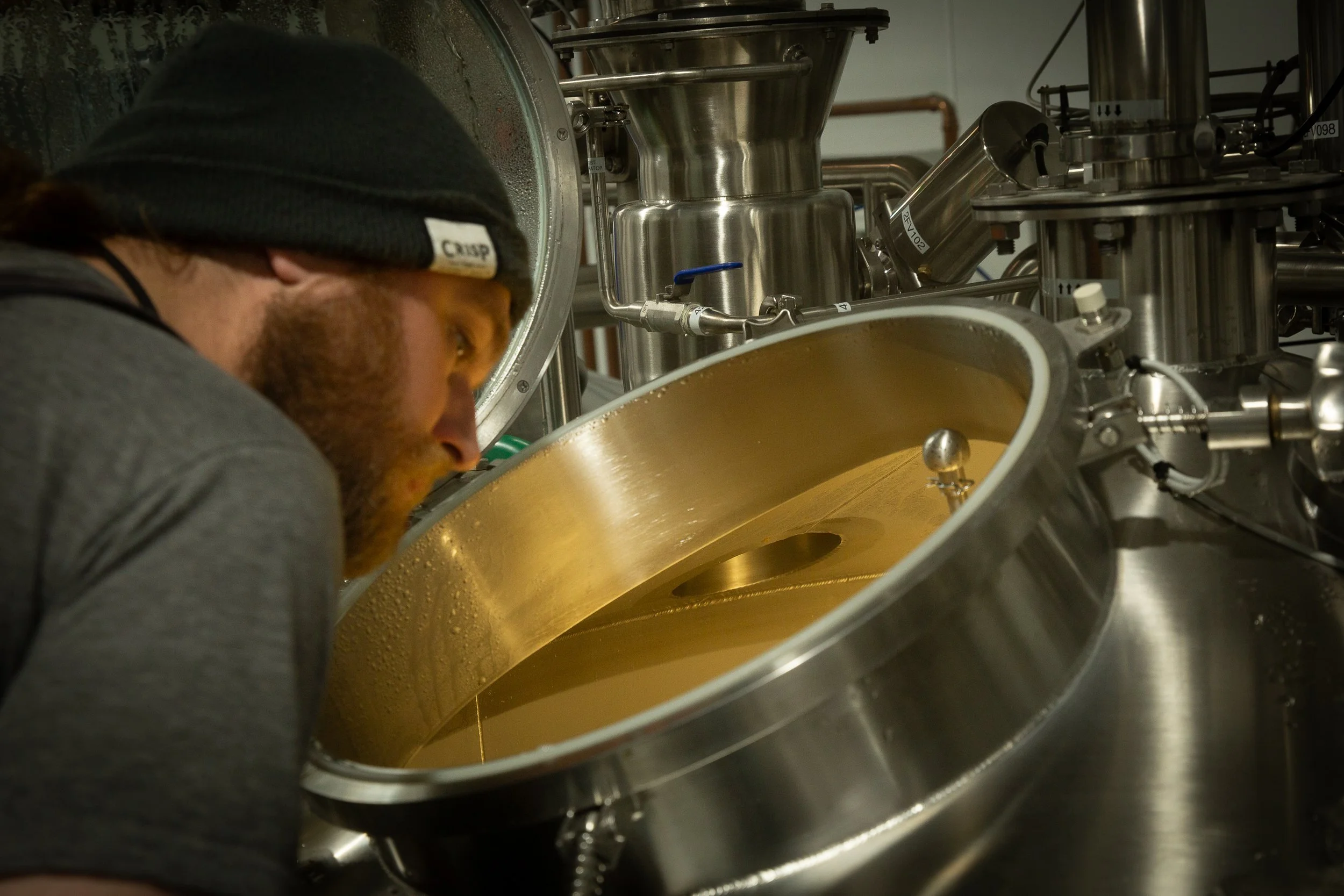
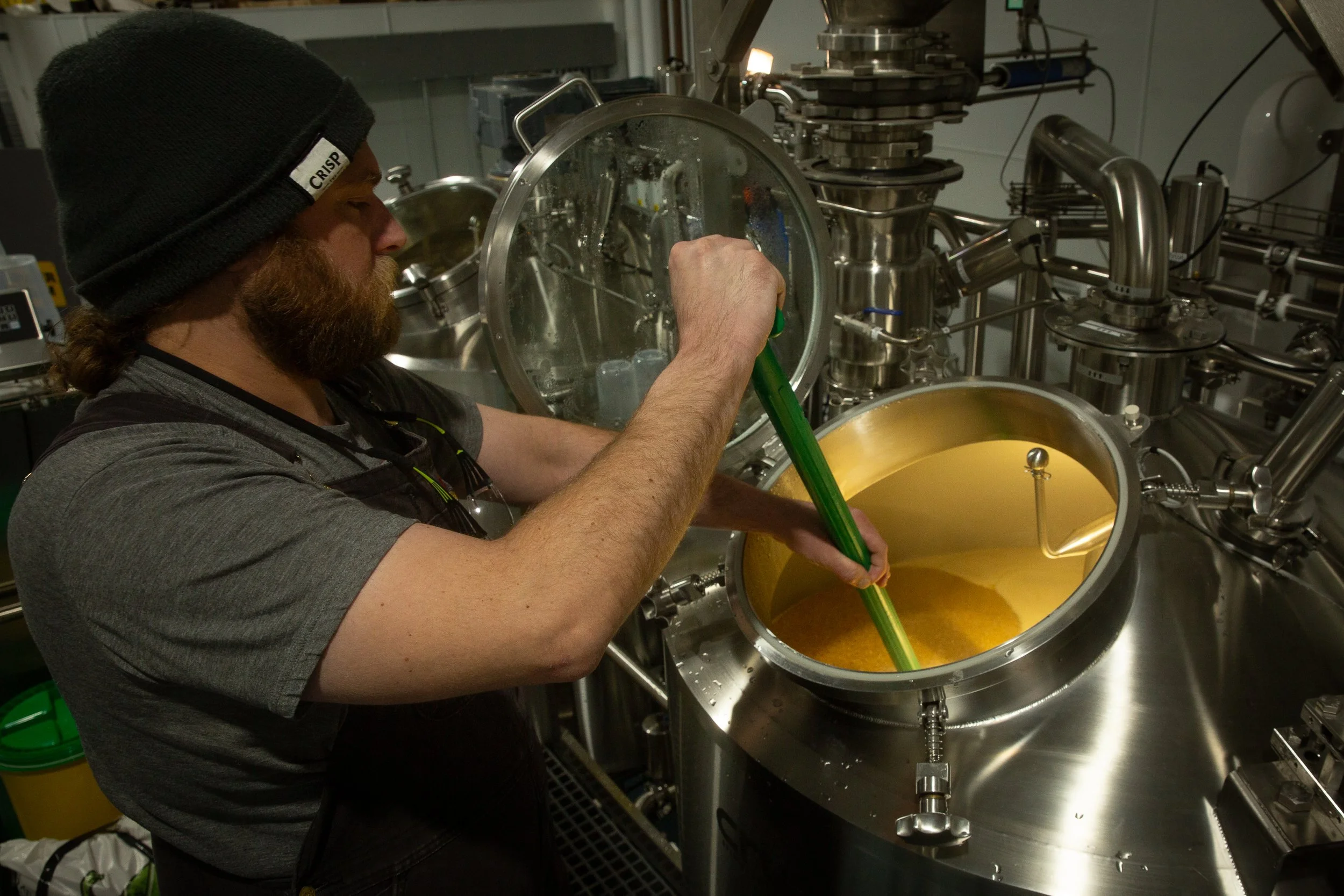
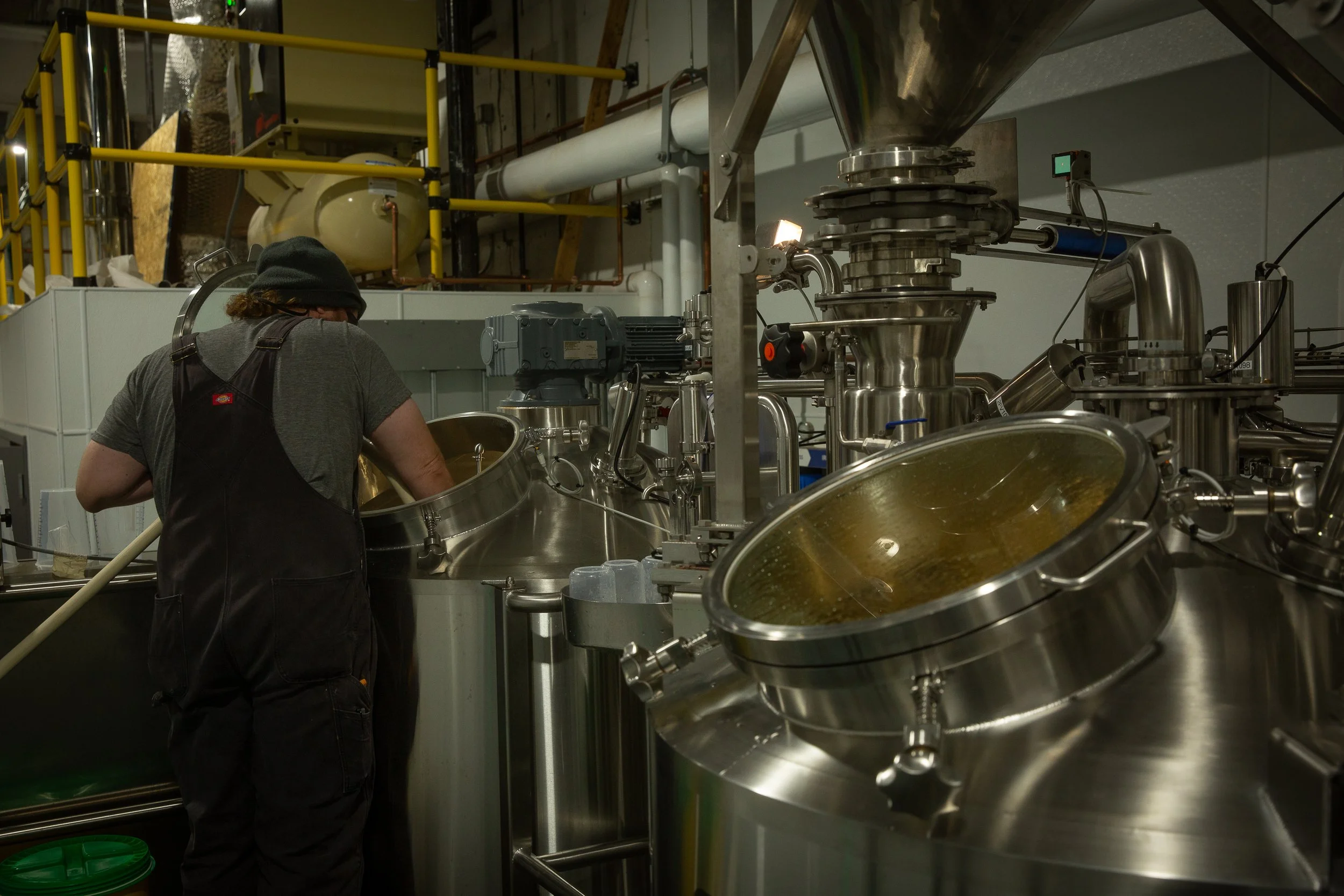
“They create sincere takes on European classic styles that are underrepresented in the U.S. market, and they do so well,” Heart of Gold’s James Rutuelo tells me.
“As the American beer market tightens, as a buyer I have often felt pressured by sales reps from other companies to take on stock that doesn’t fit my menu,” he continues. “Consistent with their ‘keep it simple’ ethos, I have never felt that Eckhart wants to sell me any beer that doesn’t fit into my menu, and it’s a huge reason that I feel that we’ll be working together for a long time.”
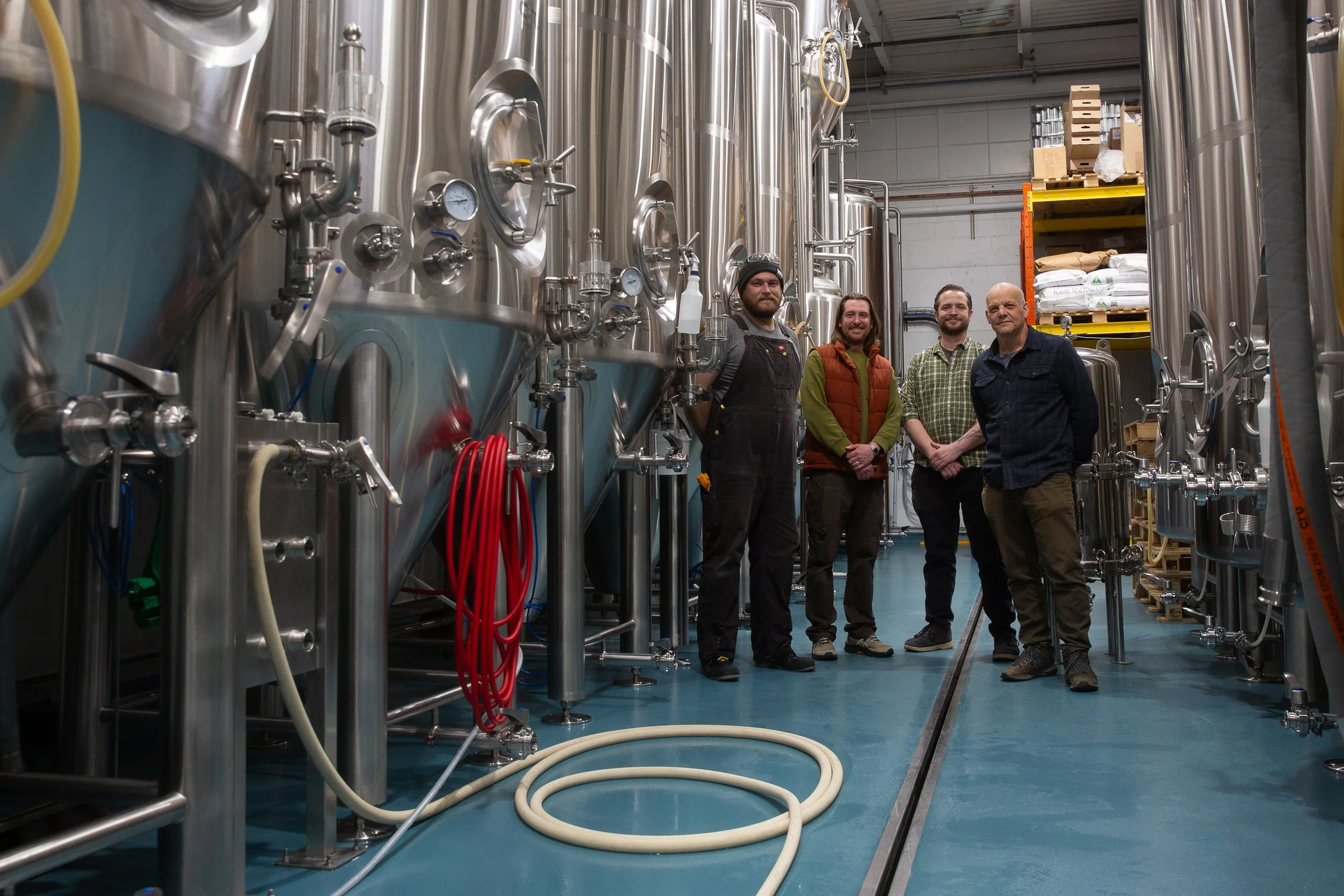
Nick and the rest of the Eckhart team are mindful of the fact that it’s a community, not just an industry, that they’re joining. They’ve been winning over hearts since well before the taproom opened.
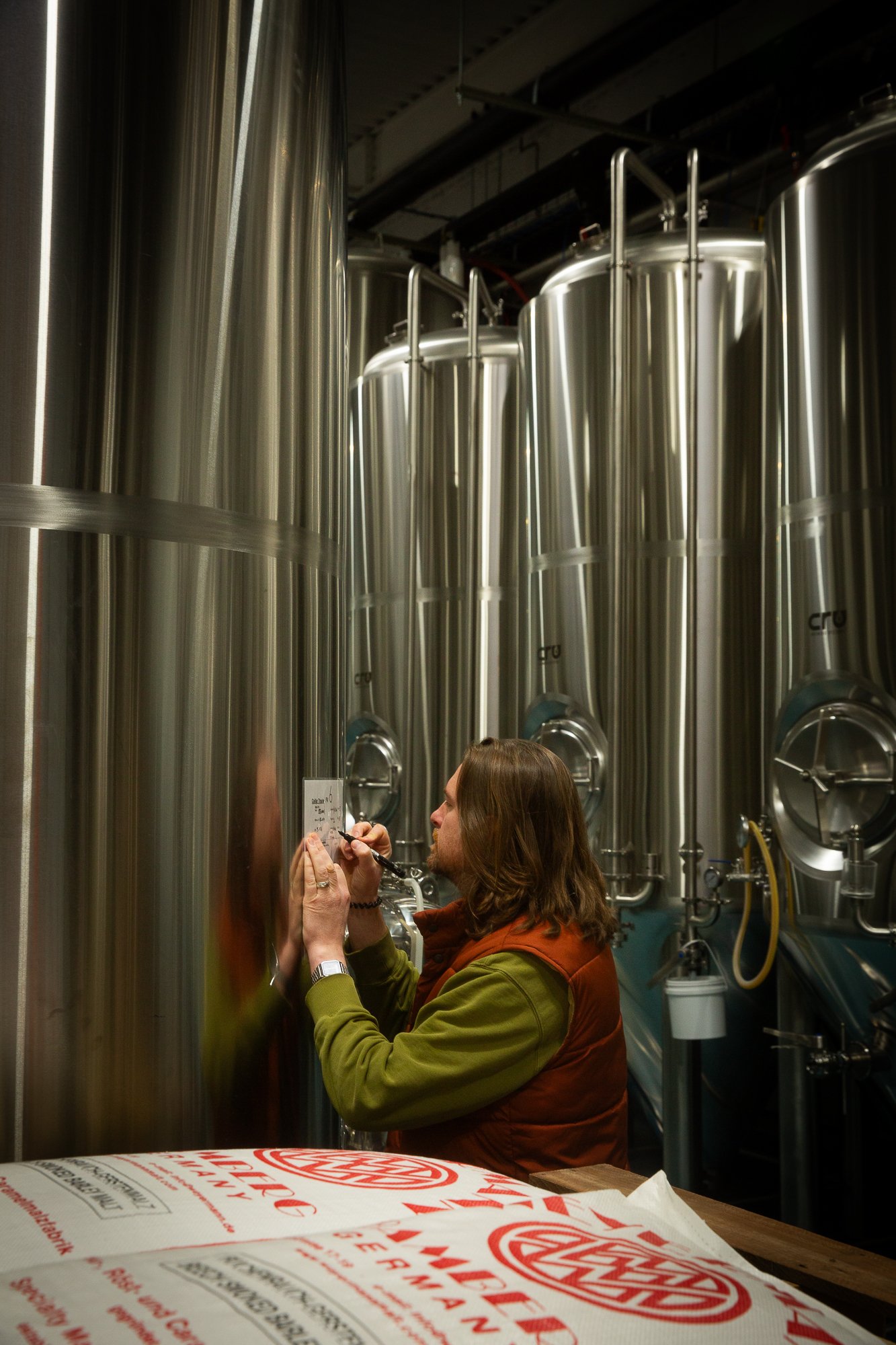
“A year ago, we were down on our luck, experiencing financial hardship as a business. Eckhart, a brand-new business, offered to help us out in a time of need,” says Chris Maestro, founder and principal owner of BierWax, a bar in the Prospect Heights neighborhood of Brooklyn.
“Once we were back on our feet and they had more liquid to sell, we started to buy their kegs on a regular basis,” he tells me. “Within a few weeks, we decided to replace our steady pilsner line with their German-style pilsner. [It] has become our go-to pilsner, and customers have had nothing but great things to say about it.”
There will hopefully always be a place for longstanding New York City breweries like Other Half and Evil Twin, with their massive menus of mad science experiments that tip heavily toward IPAs and heavy stouts. (I know that I still like visiting from time to time.) On a typical Friday night, though, I’m much more likely to hang out in Bushwick, and drink good lagers while eating good food, than I am to haul ass to some far-out spot in Brooklyn or Queens and get “blotto” on high-alcohol hazies.
I think this impulse is true of a lot of craft beer drinkers in 2026, and it fits Infante’s assessment of the current beer climate. People have been drinking beer in one form or another for thousands of years. The beverage, and the culture around it, aren’t going to be destroyed by the inevitable fluctuations in drinkers’ tastes and priorities.



Ultimately, there’s a reason people are coming out to Bushwick to try a century-old beer-serving ritual, and drinking beer styles that predate this nation. Maybe “craft beer”—banish the phrase—is dead, if we’re defining it so narrowly. But craftsmanship, dedication, and inspiration are alive and well in beer today. If you need proof, just head to Eckhart and let the kölsch convince you.