Keep Your Eyes Wide — Changing Times Brewing in Dublin, Ireland
Pubs in Ireland are unlike any you’ll find elsewhere in the world. This is largely due to the capacity of Irish publicans to make you feel welcome, at home, and looked after.
As curators of the pubgoer’s experience, they run a tight ship, take no prisoners, and yet have an unmatched capacity for revelry, and an acute sensitivity towards the needs of others. But to conflate the character of Irish pubs with the quality of beer in Ireland is to do both a disservice. For a nation famous for its love of a good drop, there’s a striking lack of diversity on Irish counters.
In fact, the beer that’s consumed in the majority of Irish pubs isn’t even Irish, with the exception, perhaps, of Guinness, Murphy’s, Beamish, and a handful of other outliers that are brewed locally but owned by foreign multinationals. While treasured in Ireland, these brands do not represent the full spectrum of the country’s beer, which is far more nuanced and varied than most pub offerings would suggest.
Speak to anyone working in the independent Irish brewing sector and they’ll soon tell you about the savage competition for taps in Ireland—primarily between Diageo, Heineken, and Molson Coors. As someone who’s worked with many of these smaller breweries, I’ll admit I never had prior reason to question where publicans fitted into this dynamic. That was until 2024, when 16 of Dublin’s most cherished pubs banded together to form a brewery of their own—the aptly named Changing Times.
Photography by Eóin Sheil
Perhaps, all along, publicans had craved variety, just as independents had sought opportunity. Could the presence of artisanal beer on respected, mainstream counters change an entire country’s perception of beer?
***
Shane Long is buying diesel when our call connects. He’s on the road, somewhere between Dublin and Cork. He’s a busy man, who has tried and failed to ease into retirement; the Irish beer scene just wasn’t ready to let him go, most recently coaxing him back into the thick of it with the promise of Changing Times.
Shane opened Cork’s Franciscan Well pub in 1998, and shortly thereafter kitted it out with a small brewery. Over time, on-site brewing operations grew arms and legs, and Franciscan Well eventually became a sizeable independent brewery, best known at its peak for Chieftain IPA, Rebel Red, Shandon Stout, Well Hazy, Archway Lager, and Friar Weisse.
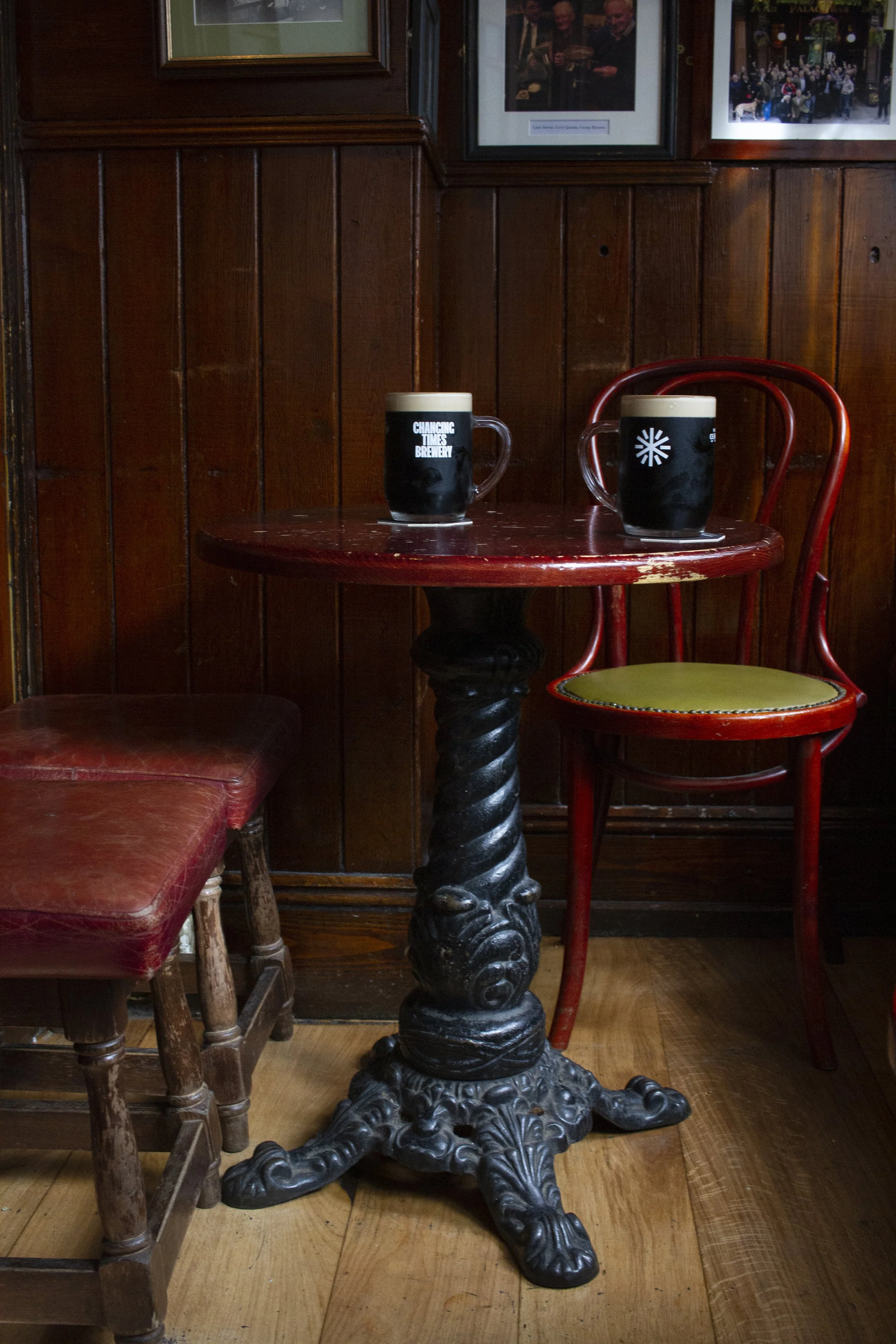
He sold Franciscan Well Brewery to Molson Coors in 2013, but stayed on as a consultant for 11 years, and still owns the pub where it all started. (Sadly, Molson Coors announced in November 2025 that it would shutter the brewery in early 2026.) Since leaving Franciscan Well, Shane has helped set up various independent breweries around Ireland, Dick Mack’s, Rising Sons, and Galway Hooker among them.
““It’s such an interesting kind of paradox that we have a uniquely Irish product, and yet the problem is, it’s not independent.””
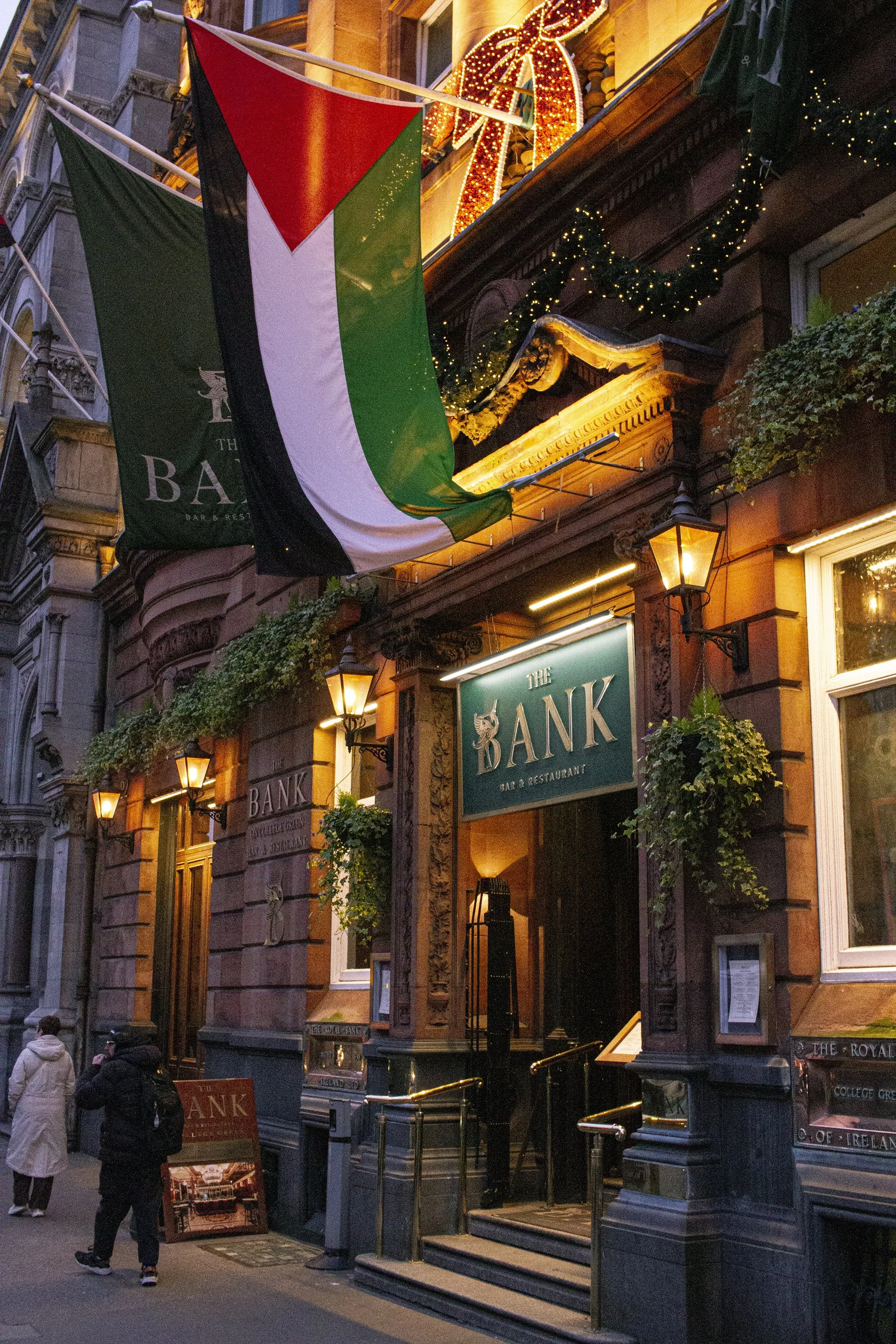
Shane says he was starting to think about retirement when Willie Aherne, owner of The Palace Bar in Dublin, and David Chawke, owner of The Bank on College Green—both of whom Shane was already well acquainted with—approached him with the idea to produce their own beer.
“The first thing I said to him was, ‘Don’t do it.’ It’s not easy. It’s very time-consuming, it’s expensive, you have to be at the top of your game all the time, and there’s no margin for error,” he tells me.
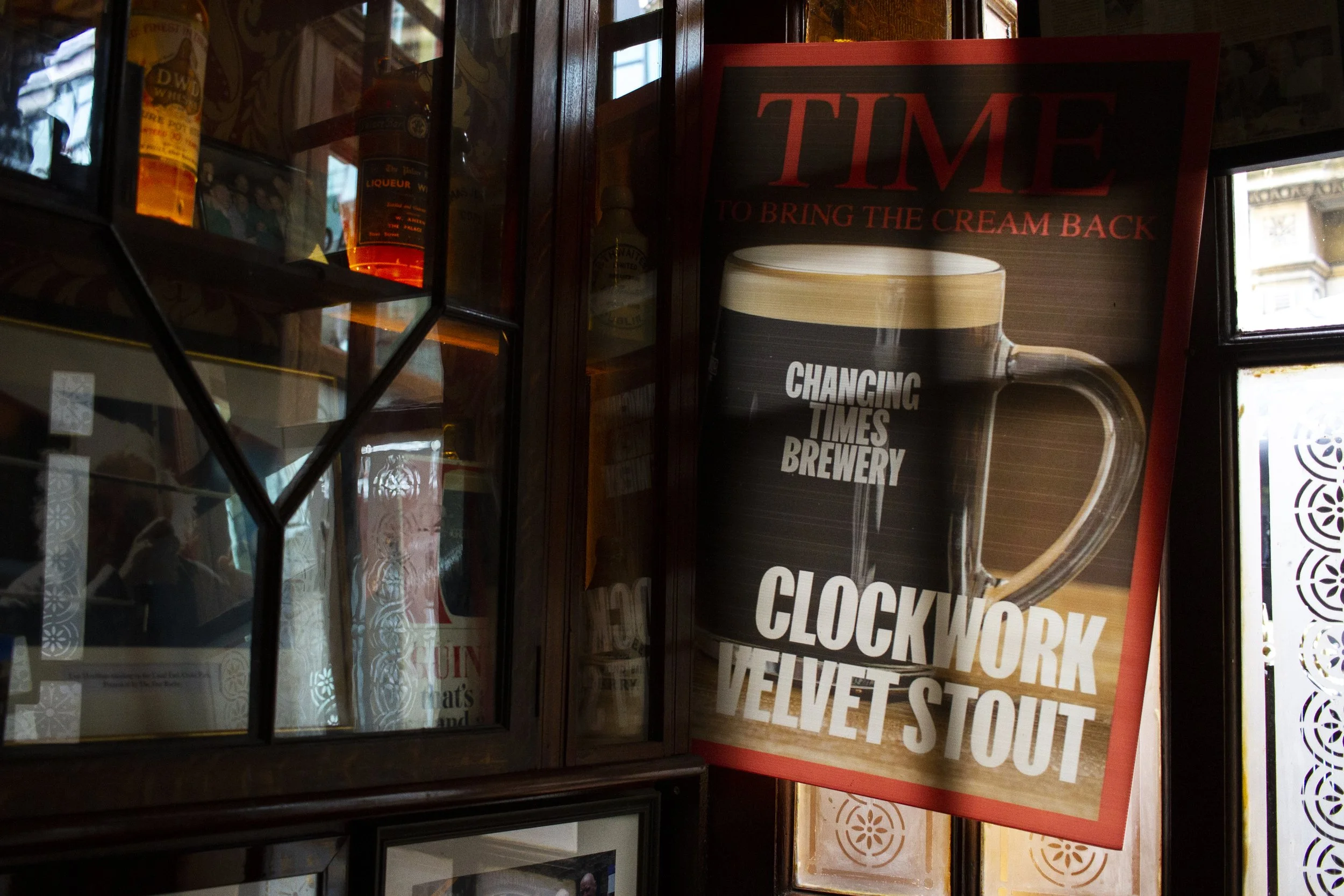
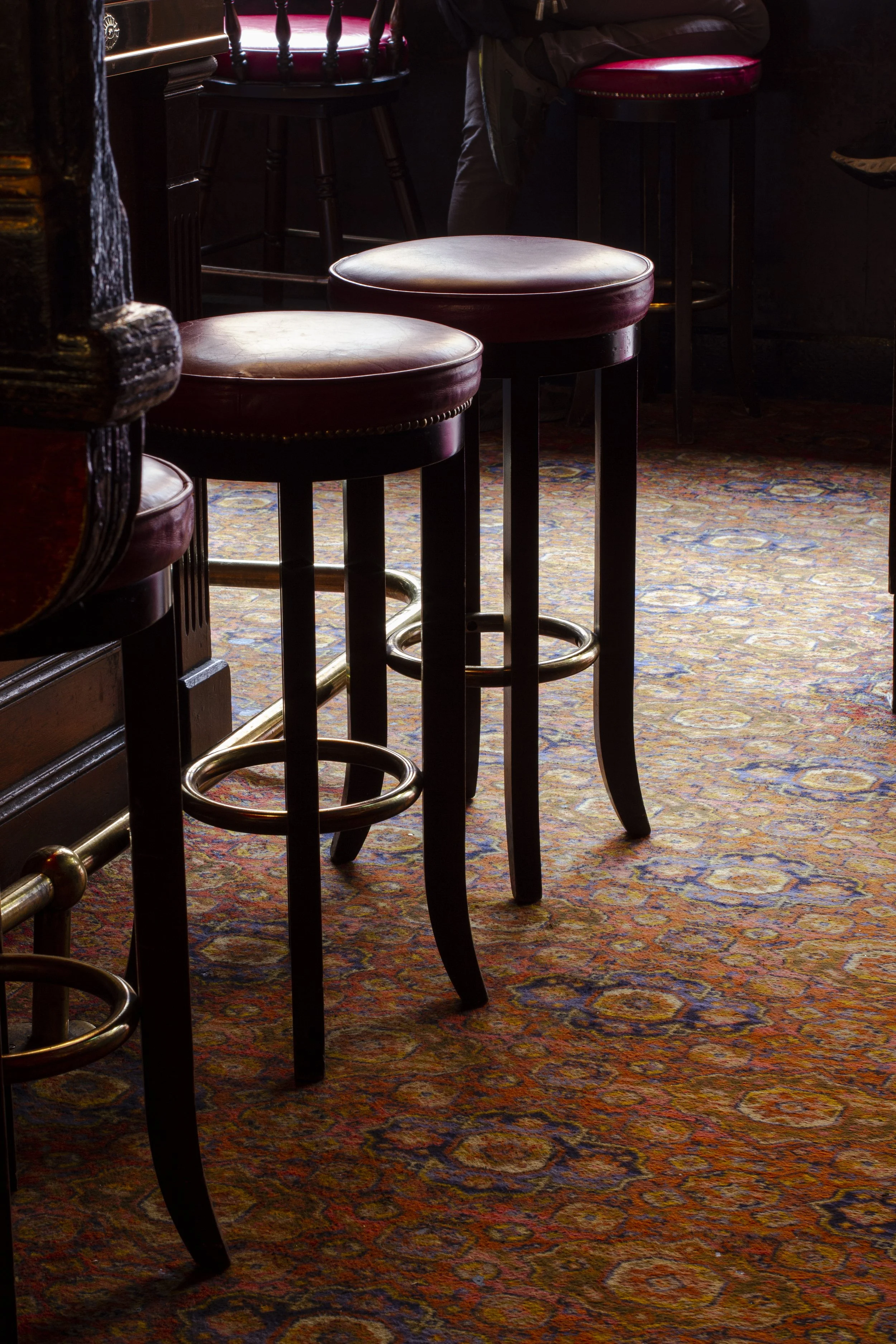
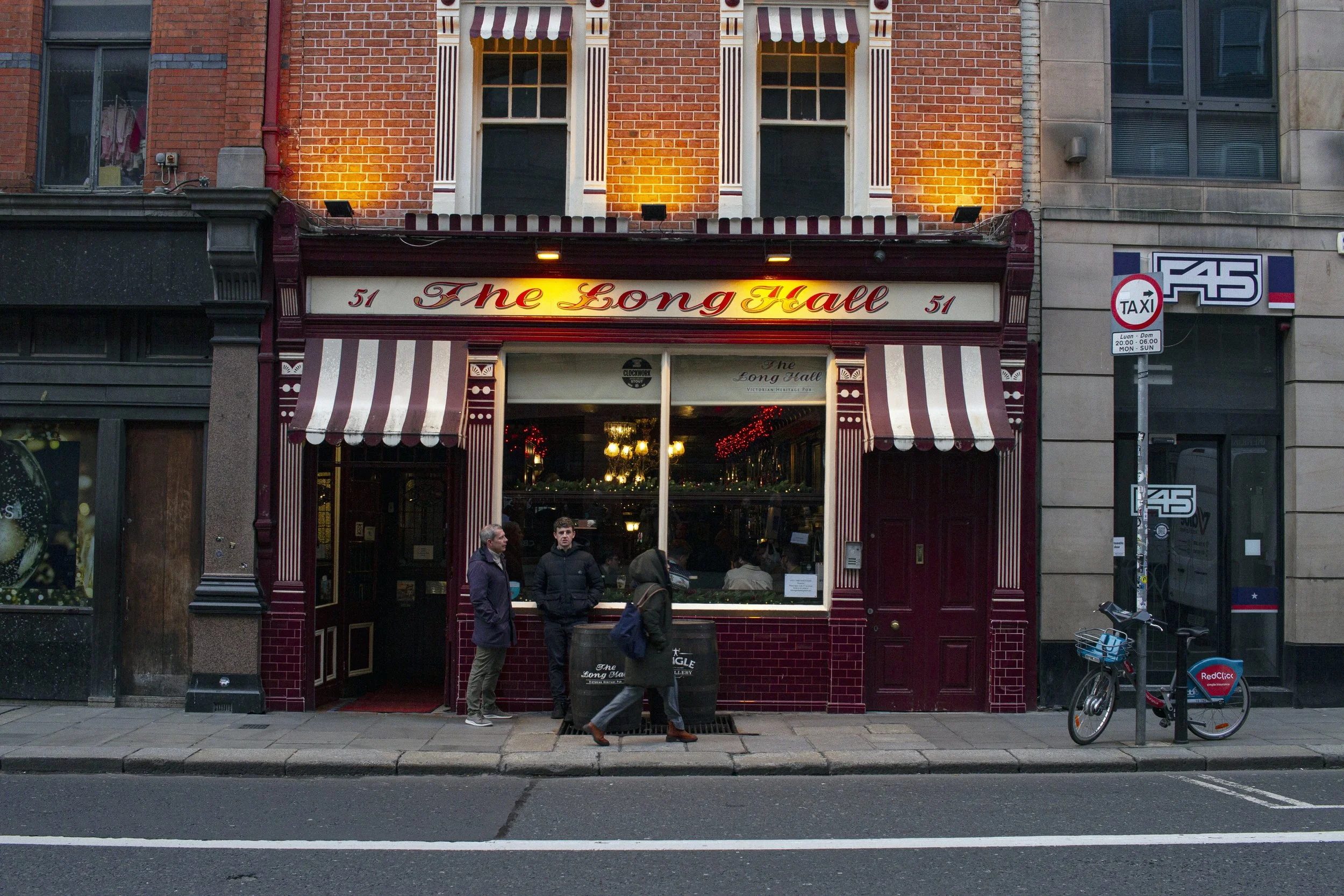
“They weren’t asking me to get involved, but to help them get set up,” Shane continues. “I said, ‘If it was me, I’d get a group of like-minded publicans together who are still in the trade, but don’t need to be, like yourselves [Willie and David], and when you’ve done that, come back to me.’ So they were back to me within a few weeks, and asked me to come to a meeting in The Palace. When I walked in, I was like, ‘Wow.’ I didn’t know these guys personally, but I knew them by reputation.”
“These guys” were the owners of The Bankers, McSorley’s of Ranelagh, The Bridge 1859, Devitts, Doheny & Nesbitt, The Swan, Sheehan’s, The Long Hall, The Ferryman, Lemon & Duke, The Blackrock, Darkey Kelly’s, The Sackville, Searsons of Baggot Street, and, of course, The Palace and The Bank on College Green. Together, they represent 16 of Dublin’s most iconic, historic, and best-loved pubs.
As Shane tells it, the group’s overwhelming feeling was that they were “tired of being told what the next big thing was, when that didn’t align with what they were hearing from their customers on the front line.” To unpick what this means, one needs to zoom out, and consider the big-picture politics of beer in Ireland.
***
In the U.K., “tying” a pub that’s ordinarily free of tie has historically involved offering tenants discounted rent, free stock, or funds to refurb the premises in exchange for exclusive access to its taps. Whether that pub’s landlord is a pub-owning business (POB) or a brewery, they usually decide what’s going on tap. In Ireland, there are no landlords or tenants, just publicans; that is, the person or people who own the business. A landlord owns the property and is responsible for maintaining its structure and safety, but has nothing to do with the business itself, or what it stocks.
While there’s no culture of tying pubs in Ireland, tying taps is common. This is an often obscure process, whereby pub and brewery come to an agreement—whether by written contract or more informal means—that gives a brewery exclusive access to a tap for a period of time, generally a year or two. Unofficially, and on a case-by-case basis, this access is paid for with rebates, free kegs at Christmas, fridges and other cooling equipment, branded umbrellas, or benches for outside seating areas.
Depending on how you look at this practice, it’s either a perfectly standard business decision or an arrangement that looks a bit more predatory. The conclusion you reach might depend on whether or not a pub can afford to say no to big beer.
Such incentives can have a real impact on businesses, especially in rural communities, and are often too good to refuse. For publicans, one downside is the stock they’re obliged to buy to keep the tied tap running is not always sold at a fixed price. Too many tied taps can also restrict a publican’s autonomy, and their ability to cater to patron requests and preferences.
““People don’t come to The Palace for a Heineken or Coors, they come to The Palace for the experience.””
Most small and independent producers—which operate on tight margins at the best of times—can’t compete in a pay-to-play environment, and so are only stocked in the pubs whose publicans actively choose to make such options available to their patrons.
“It’s very frustrating for the independents a lot of the time, because access to market is very difficult in the on-trade. But there’s no easy solution to it—the publicans have to survive too,” says Libby Carton, co-founder of Donegal’s Kinnegar Brewing and chair of trade body Independent Brewers of Ireland (IBI).
The practice of tying taps is not unique to Ireland. A version of it exists in multiple countries, including Norway, Portugal, Poland, Spain, Slovenia, Bulgaria—almost every beer market I’ve encountered. But what sets Ireland apart from other macro-dominated beer markets is that, as a nation, we’re besotted with, undyingly loyal to, and unanimously proud of an internationally owned brand.
“I think that Ireland has always been a bit different, because Guinness is such a different drink,” Libby tells me. “It comes up again and again that it would be great to have a green tap on every Irish bar, but we do have a green tap on every Irish bar. It’s called Guinness. It’s such an interesting kind of paradox that we have a uniquely Irish product, and yet the problem is, it’s not independent. It’s a really difficult one.”
Just over 100 years ago, in 1916, Guinness had the largest output of any brewery in the world, and single-handedly produced more than two thirds of all beer brewed in Ireland. Guinness is a part of our history and economy, and it’s what we’re known for on the world stage; is it any surprise, then, that the beer and brewery is a national treasure? Part of me wonders if our demonstrated capacity for brand loyalty is what caught the attention of Guinness’ now-parent company, Diageo, plus Heineken and other multinationals.
***
The first time I spoke to Shane, he quickly and very clearly asserted that Changing Times is not a craft brewery, but an independent brewery. In the U.K., the difference beween the two terms has been heavily debated, largely due to multinationals co-opting “craft” brands and styles to sell mass-produced beer.
Where it was once assumed that craft breweries were also independent, many argue that the original ethos of “craft”—drinking local and fresh—is now best upheld by the “independent” label. In the divorce, a lot of modern independent breweries also seem to have shed associations with the high-ABV, adjunct-heavy, hopped-to-the-nines styles that are still challenging to many palates.
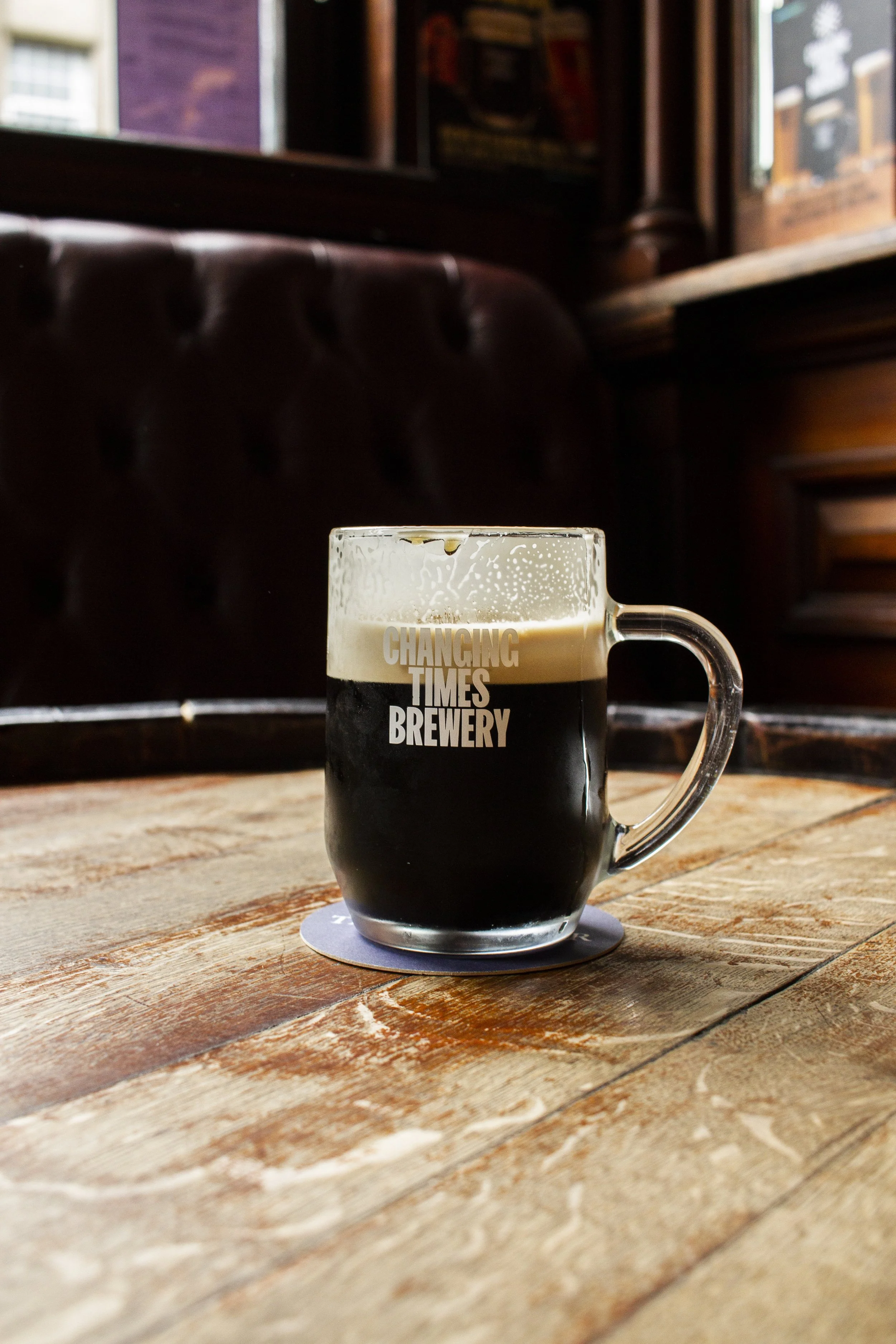
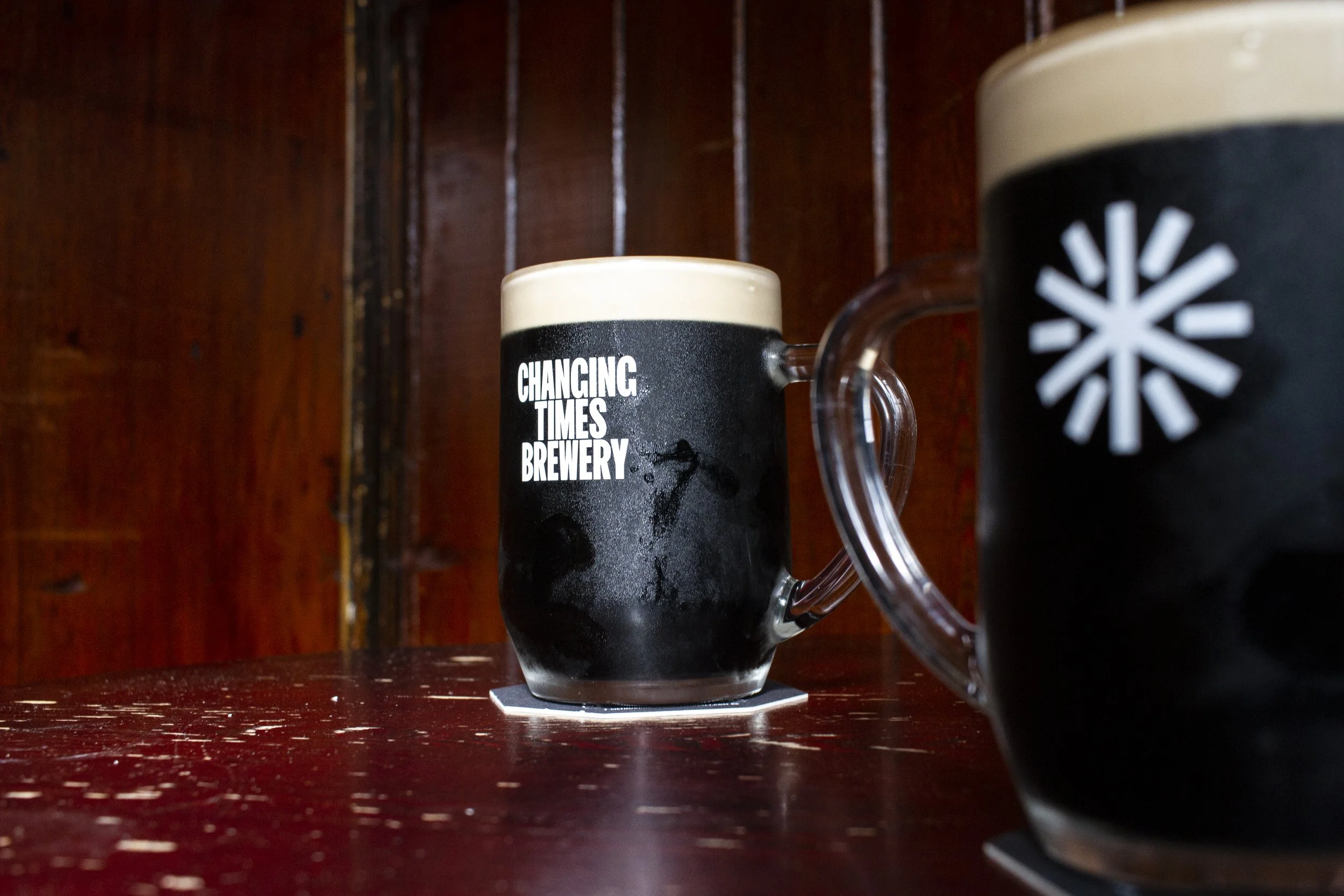
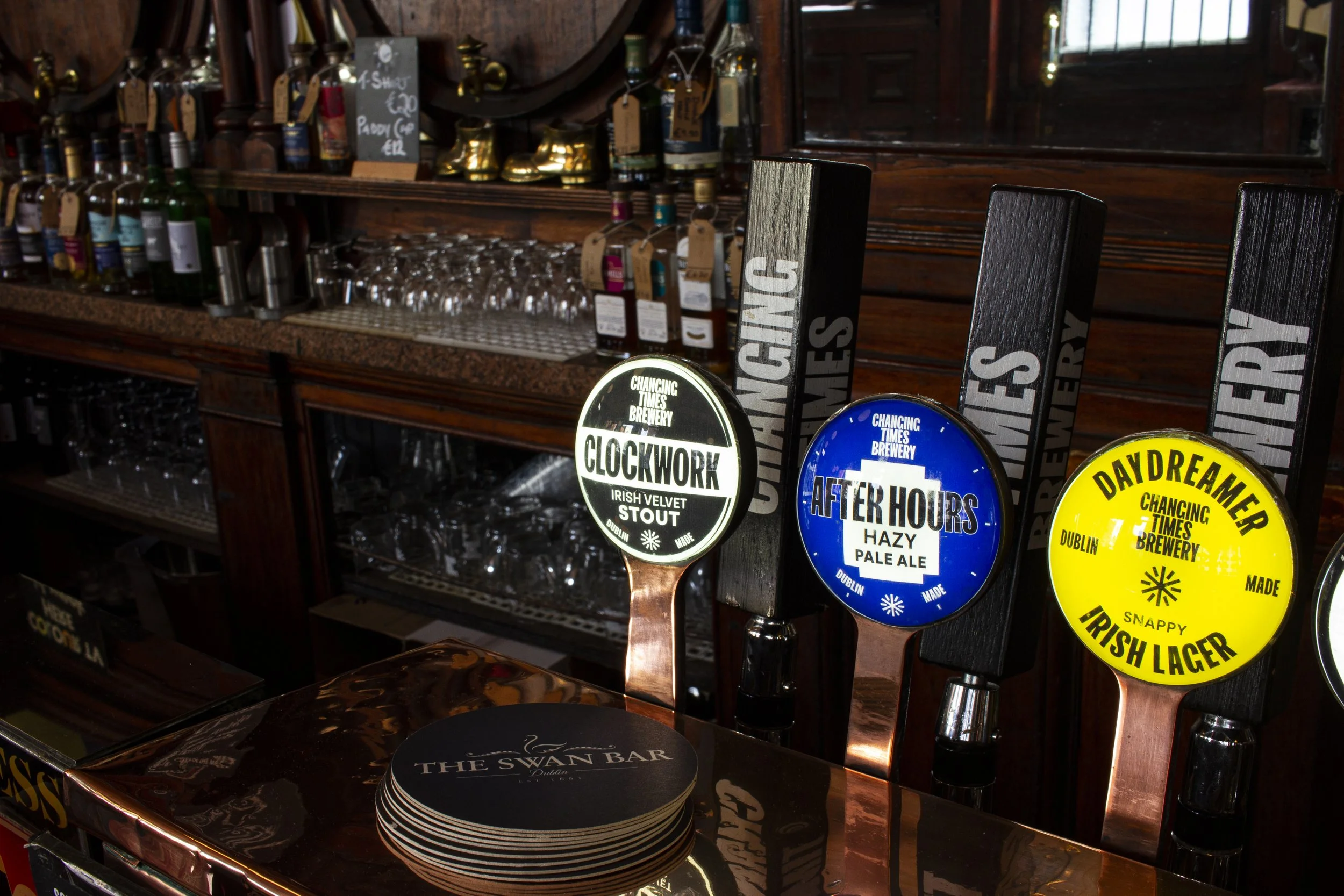
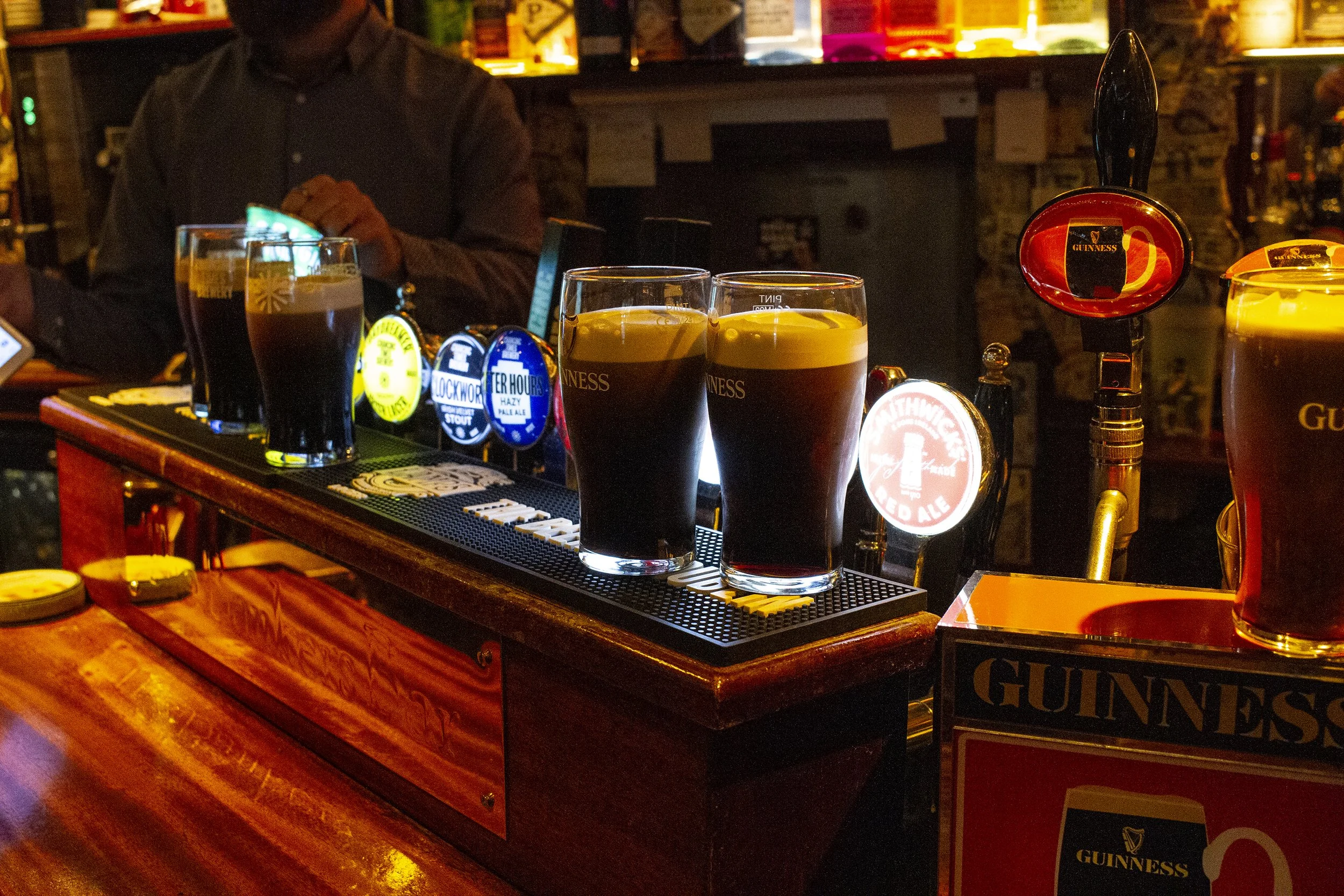
Accessibility is a huge part of Changing Times’ offering, which comprises fresh, approachable, and sessionable classics. Clockwork is a clean, dry, “velvet” stout with deep roasted notes that can be dug into and explored, but doesn’t demand attention. After Hours, a hazy pale ale, enjoys a similar quiet confidence, with a refreshing, sessionable body; gentle, balanced bitterness; and a citrus and stone-fruit aroma. Daydreamer lager is malt-forward, yet light, crisp, and lip-smackingly fresh. With an ambitious and technically oriented brew team behind the beer, it’s little surprise that these beers so effectively hit the mark.
The Glasnevin-based brewery, which opened its doors in October 2024, can currently produce 30,000 hl per year on its fully automated, four-vessel brewhouse. And while it’s still young, the brewery is guided and informed by several centuries of collective experience, thanks to insights from Shane, P. J. Rigney (the founder of The Shed Distillery and chairman of the Changing Times board), and the 16 pubs backing it. However, at the heart of Changing Times is the perspective of the publicans, and their ability to cater to the tastes of their patrons.
***
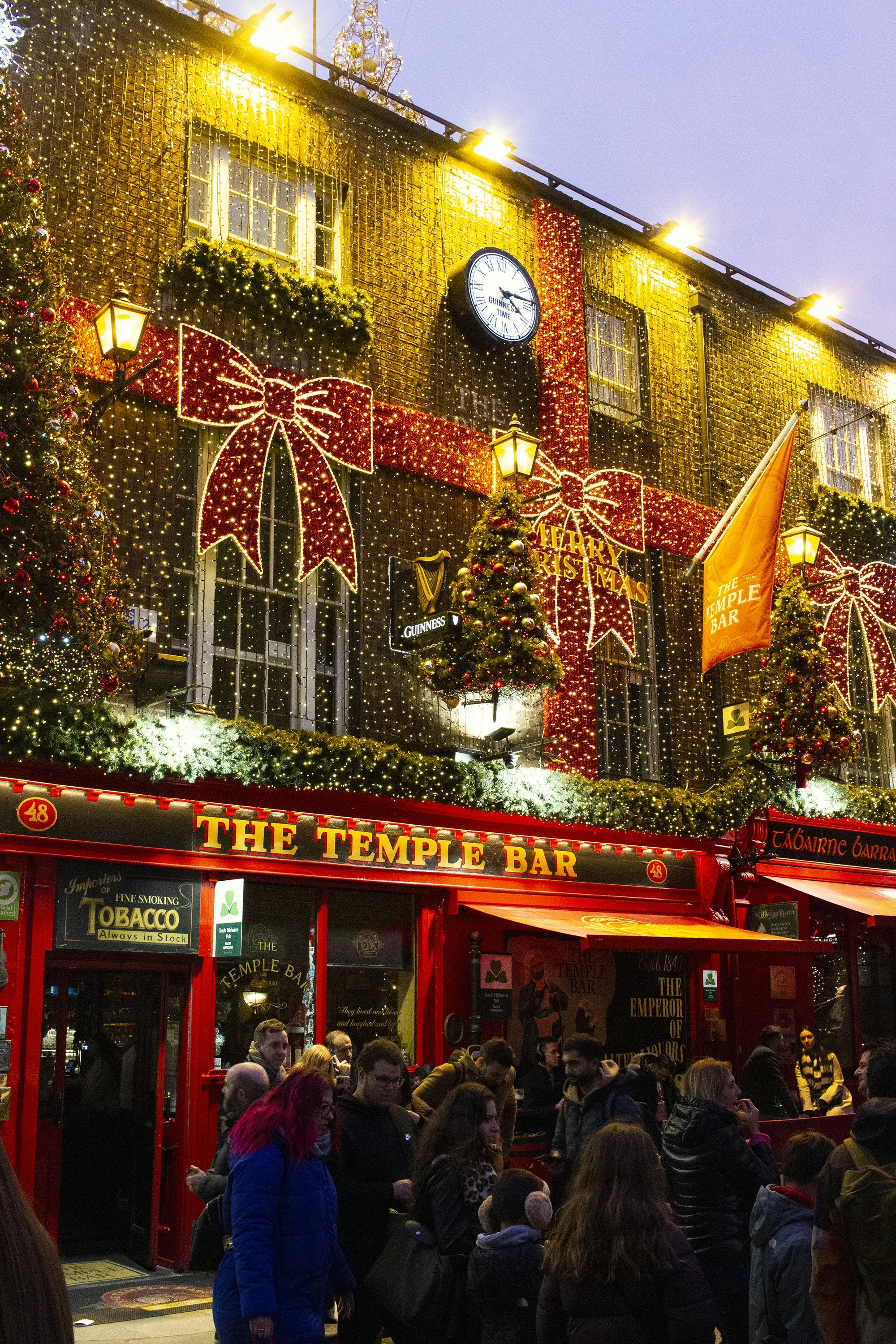
“You never know what’s going on behind closed doors,” says Willie Aherne—owner of The Palace Bar on Fleet Street in Dublin’s Temple Bar—on the subject of tied lines. “At the end of the day, you’ve to run your businesses how you see fit, and you want to pay your family’s bills and put dinner on the table, and I’m very conscious of that. Getting 30 barrels at a discount or for free can do wonders, and help you pay for your furniture and all that stuff.”
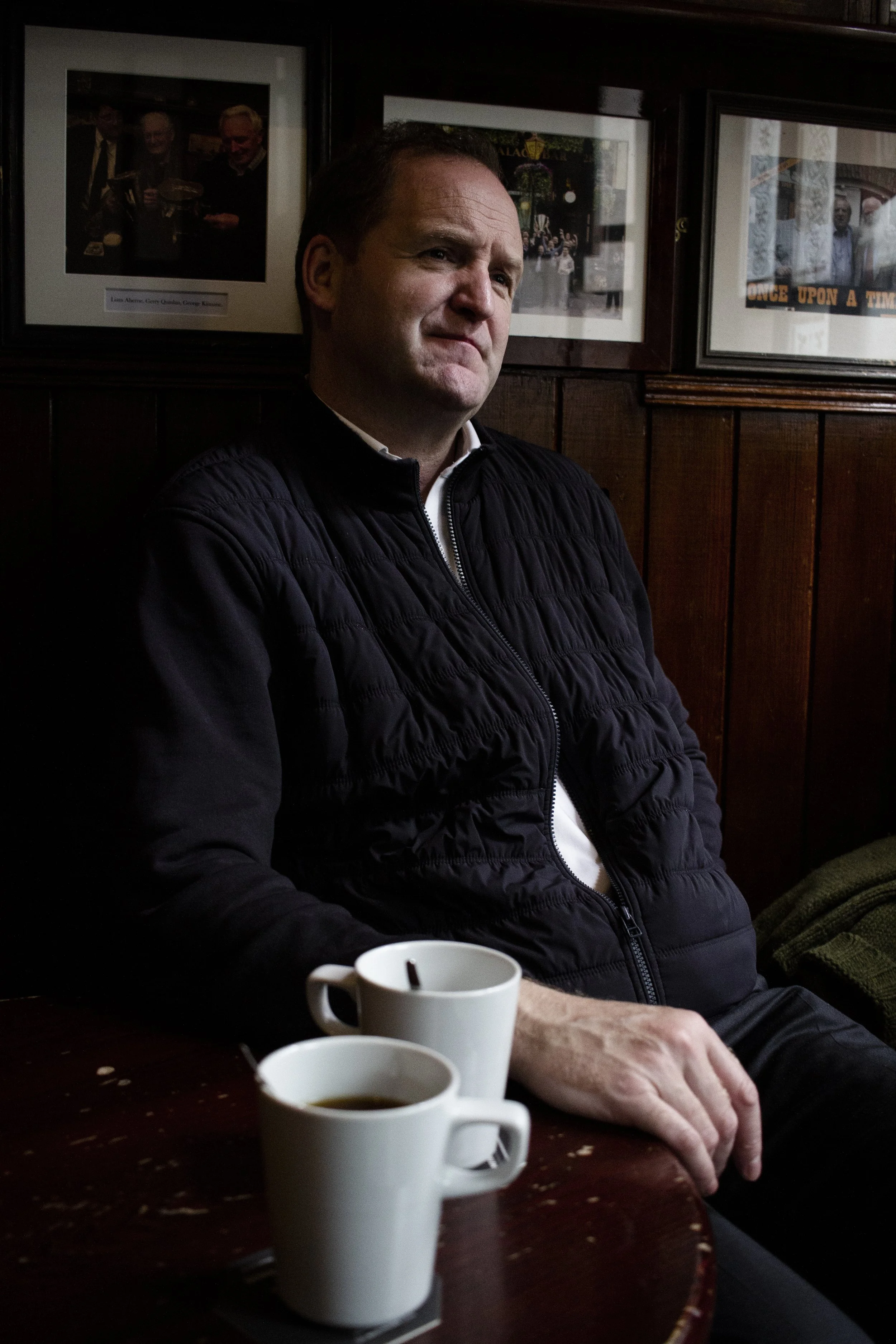
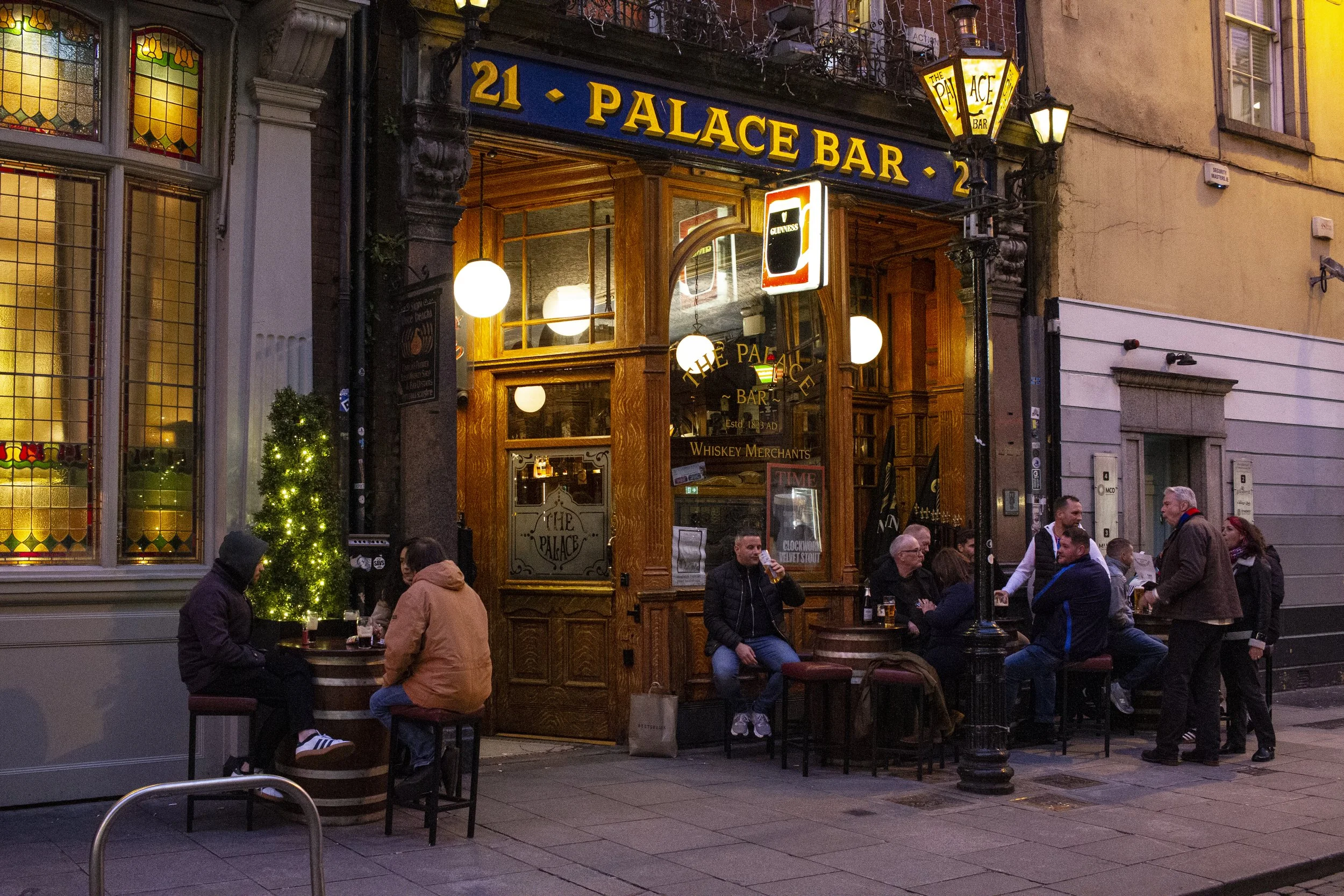
We’re drinking tea in the snug next to the bar. Like the rest of The Palace, it has retained all the original oak and mahogany characteristics of a traditional Victorian pub in Dublin. Willie is a calm, considered man, and emanates both a deep-rooted pride in The Palace and the sense that he is merely the current custodian of this cultural institution.
Willie is the third generation of Ahernes to own The Palace, though this pub has been a fixture of Dublin’s Fleet Street for more than 200 years, long before Willie’s grandfather, Bill, took the reins. A stone’s throw from The Irish Times’ old offices on D’Olier Street, and the former Irish Parliament building on College Green, this snug has seen centuries of stories shared, deals struck, and governments change. Willie’s father, Liam, was born and grew up in the rooms right above it.
“It’s the family business, but it’s a beautiful aul’ Dublin institution of a pub,” Willie says. “They don’t make them like this anymore, and I’m very privileged for our family to be here. I always try to work, over the years, on the little percentage enhancements to the place, whether it’s treating The Palace to a lovely new whiskey mirror, releasing our own whiskey over the years. You know, I always think that people don’t come to The Palace for a Heineken or Coors—they come to The Palace for the experience.”
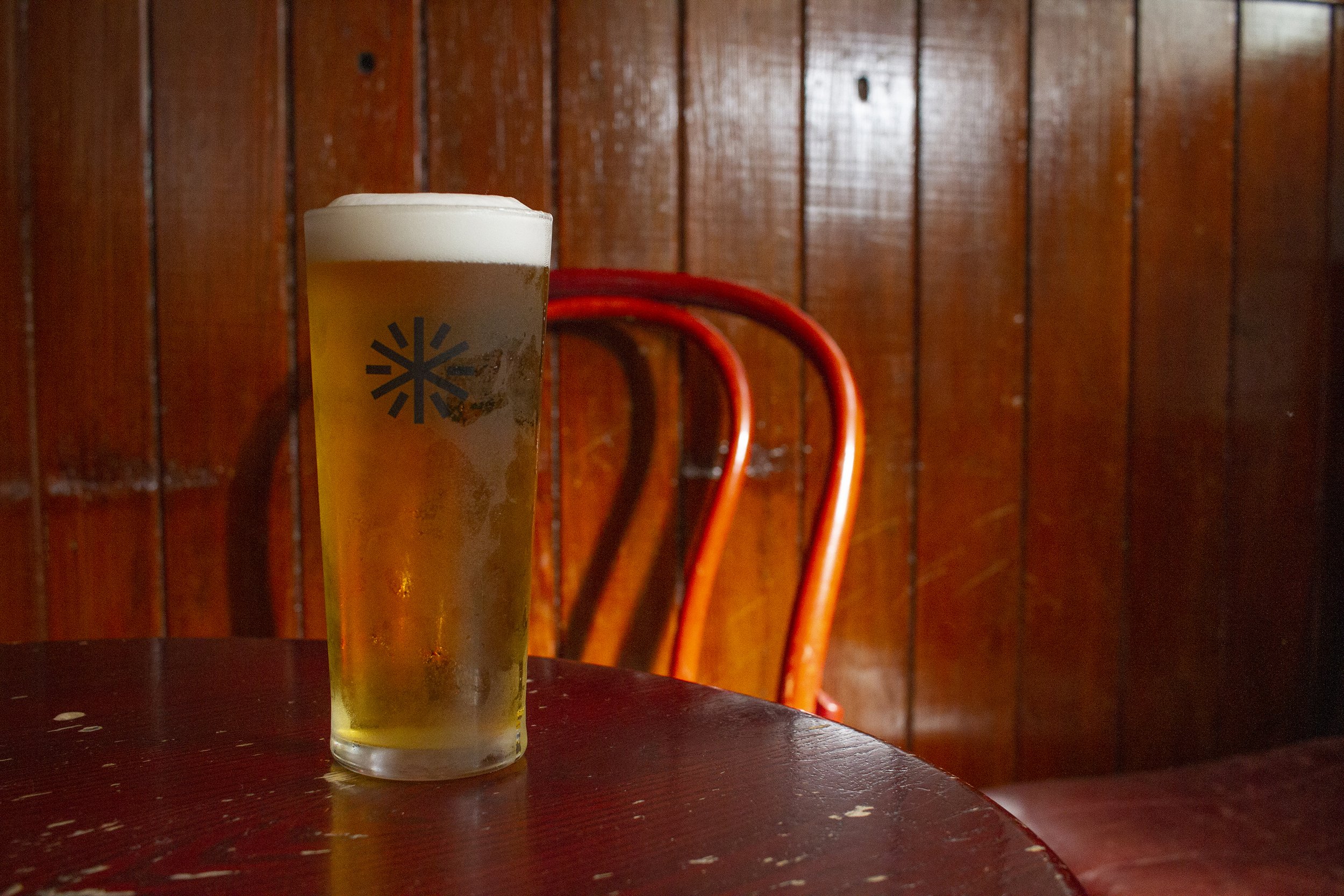
Willie is very clear that he’ll continue to stock international brands alongside Changing Times’ beer for as long as The Palace’s patrons are asking for them. Changing Times is not a campaign against big beer, but a way for participating houses to enjoy more control over their counters, and “be masters of our own destiny,” as Willie puts it. “We were very much at the beck and call of the big boys and, you know, we just felt we had to do something different. The customer wanted a change, rather than to see your mainstream beer in every bar like ours. I think it’s important to shake things up, do something new and bring a personal touch to it all.”
““If you walk into most bars in Ireland, there’s very little choice, and that’s kind of disturbing given we do have such a great brewing tradition in this country.””
Over the years, the number of craft and independent taps on The Palace’s bar has waxed and waned in response to the needs of the bar and its customers. But it has always carried some kind of independent presence, whether on tap or in the fridges. Willie speaks highly of Rye River, Kinnegar, Rascals, and The White Hag as independent Irish breweries that have featured in The Palace’s offering at one point or another. However, he also notes that overtly craft options haven’t always connected with The Palace’s patrons—in other words, mainstream drinkers—and as such have been difficult to sell.
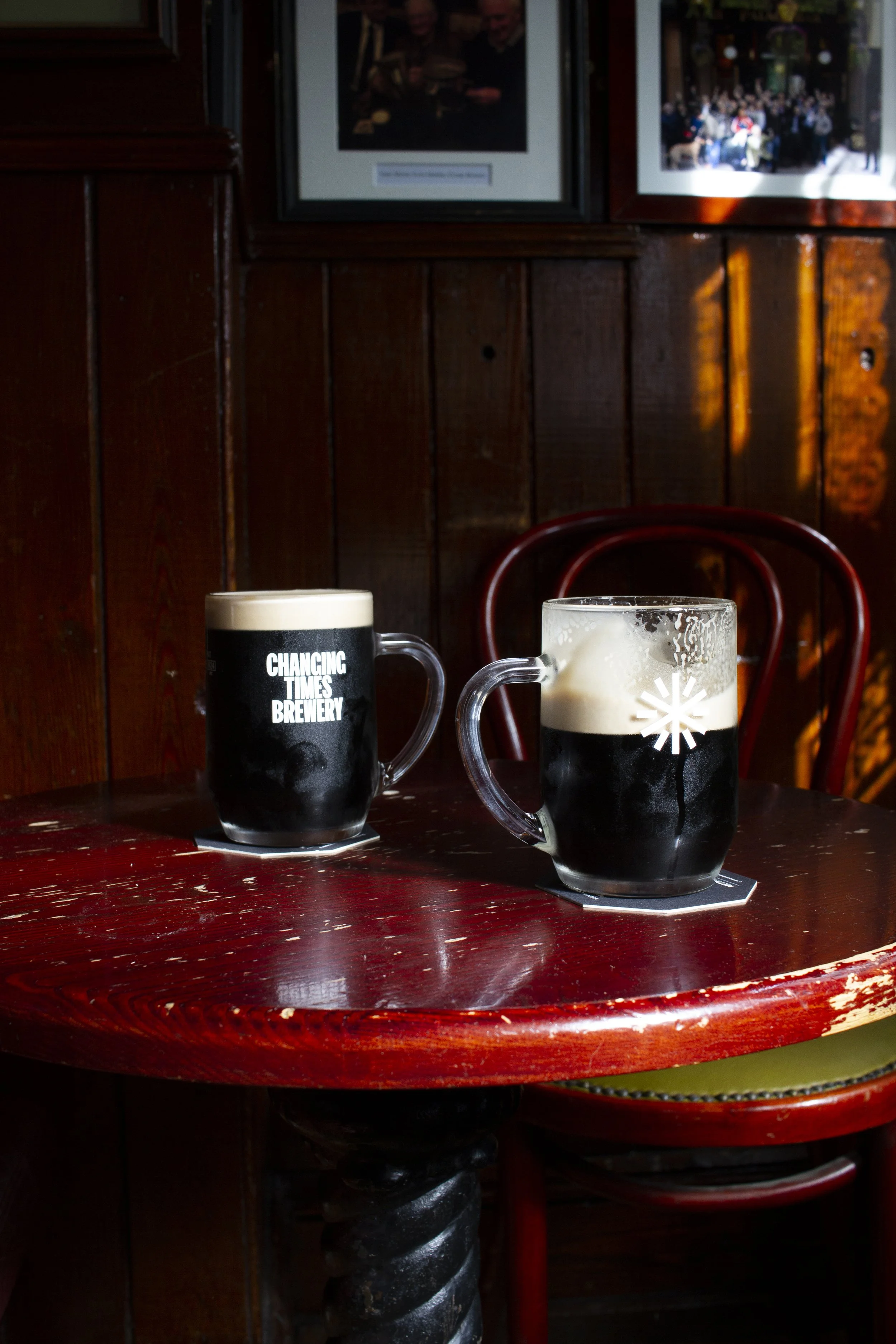
“Some people might think it’s cheaper for us to have our own beer on tap, but that’s not the case,” Willie says. “Changing Times has €2 million (£1.76 million) investment behind it, and that comes equally from the pubs. We’re taking a long-term view with this thing, and you know, there are no deals coming from that. Doing some simple maths, we could sell three or four kegs [of a multinational beer] and get one for free. There’s nothing like that coming from selling our own beer, but we felt we had to take a stand. We came to the stage, not too long ago, where within an 18-month period we saw four price hikes [from the same multinational].”
Willie tells me that, after the fourth increase, he didn’t renew this company’s contract, instead giving The Palace’s taps to its main multinational competitor. But playing conglomerates off one another didn’t feel like it was achieving anything. Willie wanted to sell beer that told the story of his pub, of Dublin pubs, and which reflected local tastes.
***
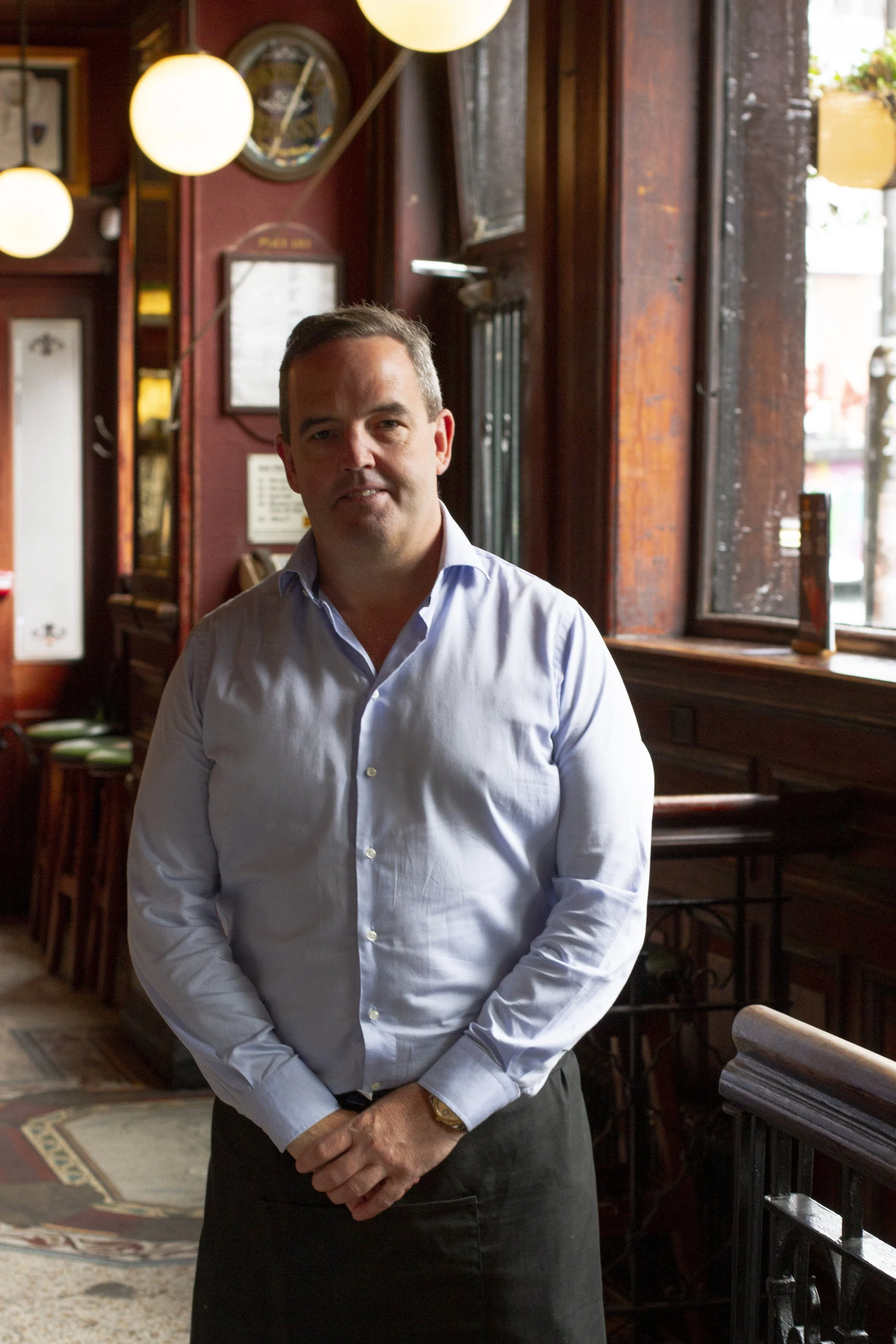
Discussion of what customers are asking for continues down the road in The Swan Bar on York Street. Owner Ronan Lynch kindly agrees to meet before the pub opens, welcoming me out of the rain and into the empty bar with the warmth of an old friend. He asks if I’d like a coffee, and if so, what kind. I ask for an espresso. “You’ve picked up some notions over there in the U.K., espresso!” he says. It feels like an embrace.
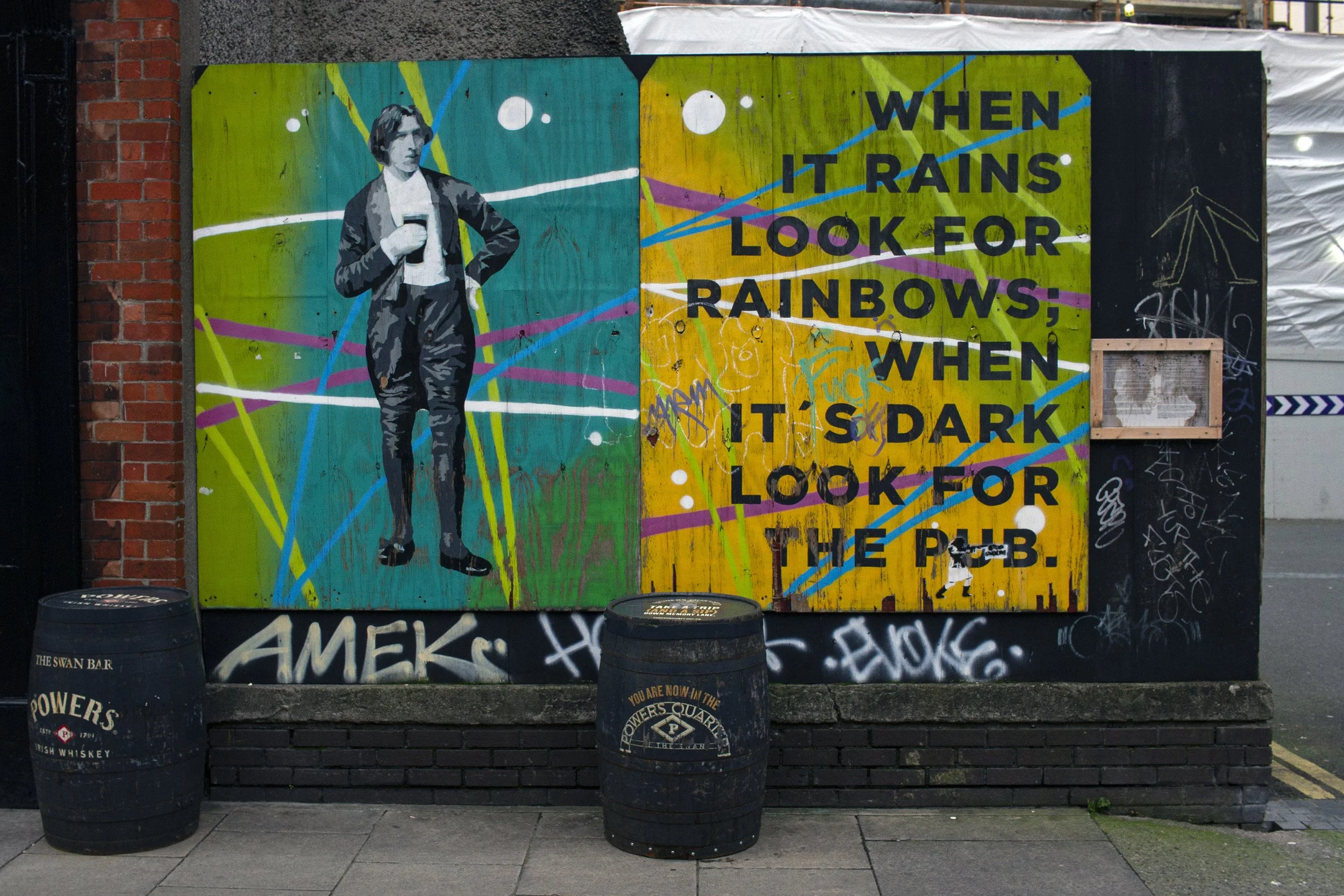
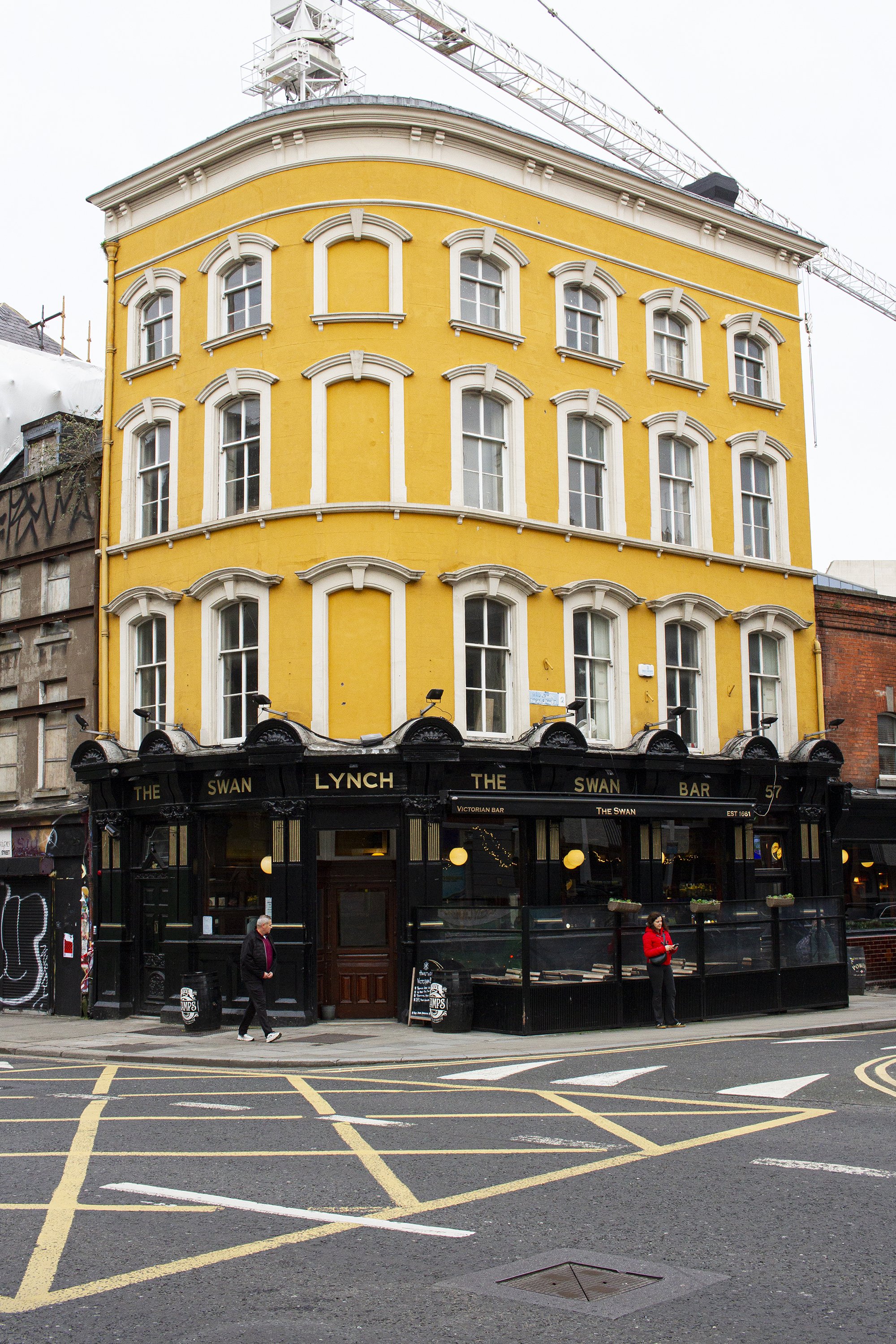
“In 1922, this building was the last place that was held by the anti-treaty forces in Dublin,” Ronan tells me as he makes the coffee. “There was a machine gun up on the old Jacob’s Biscuit Factory [on nearby Bishop’s Street], and a machine gun on top of Fanagan’s [funeral directors, across the road], and no one was budging.
“The man in charge of the pub at the time was a guy called John Marr, and he was strongly Republican. He said anti-treaty forces could stay in the pub, block it up, as long as they paid for their drink. And then, sure Michael Collins sent an armoured vehicle over, blew the front out of the place, and everyone got out, but they were there for a couple of weeks!”
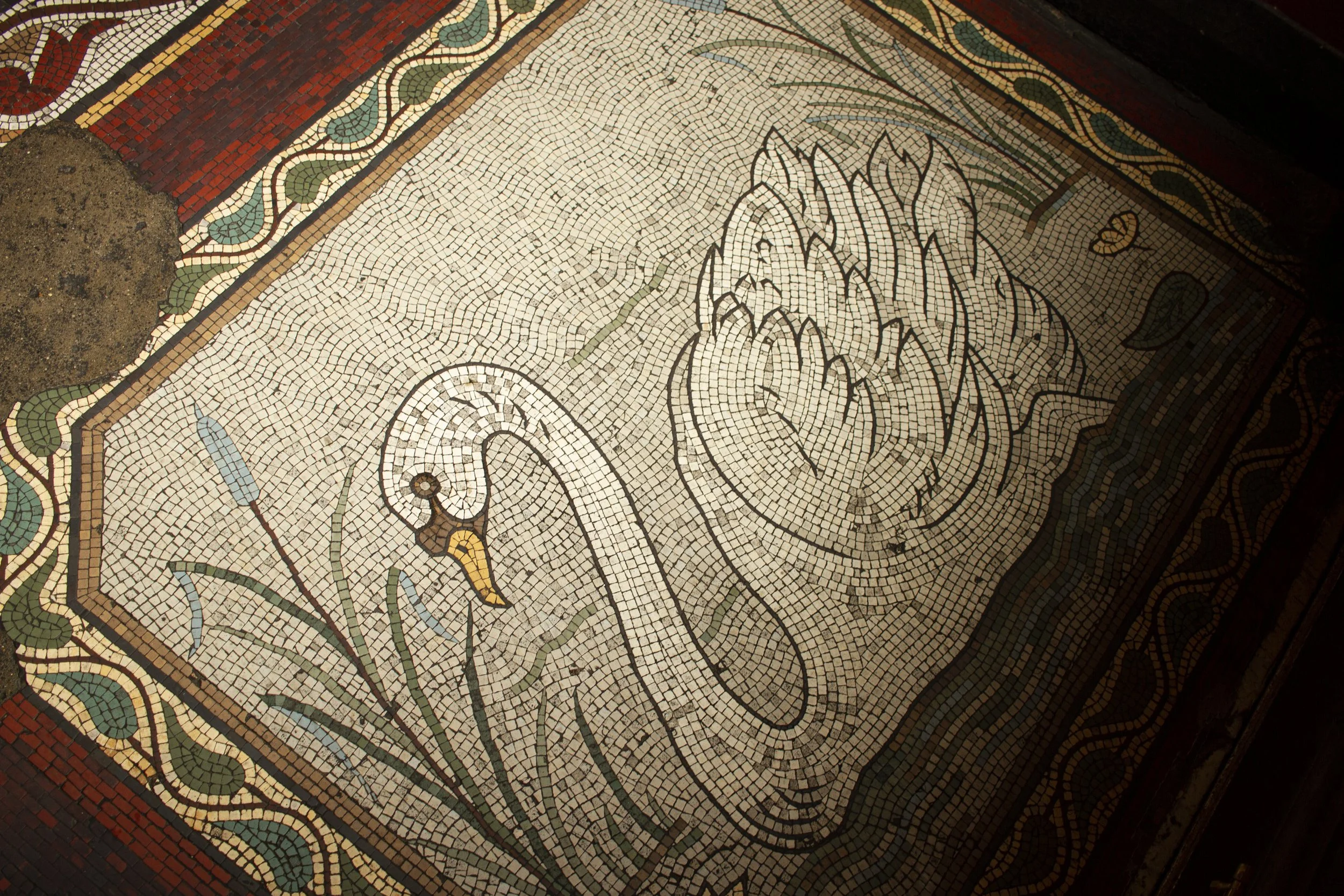
Ronan worked with local historian Eamonn Casey to uncover the history of The Swan when he bought it from his father. His family is now in its 89th year of custodianship, but the building has been a licensed pub since 1661. Considering the historical significance and family pride fuelling The Swan, it’s understandable that Ronan is protective of his counter.
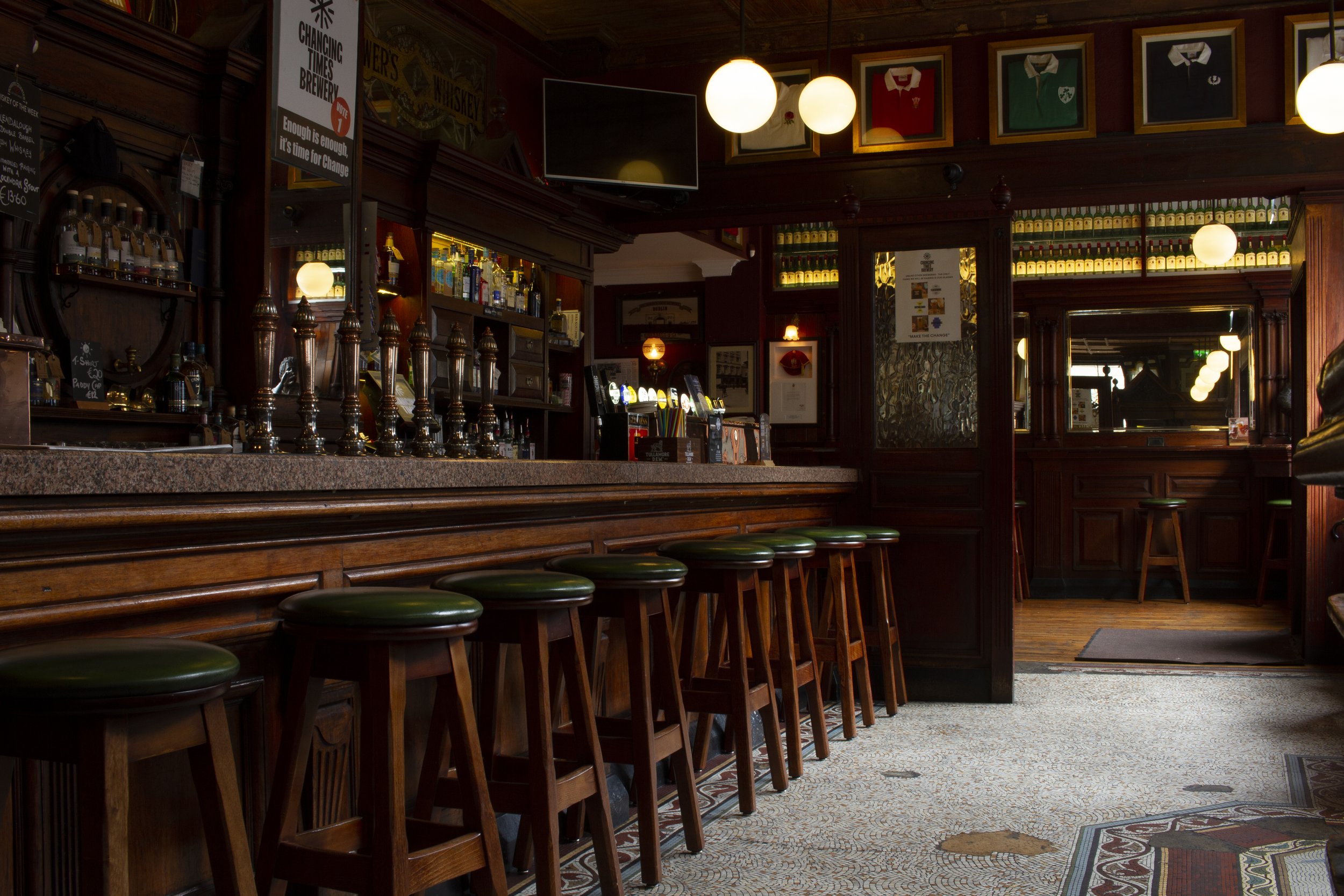
Ronan respects his patrons’ preferences, but also looks beyond them to consider the overall health of the Irish beer market. “If you walk into most bars in Ireland, there’s very little choice, and that’s kind of disturbing given we do have such a great brewing tradition in this country,” he says. “But if you look at a breakdown of your stats and three or four brands are keeping 80–90% of your customers happy, you have to concern yourself.”
I ask Ronan what his customers were asking for that wasn’t on offer before Changing Times plugged the gap. “For one, people were steering away from the stronger stuff, and looking for something sessionable that they could drink three or four pints of,” he says. “Three pints of some IPAs and you’d be jumping through windows. Then, from our perspective, if you walk into an Irish pub, there needs to be Irish products on the bar. Irish people are very brand-loyal, but they will migrate, so making variety available is important. All in all, that consistent, mainstream space is where we, as Changing Times, pitched up.”
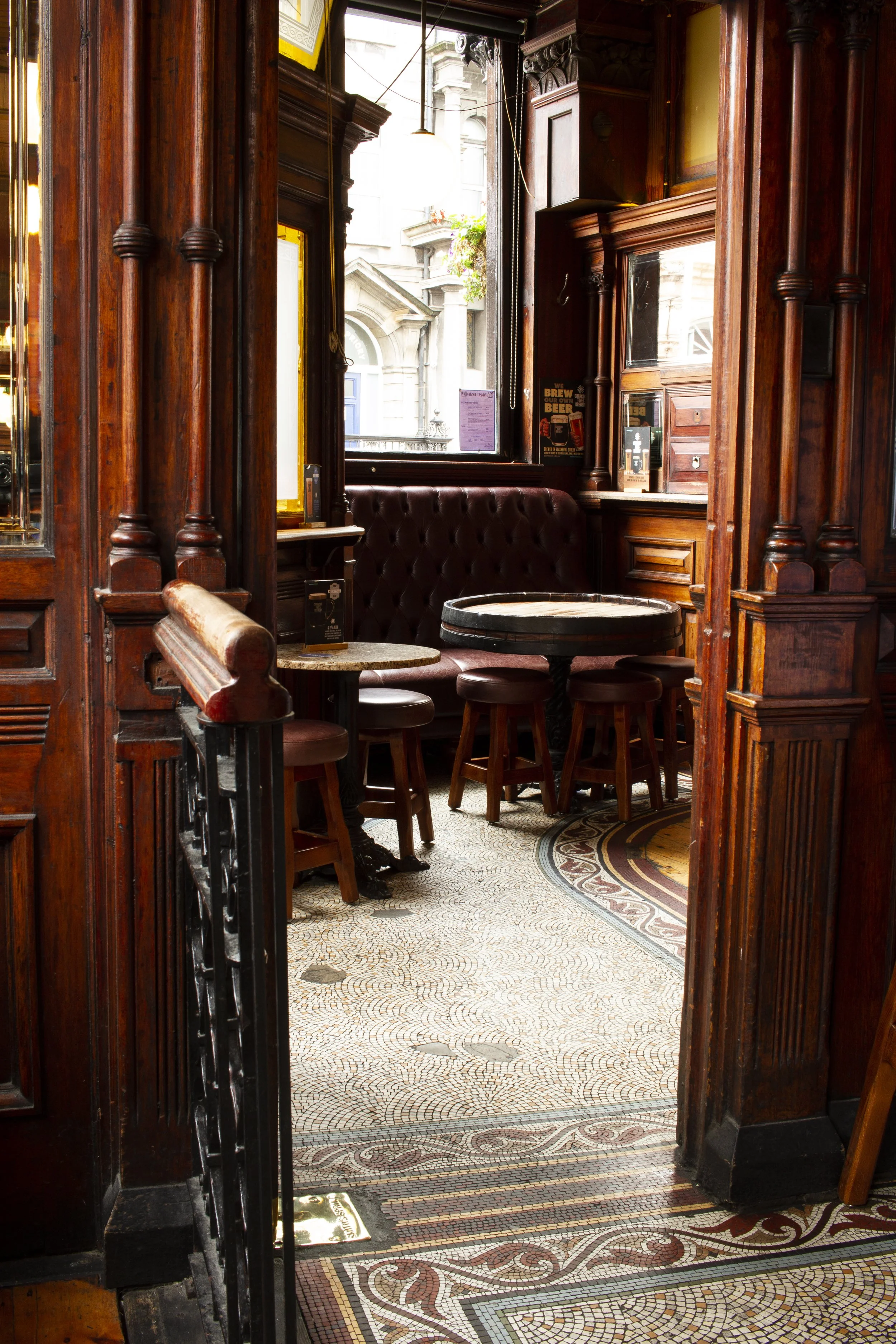
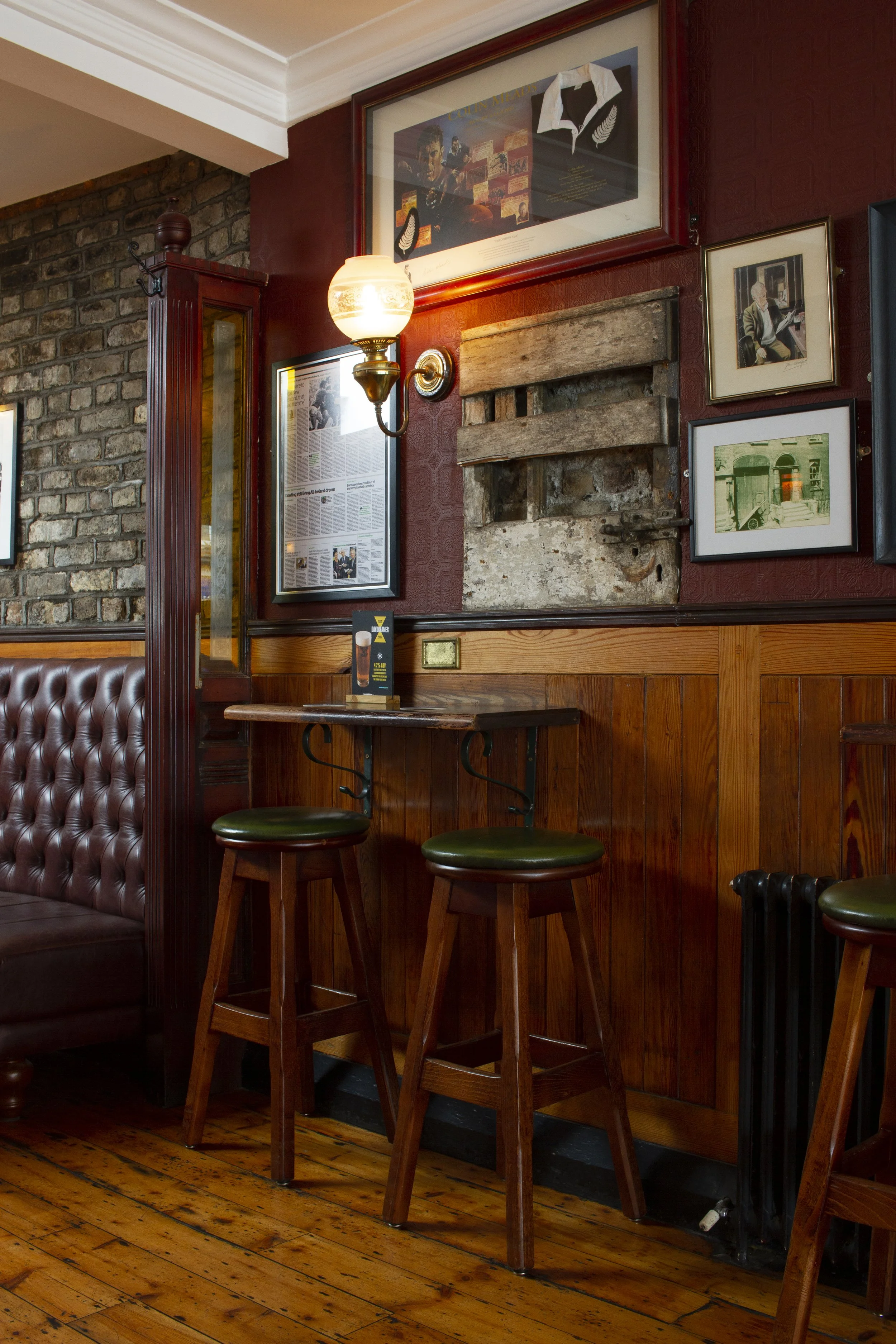
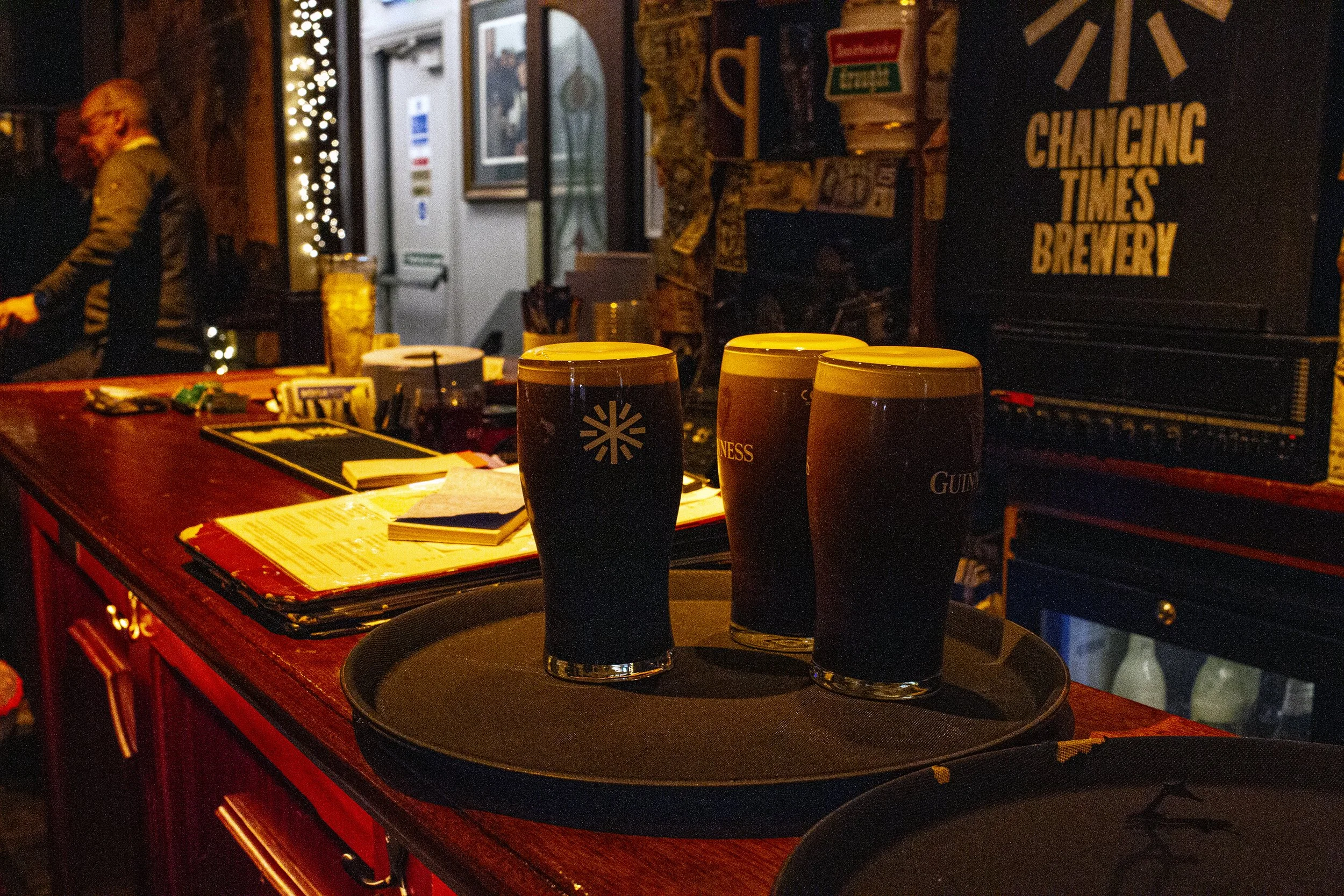
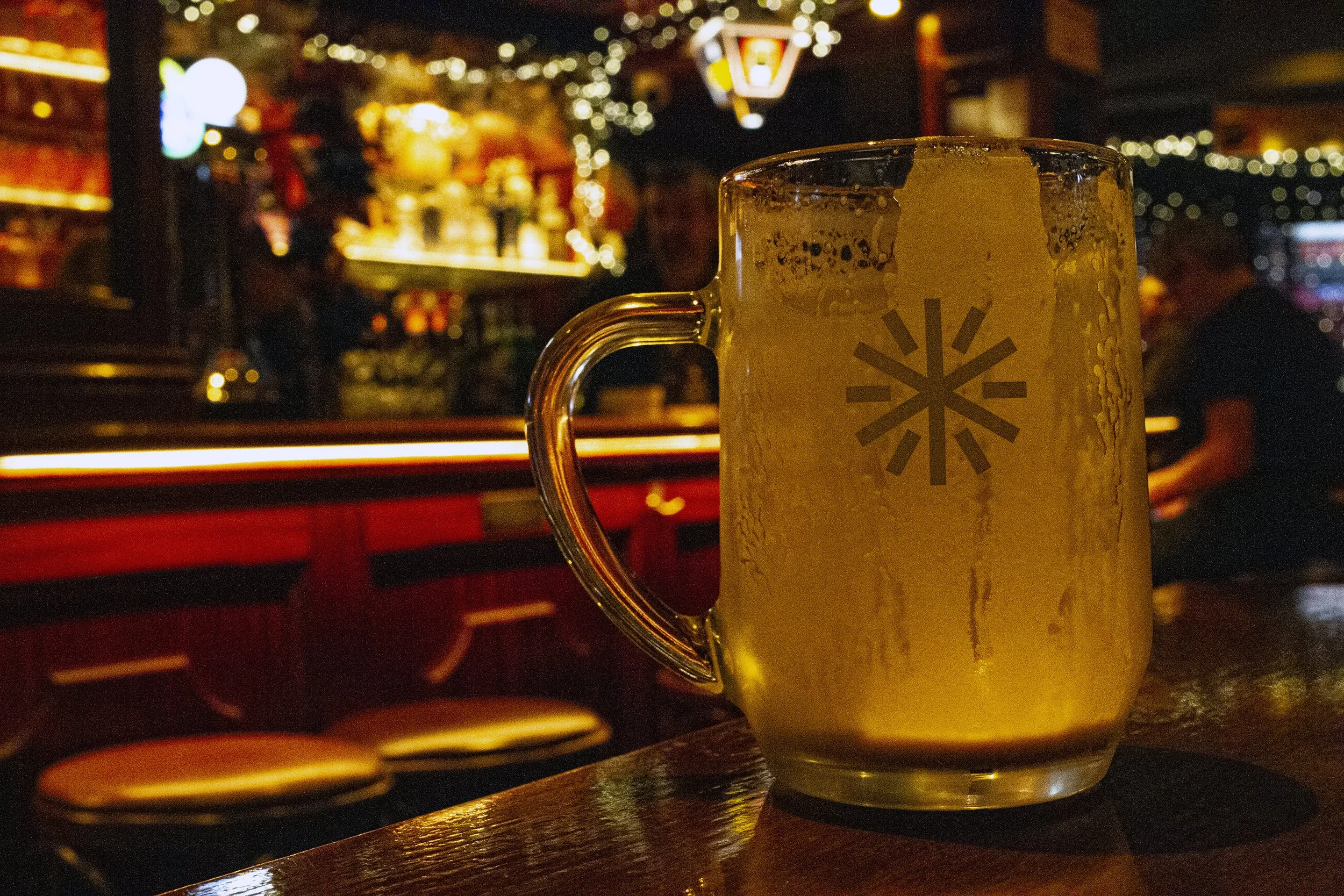
Part of the reason I decide to visit Dublin and speak to Willie and Ronan in person, instead of over the phone, is so I can see for myself who’s ordering what, and the presence Changing Times maintains in the pubs behind it. As Ronan and I chat, the pub opens and a regular comes in on the dot. He’s an aul’ fella who takes a seat at the bar with the paper. To make a sweeping set of generalisations, he looks like any man in my family who wouldn’t be found in a pub less traditional than The Swan, and who definitely wouldn’t stray from their usual. I expect him to order a Guinness, but instead he takes a Clockwork.
Faced with the choice between Guinness and an independent stout in another bar, and I’m unsure whether a gentleman such as him would have made the same choice; instinct tells me it’s trust in The Swan that lends credibility to the Clockwork tap, and it’s the quality of the beer that keeps drinkers coming back for more. Earlier on, in my conversation with Willie, he mentioned that Guinness drinkers who swap over to Clockwork one week might be back on the Black Stuff the next, and continue to flit between the two. While this might sound like non-linear progress, in a market of life-long, brand-loyal, mainstream drinkers, even this kind of change is a remarkable achievement.
If publicans need strength in numbers to advocate for more variety on Irish bars, then it feels like they’ll find no better ally than Ireland’s independent producers. There’s no getting around the fact that independents have lost access to the taps where Changing Times beer is now pouring. Perhaps it’s naive or quixotic, but I can see that, with time, the common goals of Irish publicans and artisanal producers have the potential to drive long-lasting and meaningful change.


“There’s definitely a greater proportion of the population now aware of the fact that there can and should be variety when you go out for a drink, whether you decide to take up the option or not,” Libby says. “It’s a very small percentage, but there’s a widespread understanding of the fact that the independents are part of the sector now … and the quality of independent beers in Ireland has gone up phenomenally over the last 15 years.”