
The Sun Washes Her Face — The Georgian Women of Wine
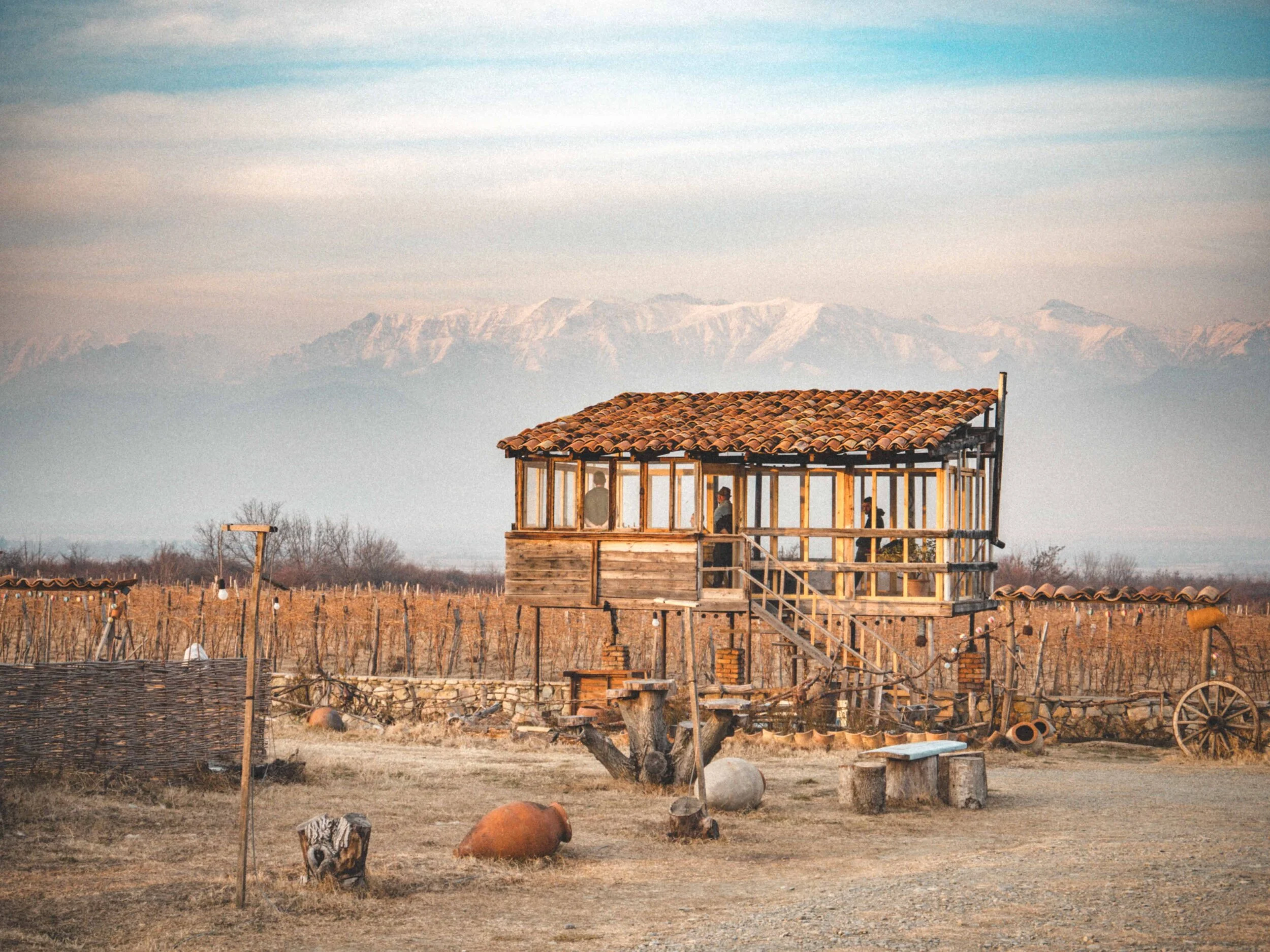
In Imereti, western Georgia, grapevines trail through the gardens that cover the foothills of the imposing Lesser Caucasus mountains. Moss-covered qvevri—traditional clay fermenting vessels, usually buried underground—litter the roadside, reliable indicators of nearby vineyards. Here, you are surrounded by wine before you take your first sip.




Georgian winemaking is still emerging from under the shadow of the U.S.S.R. During Stalin’s rule, vineyards were shredded for collectivisation, and even grubbed up for tea plantations. Wine factories, such as Tbilvino in Tbilisi or Telavi in Kakheti, churned out industrial volumes of poor-quality wine that most Georgians would never drink. Instead, many made wine in secret, to drink at home and to sell on the shadow market.
That changed after Georgia declared its independence from the Soviet Union in 1991. With help from foreign oenologists, pioneering winemakers revived the country’s industry. Today, you can find everything from complex natural wine to conventional styles with mass appeal here.
You will also find unrivalled hospitality. Being a guest in Georgia means being treated to exceptional food, wine, and more chacha (the local grape spirit, often stronger than 40% ABV) than you could ever hope to finish. Doing so is a mater of national pride.
At a supra, or traditional feast, it is typically women who cook, serve the dishes and wine, clear the table, and—when everyone else is sleeping off the meal—tidy up. The tamada (toastmaster) is almost always a man, and men usually take the starring roles, singing and raising toasts. Women are more often found behind the scenes, as the people who truly make Georgian hospitality work.
In recent years, however, that’s started to change. It first began during the Soviet period, when Georgian men were conscripted to the army and sent to far-flung corners of the U.S.S.R. to fight. In their absence, many women stepped into the vacated roles of winemakers and brewers. Today, Georgia’s female winemakers have become some of the country’s most recognised producers. In the process, they have been able to take a more central seat at the table.
***
Years of occupation and invasion have left their mark on Georgia. The country’s tight embrace of tradition has been shaped by the memory of invaders trying to snatch it away and supersede it.
That protectionism also extends to wine. Recently, the government introduced a law dictating which grape varieties can be planted. In response, critics claim the policy will increase corruption and stifle smaller producers. Another outcome is that, while many winemakers who were raised here feel limited to local varieties, those who immigrated to Georgia are often less restricted. “As a foreigner, I have more freedom with winemaking than those who grew up with it,” says Ének Peterson.
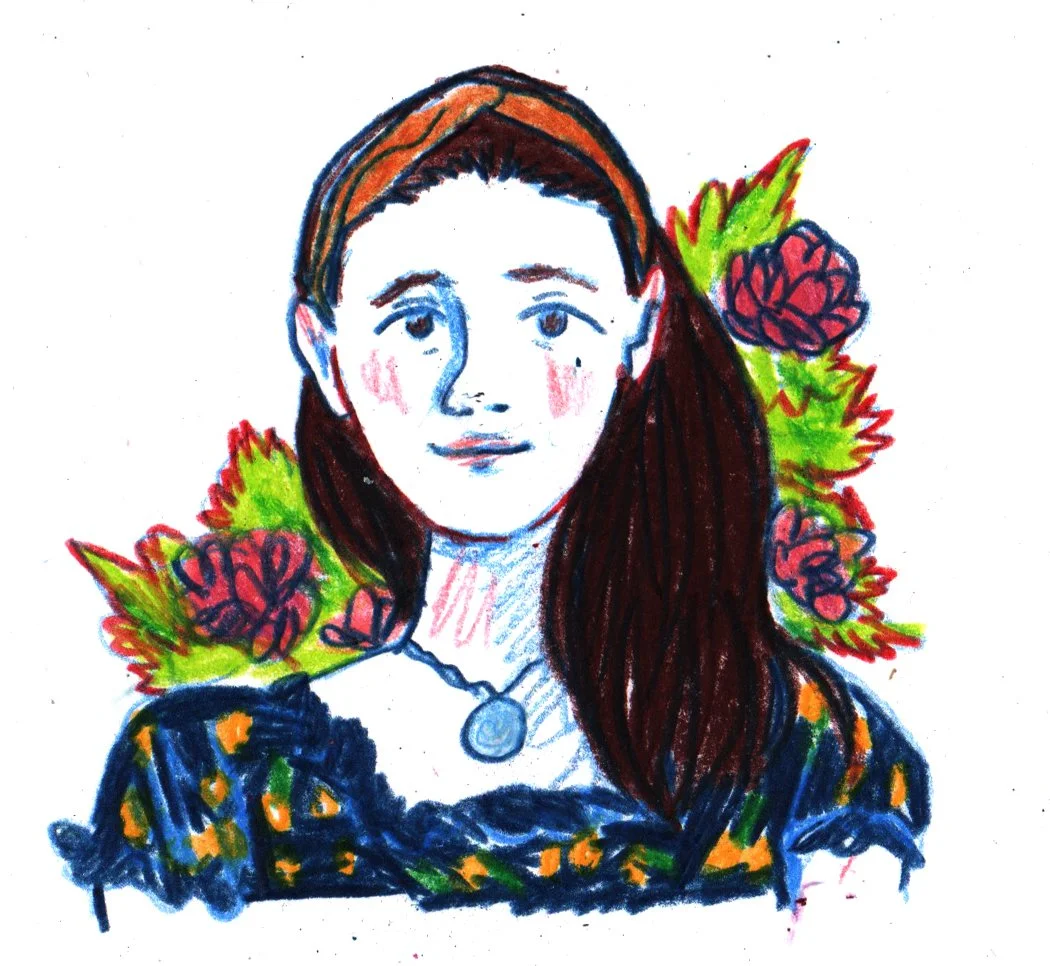
Illustrations by Hannah Lock
Ének Peterson — Freya’s Marani
🏺
Ének Peterson — Freya’s Marani 🏺
Ének’s home is in the municipality of Baghdati, just beside the Khanistskali River; according to locals, the area’s name means “place of the garden.” Her winery, Freya’s Marani—named after the Norse goddess—is where she farms organically, making sulphur-free natural wines in the marani, or cellar, beneath her house.
Her garden is an agrarian dream. Ducks and cats roam the long grass while peas and edible flowers snake up poles, dragonflies dance between rose blooms, and the humid warmth of early summer wakes the vines. Ének deliberately sought out Imerati in western Georgia for her marani, with the rolling hills and greenery reminding her of her home in Western Massachusetts. She felt like she belonged.
While Kakheti in eastern Georgia gets most of the wine world’s press (and funding for international advertising), Ének believes that some of the country’s best wines are found in the west. The story of the resurgence of Georgian wine is impressive, but as is often the case, shiny marketing means larger producers tend to benefit more from the revival than those on a smaller scale.
“There’s a great story, but without great wine as well, there’s only a story,” Ének says.
Ének’s love of Georgia began not with wine, but with singing. She visited to attend polyphonic choral workshops in 2013, and the following summer she returned, working at Pheasant’s Tears, the internationally renowned natural winery in Kakheti. After that, she went to Tbilisi to manage Vino Underground, a leading natural wine bar.
““There’s a great story, but without great wine as well, there’s only a story.” ”
It was at Vino Underground that she began her winemaking journey. “If I didn’t know how to make wine, I couldn’t do my job of selling it,” she says. She pressed and fermented 400kg of grapes on the premises, learning as she went, before finding her own vineyard.
Today, Ének has five qvevri, and also ferments in plastic and glass. Many of her grapes come from her own land, but she also takes fruit from local growers, including the headteacher at her daughter’s school. She worked one of her first harvests with her infant daughter strapped to her back, the picking done by headtorch at night. While this experience led her to rethink how she prioritised work, she still presses grapes by foot and bottles by hand today.
Her wines are distinctive, and reflect her openness to experimentation. Mimoza, one of Ének’s white bottlings, is made from Tsolikouri grapes, native to western Georgia, with a short period of skin-contact spontaneous fermentation that includes the grape stems. This process makes Mimoza darker and more tannic than most Imeretian whites, while its apricot and lychee notes balance the astringent acidity.
Standing in the cool marani, the peace only interrupted by a resident frog, Ének explains that, for all of the possibilities, being a woman winemaker can still be lonely here.
“There are lots of women in natural wine here, but the men have an easier time hanging out,” she says, alluding to how unusual it might be for male winemakers to casually drop by her marani for a drink and a chat. Still, she says, winemakers across the country have been supportive of her work, sharing knowledge and selling her grapes so she can continue experimenting.
***
While Ének may seem like an outlier, she is not the only female winemaker in the area. In the village of Obcha there’s Baia’s Wine, started in 2015 by Baia Abuladze, on land owned by her family for more than a century. Today, she spends most of her time in Tbilisi, where she looks after sales and exports, while her sister Gvantsa and brother Giorgi lead production.
After I arrive at Baia’s Wine, her mother Tamar, a Georgian language teacher, drives straight from class to show me around. The homestead’s marani now serves as a wine museum, with an old pot still for making chacha in the fireplace and small qvevri strewn across the floor. There are also ancient winemaking tools on display, such as paddles for punching down grapeskins and a sartskhi, a stick with layers of cherry bark used to clean qvevri. Workers would climb into the underground vessels to scour their insides, singing as they went.

Gvantsa Abuladze — Baia’s Wine
🍇
Gvantsa Abuladze — Baia’s Wine 🍇
Lunch is at the winery sitting under a sour plum tree, a fruit essential to Imeretian cuisine, used to flavour stews as well as the delicious tkemali sauce often found smothering kebabs.
Wines in Georgia naturally pair well with local dishes. In Racha, where the chilly mountains require a heavier diet, naturally sweet wines (which do not fully ferment due to the cold climate) match the meat-heavy cuisine. In Imereti, with its subtropical summers, the food is instead centred on herbs and beans. The indigenous grapes here produce dry white wines; when fermented without stems, they are often less tannic than many other Georgian whites.
Jonjoli, pickled bladdernut buds, is a local specialty. It tastes of flowers and springtime and is unlike anything you’ll find outside of the Caucasus. Paired with Baia’s wine—made with a blend of Tsitska, Tsolikouri, and Krakhuna grapes, and featuring a green-apple-like acidity—the vernal flavour of the jonjoli tastes like lying down face-first in a Georgian garden and breathing in the land itself.
Gvantsa shows me around the new marani with her dog Bingo in tow, keen to get some respite from the beating sun outside. The space is vast, with floor-to-ceiling windows and a cavernous roof. It feels almost reverential—a holy place for wine to sleep. Gvantsa was not raised with traditional gender roles, she says; her parents encouraged her and her siblings to follow their own paths. It was only once she went to study at university in Tbilisi that she encountered the mindset that there were different jobs for men and women.
“Men dominate the wine industry, but there are a lot of women behind the scenes,” she says. “[But] it is still conservative.”
This assessment contrasts starkly with her upbringing—as she says, her parents were “fighters for our dreams.” Tamar echoes that sentiment, and expresses happiness that her children all chose to live locally. “Despite my children getting a higher education [so] they would be able to leave Georgia, they all chose to come back to the village and build something together, and that makes me so proud,” she says.
““Men dominate the wine industry, but there are a lot of women behind the scenes.””
It hasn’t always been easy. “We started with nothing and haven’t even paid ourselves a salary,” Gvantsa says. “But after 11 years we are going full force.”
As some of the first women to make wine commercially in Georgia, Baia and Gvantsa may have experienced hardships, but their story has spread around the world. “I’ve heard from people from rural Georgia to Napa,” Gvantsa says. “If we can inspire someone with our story, then I say let’s do it!”
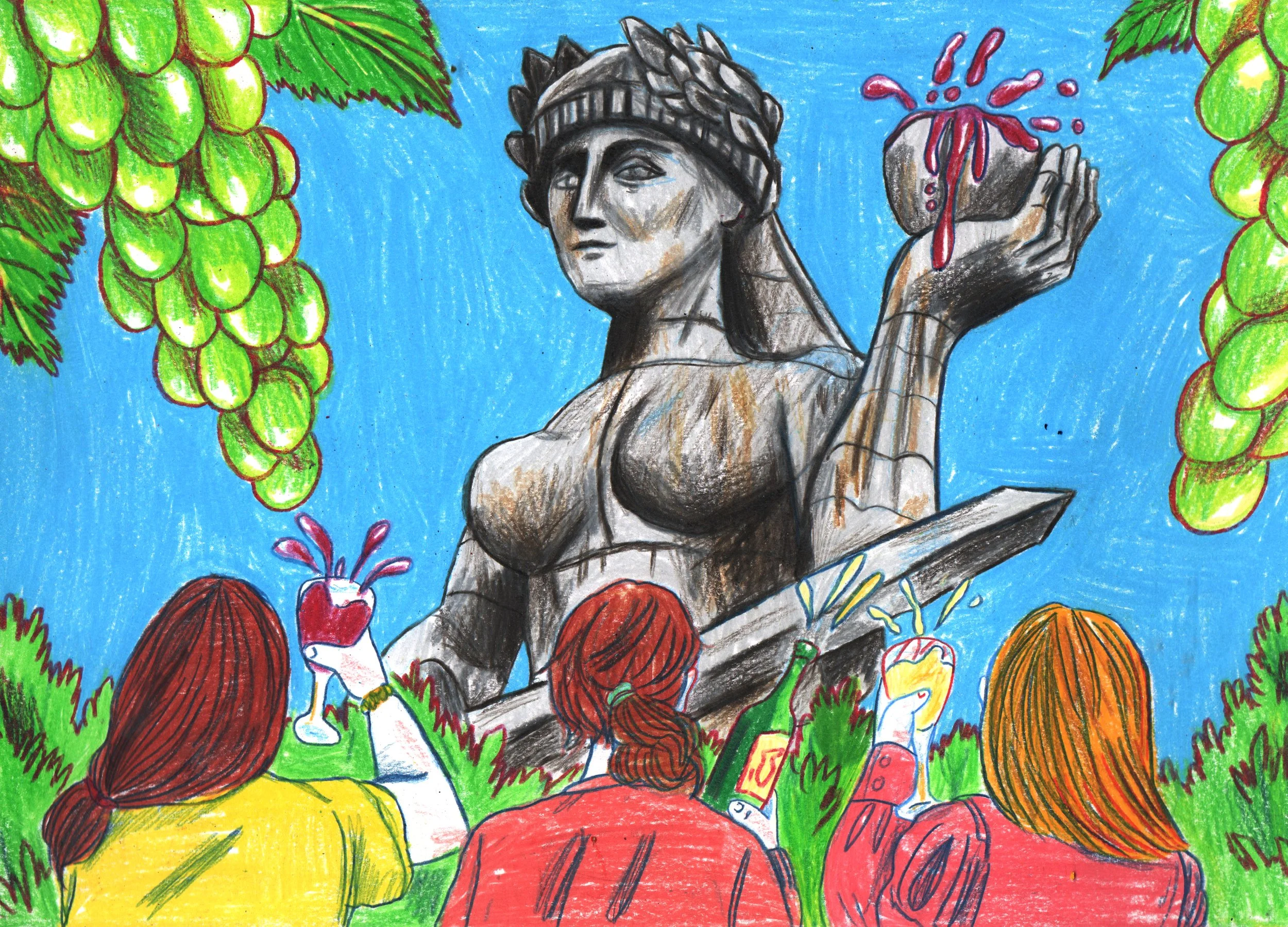
Seeing Gvantsa fresh from the fields, and Ének surrounded by grapes and roses, I can’t help but think of Kartlis Deda, the fearsome yet hospitable mother figure who is the spiritual symbol of Georgia.
She is typically depicted holding a bowl of wine in one hand and a sword in the other, ready to fend off invaders and embrace friends. These women reflect her through their wine, protecting a tradition that was very nearly stolen, while welcoming in and leading change. Together, they are presenting the new face of Georgian wine to the world.