To Carry Within Us an Orchard — Capreolus Distillery in Cirencester, Gloucestershire
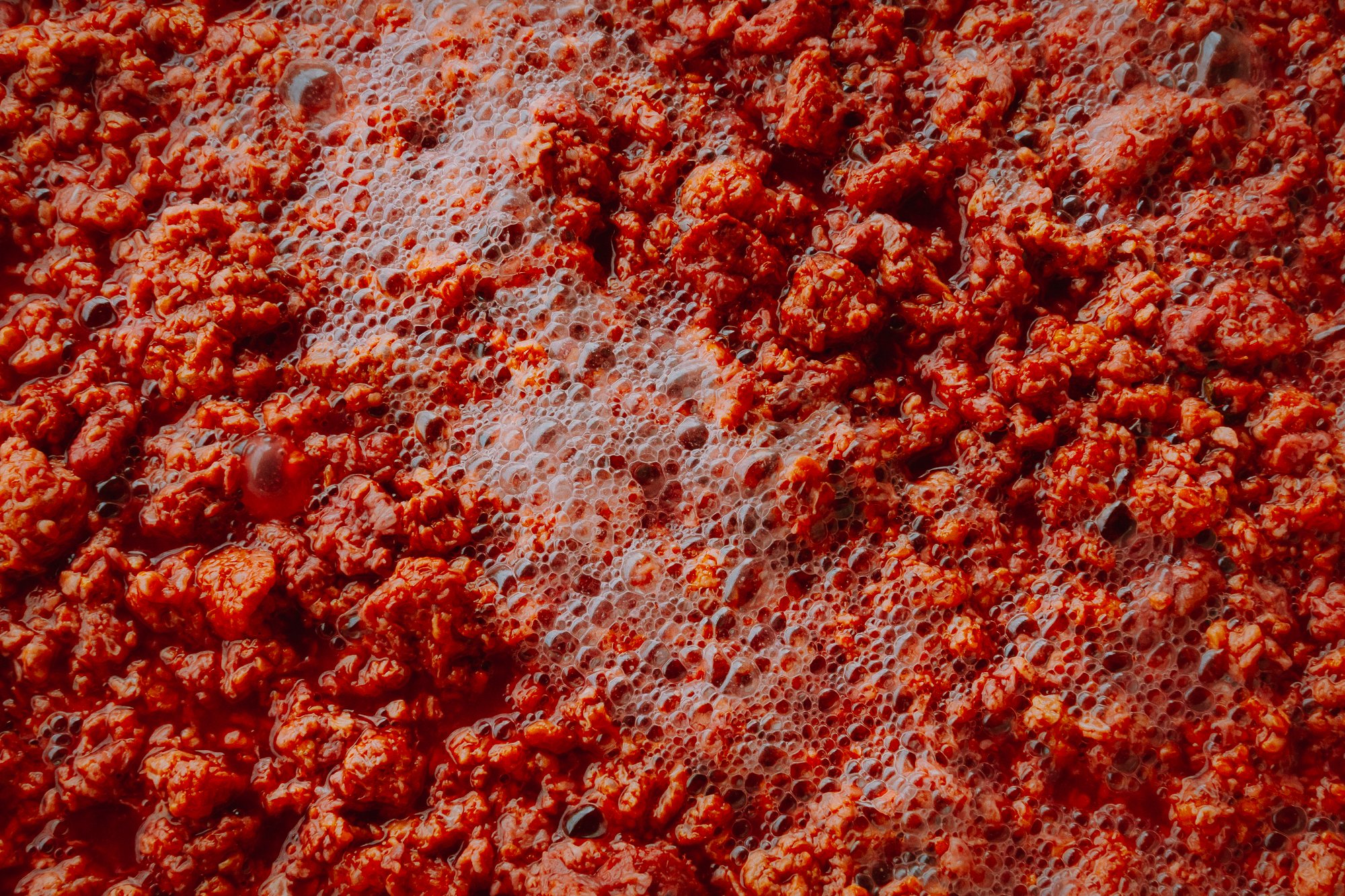
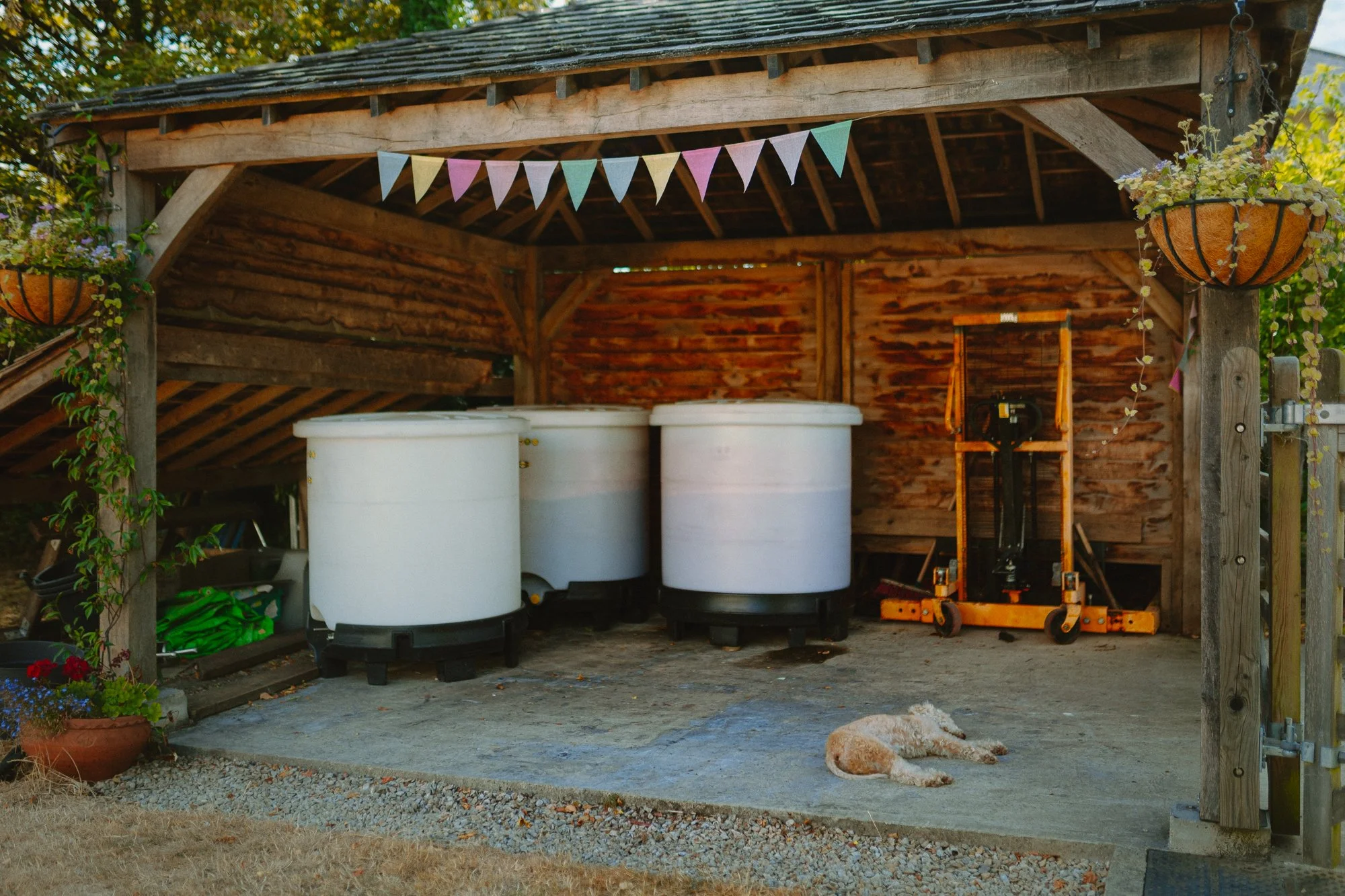
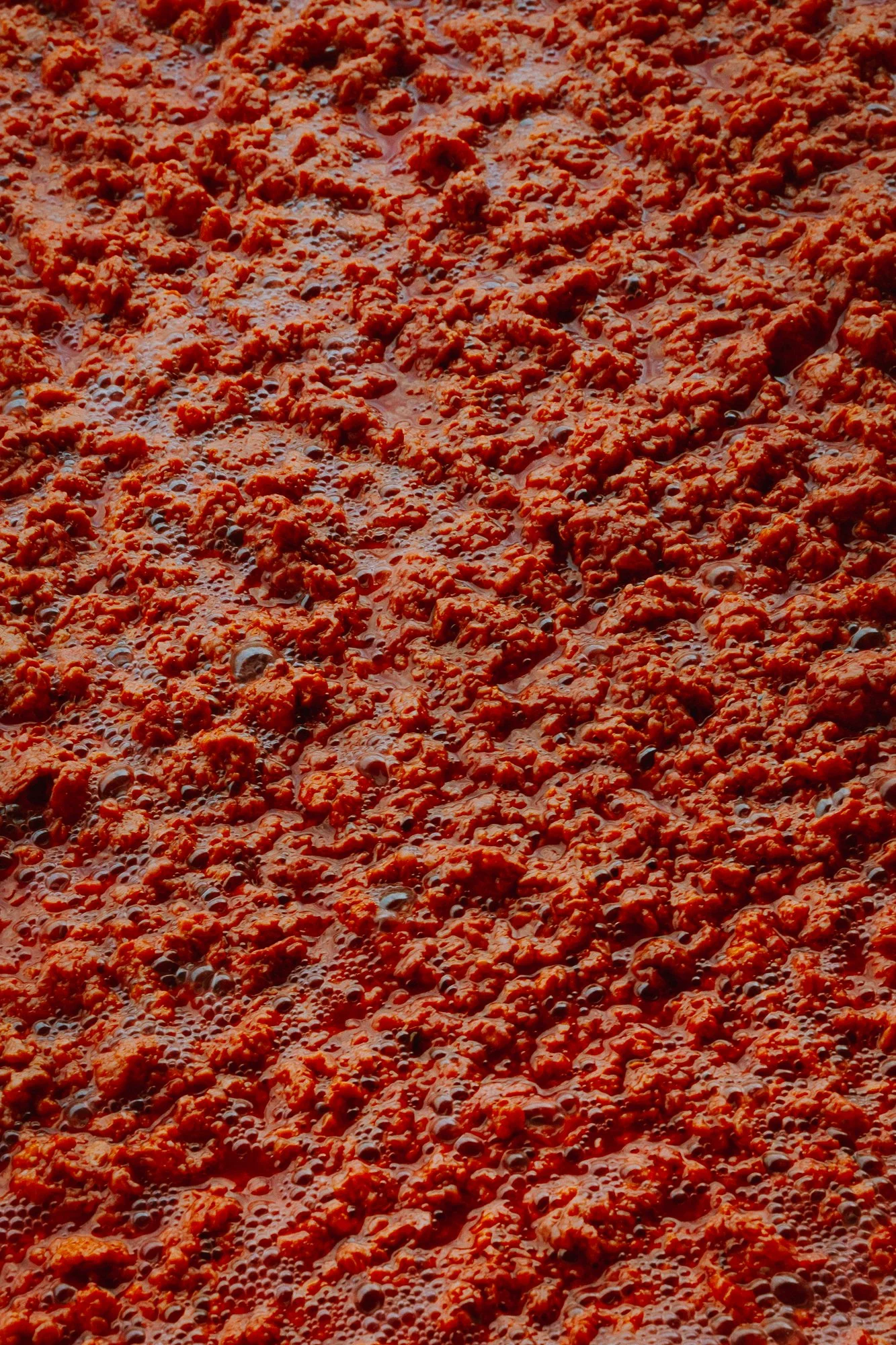
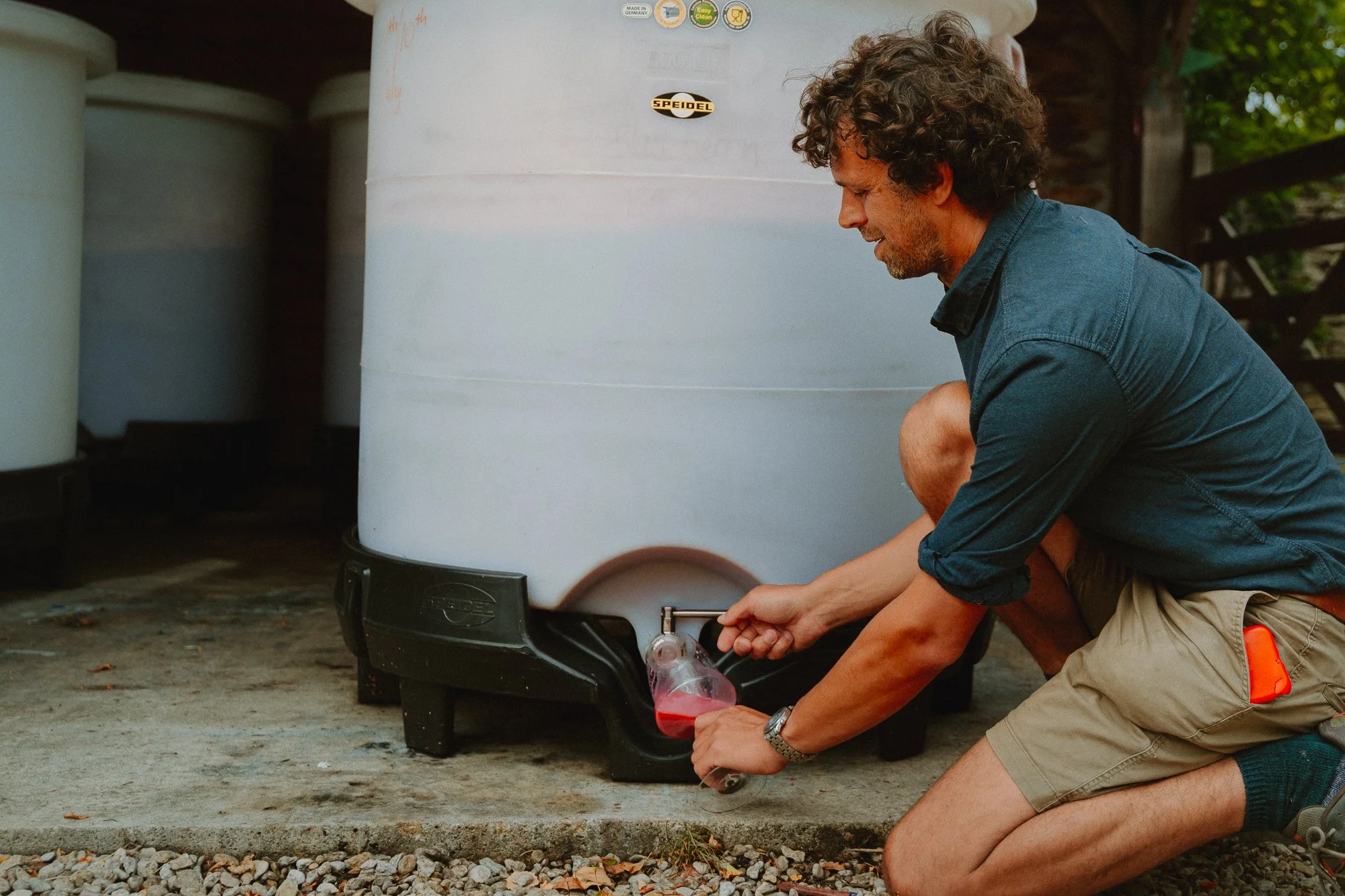
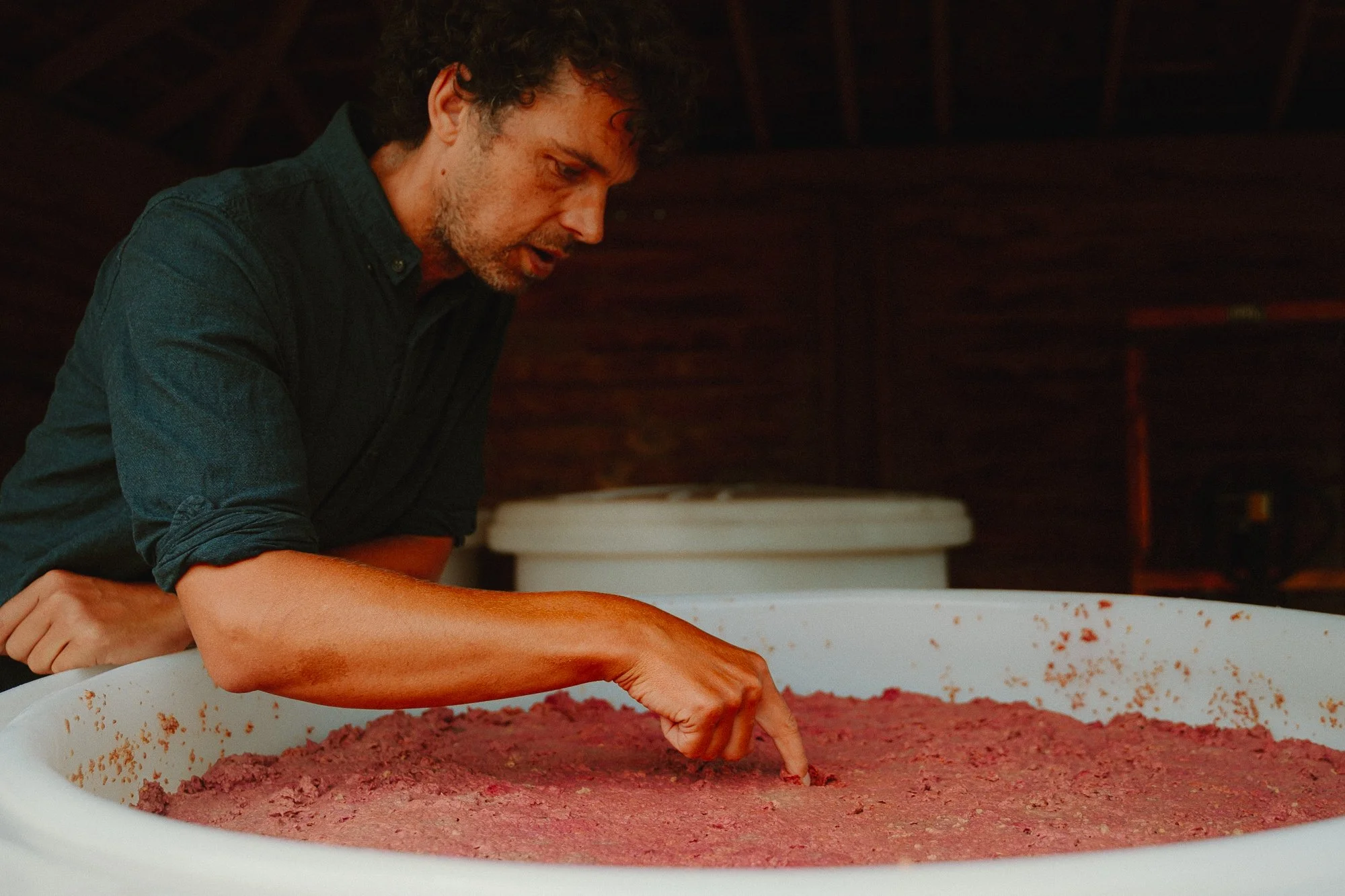
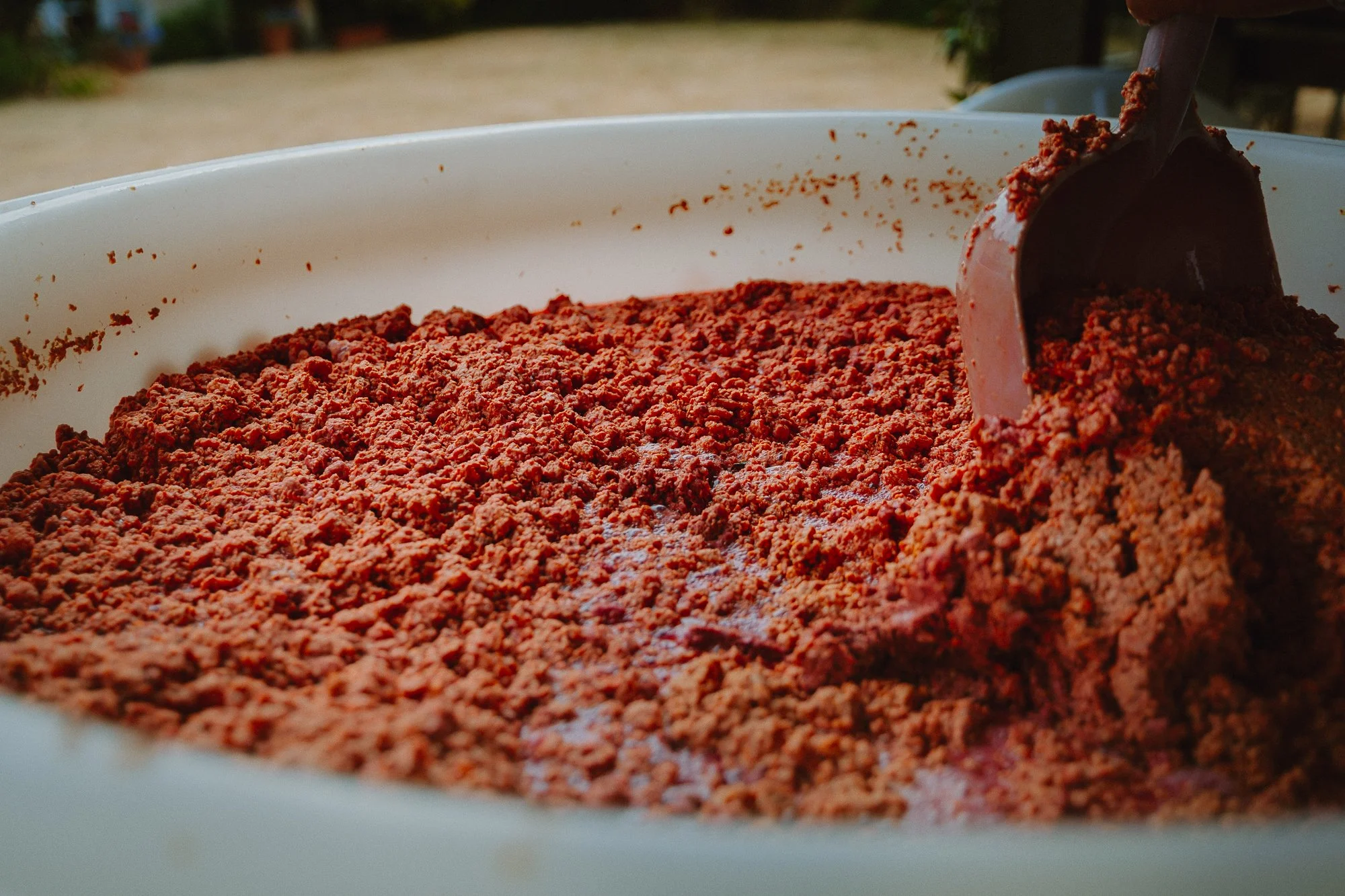
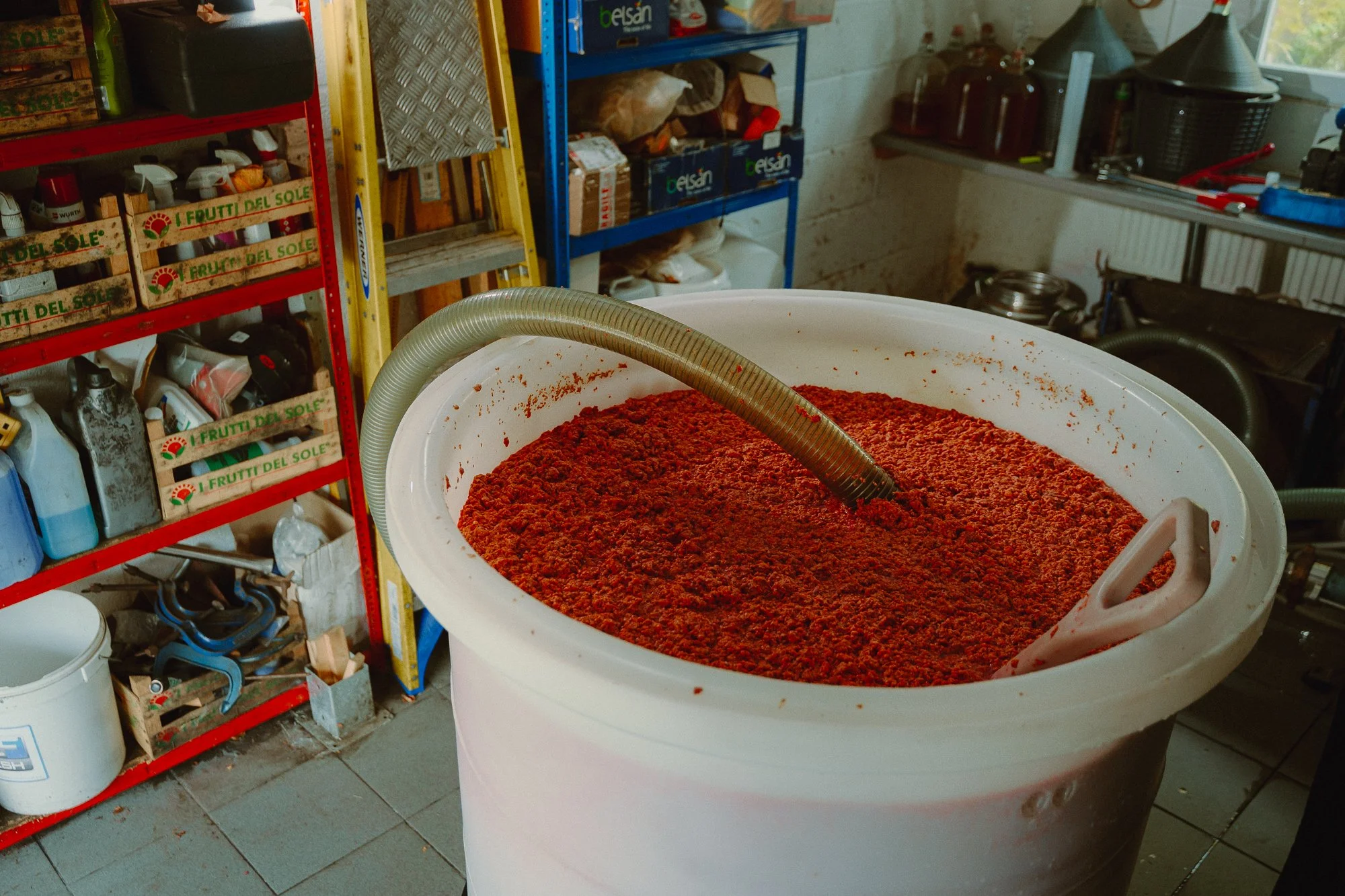
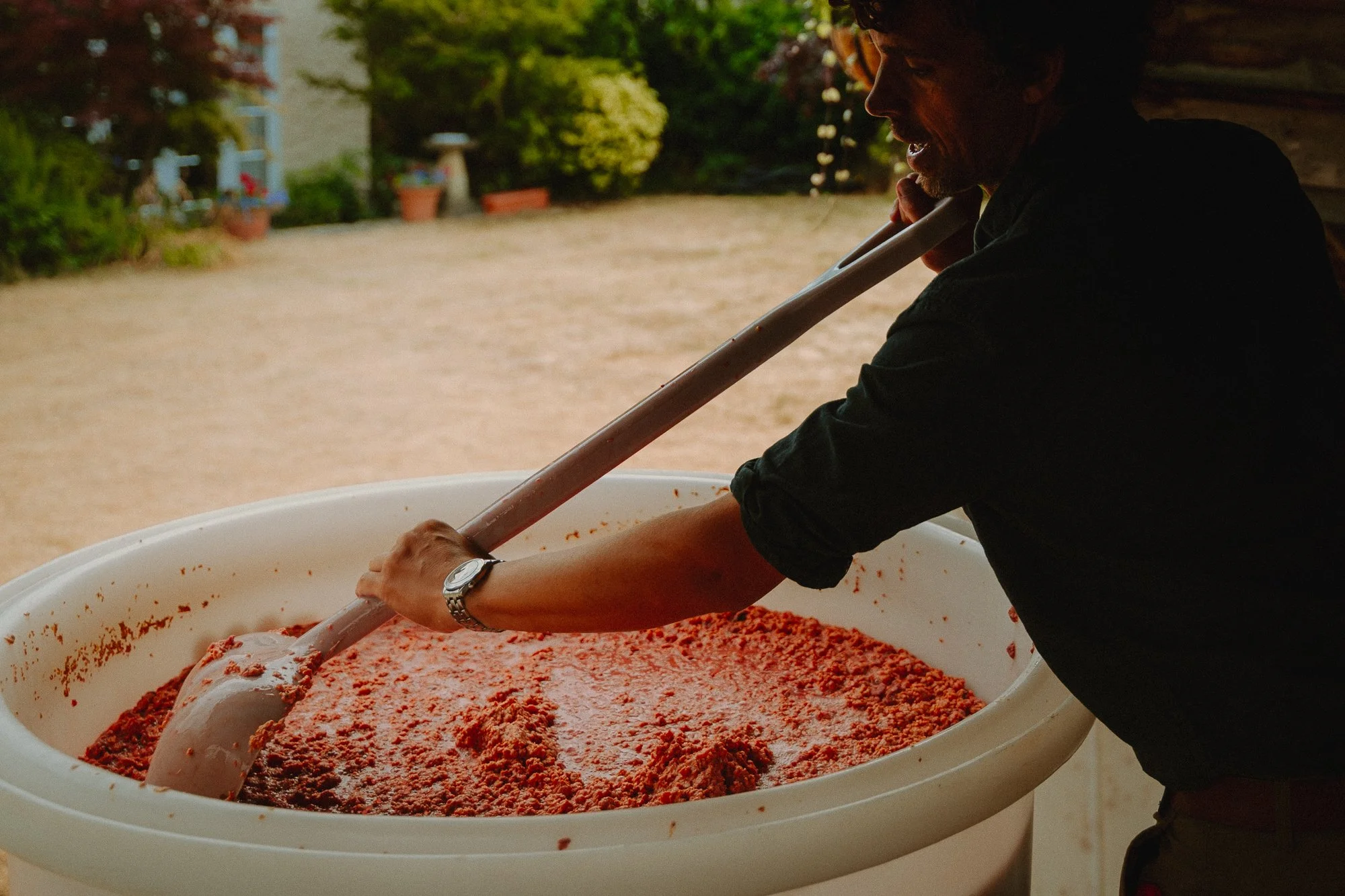
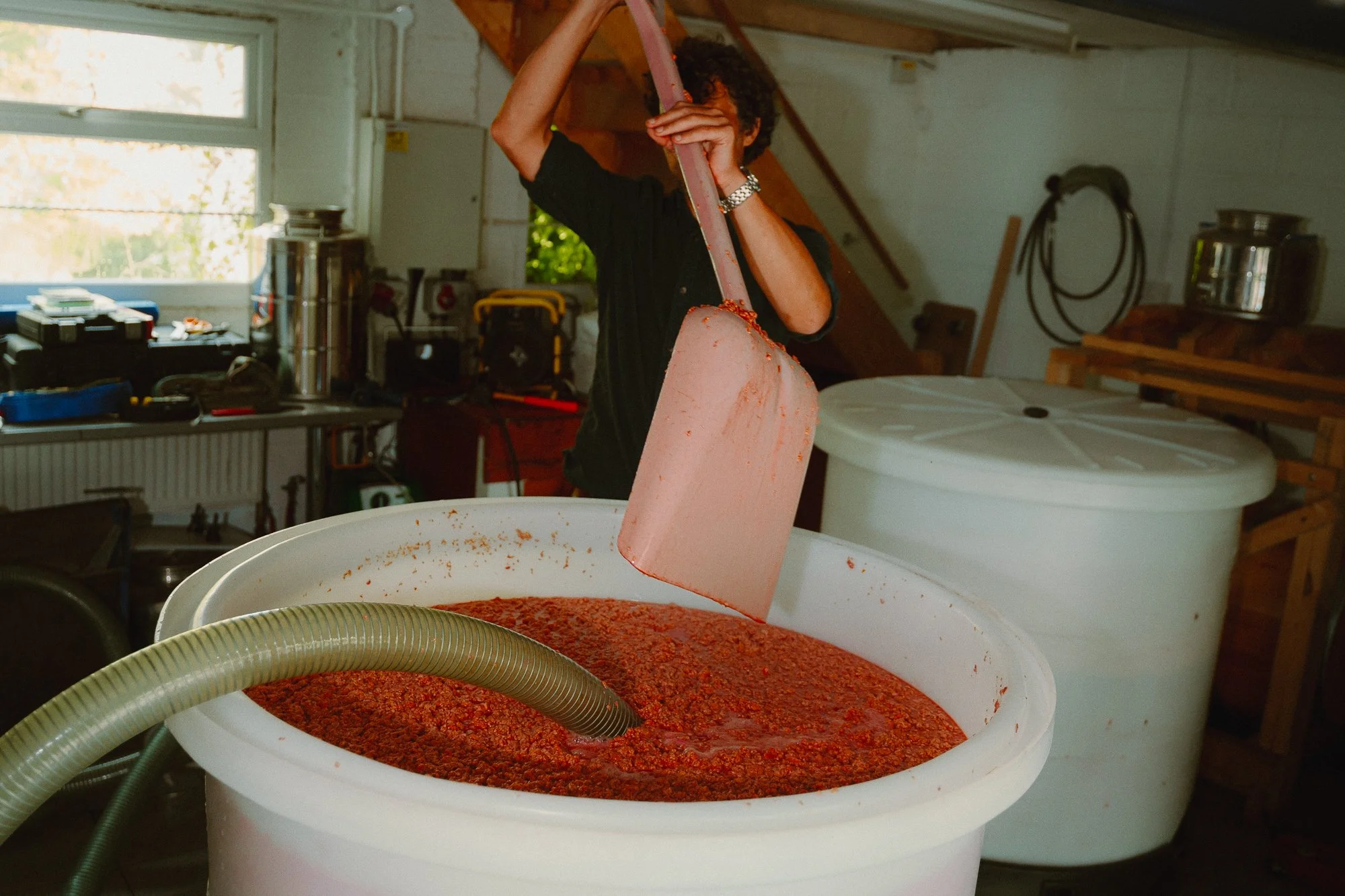
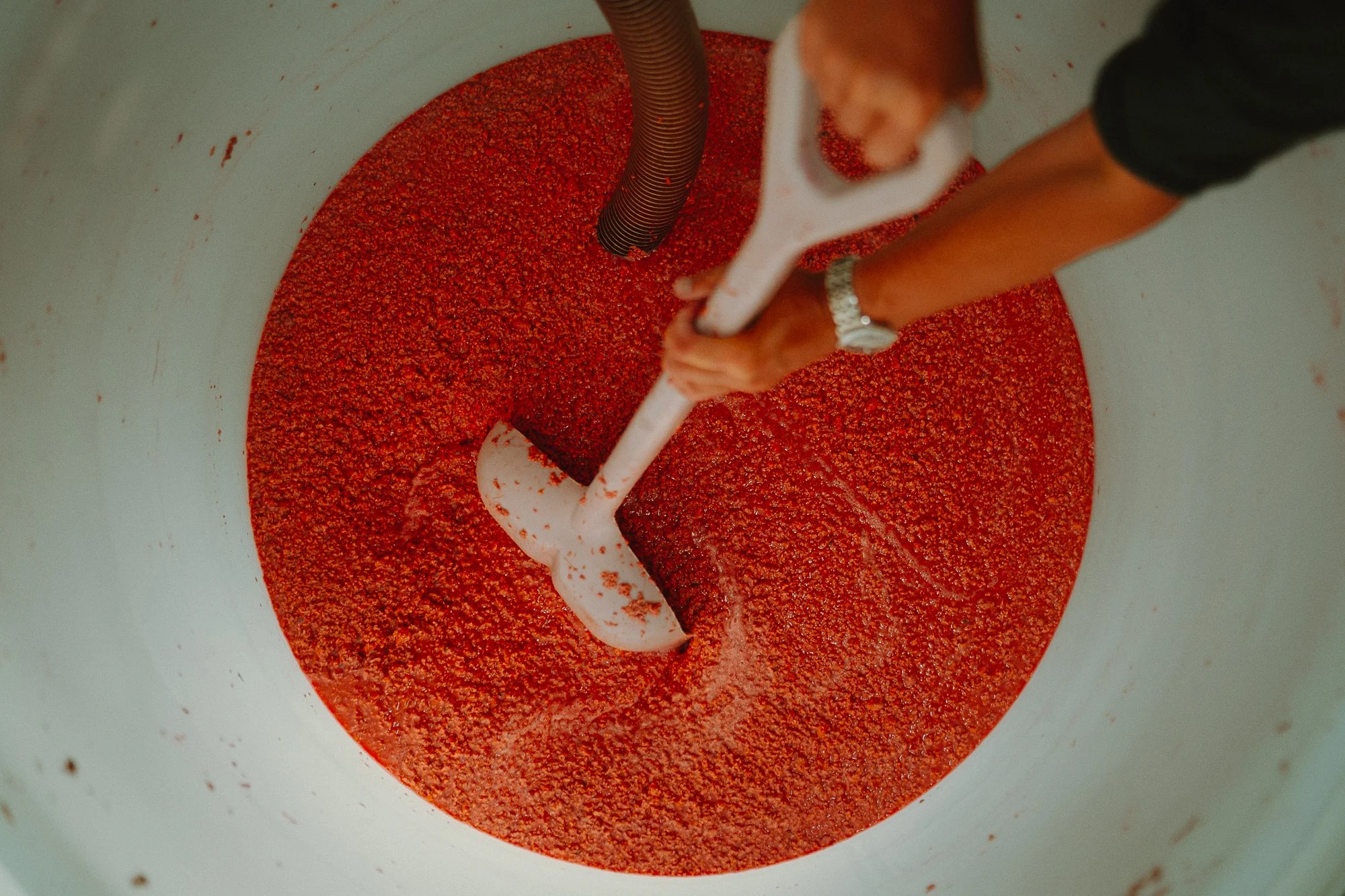
The raspberries are gurgling. All 600 kilograms of them, packed into the plastic fermenter that’s been sitting outside under a carport for the last two-and-a-half weeks.
When the lid is sucked clean of its water seal, the fruit is revealed: a tight mass, faded pink and stippled with drupelets. It’s only when the cap is punched down with a shovel that they hiss and seethe. The raspberries are possessed by wild fermentation, carbonation racing through the bloody juice they’ve let. Their aroma billows promiscuously across the lawn, heady with carbon dioxide.


These raspberries are the raw material from which Capreolus Distillery’s flagship eau de vie is made. Their sheer volume is daunting—and there are three more fermenters just like this one, still waiting in the carport—but they are just a fraction of the fruit that will run through its two copper stills this year. That quantity measures closer to 14 tonnes, and will include everything from redcurrants and quinces to Egremont Russet apples and medlars.
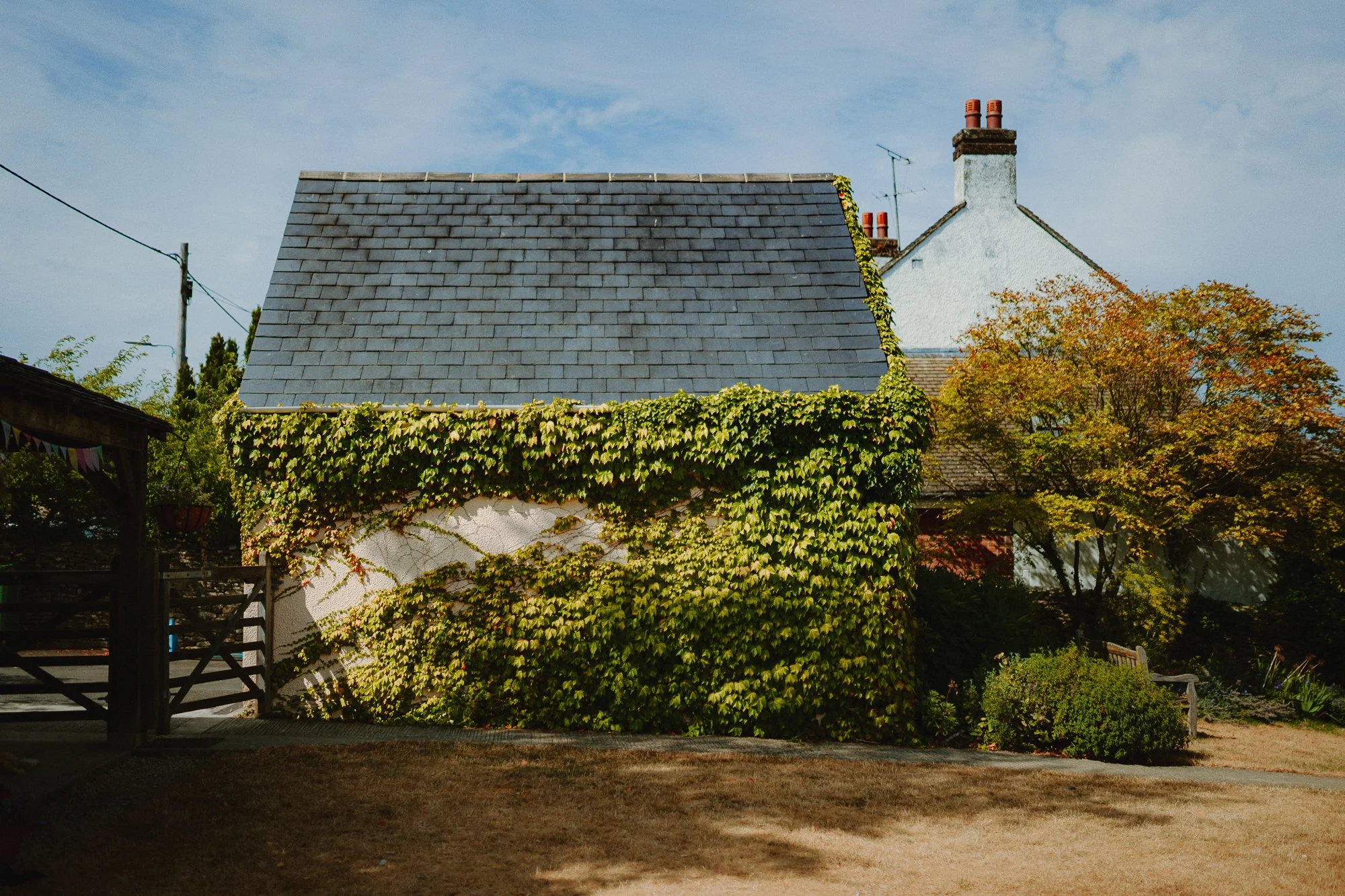
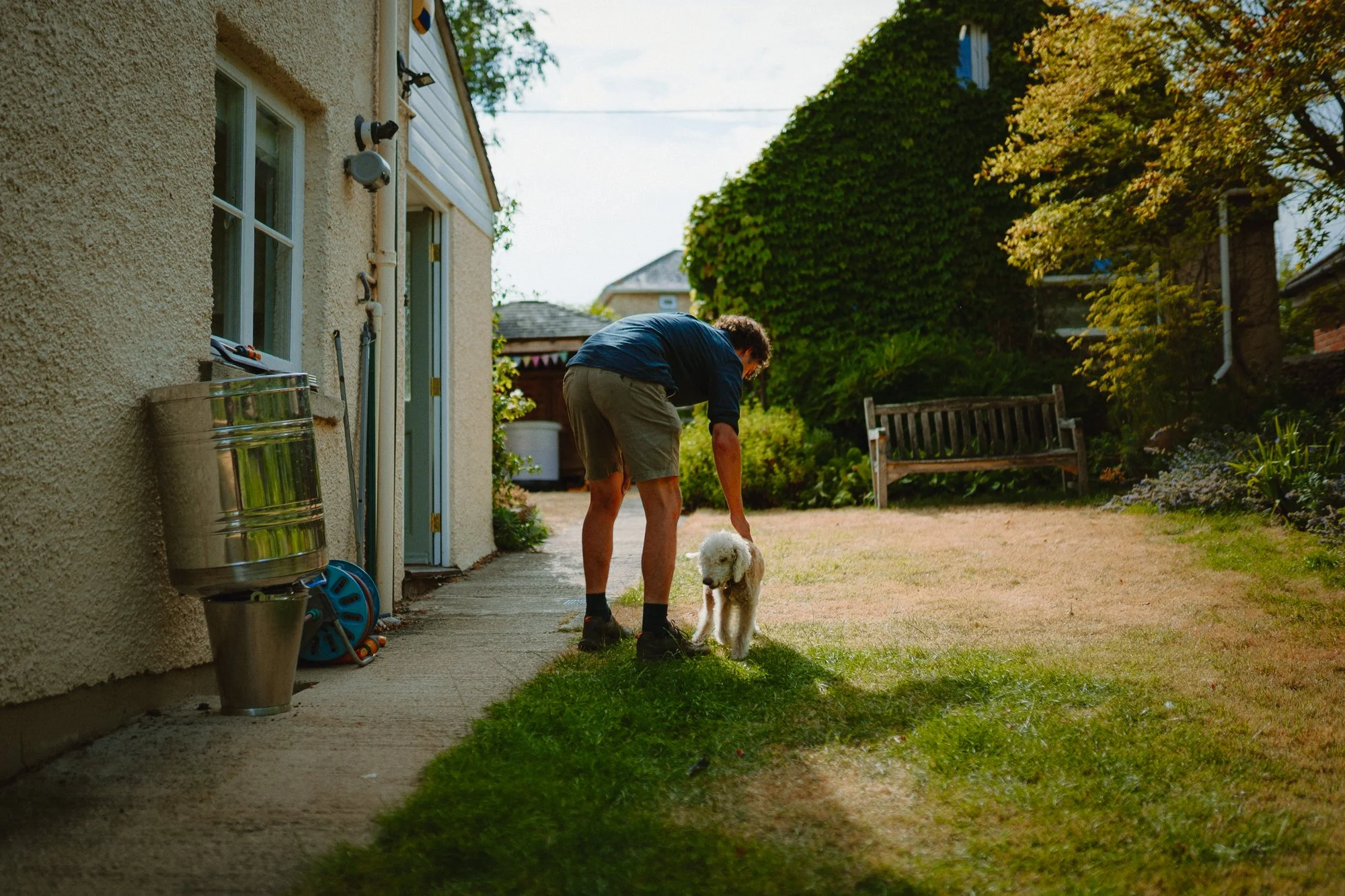
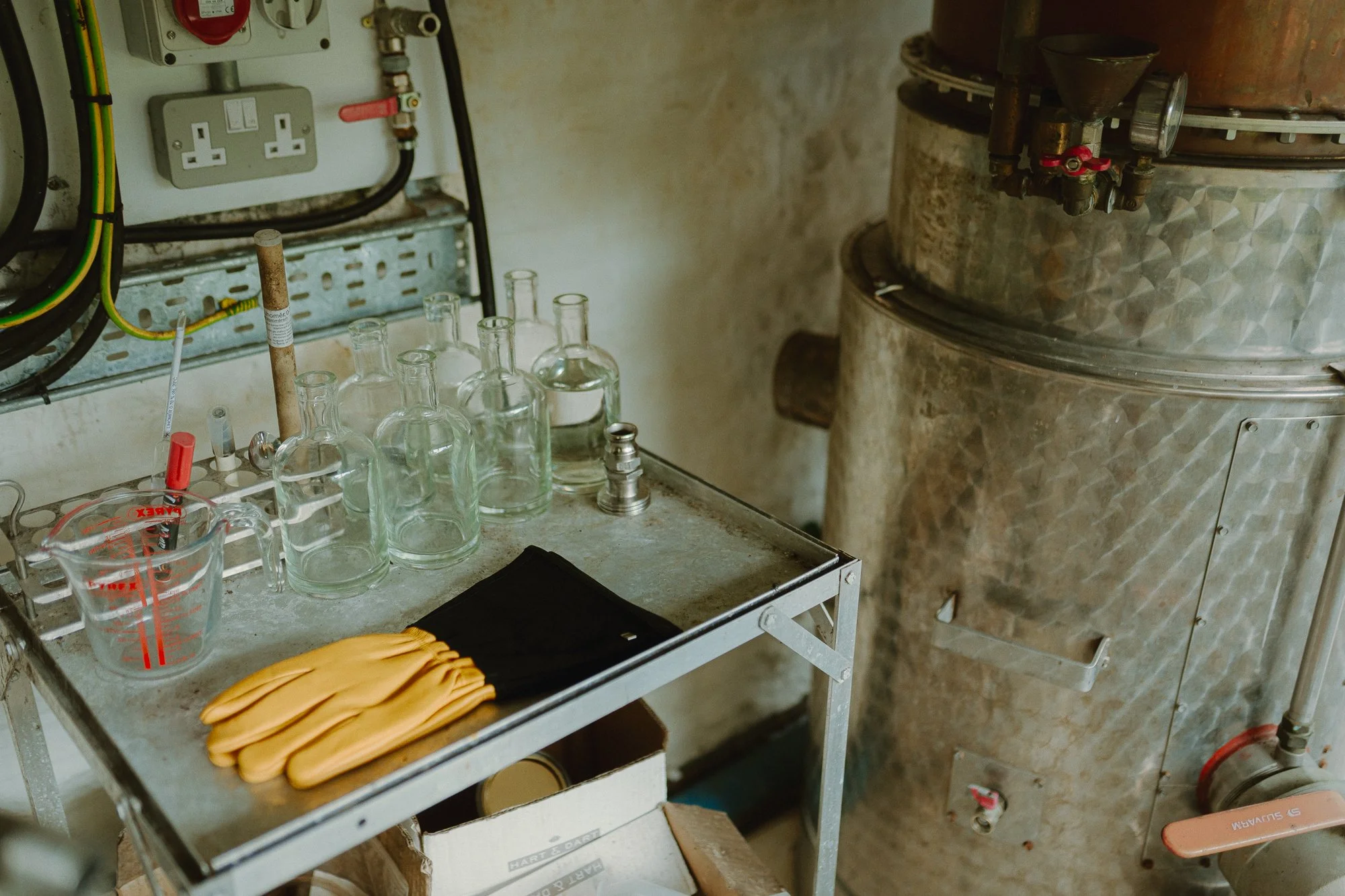
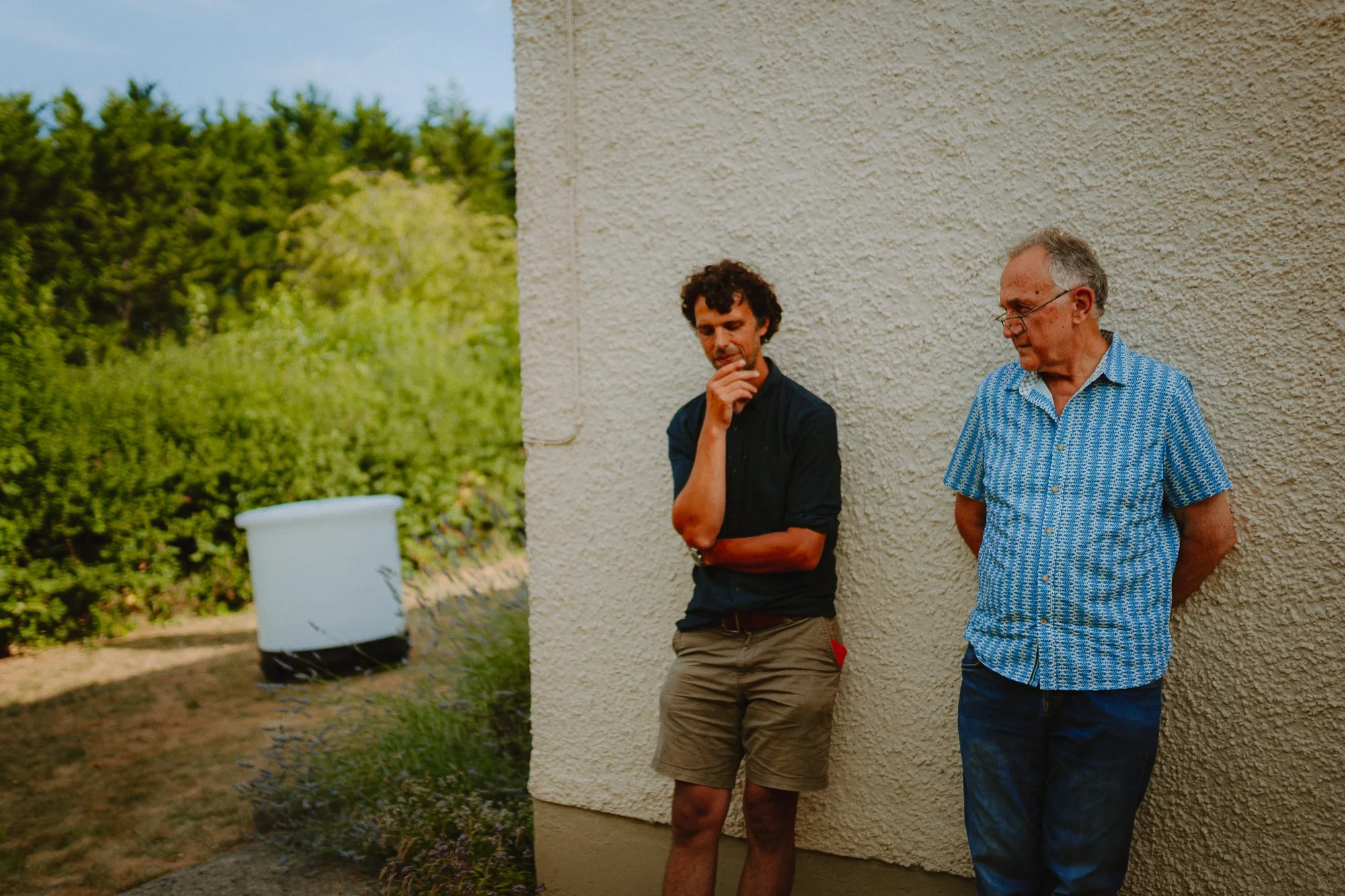
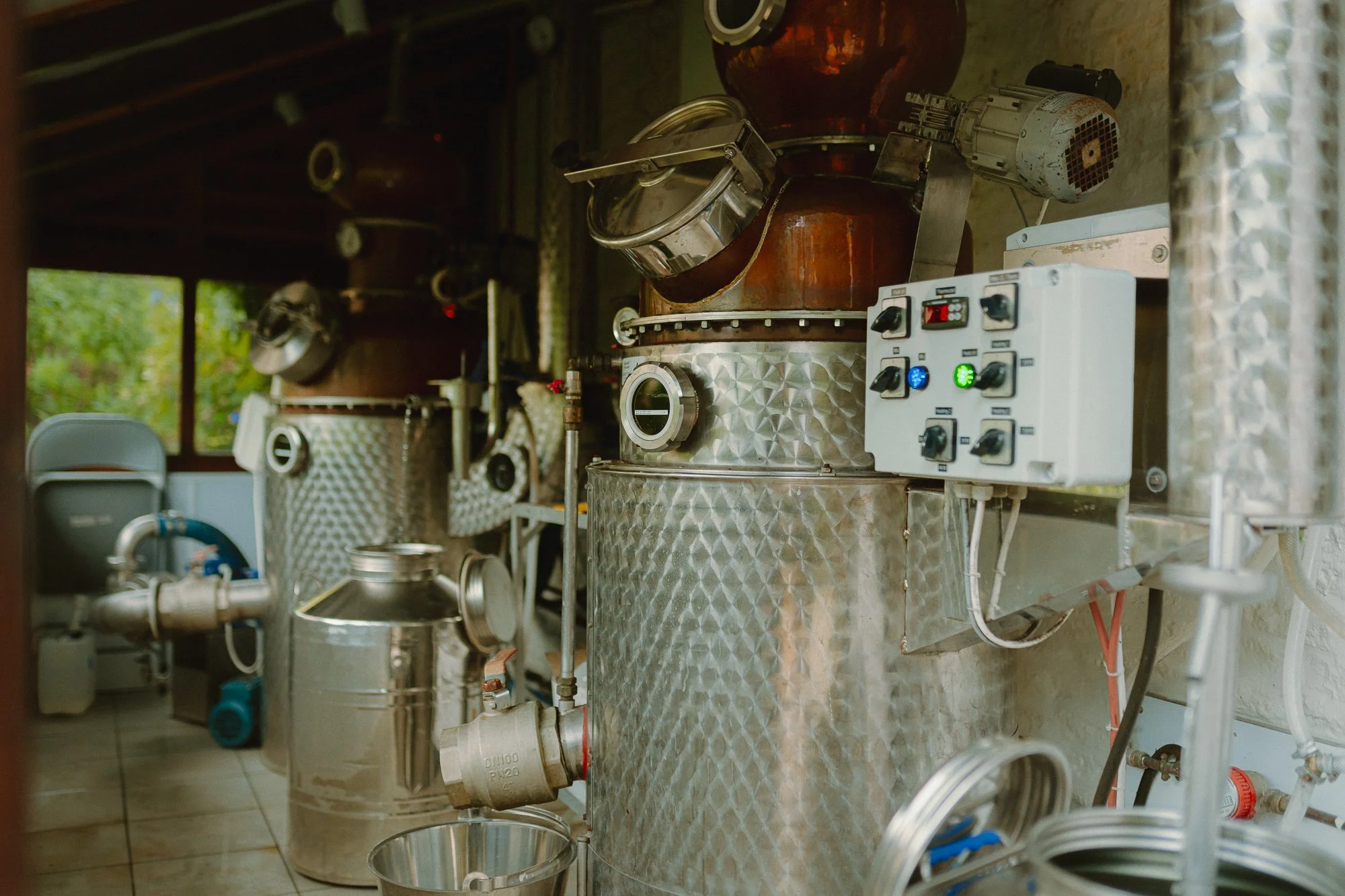
The distillery—named for the fleet-footed roe deer that’s native to the area, Capreolus capreolus—is situated on the outskirts of Cirencester in Gloucestershire, along the Cotswolds’ southern border. More specifically, it occupies a 7.5-square-metre lean-to in the garden of the detached suburban house where founder Barney Wilczak spent his childhood, and where his father, Stefan, still lives. When visitors arrive, expecting a slick tasting room, they often assume they’ve made a wrong turn.
Photos by Sean McEmerson
Almost nothing about Capreolus is typical. Not its location, nor its approach to fruit and seasonality, nor the spirits it makes. The astonishing production figures that Barney reels off—vast quantities of fruit in every teaspoon of liquid, vanishingly small yields, heads and tails cuts that would make any other distiller wince—seem to defy both basic economics and good sense.
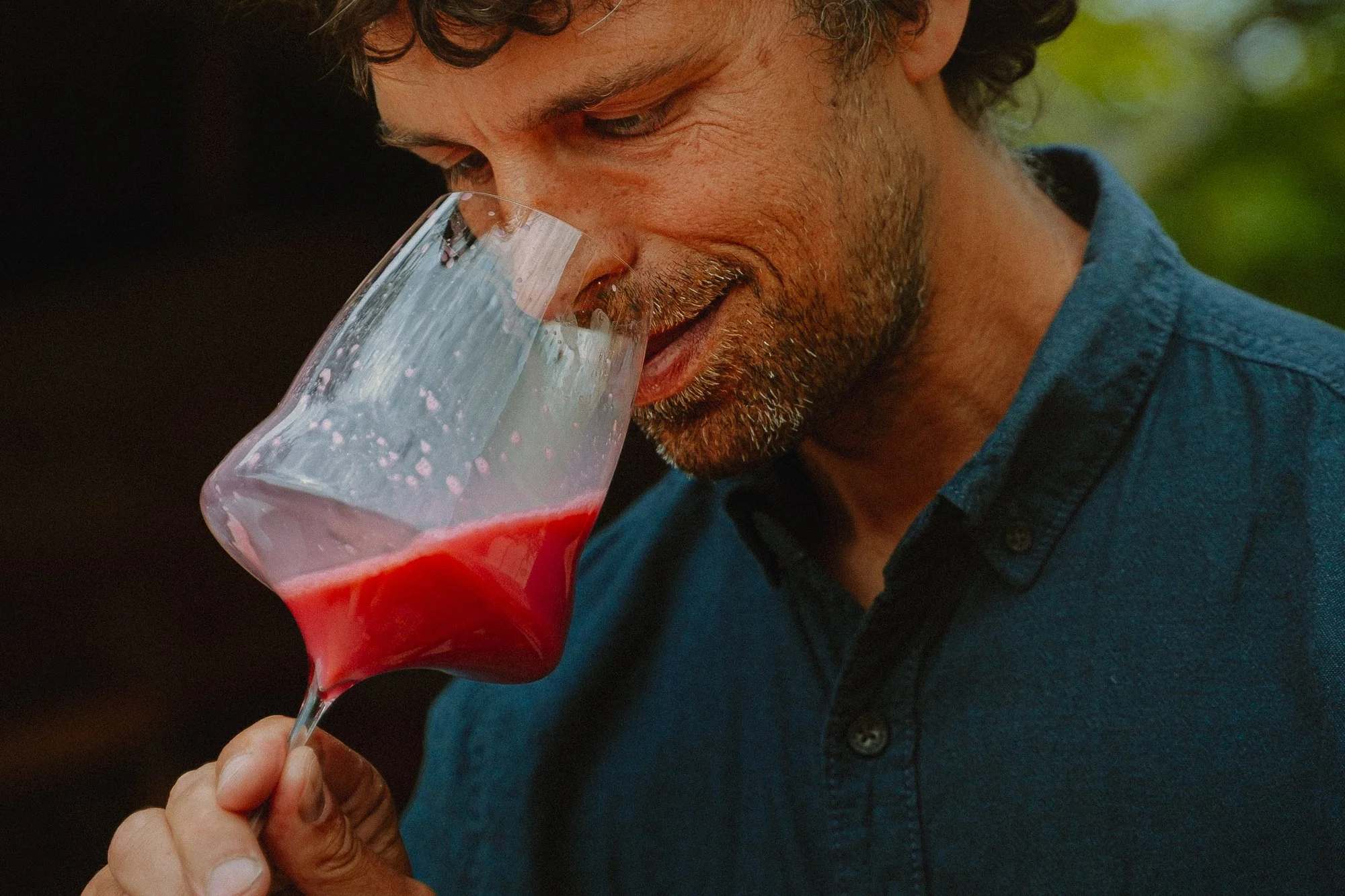
Then there’s the fact that Capreolus’ relationship to alcohol is almost incidental. Barney cares much less about making booze than he cares about finding a medium with which to capture each fruit’s botanical qualities at a near-microscopic resolution. What results from this approach are spirits of extraordinary concentration and complexity. They are virtually unique in the world, and it is not for nothing that sommeliers and bartenders have likened them to precious jewels, or drinkable perfumes.
This breathless praise from some of the industry’s most prominent figures has helped burnish Capreolus’ reputation over the last decade of its existence. But even as interest grows and word continues to spread—and even as the distillery commences its own significant expansion—Barney’s focus remains trained on the hyper-local.
“When working in reverence to plants, you have to take a very different approach,” he tells me.
***
Barney Wilczak is an obsessive of the old-fashioned kind, the type of autodidact and polymath who wouldn’t have been out of place in the 18th century. He stands 6 feet, 4 inches tall—an inconvenient height, given the dimensions of the distillery—with a thatch of dark curls and a deep tan imparted by countless hours spent outdoors. On the day we meet, his shirt and hair are studded with raspberry seeds.
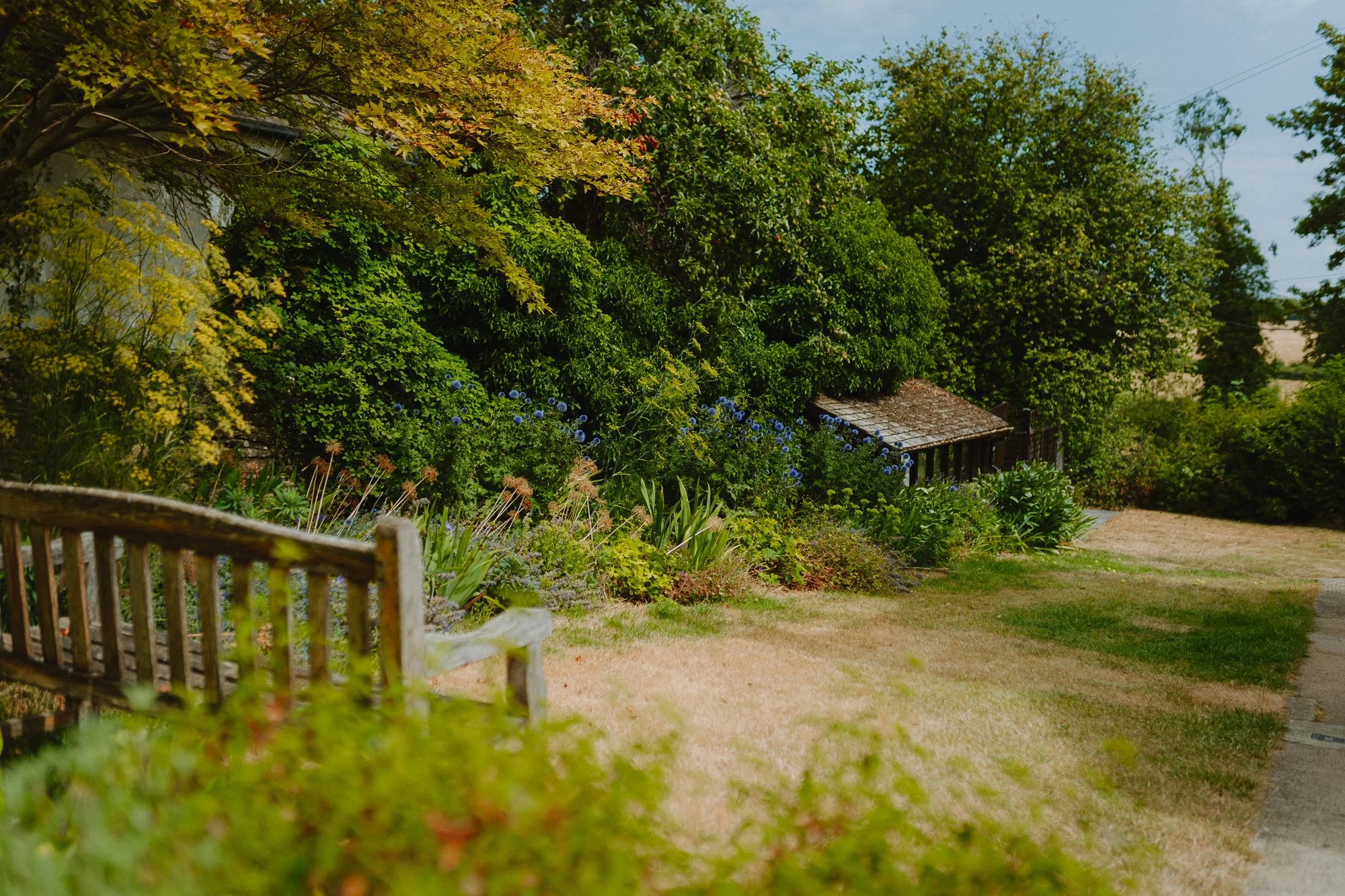
He grew up in this house, surrounded by quince trees, apple trees, raspberry canes, and gooseberry bushes. His mother is a botanist, and his father worked as a civil engineer. His paternal grandparents were Polish refugees during the Second World War; after his grandfather escaped from a concentration camp in Siberia, they travelled through Persia and into Uganda before being resettled in the U.K.
Although his grandparents did not make their own fruit spirits—which, as Barney notes, is common practice among many Polish families—they grew and preserved fruits and vegetables, and lived according to the seasons, long before such habits were commodified into lifestyle.
“I’m old enough that picking fruit wasn’t foraging, it was just picking fruit,” he says wryly. “You’d go for a dog walk and, of course, you’d be picking blackberries and picking damsons.”
In his youth, Barney was restless and experimental, prone to smoking weed and spending long stretches of time outside. He remembers “being brought up and [my parents] being like, ‘You can do anything you like, as long as you do enough research.” That research extended from making his own cider to “growing illegal plants.” When he went off to Falmouth University, he scoffed at the idea of buying jam, knowing full well that he could make his own. “I was picking bags of mushrooms around the campus and [recall] people being like, ‘You don’t know what they are,’” he says. “I know exactly what they are!”
““When working in reverence to plants, you have to take a very different approach.””
Pursuing a career in botany seemed like an obvious route—and he did publish a botanical book, An English Meadow Through the Seasons, in his 20s—but Barney quickly realised he didn’t want to spend his life cloistered in a laboratory. Instead, he took a job as a conservation photojournalist documenting habitat restoration projects, which brought him to remote locations across six continents.
The work was good, but the pay wasn’t. It also necessitated spending long stretches away from home, and from his partner, Hannah Morrison, whom he’d met at university. After six or seven years, he’d reached a crossroads, though he already had an inkling about what to do next. During that same time period, he’d been teaching himself to distill fruit.
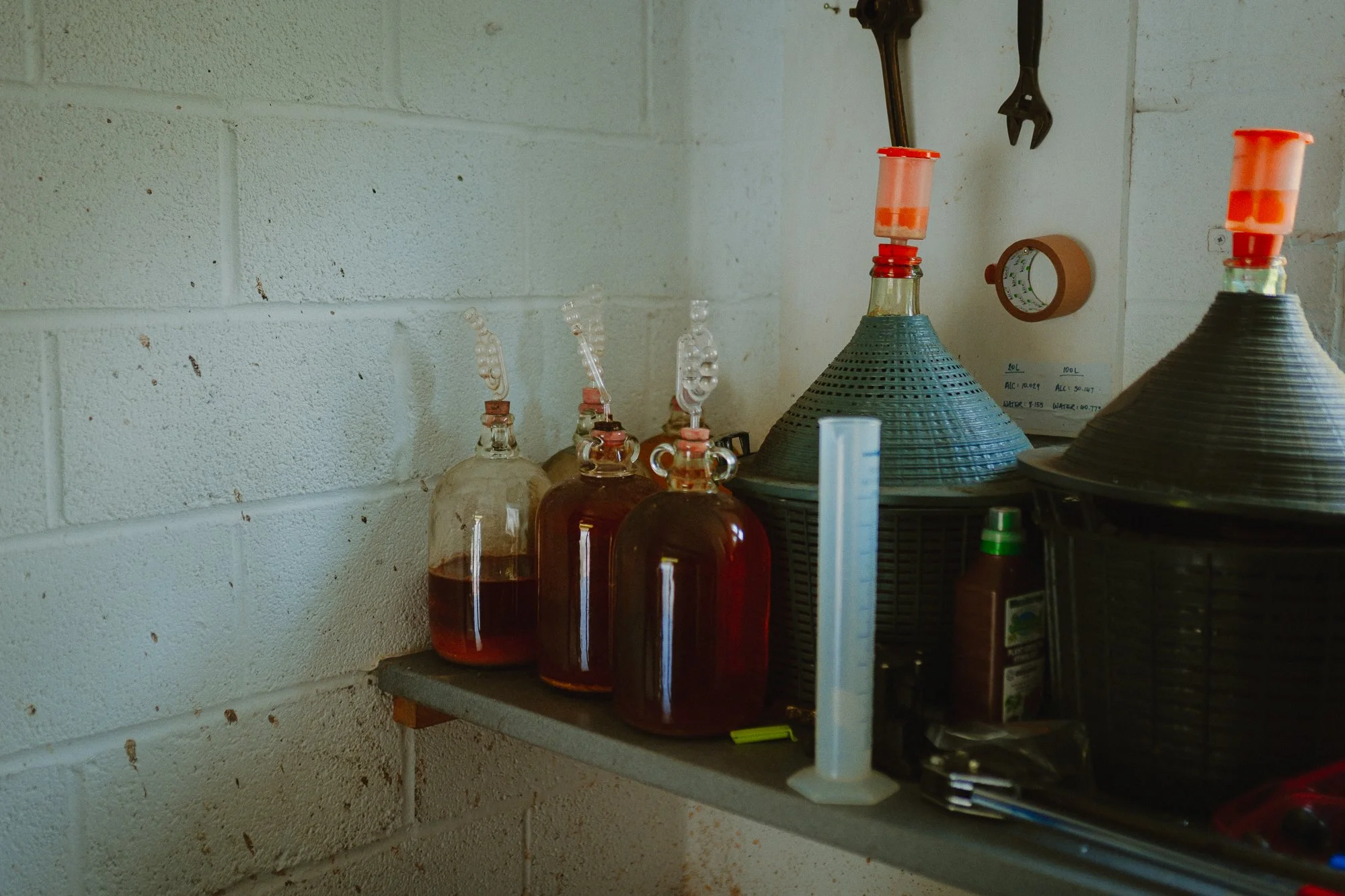
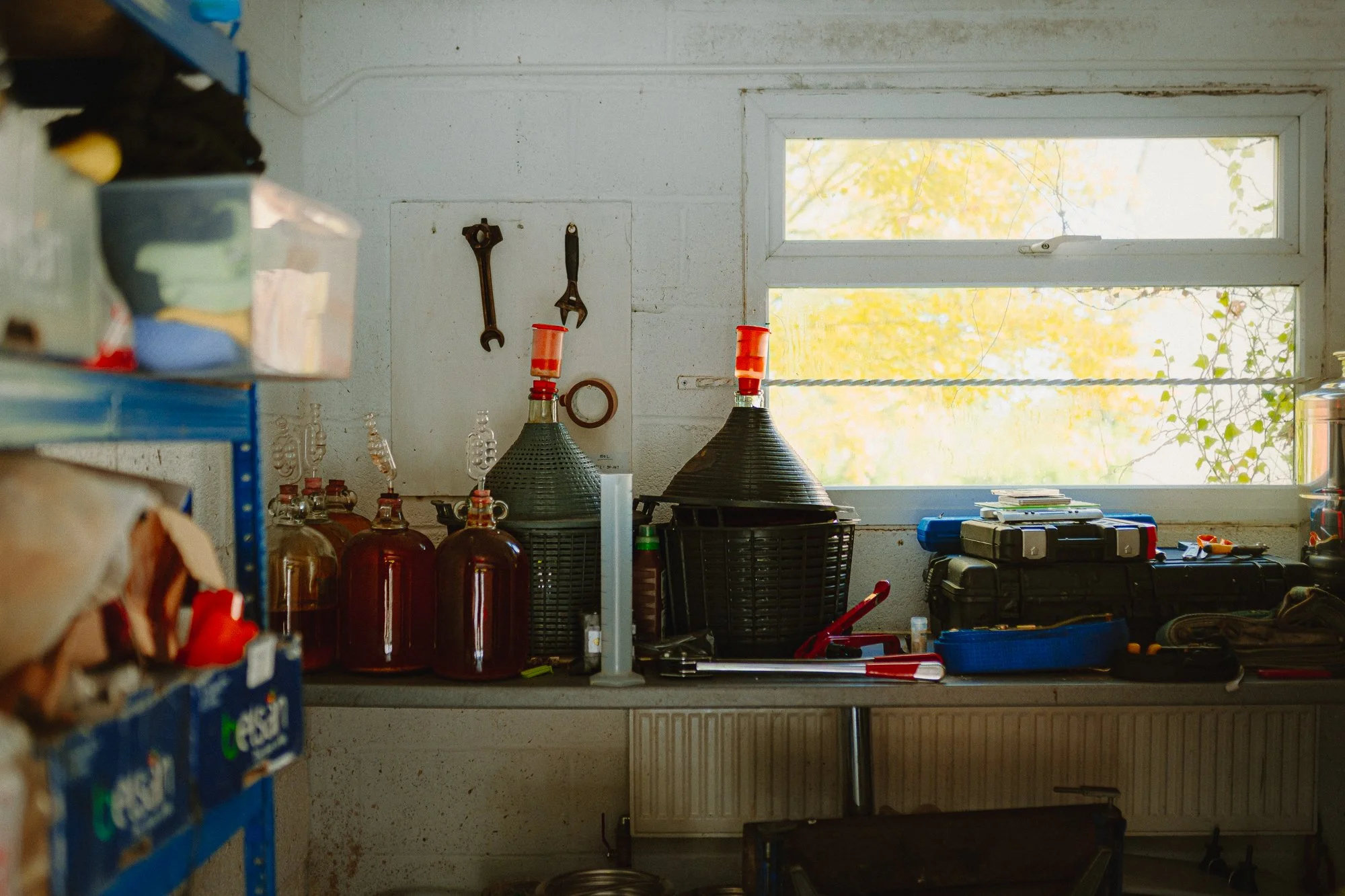
“Because there’s no English-language literature on this, I was translating Eastern European scientific papers and Austrian books and German books and French books and Italian books,” Barney says. He graduated from a 1.25-litre still up to 20 litres, and then found a full-size Czech-manufactured pot still he could modify to his specifications.
“It doesn’t surprise me, in a way—it definitely works to his strengths. All the technical stuff, and he’s always loved fruit,” Hannah says, when I ask whether she foresaw Barney’s distilling career. “He’s hopeless with directions. He and his mum are the same. He’ll be like, ‘Oh, by that really tannic apple tree, that’s where we park.’ It’s like, you know your way around Cirencester by fruit trees.”
***
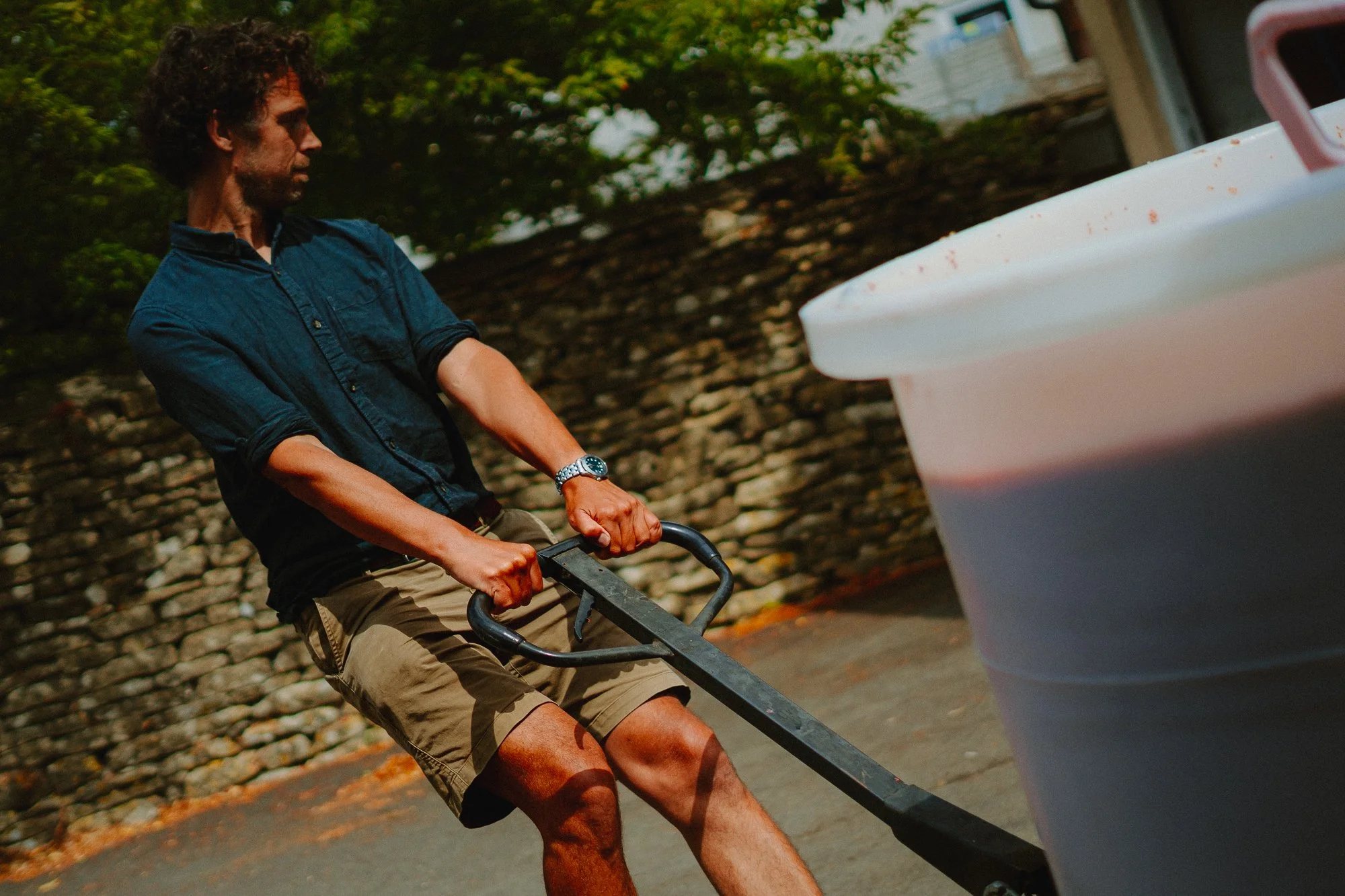
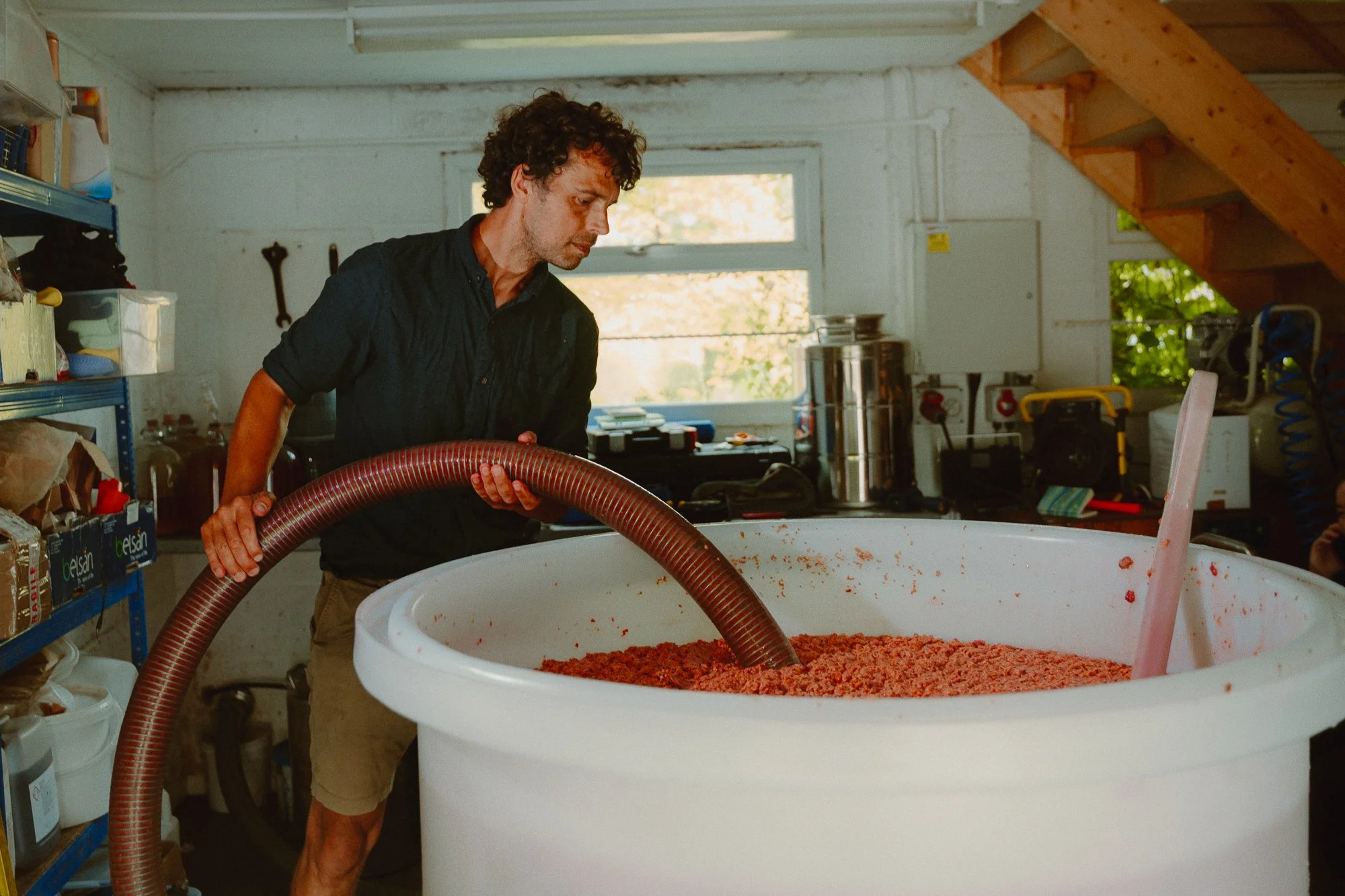
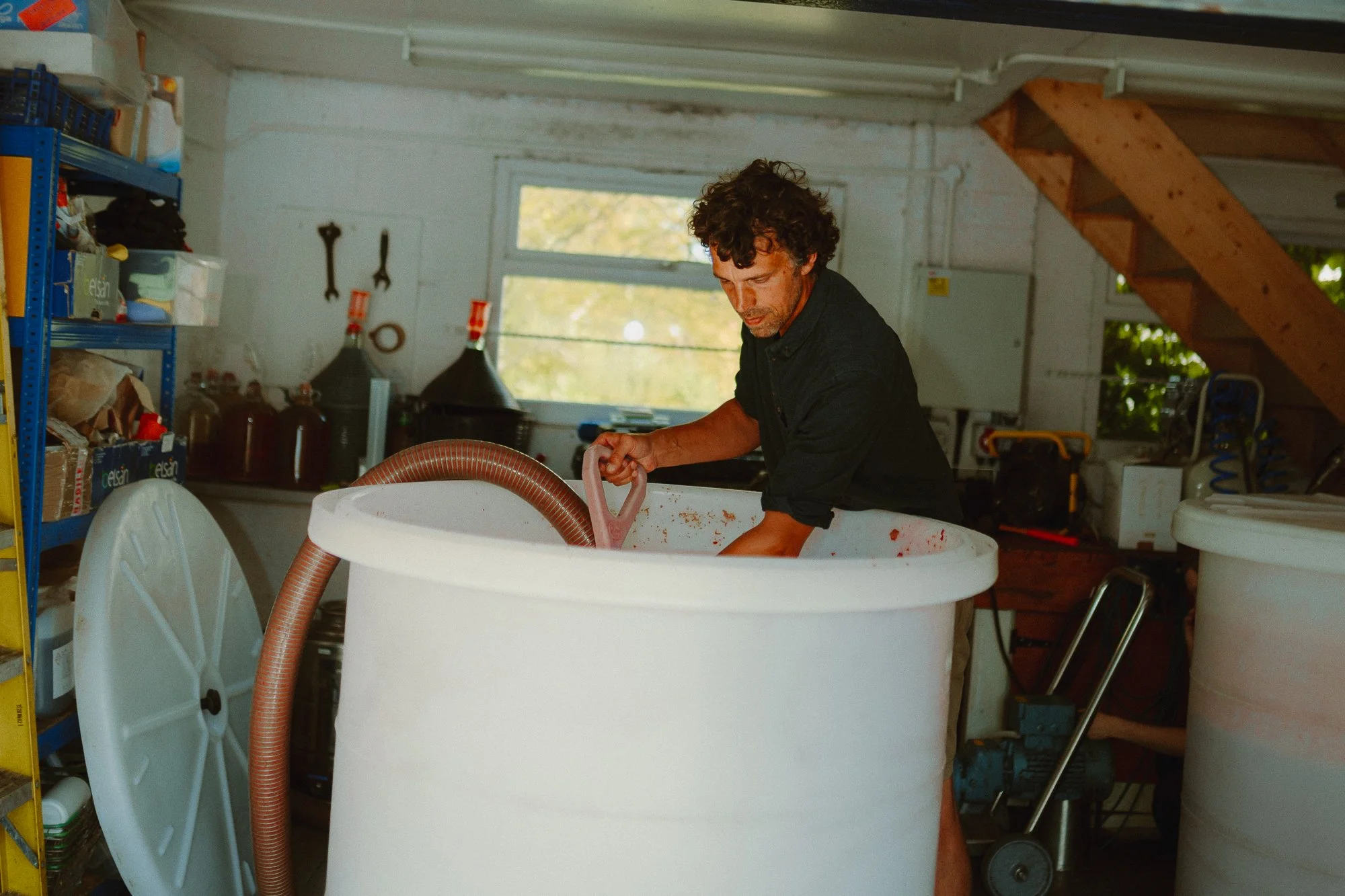
After the raspberries are unveiled, Barney wheels the fermenter from the carport to an adjacent garage (“an excise warehouse that occasionally has a car parked in it,” as he jokes). The berries still need to be transferred to the distillery building, so he hoists a hose into the fermenter, passes me a shovel, and turns on the pump.
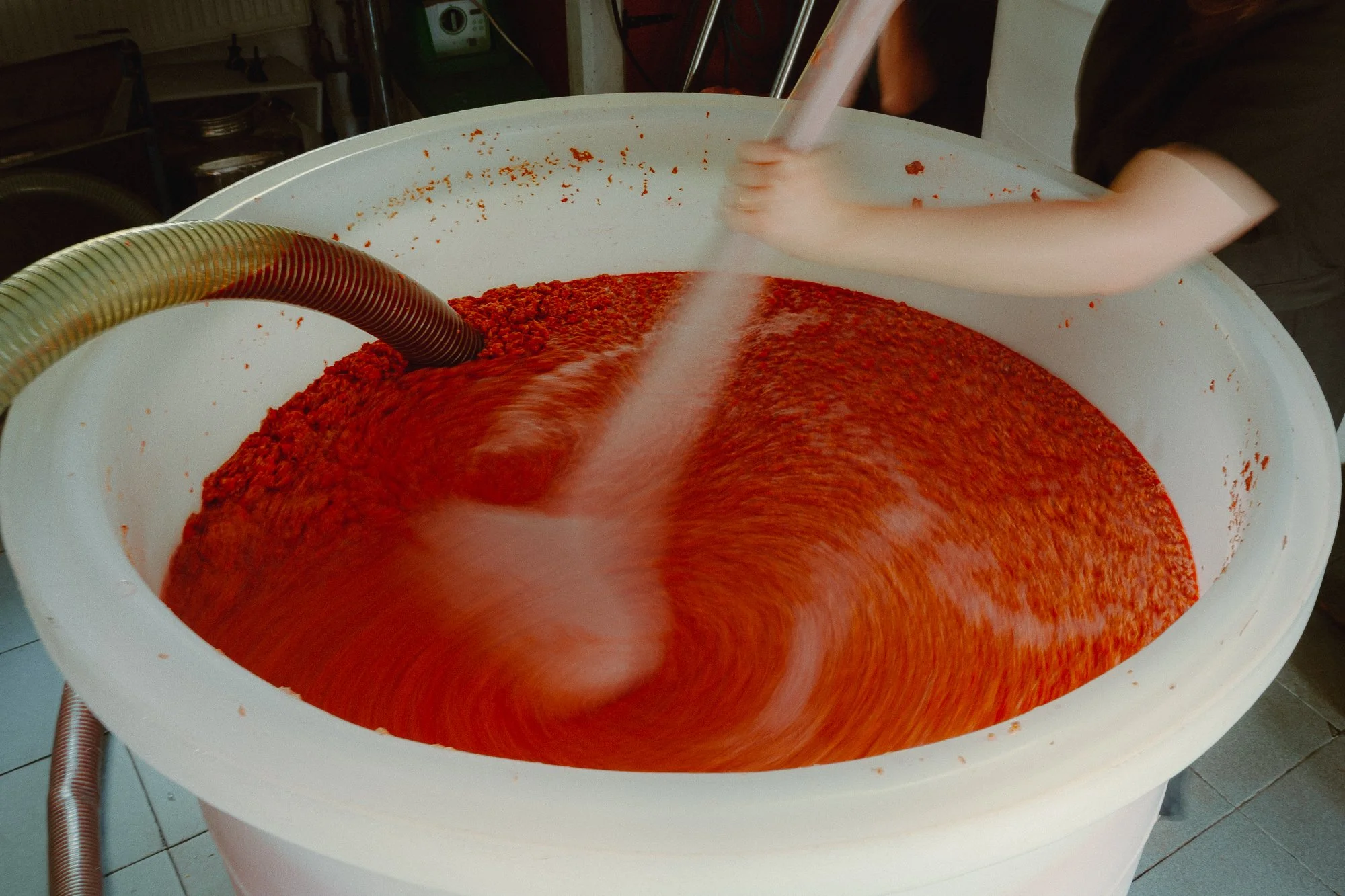
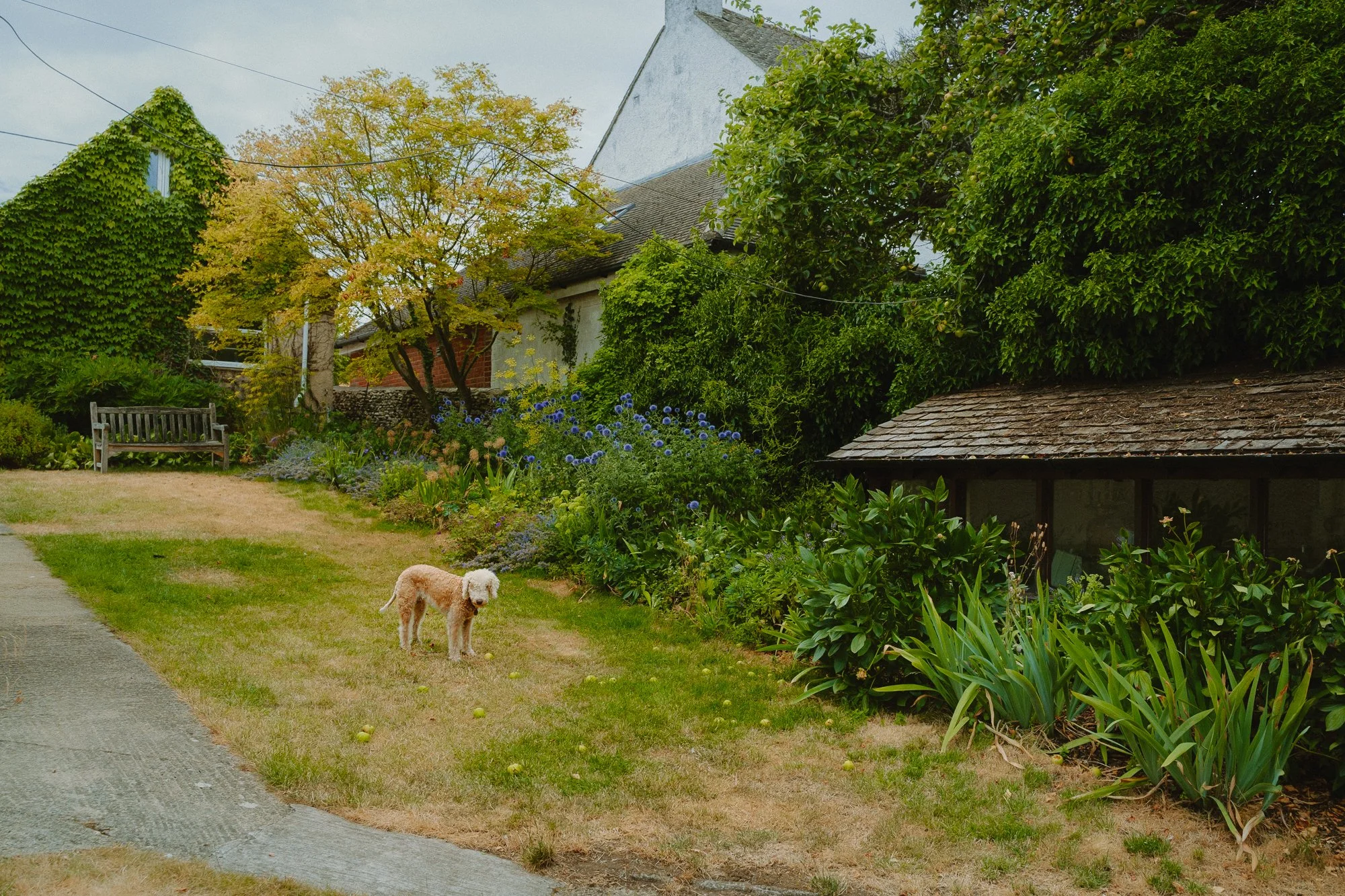
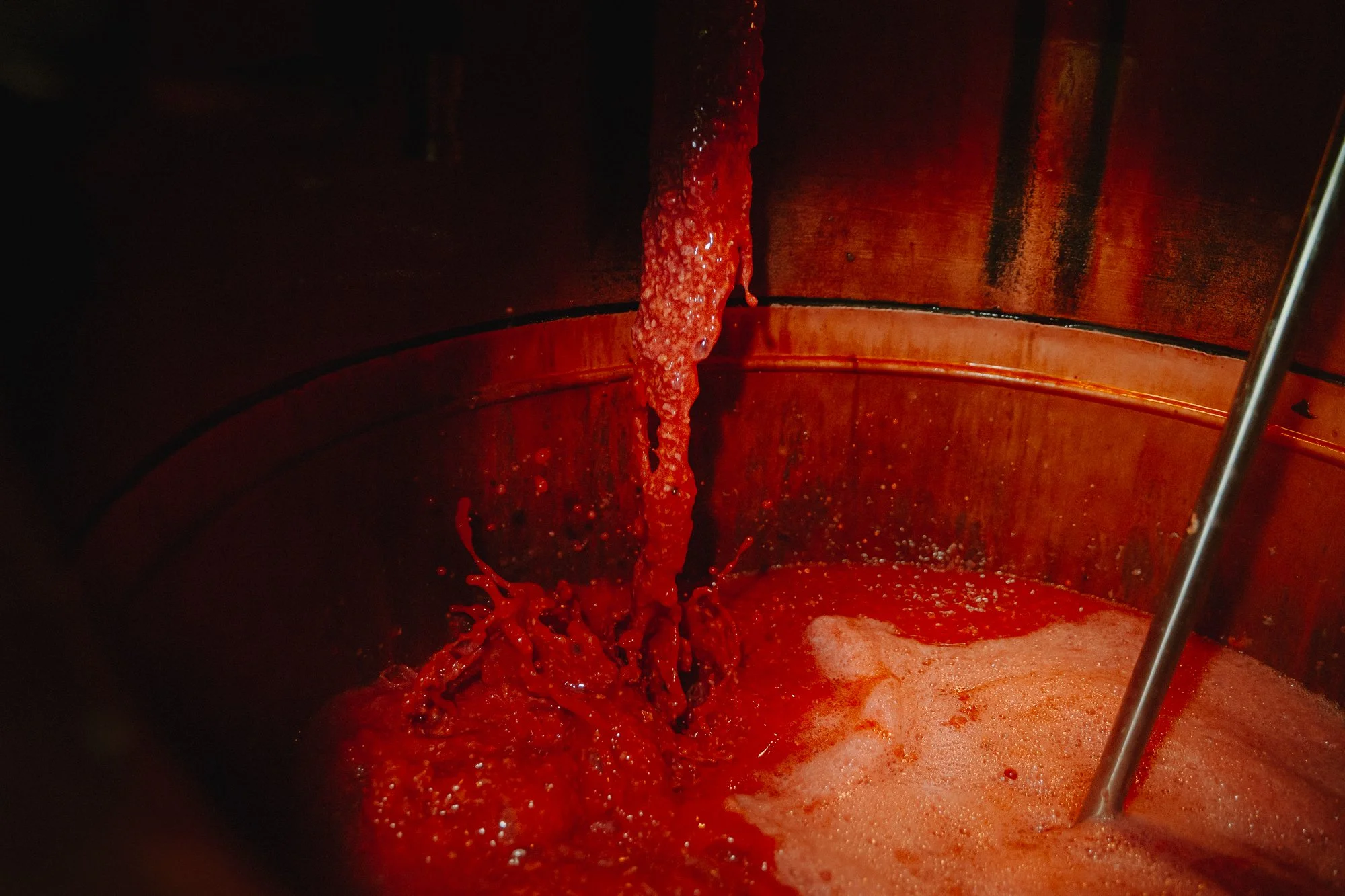
As the motor groans to life, the fruit fills the hose in a rushing pink torrent that flows out of the garage, down the lawn, and into the waiting still. It’s a distance of 20 or 30 feet between the two buildings—far enough that Barney has to phone Hannah, who’s waiting in the lean-to, to coordinate when the pump is turned off. His Bedlington terrier, Pip, lounges on the grass, clearly accustomed to the racket.
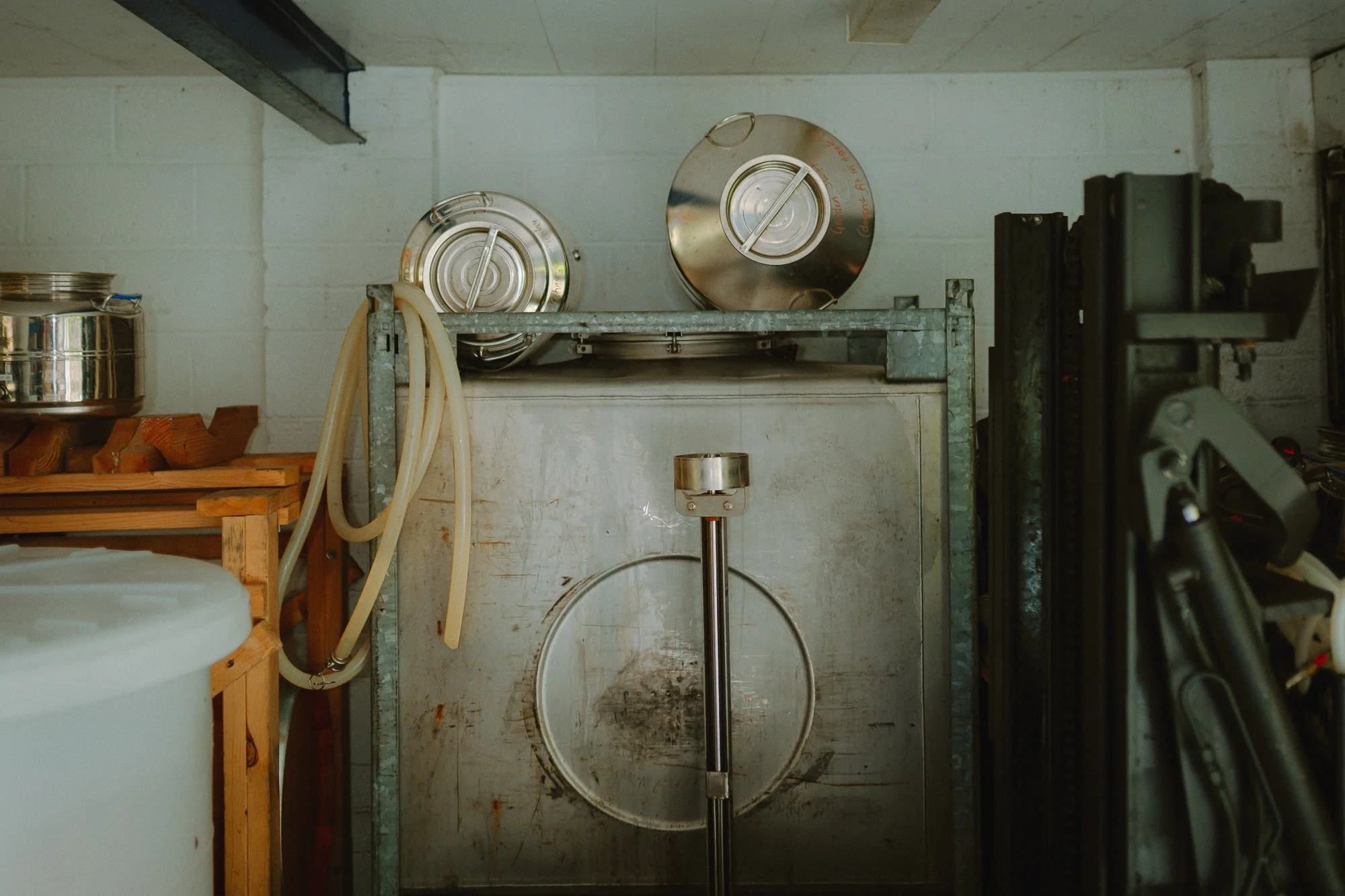
There is much in the distillery’s ad hoc setup that would likely surprise those who have only encountered its products in Michelin-starred restaurants or World’s 50 Best cocktail bars. Still, it’s an improvement on the original arrangement. “When I started, I had buckets and a wheelbarrow,” Barney laughs.
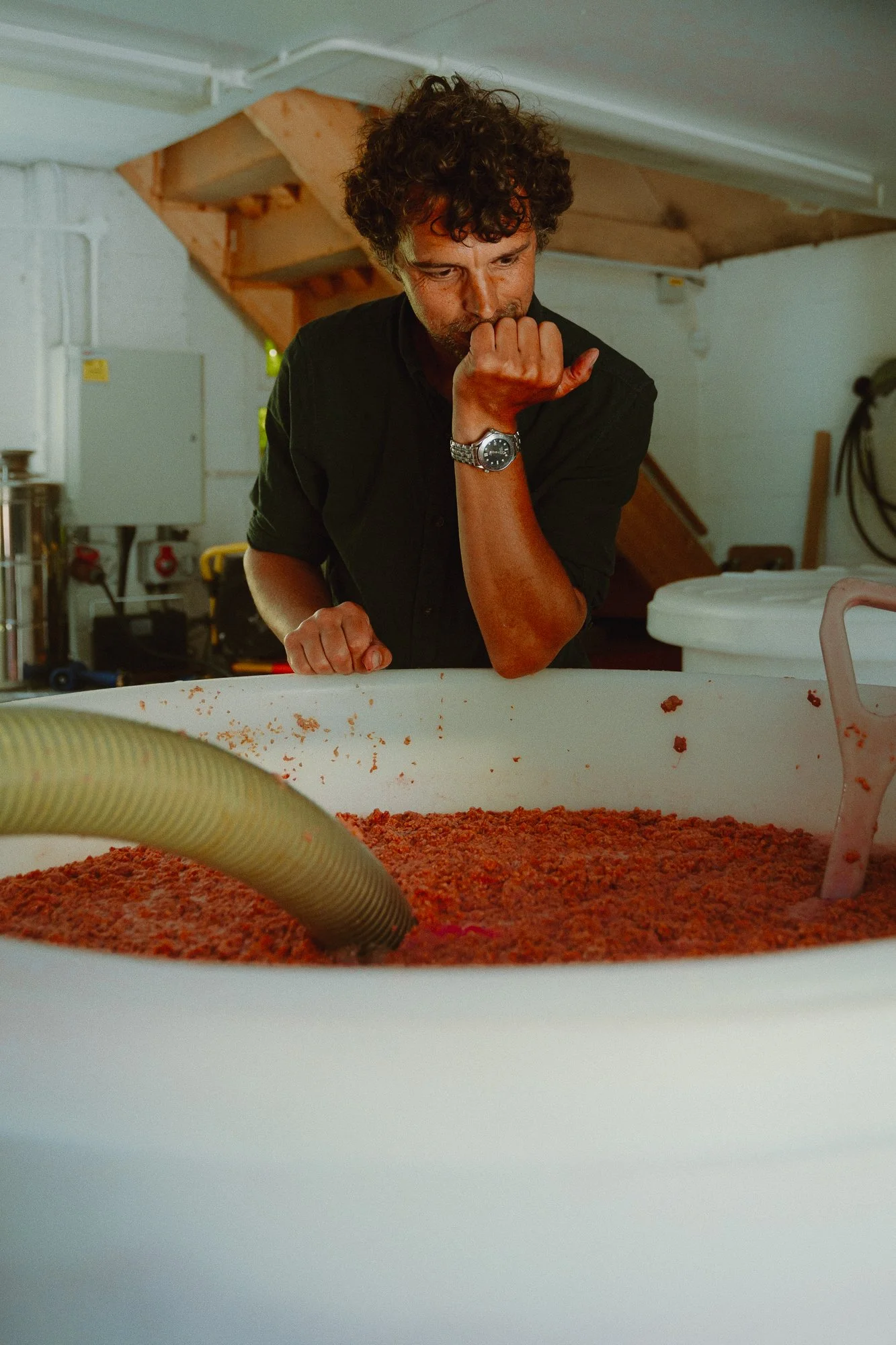
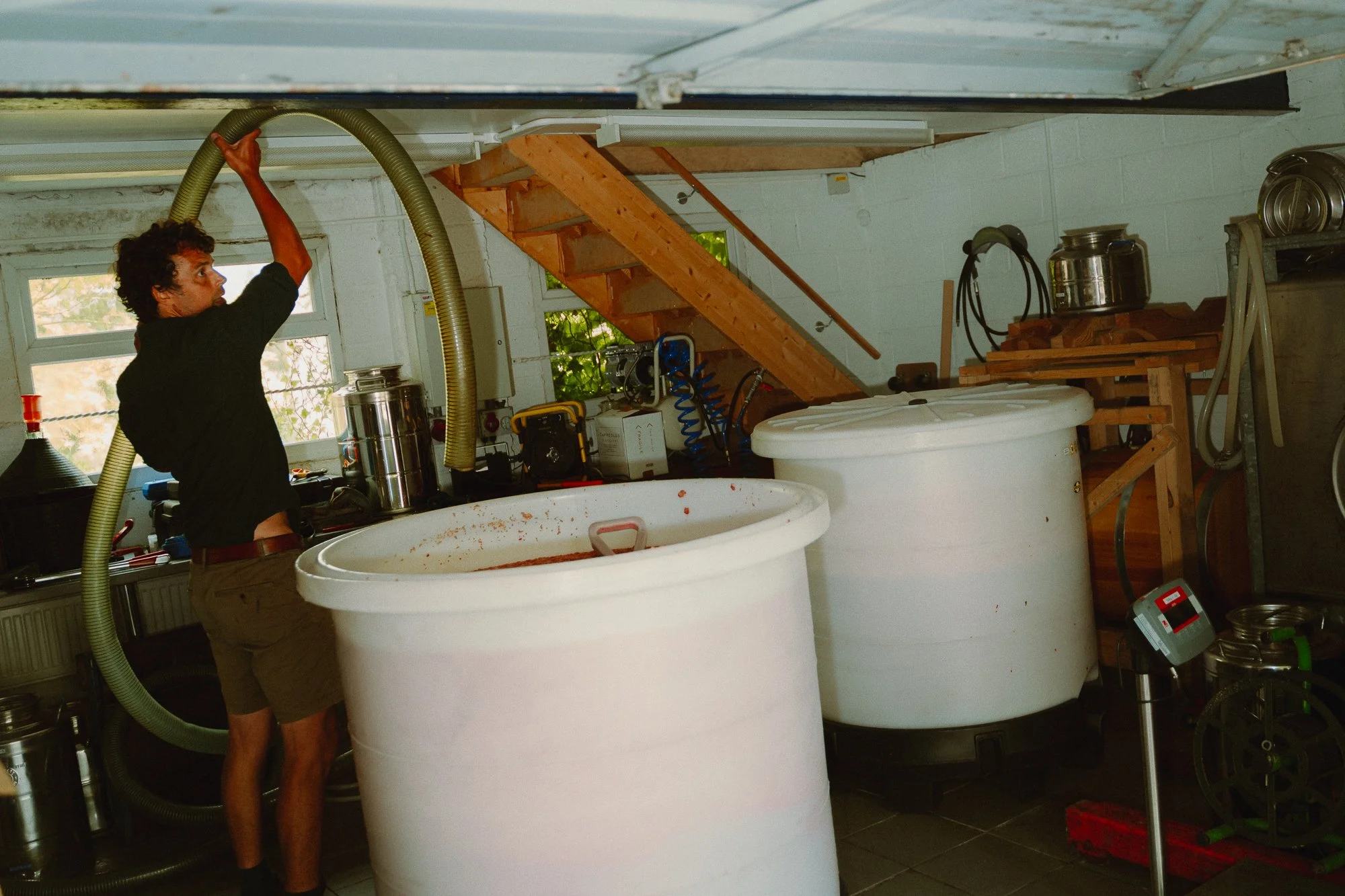
From the beginning—in 2016, when Stefan agreed to let Barney use the family home as the base for his nascent business—Capreolus has run up against the limits of its intended constraints. “Dad very kindly said [...] we’ll set you up here, but when you hit 5,000 bottles a year we’ll kick you out,” Barney says.
That threshold was almost immediately breached. Capreolus launched with a gin, Garden Swift, designed to be the bestseller that would help finance its eaux de vie, comparatively the more niche passion project. Just five months in, The Whisky Exchange named Garden Swift its spirit of the year. “I was suddenly exporting to about four countries,” Barney says. “We ended up selling 9,500 bottles of gin in year one.”
““I thought, this guy is up there with two of the greatest distillers of eaux de vie in the world, and I absolutely loved his gin.””
Dawn Davies MW, formerly the commercial buying director at The Whisky Exchange, was one of Capreolus’ earliest champions. “I tried his gin and his eaux de vie, and I was like, Okay, hold on [...] I thought, this guy is up there with two of the greatest distillers of eaux de vie in the world, and I absolutely loved his gin,” she says. “When you find a product that’s that special, and you’re in a position of power, you want to support that product because you believe so strongly in it.”
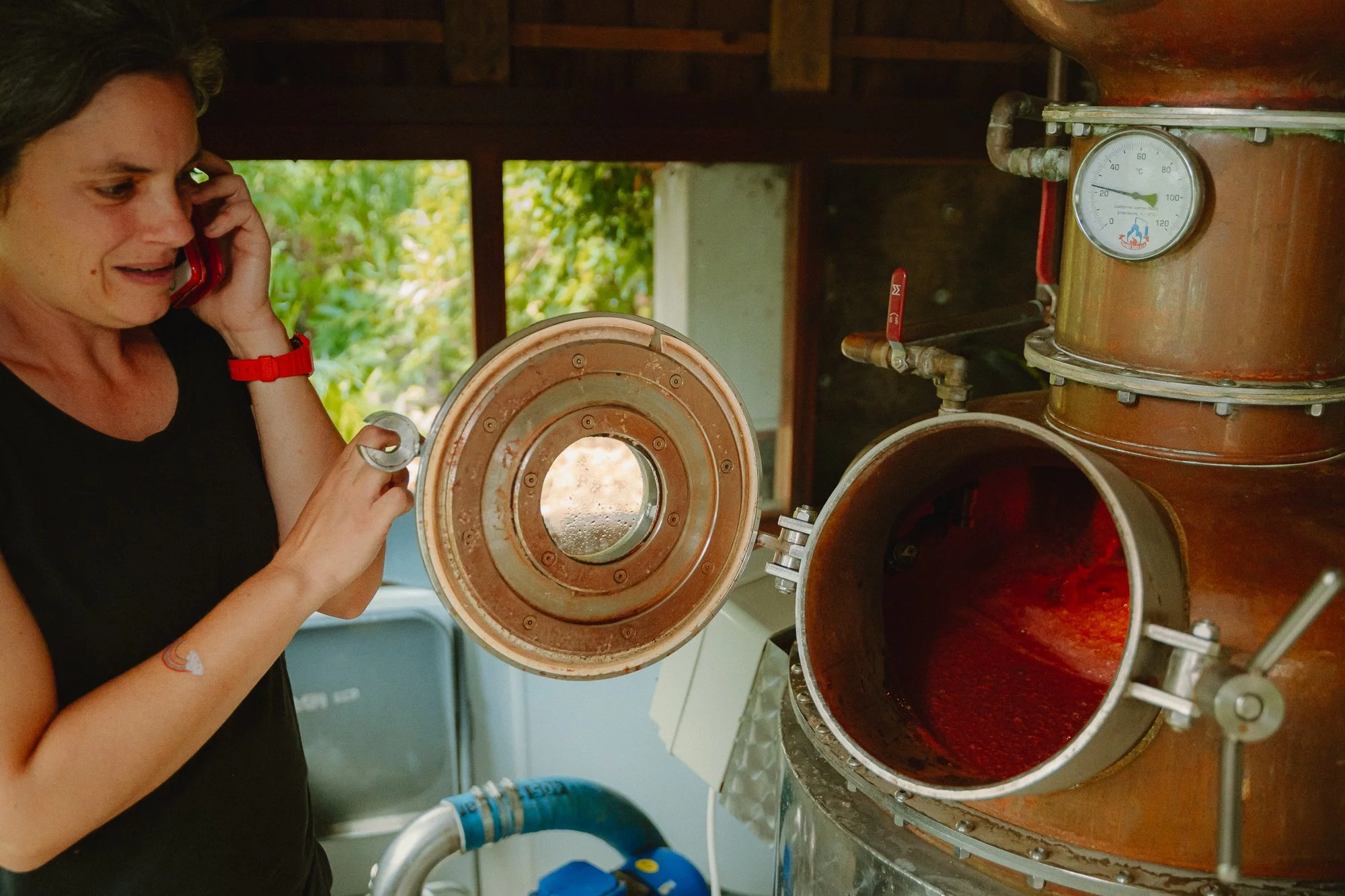
That sudden, unexpected success sent the family scrambling. “We were all so swamped,” Hannah says. Back when she was still working at a local college, she would race back to the distillery during her lunch break to label bottles. Thankfully, they could largely draw from their own resources to make it work.
“[Hannah’s] dad is a letterpress printer, and my brother is a graphic designer, and Dad runs a communications business, and I was a photographer, so we leaned heavily on everyone,” Barney says. “But that catapulted us a bit.”
In 2018, Capreolus gained some much-needed support when it won a £10,462 grant from the now-defunct Cotswolds LEADER Programme, partly supported by the European Fund for Rural Development. With the money, they were able to purchase a second still, the mash pump, storage containers, a trailer, fermenters, straddle stackers, and an upgraded power supply.
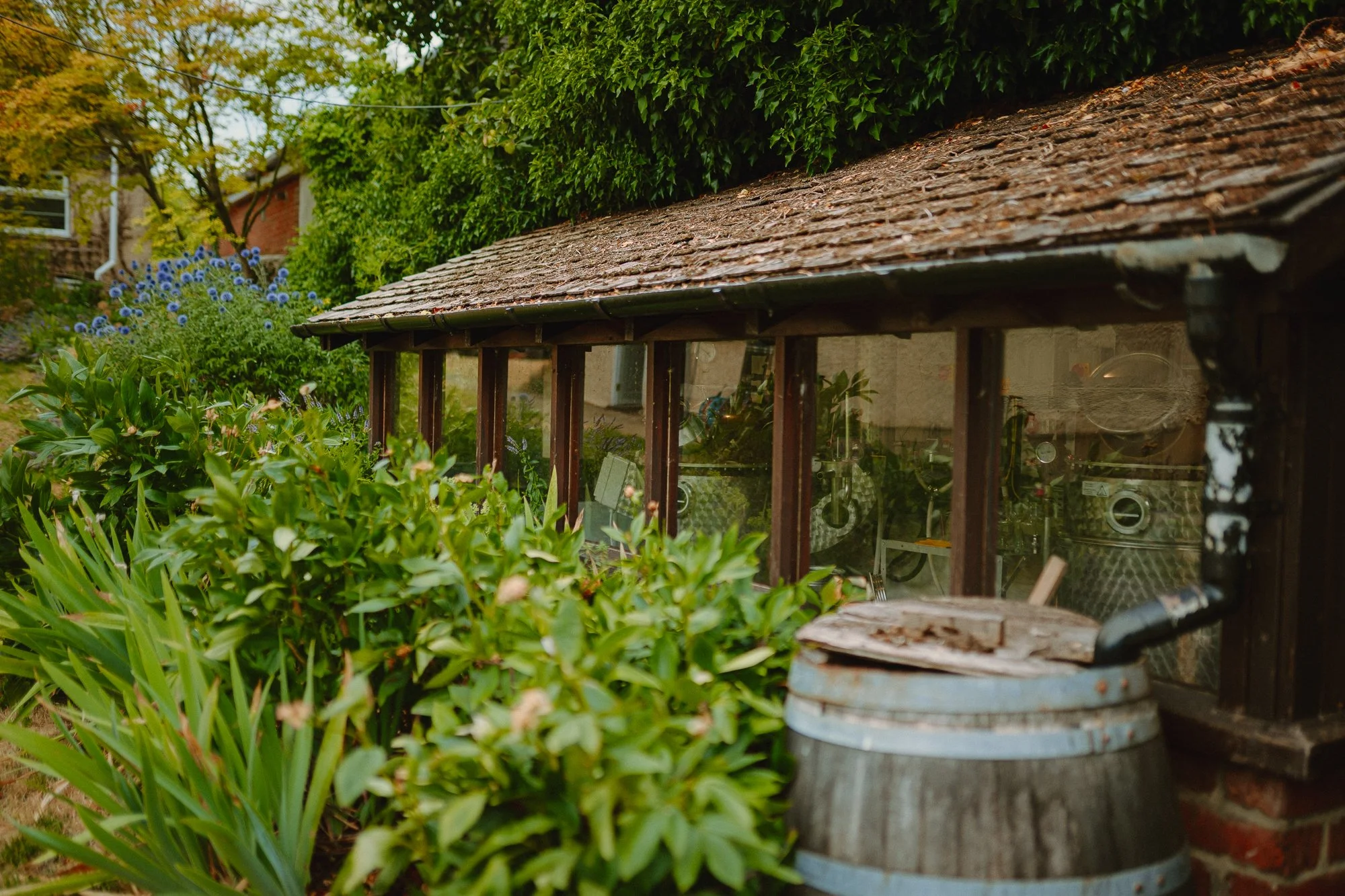
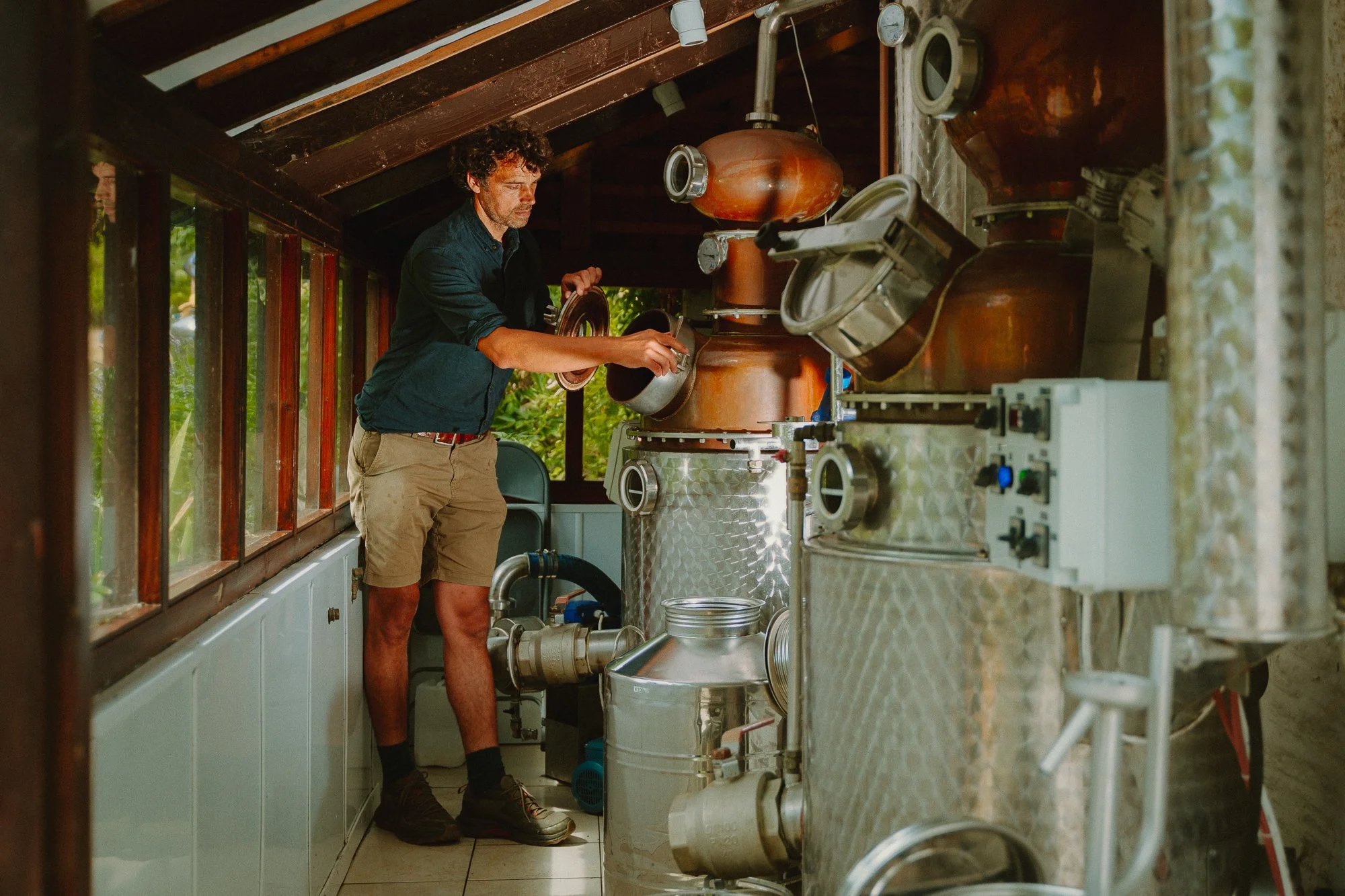
Four years later, Barney won the Rising Star Award at the International Spirits Competition. “The next day, I was stood in the rain pushing apricots into a pump, getting absolutely soaking, and scraping yeast out of fermenters,” he says. “Most of what we do is so agricultural and so dirty, and hands-on and sticky and steamy, you know. And like, yes, [the eaux de vie] get sold into these places. But that’s not this reality.”
***
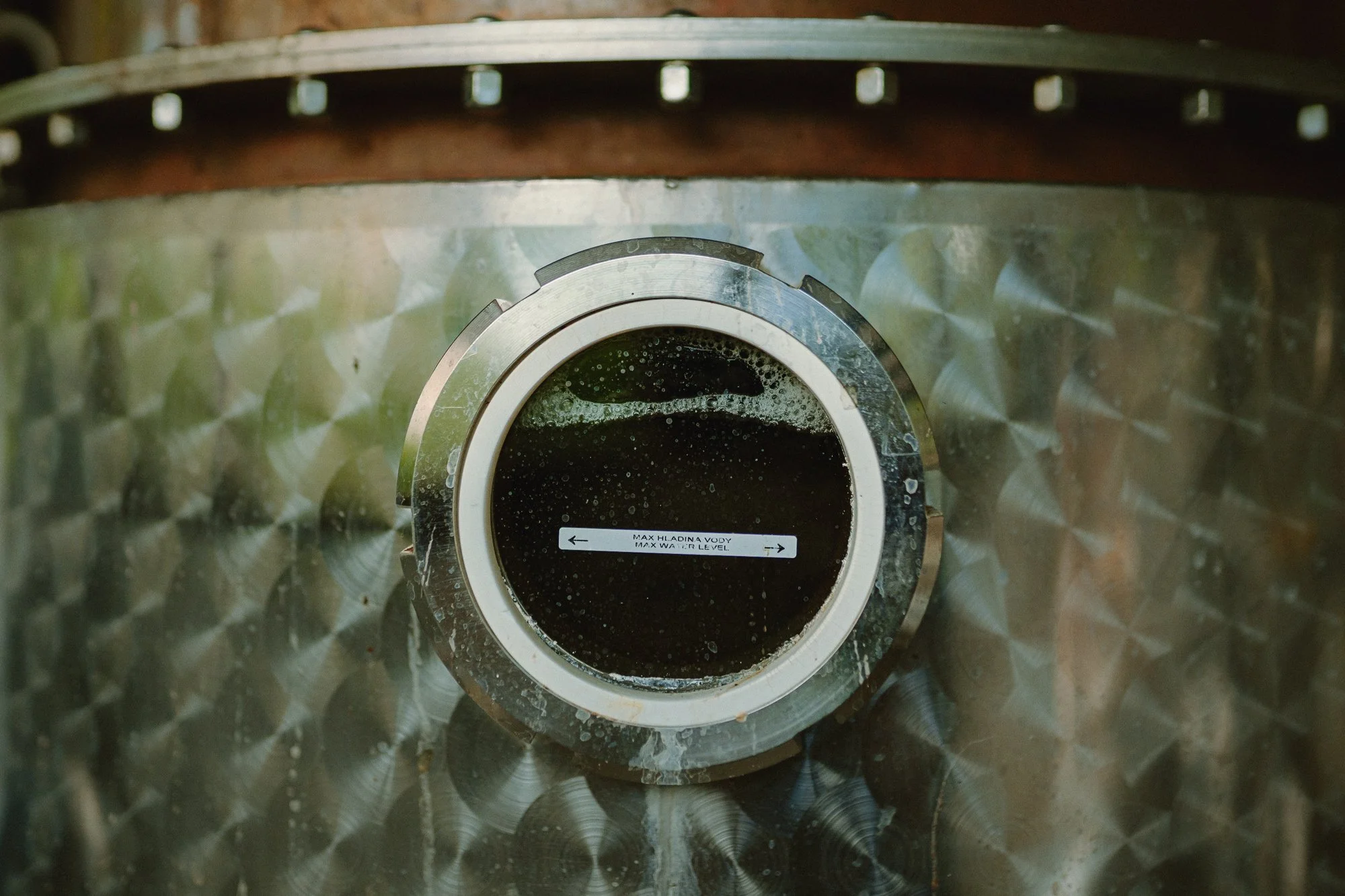
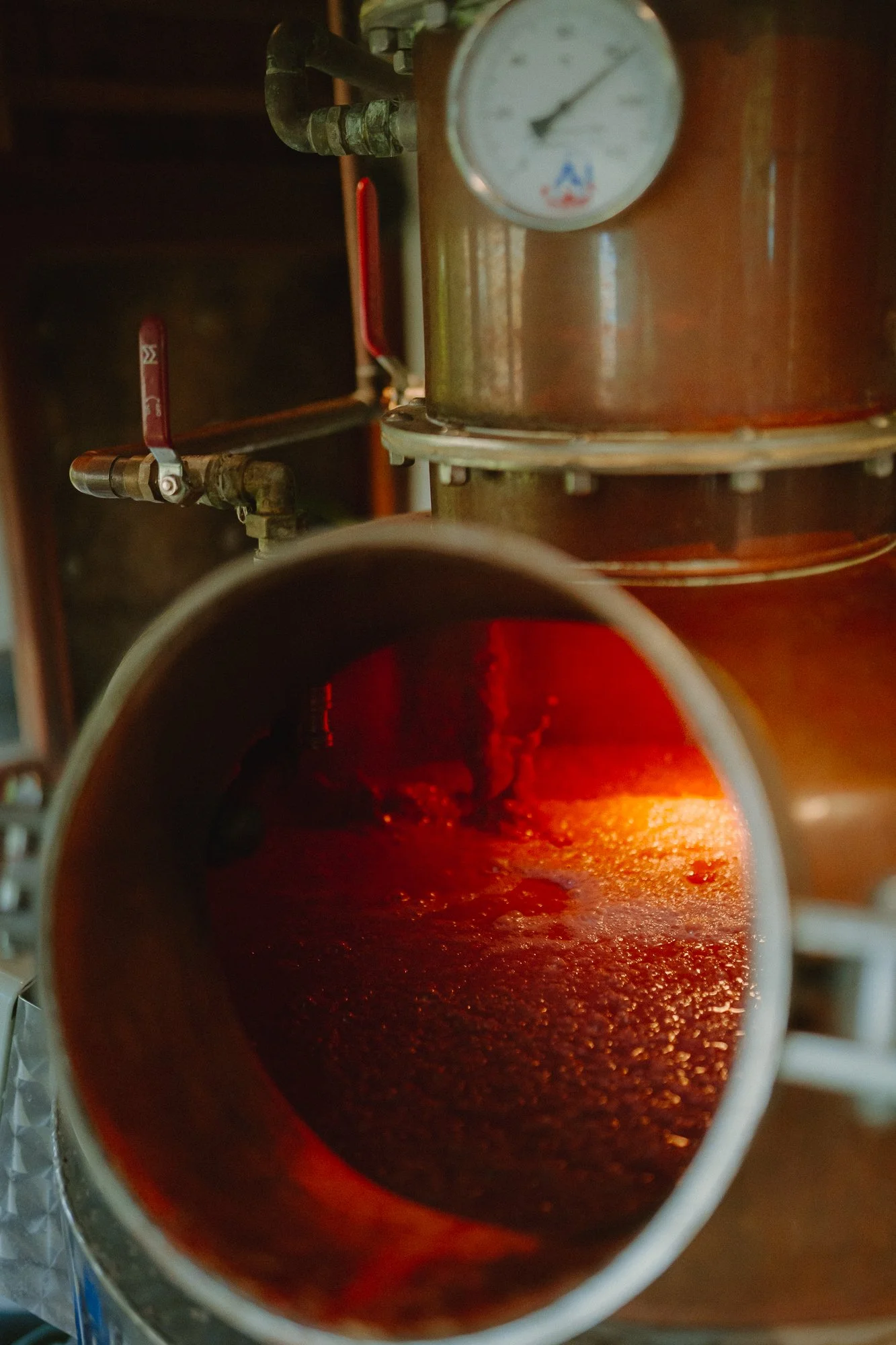
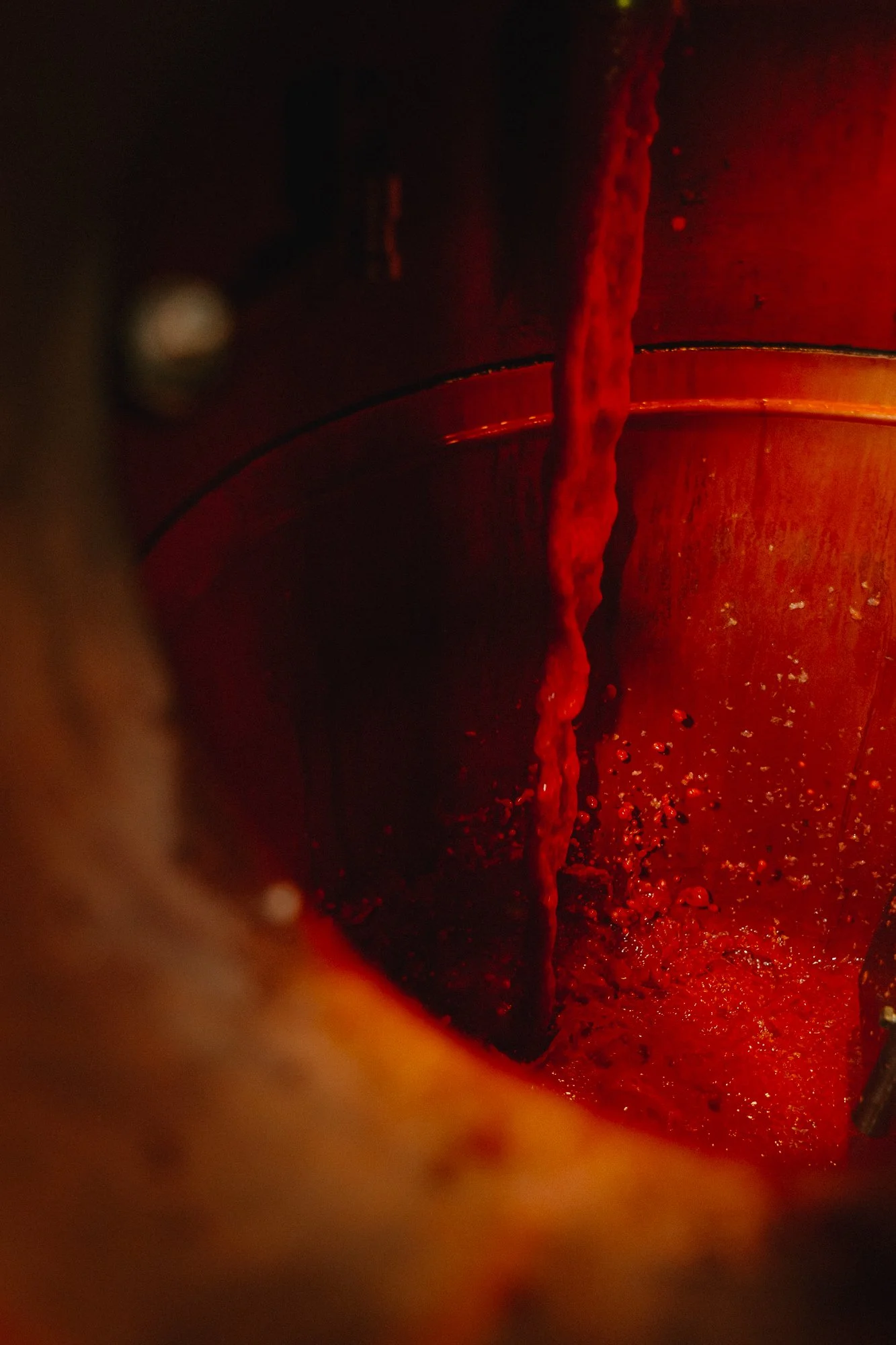
Once safely filled with fruit, the still churns into action, spinning the raspberries into a vermillion whirlpool. As the heat inside rises, it forms its own weather system, a cloud of vapour visible through the glass. Eventually, there is the first tink-tink of the distillate dripping into the steel milk can below. That noise is followed by Barney’s favourite sound. As the mash reaches a boiling point, the pressure sends dissolved gases whistling through the parrot’s ports. Don’t think of a kettle screeching on the stove—think of the mournful key of foghorns, turned down low.
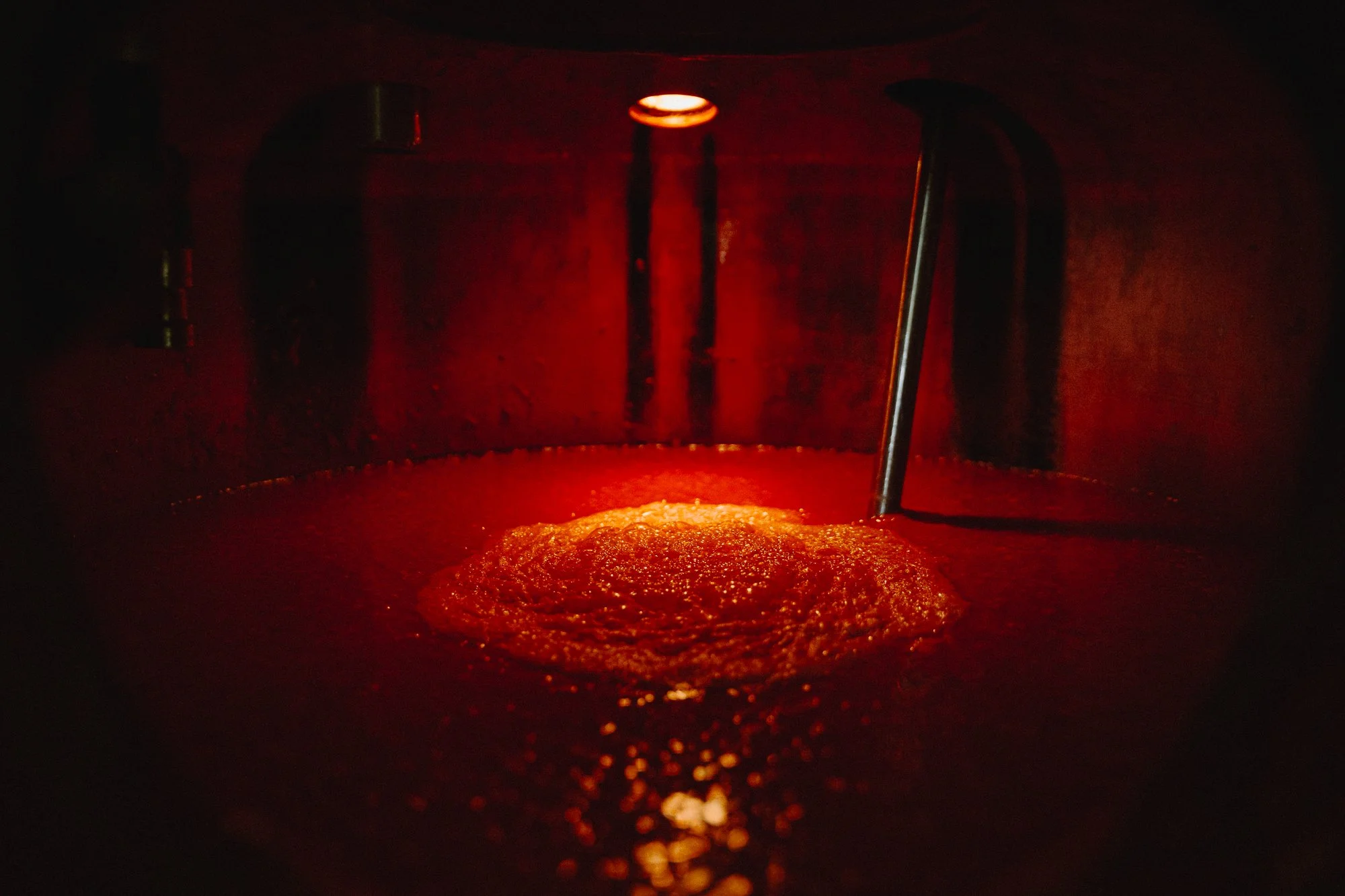
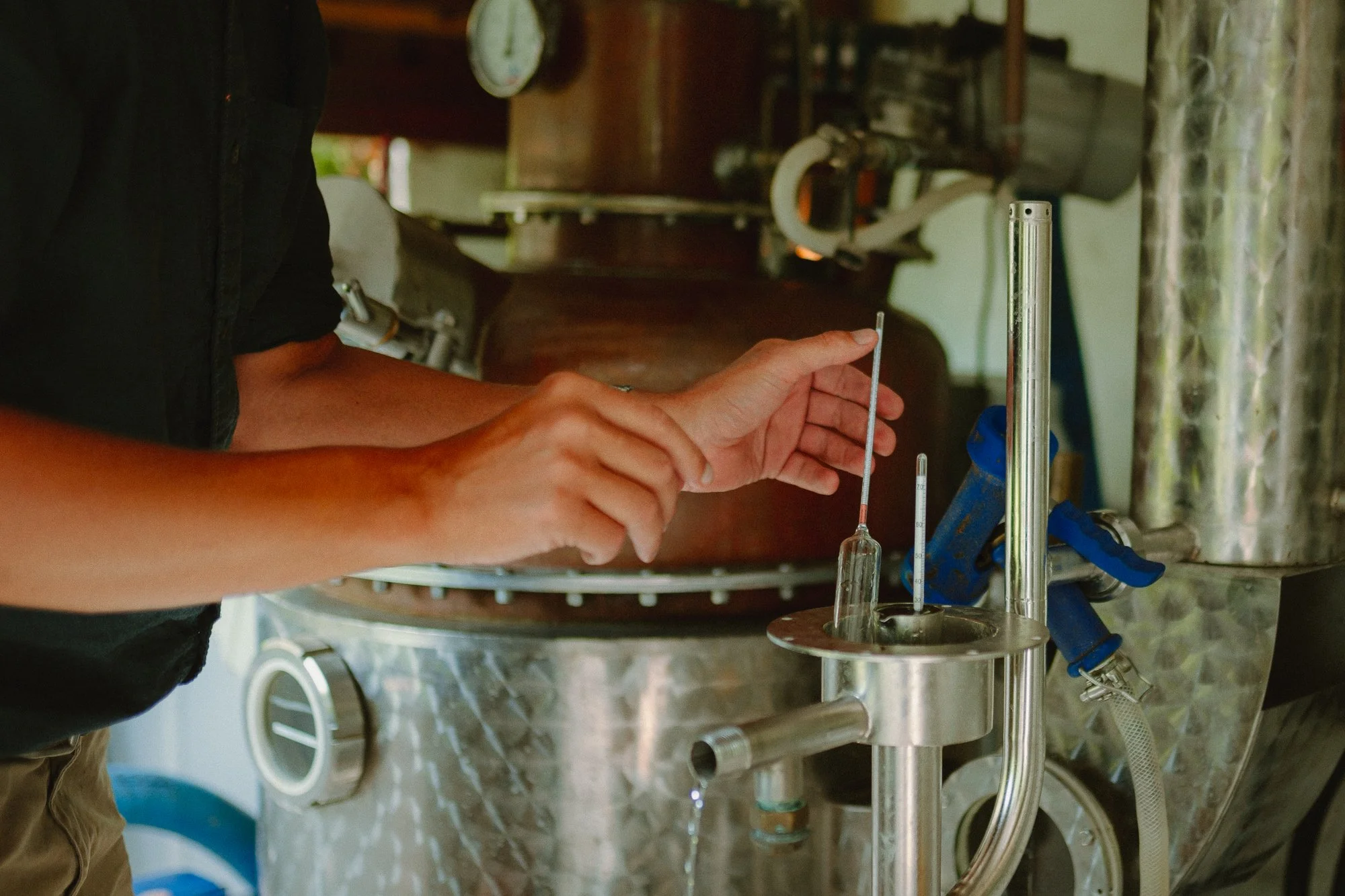
Capreolus distills each of its eaux de vie three times. The first stripping run produces the low wines, and raises the liquid’s ABV to around 25%. The second stripping run sees the ABV jump to 50%, and yields what Barney terms the “high wines.” The third run is when it departs from common practice, and when its spirits achieve their finishing precision and refinement.
This spirit run is when Barney separates the heart cut from the heads, with their “superglue-like” aldehydes, and the fatty tails, “which suck all the life away from the fruit.” What remains of each distillate is proportionally minuscule, on average 40% of the volume of the starting alcohol. He estimates that his heads cut is more than nine times the volume of what a Calvados producer would take, and 20 times the volume of a whisky distiller’s cut. No bookkeeper would consent to such ratios; in the early days, Barney says, he was “terrified” by them.
“I remember distilling raspberries for the first time, and we’d worked with a tonne of fruit. I stood here after the last distillation and I looked down into the can before me, and we had 18 litres of liquid. I thought I was literally going to be sick,” he says. “And I took a teaspoon and I diluted it and I tasted it. I drove home, and I got home an hour later and I could still taste fresh fruit in my mouth. I was like, ‘Well, this is 100% worth it.’”
Historically, eau de vie was a product of necessity, an agricultural spirit designed to make good use of gluts or damaged crops, or turn them into additional income. Capreolus takes a decidedly different approach. “There’s still a perception that fruit spirits are for using bad fruits up, where the reality is, when you’re elevating things so highly, you have to work with extraordinary fruit,” Barney says. “The cost of that is not inconsiderable.”
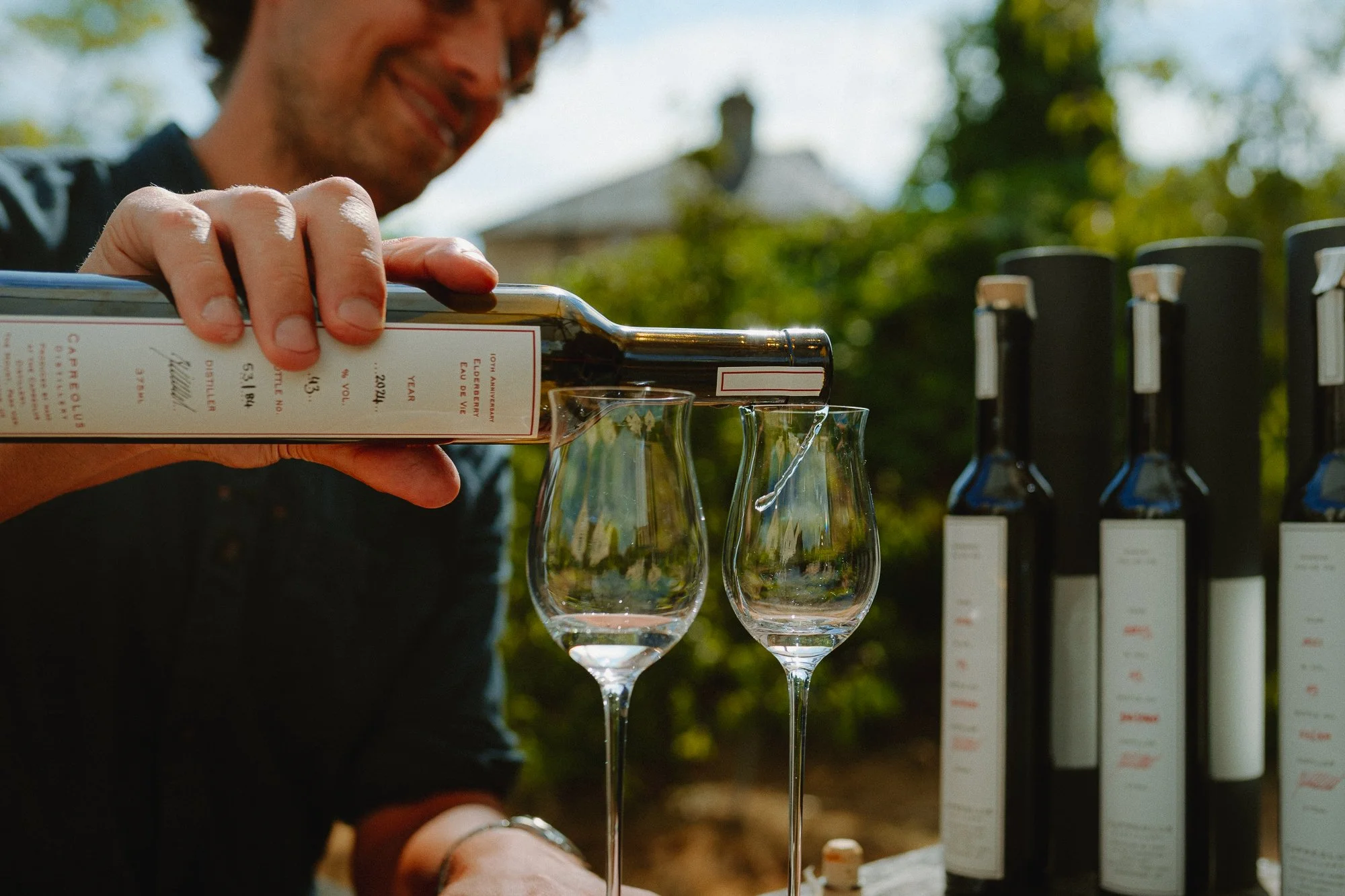
The result is a product of undeniable luxury. Capreolus has collaborated with Le Manoir aux Quat’Saisons; its 1,000 Trees apple eau de vie was used as an ingredient in King Charles’ coronation cake; the King of Sweden is said to have a bottle of the gooseberry eau de vie in his drinks cabinet. The 375ml bottles start at £79.50, though the distillery’s most expensive spirit, the elderberry eau de vie released for its 10th anniversary, costs £300.
These prices might sound extraordinary, or even perverse. But if you consider the labour and the agriculture that they represent, Capreolus’ spirits could almost be described as good-value. The fruit comes from farmers within a 35-mile radius, who are paid far above commodity prices for their harvests. Each piece of fruit is then assessed by hand, every stem, hull, leaf, and twig removed before fermentation commences. (One year, after receiving a bumper crop of raspberries, “We worked out that we had touched 3 million raspberries in three weeks,” Barney says.)
“ “Fruit eaux de vie are a fairly obscure product, but at the same time the essence is so simple.” ”
Then there’s the concentration. That bottle of elderberry eau de vie represents a mind-boggling ratio of 62kg of fruit in every litre of liquid. That’s why Barney says even 50ml pours of the spirits are too much. “If I drink at home, I would do 15 to 20ml,” he says. “They’re so intense.”
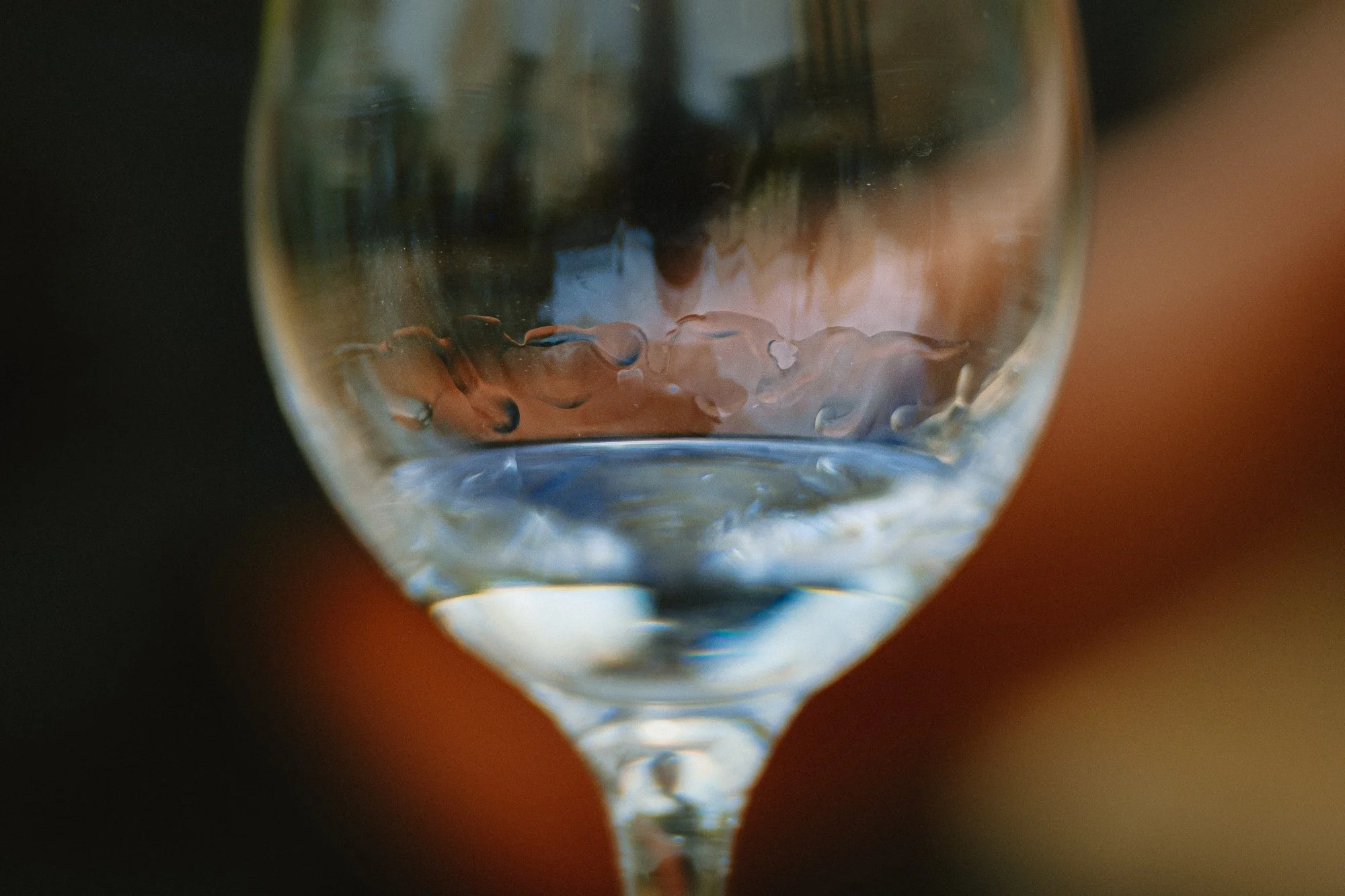
That intensity is one reason why Capreolus’ eaux de vie have been embraced by so many bartenders. Ryan Chetiyawardana, aka Mr. Lyan, uses them across his bars in London, Amsterdam, and Washington, D.C. A Bar With Shapes for a Name in London adds the raspberry eau de vie to its Pastel cocktail; just 2.5ml is enough to change the profile of the drink.
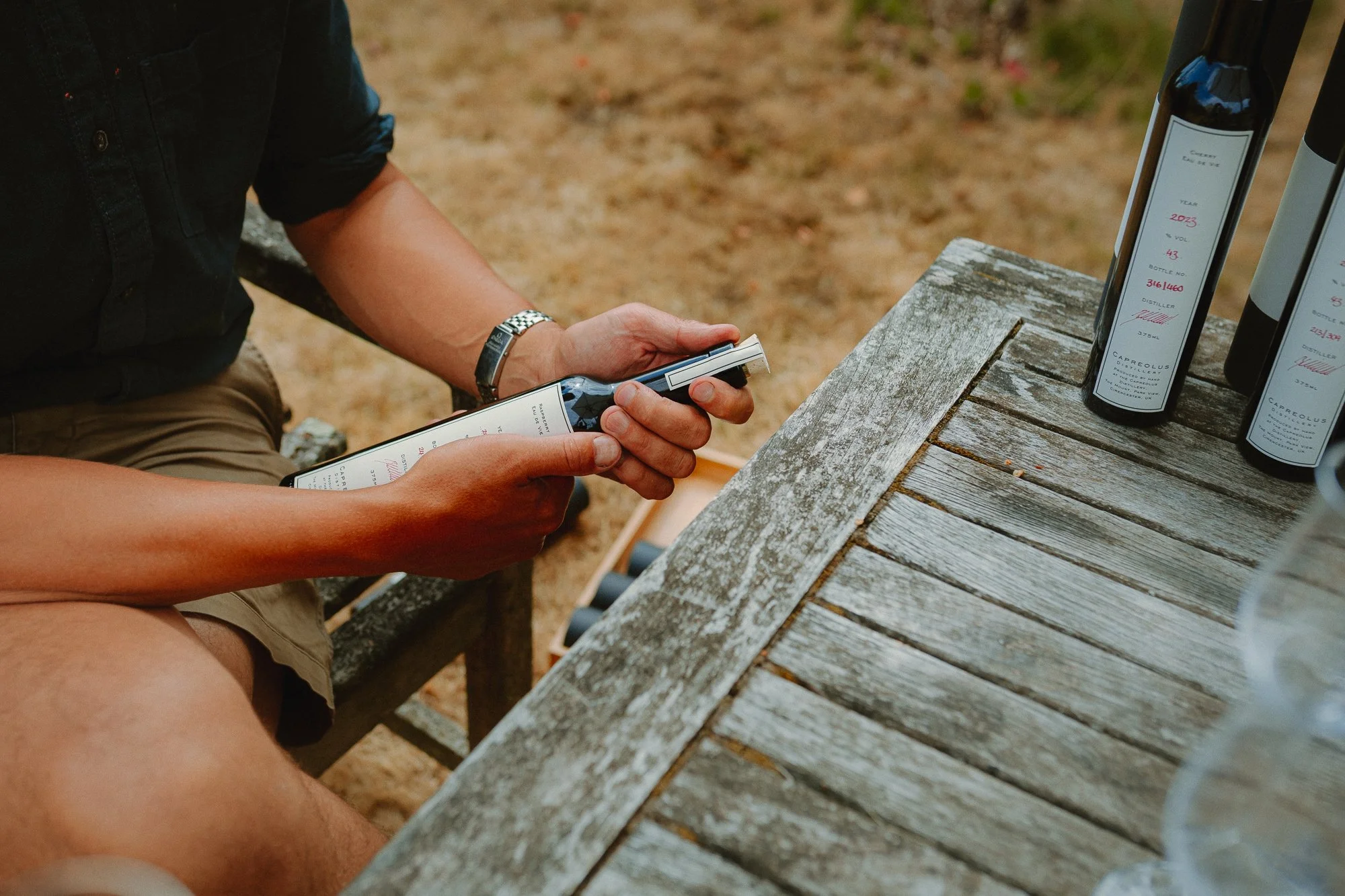
In Manchester, Bar Shrimp built its house cocktail, Dabinett Apple, around Capreolus’ eponymous eau de vie, which beverage director Daniel Craig Martin selected from Barney’s stock.
“Say you were picking apples in the orchard for a whole day, and at the end you smell your hands—that’s the essence [...] of the spirit,” Daniel says. “Not this pure, super sweet, confectionary apple flavour, but the bitterness, the woods, the richness, the depth, the complexity, the earth, the soil.”
To complement it, he added honey and ice cider, and lengthened the drink with apple juice. The eau de vie, he says, functions as an “activator” that seasons the drink, much like salt in a dish. “There’s a reason you only need 3–4ml per drink—there’s so much compression.”
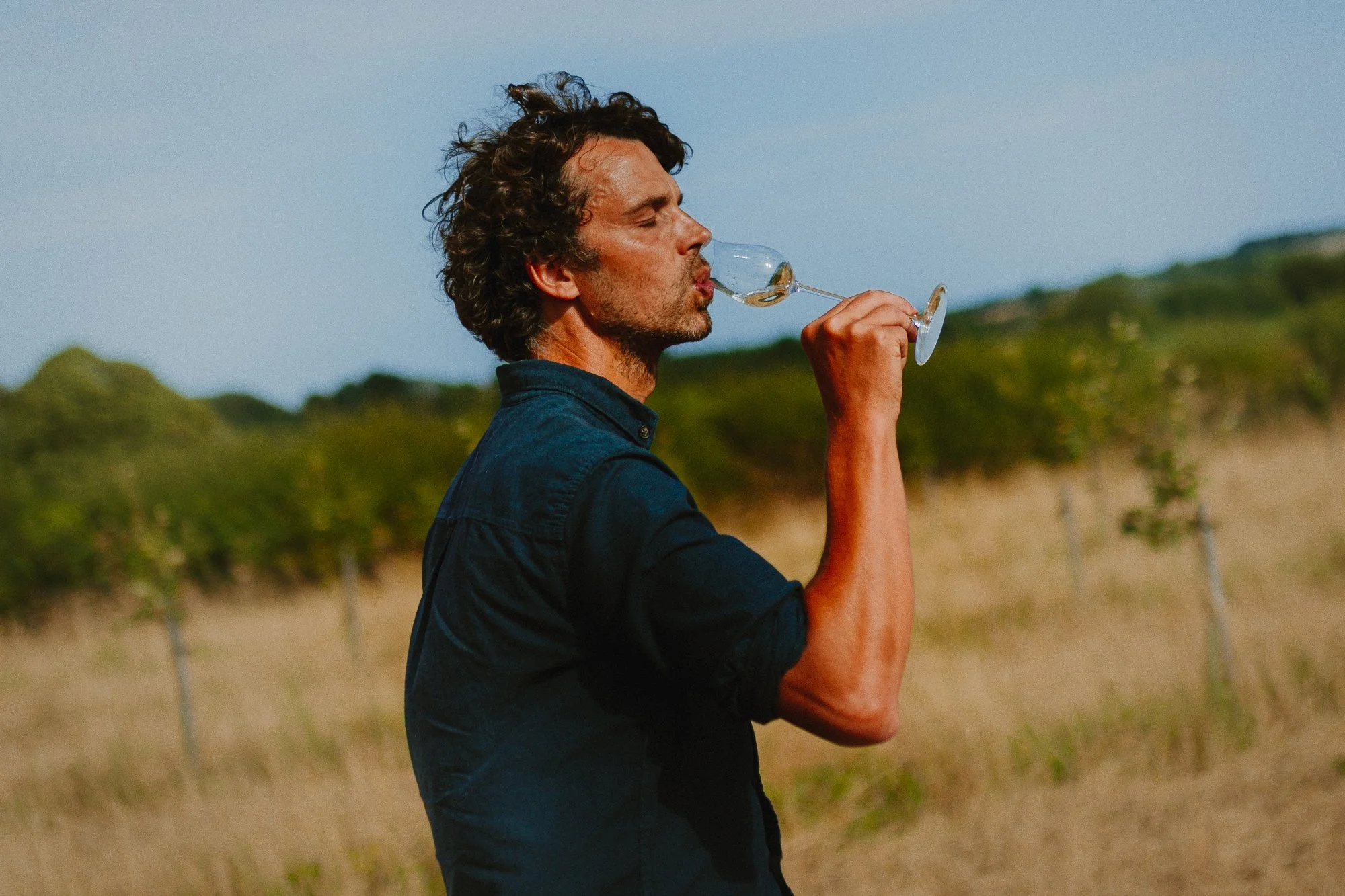
The result is something that is both wonderfully complex but surprisingly accessible. “Fruit eaux de vie are a fairly obscure product, but at the same time the essence is so simple,” Daniel says. Take Capreolus’ perry pear eau de vie. “When people are like, ‘What is that?’ […] It’s pears, harvested, crushed, left to ferment, and then distilled. You are tasting and drinking pears. That’s it.’ The beauty of that simplicity, to be able to champion that, has always been a really fun and exciting thing for us.”
***
It is useful to have champions like these when working within a category that, at least in this country, has little consumer recognition. The first problem: Its name is French. Say it out loud, clarify that it’s a kind of fruit brandy, that “eau de vie” translates to “water of life”—not that that helps much, given that “water of life” in Gaelic, “uisge beatha,” gave us “whisky” instead.
It’s even harder to explain what Capreolus’ products are because they are unique within their category—not just because of how they’re made, but because of the fruits they contain. Eau de vie is most commonly associated with Central and Eastern Europe, but in Barney’s hands, it becomes distinctly English.
There are few other examples of fruit spirits like these made with gooseberries, greengages, medlars, or Bacchus grapes. Even something as commonplace as the raspberry is rare in Continental eaux de vie. There, the berries are more often left unfermented, and macerated with neutral alcohol to make a less-concentrated spirit called geist.
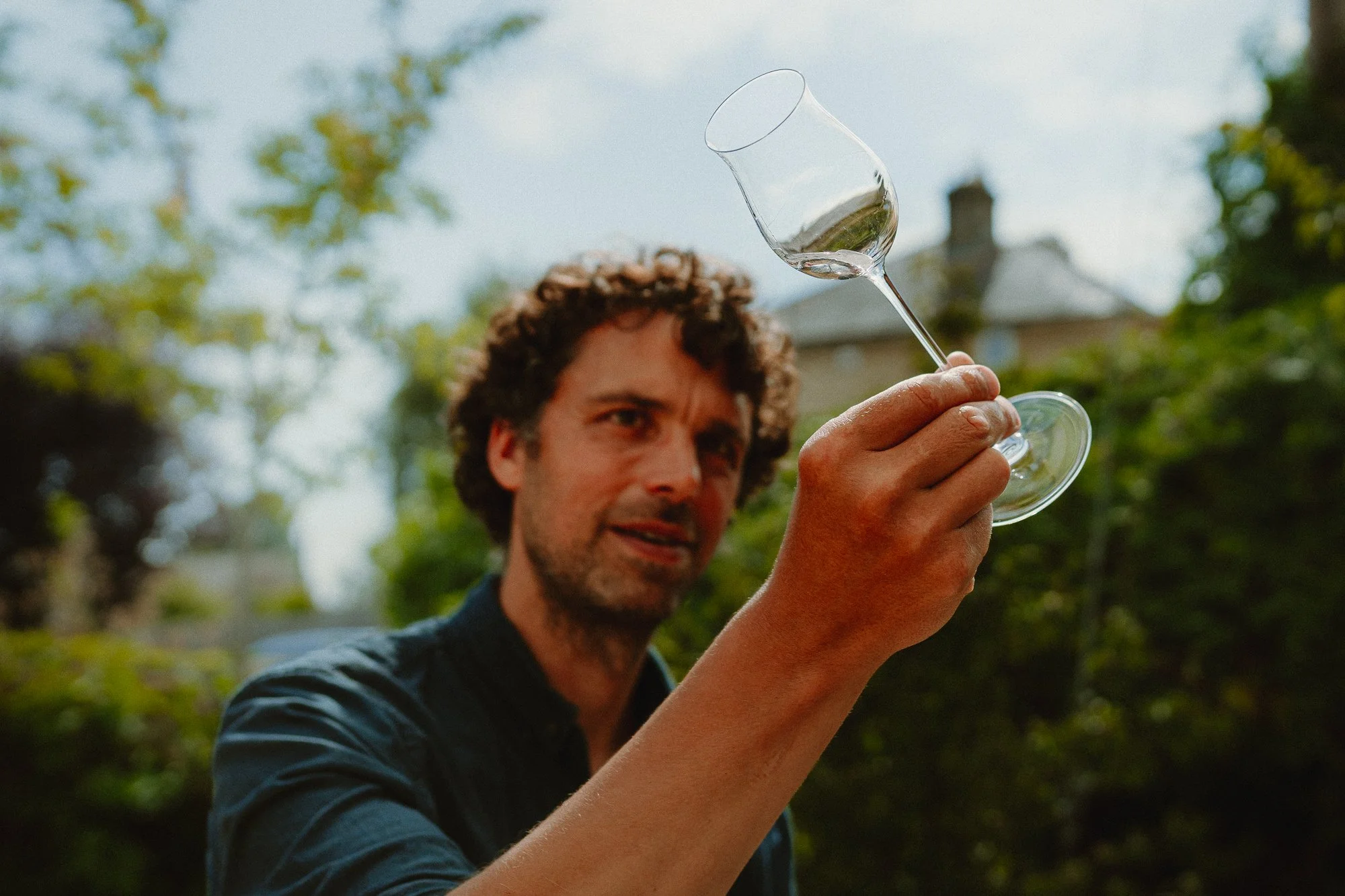
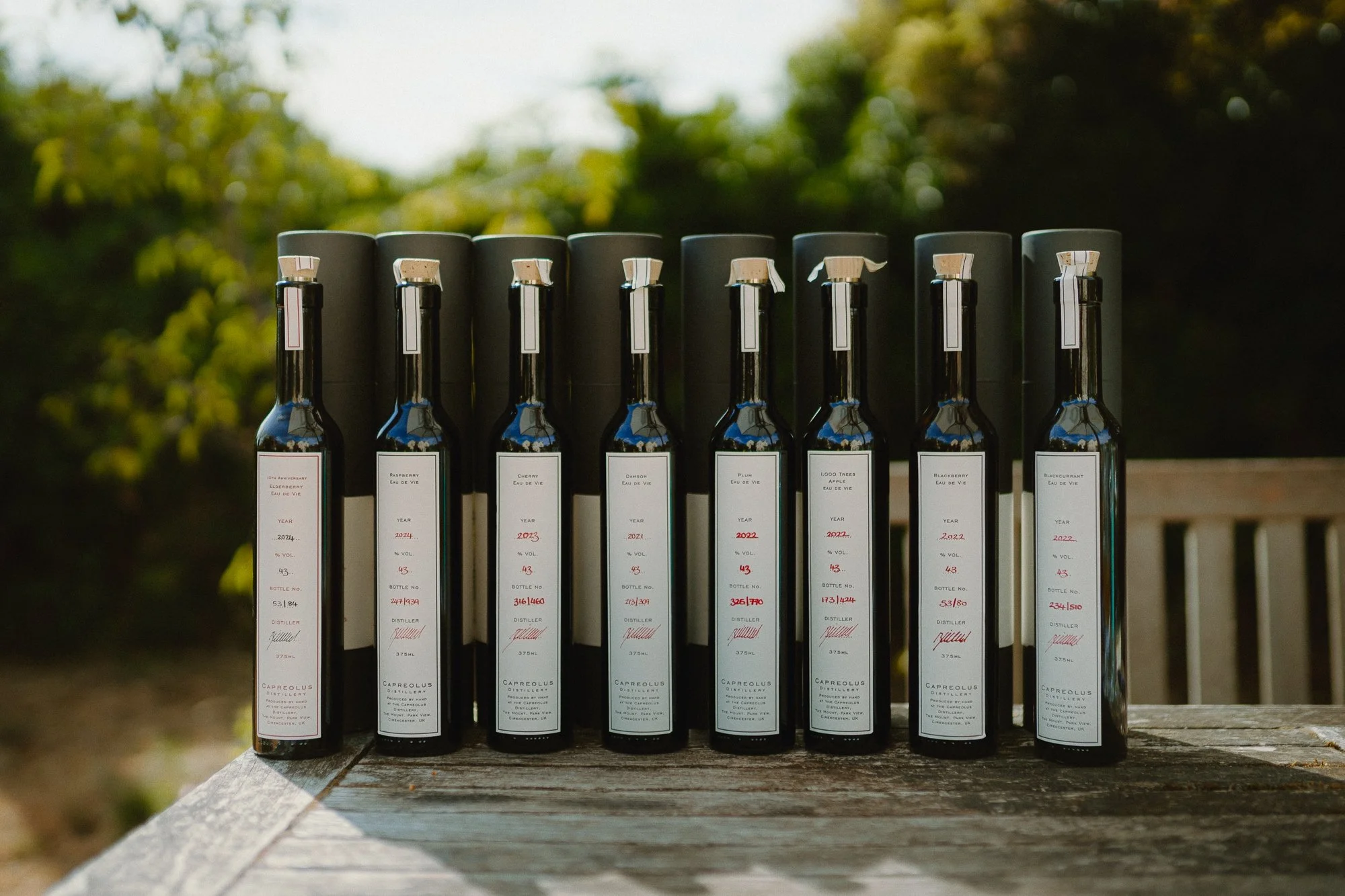
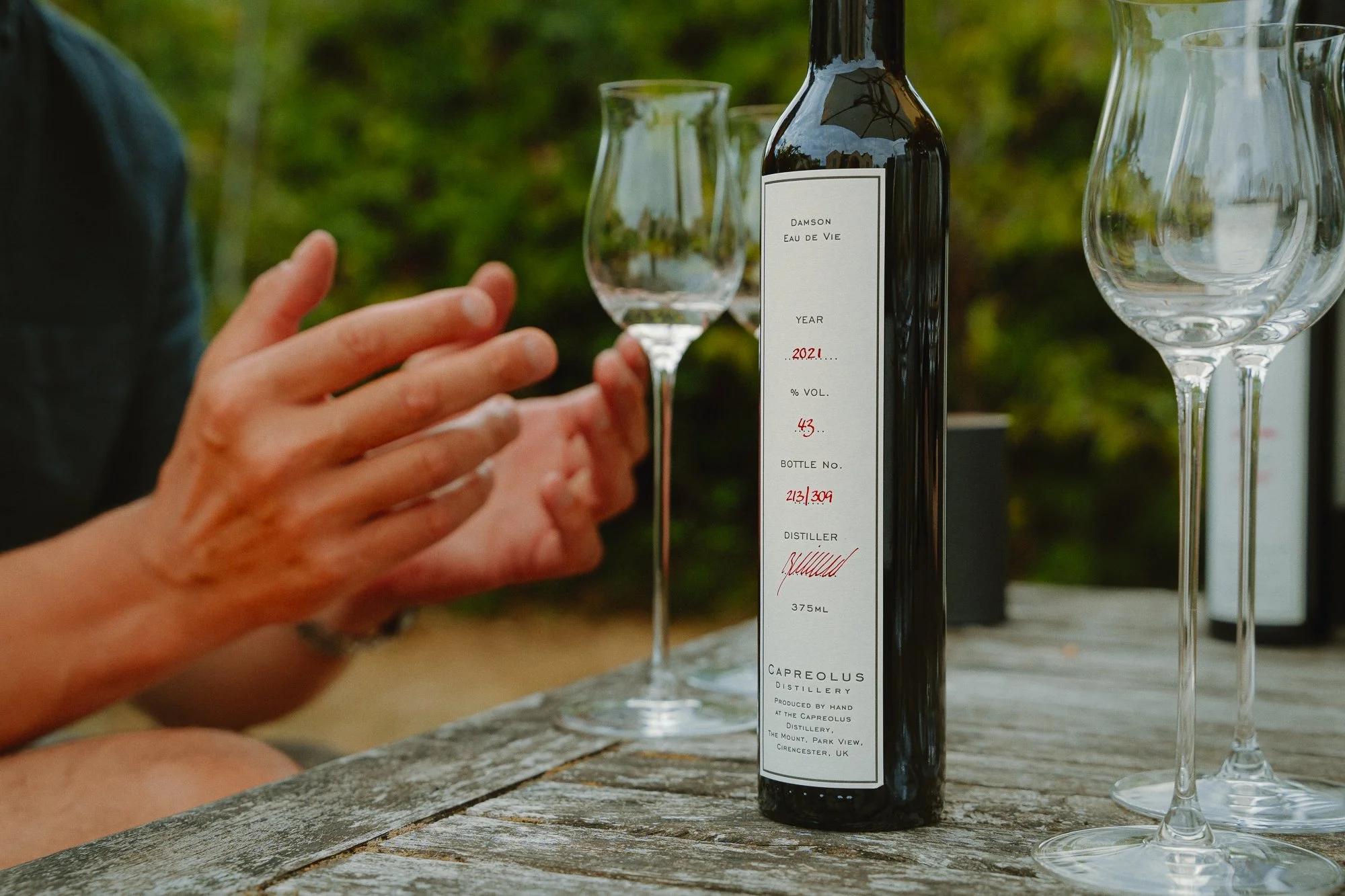
This might be why metaphor becomes one of the primary modes of communicating about Capreolus’ products. Barney half-seriously likens them to Fabergé eggs, in that they are very difficult to make and formed of precious materials. Or, the fruits themselves are an orchestra; Barney is not even the conductor of their symphony, but someone with a sensitive-enough recording device to capture the sound of each violin.
Descriptions like these risk veering a little purple, and it’d be easy to respond cynically when hearing that the spirits don’t just capture the fruit, but also the blossoms the fruits were five months earlier, and the wood, and the greenery, and the earth and the sunlight and the wider environment.
But any doubts vanish when witnessing—and tasting—the distilling process.
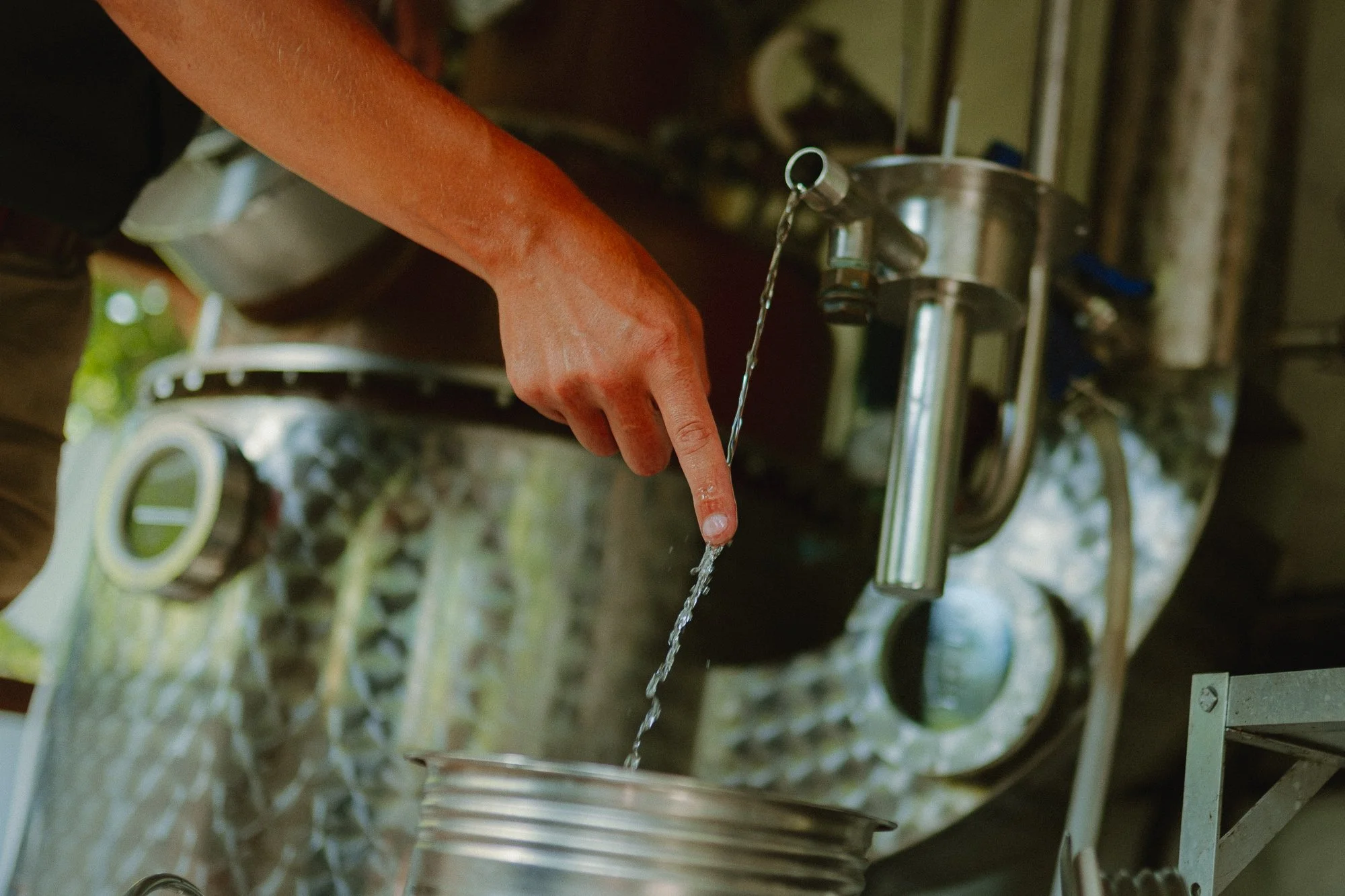
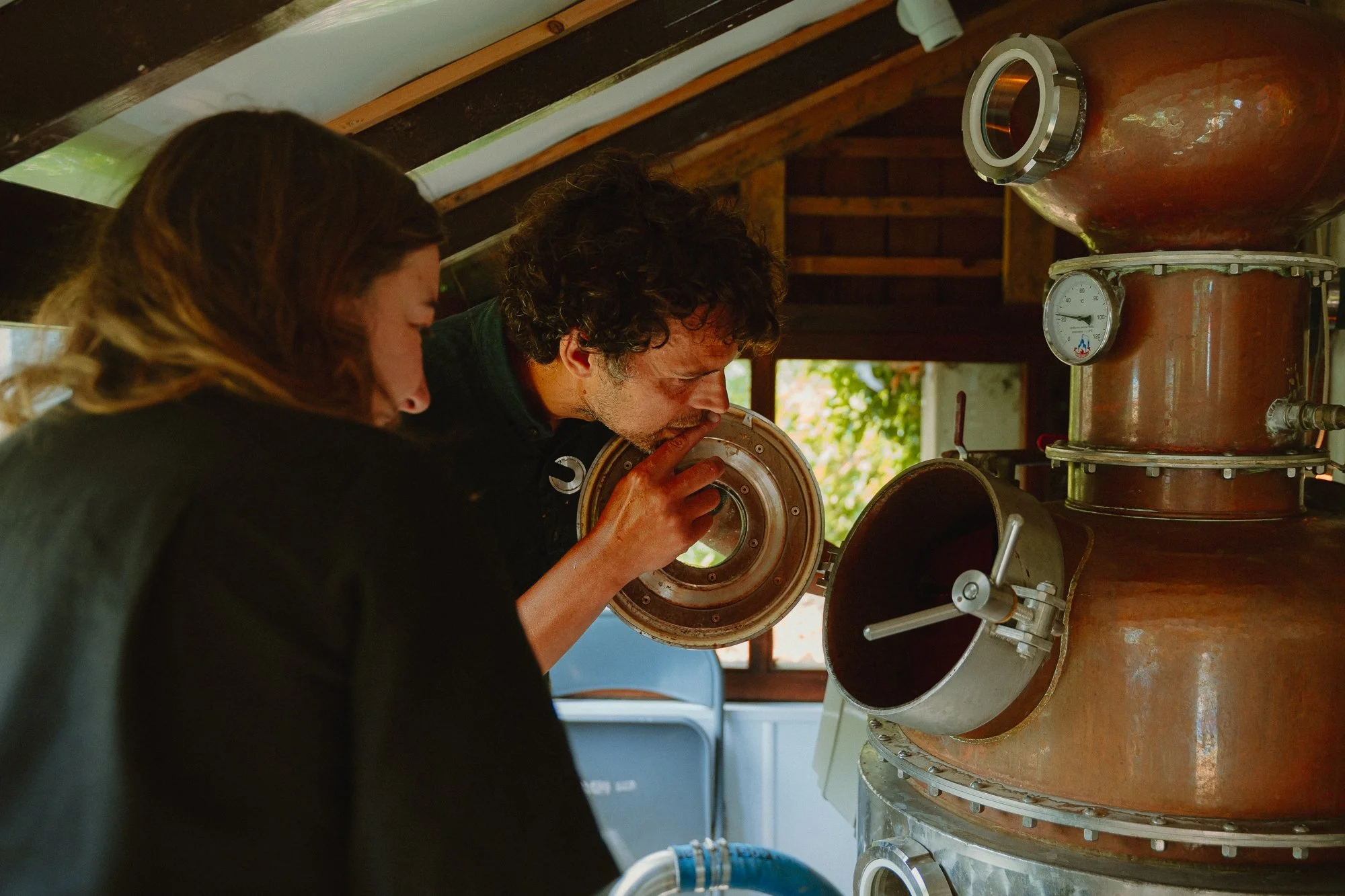
As the distillate flows out of the still, Barney directs us to dip our fingers into the stream. We lick them. Parma violet. Dip again. Lemon zest. Then rose. And then something green and herbal. Olive brine. The texture changes. From second to second, raspberry appears, and then recedes.
As the compounds within the fruit are made volatile during distillation, they come through sequentially, as individual aromatic splices. Sometimes those flavours and aromas are expected; other times, aspects of the fruit that would never otherwise reach the threshold of perceptibility are suddenly revealed. The effect verges on the hyperreal, although with none of the implied artificiality. A raspberry that is more raspberry than raspberry.
“As the distillate flows out of the still, Barney directs us to dip our fingers into the stream. We lick them. Parma violet. Dip again. Lemon zest. Then rose. And then something green and herbal. Olive brine.”
In 2024 and 2025, Barney collaborated with Tommy Grimshaw, the head winemaker at Langham Wine Estate, on a ratafia, made by blending Pinot Noir grape juice with Pinot Noir eau de vie. “I’d never seen someone with their mouth hanging open for as long as Tommy that day,” Barney says of the day he attended the distillation.
Tommy was astonished to discover aromas in his grapes he had never experienced before: papaya, beeswax, super-ripe mango. “Turns out I’ve come round to realising that distillation is the only way to achieve complete purity of expression,” he later said in an interview with wine writer Brad Horne.
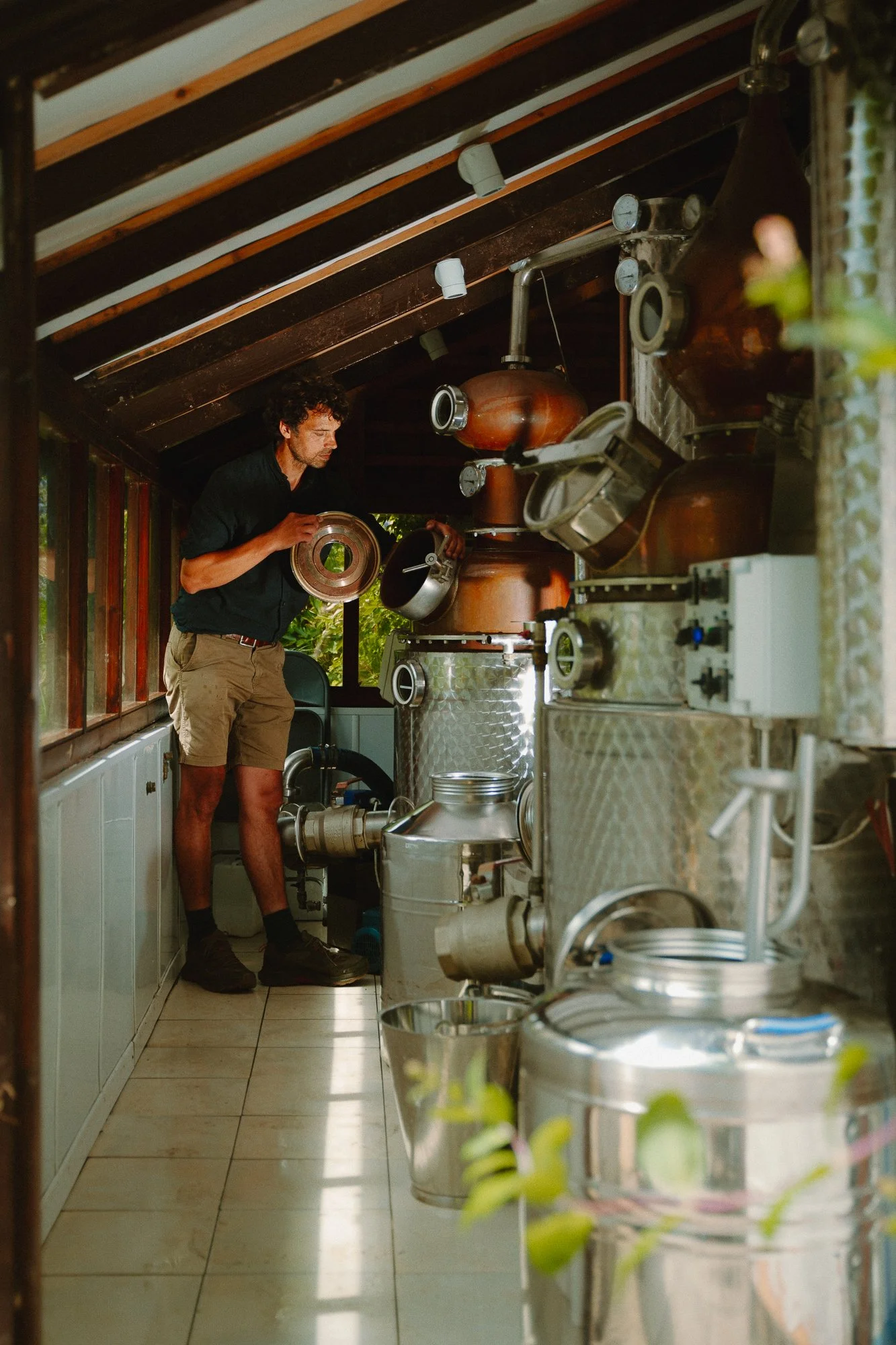
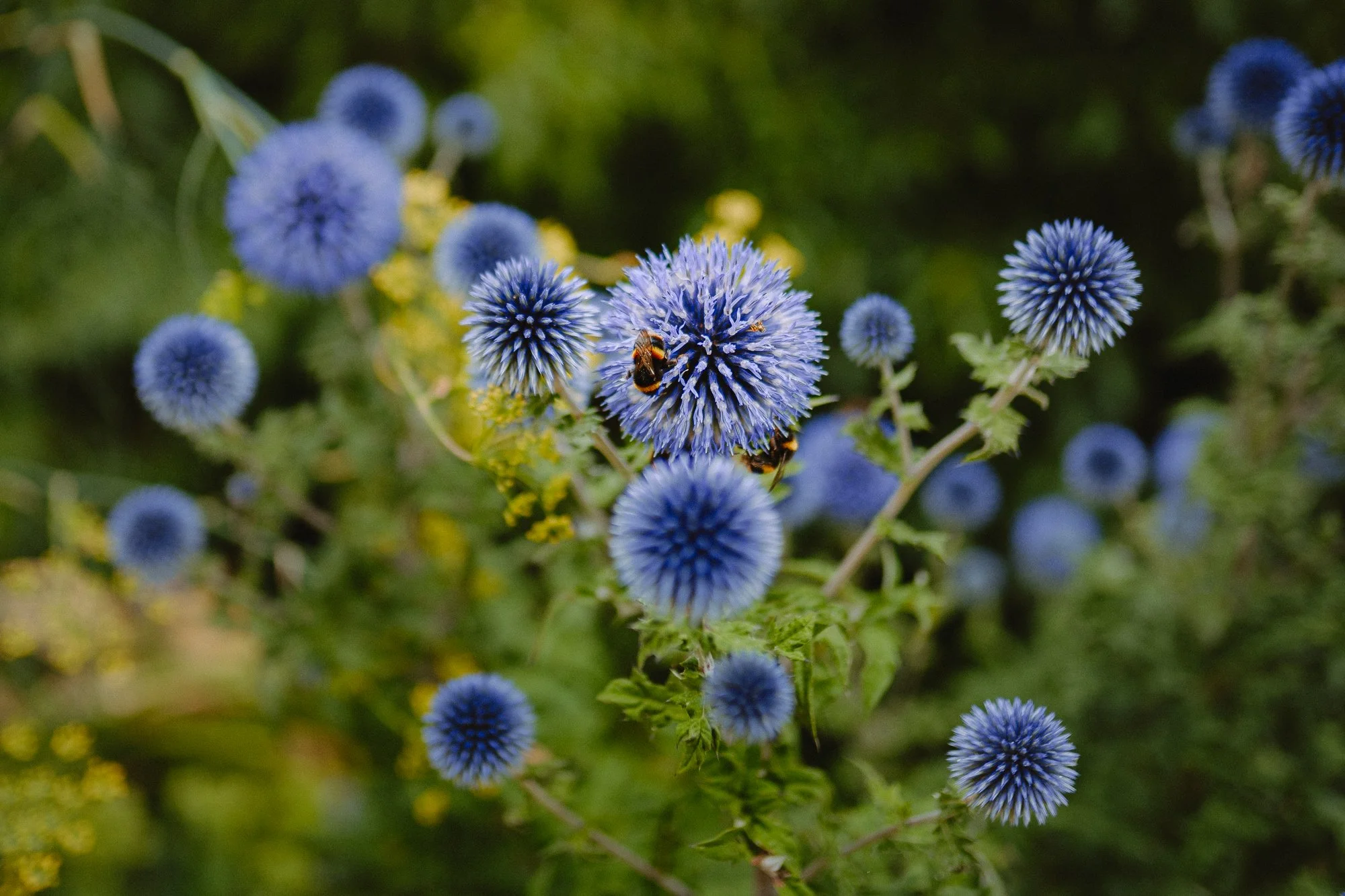
It strikes me, then, that the best way to think about eau de vie is not as a product, or even as a drinks category, but as a technology. It is a mechanism for communicating the totality of a plant in a way that holding it, smelling it, or eating it cannot. Eau de vie transforms fruit into a completely different medium, in the process capturing it, exploding it, and then piecing it back together, bigger and fuller than it was before. If it weren’t so technical, it would feel like magic.
Barney does seem to experience the production of these spirits as a kind of transcendence. “It feels very monastic. I can sit here for eight hours in the heart of that distillation, and taste through every single element that makes that fruit up,” he says. “It feels like you’re tied to a gas chromatograph, but instead of this stream of data, you have this sensory stream.”
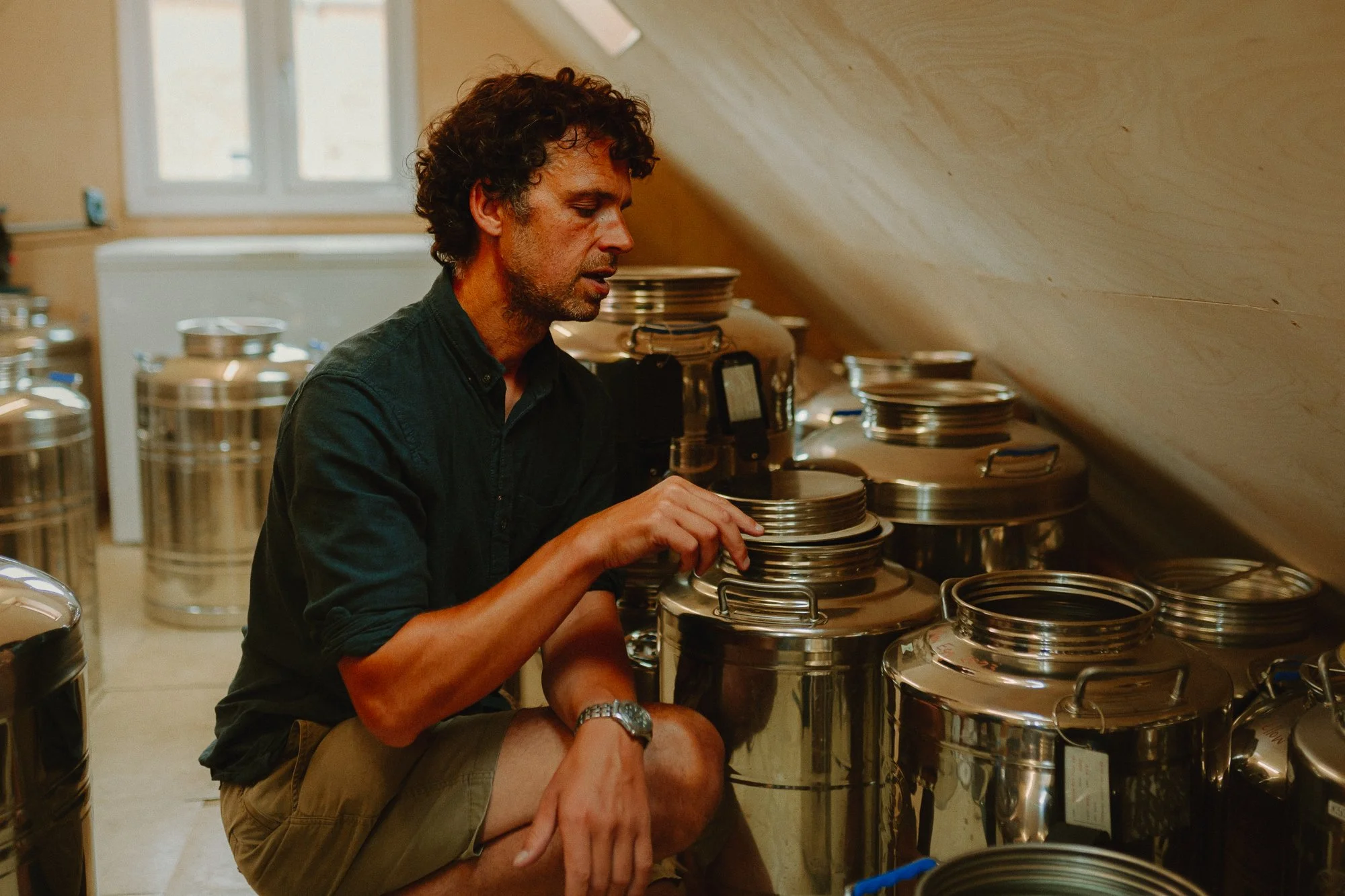
This is why he resists thinking of himself as the creator of these spirits. Rather, he casts himself as a voyeur to nature’s processes, someone who’s merely there to provide the right conditions for their transmission. The journey that each fruit brings him on is its own reward and purpose.
“[These distillations] become these incredibly beautiful moments,” he says. “Because you get to descend into this insight into plants, and this reverence that very few people get to experience.”
***
In the afternoon, Barney takes us to look at his treasures. Above the garage is a room filled with several dozen steel milk cans. Collectively, he tells us, they contain what remains of the distillery’s entire output from the last decade. Here, within this small room, is the work of 10 growing seasons. Compared with the vast barrel stores that a winemaker would attend to, they look like almost nothing at all—yet they represent 90,000kg of fruit.
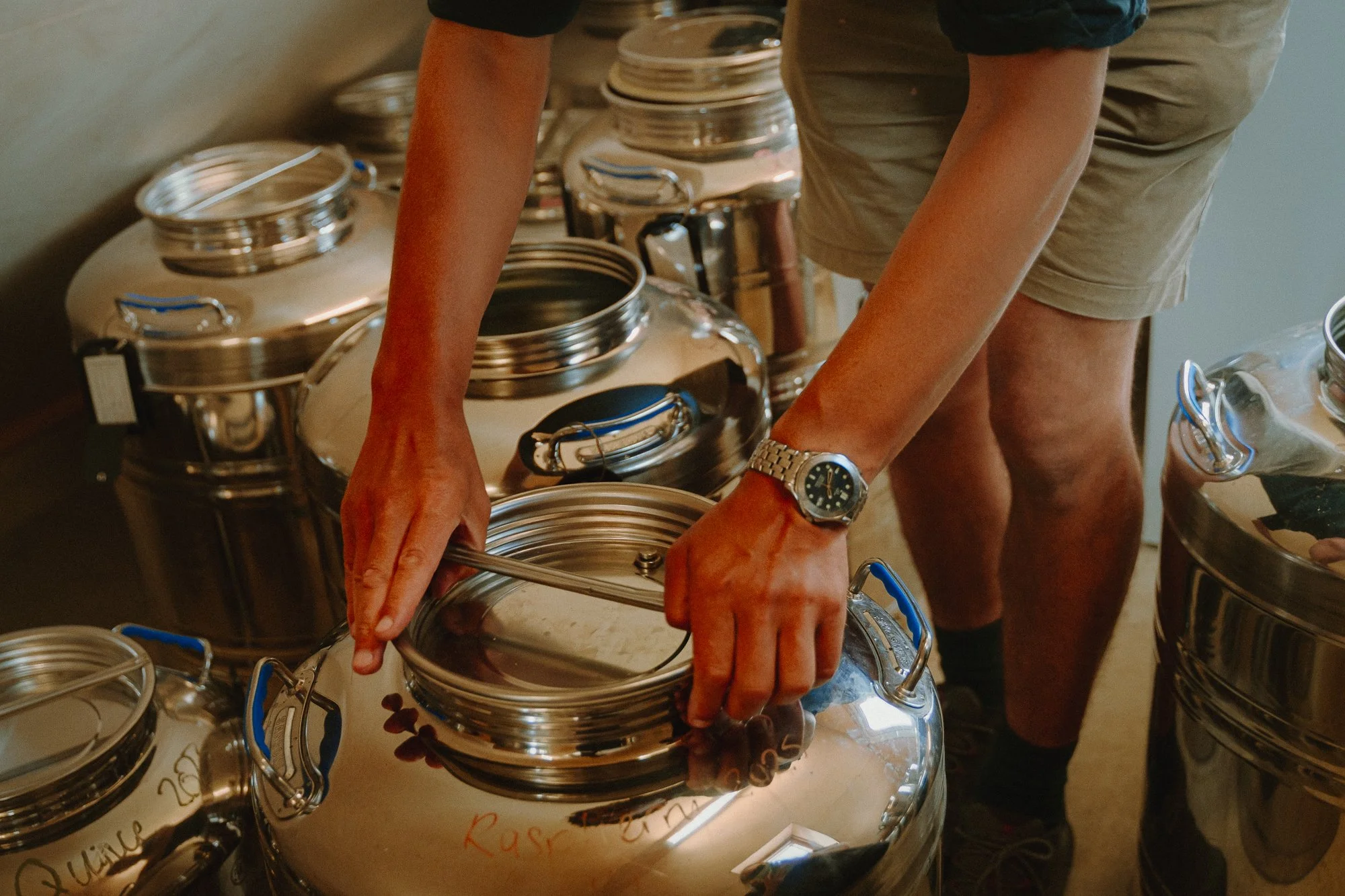
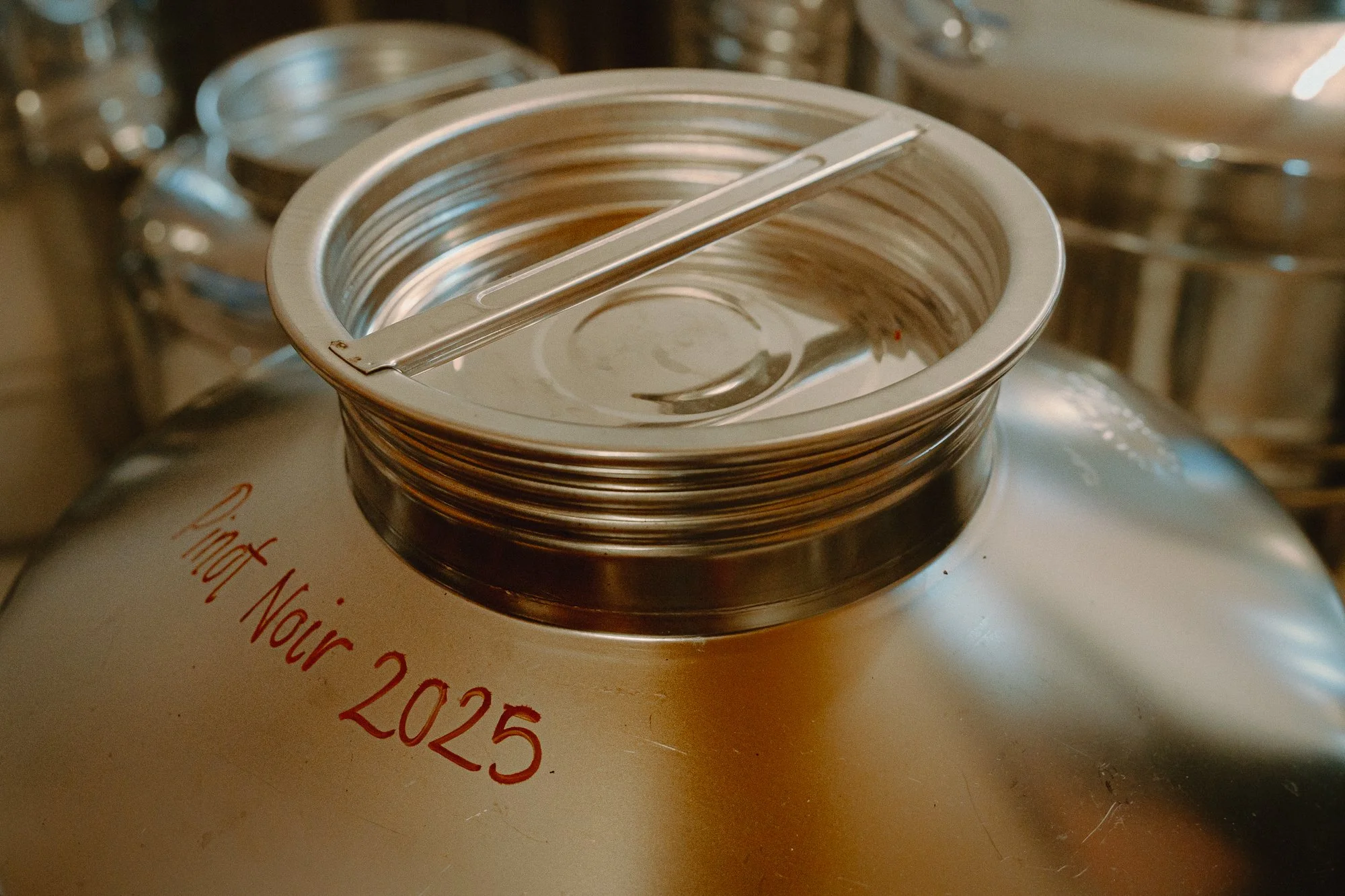
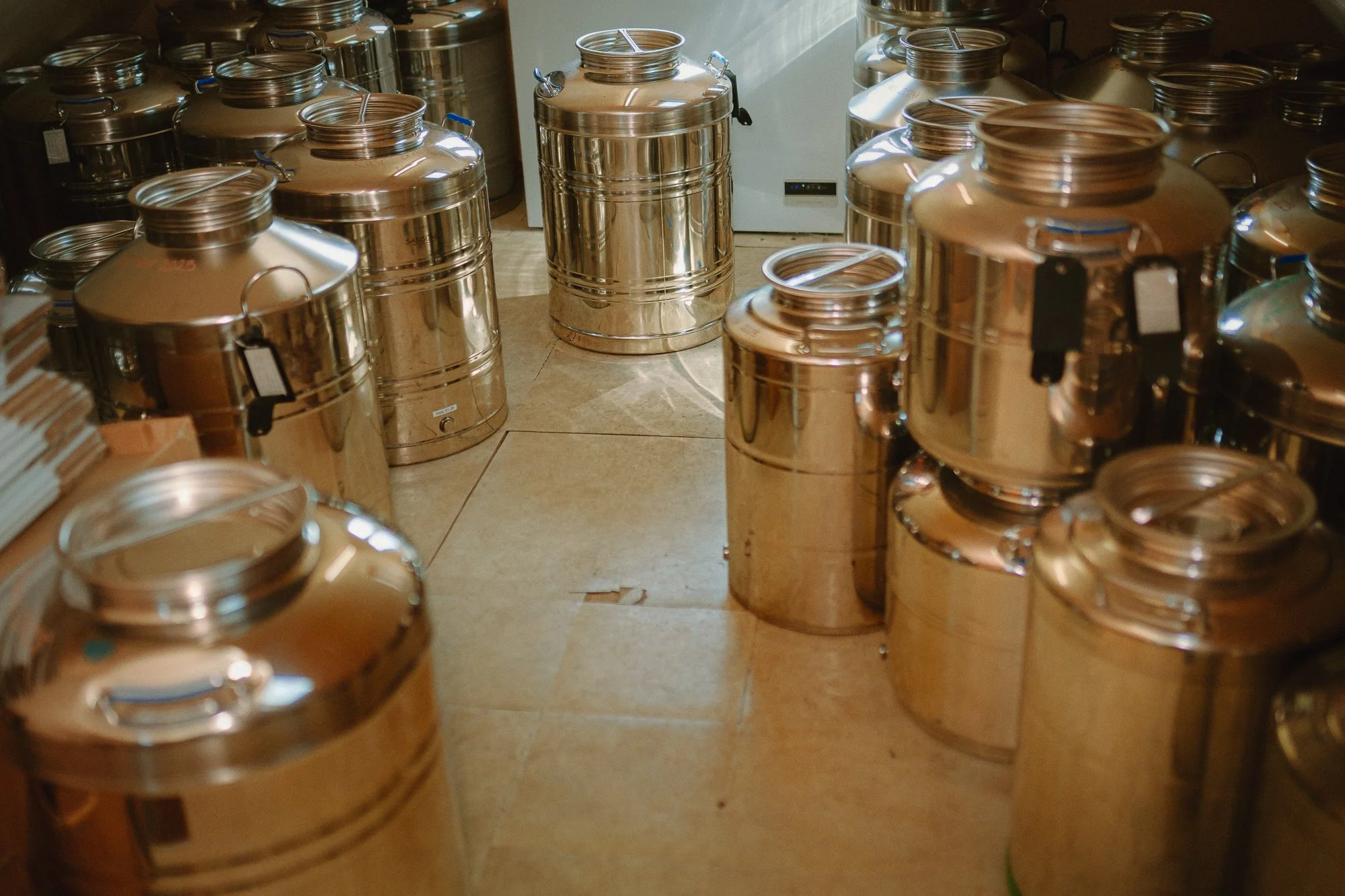
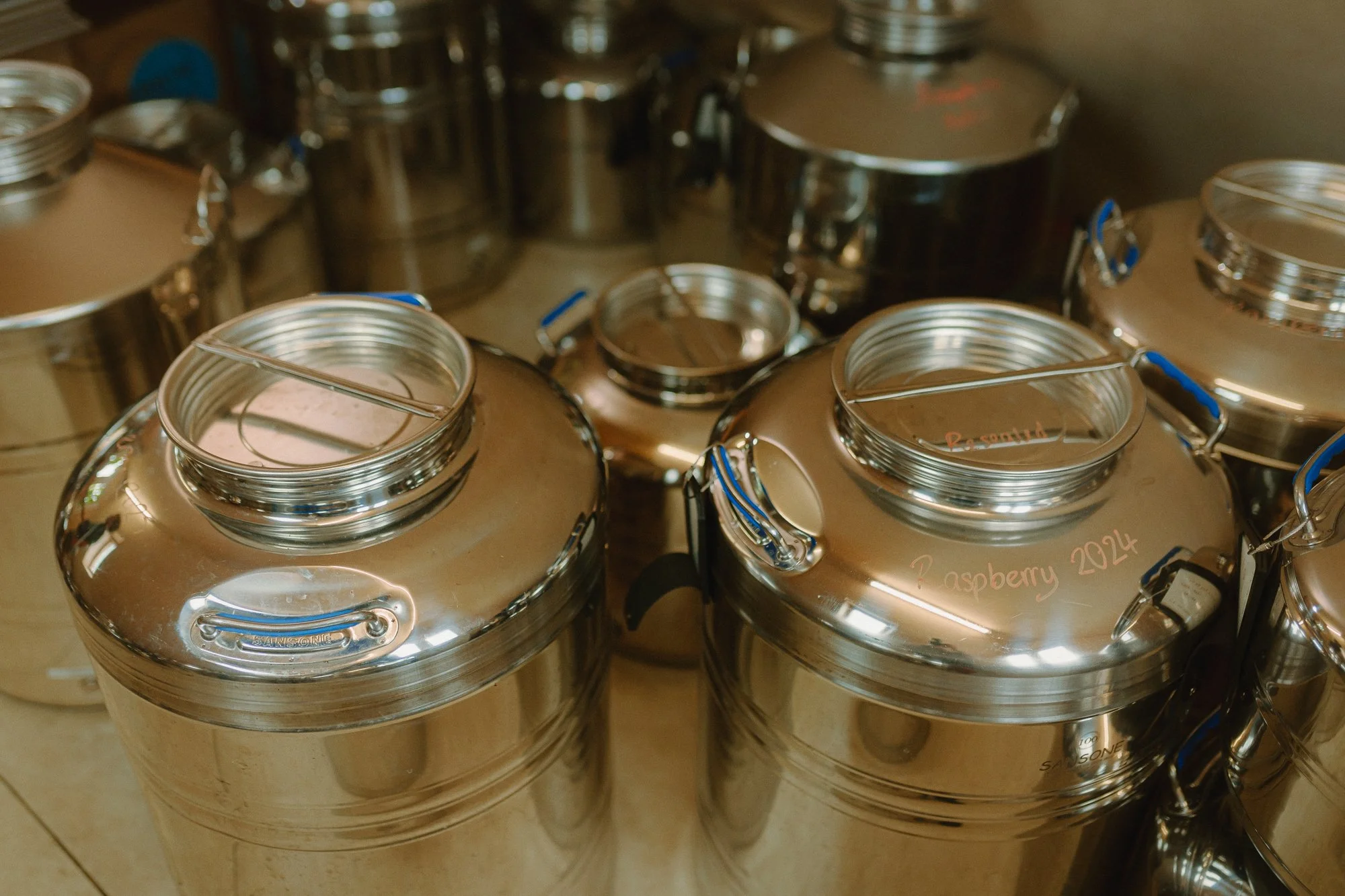
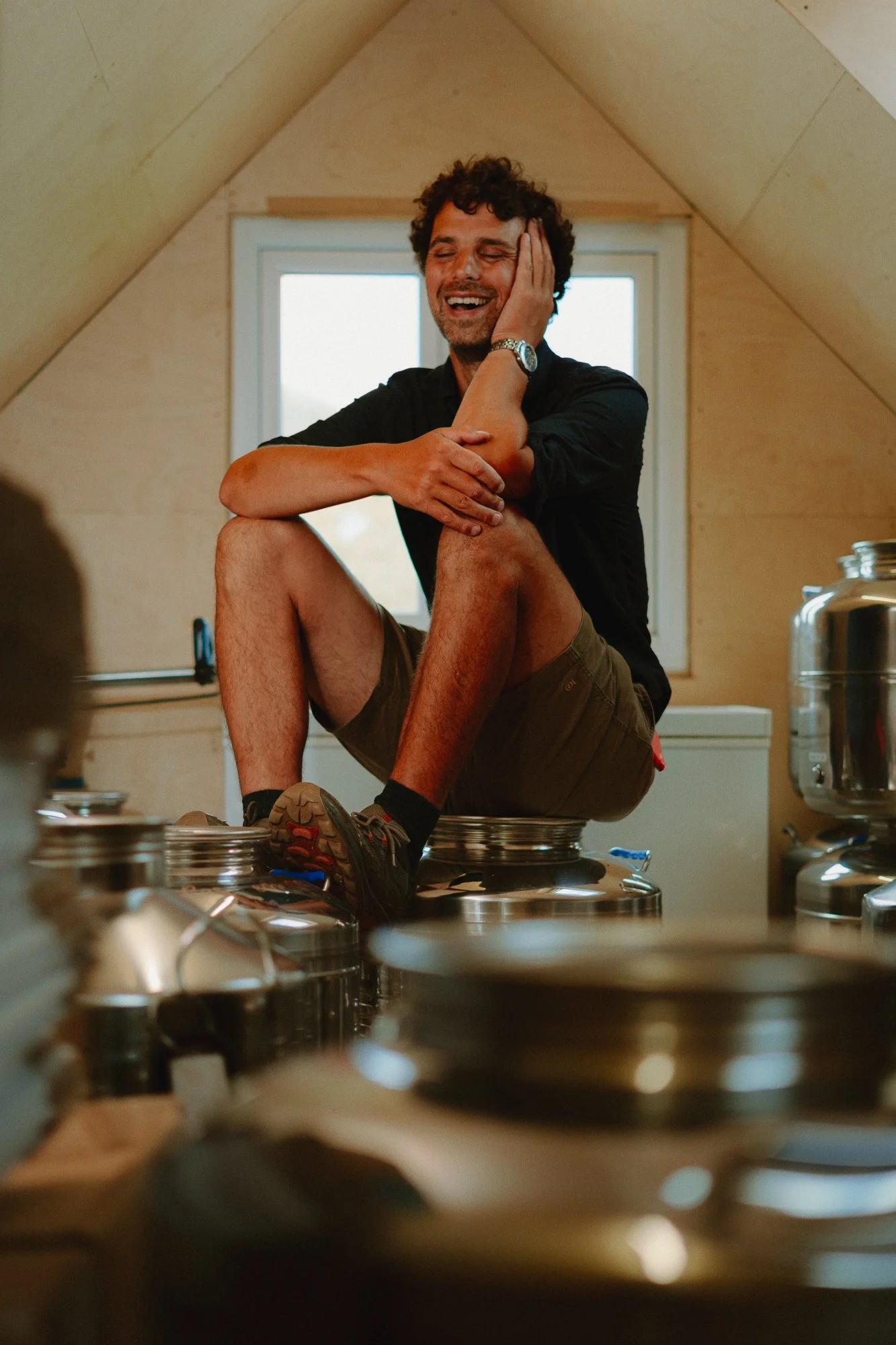
These are not the distillery’s only riches. In 2024, Capreolus bought a 5.33-acre meadow in the nearby village of Birdlip, where the family planted 252 quince trees, nine crab apple trees, and three pear trees (the latter requested by Lucia, Barney and Hannah’s daughter). This feels like a natural evolution for Capreolus in many ways, particularly given Barney’s fascination with the vintage variation he sees in the spirits.
“You work with a single site for six or eight years, and you suddenly realise you’ve never had the same expression of that fruit, and every single year is a surprise,” he says.
It also hardly seems coincidental that this move towards the land has happened at a time of increasing natural volatility, as the climate crisis scrambles seasonal rhythms and makes extreme weather events more likely. This year has been particularly low-yielding: The gooseberries Capreolus would have worked with were destroyed by hail, the plum and pear crops failed, and the apple orchard that provides the fruit for its 1,000 Trees eau de vie was empty for the first time.
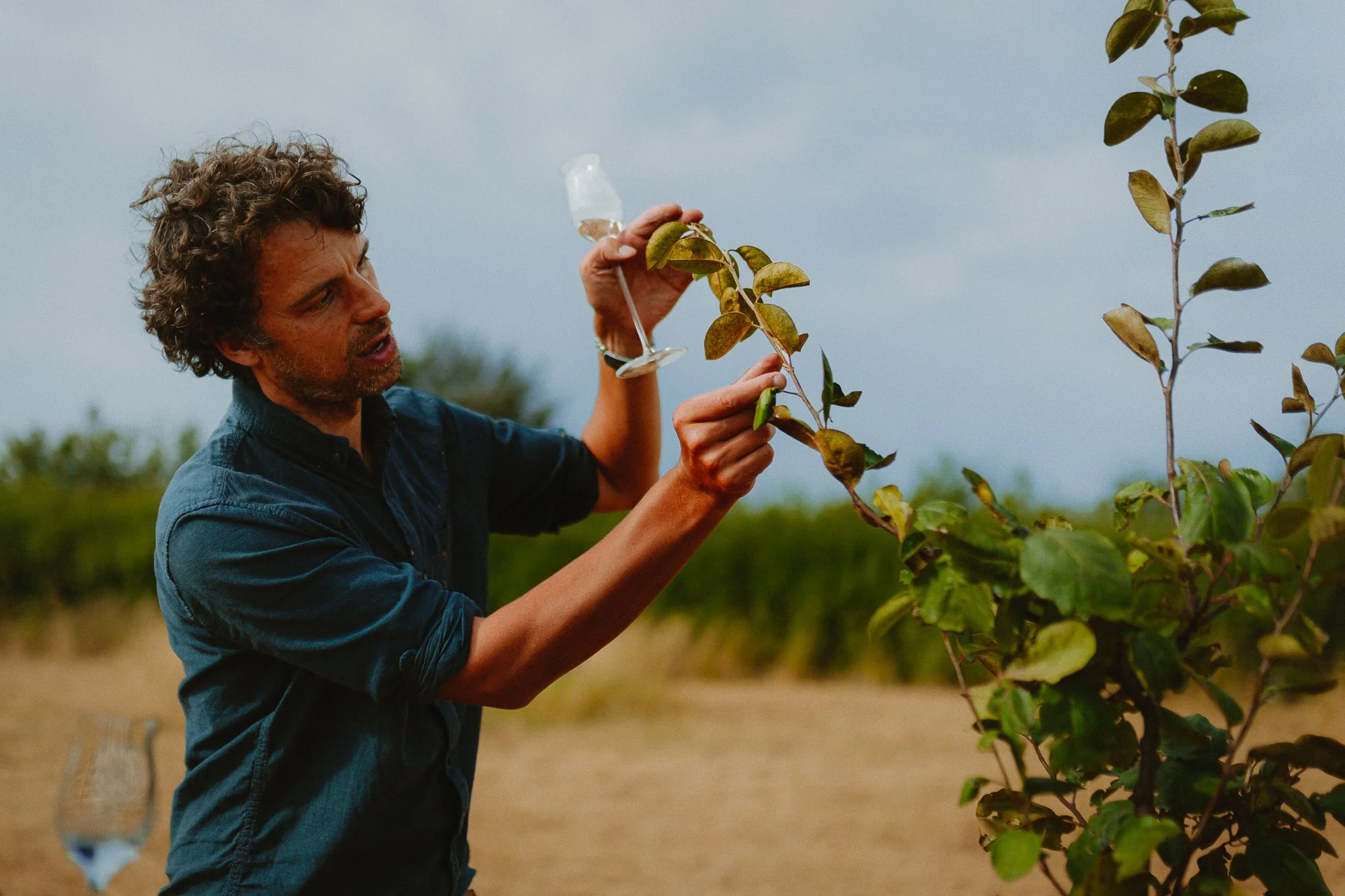
The idea of having a more first-hand relationship with the plants, then, makes sense. Barney attends to the trees as individuals, observing the season’s new wood growth and showing us the fuzzy undersides of their leaves. Two of these quince varieties, Ispolinskaja and Turunchukskaja, originally come from Ukraine, and are known for their floral aromas. Another, Limon Ayvasi, is Turkish, and highly citrus-driven, as its name suggests. The fourth, Cydora Robusta, is an aromatically dense, oil-rich German variety. Next year will be their first harvest.
““The fruits that make you work the hardest feel like they carry the most value.””
All were chosen for their high-quality fruit and disease resistance, as they are grown without fungicides, pesticides, or herbicides. The goal is “working to foster biodiversity first and foremost,” he explains; in future, the rest of the site will become a working nature reserve. As we walk among the rows, grasshoppers flee from our feet, and a red kite circles watchfully above us.
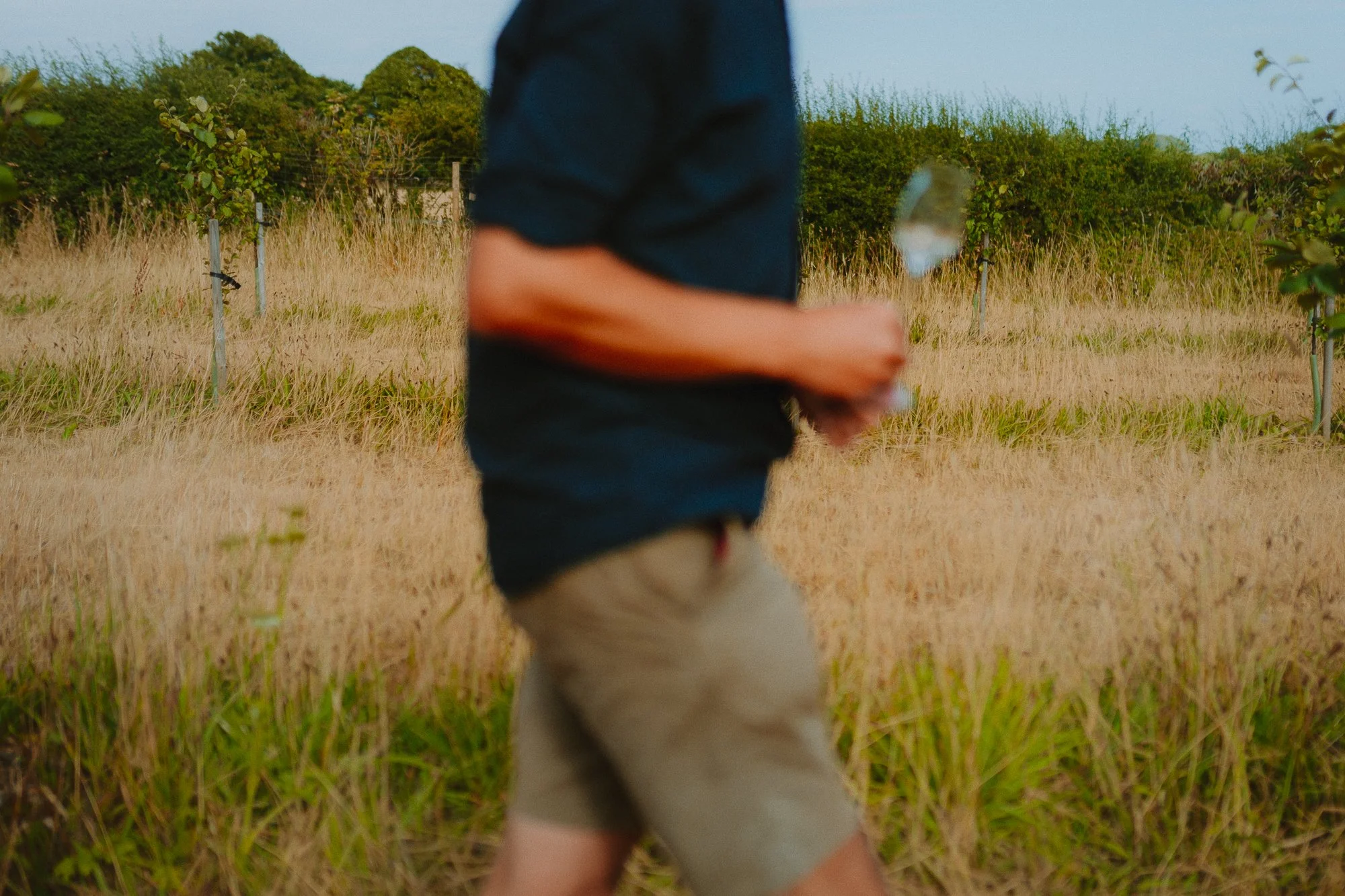
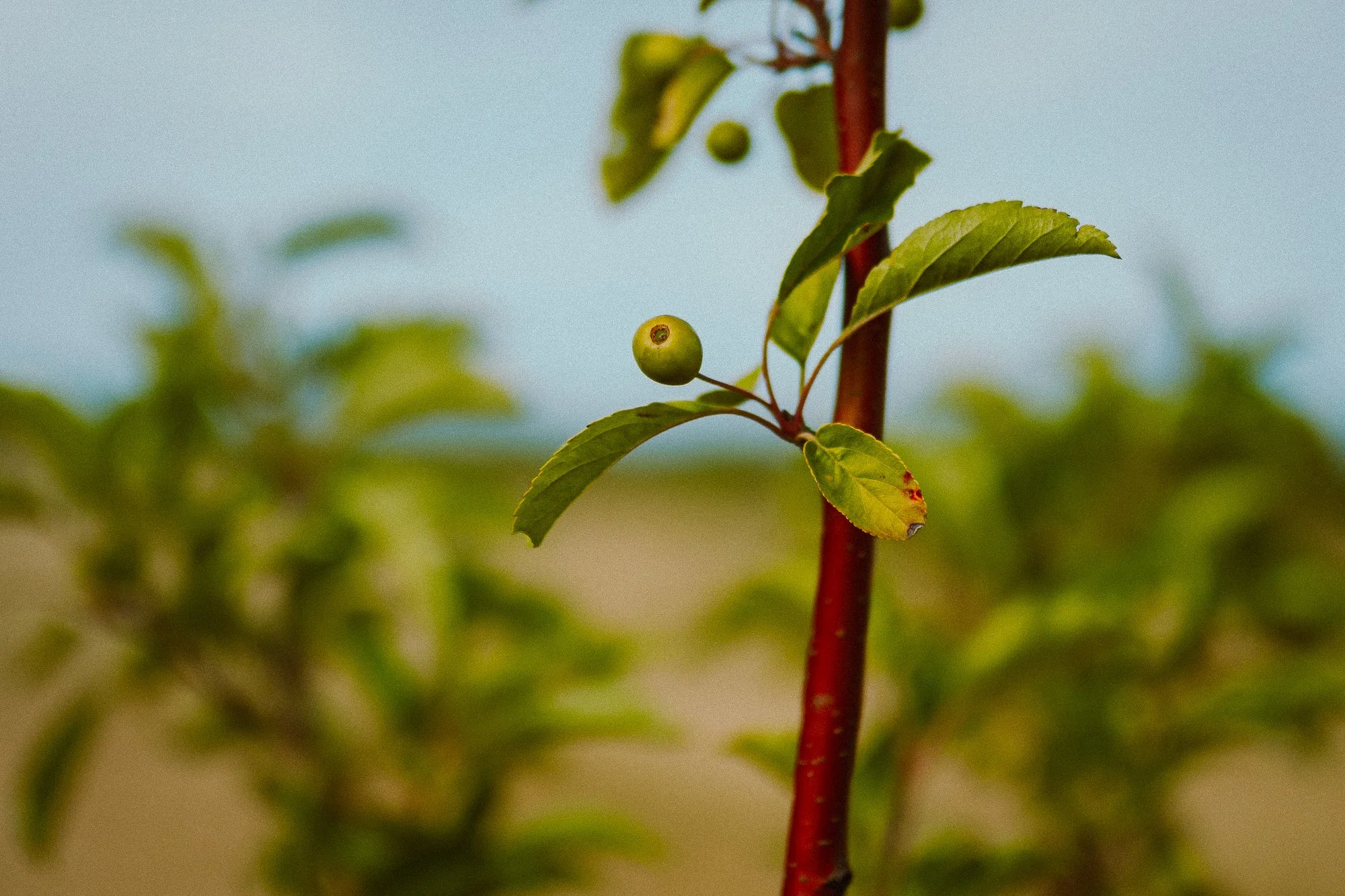
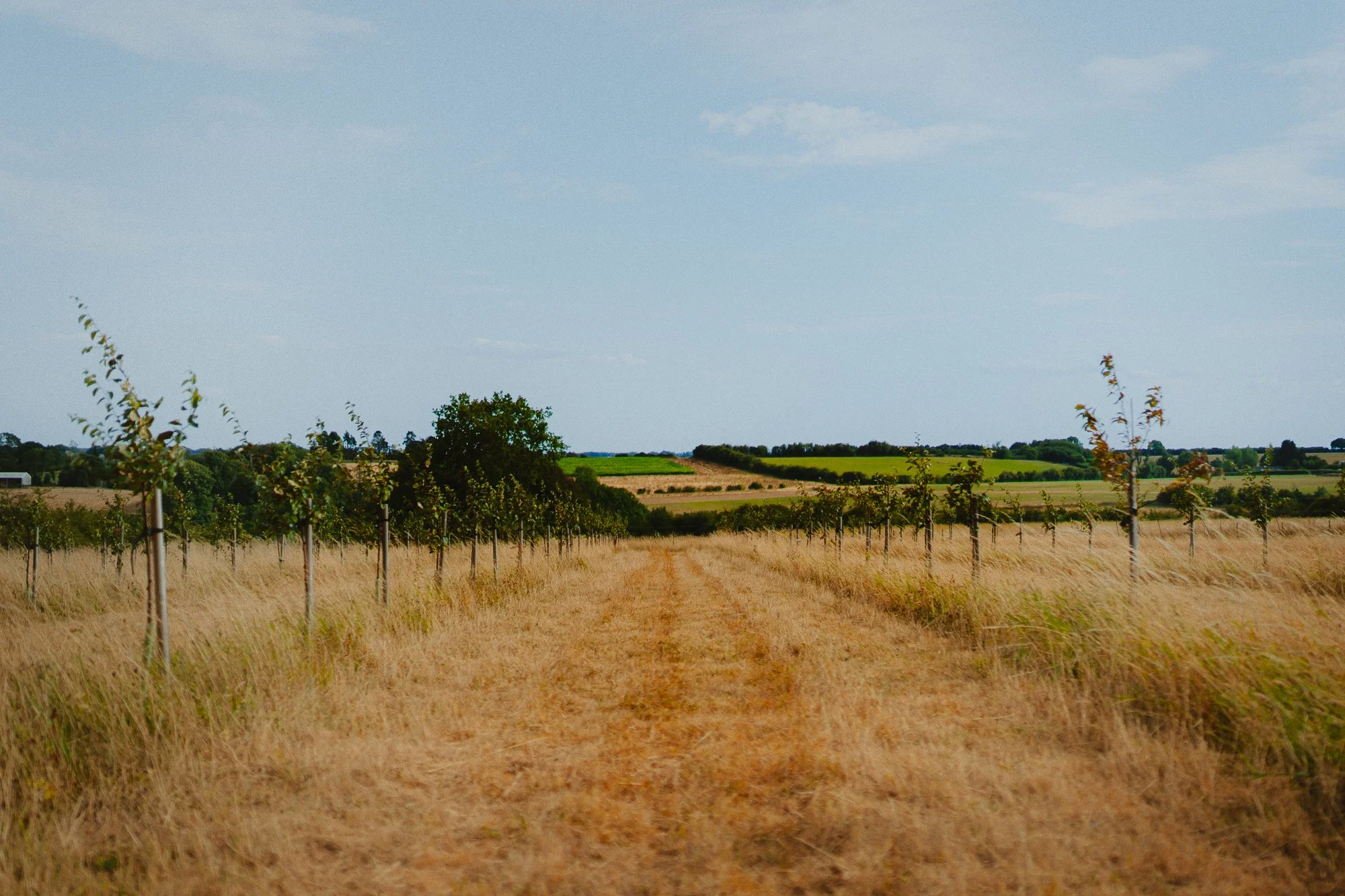
As early as next year, this site will also become Capreolus’ new home. After 10 years of working in cramped quarters, Barney will finally have a distillery he can stand upright in. Once building commences, the facilities will be scaled to produce up to 10,000 bottles a year. He doesn’t think they’ll ever go above 5,000, but then again, there’s precedent for exceeding that limit. Even now, without any outside investors, he is mindful of the pressures exerted by expansion.
While Barney expresses some ambivalence about a change of this magnitude, it’s clear that the orchard is something he feels only joyful about. “Quince are simply the most magical fruits. Their aroma is bewitching, astonishingly complex,” he says. “I also love these cooking fruits that are so rarely experienced as pure essence. Typically they are adulterated through cooking and sweetening; it hides so much of what makes them special.”
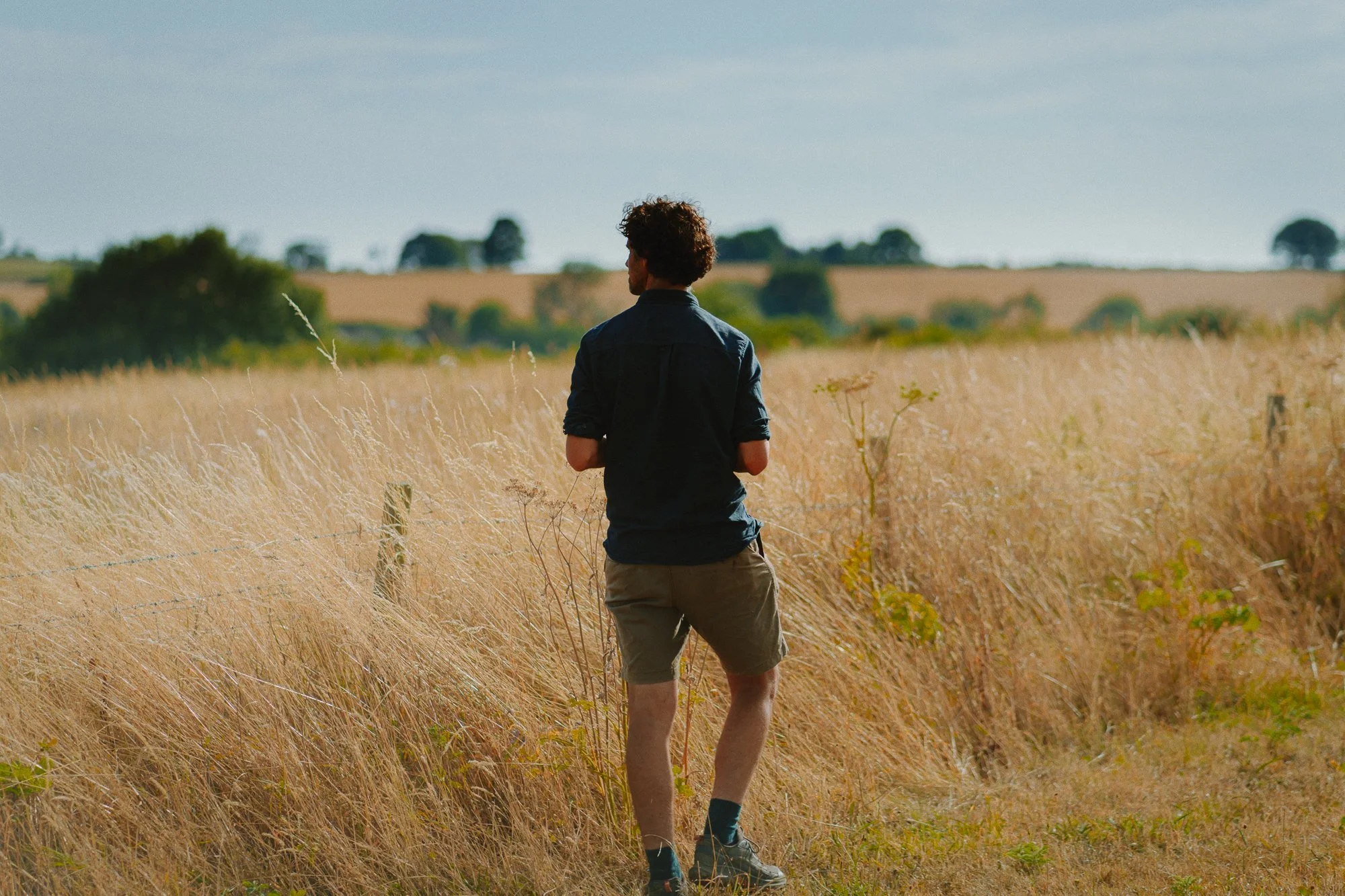
The quince trees were a pragmatic choice—they’re the only fruit that Capreolus imports for its eaux de vie, as there are so few commercial growers in this country. But more than that, “The fruits that make you work the hardest feel like they carry the most value,” Barney says. He argues that there has been a valorisation of wine grapes above other fruits, perhaps because they are comparatively easy to use and understand. When you work with quinces—stone-hard, largely inedible raw, and covered in a fine down that needs to be scrubbed off by hand—you realise why so few others choose to.
“You carry those months of work both in memory and muscle, indelibly ingrained into the year and revisited every time you smell that aroma of the eau de vie,” he says. “Quince perhaps epitomises this more than any other fruit.”
***
Not long after visiting Capreolus, I happen upon a poem written by Li-Young Lee, “From Blossoms,” first published in 1986. It begins with the narrator stumbling upon a roadside fruit stand selling peaches in the height of summer.
As the narrator eats those peaches, they marvel at the fact that they began as blossoms. “From laden boughs, from hands, / from sweet fellowship in the bins, / comes nectar at the roadside, succulent / peaches we devour, dusty skin and all, / comes the familiar dust of summer, dust we eat.”
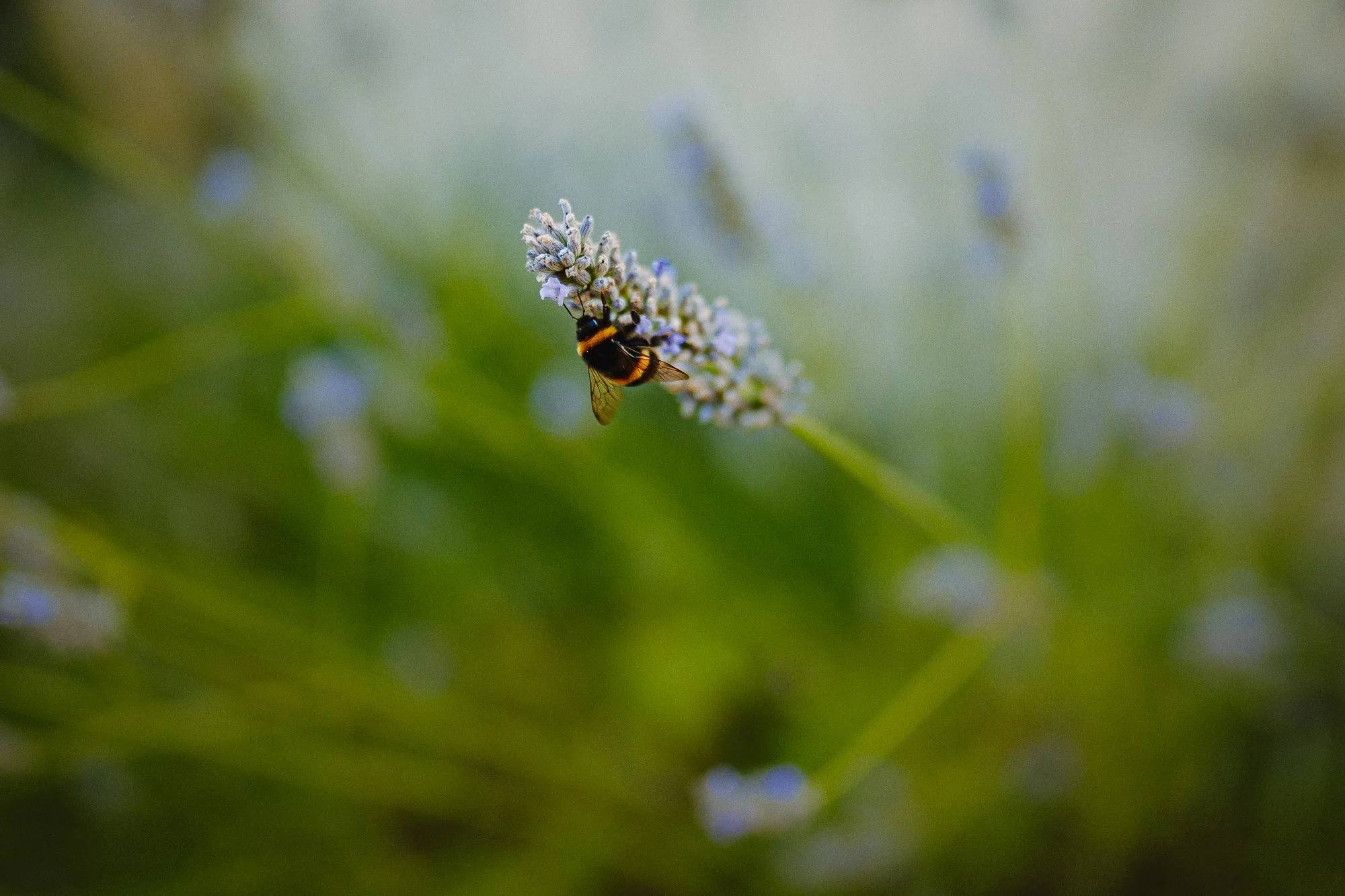
I cannot help but see Barney’s work in these lines. From the quince orchard, one day soon—and today, from the region’s many small farms—come these spirits. The fruits are taken in hand, first when separated from their stems and again when sorted, before passing through fermenters, copper stills, metal pails, glass bottles, and into hands again. In the process, they are returned to themselves.
Each of Capreolus’ eaux de vie functions like this, as a time machine in miniature. They capture the full life of the fruit, from nectar back to blossom and bud. Each is also a time capsule, one that can be passed into other hands, a vessel capable of transmitting the experience of fruit at peak ripeness into an otherwise impossible future tense.
“O, to take what we love inside, / to carry within us an orchard, to eat / not only the skin, but the shade, / not only the sugar, but the days, to hold / the fruit in our hands, adore it, then bite into / the round jubilance of peach.”
Or, in this case, to drink it.