
It’s Not Easy Being Green — Inside the UK’s Matcha Boom
Matcha lends itself to some deliciously stupid, irresistible puns, so let me get those out of the way first. Too matcha of a good thing. A matcha made in heaven. Matcha-do about nothing. And my personal favourite: Hakuna Matchacha, the name of a Dubai-based matcha brand that is so exquisitely silly I cannot help but think whoever’s behind it is some kind of marketing genius.
The matcha-loved (sorry, last one) green beverage has now become so popular that even horrible dad jokes like these can’t kill matcha’s vibe. The FT reports that British matcha revenue in 2025 was in the ballpark of £46 million, more than double the previous year’s total, and sales are expected to continue growing into the 2030s. But the numbers only confirm what was already obvious from strolling down nearly any British high street: We are in the midst of full-on matcha mania.
“Yep. We do matcha now,” states a recent advertising campaign from Costa, as if answering a question the chain has already grown tired of hearing. Matcha is even on the menu at that bastion of the Middle-English mainstream: Greggs. And it’s not just matcha lattes. As British companies have found increasingly novel applications for matcha, store shelves are newly awash in vivid green.



Every supermarket now stocks matcha in myriad forms: Asda puts it in smoothies; M&S in overnight oats; Ocado sells matcha cookie dough, ice cream, oatcakes, and shower gel. Elsewhere, I’ve come across matcha washing-up liquid, matcha latte popcorn, a pre-mixed “matchatini” cocktail, matcha-scented candles and perfume, and matcha collagen bars. Graham & Brown makes a “matcha tea” paint, and reality television star Molly-Mae Hague recently released a matcha latte shoe in collaboration with Adidas.
“It’s a London girl shoe,” she explained. “I feel like you’re either an iced latte girl or a matcha girl… Matcha’s like the cool girl in London. Which is so us, isn’t it?”
It is so us, Molly-Mae. But matcha is also Japanese, and it can be easy to lose sight of what that means as we indulge in matcha Basque cheesecake and knock back matcha cocktails. The runaway commodification of matcha has not been without repercussions. In the immediate term, it’s caused supply shortages and price inflation around the globe. And in the long term, it risks flattening a centuries-old cultural product into just another lifestyle signifier.
***
While we could see all of this matcha nonsense as a straightforward instance of unbridled cultural appropriation, there is precedent in Japan for adding matcha to all kinds of stuff.
Matcha has been used in Japanese confectionery since as far back as the Sengoku period, circa the mid 15th to the early 16th centuries. Over the course of the 20th and 21st centuries, it became one of Japan’s most popular flavours, up there with chocolate and vanilla. Today, Japan produces matcha liqueurs, matcha milk jam, matcha ramen, matcha gyoza, matcha curry, matcha beer, matcha takoyaki, and matcha chocolate-covered crisps. So while it’s tempting to call out products like Caffè Nero’s non-alcoholic Bailey’s iced matcha as antithetical to real Japanese matcha culture, you might have to level the same criticism at Japan’s own matcha mapo tofu.
Doing wacky stuff with matcha isn’t necessarily the issue, then. Instead, the problem lies in the cultural and economic consequences of such wackiness.
Jameel Lalani has imported some of the world’s most beautiful organic teas—including rare, single-origin matcha—through his company, Lalani and Co., since 2010. He confirms that recent changes to the matcha market are “historically odd.”
““That’s kind of ruined the flow, because those buyers, they don’t know which one is actually good matcha. There’s a lot of process behind producing matcha.””
As he describes it, a sudden spike in international demand, combined with lower yields due to heatwaves and labour deficits, has produced a global matcha shortage. The result is a “huge dislocation” in pricing in the past year, exacerbated by panic-buying to secure a share of the limited stock. Matcha is now making people see green in more ways than one, and Jameel has noticed a surge in “opportunists who know nothing about tea coming into the market and saying they want to start a matcha company, and they’re bidding up the price, not knowing what the fair market value is.”
“Japan is a very consistent business culture,” Jameel says. “They don’t like price rises worldwide. If they can keep making incremental improvements and keep everything stable, that kind of makes everybody happy.”
Hiromi Matsunobu of Matchado is another of London’s premium matcha purveyors who has experienced this disruption first-hand. Typically, she says, foreign vendors purchase tea through an intermediary who understands the market in Japan and has relationships with producers there. But because supplies are becoming scarcer, foreign business owners are flying to Japan to cut out the middlemen and buy direct.
“That’s kind of ruined the flow, because those buyers, they don’t know which one is actually good matcha,” she says. “There’s a lot of process behind producing matcha.”
As Hiromi explains, matcha production is complex, including cutting, steaming, drying, and grinding stages. Each one requires specialist know-how. “You cannot just jump straight into the farm to buy the tea leaves,” she says.

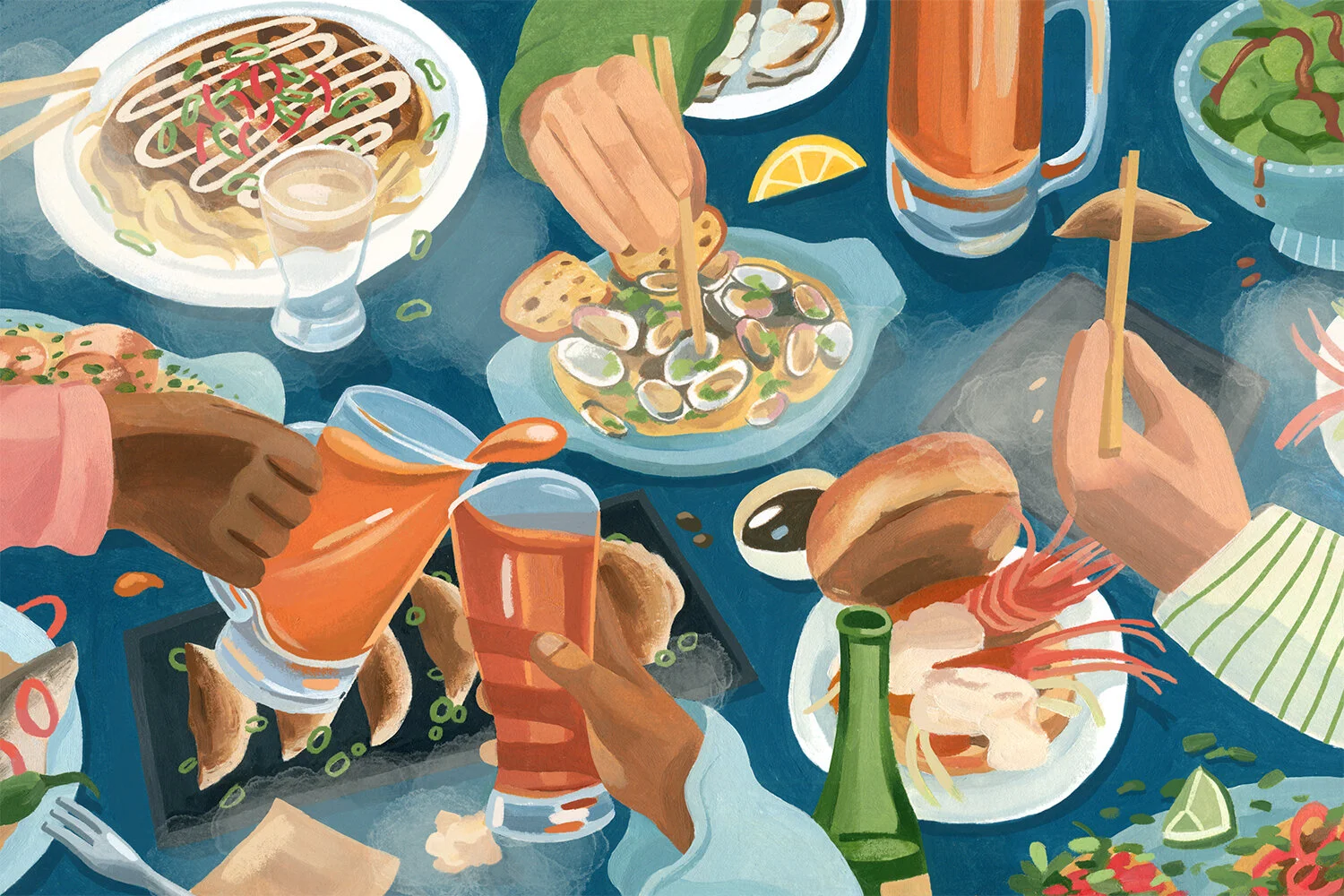
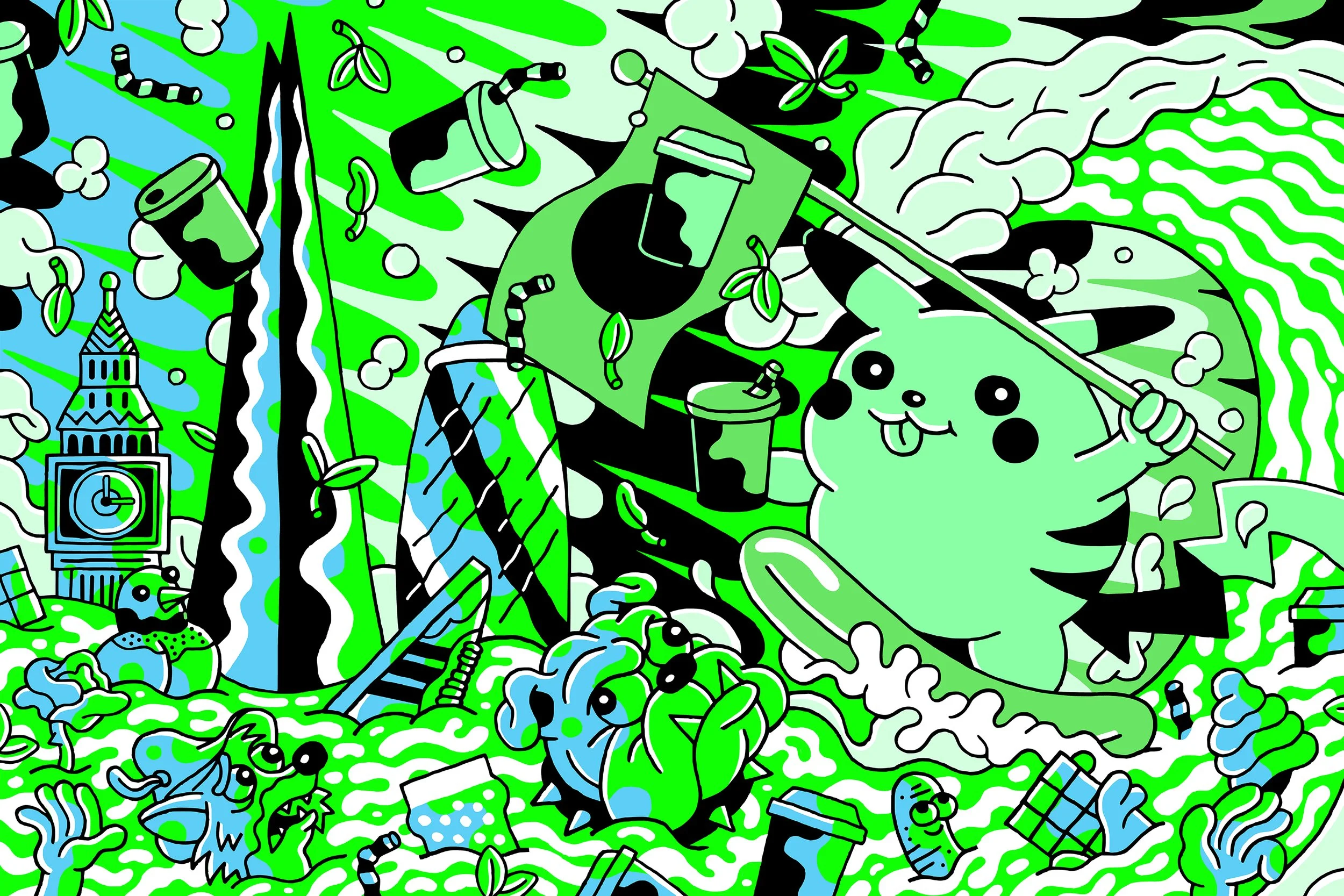
Illustrations by Sam Taylor
But while the global matcha fad has caused trouble for buyers and producers alike, Hiromi believes that the average customer in Japan might not have noticed a change. She explains that the majority of Japan’s matcha is sold to fulfil contracts with huge multinational beverage companies like Ito En, Sapporo, and Suntory, which sets the market price at a more reasonable level. “Prices went up [in Japan], but not as much as here,” she says.
It’s worth noting that matcha labelling is completely unregulated, so an unknown quantity of so-called “matcha” currently flooding the market isn’t from Japan—and isn’t actually matcha. Even in Japan, matcha is defined not by law, but by a promotional body called the Japan Tea Industry Association. In the U.K., there are no such standards, which means that other forms of powdered tea, typically from China, can be misleadingly sold as matcha.
Similarly, “grades” of matcha, such as “ceremonial” or “culinary,” aren’t used in Japan and have no standardised definition. Instead, these terms originated around 2005 among Western tea sellers. In Japan, matcha quality is assessed along far more complicated lines, so these designations are both inadequate and entirely subjective. Ultimately, they’re marketing categories decided by sellers to differentiate their products and justify disparate price points.
***
One reason that matcha has taken off so dramatically, both in the U.K. and in other markets, is the fact that it plays into much bigger global trends. Health consciousness is a big one. Matcha is high in antioxidants and amino acids, and low in caffeine compared to coffee, offering an experience that’s often described as gently energising and less jittery (though I can confirm that that really depends on how much matcha you drink). Plus, it’s green—and everyone knows green things are healthy.
That greenness has made matcha a long-running hit on TikTok, alongside other green social media food sensations like Dubai chocolate and pandan desserts. (Apparently Nigella Lawson called pandan “the new matcha” in 2017, but nine years later, there are no pandan products at Tesco or Sainsbury’s.) Humans have a special affinity for green, which is both evolutionary and cultural, giving matcha the edge over other perfectly delicious Japanese teas, like the beautifully brown and nutty hōjicha.
But even with all of these qualities going for matcha, it still surprises me how much such a strongly flavoured, distinctive product has broken through in the U.K. The pace of growth it’s managed to sustain feels unique among social-media-fuelled food and drink trends, which are more often fleeting.
Hannah Tokumine, director of Shoryu Ramen, remembers what it was like before matcha’s breakthrough. Previously, she worked at Japan Centre, her father’s iconic Japanese grocery business, where she observed sales trends unfold over many years.
In 2007, when Japan Centre first launched its ecommerce site, she says matcha orders were placed almost entirely by Japanese customers. “We had quite a hard time trying to sell matcha to non-Japanese customers,” she recalls. “Quite often it would be in the sale, with a short shelf life. It just wouldn’t move.”
The idea of matcha sitting untouched on the shelf is almost unthinkable now, but at that time, there weren’t nearly as many novel products that might have tempted customers to try it. “When I did start to notice a change was around 2010,” Hannah says. “We brought in matcha Kit Kats and they just flew off the shelf… so chocolate, and baked goods, really, was where I saw the change.”
““We had quite a hard time trying to sell matcha to non-Japanese customers. Quite often it would be in the sale, with a short shelf life. It just wouldn’t move.””
That makes sense. Just as cocoa, espresso, and vanilla are quite intense flavours on their own, so matcha is also often tempered by sugar and dairy to make it more palatable. Fifteen years ago, people might not have known what matcha was, but as Hannah puts it, “Everybody knows what ice cream is.”
Because Britain is a nation of tea drinkers—especially milky tea—the matcha latte offered another way in for many consumers. The matcha latte is the ur-matcha product in the U.K., most often served iced with a flavoured syrup. While milky matcha preparations previously existed in Japan, the latte feels distinctly Westernised—though, as Hiromi notes, it’s also been repatriated. “It’s the same with sushi, right?” she says. “Like, someone put mayonnaise on top of sushi, and they put avocado and salmon in the middle. That’s definitely not coming from Japan, but everyone there likes it now.”
Hiromi says this back-and-forth between Japan and other countries is an overlooked part of the matcha craze. “Western people try to make Japanese food their way, right? They think, ‘This is really interesting, this is impressive—so how can we eat it our way?’ And then they create something new,” she says, noting that Japanese people are often receptive to these new creations. “[We think] ‘Oh! That’s really nice.’ And then we copy it … but not like a complete copy. We try to change it [to] our way again.”
The way Hiromi explains this process reminds me of kaizen, the Japanese principle of continuous self-evaluation and improvement. This time, however, it’s being practiced with a spirit of openness to cross-cultural exchange.
***
It’s easy to be cynical about matcha in 2026. But, as Hiromi points out, increased consumption can also mean more support and resources for matcha growers in Japan. That impact should not be taken for granted. Younger generations have largely been disinterested in matcha farming, Hiromi says, because there’s so little money in it relative to the amount of work and knowledge it requires. But newfound demand may help ensure matcha’s survival into the future.
Likewise, while it can feel like bandwagon-jumping when big chains start to sell matcha, it may actually be helpful. These businesses are very effective at familiarising customers with the product, Hiromi says—in a way, they advertise matcha so much that smaller businesses don’t have to. Hannah has a similar outlook. “It helps the visibility of everything,” she says. “It makes me happy if more people know about Japanese food and Japanese culture.”

Of course, matcha sales and advertising help producers in Japan only insofar as matcha remains a uniquely Japanese product in the minds of consumers. This is not guaranteed, especially as matcha has become a popular flavour everywhere from Taiwanese bubble tea parlors to Filipino bakeries. Late last year, Tokkia opened at the top of London’s Seven Dials. It serves premium, Korean-grown matcha, both straight up and in thoughtful, balanced lattes using house-made fruit purees (when I went, the seasonal option was persimmon).
Businesses like Tokkia complicate matcha’s Japanese identity in interesting ways, but they don’t really challenge it. Instead, I worry more about how the rampant commodification of matcha could erode its value—not just by obscuring its flavour, but also by overshadowing the craft and labour that go into making it.
Social media-driven food trends are really intended to show off the consumer rather than the producer. In the visual language of TikTok, a matcha latte signifies much more about the person sucking on the straw than the person who grew the tea. More than a drink, it’s a lifestyle that can be packaged up and voraciously replicated.
““It’s not just an ingredient that’s gaining popularity over a short period of time, it is a serious drink of culture—like wine, like whiskey, like coffee—that has a huge history.””
Japan—especially Kyoto (and nearby Uji, Japan’s most famous site of matcha production)—has also become a site of this relentless consumption. As Craig Mod reports, overtourism can drive out locals, disrupt communities, damage small businesses, and attract investments that chip away at the unique characteristics of a place that made it so wonderful in the first place. I was kind of aghast, on my last visit to Kyoto, when I emerged from Gion-Shijō station only to face a towering Hard Rock Café. There is a risk that things that are really special can crumble under the weight of their own popularity.
Personally, my hope is that the widespread fixation on just a few specific aspects of Japanese culture—like Kyoto and matcha—will level out, and maybe prompt deeper curiosities.
Whether that happens remains to be seen. In the meantime, matcha consumer culture will probably continue to sustain what tea seller Kotaro Shinbara calls the “Japanese tea K-shaped economy,” where consumers and producers diverge in two directions: highbrow specialisation vs. lowbrow mass consumption, each priced accordingly. Jameel agrees, arguing that there’s room for both forms of matcha culture. He’s confident that matcha will not only survive but thrive beyond this uneasy moment.



“It’s not like it’s a flash in the pan. The roots are deep,” he says. “It’s not just an ingredient that’s gaining popularity over a short period of time, it is a serious drink of culture—like wine, like whiskey, like coffee—that has a huge history, that’s just flourishing at the moment, and I think it will continue to do so.”
It’s easy to think dichotomously about this, as if the prospect of matcha’s future can only go one way or another, when actually, it can go both ways. You can eat your matcha Kit Kats, you can wear your matcha shoes, you can rub your butt with matcha moisturiser—and you can drink it, too.