
World Crust — Pork Scratchings and Making Meat of the Scraps
The pork scratching’s journey from humble Sunday roast side to mass-market snack belies its enduring popularity as a curious cornerstone of the British pub experience. The pork scratching as we know it exists in its own genre outside the range of normal foodstuffs, but is thought to have emerged as a home-spun delicacy in the West Midlands during the 1800s.



This was a time when many poor families with a garden, small-holding or even inner-city cobbled yard might keep pigs—they were easily fed on scraps and promised long-term returns. As the saying goes: “the only part of a pig you can’t eat is the oink.”
The original pork scratching emerged from what we now know as “crackling”, a treat on the side of the family Sunday roast, or a butcher’s offcut that could be fried-off and sold. It is a strip of hide and subcutaneous fat neatly trimmed from which, when cooked, the excess fat drains away, producing a cooking by-product known as lard, tallow, or schmaltz . The remainder bubbles up into a crunchy, unctuous coil.
““The only part of a pig you can’t eat is the oink.””
The key distinction is that while pork crackling is roasted, scratchings are deep-fried; some brands even boast “twice” or “triple-fried”, like the now ubiquitous Belgian-style gastropub chip, doubling-down on an already intensely fat-saturated process.
***
Dudley, a town in a part of England’s West Midlands known as the Black Country—the spiritual heartland of pork scratchings—was the obvious place for me to start my investigations. A major cog in the Industrial Revolution, Dudley produced glass and porcelain, and was linked to other towns by the River Stour and its canals, forming a gritty, girthy chain that helped pull England into the modern age.
Much of the U.K.’s pork scratchings are produced in an area termed (by me) the ‘Pork Belly Belt’, stretching from Dudley to Walsall, and then northwards up the M6 and back west to Wolverhampton. The Black Country can be reached by train, via the main terminals of Birmingham’s Moor Street and New Street stations—a clash of Victorian classicism and post-modern bubblewrap.
The walk from Dudley train station to its town centre demands a long trek up a great hill that even a super tram would struggle to conquer. Below is the expanding vista of the extreme West Midlands, heavily wooded, nature has fought back with a vengeance—a full display of Tolkien’s Lord Of The Rings inspiration for the industrial wastelands of Mordor set against the bucolic utopia of the Shire.
We cut through Green Man Entry, what is locally termed a “gulley”; a one-in, one-out narrow alleyway; a birth canal towards the spectre of the industrial revolution. The town is the common clash of lofty, modernist, stone-cut civic buildings, crumbling Victorian facades and clunky new installations, like a shiny gym front, all hollow glass cut into the stone.
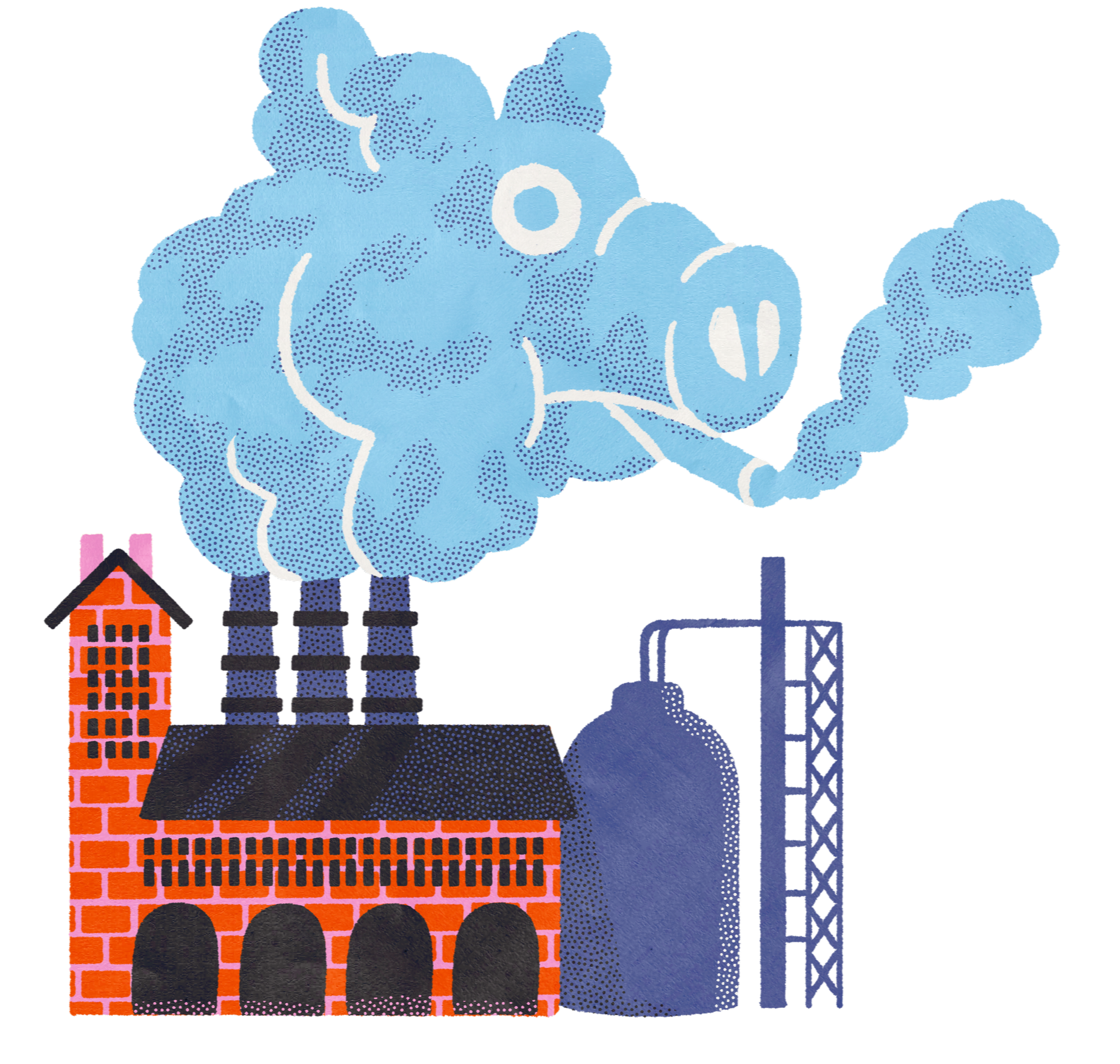
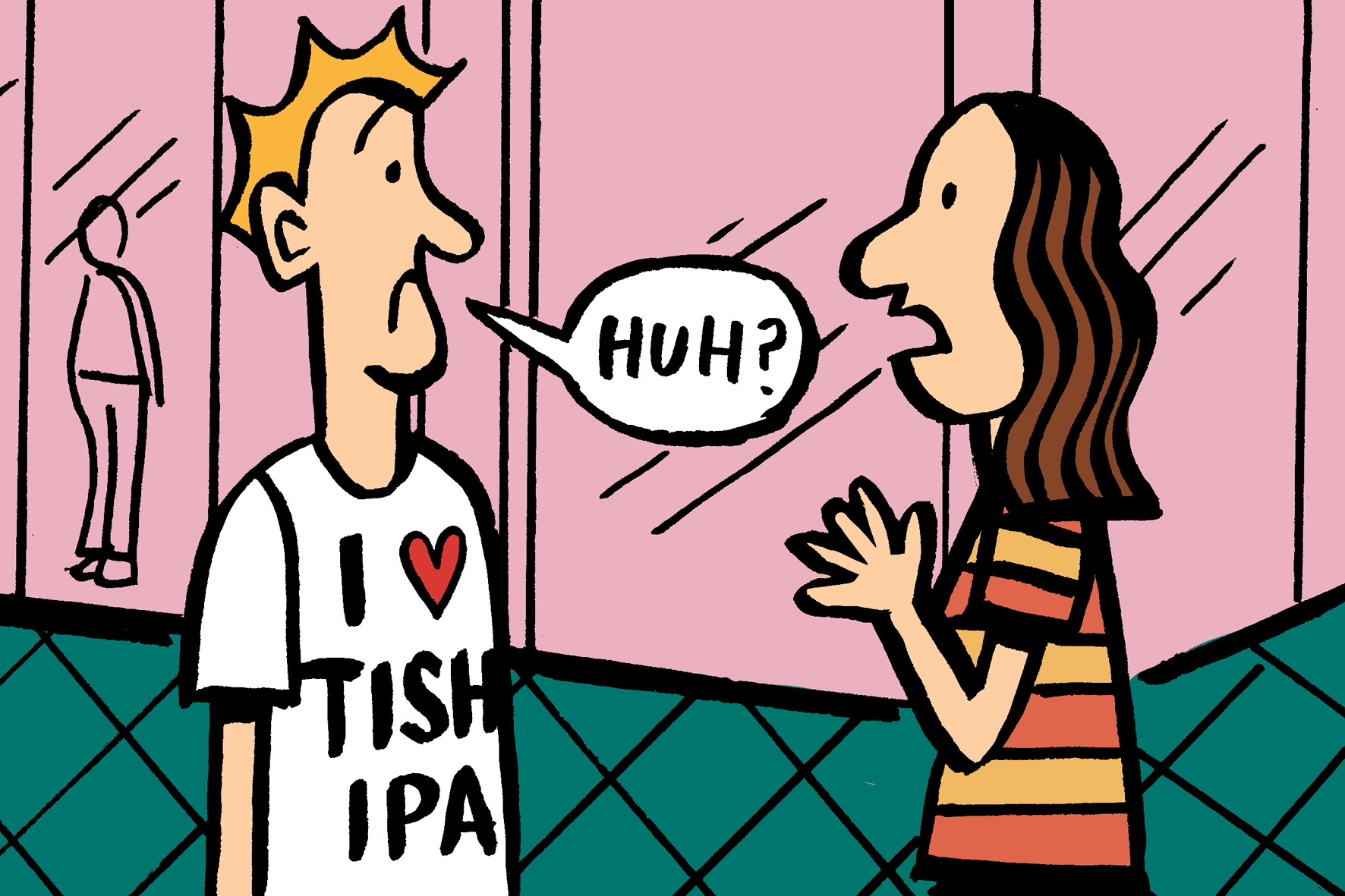
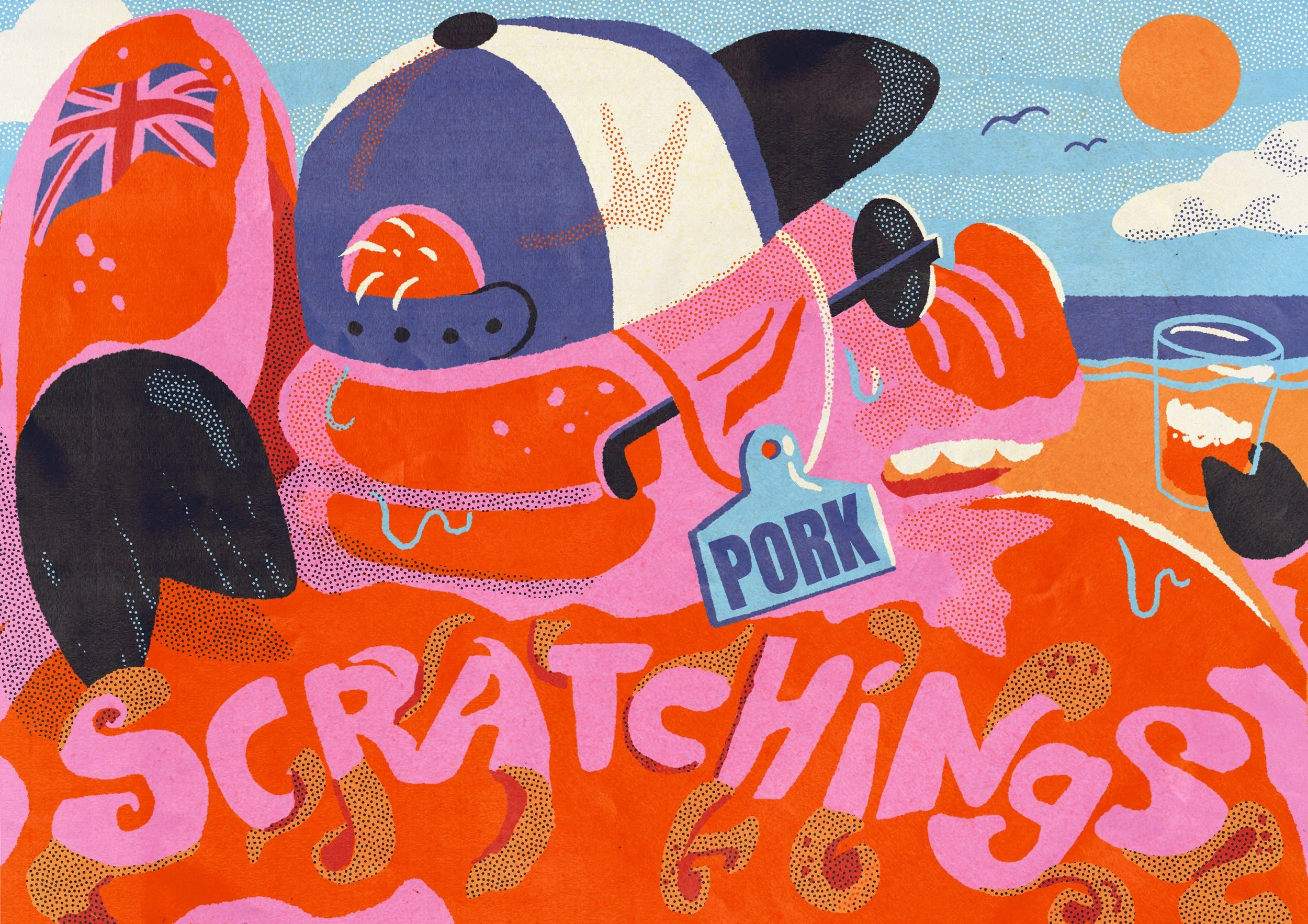
Illustrations by Eilis Dart
Stepping into the half-light of the Malt Shovel pub, we grab a pint of Wye Valley Brewery’s Butty Bach pale ale and a bag of pork scratchings each. The neat rows of packets are displayed alongside the offer of a local “shell cob”—Dudley parlance for a bread roll—packed with door-wedges of cheese and hoop earrings of fresh onion.
These pork scratchings are something to behold: warped into abstract crispy curlicues, sometimes still featuring the stamp of the slaughterhouse and a few faint hairs, they offer a glut of gristly promise. This is a naked lunch at the limit of omnivorous tolerance where three essential taste elements; sheer salt, rich fat, and bold as brass umami forge a complementary explosion of taste, edging into the Maillard reaction of faint smokiness, bold, bristly and full of bite.
Locals in the pub declare to us that Dudley is best known as the “central psychosphere of the Black Country,” the true heartland of the area being a common point of contention. A statement that is hard to digest on its own, we are pointed towards the area of Crowley which displays the region’s crowning achievement: a giant anchor forged in the town for the ill-fated Titanic cruise ship. A replica, of course, it stands as a totem of energy, graft, innovation— you can see it all over Dudley— the town’s most enduring symbol of civic pride.
Unlike the remaking of Greater Manchester suburbs like Stockport and Altrincham, many Black Country towns have found themselves left behind in the wake of great change.Wealth persists mostly in the rear view of history; in its great buildings and homegrown nostalgia; and in its pubs. So important are public houses to the history and culture of the Black Country, the Living Black Country Museum, contains two of them.
““...warped into abstract crispy curlicues, sometimes still featuring the stamp of the slaughterhouse and a few faint hairs, they offer a glut of gristly promise.””
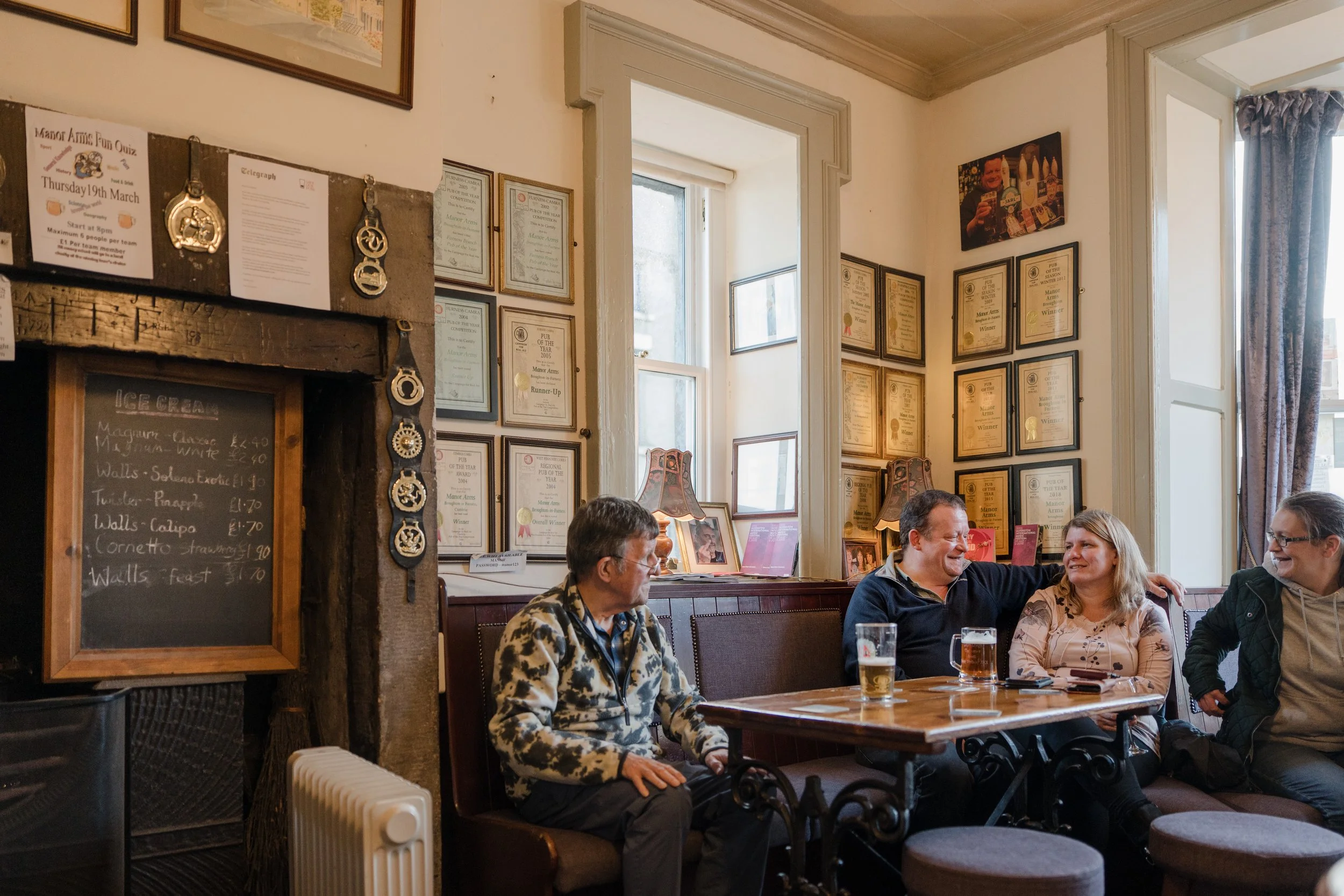
The Britannia Inn belongs to the local Bathams Brewery, and sits in the heart of the community, popular with both working class drinkers, tourists and a local girls’ football team indulging in post-match pints. Fifth generation co-owner of the brewery Matt Batham acknowledges strong local heritage behind pork scratchings as part of Bathams’ pub lore.
“We brew to full capacity so 60-70% of Bathams’ beer goes through our own pubs and selected free houses,” he tells me. “A few years back Brierley Hill was the home of Marsh and Baxters, a massive producer of sausages, hams and pork pie–so there must have been a lot of spare pork rinds around.”
Marsh and Baxters happen to have a pristine 1950s shop in the Black Country Living Museum, should you wish to delve deeper into the history of the region’s favourite pork pie producer. It is the last remaining vestige of a pork empire that had more than 50 shops in the West Midlands and a factory that could handle 60,000 hams at one time.
***
Pork scratching brands are more varied than you think: some are snappier, less chunky; others retain a more glutinous underbelly, and less jawbreaking crackling. Some packs include the grisly warning ‘may contain bones’ for people with false teeth, fillings or a nervous disposition, with scratchings cited as one of the top causes of dental emergencies in the UK.
George Rice, founder of popular pub-charcuterie brand Serious Pig, started with the goal of producing the UK’s first ‘posh pepperami’ the Snackalami, along with their own brand of pork crackling, Snacklings. It was tougher than he thought to stick to his guns.
“A lot of corners can get cut—comparable to the scrap metal trade,” George says. He tells me how Serious Pig’s goal was to commit to using high-welfare pork and supporting British farmers, although this proved unsustainable. Serious Pig stopped producing Snacklings back in 2020.
““It’s the slipperiest place, there are handrails everywhere, like human curling.” ”
The production of scratchings is a tough, messy, high-heat operation, as George confirms: “It’s the slipperiest place, there are handrails everywhere, like human curling.”
Producers now face rising energy costs which hit brands with shrinking margins, pushing price wars between pubs and supermarkets, when drinkers are already facing up to the steadily rising cost of a pint.
The staying power of pork scratchings arises from their depth of taste, especially when set against the bland sameness of the peanut, too-obvious ready-salted crisps, or the unbearable lightness of the ephemeral prawn cracker, but it’s also in the scratching’s resistance to the reinvention of the wheel.
Most brands stick to the traditional recipe of salt and yeast extract, while others use rusk, onion powder or MSG additives to enhance crunch and flavour. Both producers and fans seem equally passionate about the genuine article, bristle and all. The word “proper” is prominent on most packaging as a token of this. Much like the lingua franca of “authenticity” played in the cultural taste-making of politics, lots of companies state their product is ‘made in Britain’, from the homegrown fat of England’s green and pleasant land.
The ‘Mister Trotters’ brand, originally led by Tom Parker-Bowles and Rupert Ponsonby, built their reputation with pride at being “British-made”, only to find that a sudden boom in sales meant that demand outstripped supply. In 2019 a press scandal erupted when the company was caught red-trottered using a mixture of British and Danish pork rind; cheaper imported meat which has lower animal welfare standards. The pair left the brand “incensed”, and their patriotic piggy dream was over.

***
The Beacon Hotel, suitably perched on a high mount, oversees nearby Sedgley Hill and the Western Black Country beyond it. The pub is a grand old ship, packed on a Thursday evening, with multiple snugs, saloon and conservatory, the traditional circular bar steadfast at its core, an altar of stained glass. The pub is home to Sarah Hughes Brewery, boasting an excellent range including Dark Ruby, Surprise, and Pale Amber—all perfect with pork scratchings.
The pub’s multicoloured pump clips remind me of the importance of scratching packets. Many designs come in clear plastic, striped with no-nonsense colours resembling the apron, awning and pole of the small-town trinity of butcher, pub and barber, the Saturday circuit that marked the arrival of the weekend. Today, many brands have moved-on towards the shinier foil vacuum packed packets, trading grit for glamour.
Most of my scratchings have been purchased on the hop in clear plastic bags from Nuneaton’s town market, unnerved but not deterred by their proximity to the rawhide and pigs ear dog chews at the nearby pet food stall.
These would never have been adulterated by flavourings, but pork scratching flavours now range across jalapeño chilli, salt and vinegar, black pepper, garlic, “roast pork” and health-focused “pulled pork crunchies” to cut down on saturated fat. How many of us have stared back into a bag of open scratchings wondering just how unhealthy they are, a quick internet search revealing the appalling fat content—and a new fad of proto-keto diet that pitches scratchings as high in protein and low in carbohydrates.
Serious Pig now offers a healthier, veggie alternative of Corn Scratchings, made with Peruvian giant corn kernels puffed-up and sprinkled with a traditional scratching-like seasoning. The notion of pork-free scratchings is seen as sacrilegious by some, sparking paranoia over the “cancelling of pork” in reactionary social media pile-ons.
We are not the only nation to enjoy crispy fried pork rinds with our beer. In the U.S., pork rinds or ‘pork crunch’ is preferred—the rind is super dehydrated then puffed up with air. They even come in microwaveable versions. In Spain, Mexico and South America scratchings are chicharrones; in the Cajun Deep South there is the delicacy of grattons, cubes of pork belly soaked in lard before frying and then doused in cayenne pepper and paprika. In Poland, Czech Republic and Bulgaria, strips of pork fat are cured in vinegar, said to resemble the unctuous consistency of foie gras.
““We go through about half a pig a week...””
No doubt, the continued appeal of the pork scratching aligns with the resurgence of offal, combatting the class-ridden desire to live “high on the hog”; back when it was fashionable to eat only the choicest cuts of meat from top of the pig, it is now recognised to be tasty, flavorsome and affordable. Chefs like Fergus Henderson of London’s St John restaurant marked this shift with his 1999 cookery book, Nose to Tail Eating: A Kind of British Cooking, which promoted a no-waste cooking style, bringing a more open, working-class mindset to cooks and chefs today.
Mike Davies, is founder of south London pub The Camberwell Arms, and part-owner of a butchers in nearby Bermondsey. “We go through about half a pig a week, sourced free-range from a farmer in Herefordshire,” he says. “We use every part of the pig all across the pub menu. We make our own fresh scratchings and a ‘glass’ crackling garnish for some of the dishes.”
Mike praises the versatility of pork: “It has a high fat content, along with the durability of the rind directly fused to the fat. Ageing the pork in a cool dry fridge lets the skin dry out and only intensifies the crunch.”
One of the problems in the industry is sustainability. “Sourcing high-welfare pig skin to make scratchings is inevitably rigged towards cheaper mass-production,” Mike says. “That’s why we took the hog by the tail and started sourcing our own.”
***
Dudley’s The Old Swan, aka Ma Pardoes, feels like the last late pub on the edge of town. Its dim lighting masks a Shining-like ambience, in the clash of white stucco walls, cut off at the waist by a blood-red dado rail running down into ancient psychedelic carpets. After last-orders the lights are turned out, and a gloomy, cobwebbed model of The Titanic sits fish-tanked in the window, sailing into the next wave of future nostalgia.



Just as in a bag of pork scratchings, often the best bits of our culture hide in the hardest to find places. The Black Country’s story of pork scratchings is more than snap and crackle, but an iconic cornerstone of the British pub experience, and something that can never be bested.