The Union Forever — How Thornbridge Saved a Vital Piece of Brewing History
“Can we see it?”
A couple has anxiously approached the bar at the Thornbridge Brewery taproom. Here, they’re met by the beaming face of bar manager Russell Bennett.


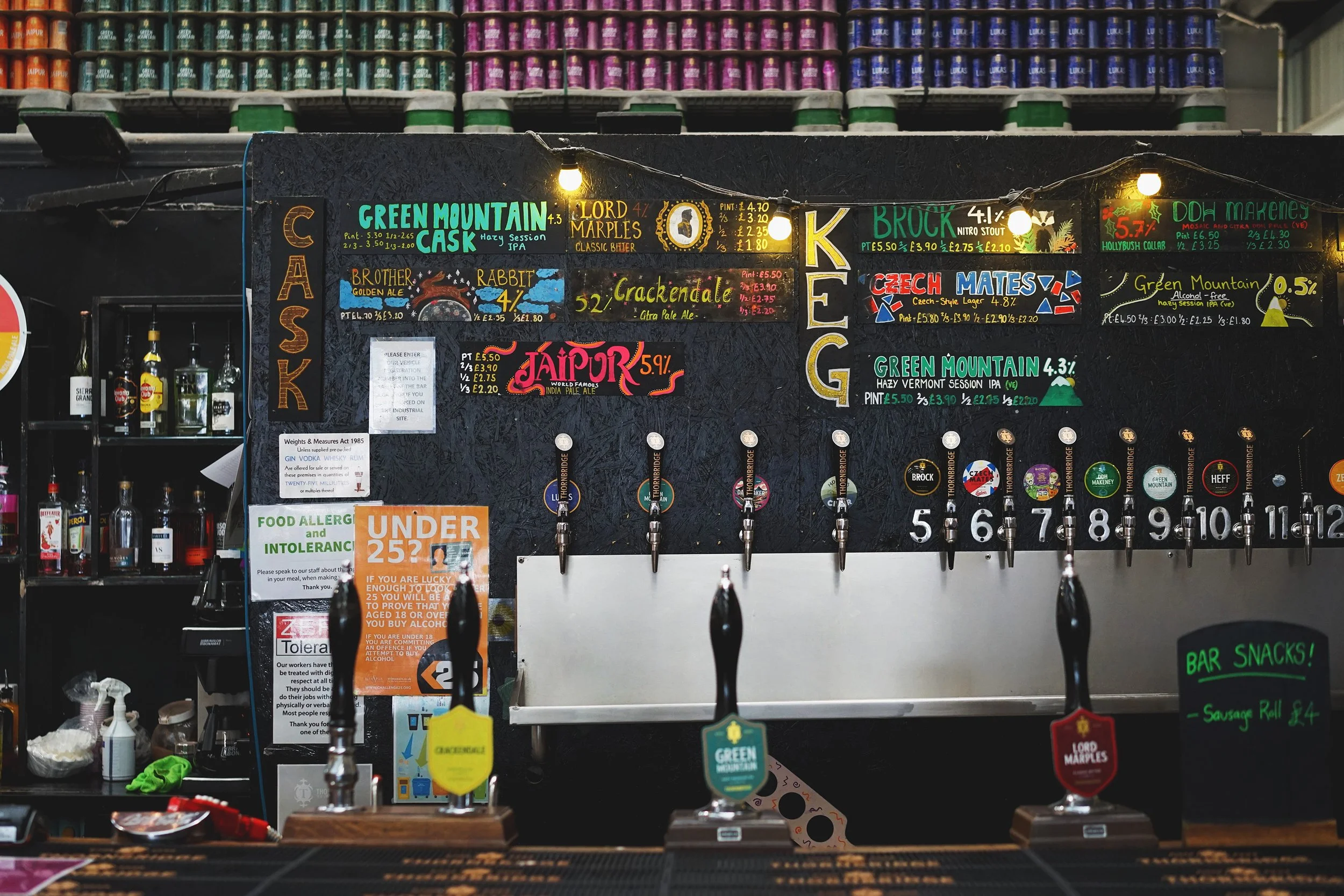
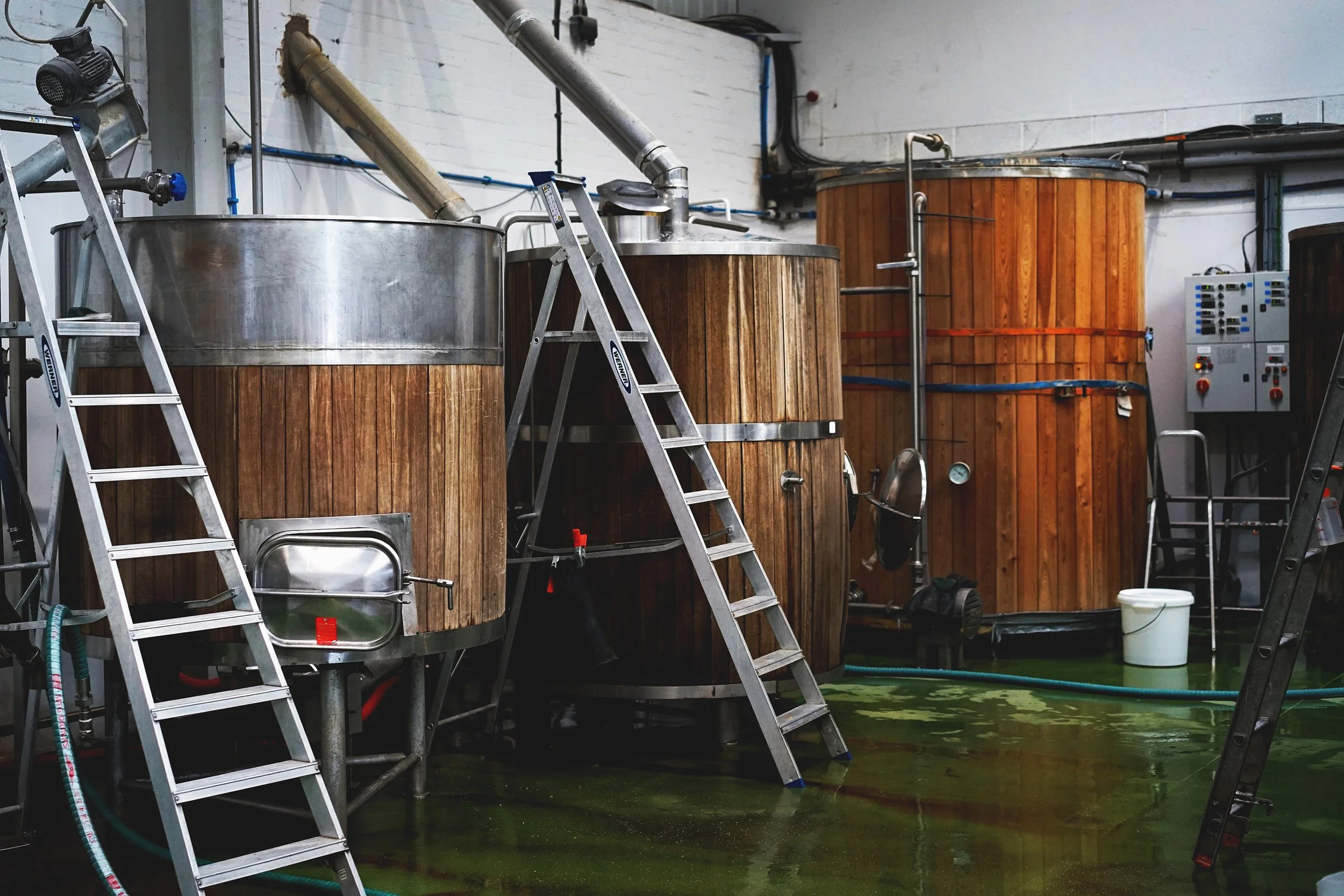
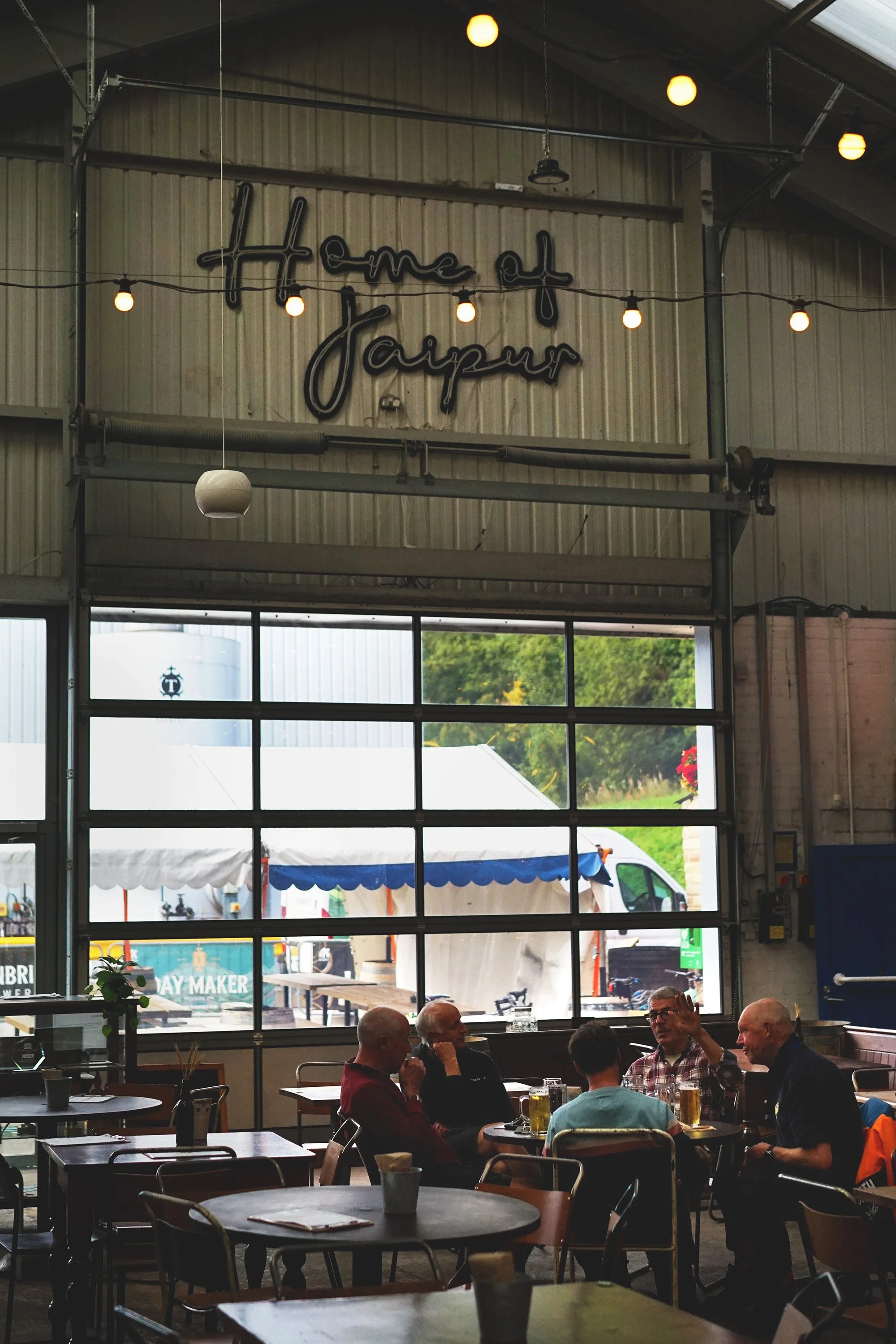
“Of course!” he replies, flashing a wide grin before leading them past the wall of taps obscuring what lies behind it. At the rear of this modern, repurposed warehouse sits the original Thornbridge brewing system, now repurposed as a pilot kit, two decades after the brewery was founded in 2005. This is not what these eager customers are here to see. Instead, they’ve asked to take a look at a more recently installed, and far more curious-looking contraption that arrived in the middle of 2024: an original Burton union system, dating back to 1898.
Photography by Matthew Curtis
“I don’t think we quite understood how much people would want to see [the union] and engage with us about it,” Russell tells me. “For people to be able to learn more about it, and how we’re using it in comparison to how it was previously used? That’s incredible.”
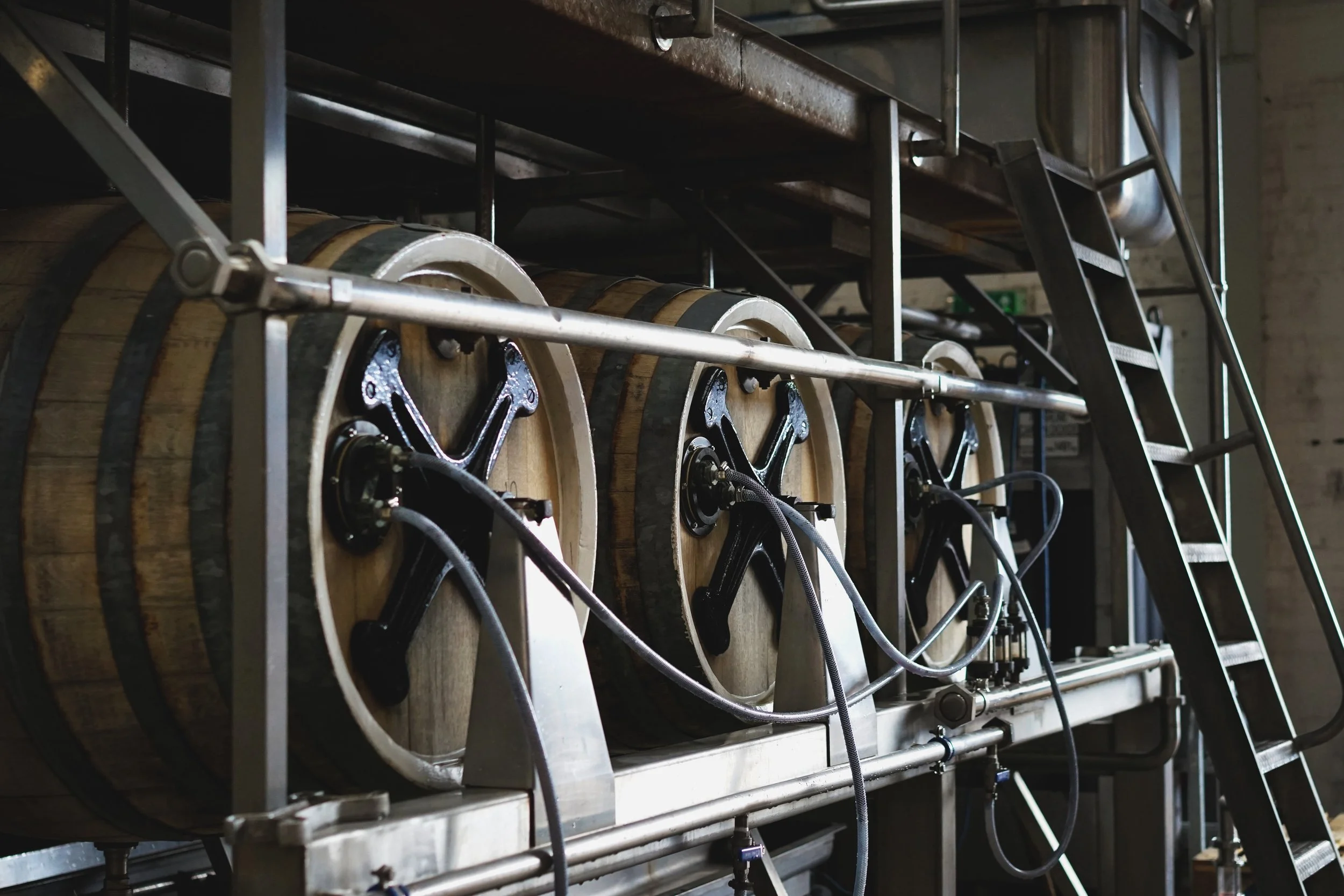
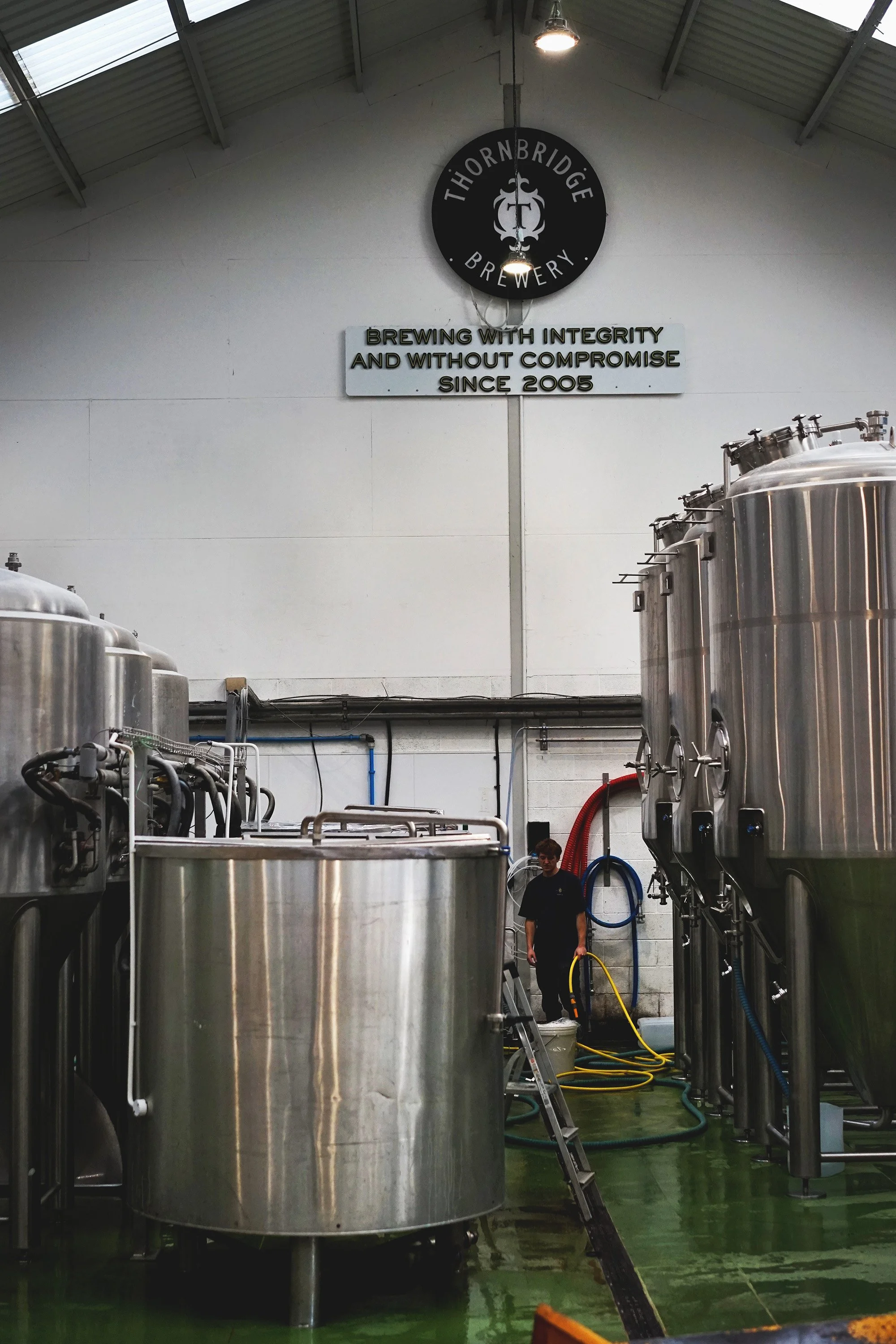
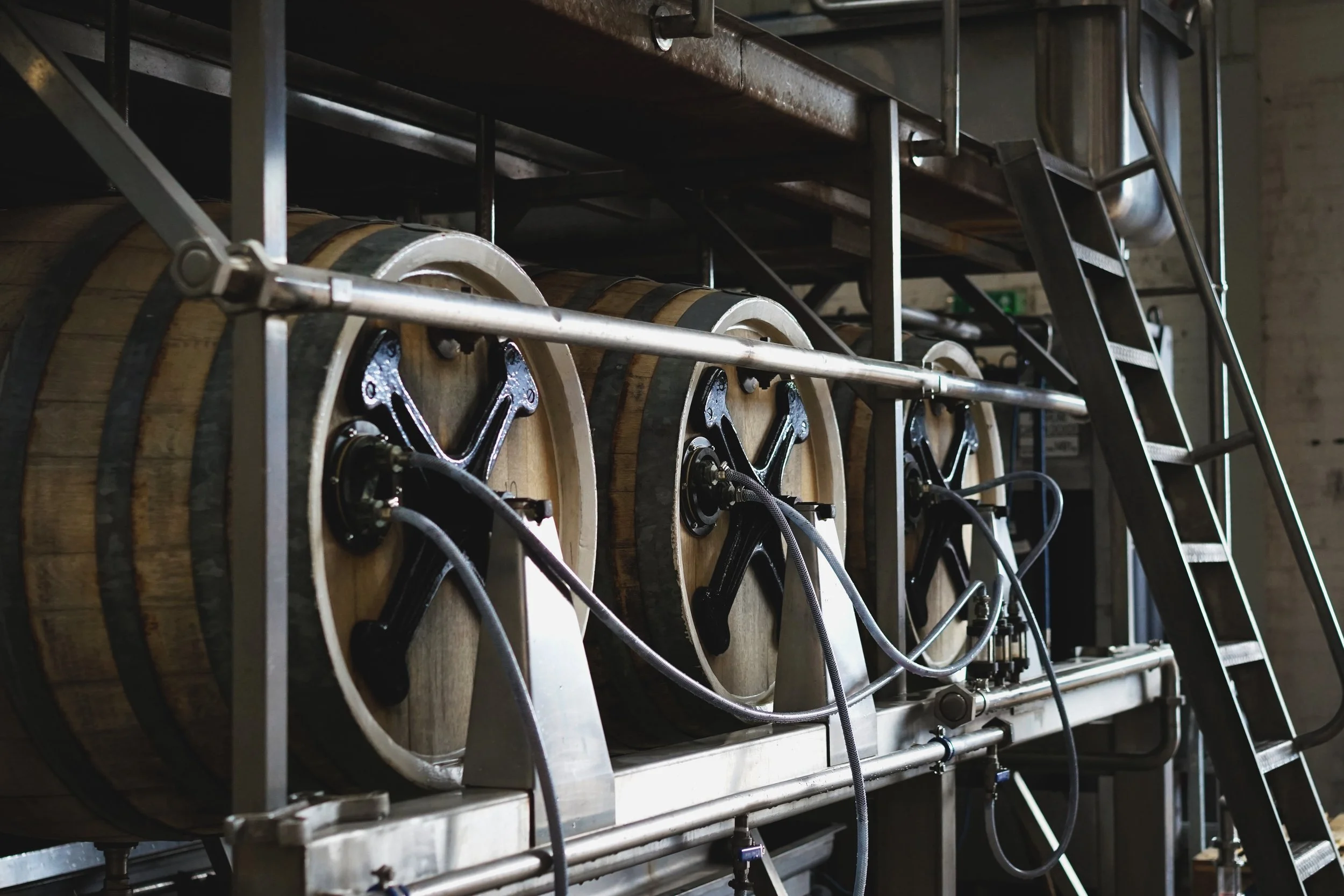
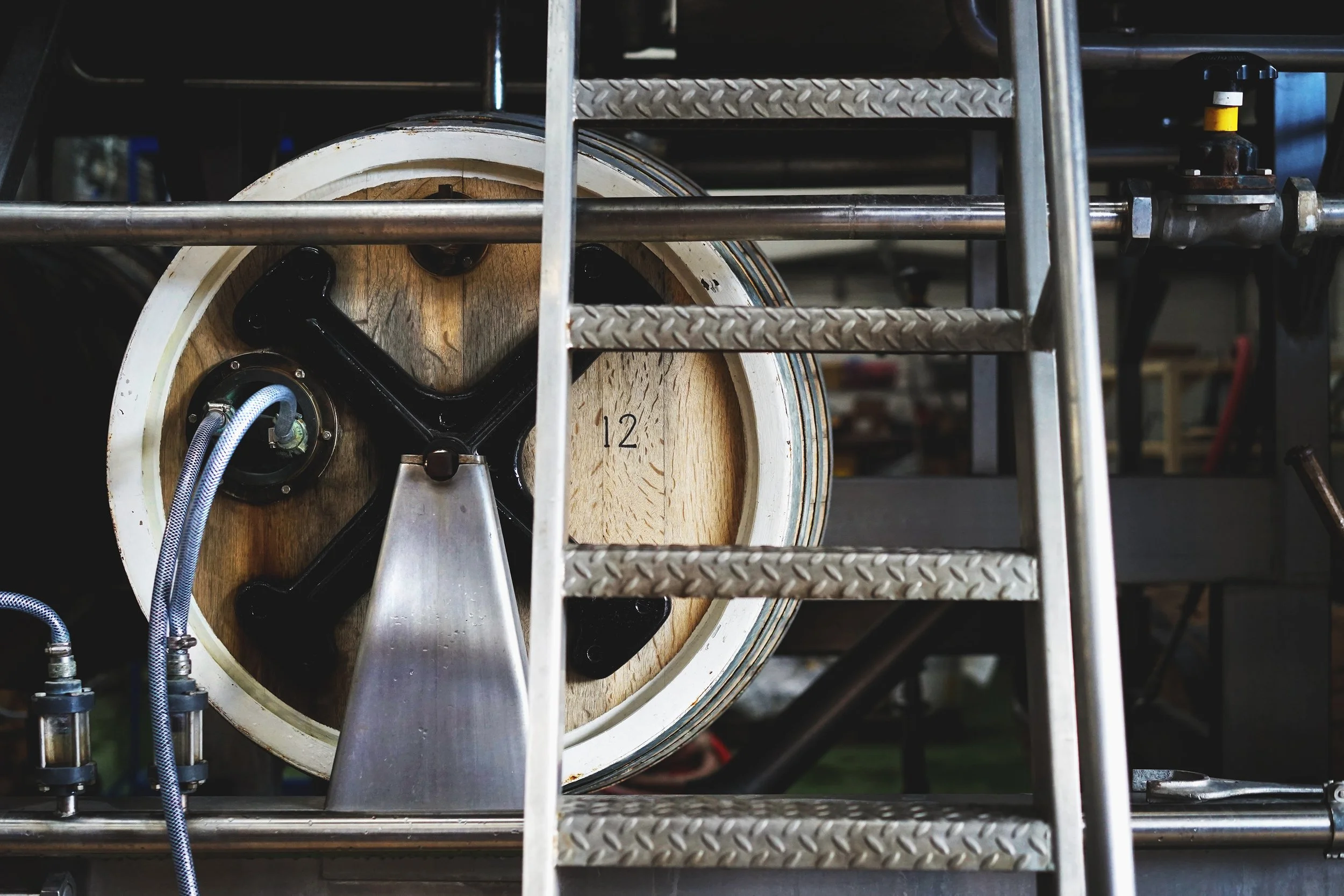
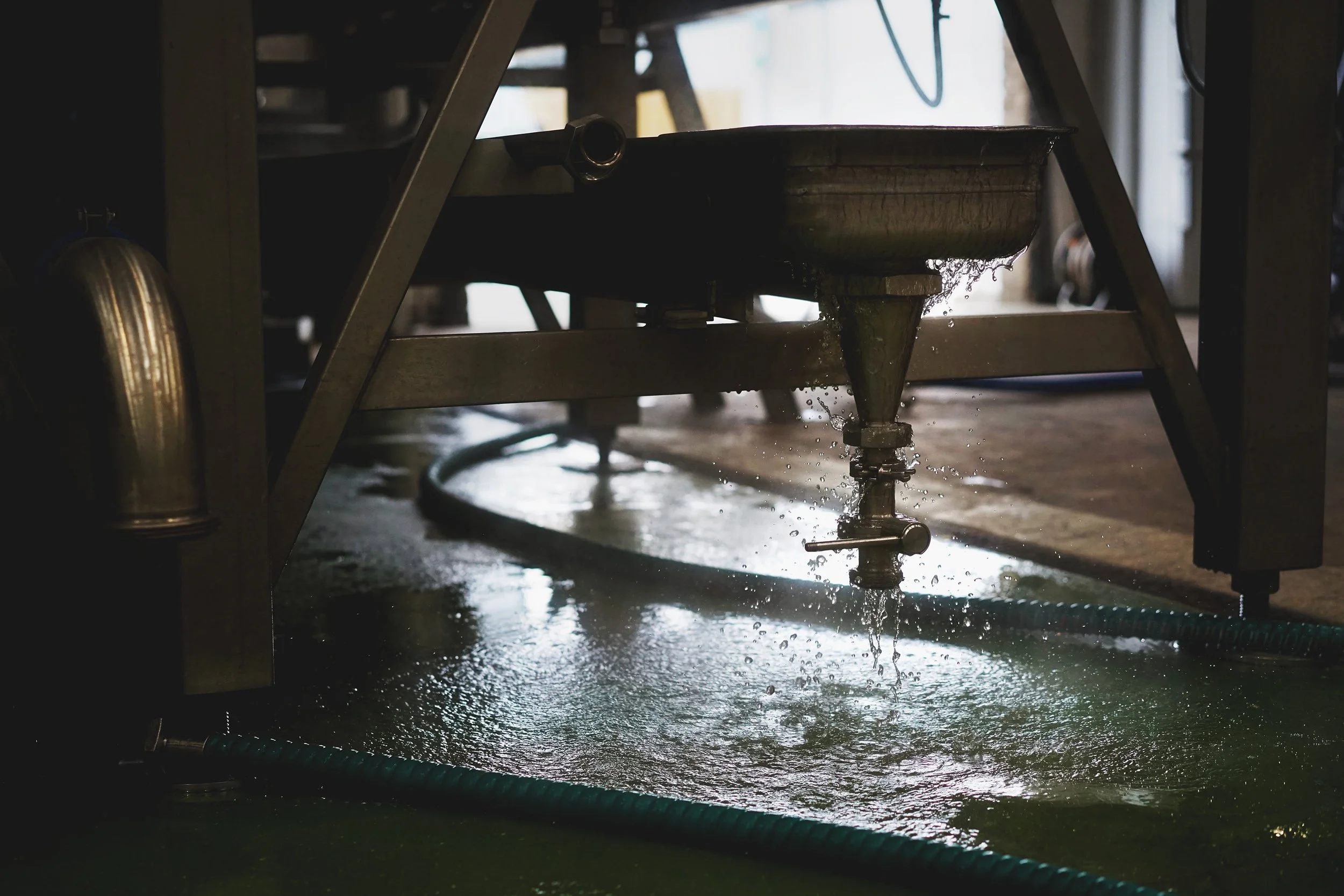
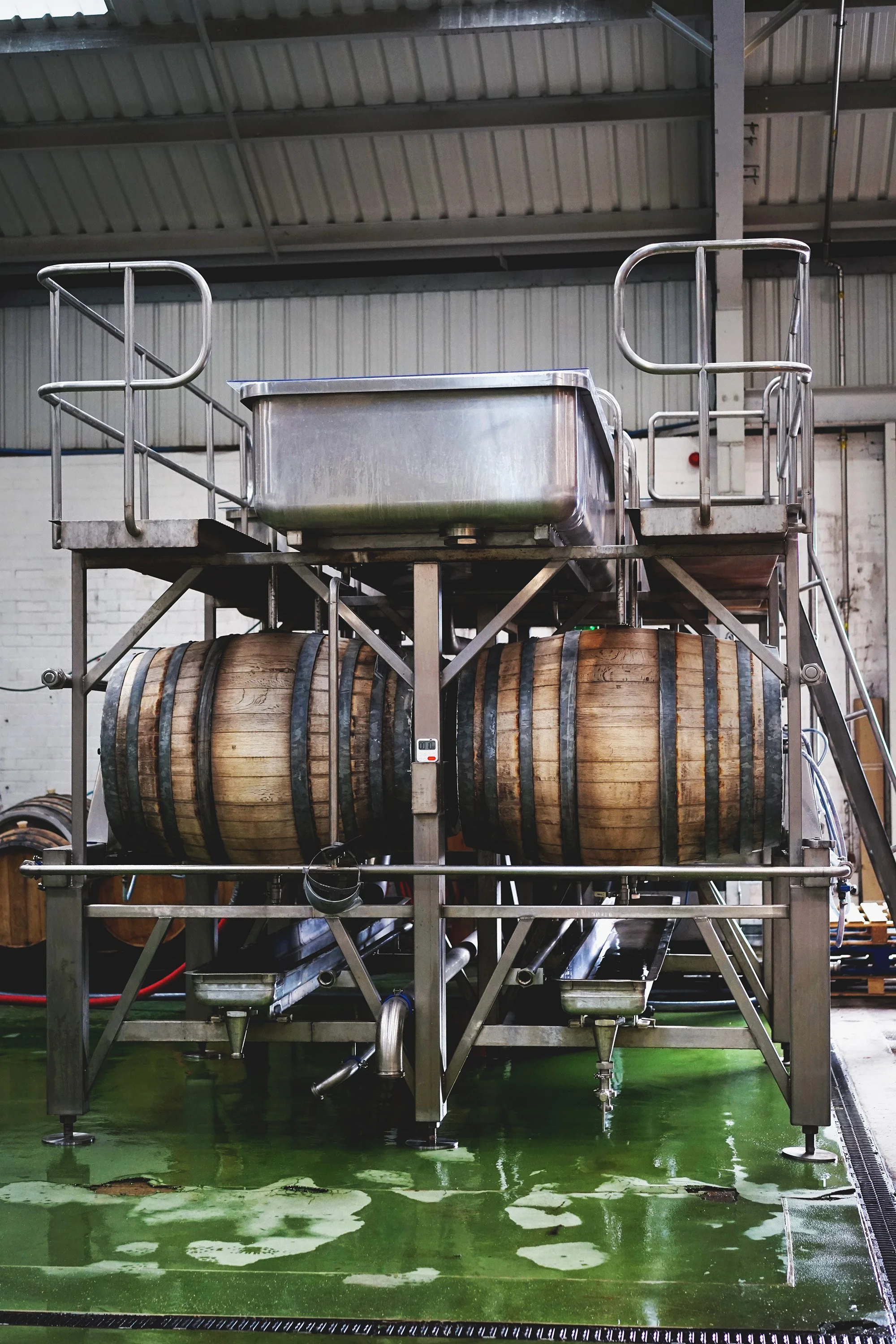
Standing at around 12 feet tall, and equally as wide, at the heart of the union set’s stainless steel frame are six 150 gallon oak barrels, lined up in adjacent rows of three. Steel pipes protrude from each of them, running to various troughs and two slender containers are at its base beneath the rows of barrels, one either side. Up a ladder that leads to a viewing platform are two larger troughs, arranged together in an L-shape. Protruding upwards from the barrels and arcing into the largest of the two are six swan-neck pipes. At this moment it lies empty, the silvery surfaces reflecting the glimmer of sunlight shining through the open shutter opposite. Tomorrow, as happens every two weeks, it will be filled with fresh wort piped over from the main brewery, when it will spring into action, used to ferment a new beer for around seven days.
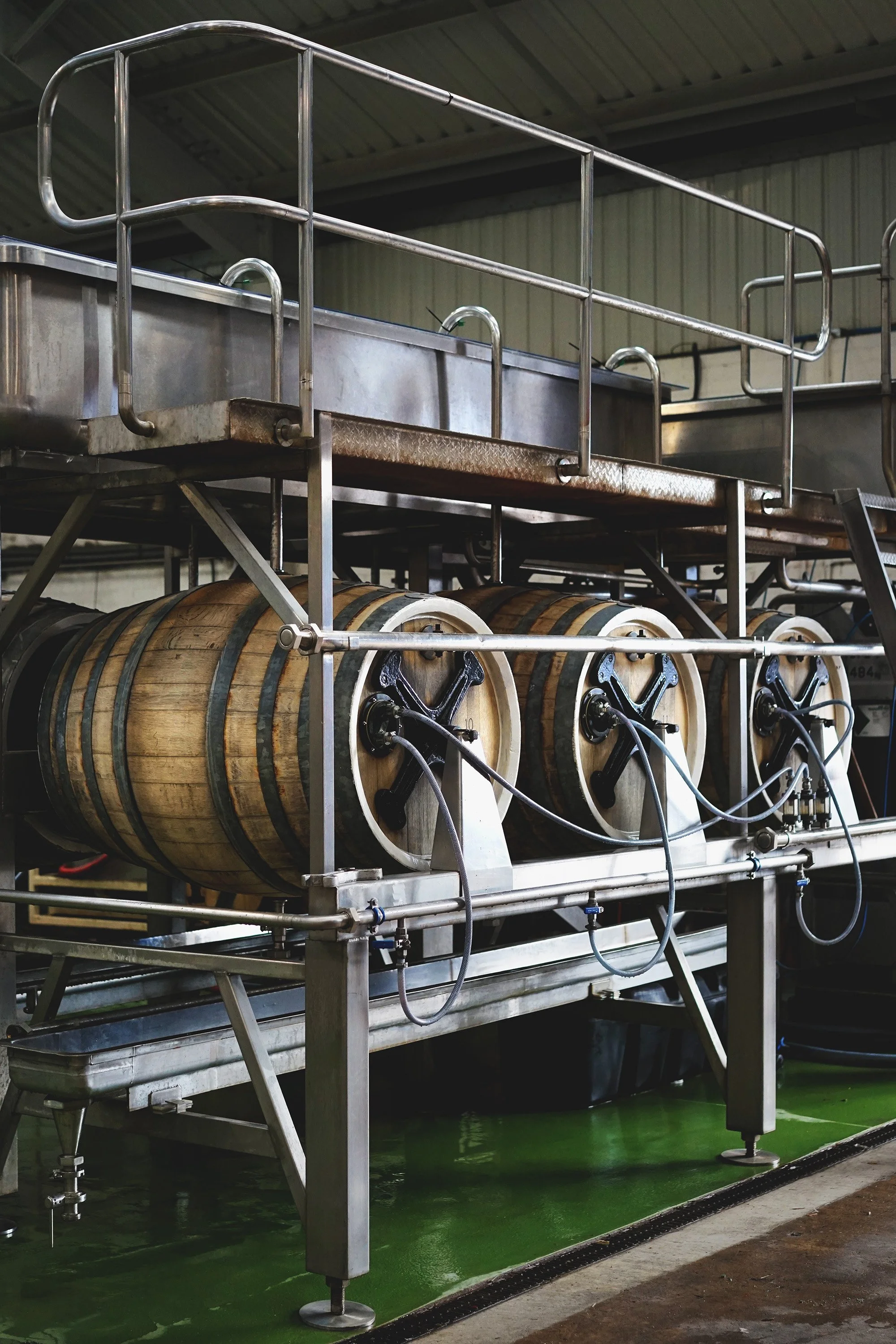
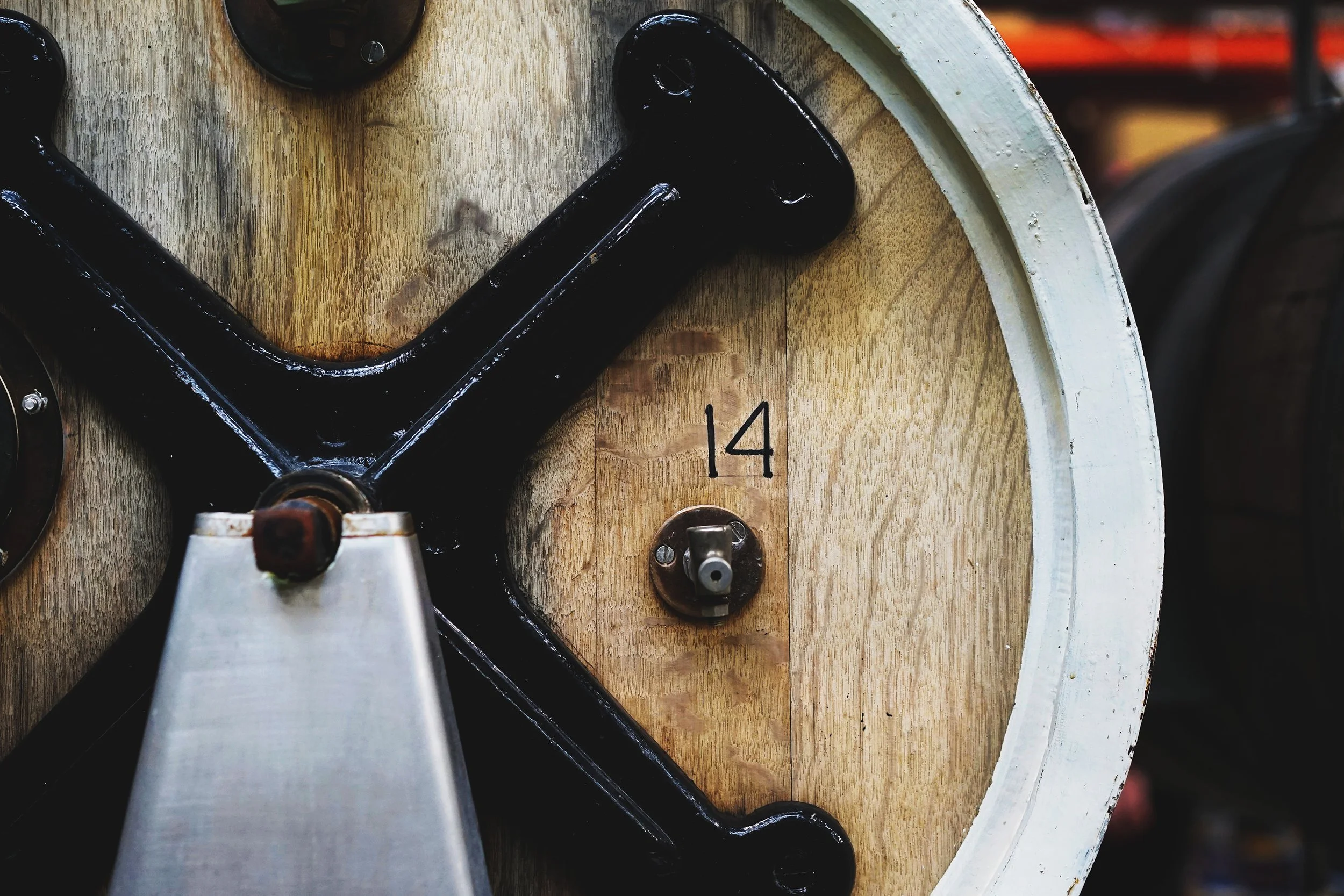
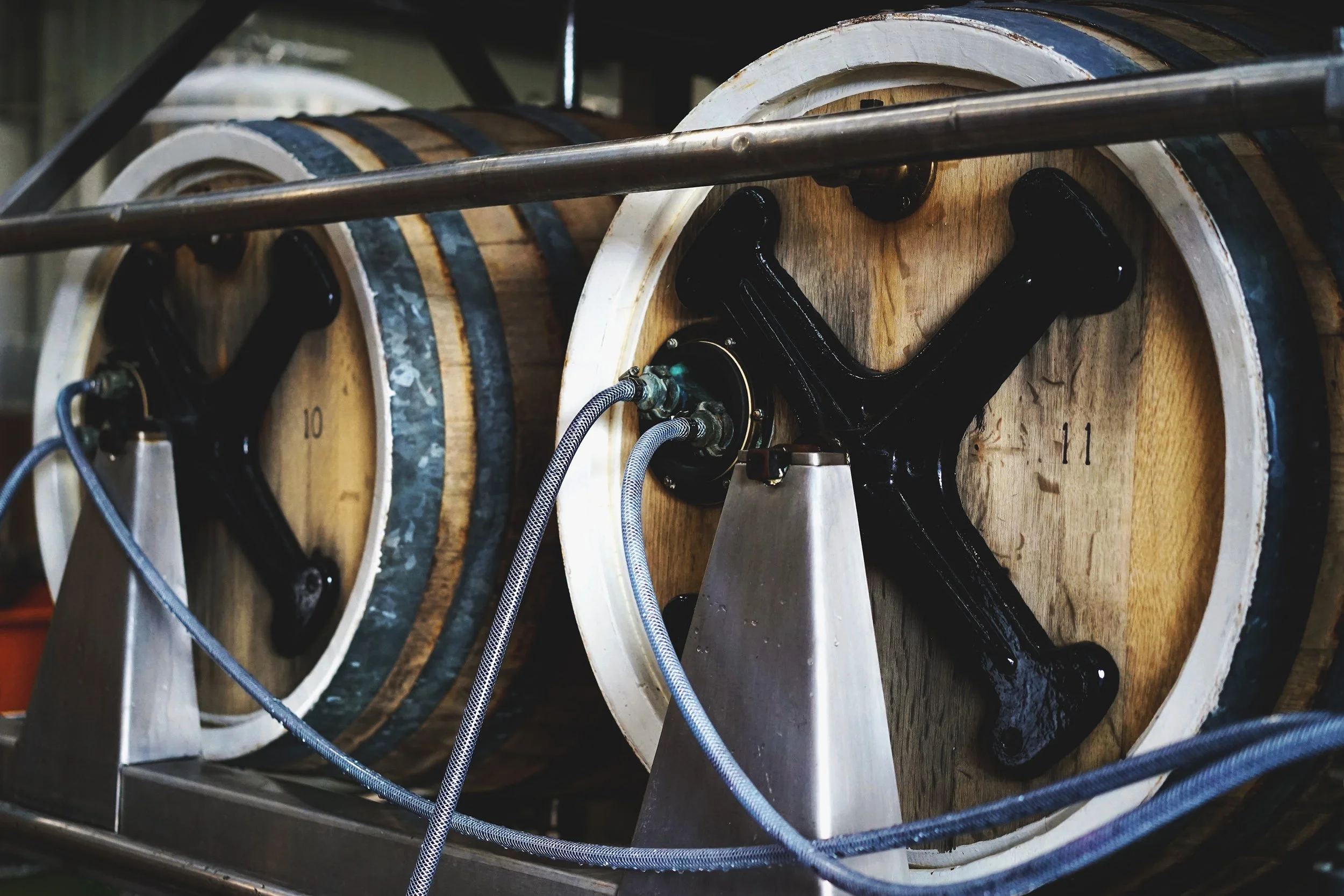
Fixed to the head of each oak barrel is a large, cast iron “X”, painted black. If this seems familiar it’s because, for a time, an illustration of three such barrels, stacked in a triangle formation, formed the logo of Marston’s Brewing Company in Burton-upon-Trent, Staffordshire. Still in operation, today Marston’s brewery is owned and operated by British-Danish conglomerate, Carlsberg Britvic.
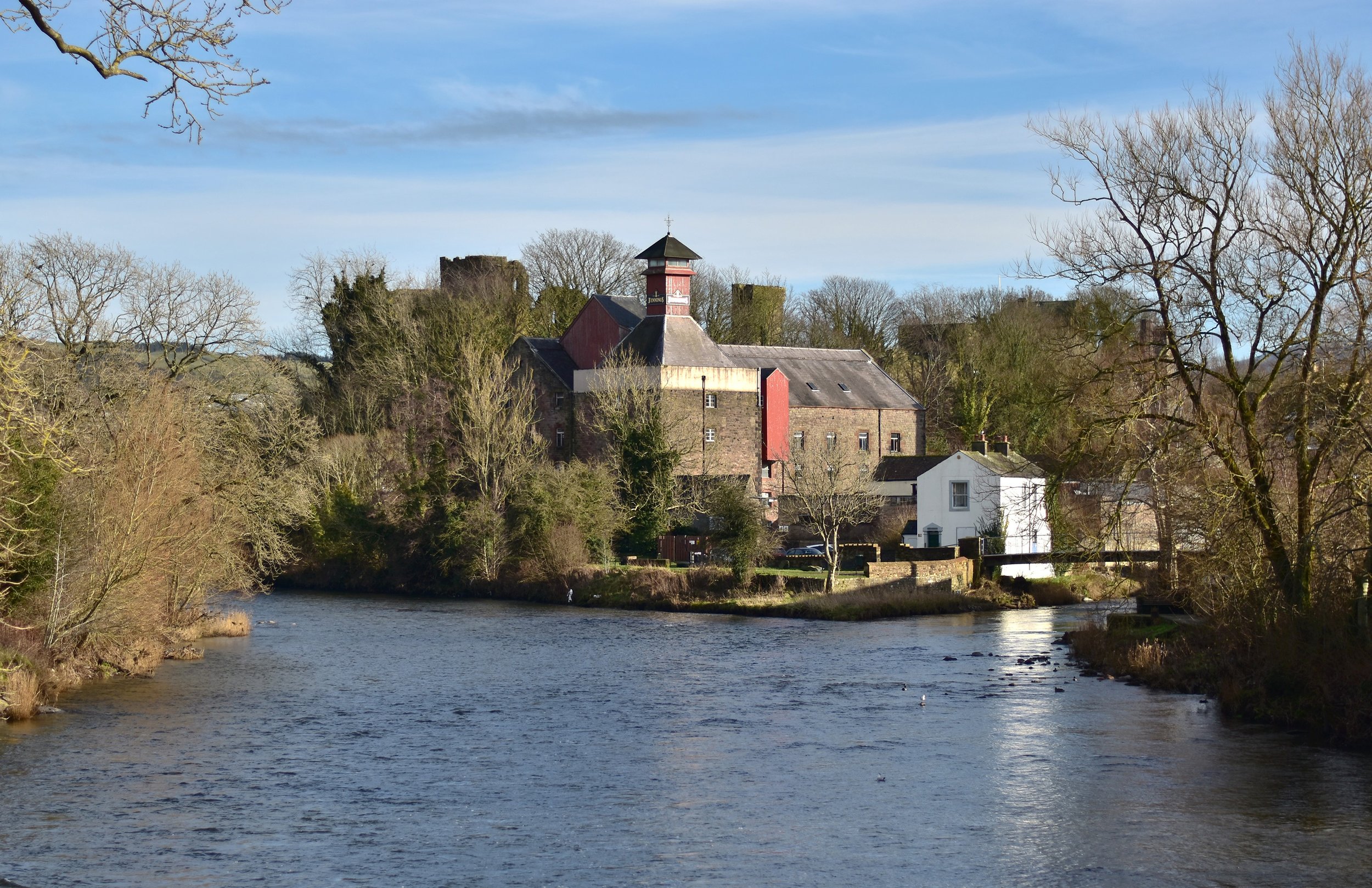
In January 2024 Carlsberg Britvic—then known as the Carlsberg Marston’s Brewing Company—decided to retire the remaining four working union sets at Marston’s. Once used to brew what was once some of the most well-known ale brands in the country, including Marston’s Pedigree and Owd Roger, the brewery’s website famously used to state: “No Burton Unions, No Pedigree. End of.” Now, it seemed certain this storied piece of British brewing history, first invented in 1838, was due to be consigned to the dustbin of time and memory.
When the news broke, it stirred plenty of emotion within the industry-at-large. It was another dreadful PR-blunder from Carlsberg. Since the multinational had taken its initial 60% stake in the Marston’s empire in 2020, it had been systematically shutting down the more traditional, cask-led elements within its portfolio. This includes Jennings Brewery of Cumbria in 2022, and Hampshire’s Ringwood Brewery the following year. The scrapping of the union sets looked a likely addition to what could genuinely be considered as serial cultural vandalism. Veteran beer journalist Roger Protz put his response bluntly: “The unions must not die.”
Step in an unlikely figure, Garrett Oliver of New York City’s Brooklyn Brewery. Carlsberg has, for several years, been Brooklyn’s European distributor. Garrett, who has served as brewmaster at Brooklyn for more than three decades, also has a long friendship with Thornbridge, and visits the brewery at least once a year. What started as a simple message, sent late one winter’s night, would be the spark to set in motion the saviour of this vital piece of British gastronomic heritage.
***
“No one knew it was happening,” says Thornbridge’s creative lead Rebecca Jayne Painter. “I think they deliberately kept it a secret from us so that we’d all be really excited.”
In January 2024 Garrett Oliver emailed Thornbridge co-founder and managing director, Simon Webster. He’d heard a rumour that Carlsberg were “laying the unions to rest,” and asked if the Derbyshire brewery were interested in acquiring one of the sets. Fortuitously, Simon—a self-confessed Burton-o-phile—along with fellow co-founder Jim Harrison and production director Rob Lovatt, were keen to get their hands on one.
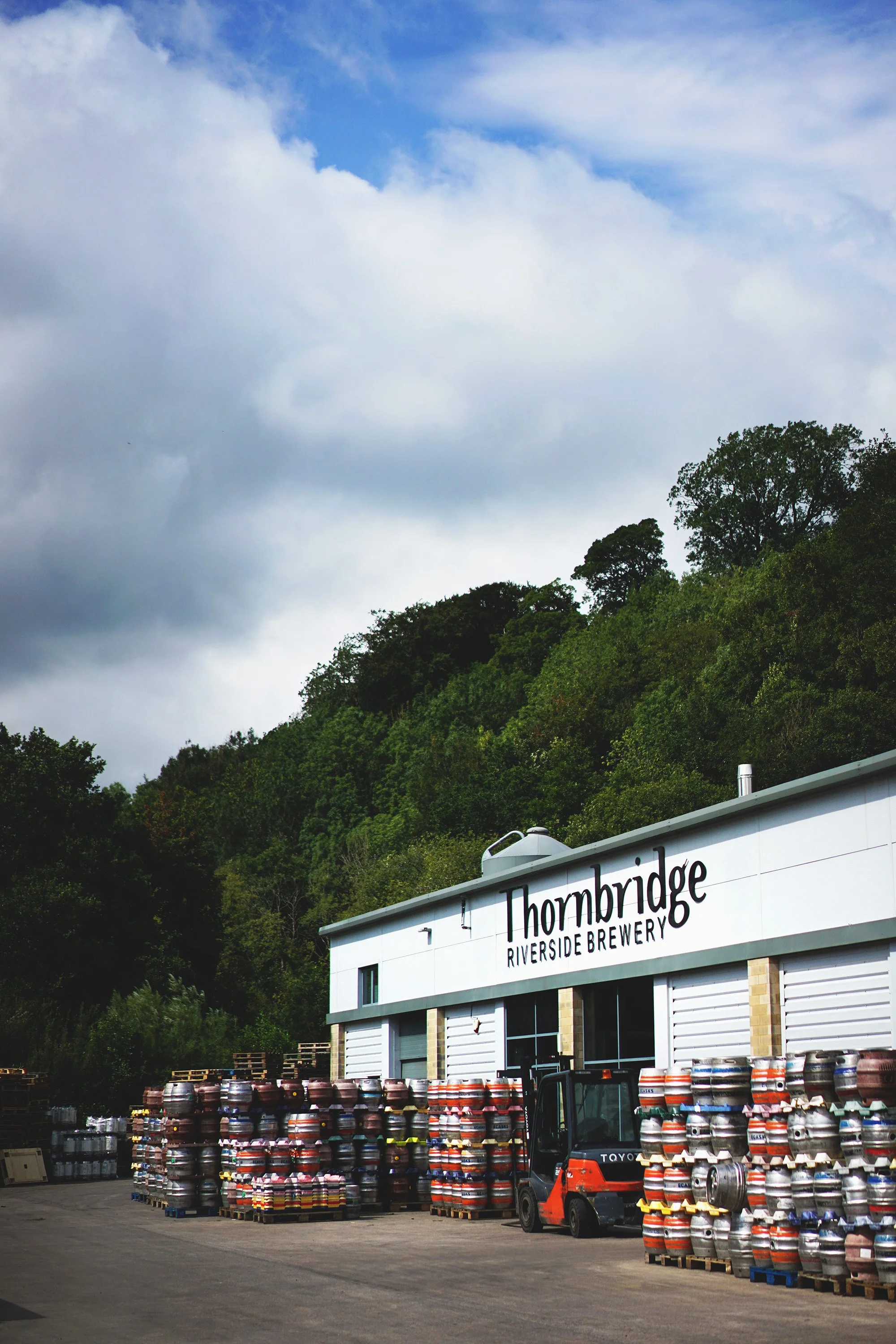
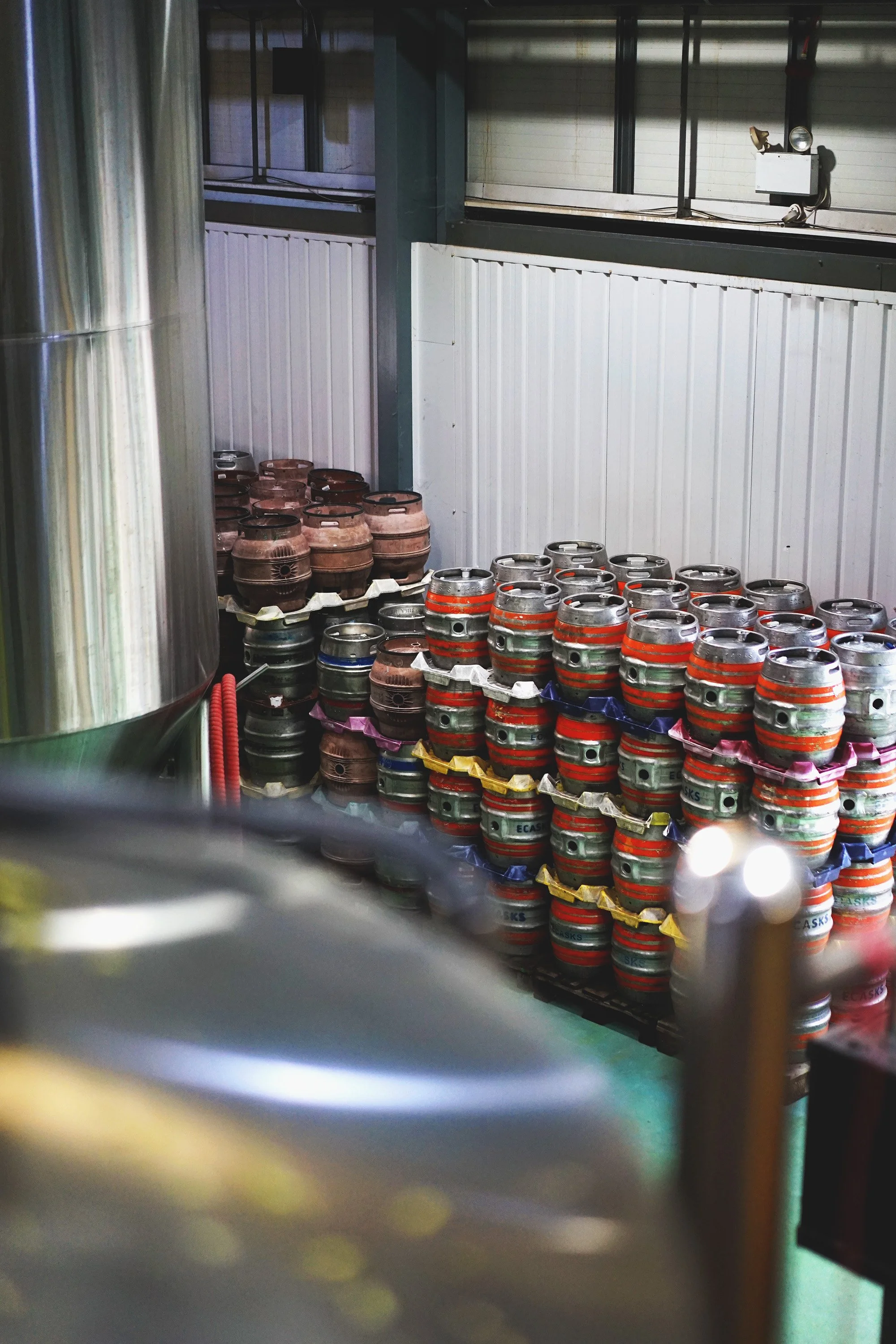
A few weeks later, Simon and Rob travelled to Burton to visit Marston’s brewery, where they saw the original, full-sized union sets, now lying redundant. Thornbridge was to receive one of the smaller, end units, which still holds a remarkable 42 hectolitres of fermenting beer—enough to fill nearly 100 nine-gallon firkins with each use. It’s worth remembering that, as romantic as the unions are, these are tools of mass production, designed to regularly turn out large volumes of beer. For Carlsberg, their continued use had become too laborious compared with modern, cylindroconical fermentation vessels, which are more efficient, and far easier to maintain.
In a remarkable display of generosity, Carlsberg did not ask Thornbridge to pay for their soon to be acquired union set. Although it still required a significant amount of time and investment to get it moved to Bakewell and return it to full working order. Marston’s retiring cooper, Mark Newton, restored the six oak barrels—the most challenging part of the union to sustain. Once installed, Thornbridge made several modifications, most notably the installation of a perspex lid to its upper troughs, in order to help prevent contamination during active fermentation. Ultimately, the installation of the union set ended up costing Thornbridge around £20,000.
““I understand fully that they’re difficult beasts to work with… But the romanticism of brewing a beer and then treating it in the same way as they were in the 1800s? That was just too good an opportunity to miss.””
“It was an amazing opportunity to preserve the last piece of this incredible brewing history,” Simon tells me. “I understand fully that they’re difficult beasts to work with… But the romanticism of brewing a beer and then treating it in the same way as they were in the 1800s? That was just too good an opportunity to miss.”
Three sets were saved in total. One went to Thornbridge. Another was kept by Carlsberg as a museum piece. The third set went to Gareth Young at Glasgow’s Epochal Brewery. Sadly, Epochal—a brewery far smaller in size than Thornbridge—closed down just months after receiving its union. Claimed by a debt collection agency, it was left idle for around half a year, which is far from ideal for the condition of its oak barrels. Thankfully, this particular set has since been acquired by the fledgling Springbanks Brewery of Wolverhampton, which expects to start using it at some stage in 2026.
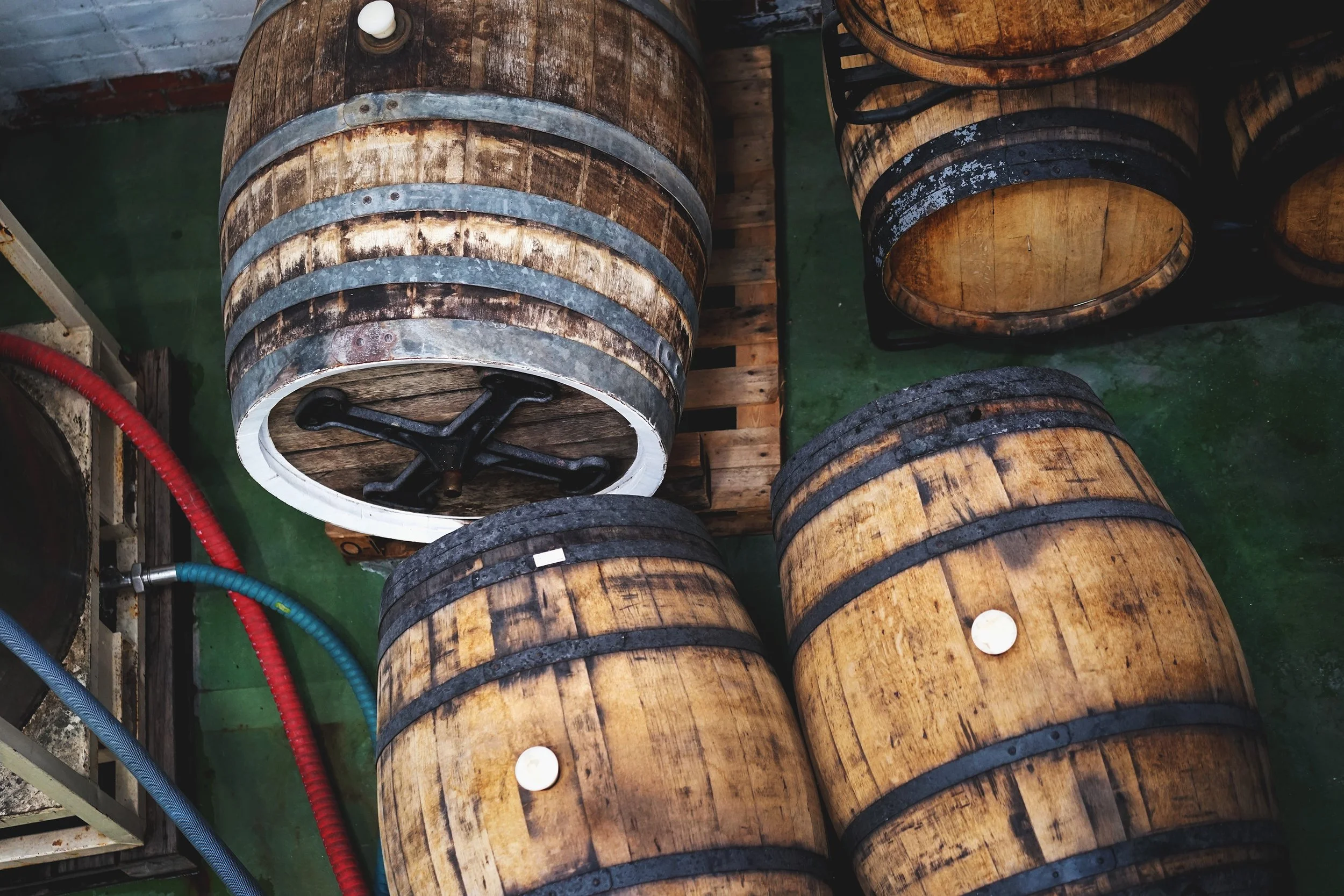
The most challenging element of maintaining a union set is that it must be used regularly in order to maintain the health of its barrels. If they become dry, then their condition immediately starts to deteriorate. With Marston’s cooper now retired, and only two professional coopers working in the brewing industry—both in Yorkshire, at Theakston and Samuel Smith’s Brewery, respectively—replacing any of the barrels would be a long and costly exercise.
“It’s fantastic to have this piece of brewing history, but there was also a lot of trepidation,” production director Rob Lovatt tells me. “It’s difficult to clean, there’s the risk of potential oxygen pickup, there are microbe problems that you could have, and that did concern me.”
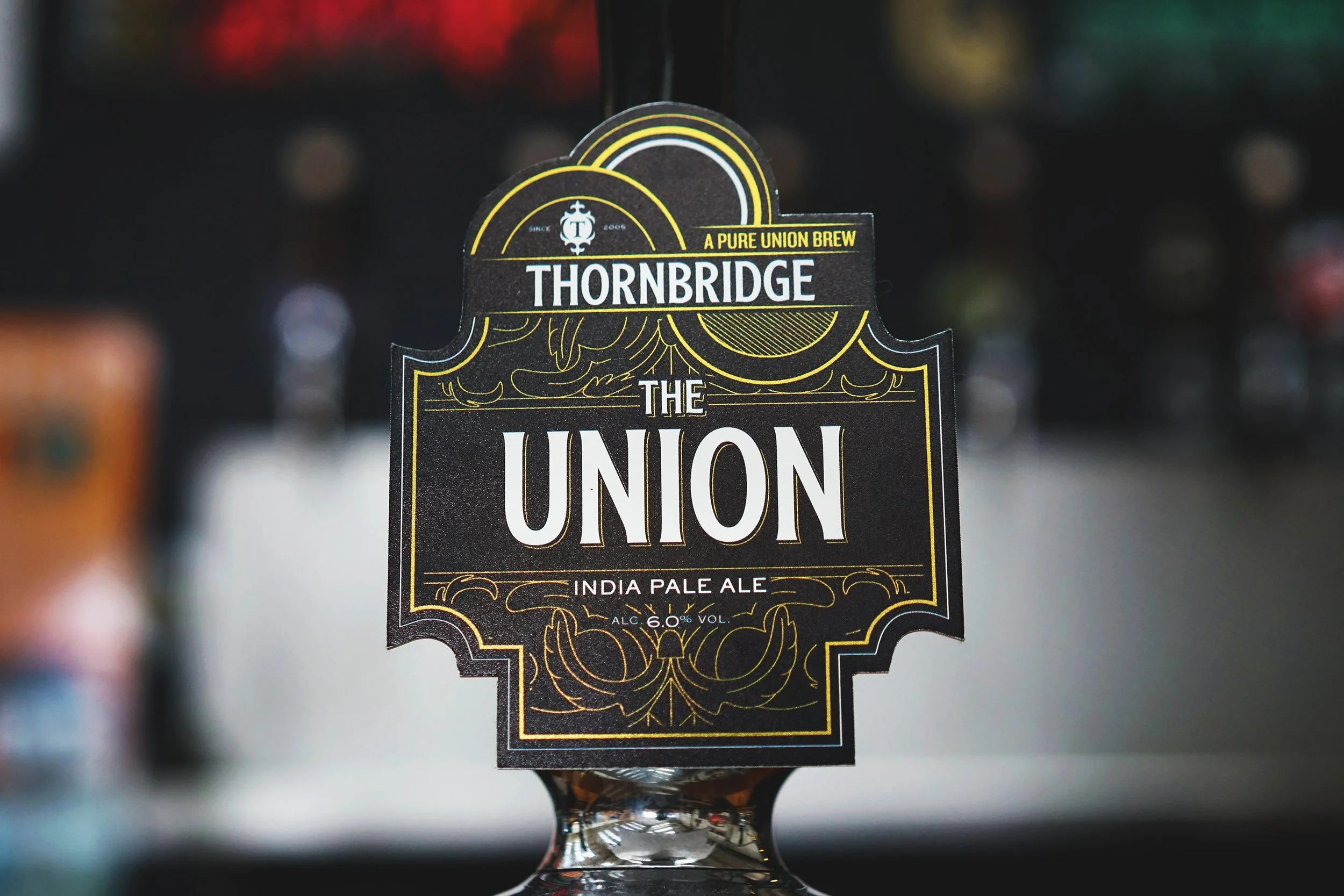
The best way to keep the barrels in good working order is to keep them wet, hence why Thornbridge has to brew on it constantly. In order to meet this demand, it developed two new core recipes, exclusively designed for the union: a traditional, strong English IPA intuitively named “The Union”, and a more sessional pale ale, “1838” that bears more than a passing resemblance to another famous Burton ale, Bass.
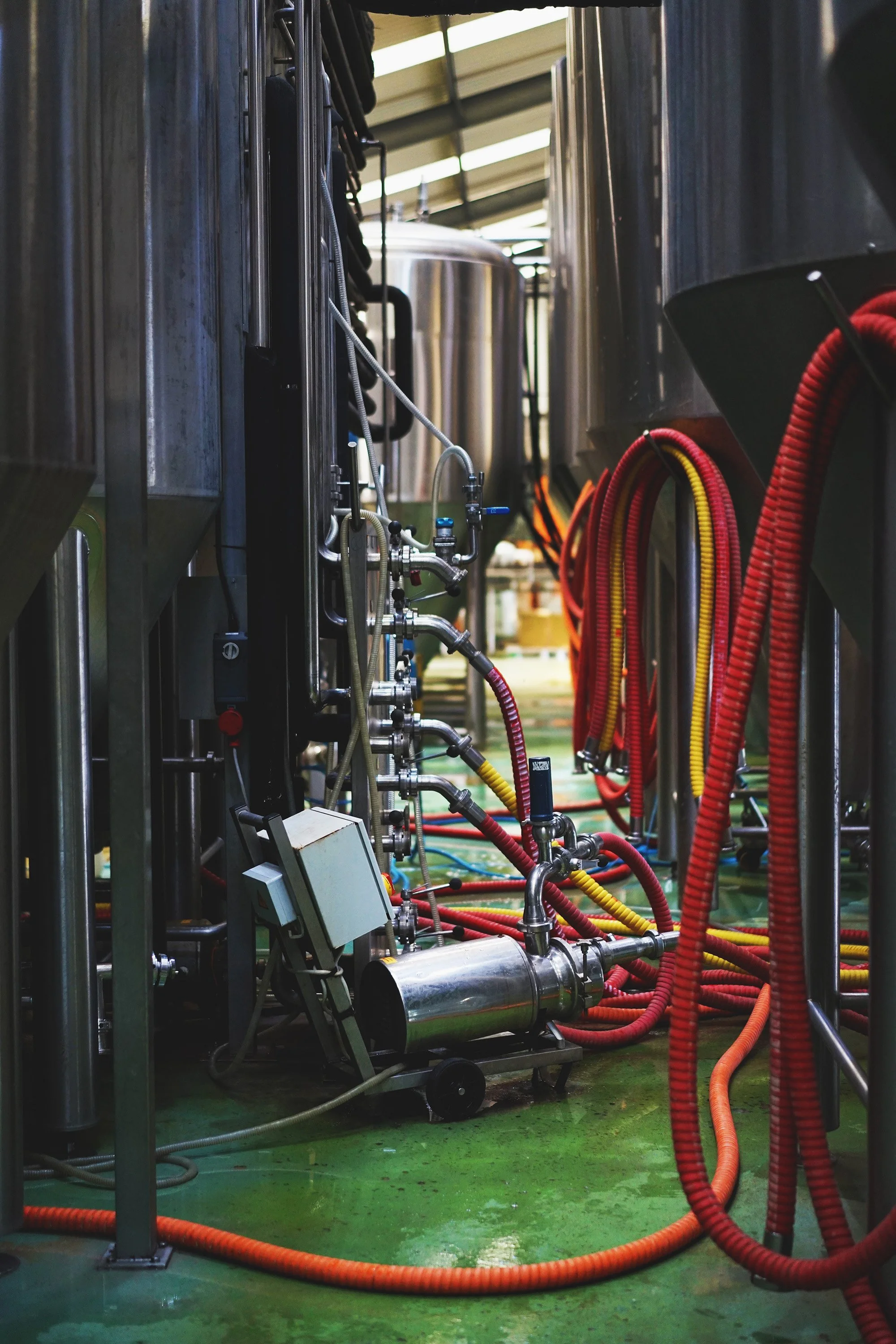
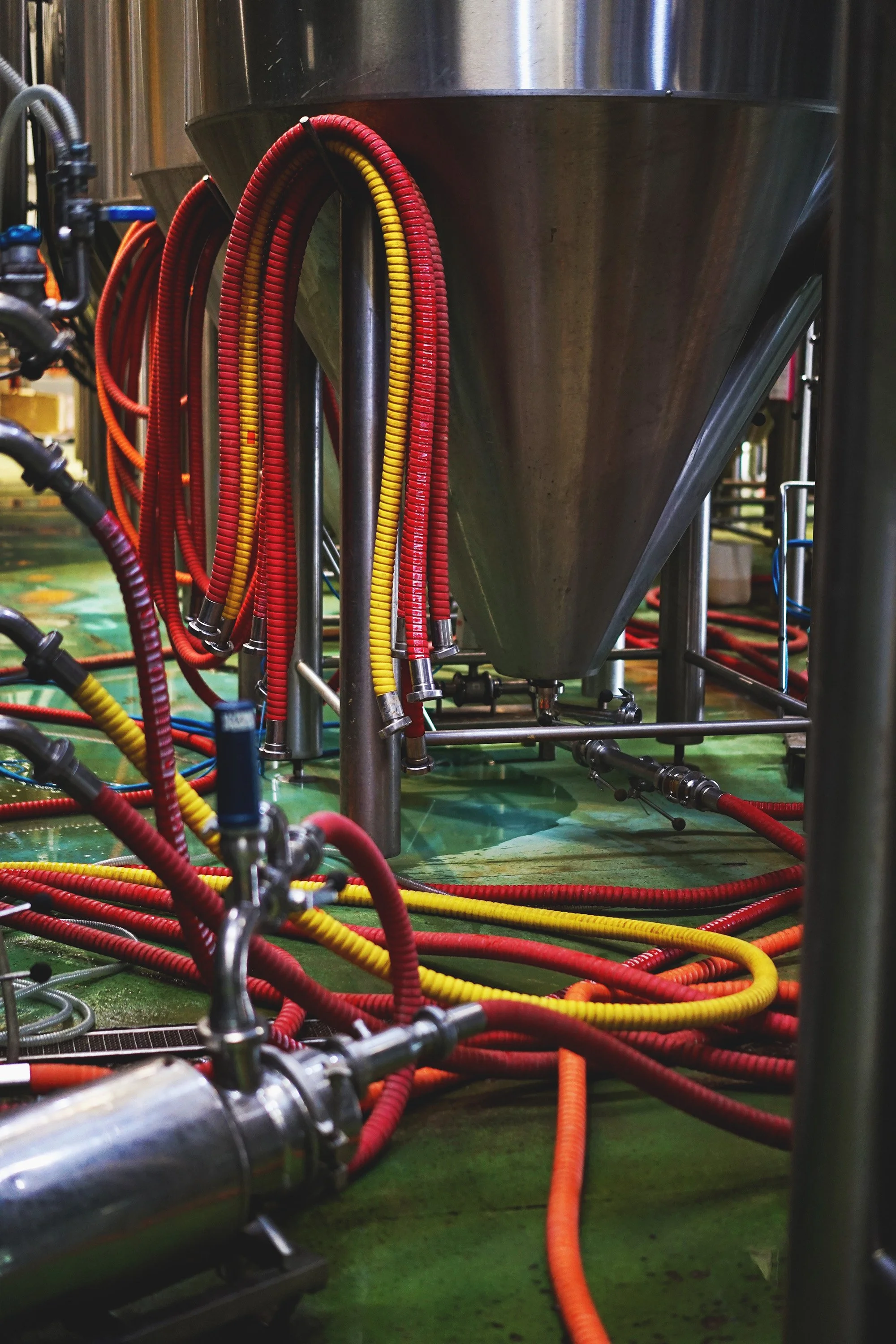
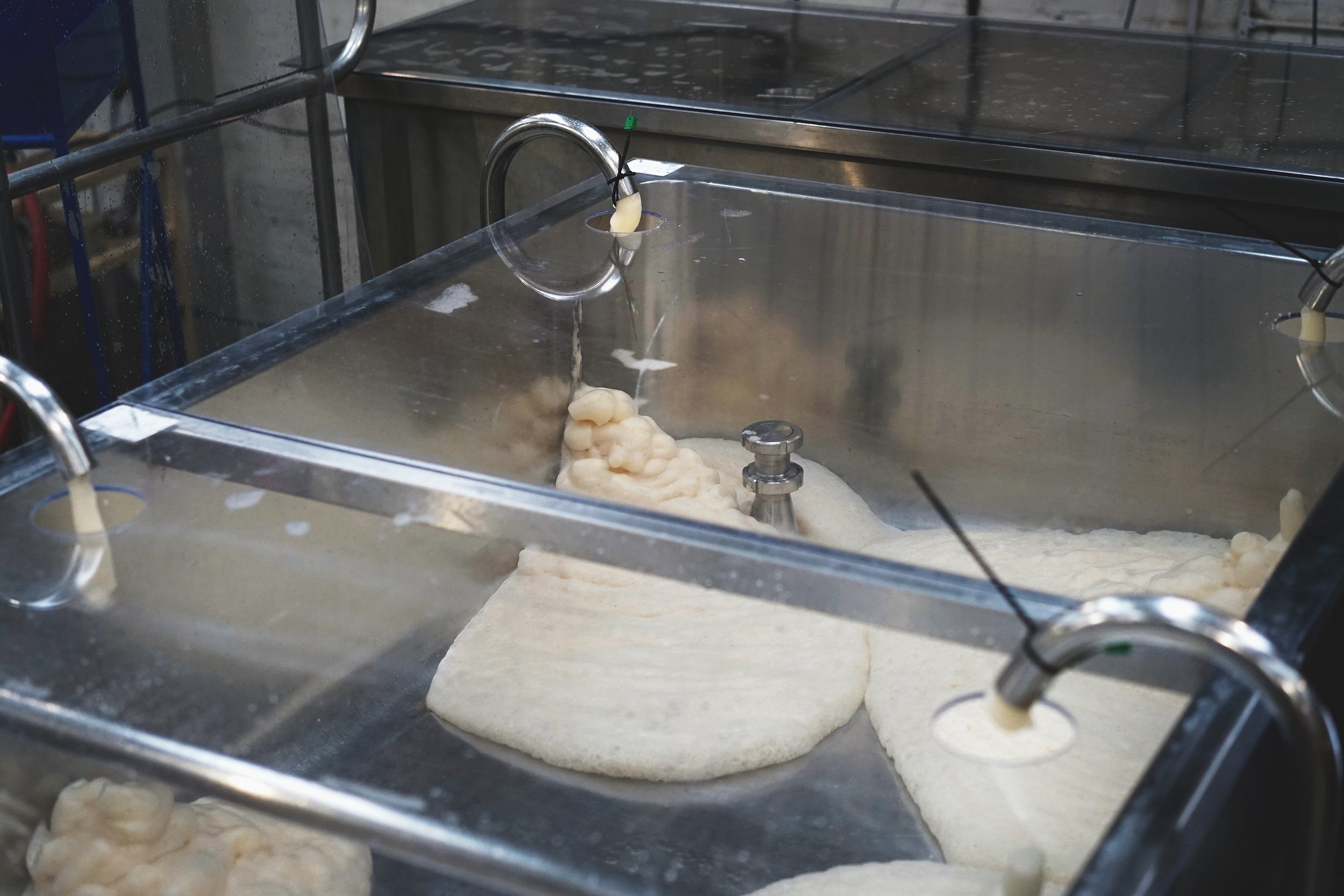
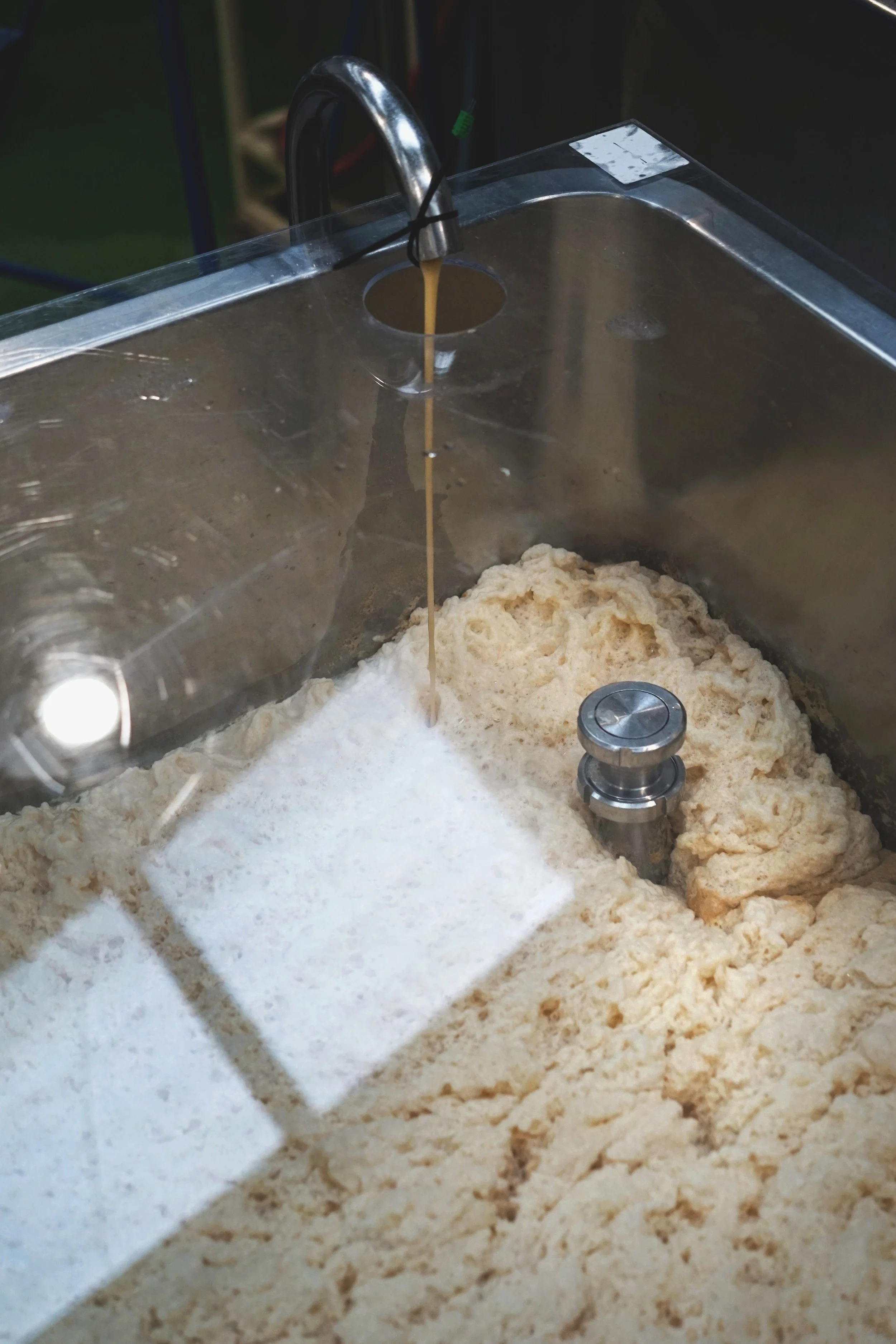
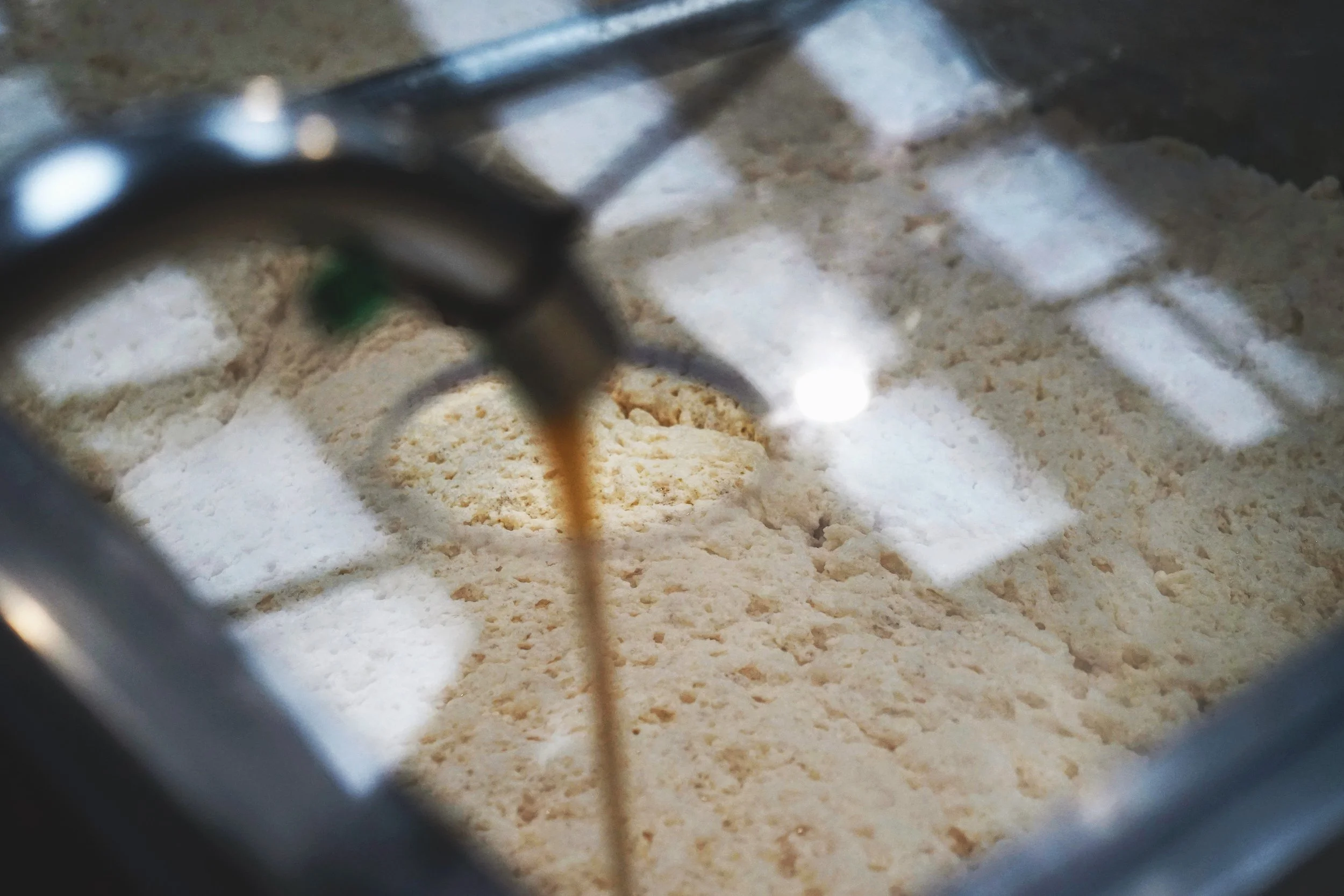
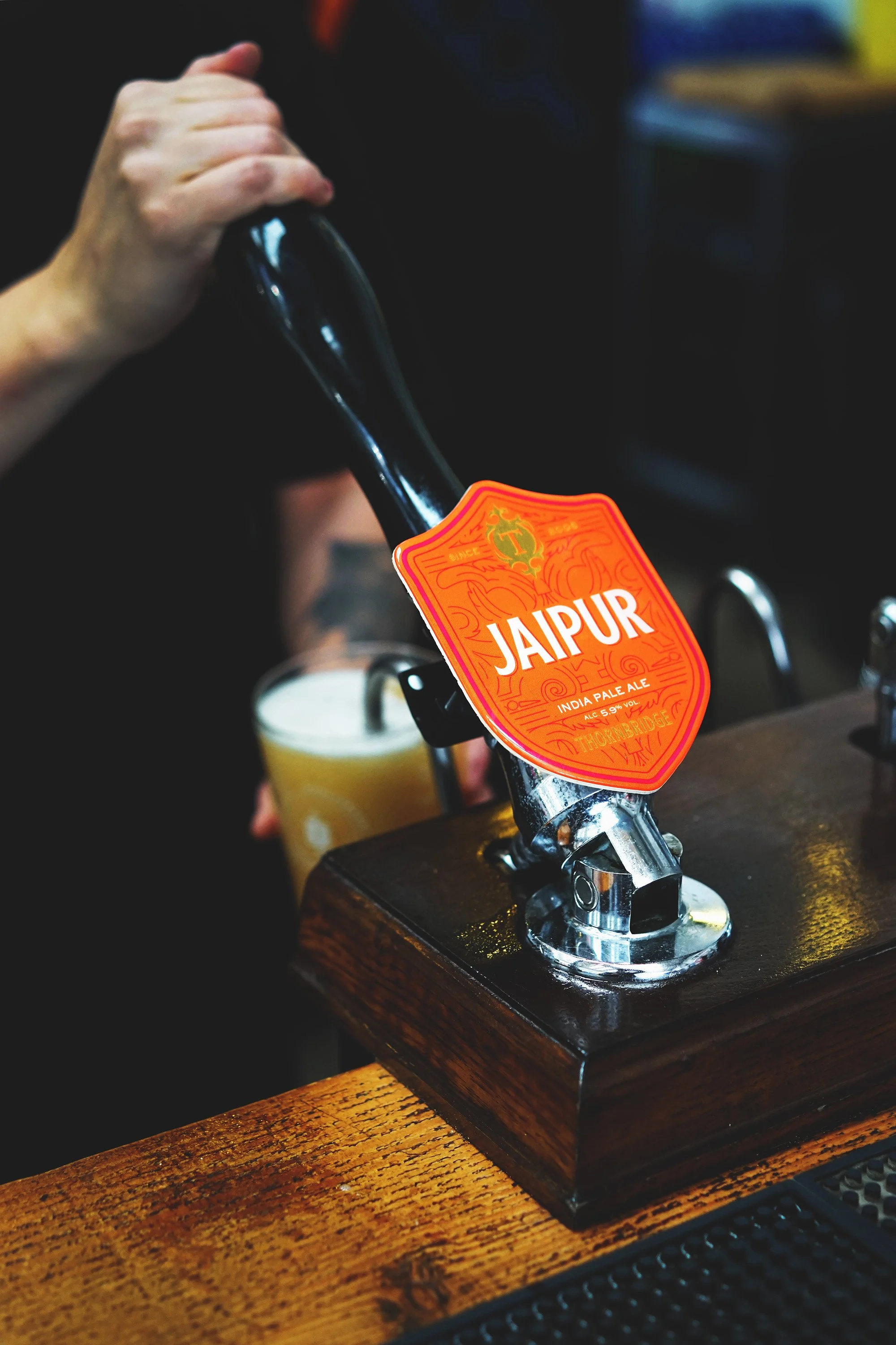
Before either of these beers came along, Thornbridge decided to commission the union with a batch of its flagship West Coast style IPA, Jaipur. The way a beer ferments in the union set is fascinating; as fresh wort is pumped in, it fills the barrels and then recirculates through the troughs, keeping the beer aerated, providing the perfect environment for yeast to healthily and happily do its thing. As fermentation continues, yeast is collected in the largest upper tray, as the finished beer settles in the barrels. This softer, gentler method of fermentation has a noticeable effect on a beer’s character. When comparing regular cask Jaipur alongside its union variant, the latter had a noticeable softness, as though any hard edges had been rounded off. You could easily argue the 5.9% ABV beer tasted closer to a calmer 4.5% as a result.
“It just gives an extra dimension in terms of texture and flavour,” production manager Dominic Driscoll tells me. “It makes me very happy indeed. Being part of the project of bringing it in and coming up with recipes for it has revitalised my own love for making beer in the first place.”
***
To keep up with the busy brewing schedule the union demands, Thornbridge has engaged in regular, jolly cooperation with other breweries who are keen to see it in action. So far this has included Doug Odell of the eponymous Colorado brewery, who brewed up a batch of its lauded 90 Shilling Scotch ale. Together with London’s The Kernel it produced a strong, ruby red Burton ale. Most recently, it collaborated with Manchester’s Track Brewing on an American Brown Ale.
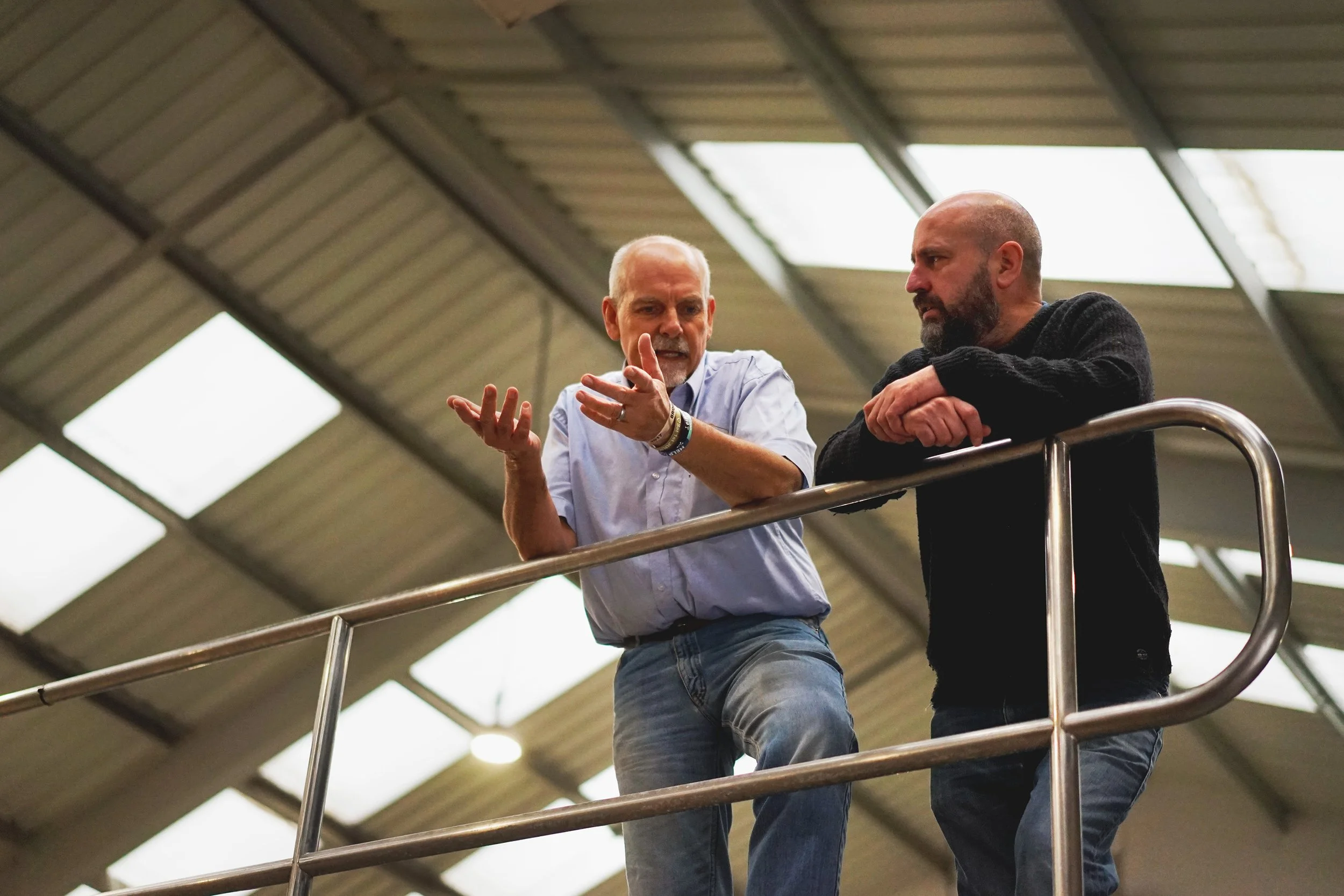
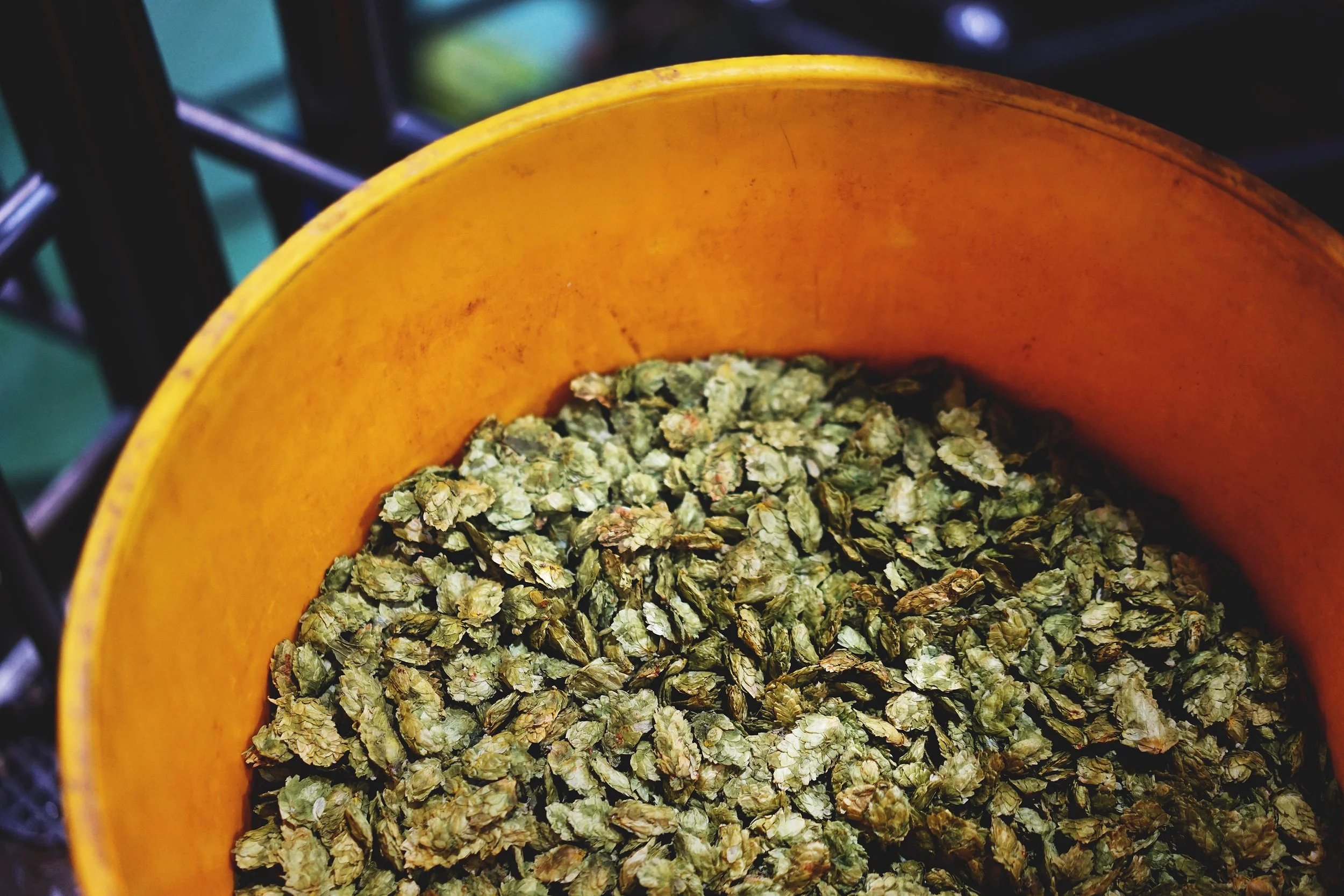
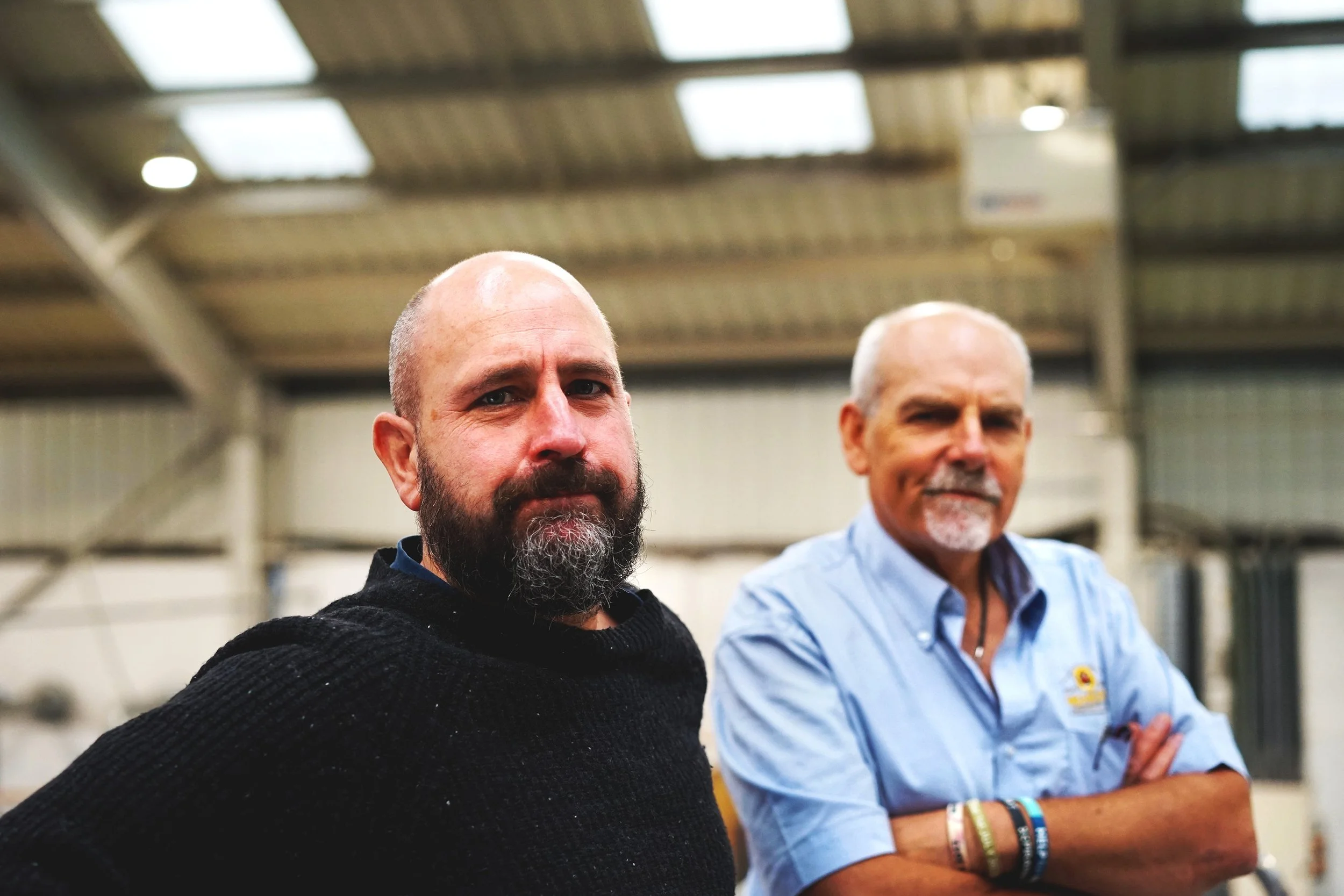
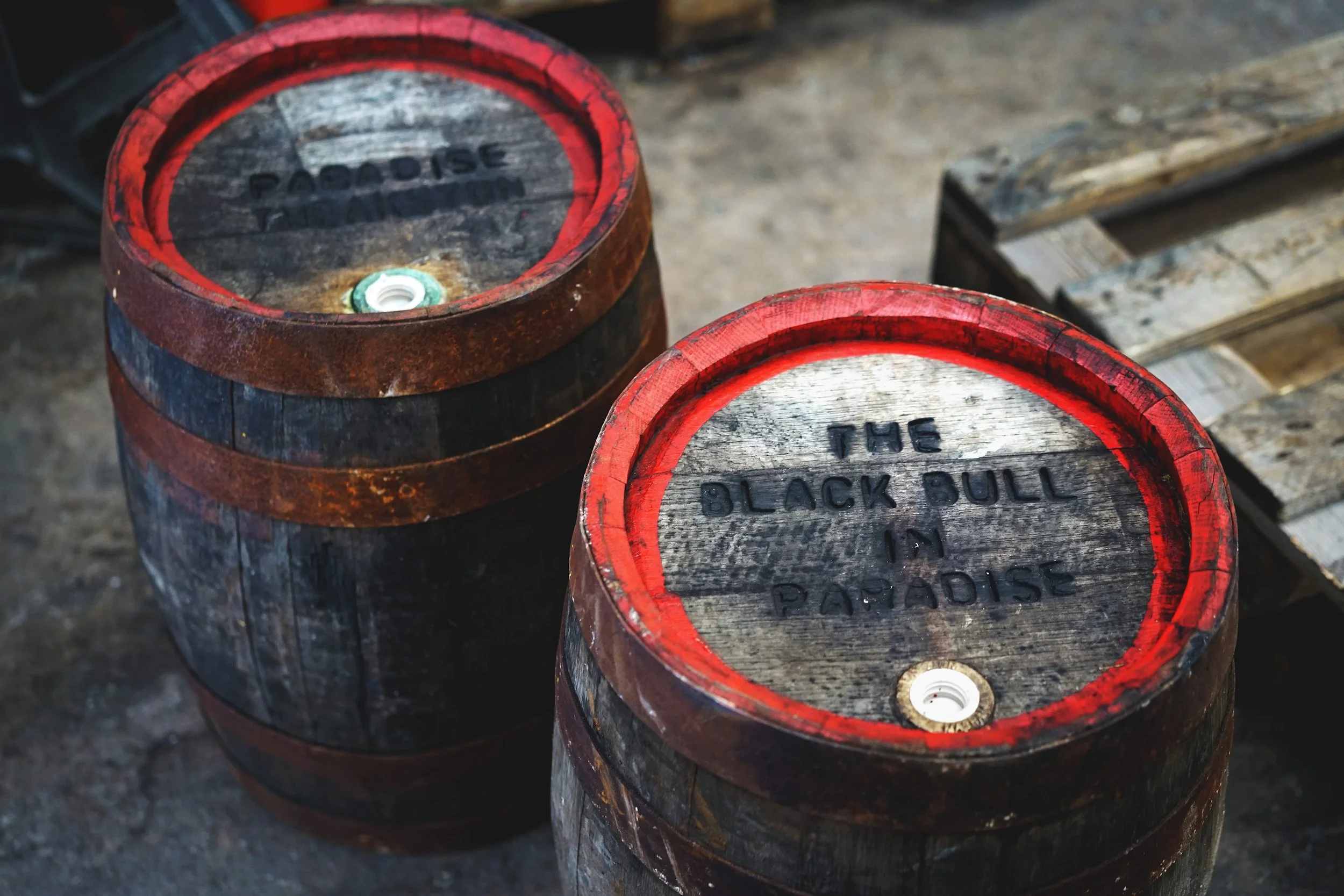
The day after I witnessed the eager couple ask to be shown Thornbridge’s union set, I finally got to see it in action for myself. Rob and Dom have been joined by Mark Slater, head brewer at Theakston’s, who has brought with him the recipe for Masham Ale, a potent, 6.5% Yorkshire brown ale that showcases both malt and hop with equal tenacity. Both parties seem eager to discover what the union’s signature “softness” will add to its character. A handful of lucky drinkers will even get to taste this beer served “from the wood” as Mark has also come equipped with a pair of oak firkins, crafted by Theakston’s in-house cooper, Euan Findlay.
“Masham Ale has been part of the Theakston’s portfolio for decades,” Mark tells me. “To be able to brew a beer in the wood, for sale in the wood? That was an opportunity too good to miss.”
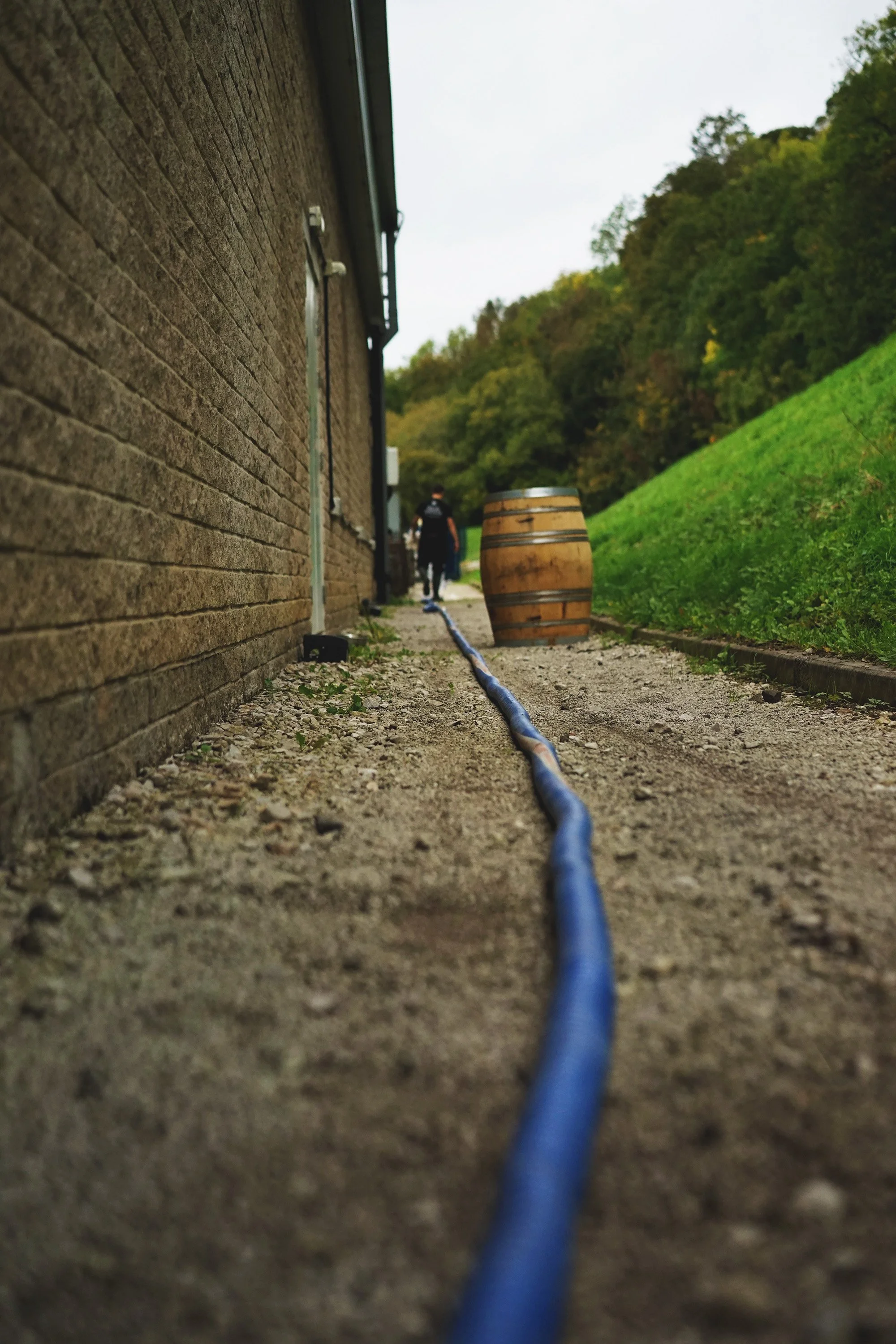
In order to get fresh wort from the main brewery to the union, it has to be pumped from one building to the other using almost 100 metres of hose. The wort also gets a head start, being allowed to ferment for 14 to 17 hours in a modern vessel before it arrives at its next destination. This means that it is already in active fermentation when it hits the union, which makes for a spectacular display.
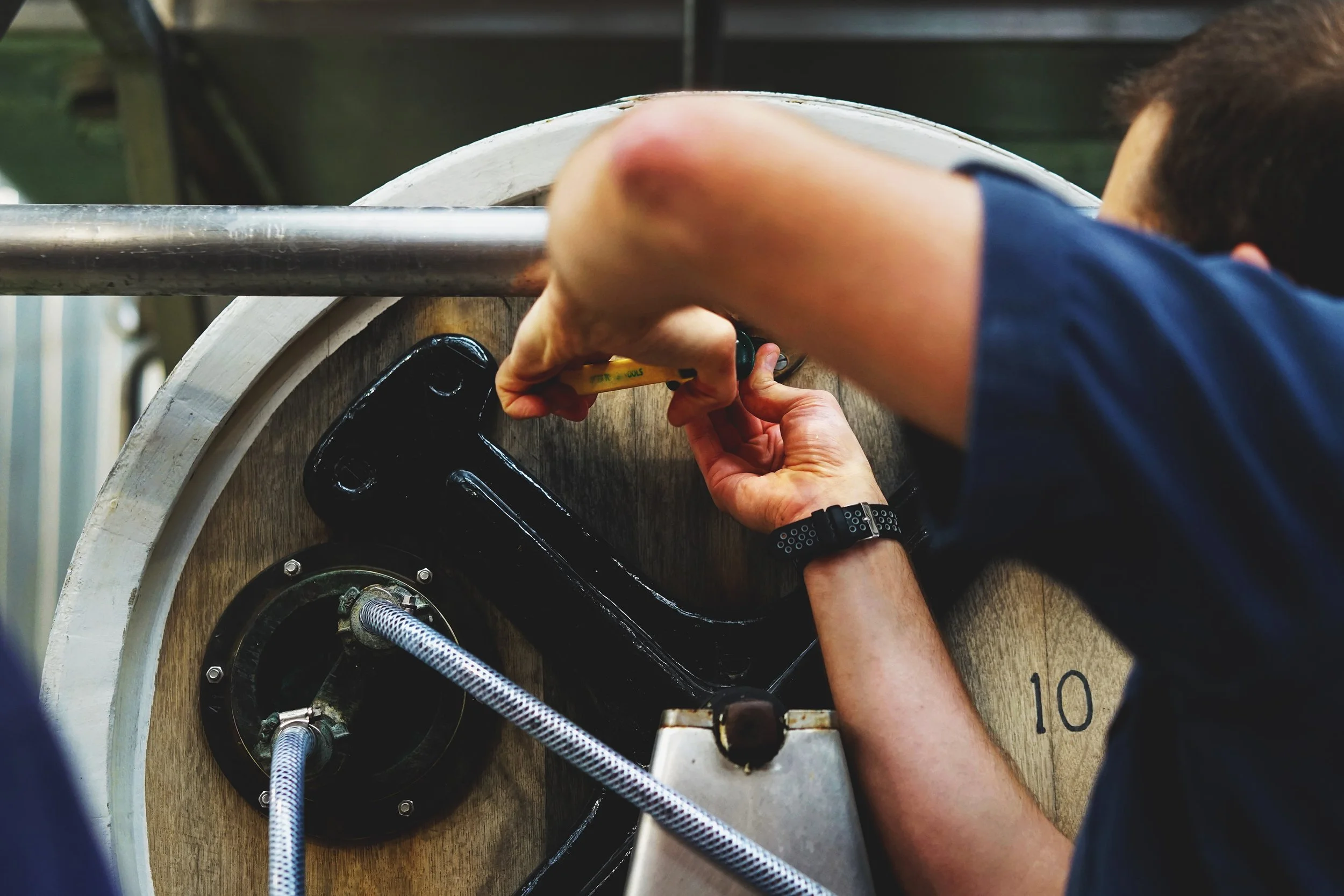
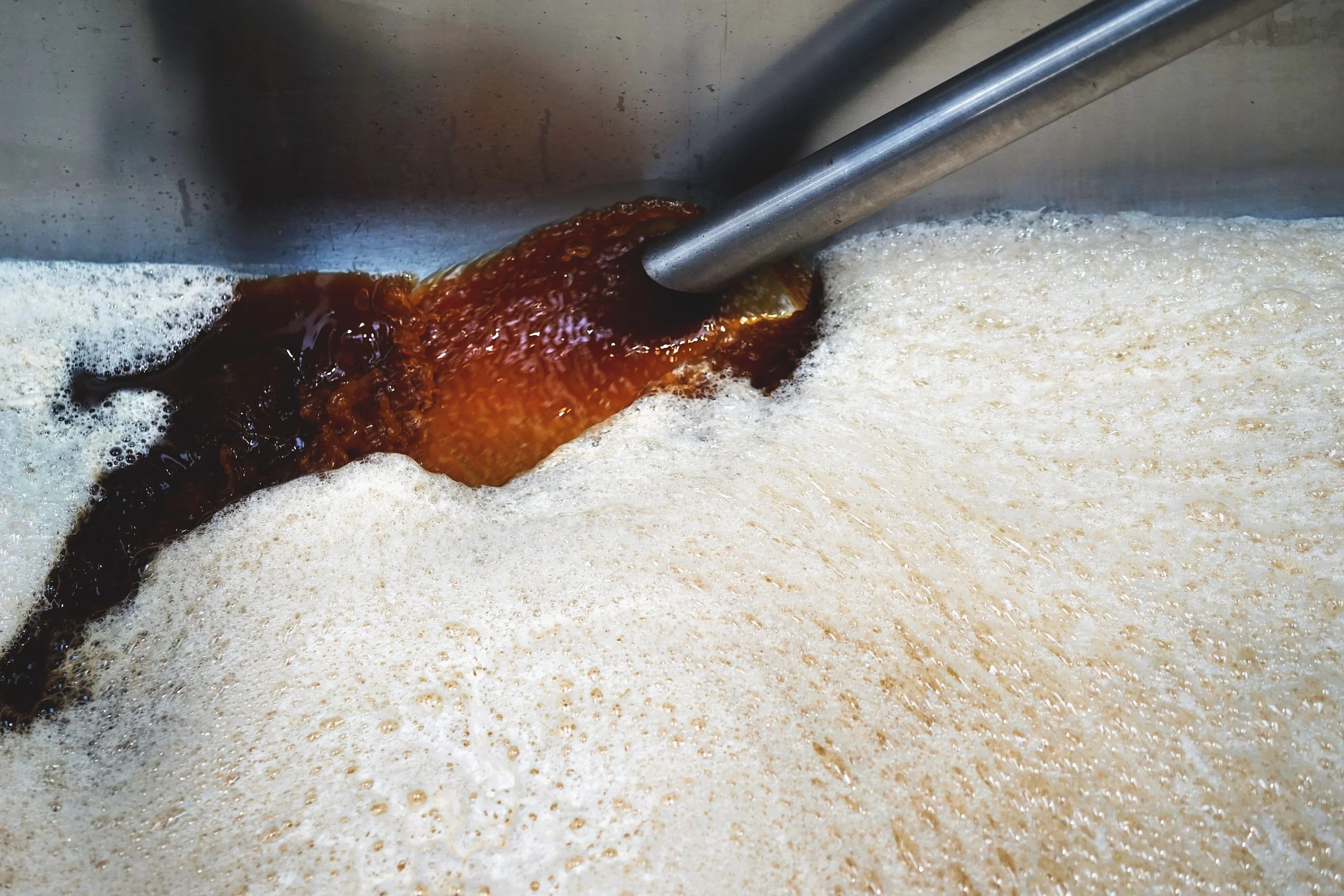
Moments ahead of the sticky, brown, almost-beer hitting the union, a collection of brewers and taproom staff gathers around it in anticipation. After it has been cleaned, checks are done to ensure the barrels are watertight, and that every clamp and valve is in place. Standing on the viewing platform, I watch as the wort cascades into the smaller of the upper two troughs, from which it begins collecting in the barrels below. After a few minutes, a gentle, beige burst of foam begins softly put-put-putting from the swan-necks. Slowly but surely the main trough fills, and is soon topped by a thick, tan-hued layer of krausen, which indicates fermentation is successfully underway. Here the batch of Masham Ale will remain for a week, before being packaged ahead of sale.
““Thornbridge are not only my friends, they also seemed unique in having the wherewithal, the skill set and the daring to take on a project like this.””
“I’ve already tasted the initial sweet wort and it’s tasting incredible,” Dom tells me, as we watch foam sputter gently from the swan-necks. “We’re really happy to be making beer with them.”
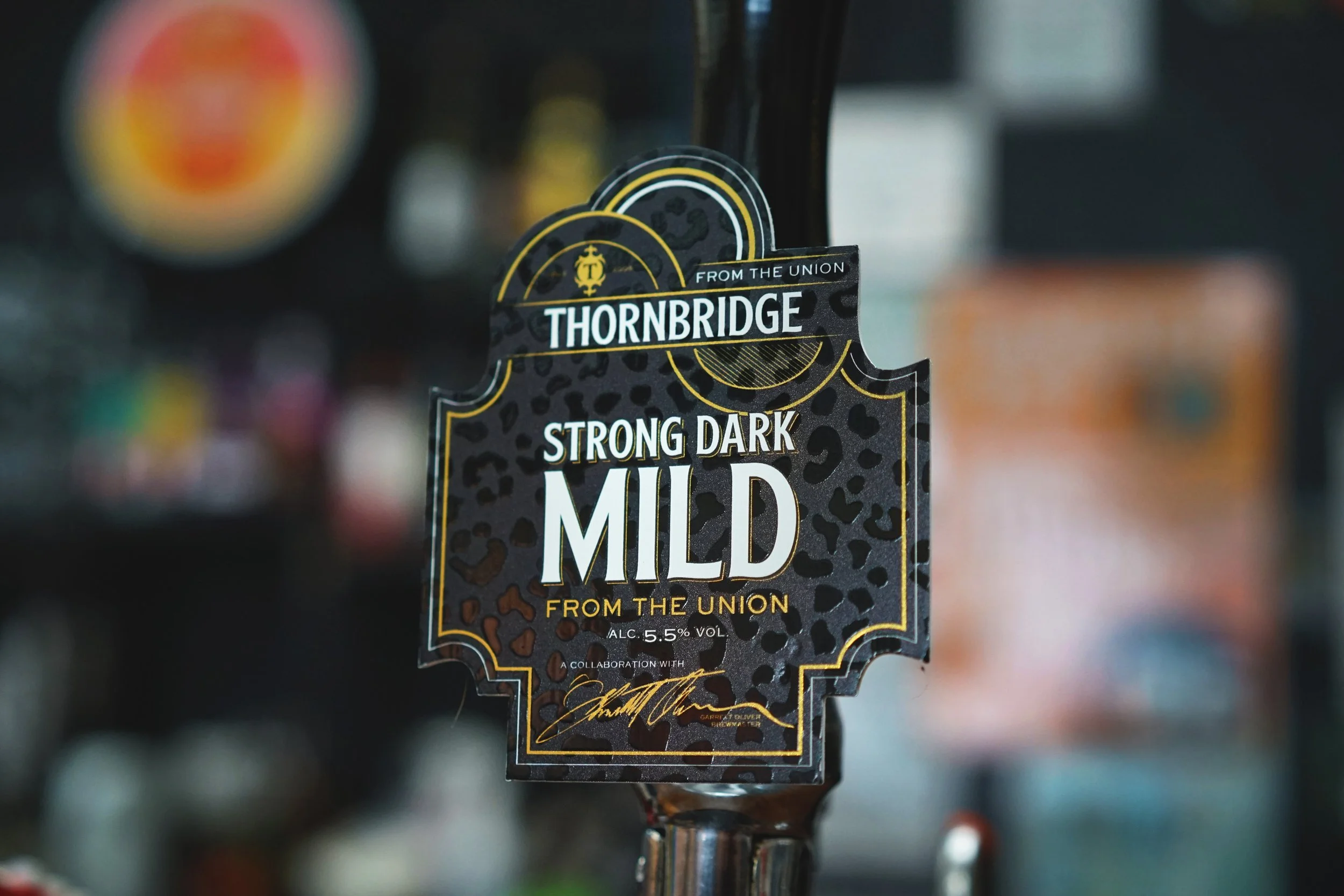
One collaboration that must’ve felt inevitable from the start of Thornbridge’s effort to acquire the union was with Garrett Oliver himself. Garrett is no stranger to working with Thornbridge, having produced Serpent—a barrel-aged golden ale that also featured the input of notable cidermaker Tom Oliver—in 2016. To mark his involvement in saving this particular union set from an untimely demise, they would together brew a style befitting of such a historic piece of equipment: a strong dark mild, at a robust 6.5% ABV.
“As someone who once saw the union rooms [at Marston’s] going full-tilt, it seemed to me that a piece of magic was about to leave the world,” Garrett says. “Thornbridge are not only my friends, they also seemed unique in having the wherewithal, the skill set and the daring to take on a project like this.”
“Very often if Garrett asks for something, somehow it magically appears,” adds Thornbridge’s Simon Webster. “To be able to do the strong dark mild with Garrett, that was a fantastic way of representing how instrumental he was [in helping to acquire the union.]”
The resulting beer was, unsurprisingly, a triumph. Rich with notes of freshly-brewed coffee and dark, sticky molasses, it also conveyed that characteristic softness and dry finish that union fermentation seems to lend a beer, dramatically boosting its inherent drinkability. First available at Stockport Beer Festival in June 2025, of over 200 casks pouring at the event, it was the first to run dry. It was a rare thing: a highly traditional, strong, dark beer, conveying the kind of hyperbole that, until recently, has been almost exclusively reserved for the hoppy, and the hazy.
This potentially raises wider questions about the importance of Britain’s long and complex brewing history, and how we preserve it in a way that remains meaningful for today’s drinker. Thornbridge’s initiative to take on the union system, despite the technical challenges its continued use and upkeep poses, is representative of a desire not just to preserve this heritage, but to nurture and steward it, so that it’s there for the next generation to enjoy. It demonstrates a level of respect for that heritage that, too often, the youngest generation of British breweries have failed to acknowledge.
In the U.K. we are guilty of showing a lack of respect for our brewing history, and have done a terrible job of preserving it over the past few decades. Nowhere is this more apparent than where the union came from, Burton-upon-Trent. Here the town centre is dominated by two brewing giants: Carlsberg Britvic and Molson Coors, both largely focused on the production of mass market beers like Carling and Carlsberg. The former Bass brewery, which once dominated the town, now lies empty and derelict. Outside Molson Coors—which closed down the U.K.’s only working brewing museum, the National Brewery Centre, in September 2022—a row of several union sets lies idle by the side of a main road, exposed to the elements, seemingly doomed to decay.
“I have this love-affair with Burton,” Simon says. “If it existed anywhere else in the world it would still be a beer city, wouldn’t it? The Bavarians would never allow what’s happened to Burton to happen in Bavaria, would they?”
Walking around the market town, it feels like the life force that once sustained it—its rich history of beer and brewing—has been sucked dry. Buildings are crumbling, boarded up and fenced off, blue plaques that denote brewing history that stretches back several centuries are strolled past and ignored.



At Thornbridge however, a piece of that history is not only now in situ, but in constant use, allowing people to taste and experience our long and rich brewing heritage with relative ease. And for every couple, every individual, who approaches the bar at the taproom and asks to see the union before sampling what it has mostly recently been used to produce? They’re not just enjoying a great beer, they’re tasting history, preserved.
***
This feature is part of a multimedia project from our founder and editor-in-chief, Matthew Curtis. Watch the accompanying series of mini-documentaries by visiting our YouTube page here, and listen to the full, 25-minute podcast episode here.