
New Voices — Winemaking in Hakodate, Hokkaido’s Emerging Wine Region
Five hours north of Tokyo and 20 degrees colder, I climb into a taxi in Hakodate City. My driver furrows his brow as I clumsily explain to him where I need to go.
“No,” he says firmly. “There is no winery in Hakodate.”



Panic sets in. My Japanese peaks at restaurant level, and is certainly not sufficient for a pantomime of “oh no there isn’t/oh yes there is” with a stubborn taxi driver. As I frantically scroll through emails, maps, and screenshots in search of supporting evidence, he shrugs and starts the engine. Perhaps he’s decided that, even if this proves a waste of both our time, he’ll at least earn the smug satisfaction of being right.
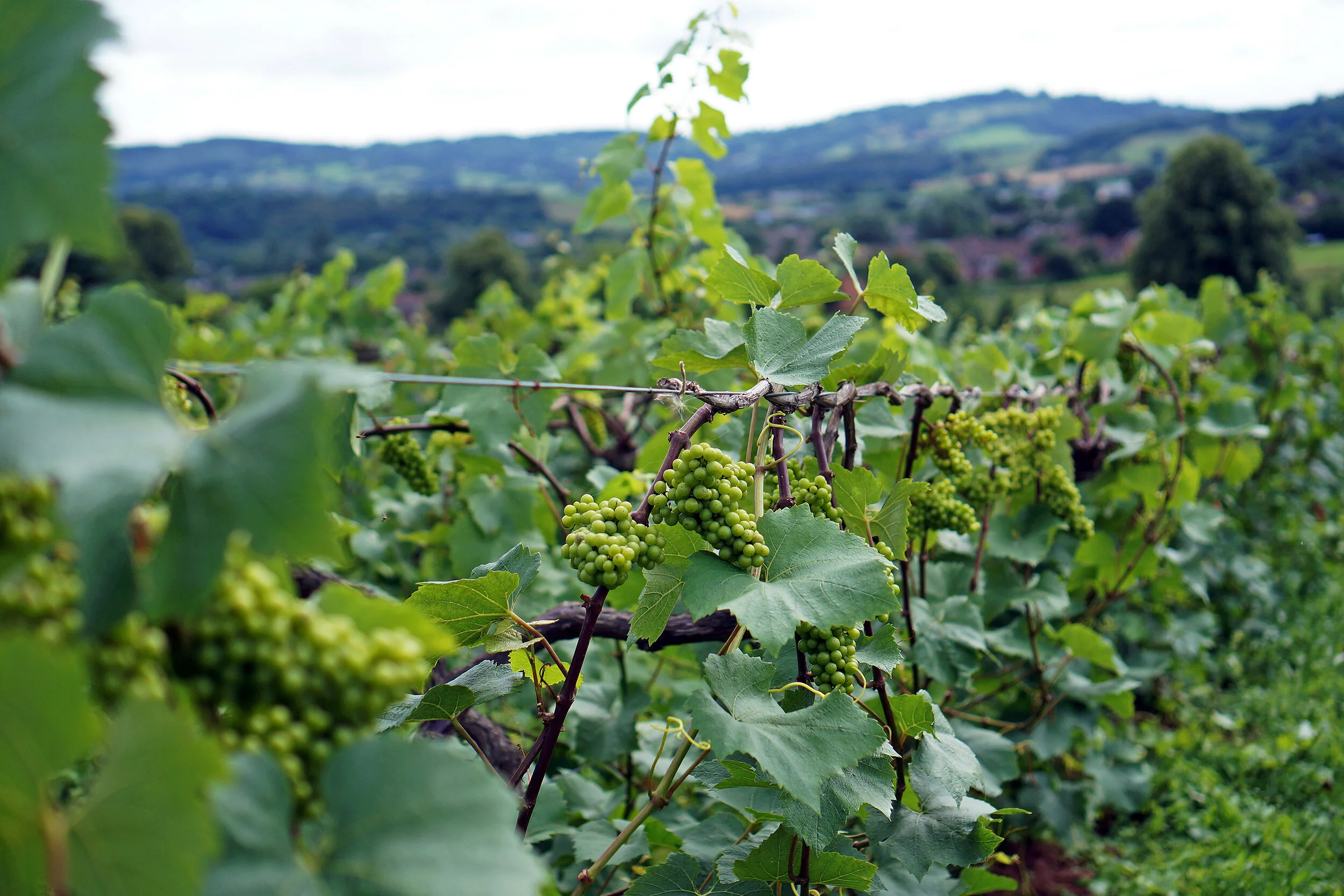
We drive for 10 long minutes, past yellowing grass and soggy rice fields, the car chugging and spitting, before we see vines. Spectacular vines—rows of manicured, Guyot-trained, recently pruned vines, marching along the horizon. The driver’s eyes widen, then narrow suspiciously. We share a brief moment of silent reckoning. There is, in fact, a winery in Hakodate City.
***
These vines belong to Etienne de Montille, a French national and owner of Domaine de Montille in Volnay. His estate in Burgundy predates the French Revolution, but his unlikely Hokkaido project only popped up in 2016.
At the time, there was lots of wine being made across Japan, much of it with the native Koshu grape. But it was the growers working with international varietals like pinot noir that really piqued Etienne’s interest. After being blown away by a lineup of Japanese wines in the 2010s, he became convinced that Hokkaido was deserving of wider attention, and asked to help.
The winemakers of Japan responded by acknowledging that they were finding their feet, but that they would love endorsement from a French winery owner, which they saw as a recognition of quality from the so-called Old World. De Montille & Hokkaido found its place in Hakodate as a kind of vote of confidence.
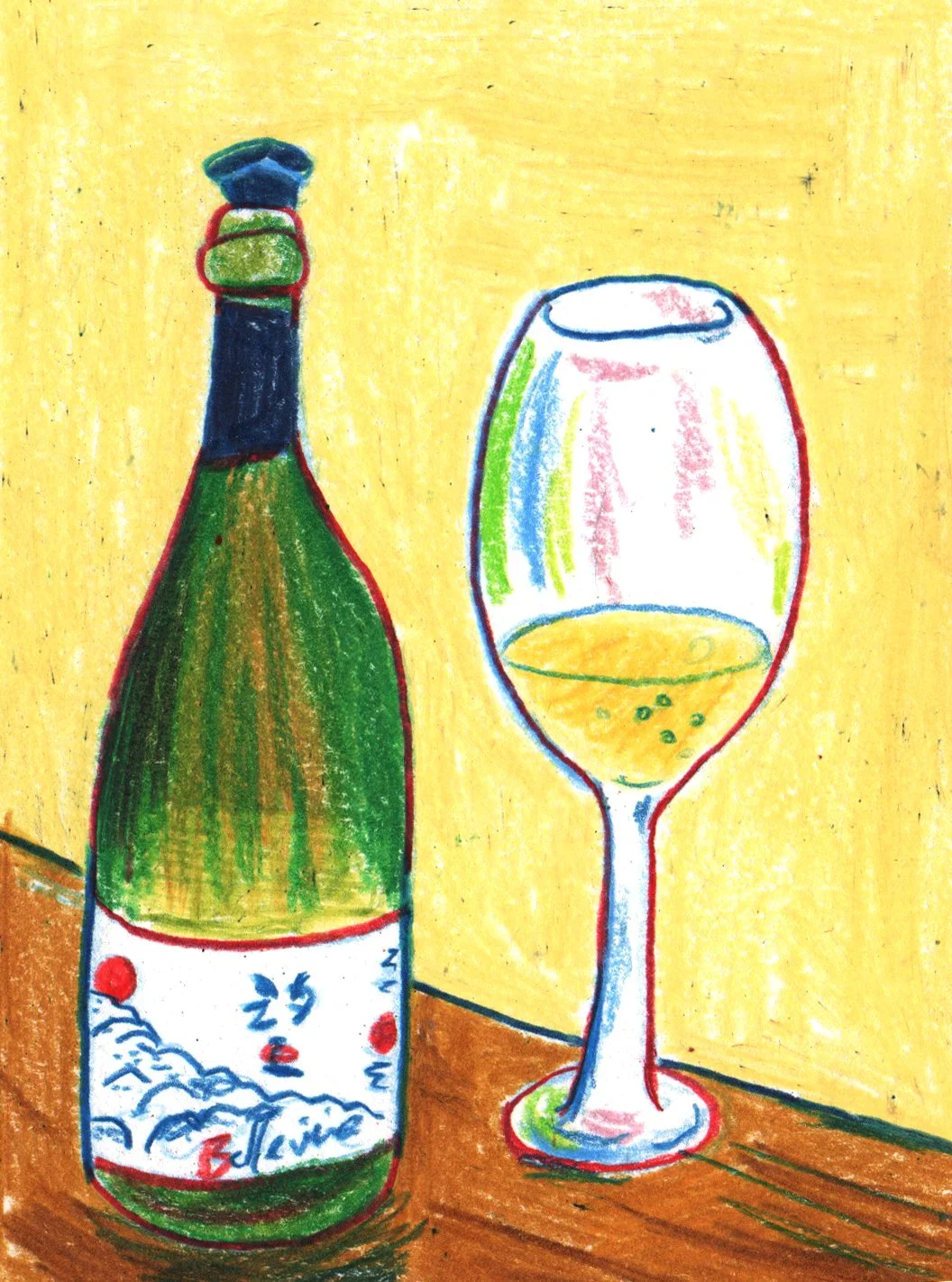
Illustrations by Hannah Lock
It wasn’t the first notable winery in the region. Winemaker Takahiko Soga, based in the town of Yoichi, was already receiving acclaim for his cult wines. But Etienne opted to settle in the southern foot of the island, where there’s a little less snowfall. Hakodate’s cool maritime climate and long growing season are the perfect conditions for pinot noir, and its ocean winds protect the vines from spring frosts.
Visitors are not permitted inside the cellar at De Montille & Hokkaido, but the sleek and minimalist tasting room is spectacular, with a working kitchen that allows the room to transform into a restaurant when required. Floor-to-ceiling windows overlook 15 hectares of vines, and next door a large plot sits empty, waiting for the hotel that Etienne hopes to fill with year-round visitors.
Dotted around the room are clusters of framed photographs that look like they’d be more at home on granny’s mantlepiece than against the stark white walls. Some of the faces are familiar. There is Bruce Gutlove, the American viticultural consultant whose influence on modern Japanese wine is difficult to overstate, smiling broadly beside a fermentation vat. A few frames later, winemaker Ken Sasaki, equally cheerful, slings an arm around Etienne’s shoulder. The collection of photos appears as a shrine to those who made the project happen.
***
Japanese wine remains a remarkably small world. In Hakodate there’s only a handful of producers. Across the country there is no centuries-old framework through which generational knowledge flows, and still no dedicated winemaking school. The industry’s growth depends instead on winemakers sharing ideas, experiences, and even cellar space.
““De Montille & Hokkaido’s first vintage from the 2024 harvest will be ready for release in late 2026, yet all 7,000 bottles are already spoken for.””
De Montille & Hokkaido’s first vintage from the 2024 harvest will be ready for release in late 2026, yet all 7,000 bottles are already spoken for. I think back to my friend the taxi driver, who had no idea such a hot commodity was right on his doorstep. It doesn’t surprise me to hear that the majority of the release will go to wine bars and private collectors in Tokyo, rather than staying in Hakodate itself.
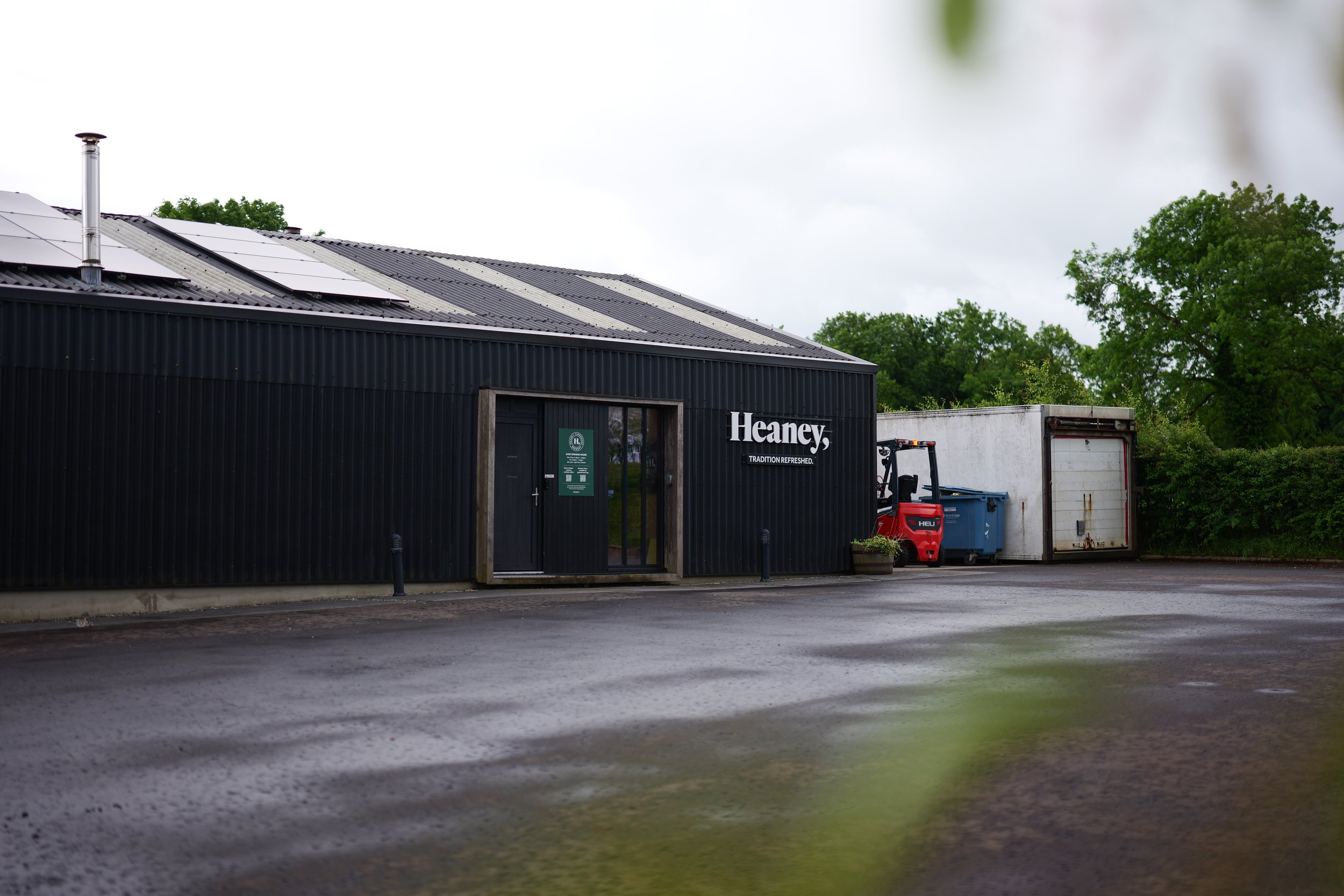
In Hokuto, further north still, public transport appears theoretical. The polished glamour of Domaine de Montille is fresh in my memory, so my heart races slightly as my taxi eventually pulls up outside a wooden garage.
Ken Sasaki, one half of Nora Kura, pokes his head out from behind a metal door and ushers me inside. This isn’t our first meeting; weeks earlier, we’d spoken in a tiny Tokyo wine bar, where a perfectly civilised conversation about Burgundy dissolved into chaos. Sasaki-san had produced a plastic microphone from nowhere and launched into a Japanese pop ballad to enormous applause.
Today, however, he is serious, answering my questions in a jumble of English, Japanese, and French, eager to ensure he is absolutely understood.
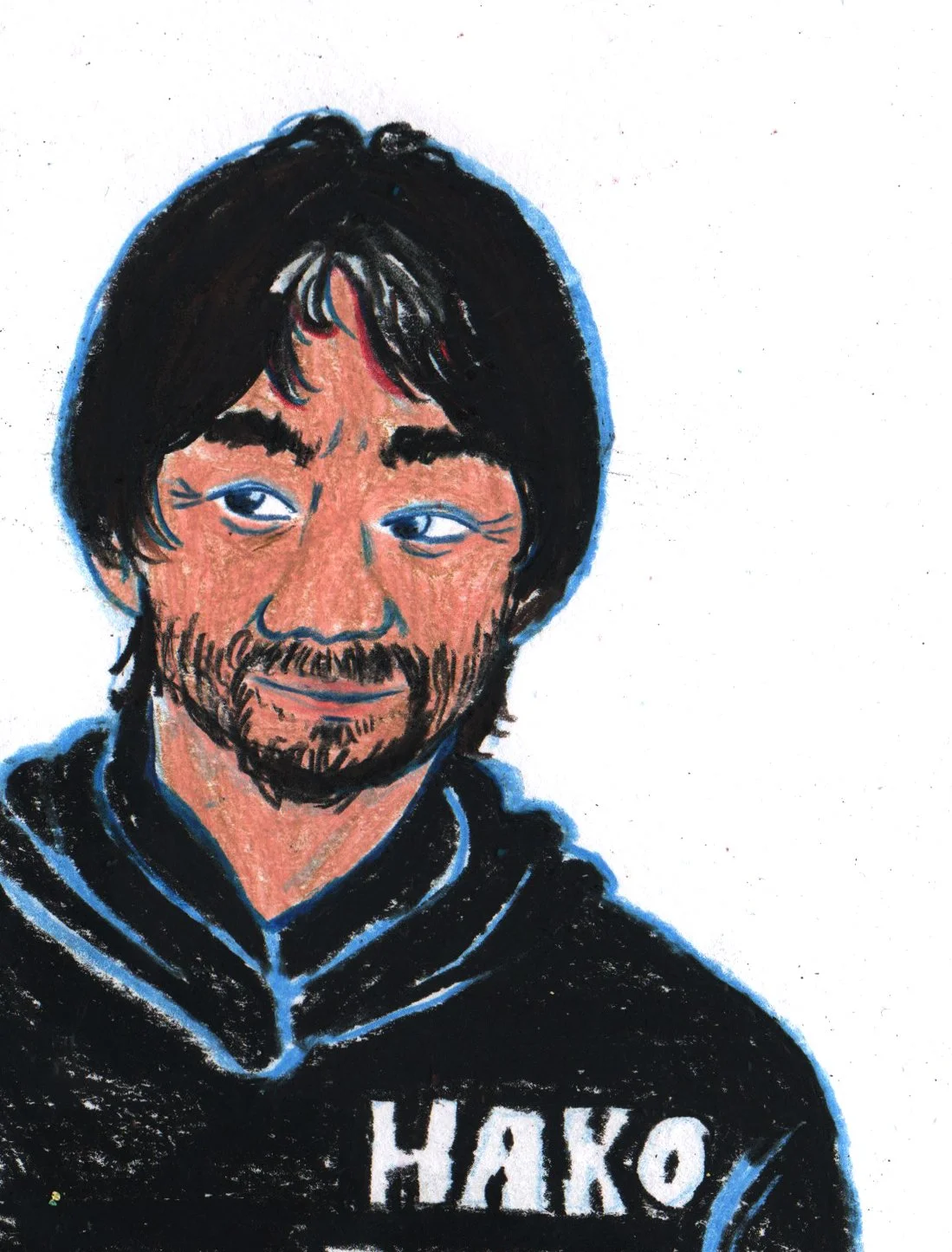
Ken and his partner, Kazuko Sasaki, both began their education in winemaking in France, training with pioneers of the regenerative farming movement including Domaine Leflaive in Burgundy, Domaine Binner in Alsace, and Chapoutier in the Rhone. Ken tells me how quickly he fell in love with the country.
“When I first got there, I thought, ‘I can stay here forever.’ That was until I tried to buy fish.” He looks at me gravely. “There is no fish in France.”
I stifle a laugh, my mind flickering to many a dozen oyster lunches enjoyed on the banks of Paris’ Canal Saint-Martin. But I know that when Ken Sasaki talks about fish, he isn’t referring to a Champagne lunch. That morning, in Hakodate city, we visited the fish market, where a crab the size of my torso practically scurried across my feet. I’d eaten a magnificent bowl of raw tuna, uni, and ikura for breakfast, with wasabi sharp enough to rocket through my sinuses and leave my eyes prickling with tears. The whole thing had set me back five British pounds.
Ken and Kazuko built impressive careers in France before returning home. When they founded Nora Kura, it was the first of its kind, certainly in Hakodate. Nobody else was farming organically quite like Ken wanted to, and few people were working with European varietals at all.
““...the wines I knew from Burgundy at the time were too powerful ... I wanted to make a wine that would taste good alongside fish.””
When I ask him if his experience in Burgundy laid the groundwork for his style of winemaking, he thinks long and hard before answering. “Yes, but … the wines I knew from Burgundy at the time were too powerful ... I wanted to make a wine that would taste good alongside fish.”
Ken and Kazuko’s three hectares are farmed without invasive treatments, largely inspired by the “do nothing” approach to farming specified by Masanobu Fukuoka’s One-Straw Revolution. A similar approach is undertaken in the cellar, with a commitment to natural yeast, spontaneous ferments, and very little sulphur.
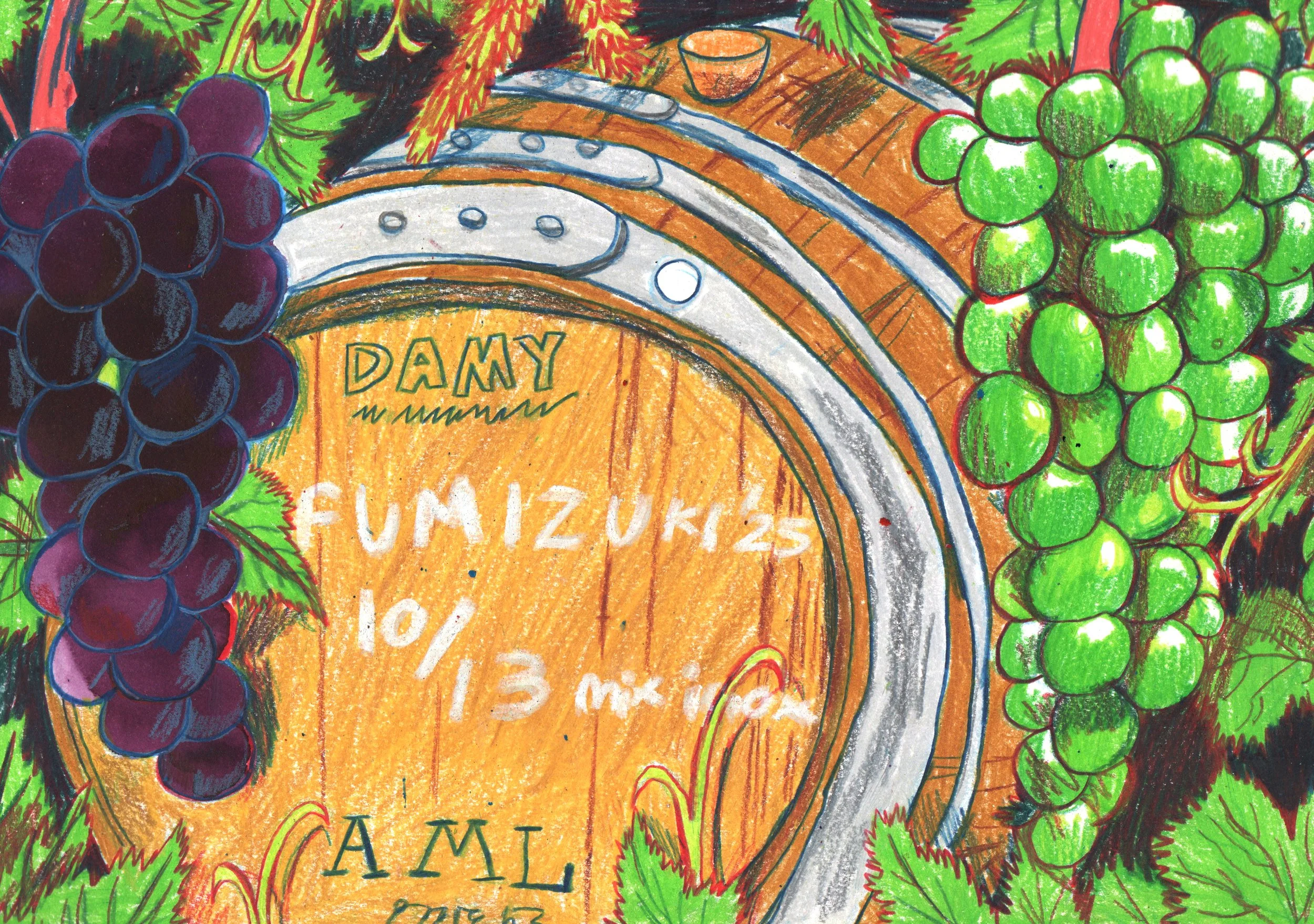
The cuvées continue, but the Nora Kura Fumizuki remains the flagship. It’s a barrel-fermented chardonnay that explodes with texture, plus curry leaf and fennel seed notes—difficult to find, but an immeasurable reward when you do. Ken seems to think, however, that the future of Hakodate might shift in a different direction. Late-ripening Sauvignon gris has captured his interest, and he’s excited to see what Sauvignon blanc’s less aromatic cousin can do in Hakodate’s cool climate.
***
Just over the road from Nora Kura is Due Punti Vineyards, a project started by Shinsuke Isaka in 2020. There’s less Burgundy chat here; Isaka-san relies instead on his experiences in Italy and in New Zealand, where he was employed by Japanese national Hiroyuki Kusuda of Kusuda Wines.
Much like his peers, Shinsuke found it necessary to study winemaking overseas, but is committed to changing that for the future winemakers of Hokkaido. He already hires one apprentice and hopes to help them make their own wines in the future.
““Wines this compelling shouldn’t remain confined to cultish wine bars...””
So far, the 6,000 vines planted at Due Punti are primarily pinot noir and pinot blanc, with chardonnay, Zweigelt, merlot, pinot gris and Sauvignon gris also planted in minuscule amounts. These make up three cuvées: the textural and opulent Fumizuki Pinot Blanc; Fumizuki Rosso, which is a savoury, earthy blend of all three red grapes; and a single bottling of pinot noir.
When asked about the future of Hakodate, Shinsuke’s answer is quick. “Sauvignon gris,” he says, definitively. “I planted 70 vines a few years ago, at the advice of Ken Sasaki.”
Occasionally, I’ve wondered if my affection for the wines of Hokkaido is rooted in sentimentality rather than merit. But after just a few days in Hakodate—with more than a few bottles kindly opened for me in the name of research—my suspicions are quashed. What is emerging here is not an imitation of Burgundy, as recent endorsement might suggest. The wines taste of Hokkaido, saline and textured, eccentric and unique. If I’d begun to suspect nostalgia had sweetened my recollection, I was wrong.



Wines this compelling shouldn’t remain confined to cultish wine bars and the cellars of those who seek them out. That obscurity, though, seems to suit the people making them just fine. Every winemaker I met laughed at the suggestion that a taxi driver might be able to find their address.