
Tradition is a Lie — French Wine’s Place in France’s Far-Right Gastronationalism
The wine that French presidents choose to serve during official visits is far more than a drink. It’s a way of expressing their political beliefs, and their taste has long been scrutinised and documented. Charles de Gaulle loved Maison Drappier Champagne. Georges Pompidou had a thing for Château Lafite Rothschild. Jacques Chirac actually preferred beer.
Nicolas Sarkozy, president from 2007 to 2012, didn’t drink, and yet exclusively served grand crus at the Élysée Palace. Sarkozy’s successor, François Hollande, wasn’t picky and liked pretty much everything. As for Emmanuel Macron, the incumbent, he considers himself a connoisseur and picks the finest French wines for his guests.



“Hollande stopped serving Champagne during receptions, choosing Muscadet instead, as a way to fit his ‘normal President’ narrative,” says Sandrine Goeyvaerts, a Belgian sommelier, wine shop owner, and author. “Sarkozy [as a liberal-conservative] heavily relied on grand crus and a very elitist image to convey the idea of French excellence.”
Wine is a €90 billion (£79 billion) industry in France, providing more than 500,000 jobs across the country. It’s no surprise, then, to see it instrumentalised as a cultural and political tool to project French power and dominance—even as wine sales and consumption have shrunk domestically, from 140 litres per capita in 1920 down to just 22.5 litres in 2024. This decline has led the government to allocate €130 million (£114 million) to tear up 30,000 hectares of vines in order to “restore the vineyards’ economic viability.”
The stats show that red wine, and prestigious wine regions like Bordeaux, are particularly suffering from this downturn, as drinkers pivot to white wines, rosés, and the growing number of low-to-no-alcohol options. For conservative politicians, influencers, and activists, this shift is just further proof that France is losing its tradition and terroir, and, as a result, its overall identity.
The blame has fallen on everything from globalisation and immigration to a so-called masculinity crisis. Since figures across France’s political spectrum have long used wine for ideological purposes, it’s unfortunately no surprise that the far-right is joining in.
***
It’s true that the French connection to wine goes back a long way. “France is a country with a Judeo-Christian tradition, and wine is an undeniable part of liturgy, considered sacred because it’s handled by priests,” Sandrine says. “But at the same time it’s also accessible to ordinary people, since it’s shared during mass. There’s both an element of the elite and something really popular about it.”
To say that France is all about wine simply isn’t true, however. For hundreds of years, hops were cultivated in Burgundy and cider was overflowing in Brittany. Then, during World War I, red wine was sent to soldiers as a reward and a way to keep them motivated on the battlefield—a romanticised version of the story that fails to mention that soldiers were basically drugged with wine and medicine to numb themselves. Soon after, bottles found their way to seemingly every French family table, and became a symbol of hope during a time of adversity.
But the French didn’t invent wine. France is not the biggest wine producer or exporter in the world (Italy and Spain come first, respectively). The French aren’t even the biggest drinkers—the Portuguese are. Still, the country manages to be recognised internationally as a standard-bearer for winemaking, with its language flooding every corner of the industry’s lexicon. Its people, meanwhile, are believed to have some sort of innate understanding of wine, as if it were encoded in their DNA. This was a calculated move.
“The French have massively invested in wine domains abroad, like in Chile, Australia, the U.S., or China,” Sandrine says. “It’s a way of imposing their taste and how they produce wine: It’s colonisation. The more you go abroad and say that you’re bringing a savoir-faire and techniques that no one else has, the more you will convince people that it’s true, and the more your prestige will grow.”
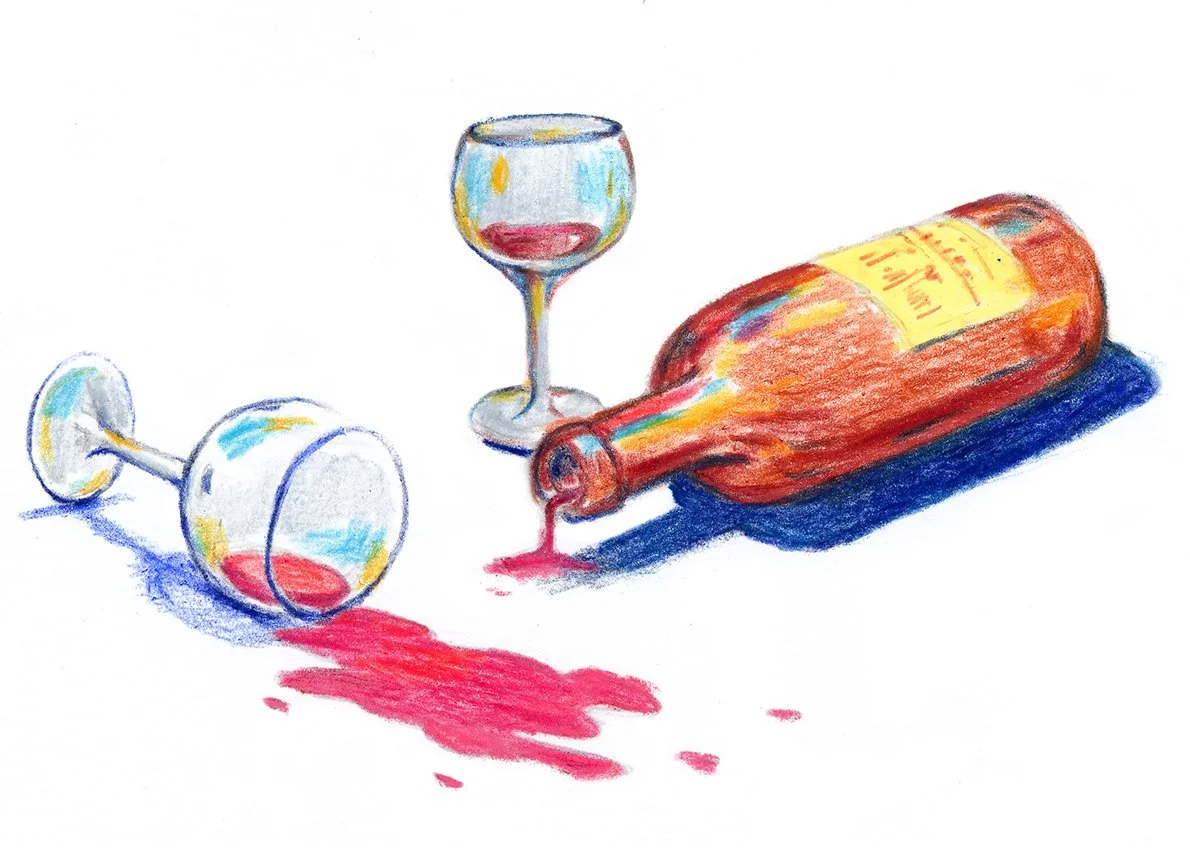
Illustrations by Sophie Sitemboun
The imposition of taste goes hand in hand with the need to protect it. When France became the first country to create geographical indications in the early 1900s, it was to protect its wine and alcohol from other “fake” and “low-quality” products, starting with Champagne, Cognac, and Bordeaux. Pride grew from there, so much so that when French wines lost to Californian wines during a blind tasting in 1976, the event was remembered as a public humiliation (and now has its own Wikipedia page). The results were deemed spurious, and were ridiculed by the French press.
This overprotective reaction, and the insistence that wine is fundamentally French, is ironic. Not only have French wine domains used foreign workers for decades (Moroccan people have long worked in the most renowned Bordeaux vineyards, despite mistreatment, while several trials have taken place in Champagne regarding the abuse of undocumented workers during the harvest), but they also used foreign grapes extensively before disregarding them.
When the vine pest phylloxera decimated half of French vineyards in the 19th century, France turned to Algeria (a French colony from 1830 to 1962) to produce and import grapes and wine.
“Viticulture became intrinsically connected to settler colonialism, resulting in the settlement of 50,000 families from the metropole and the dispossession of some 700,000 hectares of land from Algerians,” writes Mathilde Cohen in a research paper published in 2021, The Whiteness of French Food. Law, Race, and Eating Culture in France.
This process was so prolific that Algeria became the largest wine exporter by 1930, with 98% of its production going to France.
But that only lasted until France’s vineyards were restored (thanks in part to American rootstocks). “Wine producers’ organisations, particularly those in the South of France producing low-end wine, began to resent the competition represented by Algerian wine,” Cohen writes, noting that judges even had trouble distinguishing Algerian wines from French ones. “Negative intellectual and moral traits were attributed to Algerian wines, depicted as fraudulent and artificial in contrast to ‘natural’ French wines.”
““Algeria was then denied an AOC (controlled appellation of origin) classification for its wines. Tradition is a lie.””
Suddenly, the very same grapes that had been used for years by French producers were deemed inferior. Algeria was then denied an AOC (controlled appellation of origin) classification for its wines.
Tradition is a lie. And it’s the same lie, fuelled by carefully curated storytelling, that the far-right is trying to feed us now.
***
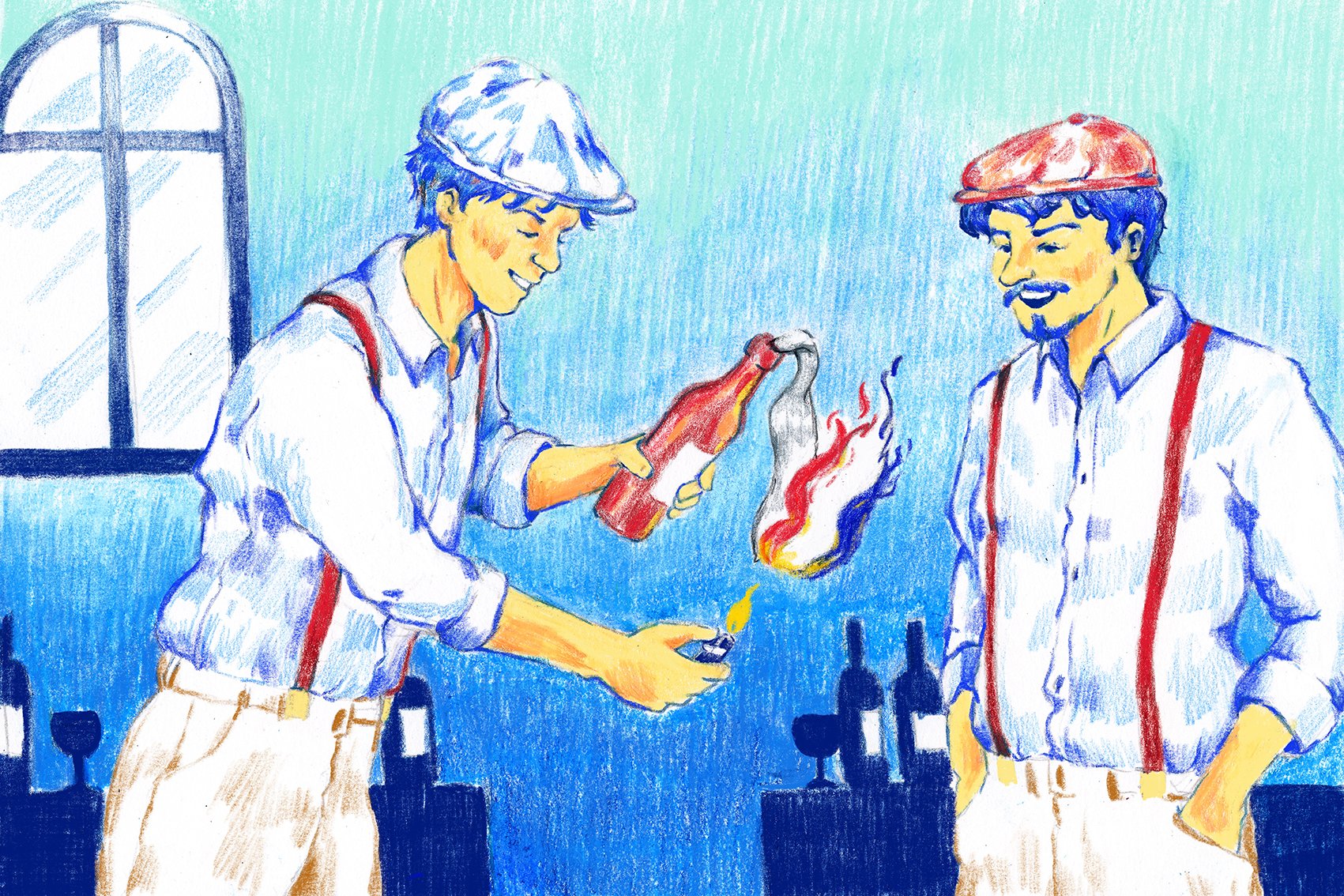
They wear black berets, big mustaches, and suspenders. They hang up French flags, and talk about meat and wine as the epitome of French food, not missing the opportunity to ridicule vegans and mock people who don’t drink alcohol. They’re terroir influencers, born out of the rise of conservatism and general backlash against social progress. What they’re doing has a name: gastronationalism, or culinary nationalism, which refers to the way food—its history, production and consumption—is used to promote nationalism and define national identity.
I come across these videos more and more often in my feed, along with banquets showing grown white men in berets loudly singing off-key, elbows linked in a manly way, glasses of red wine in their hands and royalist flags somewhere in the crowd. They claim to recreate a traditional fête de village atmosphere, with accordion music, lots of meat, and red wine, all at the equivalent of £70 or more per head.
Most of these companies and influencers insist that they have no political affiliation (despite regularly being interviewed by conservative publications or collaborating with far-right public figures). Their goal, they say, is only to bring people together through food and wine. No harm there, surely. It would be inappropriate to see anything more in their intentions, to invoke the dinnertime faux pas of political discussion.
Whether these figures believe in the purity of their actions or not, the far-right has taken an interest in them. French ultraconservative billionaire Pierre-Édouard Stérin, who lives in Belgium for tax reasons, plans to use his money to install the French far-right in power by 2030. This is not the plot of the next James Bond movie, but a real plan called ‘Périclès’.
In 2024, he invested in Le Canon Français, one of the most prominent event companies that organises these “traditional” banquets. While its founders say that it is nothing more than an economic decision, Stérin has been known to invest and acquire companies and media outlets that suit his vision of France, fitting right into his Périclès project.
“The far-right has embraced these themes because gastronomy and wine speak to everyone,” Sandrine says. “Saying, ‘Look, we’re French, we should be proud of our terroir’ resonates with both the worker and the bourgeois, and then each group will attach its own beliefs and emotion to it, but there’s a sense of belonging that reaches everyone.”
All I see on my screen is cosplay, men who have walked into a costume shop and bought all the “rural French guy from the good old days” outfits off the shelves. Olivier Candon, winemaker at Domaine du Bout du Monde in southwestern France, thinks so too.
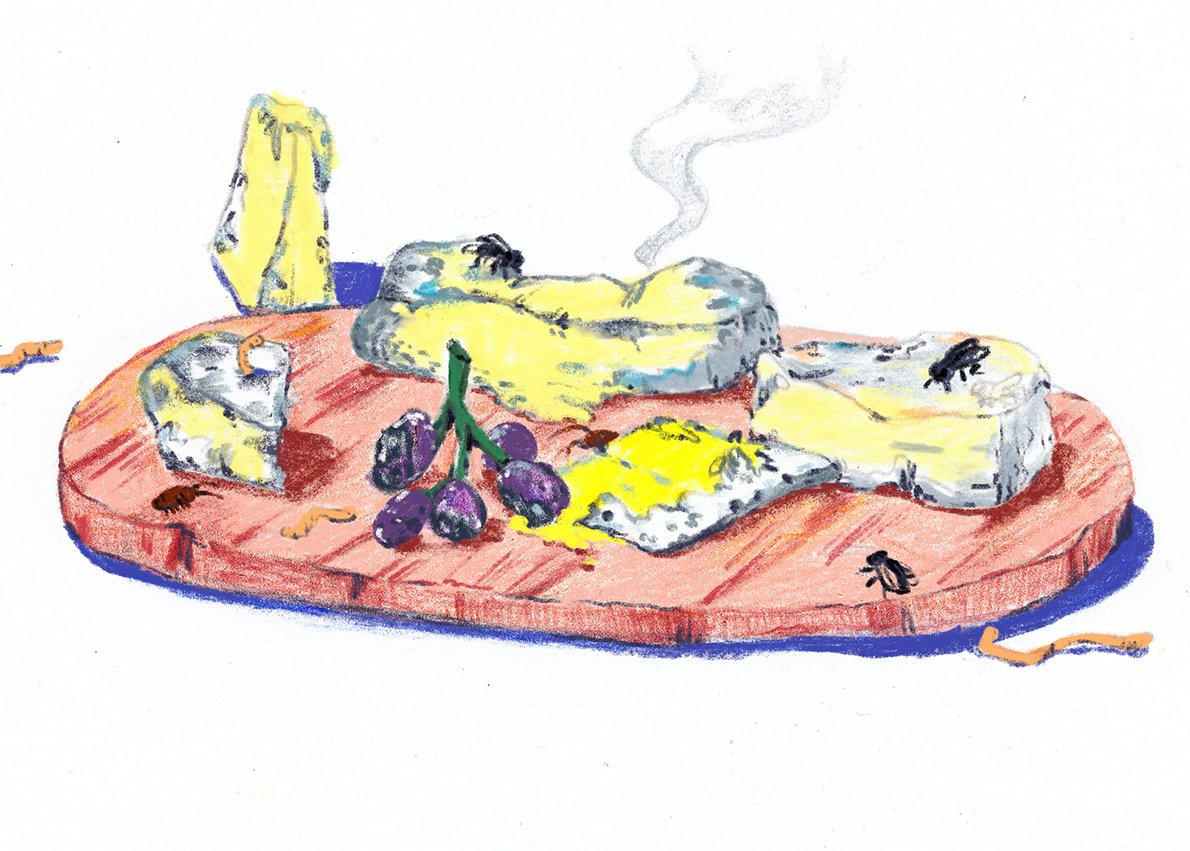
“It’s a very city-based and hypermasculine phenomenon, because you don’t really see these people in rural areas,” he says. “If they were throwing these events in small villages like our own, they would not have any bookings. People in the countryside don’t pay more than €15 (£13) for this.”
“It’s the paradox of a terroir that never really existed,” Sandrine adds. “You see all these images glorifying the terroir, saying that we need to return to peasant-style consumption, to eat like people used to… And then you’ve got guys stuffing themselves with foie gras, bone marrow, endless slabs of meat, and drinking Saint-Joseph. But we know that’s not how people in the countryside actually eat. Anyone who’s lived in rural areas knows that’s not everyday food.”
The reality is much more humble. The rural lifestyle has always been more about plant-based meals, with grains and vegetables and watered-down wine rather than pit-roasted pigs and bottles from the most prestigious and expensive châteaux (unfortunately, Astérix et Obélix is not historically accurate).
French people drinking less wine is not a real problem. What is a real problem is the eight million people facing food insecurity across France, or the drastic cuts in state funding for food banks despite growing demand, or the fact that one in two students sometimes limits or even goes without food because they can’t afford it.
***
Gastronationalism is nothing new. 15 years ago, two French far-right organisations planned an “apéro saucisson-pinard” (charcuterie and red wine aperitif) to demonstrate their hostility towards Muslim people and what they believed to be “the Islamisation of France.” At the time, the event, which was banned by authorities, was clearly seen as Islamophobic and racist.
Now that regressive and conservative worldviews have seeped further into the public discourse, attitudes have changed. In September 2025, a “pig feast” organised by a far-right political party was cancelled, prompting public outcry. “An attack on the pig is an attack on the very heart of French identity,” Gabrielle Cluzel, a far-right editor and journalist, dared to suggest.
Similar feasts hosted by Le Canon Français attracted protests, and the venue that was supposed to host them cancelled their reservation. Though the events were later held elsewhere, the initial cancellation was used by the right-wing as additional evidence that “some people” (leftists and antiracist activists) have a problem with French people being proud of their country.
While celebrating their country’s gastronomic heritage isn’t enough to make someone a fascist, a feeling of cultural superiority does. Thinking French wine is better than all other wine is a problem. That’s even more true when it’s accompanied by a whitewashed version of history that overlooks a huge part of the French population (namely the part that is not white or wealthy) and the contributions of foreigners.
“What’s being appropriated by the far-right is the image of tradition and connection to the land, which is something that farmers and people working in the vineyard genuinely feel,” Olivier says. “As winemakers, we need to use the good image people have of us to show that we don’t align with their ideas. Wine is first and foremost the communion between all humans, and the idea of sharing and bringing people together. That’s the complete opposite of what the far-right stands for. ”
““We have completely forgotten that, originally, wine is about sharing, not about pride.””
Extreme and reactionary ideas have spread so far that they are now dictating how wine should be perceived and enjoyed. But amidst such toxic discourse, Sandrine wants to remind people that there’s always been an alternative approach.
“We have completely forgotten that, originally, wine is about sharing, not about pride,” she says. “It should be something that opens you up to others, not some kind of thing you lock yourself into, feeling proud of on your own.”