
Let’s Work Together — Community-Led Winemaking at Forty Hall Vineyard, Enfield, London
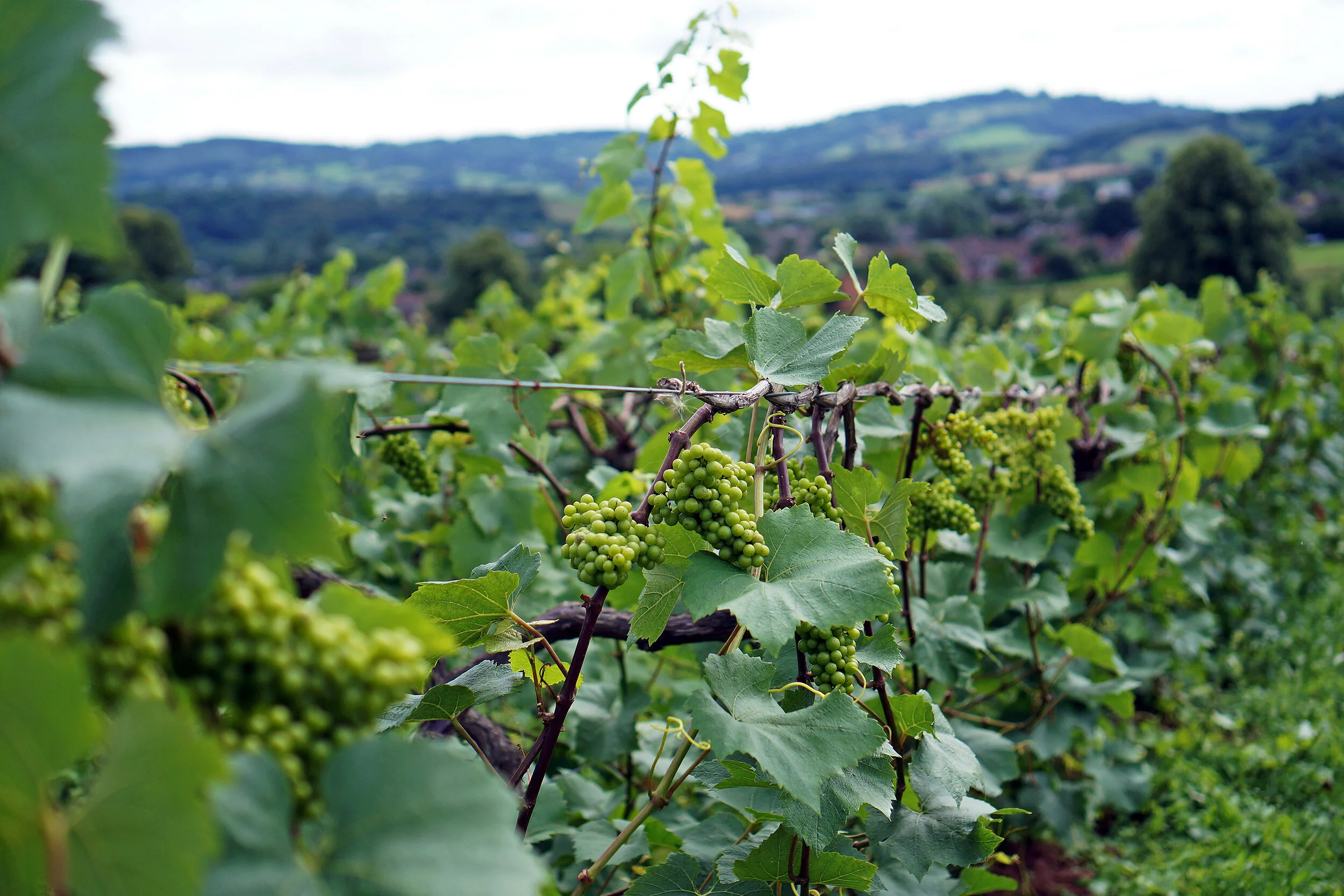
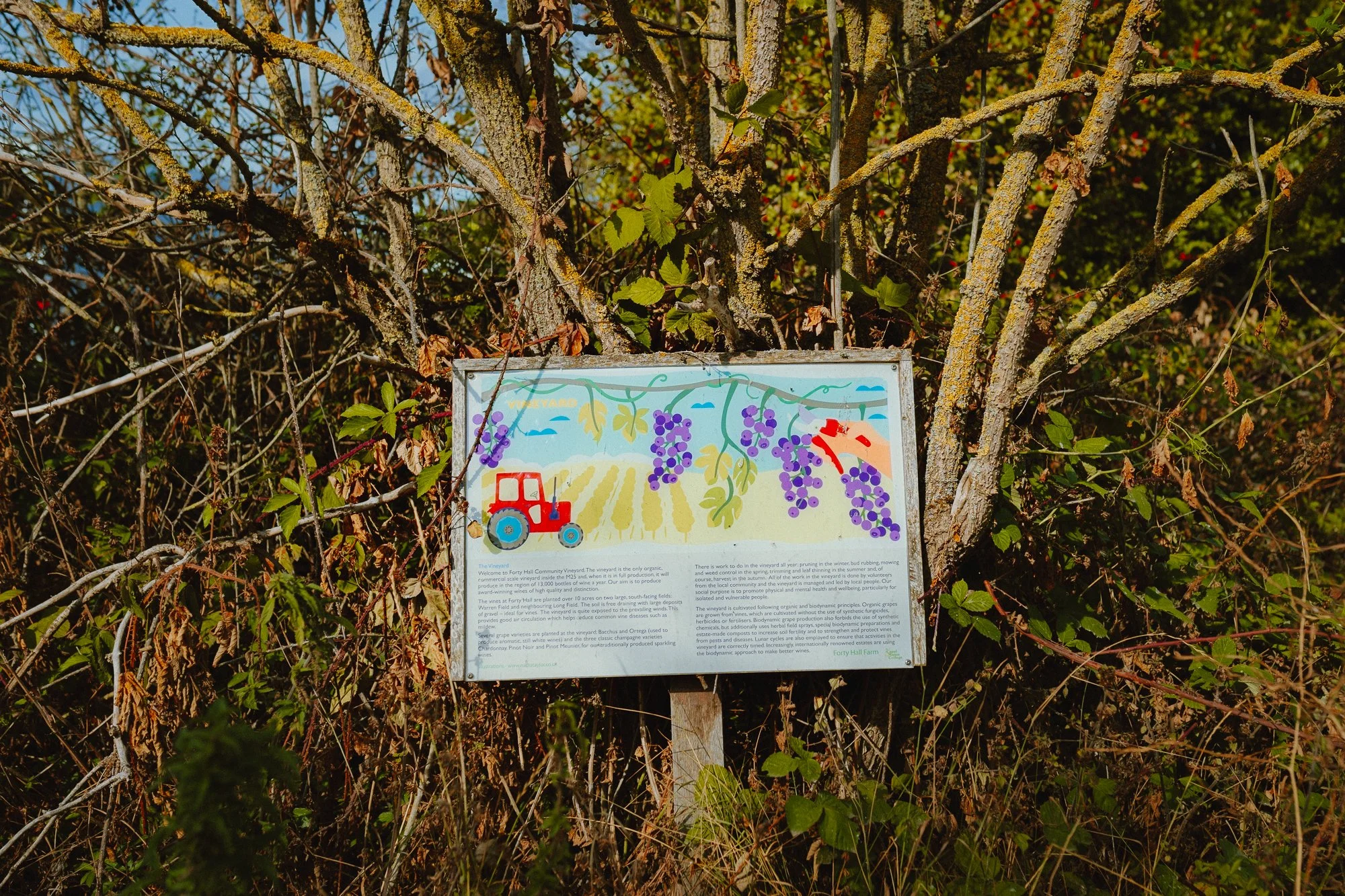
Standing among 10 acres of grapevines at the edge of Enfield in North London, it’s hard to believe the M25 is so close. A herd of Red Poll cows moo in the neighbouring field; feral parakeets raucously chatter overhead and into the green expanse of ancient woodland beyond. Welcome to Forty Hall Vineyard.



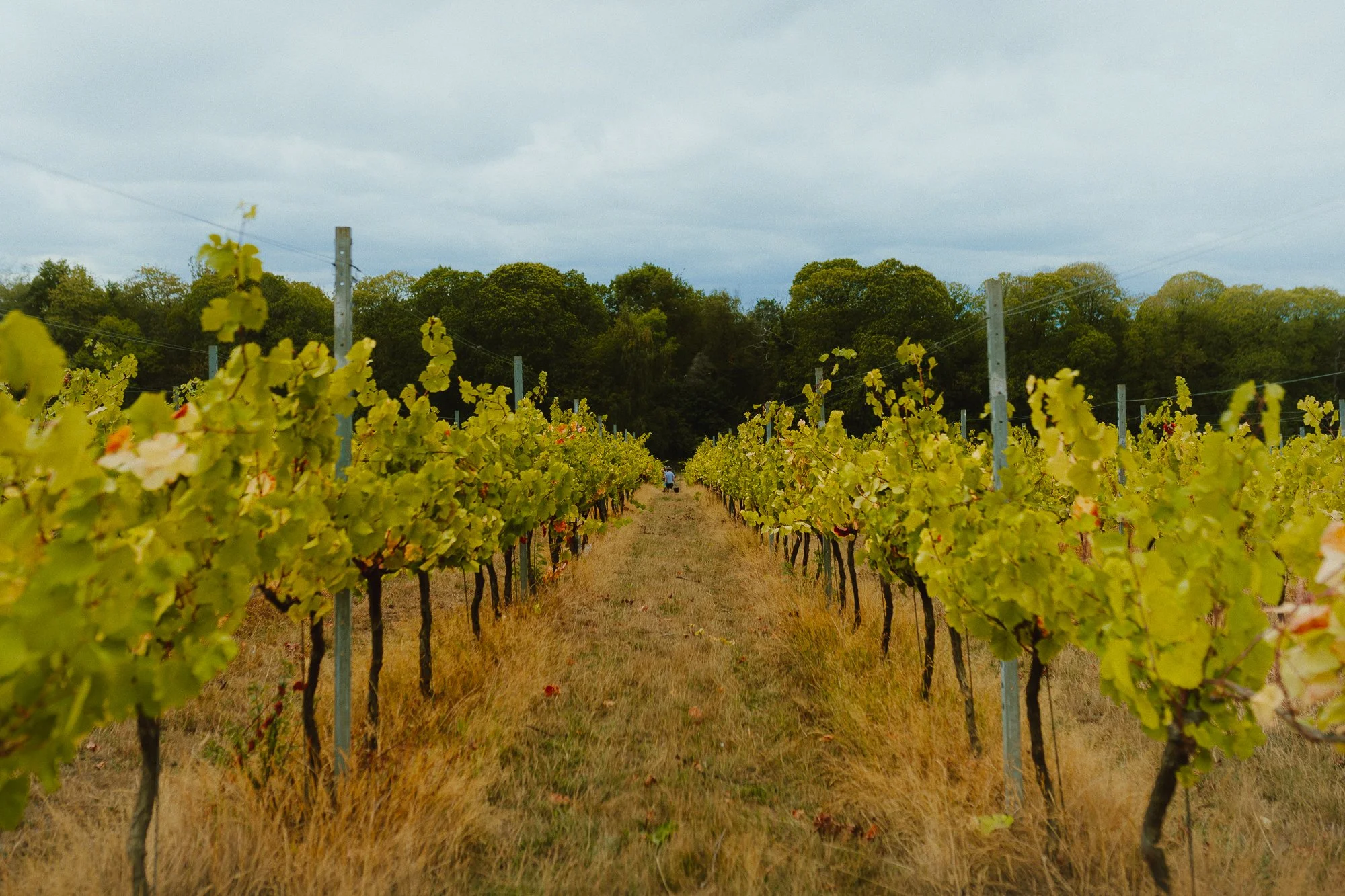
It’s early, but already a large group of people are chatting away and sipping tea from thermos flasks. Some are equipped with the official FHV T-shirt, sturdy walking boots, and shiny new snips; others, like me, are somewhat underdressed in shorts and sneakers. I see a few men arrive with wheelbarrows and crates, which they carefully place at the edge of each row of vines. A buggy drives in with more kit, gloves, and buckets.
The crowd is as diverse as the grapes grown here. There are wine enthusiasts, teachers, housewives, media execs, filmmakers, civil servants, retirees, locals, and other happy helpers brought along for the day. Some have been referred through eco-therapy programmes; others have come for companionship, or simply because they live or work locally and want to see what’s growing right on their doorstep.
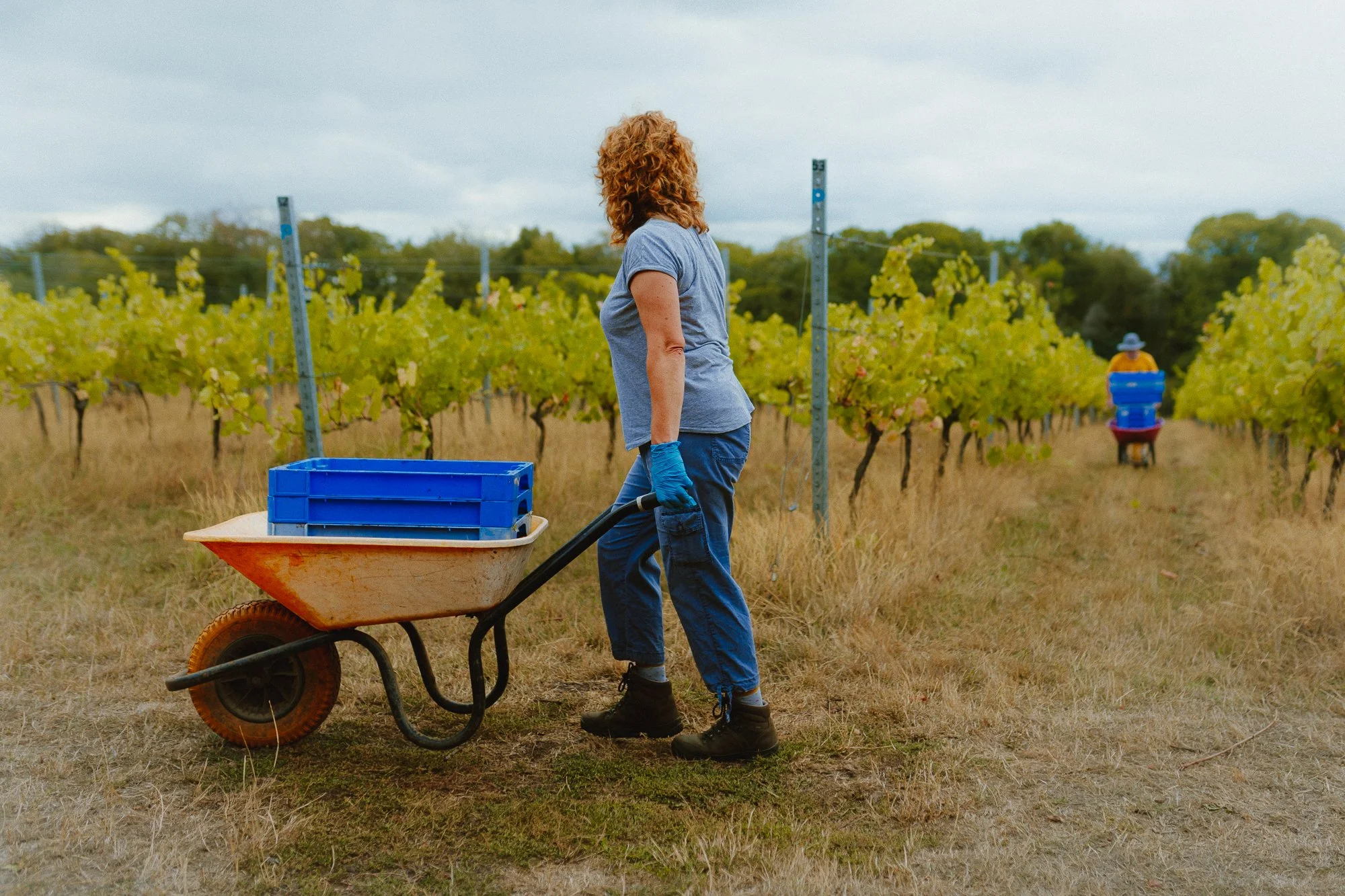
All of us do, however, have one thing in common: We are volunteers, learning the practical realities of viticulture alongside people we’d probably never have met otherwise. We prune, we weed, we get muddy and sunburned. And after all the hard work, we harvest and, eventually, we drink the wine made from these grapes we have tended to.
***
Forty Hall Vineyard isn’t a place that exists to pay lip service to the local authority’s green objectives. It is, in fact, London’s only commercial-scale vineyard, established in 2009 on the 273-acre Forty Hall Estate and organically certified by the Soil Association since 2013.
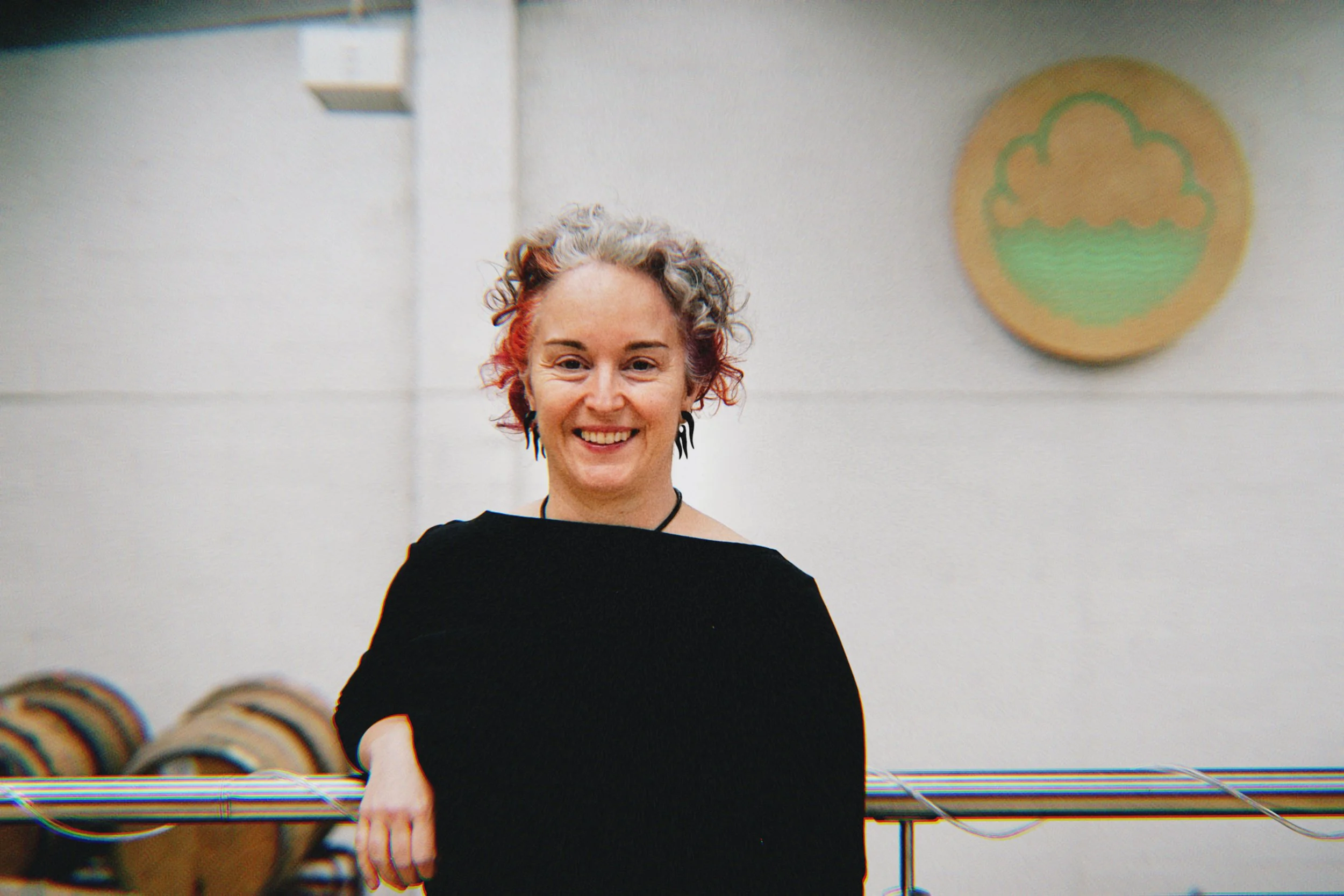
Emma Lundie, the head of operations at Forty Hall Vineyard and Farm, is responsible for keeping all the moving parts working—the vines; the volunteers; the production; and the relationship between the wider farm and its landowners, Capel Manor College.
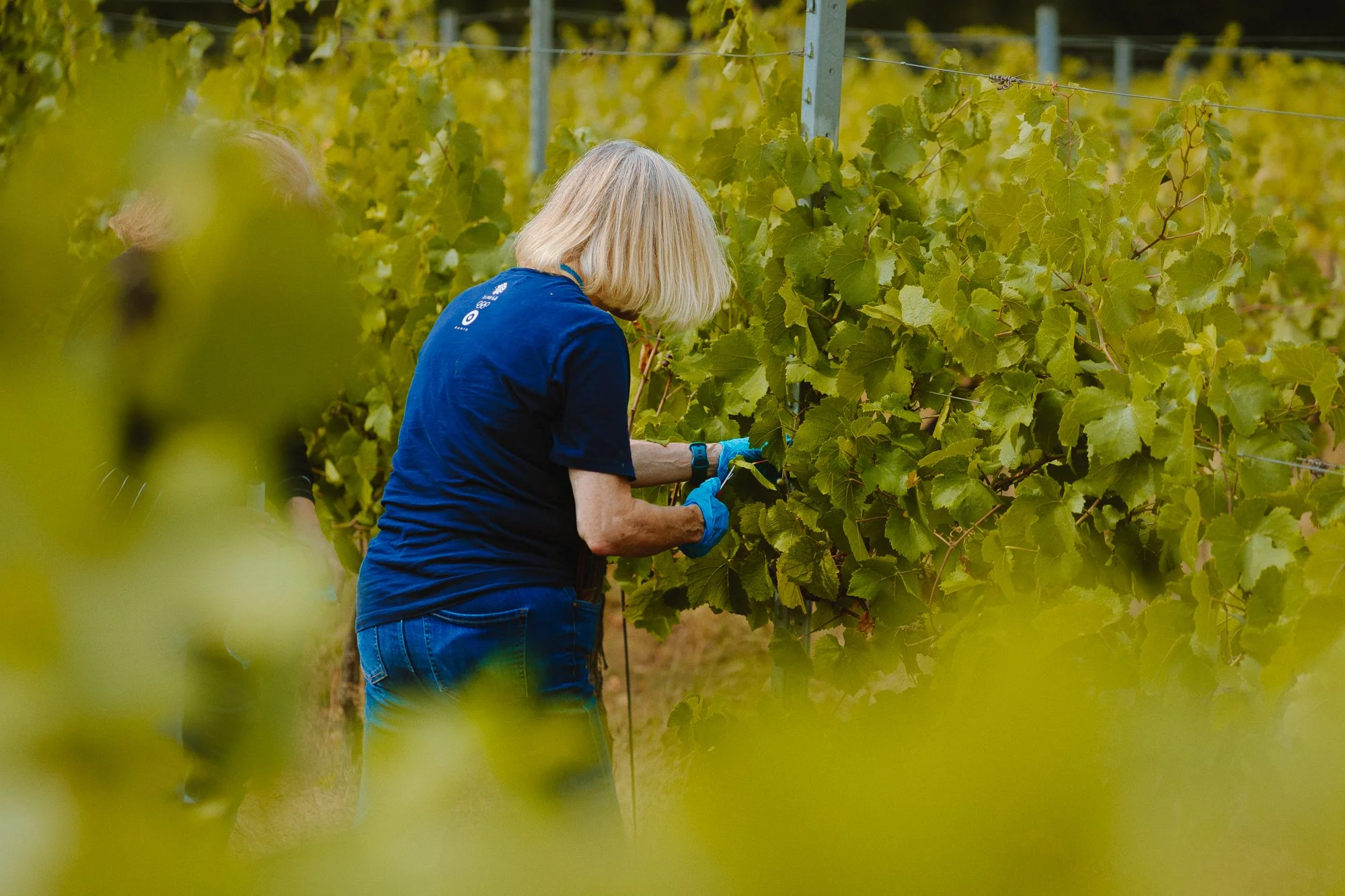
Photography by Sean McEmerson
“The wines have a sense of purity that’s hard to match,” she says. “That’s from the quality of the grapes for sure, but also from the integrity and dedication of our volunteers and their love for this project. They are definitely what makes us so unique.”
In the winter, sheep roam freely among the vines, keeping weeds down and fertilising the soil. It sounds idyllic, but in reality, there’s lots of hard graft. The undergrowth of weeds and long grass under the 20 miles of vines is a perfect disease habitat, and one that is managed completely by hand.
Summer, meanwhile, entails hours of canopy management, leaf-stripping, foliage-clipping, wire-lifting and shoot-positioning to create the right amount of light exposure and airflow that will benefit the grapes.
Clearly, this is not a hobbyist operation. “Our volunteers undertake all the jobs that directly contribute to the production of the wines, and they do that with genuine interest and good humour,” Emma says.
““They really are the eyes on the vines. We couldn’t produce the quality without them.””
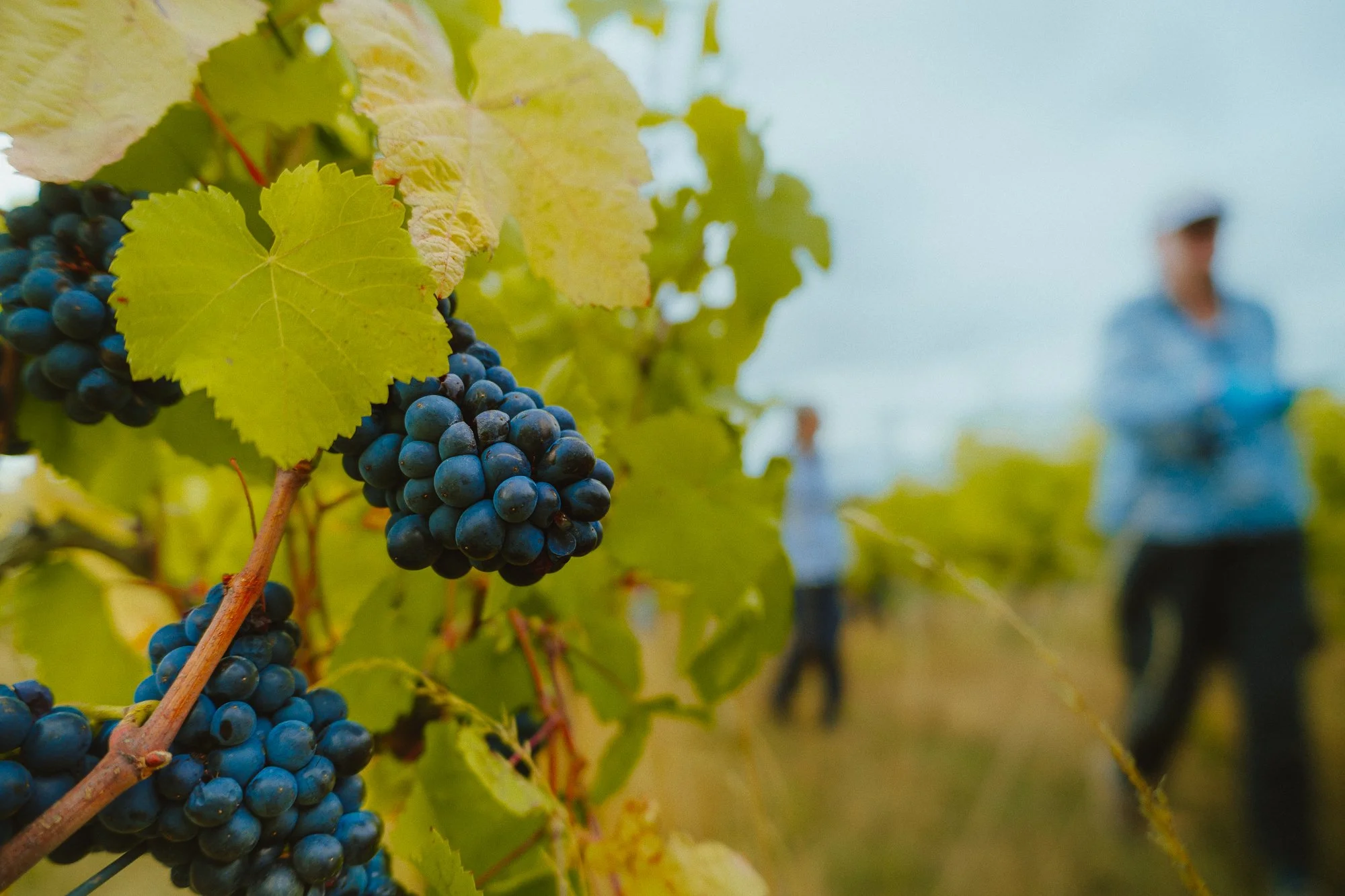
At the start of the season, the vineyard is divided into blocks, each of which is allocated two volunteers. They walk up and down the vines, recording growth, looking for signs of disease, pulling out flag shoots—growth that would sap energy from the main canopy—or bagging up mildew damage.
“They really are the eyes on the vines,” Emma adds. “We couldn’t produce the quality without them.”
***
For many of the volunteers here, caring for the vines gives their week routine, plus physical activity, connection with others, and a sense of purpose. Others come to learn a new skill. Then, of course, there’s the novelty of taking part in the winemaking process.
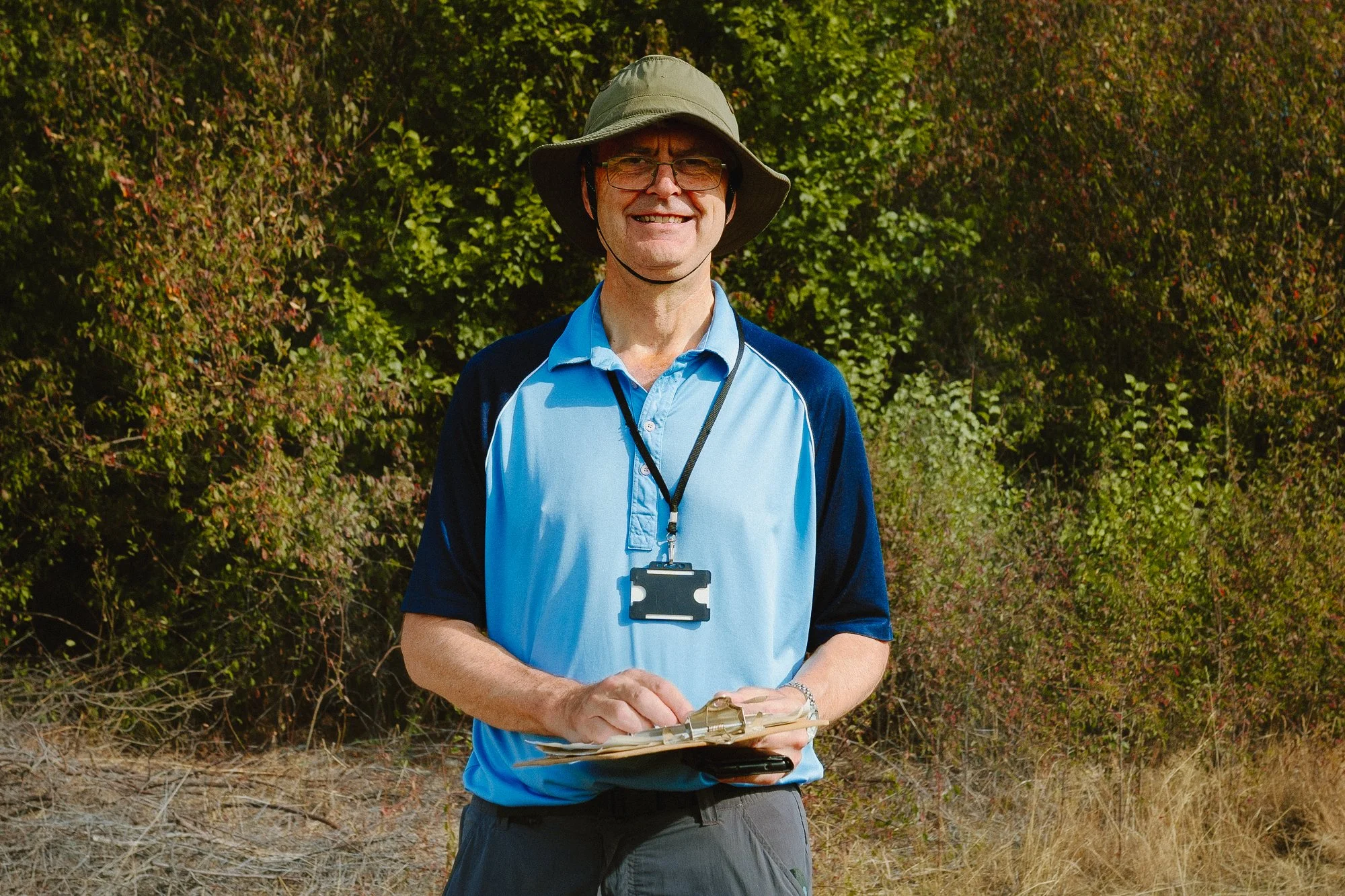
David* has been volunteering for just over a decade. “We start each volunteering session with some updates about the wine production and sales before going through the tasks of the day and explaining how they fit in the whole process,” he explains.
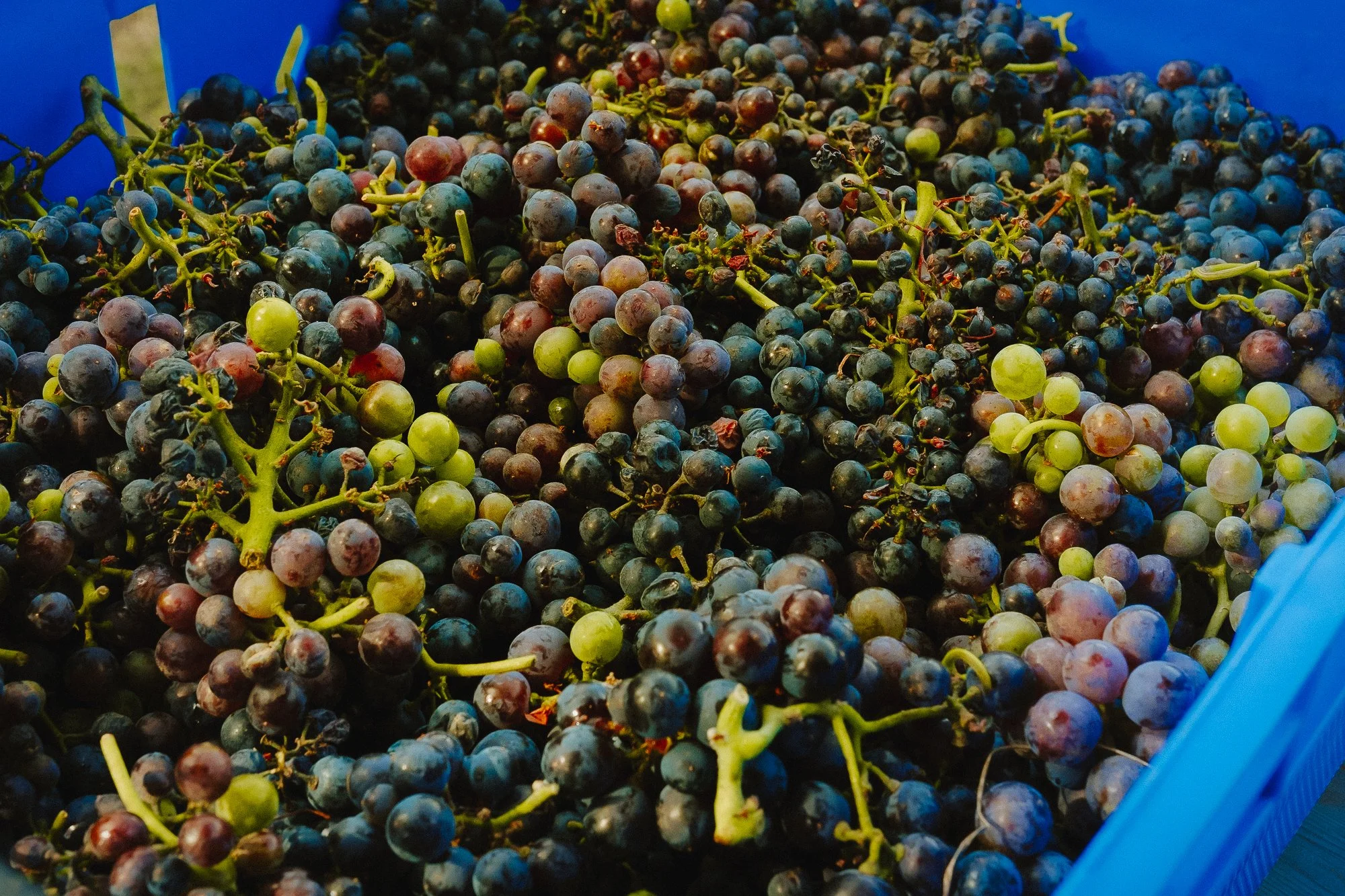
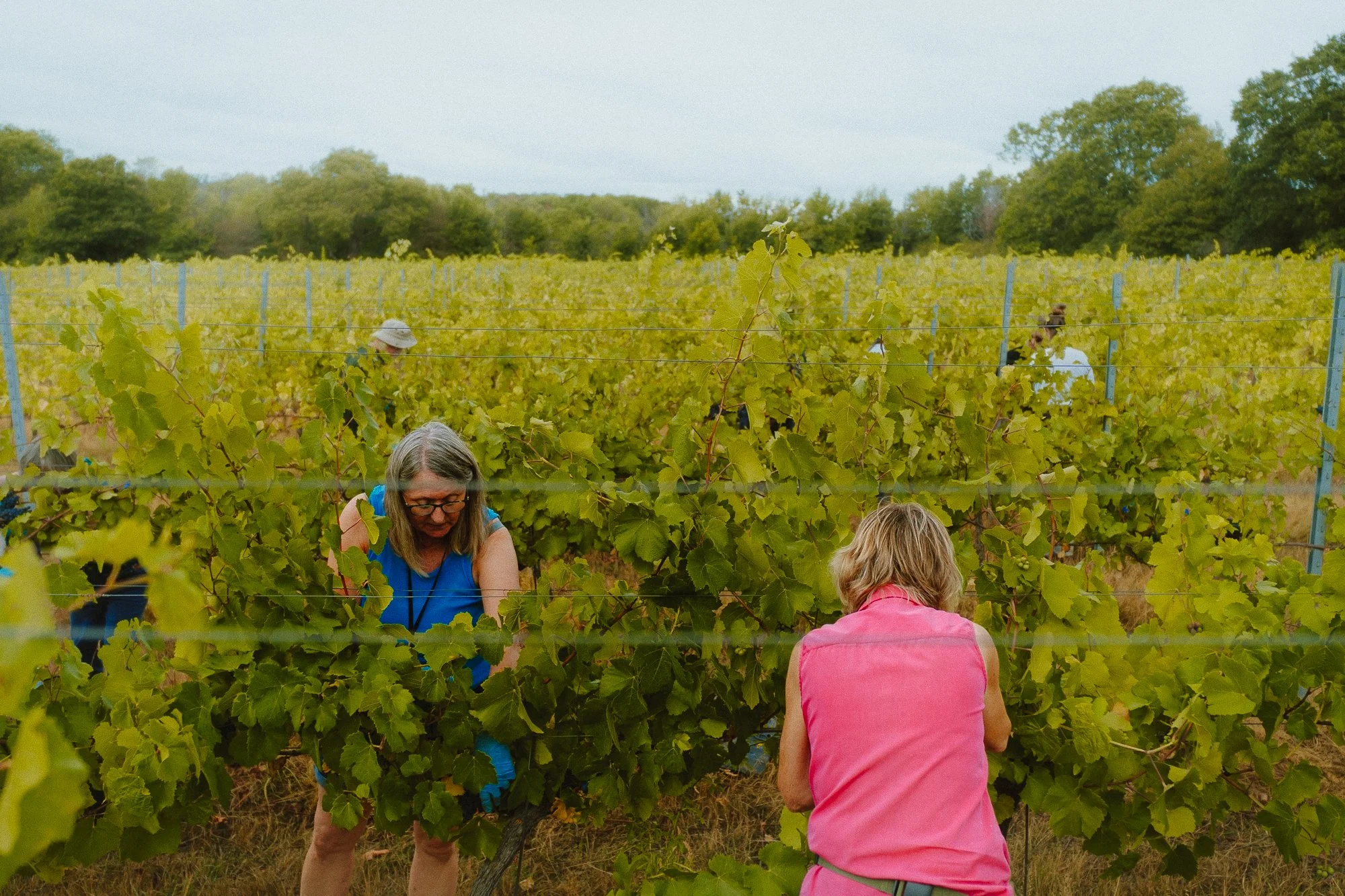
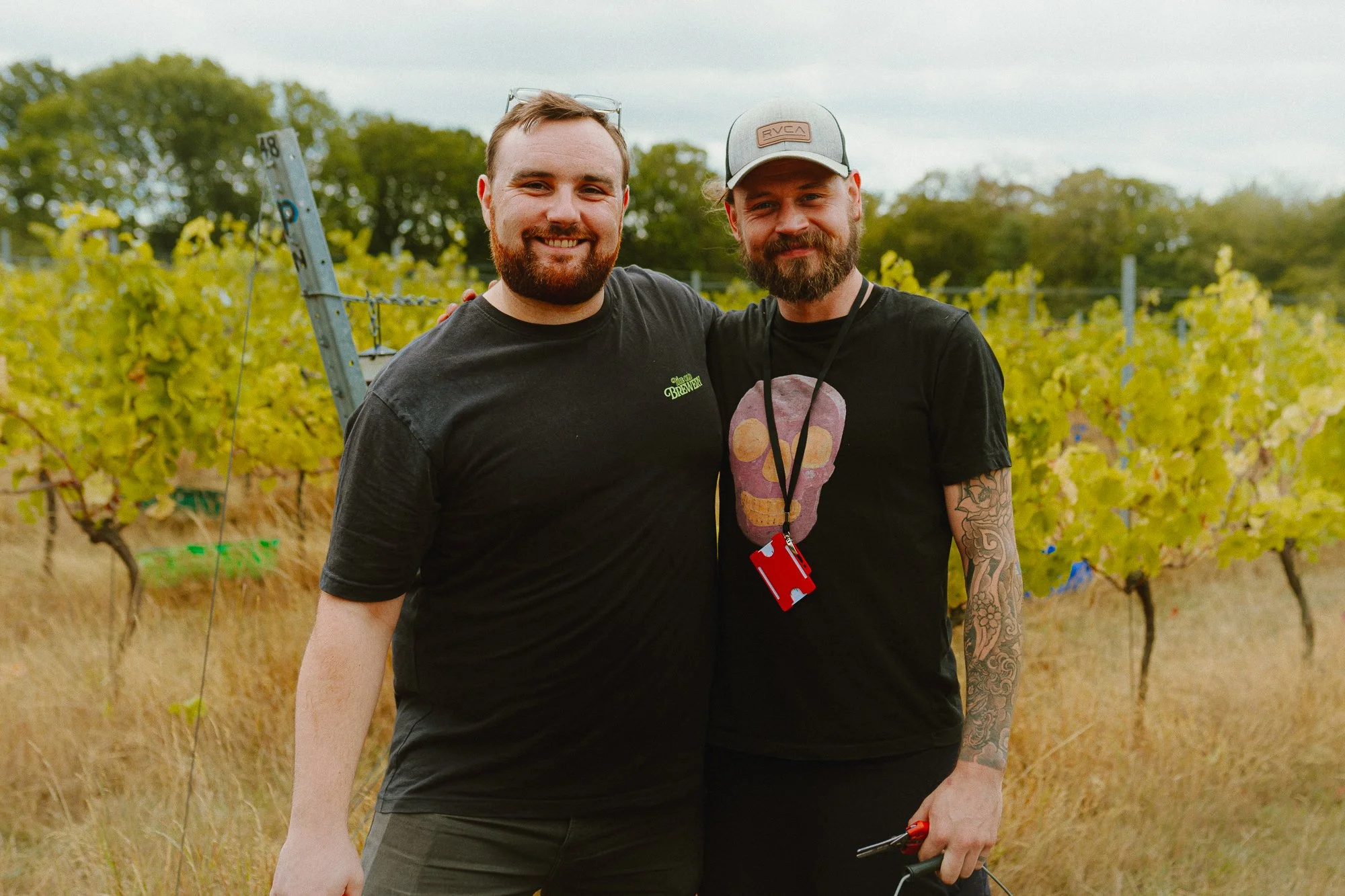
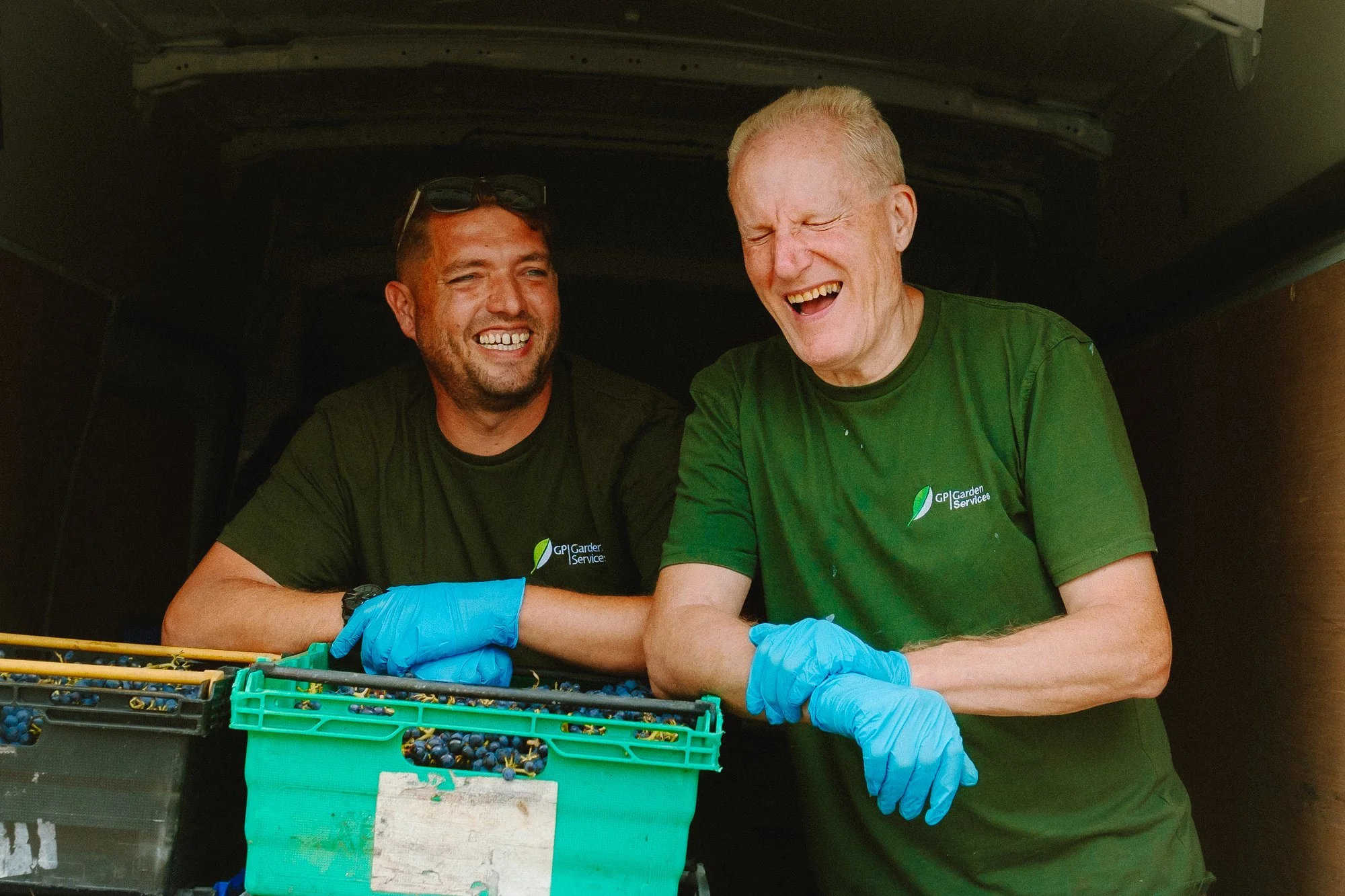
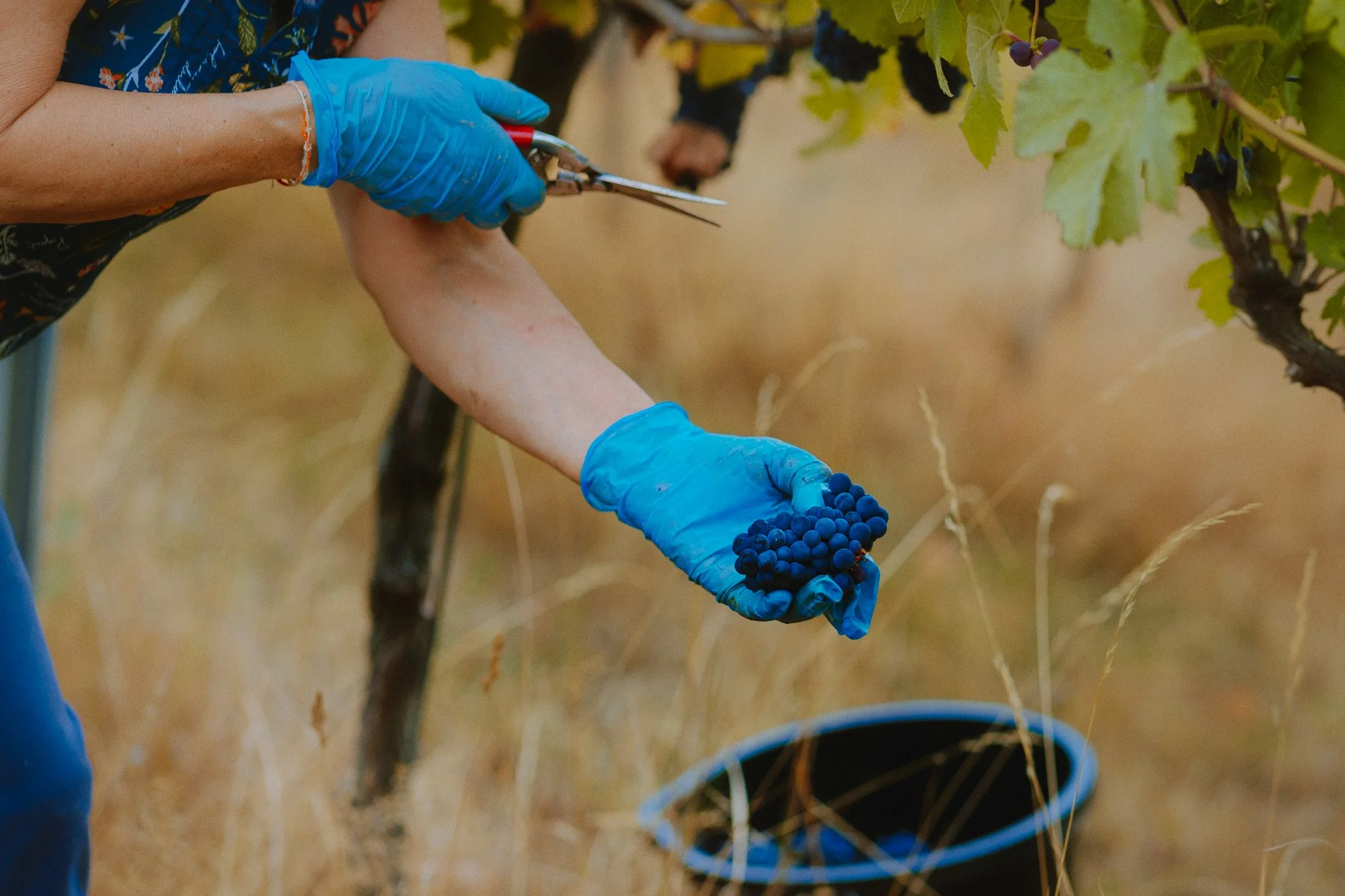
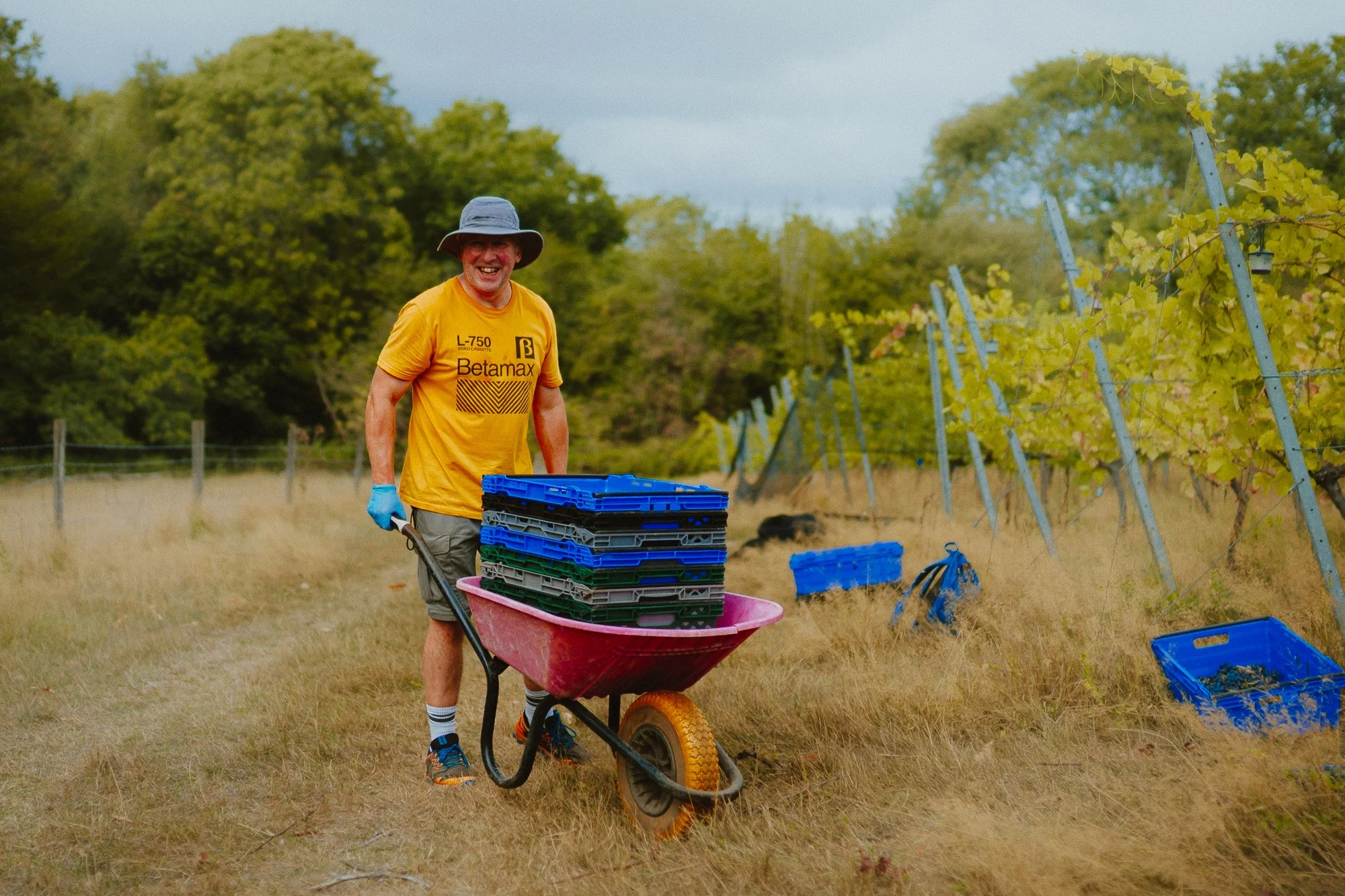
“We assign team leaders who will then go on and organise the groups into subgroups,” he continues. “They make sure the work is completed and any issues are escalated back up. We want everyone to feel like they are contributing to something tangible.”
There is also an immense sense of camaraderie, he says. A vineyard is an unusually effective place to strike up conversations.
“You can spend several hours working beside someone without knowing anything about them, then discover that you have a shared obsession or similar experiences to talk through,” says David. “The repetitive aspect of many tasks is meditative in itself, but time with a non-judgmental stranger can also be therapeutic.”
The vineyard also has “quiet rows” for those who want to come and lose themselves for a while in this beautiful green space.
“Parents with young children or those with caring responsibilities need time out, and we are proud this environment can provide that support,” Emma adds.
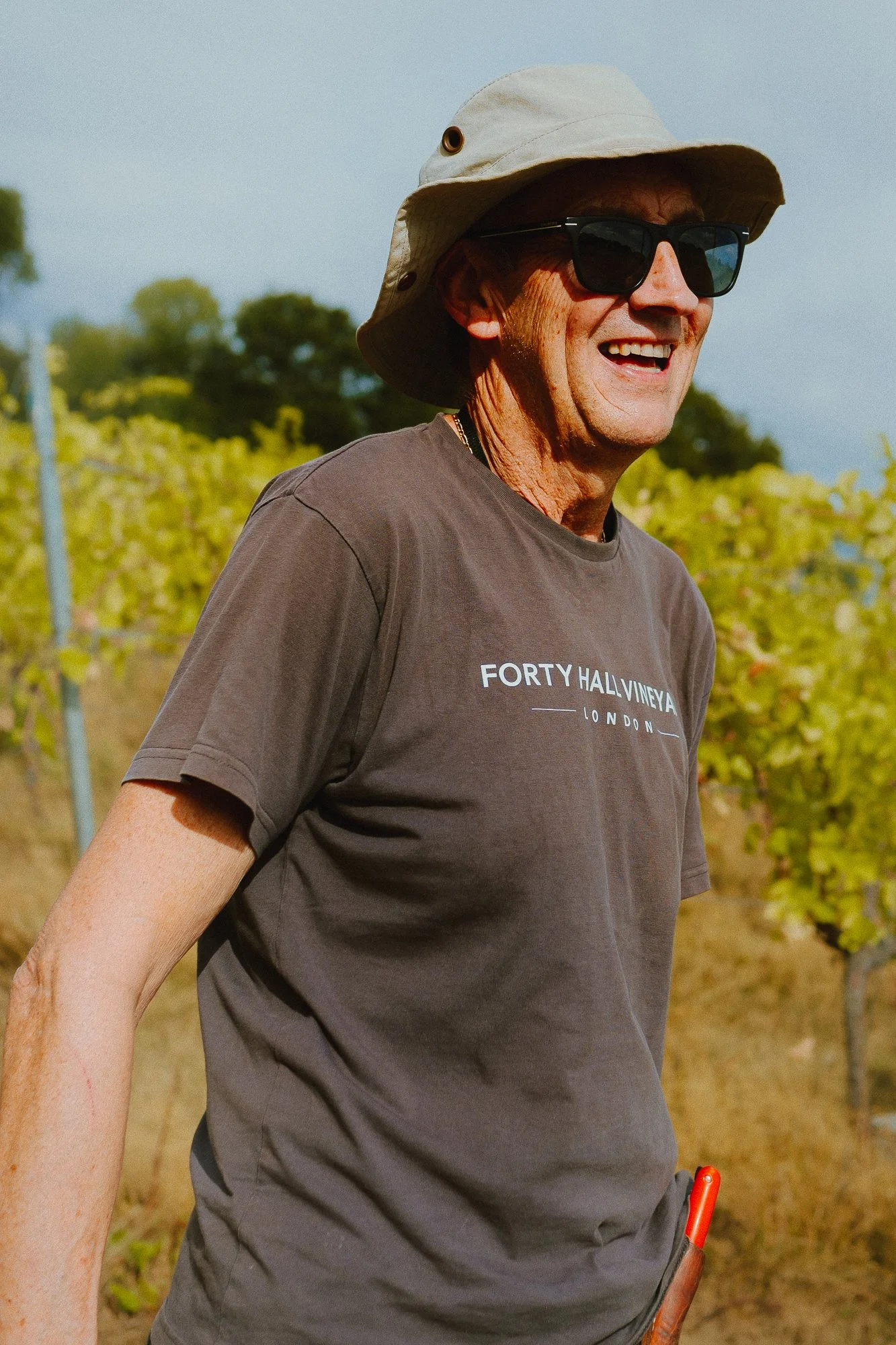
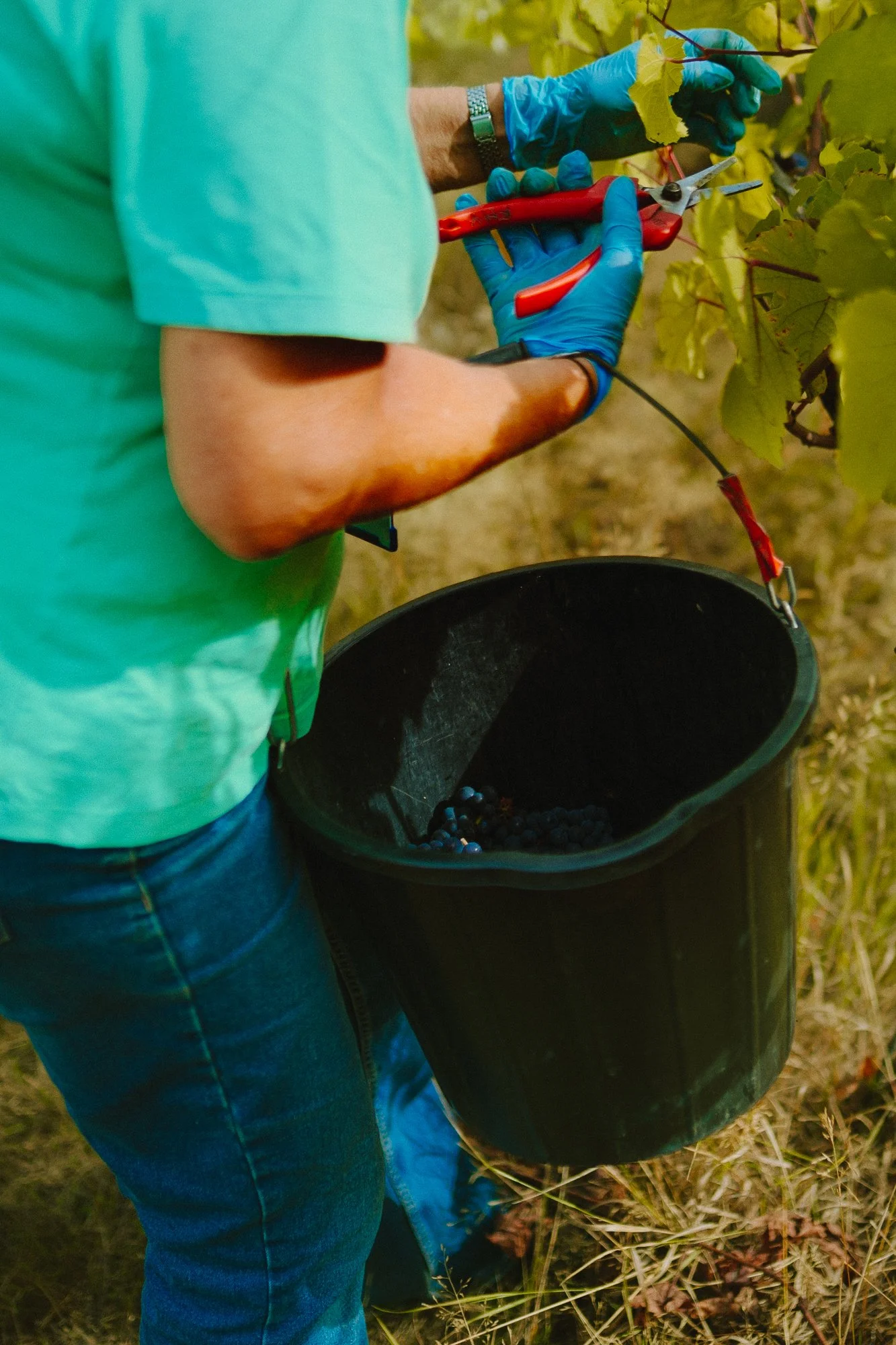
Teatime is a ritual as essential as the work itself. Conversations turn to gardening tips and informal recipe swaps for the cakes that have been brought along. Sometimes there is wine tasting, an extended lunch, or some training—again, often led by volunteer community members.
Will Davenport, winemaker at Davenport Vineyard, has been with the project since the beginning. His role is to transform the grapes into wine at his winery in Kent.
“Forty Hall’s vines grow on a south-facing site in dry, sandy, and flinty soil over London clay,” Will says. “This means the grapes don’t typically dry out with that deep-rooted water source. Being in London means it’s generally a few degrees warmer than other vineyards in England, helping the grapes to ripen while retaining that acidity which gives the wine its freshness. They’ve also chosen Ortega and Bacchus, which are varieties that perform well.”
The wines are made using a low-intervention method, because, as Will explains, “the grapes are so good.” They go straight to the press when the vans arrive, with the juice transferred to tanks the following day. After the sediment has settled, the clear juice is racked off and yeast added. It ferments for around three weeks before being left to settle over winter. It is then filtered and bottled around April or May.
Similarly, the mix of Chardonnay, Pinot Noir, and Meunier is perfect for the sparkling wine. This is made using the traditional method, with around 18 months spent on the lees. The result has notes of lemon, ripe apple, and almond on the nose, making it a perfect aperitif.
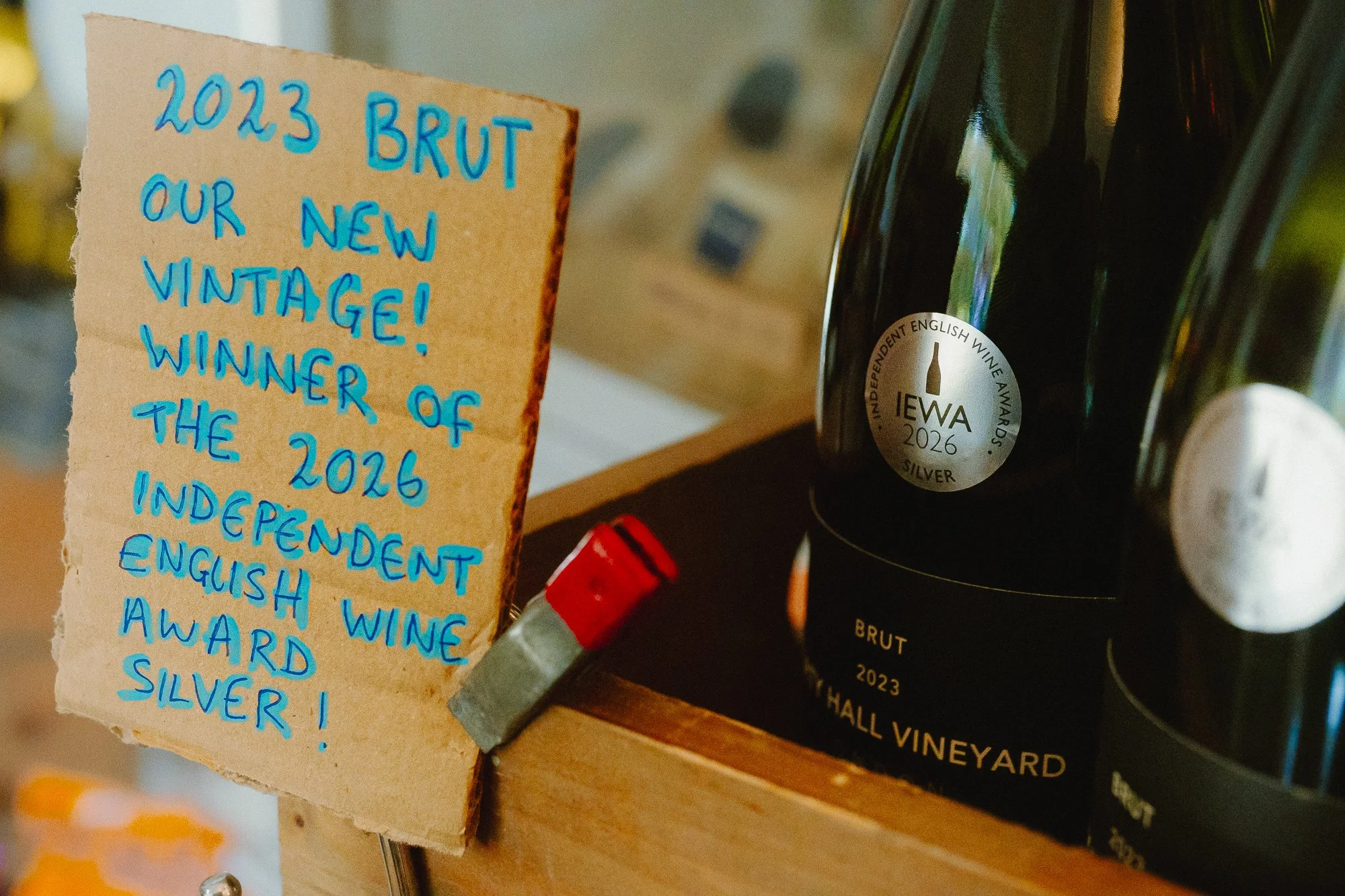
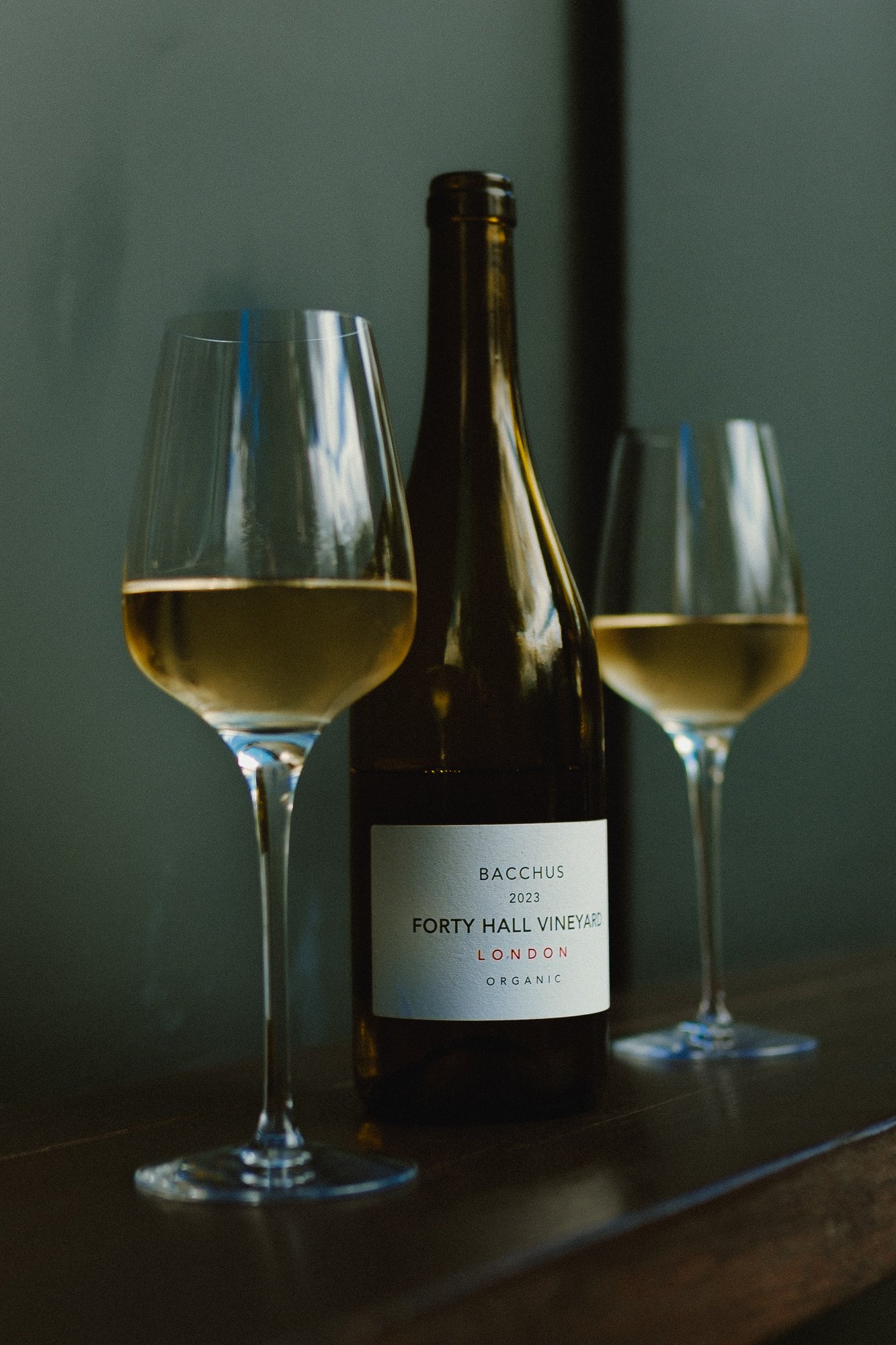
Toby Evers, head buyer at Naked Wines, is particularly enthusiastic about Forty Hall’s sparkling wine. The community aspect of the venture is inspiring, but it wouldn’t be the special place it is without its end product—the wine—being any good. .
““...it’s the first commercial sparkling wine made in England’s capital since the Middle Ages!”
“We wanted to support the volunteer efforts with an outlet to the broader British public—and it’s the first commercial sparkling wine made in England’s capital since the Middle Ages!” he says. “Our relationship with the vineyard is a partnership. We truly want to help them generate the funds needed for future growth.”
Chef Jakob Grant of The Prince N22 agrees. “We’ve recently started with the Bacchus. It’s really cool to be able to tell our customers that the grapes for this wine were grown just 30 minutes away from the pub. It’s bright and clean—a good all-rounder for our menu.”
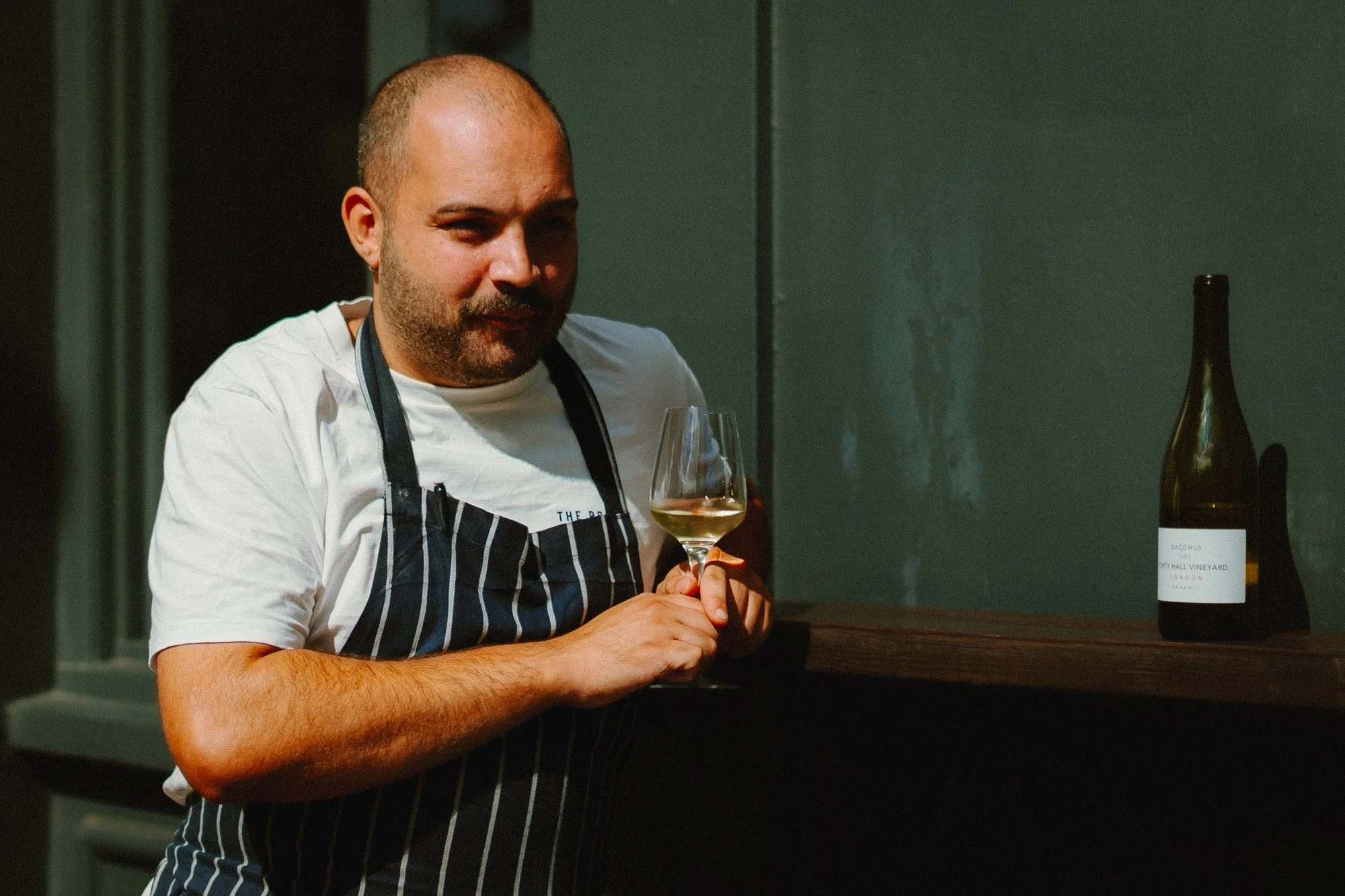
Sales alone are not the ultimate measures of success. As Forty Hall is a social enterprise, the money generated by the wines is reinvested into the volunteer community. Back at the vineyard, Emma explains why the quality of the wine and its growing sales simply bolsters the vineyard’s commitment to its volunteer community.
“Expansion is not the priority,” she tells me. “It’s about continuing to help the volunteers get the most out of what we are creating together.”
In order to do so, the vineyard has plans to develop its wellbeing offerings, and use the vineyard as a space where people can try activities like yoga and meditation. There are also plans to build a fixed tasting room overlooking the vineyards, where visitors can enjoy the wines made from the very vines they see before them.
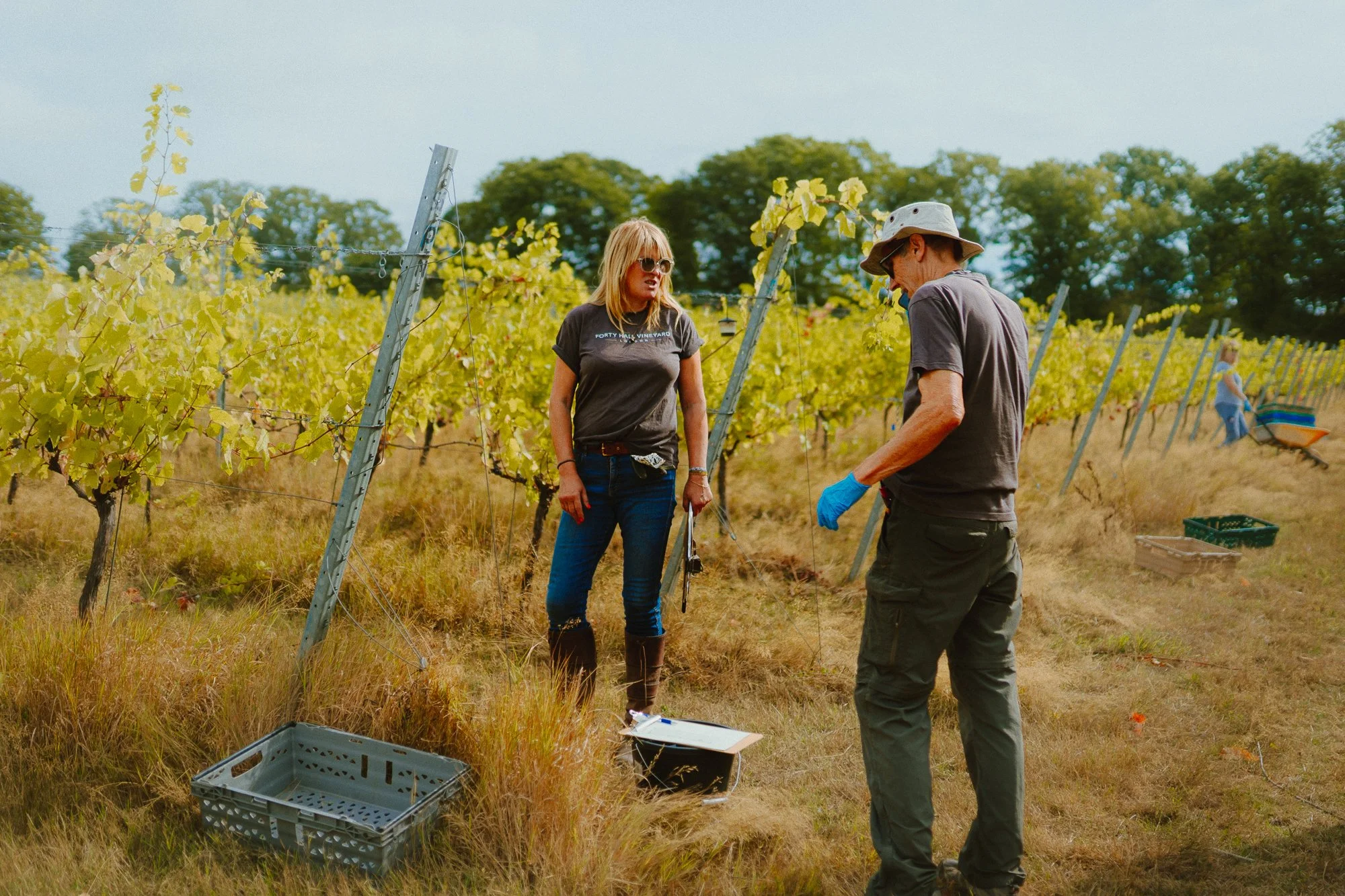
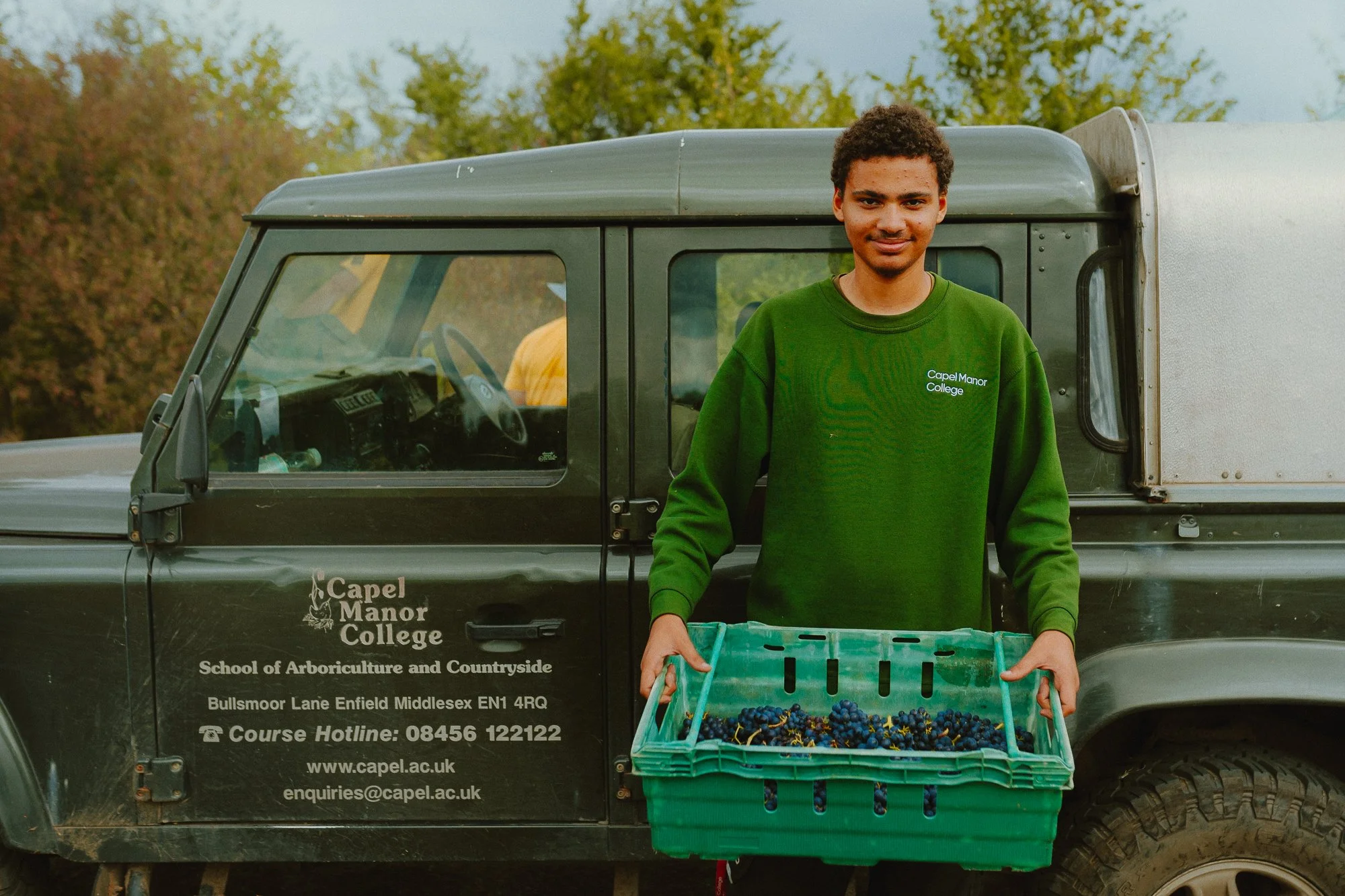
“Learning and passing on our knowledge to the next generation is important, and we’ve recently begun offering hands-on, practical, viticulture classes through Capel Manor College,” Emma adds.
This brings us back to those 150 or so volunteers, and why they matter so much. They aren’t simply helping to keep the vines productive. They are the business model. The wine pays for the community, and that community tends to the vines in turn.



*Some names are changed to respect annonymity.