
I Predict a Riot — The Battle for the Soul of Leeds’ Independent Beer Culture
Autumn and winter 2015 brought heavy storms and severe flooding to the U.K. As news came in of sandbags and dinghy rescue missions, one image cut through the gloom: two men waist-deep in the flooded beer garden at the Kirkstall Bridge Inn in Leeds. They leaned on a pub table, glasses aloft, like a jovial Jack and Rose bobbing around in the flotsam of the Titanic. But in this scene, the only things sinking were pints.
One of the men semi-submerged in the River Aire that day was Steve Holt, arguably a catalyst for the heady growth of independent British beer in the 2010s. As the first person to import Sierra Nevada this side of the Atlantic, stocked initially at Safeway in 2003, he helped beget a generation of brewers and bars who looked to the States for inspiration—a trend that is only now, by Holt’s admission, in decline.
But Steve is no one-trick pony. As the founder of the thriving Kirkstall Brewery, as well as a major beer distribution business and a growing estate of pubs across Leeds and Yorkshire, his influence in 2026 is arguably more significant than ever.

Photography by Matthew Curtis
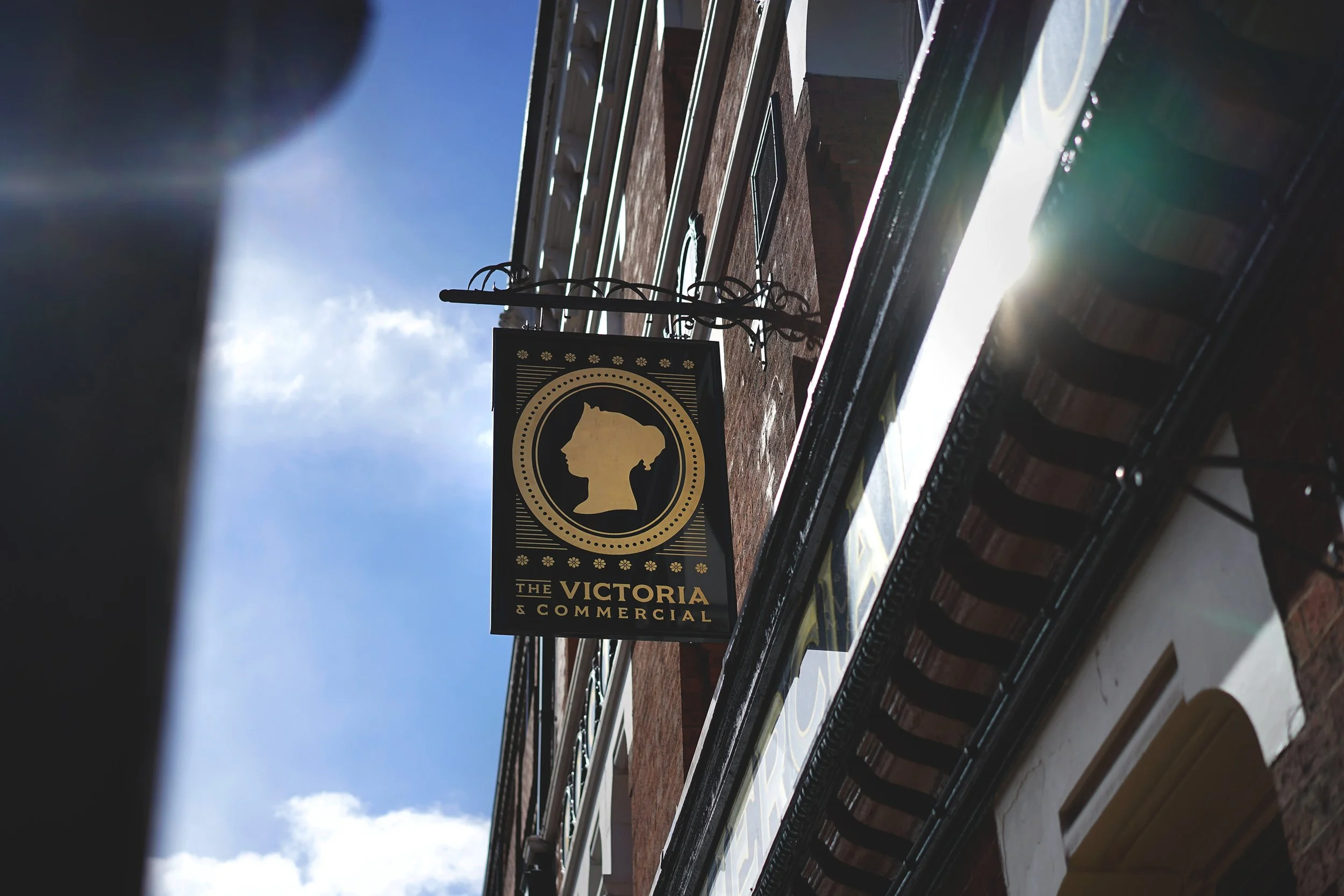
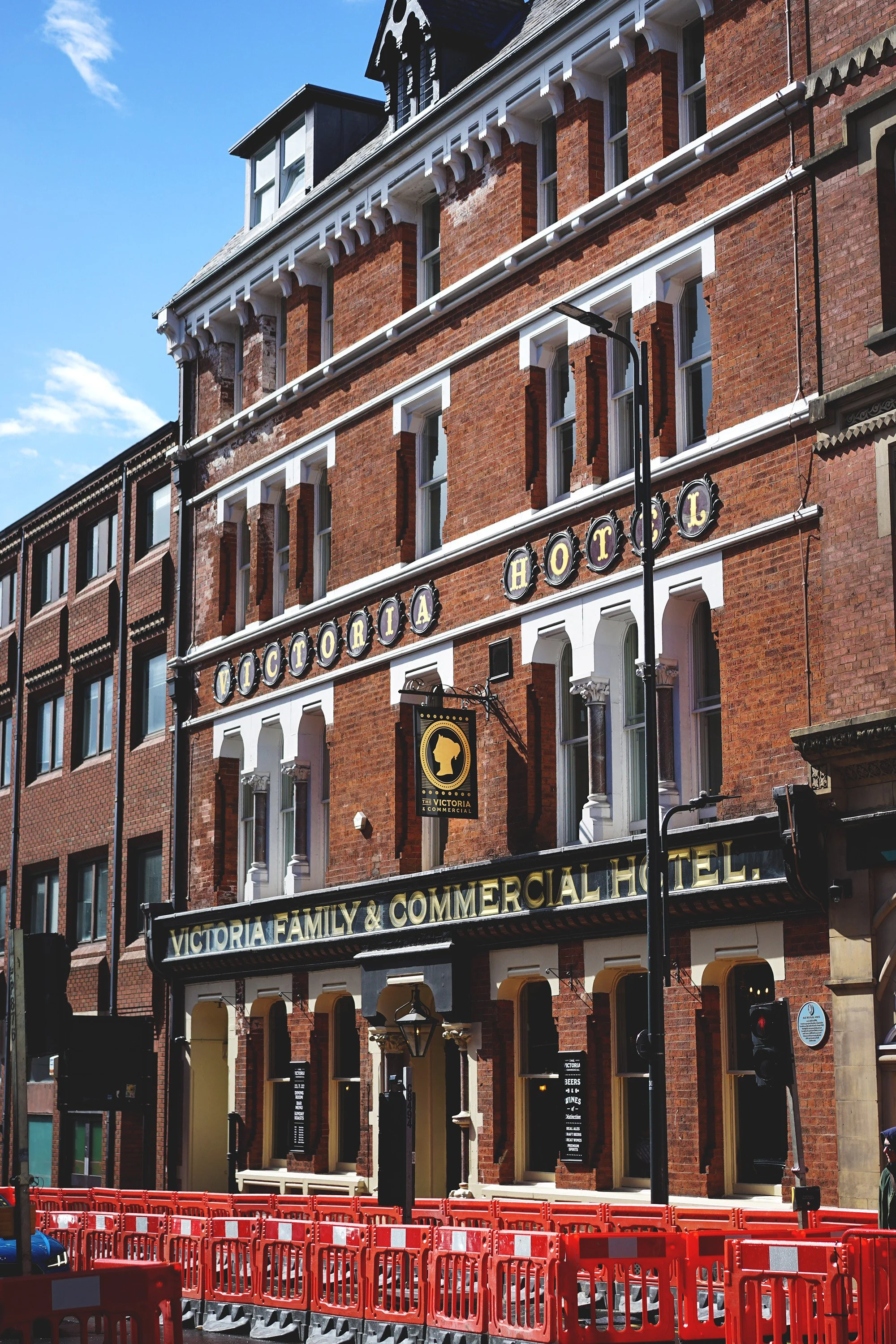
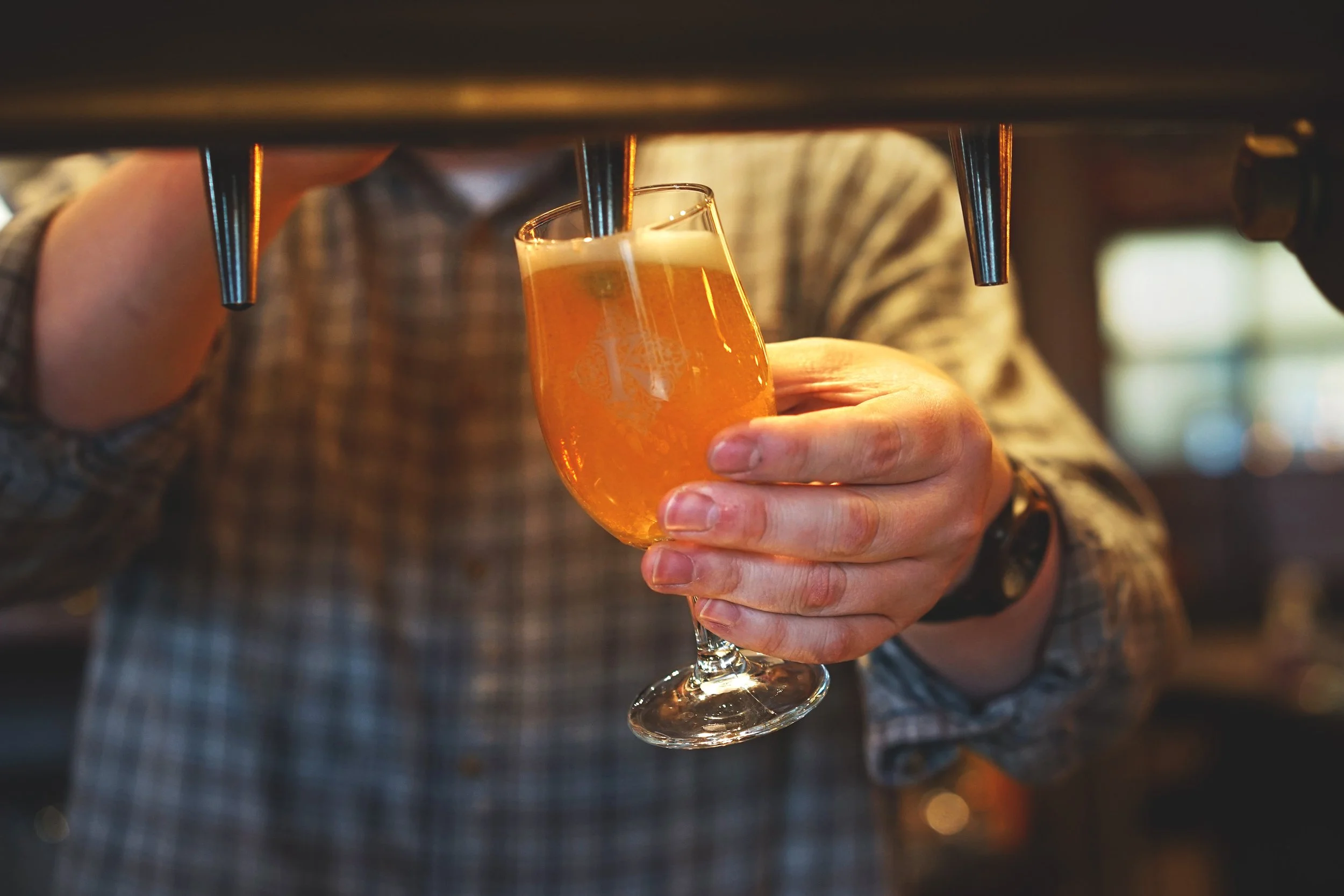
Take the reopening of the Victoria & Commercial on Great George Street in late 2025, after five years of dormancy. Across the press-night coverage, as featured on Leeds List, Why Leeds?, Leeds Independent Life, Leeds Plus Social, and The Hoot, the same images seemed to repeat: cosy snugs, vintage beer ads, and the coordinated cheers-ing of perfectly poured pints in branded glasses.
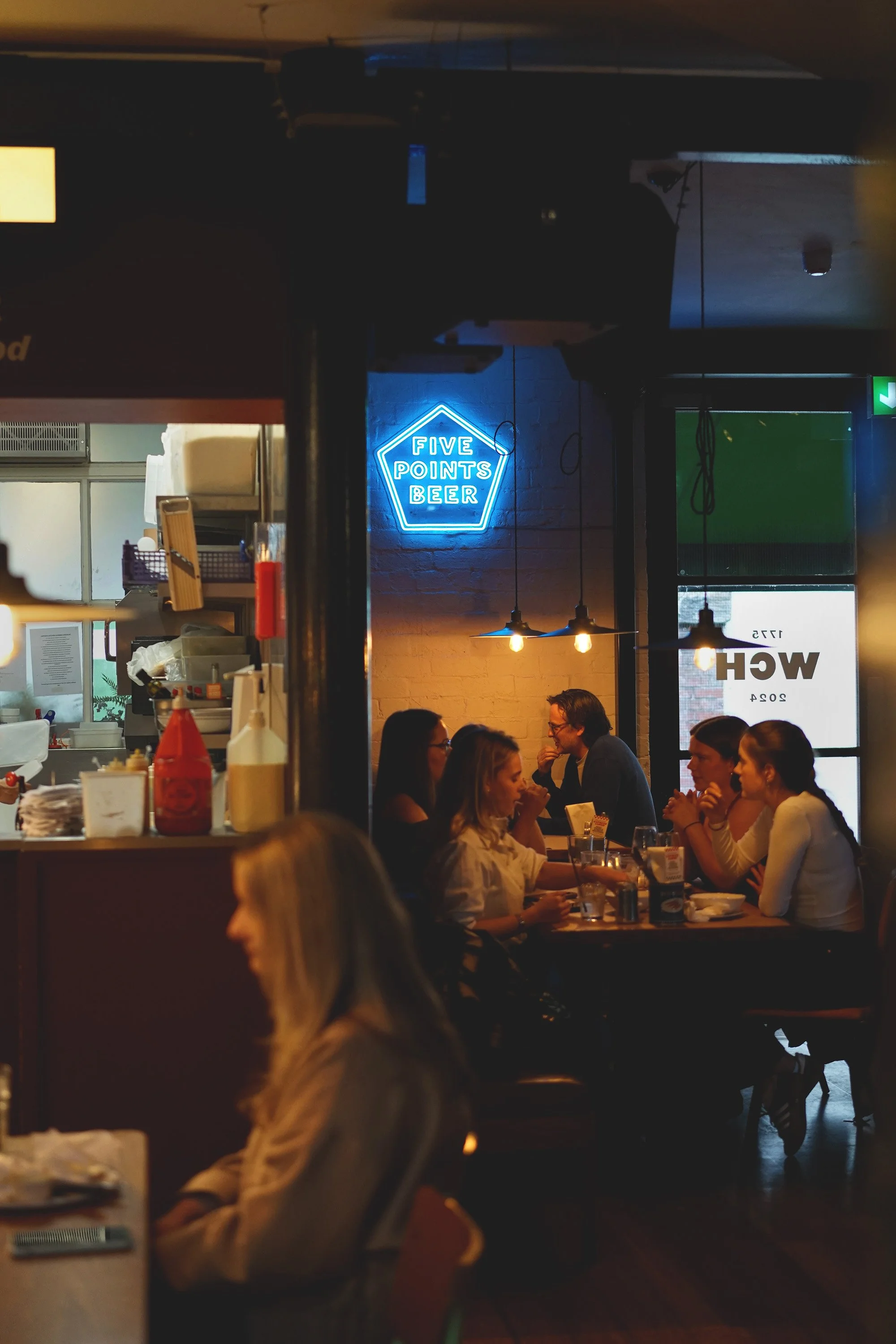
It felt like a visual metaphor for the Leeds hospitality dream team that had convened to refurbish and reopen the once-mighty boozer: Steve Holt and Ed Mason, owner of Whitelock’s Ale House and founder of London’s The Five Points Brewing Company.
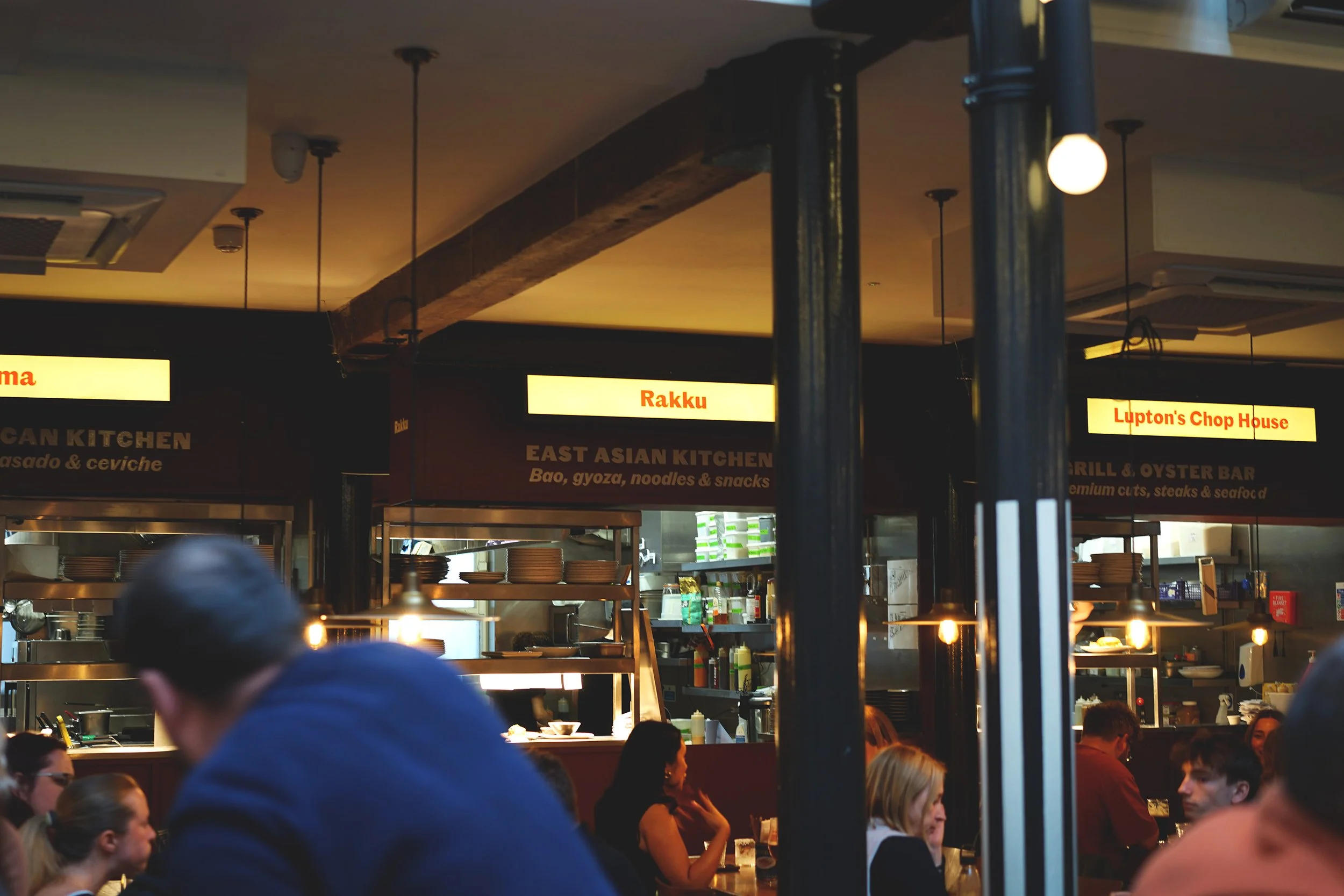
The Vic is the latest of Steve and Ed’s restoration projects. Together, the two have transformed a number of unloved venues into some of the most popular spots in town. In addition to Whitelock’s and its adjacent sister bar, The Turk’s Head, Ed has recently opened White Cloth Hall, a beautiful former-merchant’s-yard-turned-food-hall behind the Corn Exchange. Then there’s Brewery Wharf Tavern, which opened in 2025, and the Meanwood Tavern, refurbished three years earlier.
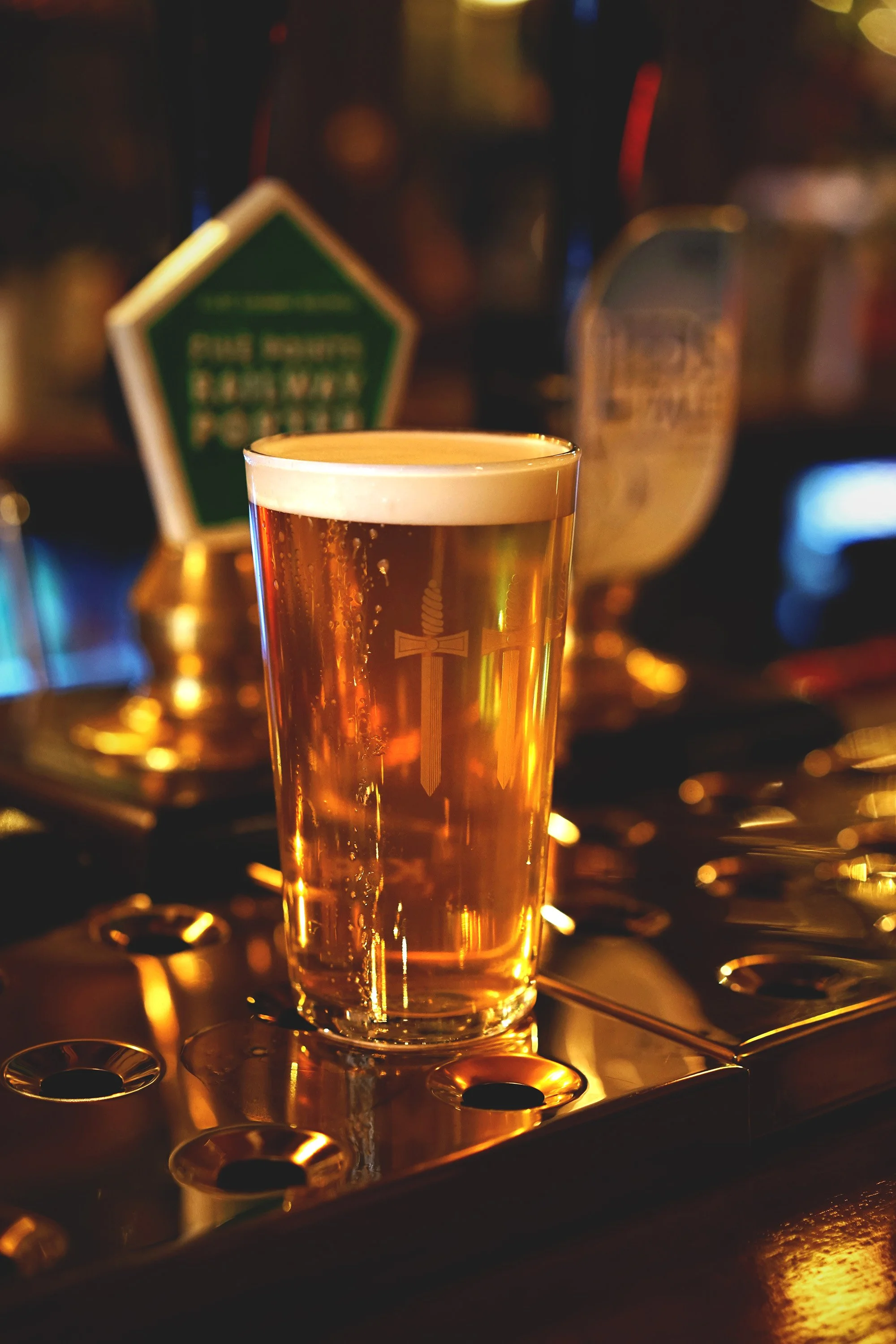
As for Steve, he added The Tetley—the famed former brewery and erstwhile art gallery—to his existing roster of eight pubs across Leeds in 2024. In addition to Kirkstall, he also runs Vertical Drinks, which distributes brands including Veltins, Westons, Aspall, Leeds Brewery, Harvey’s, and Allsopp’s to boozers across the North of England.
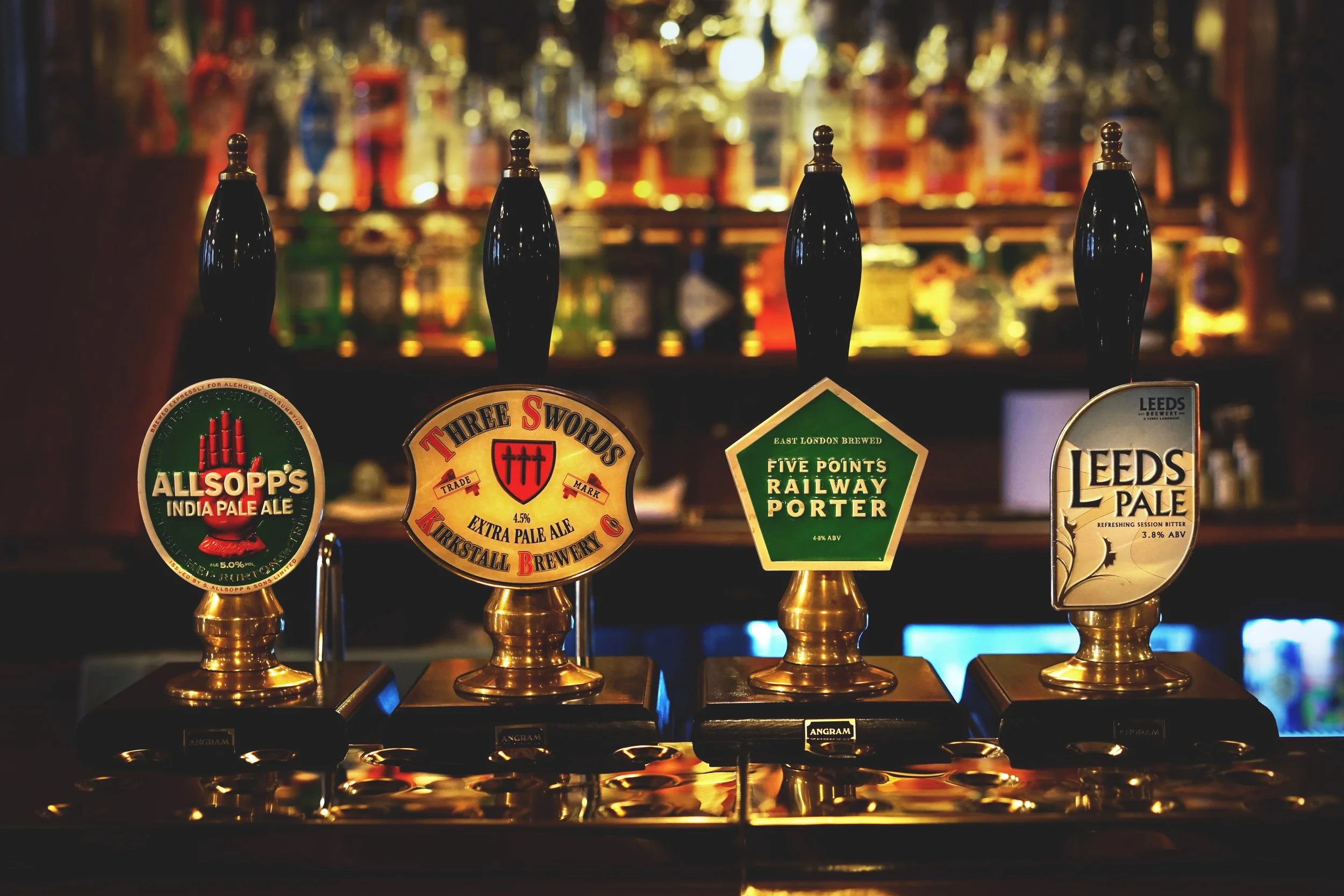
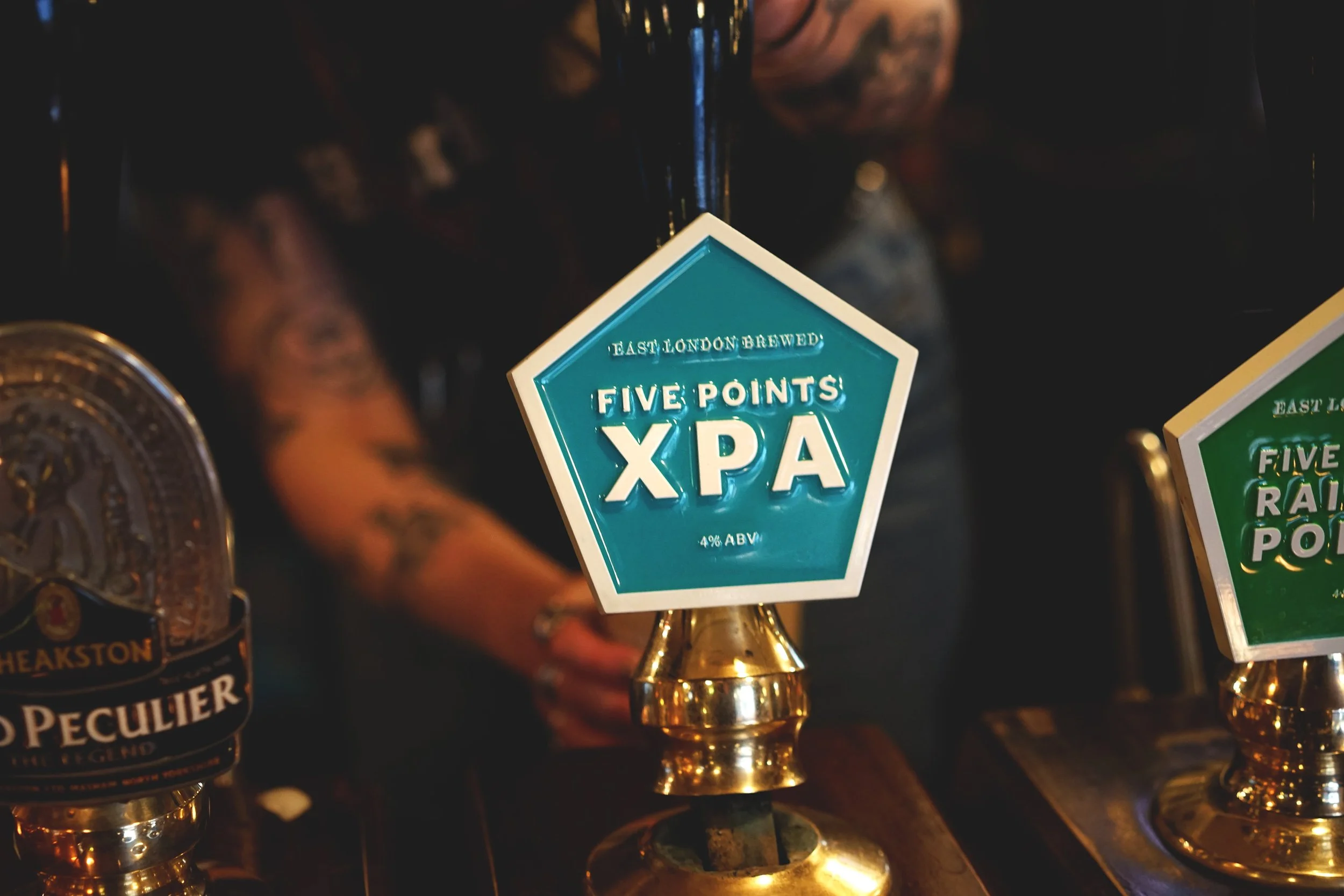
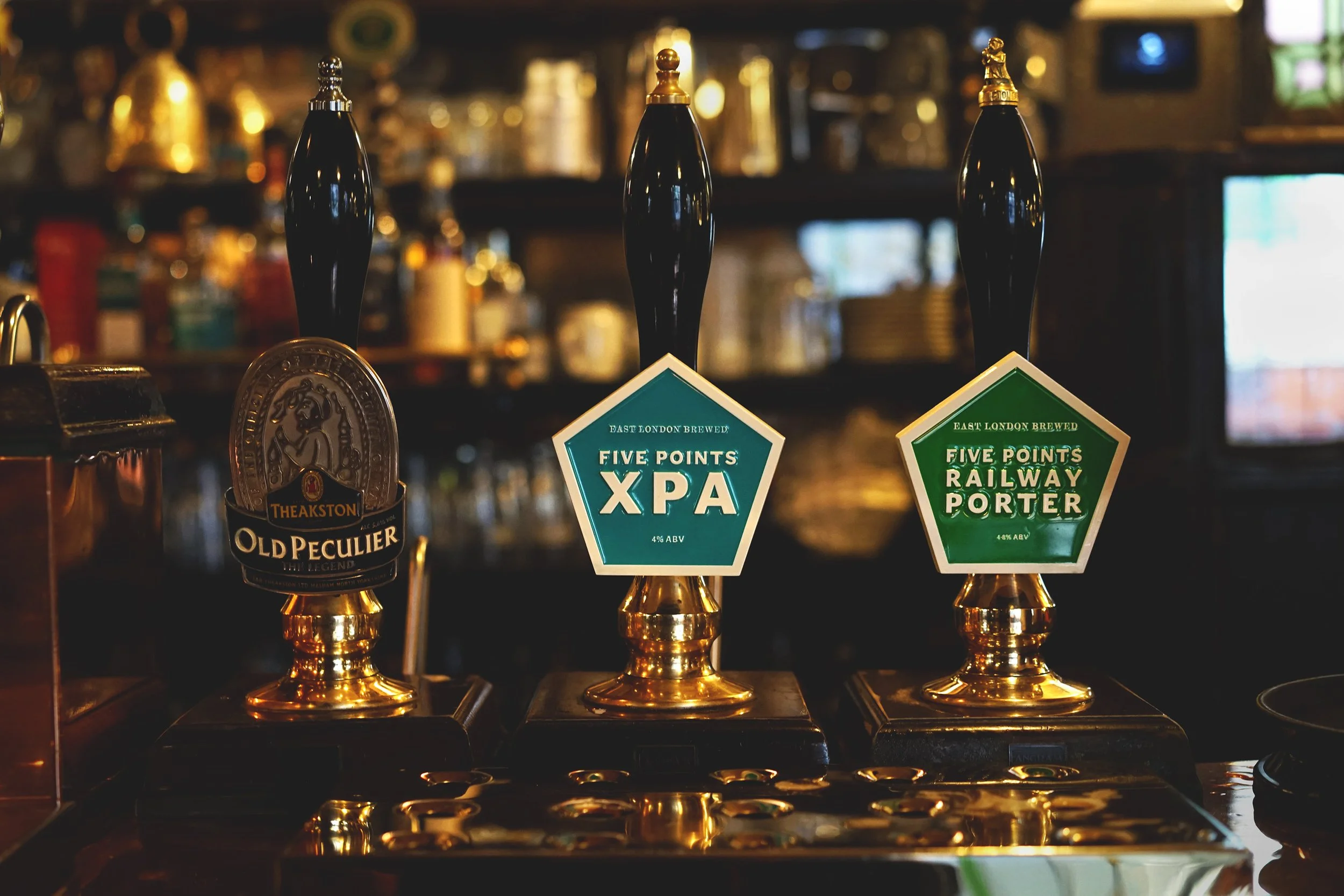
Vertical is the sole distributor of Five Points outside of London. As a result, the brewery’s presence in Leeds is far greater than in other Northern cities. In addition to being a fixture in Ed’s own venues, it’s a regular in Kirkstall pubs, and a relatively common option elsewhere, too. Lucky Loiners: Five Points has a superb cask and keg range that easily stands alongside its Yorkshire counterparts.
In turn, Ed is a key retailer of Steve’s beer. “We’ve always stocked and sold Kirkstall beers in our venues,” he tells me. “Kirkstall is a best-in-class independent brewer. Great beers, with a commitment to quality and integrity. We’ve always loved that about them.”
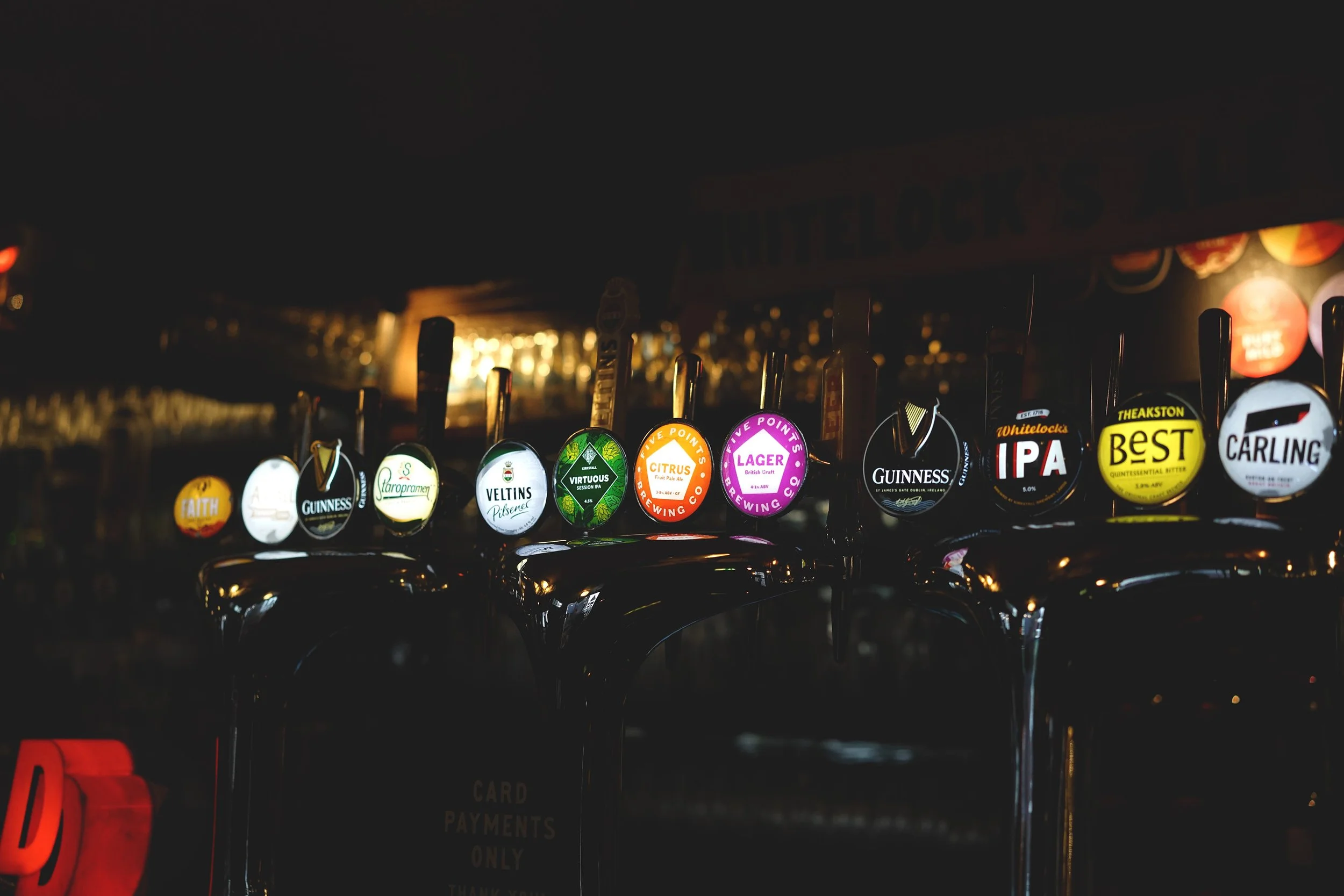
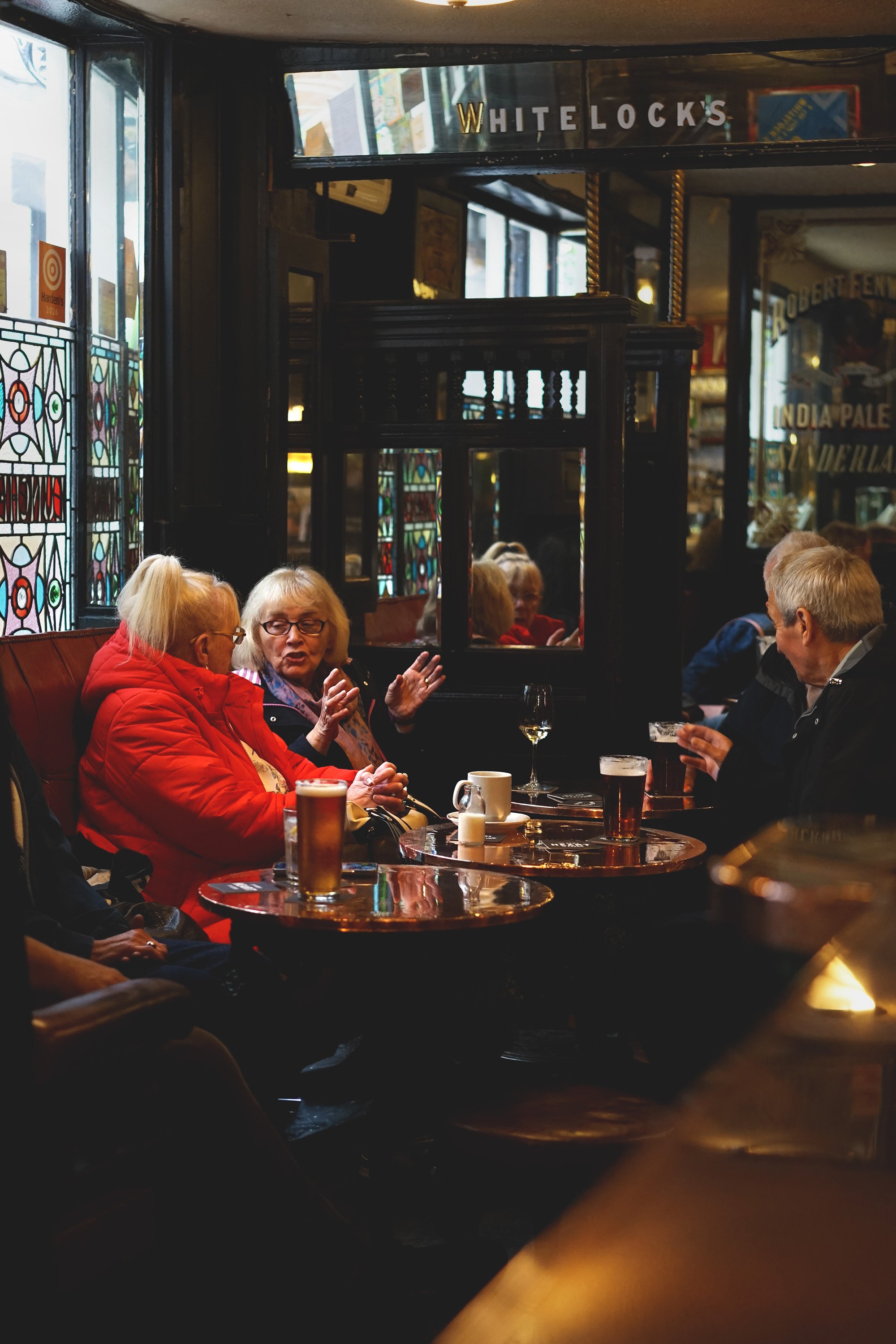
There’s a certain kinship in the way that Ed and Steve approach their hospitality venues—each focused on creating interesting, well-appointed spaces, with interior design that generally leans classic and cosy over austere and hip.
“Both Steve and I love pubs,” Ed explains. “We consider ourselves proud custodians of much-loved pubs. I have Whitelock’s, which is the oldest pub in Leeds, about 310 years old, Grade II listed. A real institution. Steve has the Cardigan Arms, which was another pub fallen on hard times, which was revived and relaunched by him and his team.”
When I chat to Steve several weeks later, he echoes Ed’s sentiment. “Ed and I have very similar opinions on brewing and retailing,” he says. “Kirkstall pubs are very traditional in design, but sell a modern range of beers. And Whitelock’s is doing that same thing.”
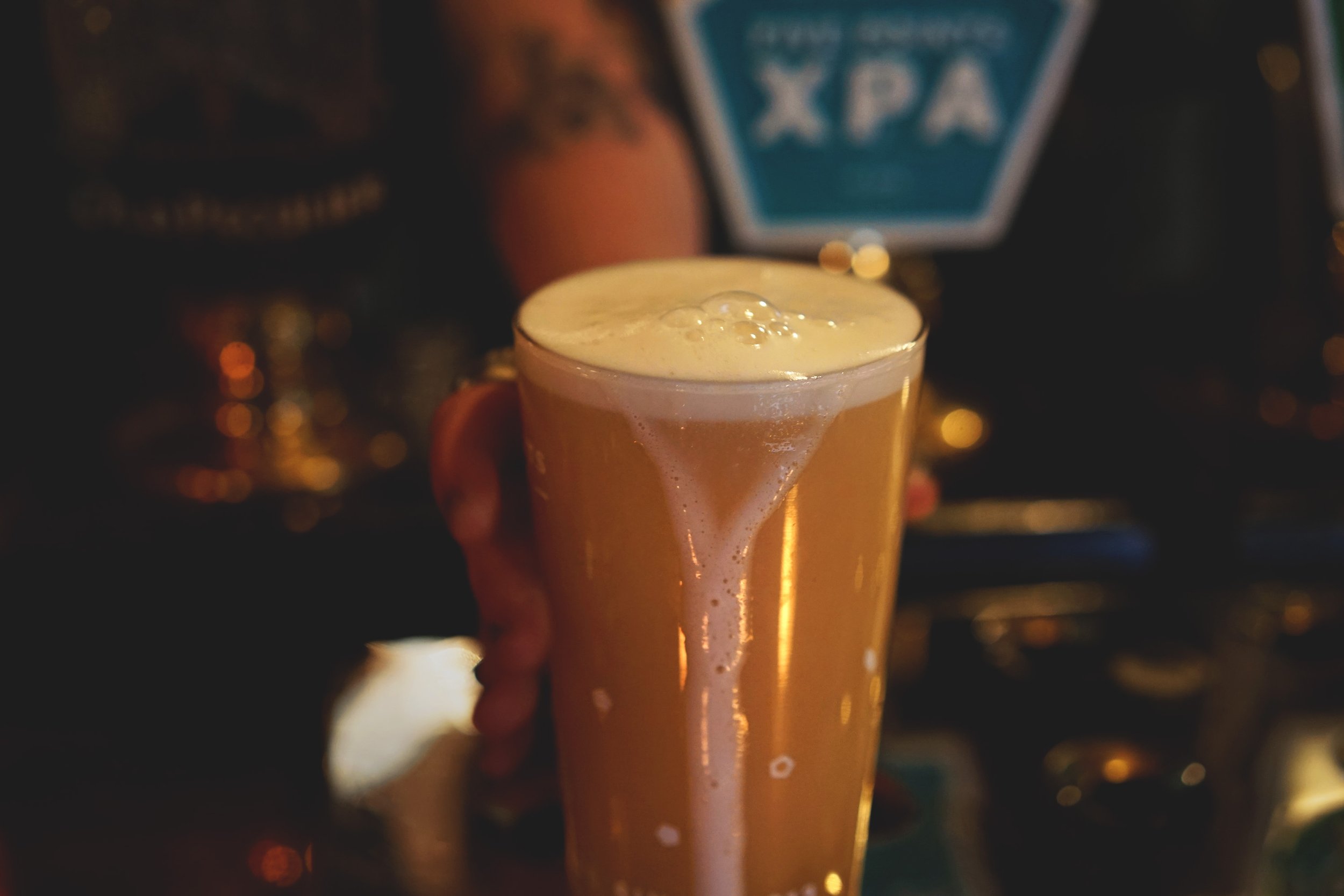
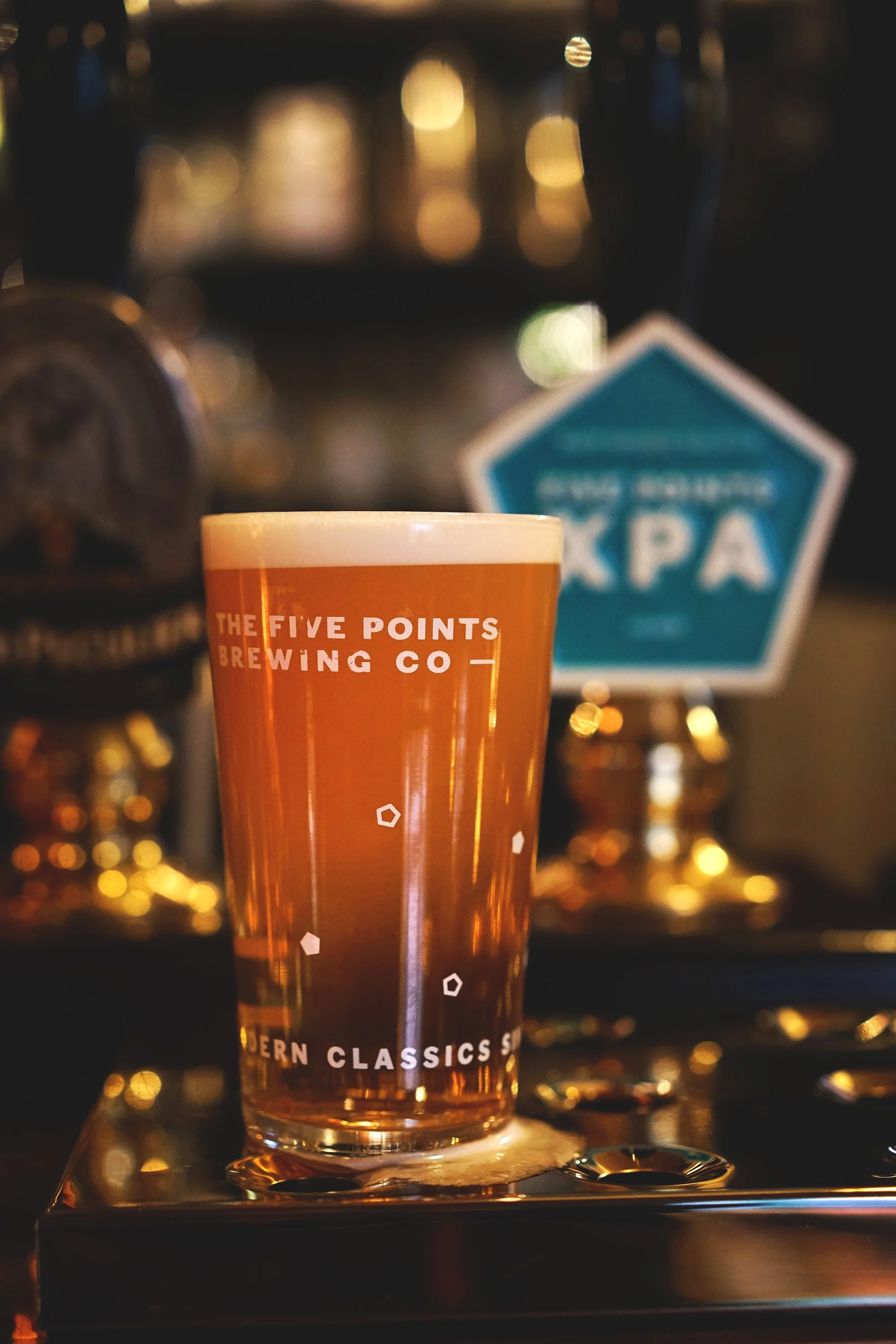
It’s no surprise that The Vic feels like a natural, almost inevitable collaboration. The buzz around its opening—alongside other high-profile launches, like The Highland Laddie, recently named Best Pub in Britain by The Good Food Guide—points to a boom time for Leeds pubs.
On a good day, these buzzy boozers do feel closer to the ’90s or 2000s than these distinctly un-roaring ’20s. But outside this select group, you could argue that Leeds, once at the U.K. vanguard for beer-forward venues and homegrown brewing talent, no longer has the range or diversity that once put it on the map.
***
To understand the influence and prevalence of Steve Holt and Kirkstall Brewery on Leeds’ contemporary beer scene, one only needs to take a pub crawl across the city centre.
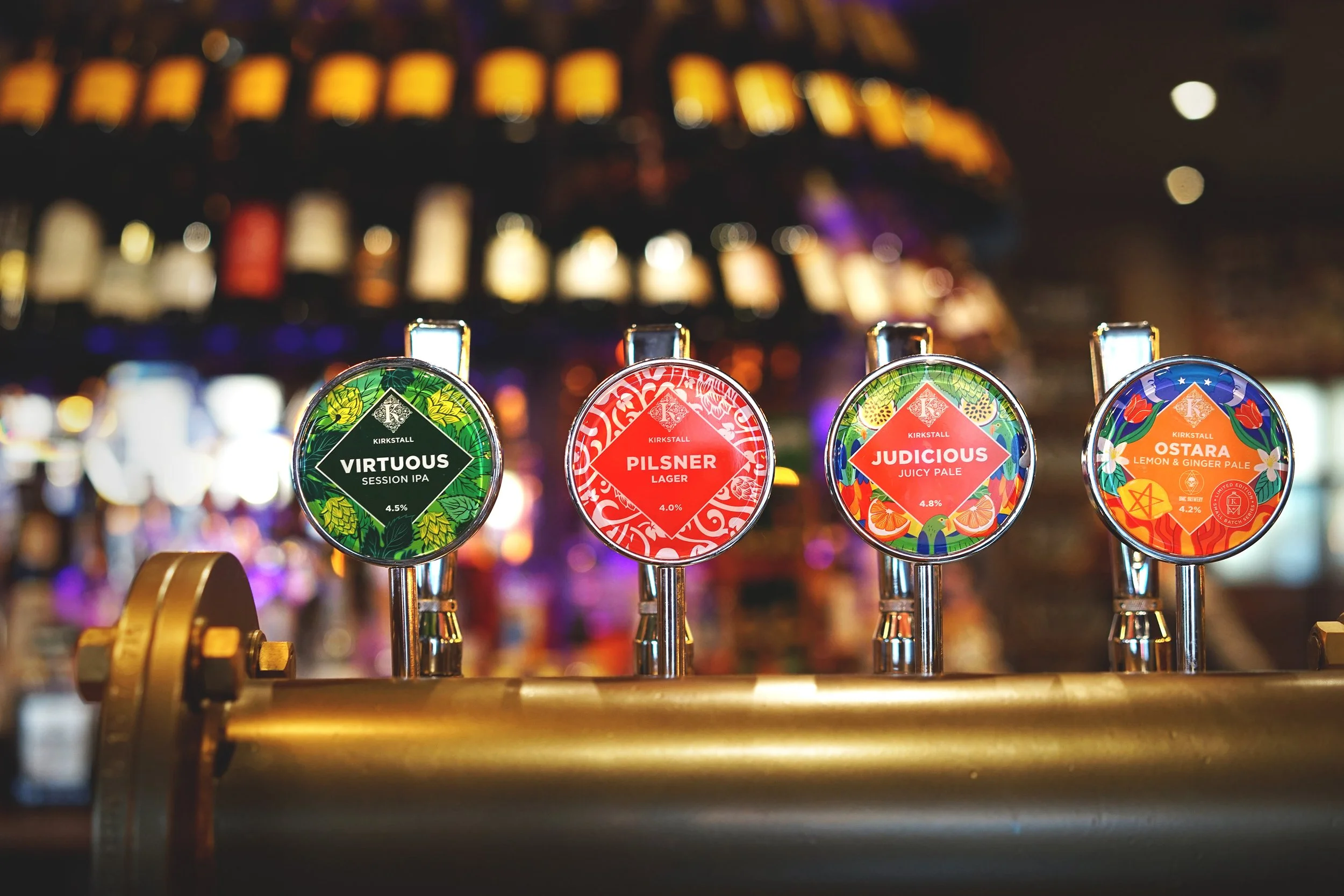
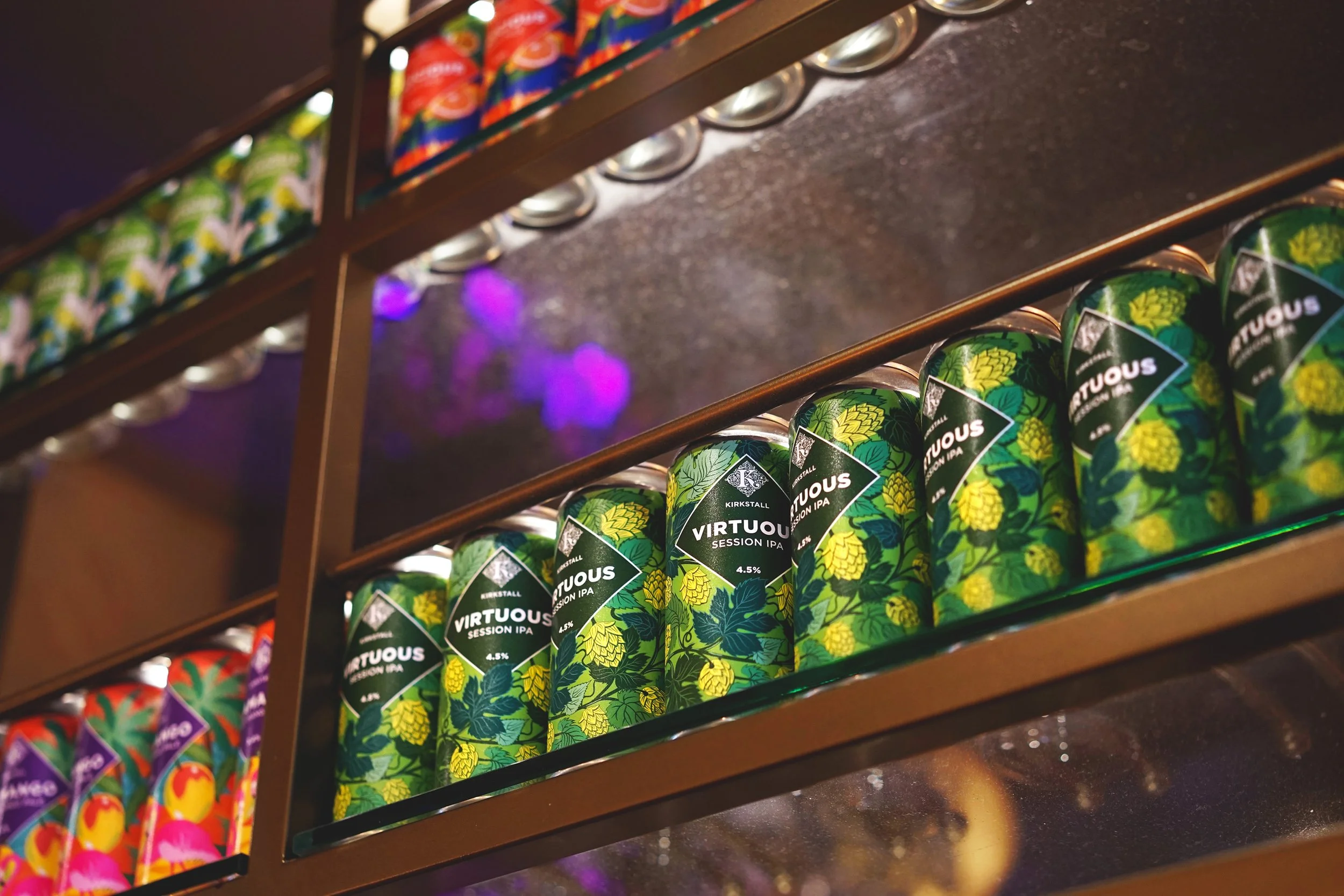
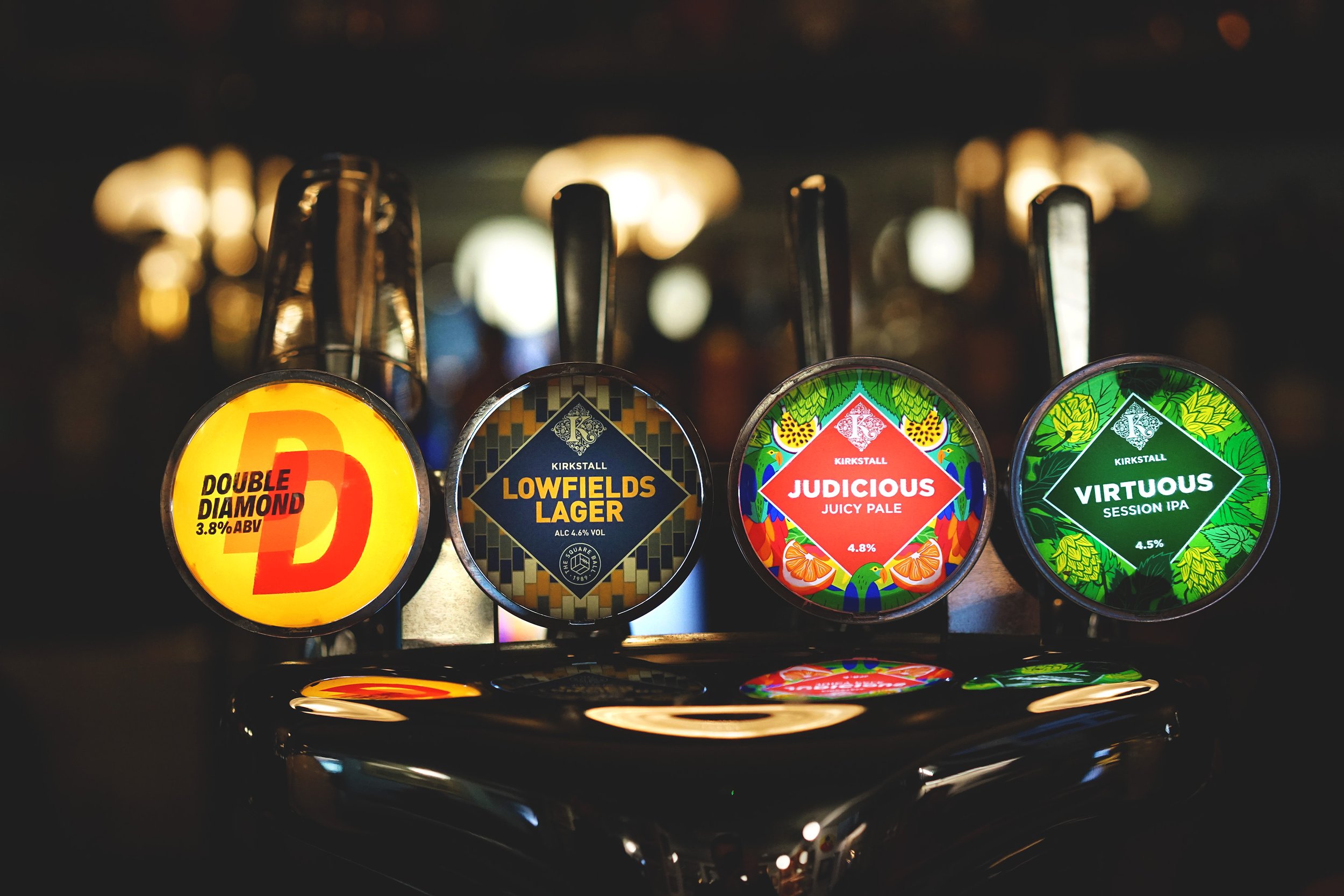
A good place to start is at the Hoist or The Good Luck Club, key hubs of the Wellington Place “finance district,” for a Kirkstall Pilsner or Virtuous Session IPA.
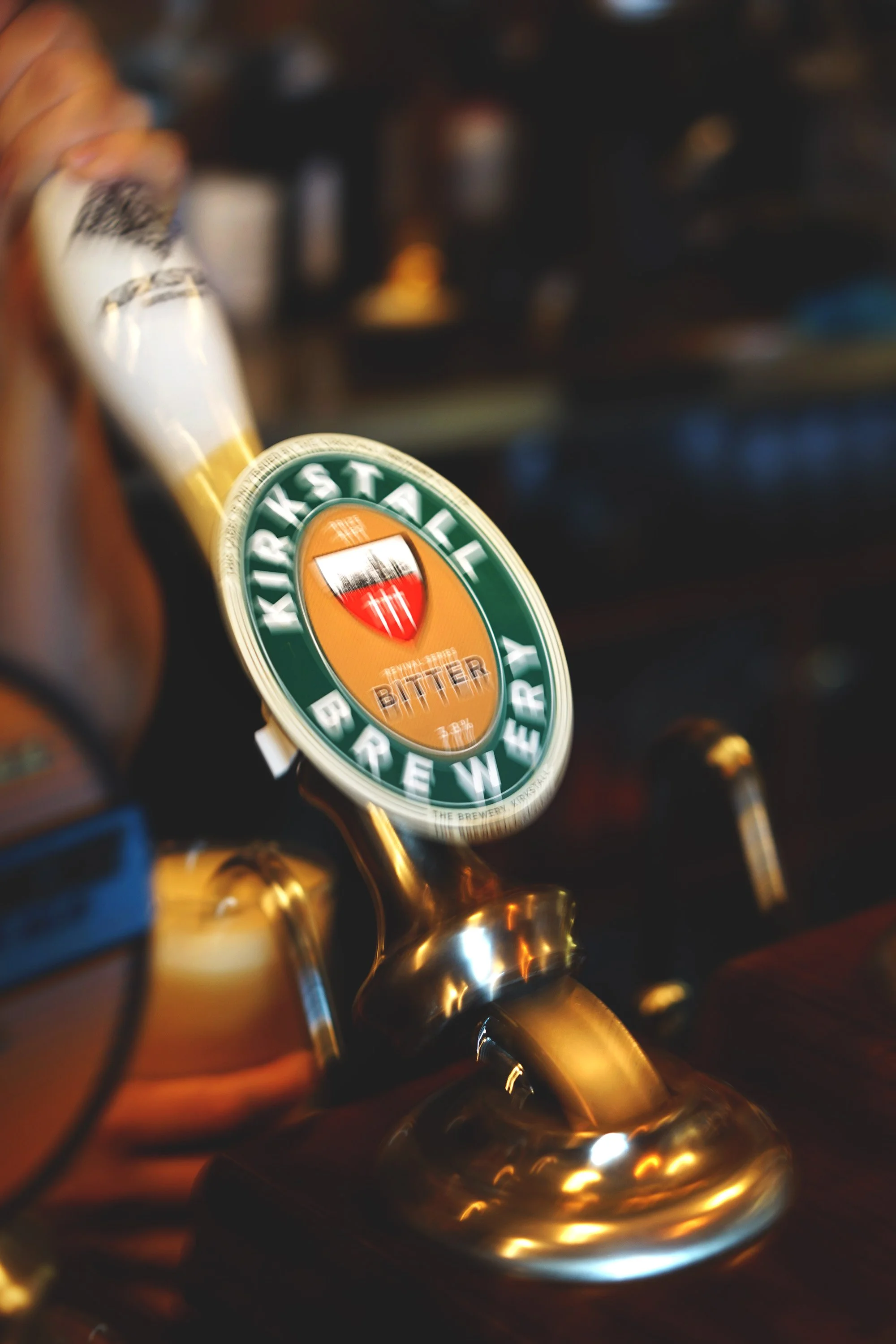
After this, the route forks. You can cross the river towards The Cross Keys, Midnight Bell, or Water Lane Boathouse, where Kirkstall’s beers regularly appear on the taps. Alternatively, head along Wellington Street to Green Room—the ever-expanding rooftop bar, nightclub, yoga studio and brunch spot—where several Kirkstall keg lines run permanently. The venue will soon launch an exclusive Kirkstall x Green Room 3.4% radler, designed to quench the thirst of punters on its heaving summer terrace.
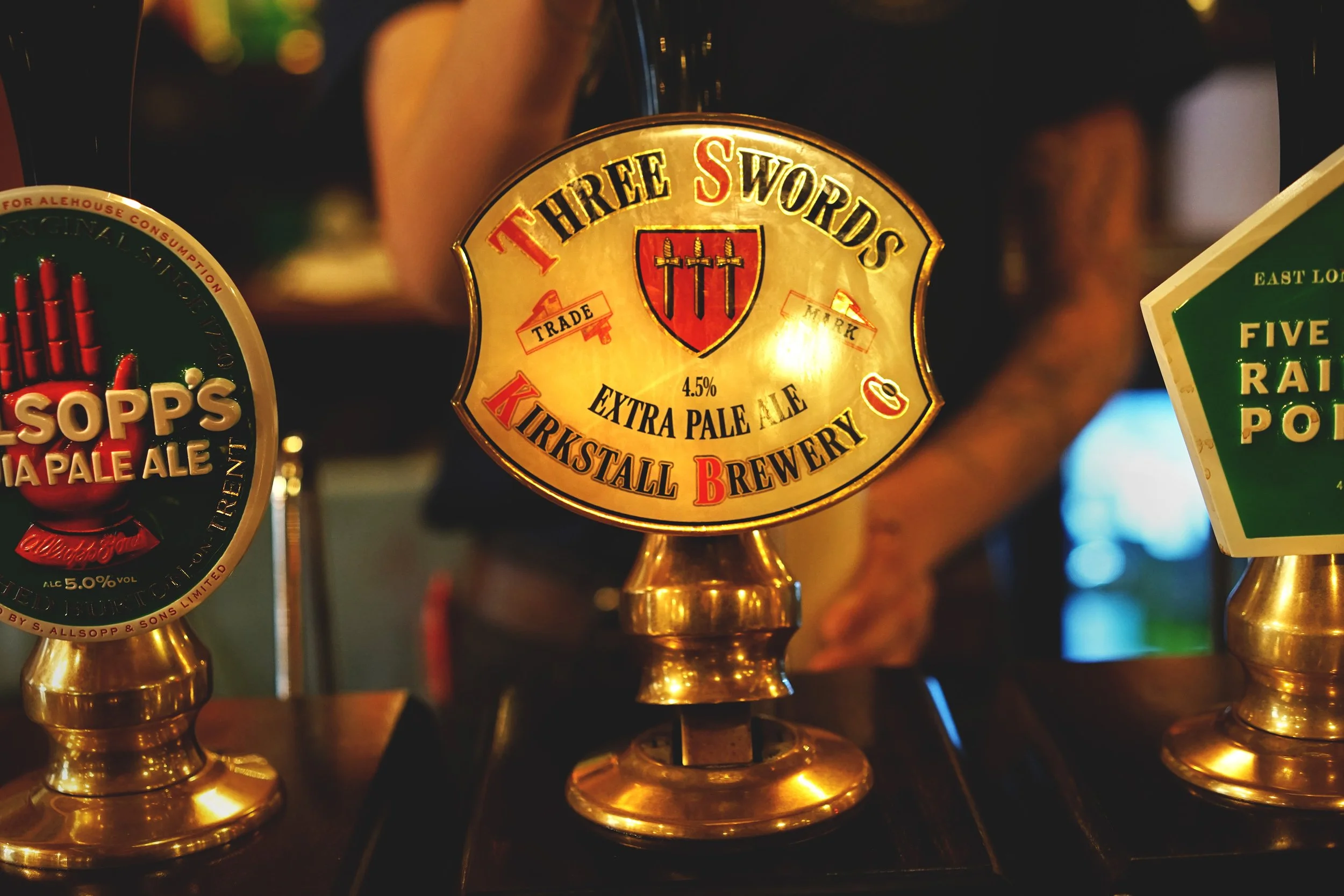
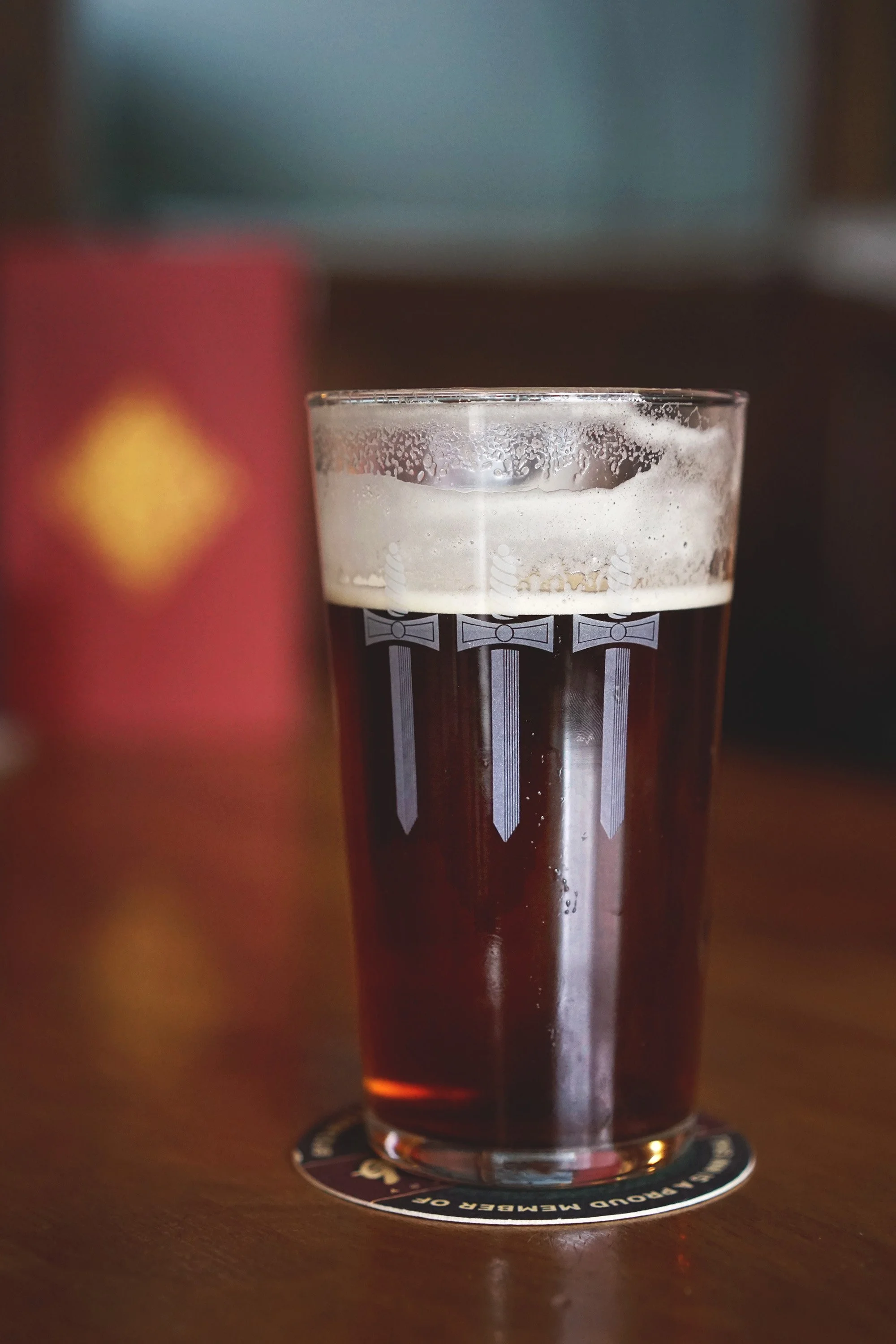
Next, head to Friends of Ham for Three Swords, Kirkstall’s flagship cask pale. Don’t be shy about popping into the Brewery Taproom for a Kirkstall Bitter before swinging by Whitelock’s for a pint of Kirkstall Pale.
Before long, you’ll arrive at Leeds’ magisterial Kirkgate Market, where you can soak up the hooch at the thali counter institution, Manjit’s Kitchen. It keeps two Kirkstall beers on tap permanently. From there, the eastern edge of the centre opens out towards the Calls, the city’s docks, and the suburbs. Settle in for the evening at essential Leeds boozers like The Adelphi or The Templar Hotel, where Kirkstall beer isn’t hard to find. Or head to the Brewery Wharf Tavern or Fearns for a sundowner of, ahem, Kirkstall.
That’s a lot of Kirkstall. And I wasn’t even including the 10 Kirkstall venues across the city. Nor was I taking into account brands distributed through Vertical Drinks, for which you could probably trace an entirely separate and equally comprehensive route.
““Kirkstall is a best-in-class, independent brewer. Great beers, with a commitment to quality and integrity.””
What sounds like a cautionary tale of beer monopoly is complicated by the fact that Kirkstall’s beer is excellent. Virtuous is an exemplary post-work summer pint for those who prefer a more complex alternative to mass-market lager and “juice bomb” pales. My foaming pint of Three Swords, received with practically trembling anticipation after a hard day’s volunteering in Meanwood Park a few years ago, remains one of my all-time standout Leeds pints. Dissolution is a gutsier, darker IPA than its 5% ABV suggests, a must-have on cask and a real treat in the bottle.
Why, then, does something feel a bit off? Why are there grumblings about “the Kirkstall Empire” on Reddit? Where are the freehouses of Leeds, offering the range that the city was once famous for, and which now make nearby Sheffield and Manchester more interesting beer cities in 2026? Why is there a consortium of independent Leeds breweries trying to promote local brewing and get onto city-centre tap lists when a local indie brewer runs the show already?
In Kirkstall Brewery, does Leeds have too much of a good thing? And what does this mean for the rest of the city’s small, independent breweries?
***
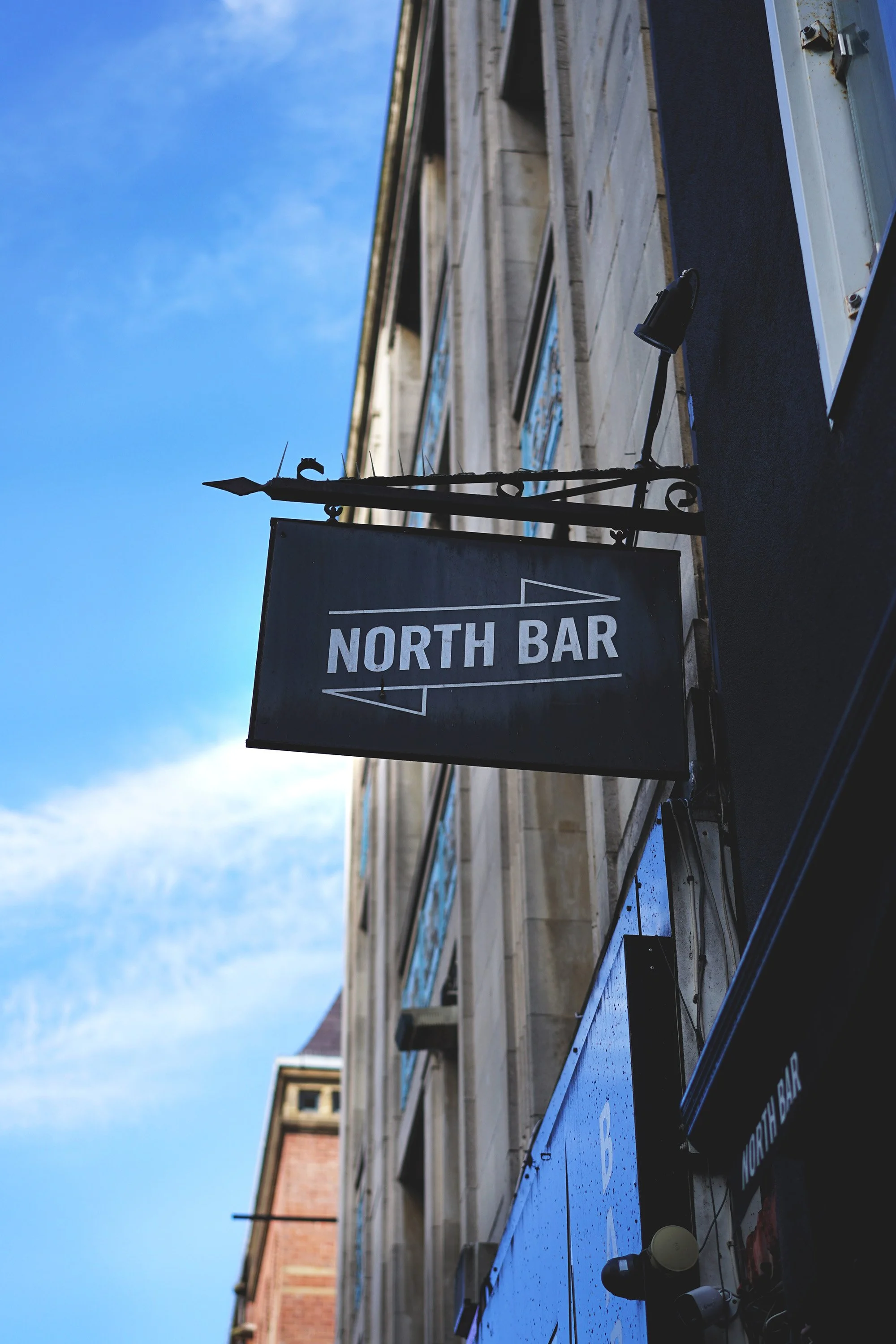
To understand the beer scene in Leeds in 2026, we need to dig into its roots. Few can tell that story better than John Gyngell, the co-founder of North Bar—arguably the first bar in the country to prioritise modern, independent breweries; hard-to-find imports; and niche brews over mass-market options.
John and his business partner, Christian Townsley, met behind the bar of the legendary Town and Country Club venue, now Leeds’ O2 Academy, and decided to go it alone.
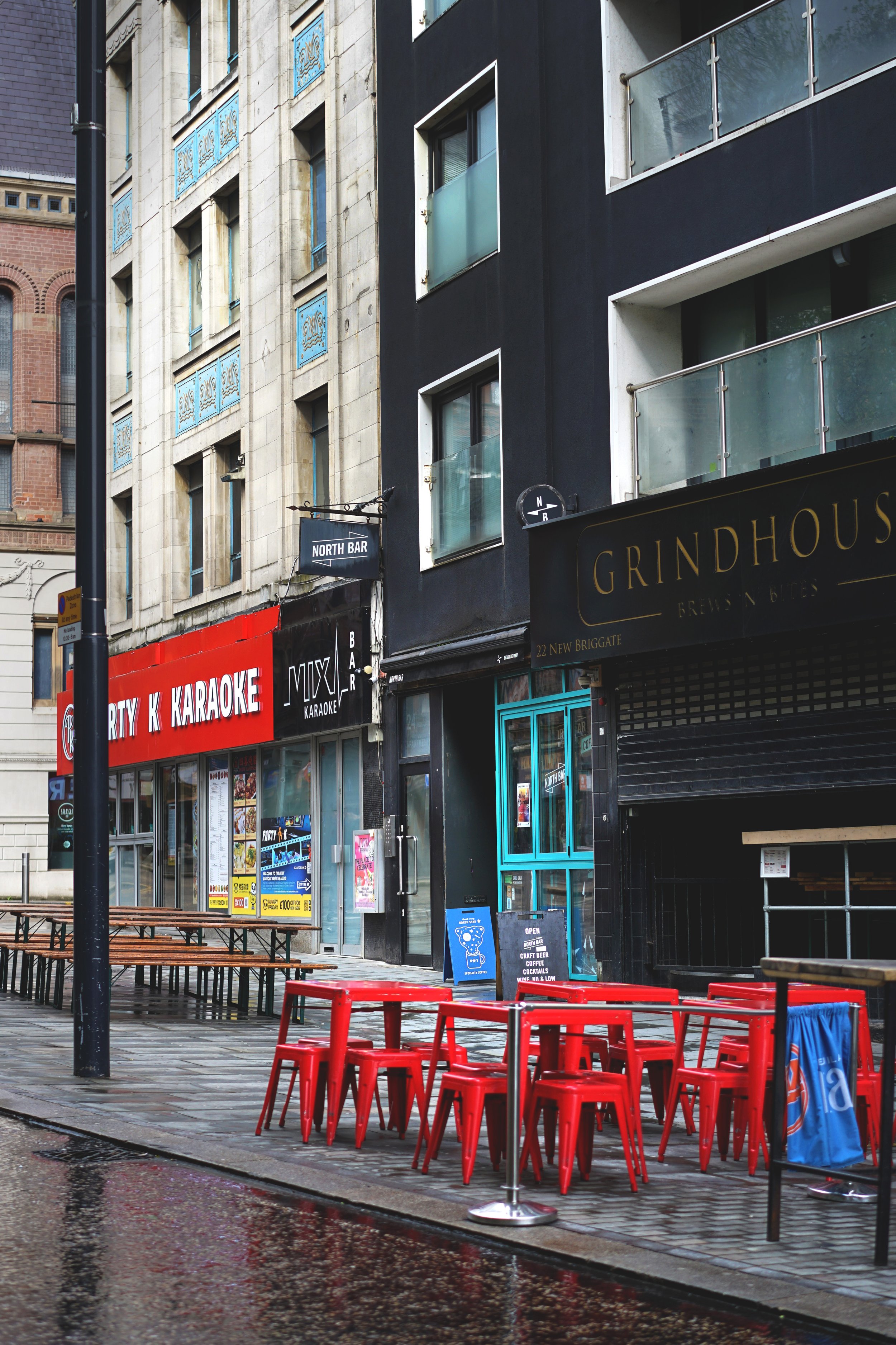
“If you’re 25 and stupid, you think you can do anything,” laughs John as we chat inside the OG North Bar on New Briggate. “That’s how places still get opened. We didn’t open thinking we were going to be a beer bar … we just wanted to be a better bar than we were last week. We started with Foster’s, Guinness, and Kronenbourg. That was the world then.”
The tap list might not have been too different from the pubs down the road, at least initially, but the ethos was. North Bar offered a cosmopolitan edge (and an espresso machine in a bar, which was practically unheard of in those days) in a city centre dominated by alcopops and kebab shops.
But soon enough, the big beer mainstays were rubbing bungs with exciting Belgian and German imports, including the city’s first-ever barrel of Erdinger. Next came Leeds’ inaugural kegs of Sierra Nevada and Brooklyn Lager, supplied by Vertical Drinks, no less. John and Christian even dared to cross the forefathers of today’s G-splitting community when they subbed Guinness for Elland 1872 Porter.
Not all the punters were happy—some customers apparently refused to speak to John after some decisions—but the risks were eventually rewarded with a core of regulars drawn by the sense of discovery, insight, and curation you might expect from a good record shop.
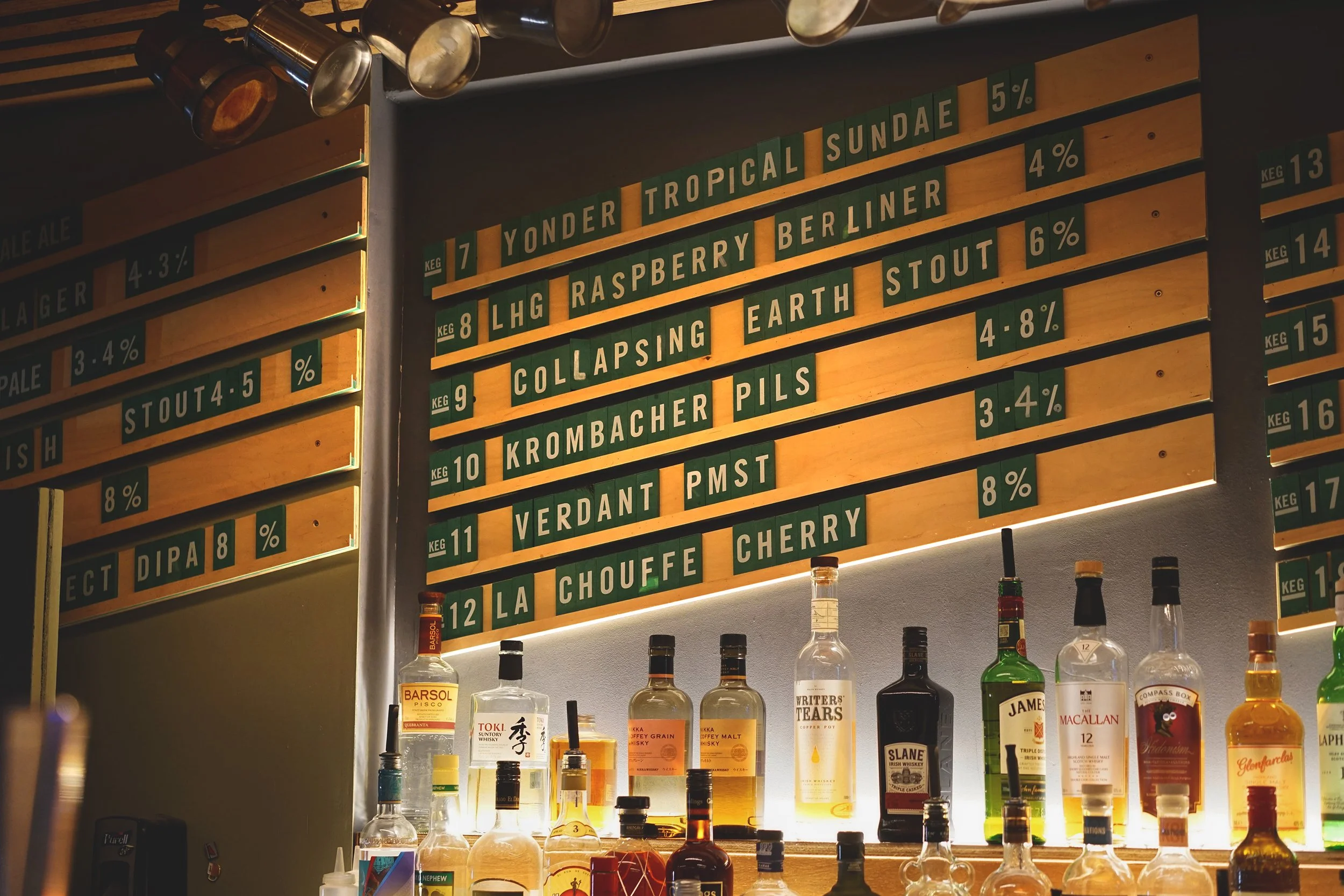
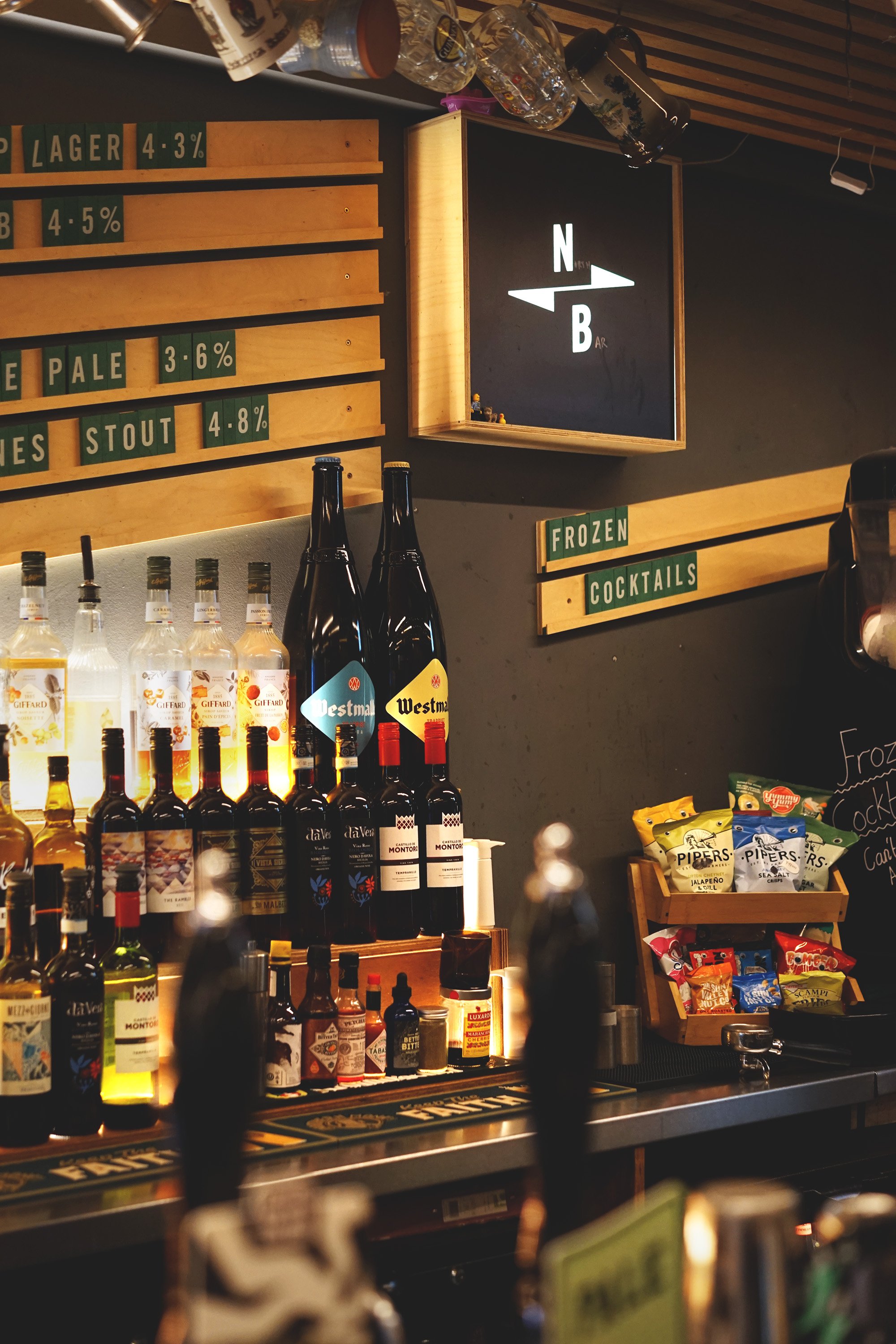
The next two decades would see North—alongside a host of new venues, including Friends of Ham, Bundobust, and Ed Mason’s reopened and rejuvenated Whitelock’s—usher in a new era of unique and highly discerning Leeds beer venues. They were joined by a host of eagle-eyed importers like Vertical and James Clay; bloggers like Zak Avery, Leigh Linley, and Gareth Pettman; and retailers like Beer Ritz and (the now-closed) Little Leeds Beerhouse. Here was a thriving, organic ecosystem in perhaps the greatest city for independent beer in the U.K. at the time.
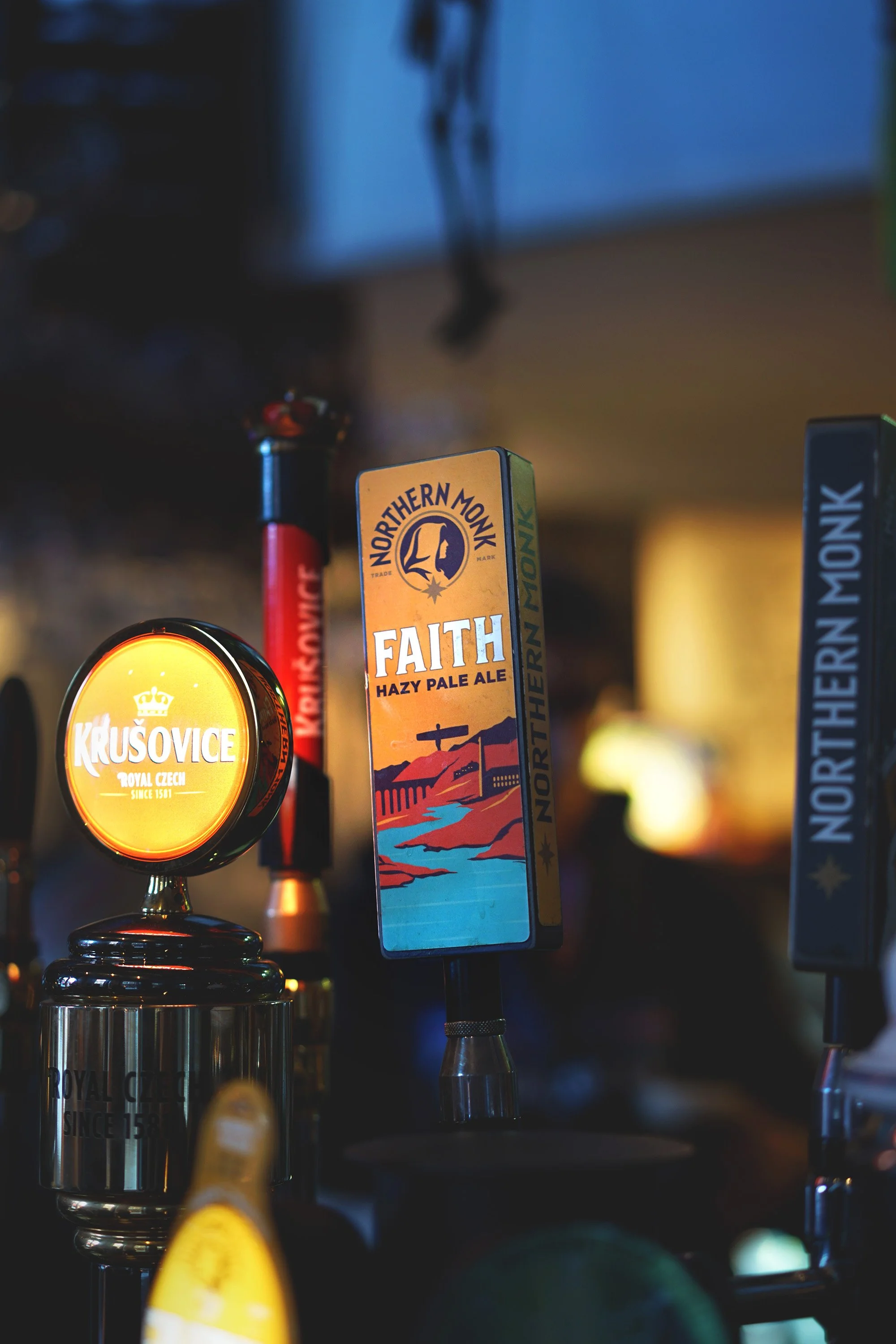
By the early 2010s, a new generation of upstart local brewers was eager to pick up the mantle from Tetley’s, which was finally closed by owners Carlsberg in 2011. In 2015, North Brewing Co joined Northern Monk in Leeds, Vocation Brewery in Hebden Bridge, and Huddersfield’s Magic Rock Brewing. They took the fight to the likes of Carlsberg, Molson Coors, and John Smith’s, who had long dominated the taps in Yorkshire’s West Riding.
“Leeds had history, heritage, independent free trade, and a collaborative energy at exactly the right time,” recalls Russell Bisset, the founder and managing director of Northern Monk. “There was a real spirit of collaboration—borrowing yeast from Magic Rock, everyone helping each other out. That supportive ethos was there from the get-go.”
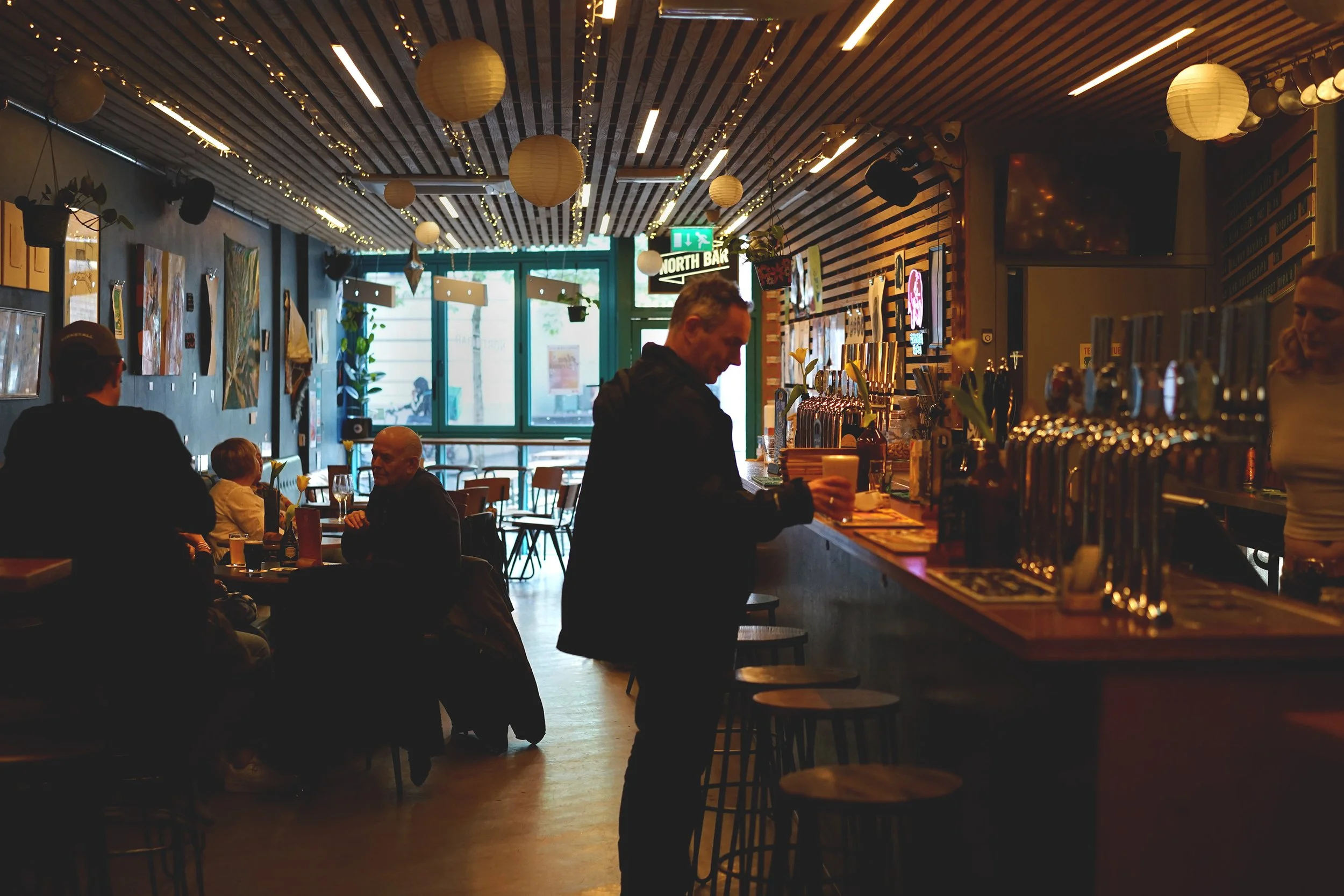
John echoes Russell’s enthusiasm. “It was thrilling,” he says, simply. “Full of change.”
But as North Brewing grew, it began to dilute a winning formula. Its beers increasingly featured on North Bar’s taps, at the expense of the extensive range of indies and imports that had once made North’s name.
““We didn’t open thinking we were going to be a beer bar… we just wanted to be a better bar than we were last week.””
To some staff and punters, these new beers were seen as interlopers. But John insists the approach was cautious, and driven by quality, rather than profitability.
“We didn’t go straight in with North Brewing,” he says. “We eased it in. We made sure the beer was either as good or better. But some of the staff were really sceptical about the brewery. They said North beers were only on because they’re owned by the same people.”
As far as I can tell, John’s metrics for “as good or better” seem governed just as much by personal taste and anecdotal customer preferences as anything else. I even detect a hint of triumph as he recalls a victory in an informal sales battle between North’s Transmission IPA and Magic Rock’s revered Cannonball.
“People were saying Transmission tastes better! We had the first Cannonball tap in Britain, but we were like, ‘Right, we can get rid of that now.’”
By the late 2010s, North Bar was functionally more a North Brewing taproom than a “beer bar” in its own right. John and Christian continued to expand, operating more than 10 venues across Yorkshire, Manchester, and Birmingham at the business’s height. But expansion left it exposed when Covid-19 hit, followed by rising energy costs, inflation, and broader shifts in drinking habits. North Brewing Co eventually entered administration.
“We never had that luxury of private equity or family money,” John explains. “We were profitable for nine out of 10 years. We just didn’t have the cash to survive the one year we weren’t.”
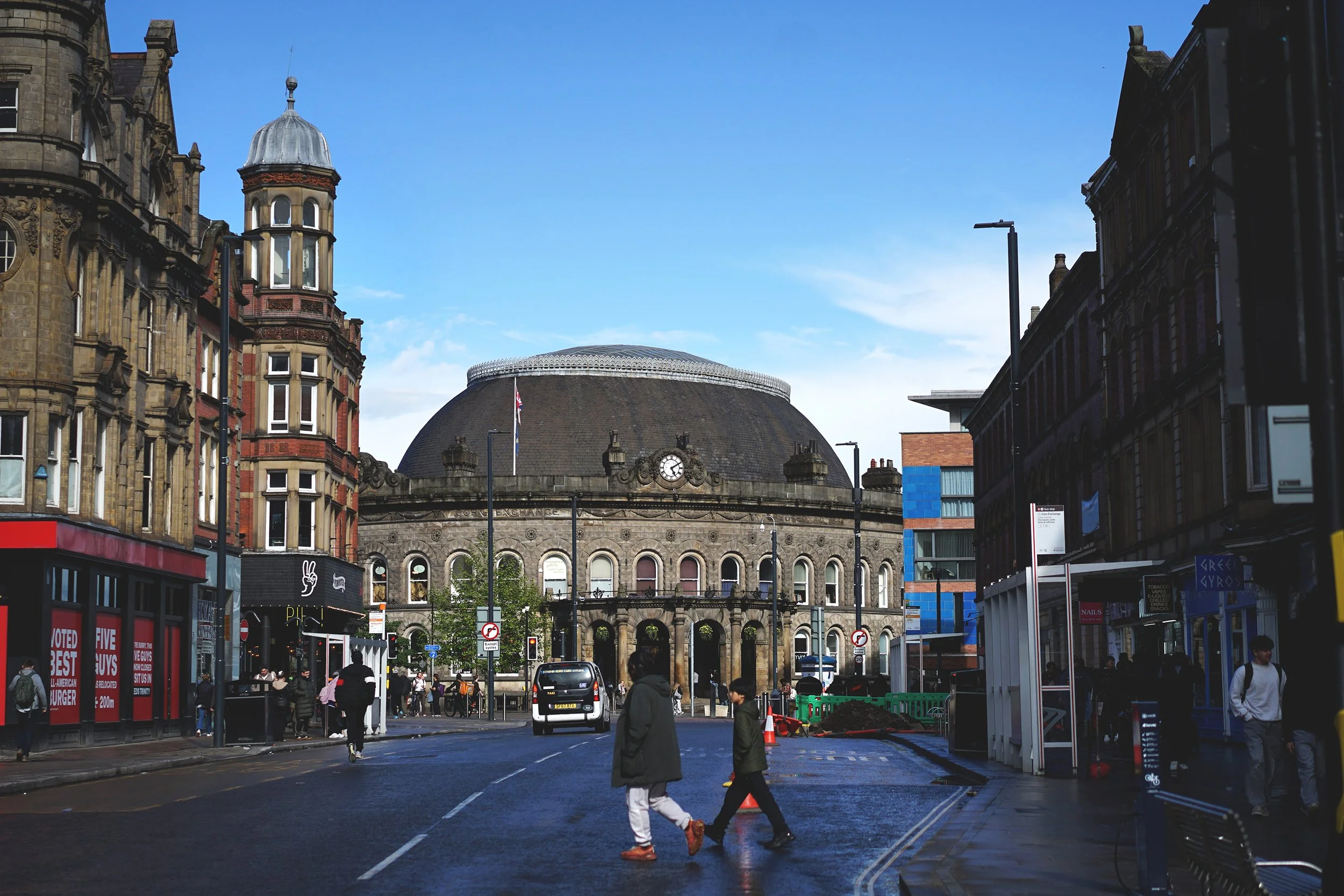
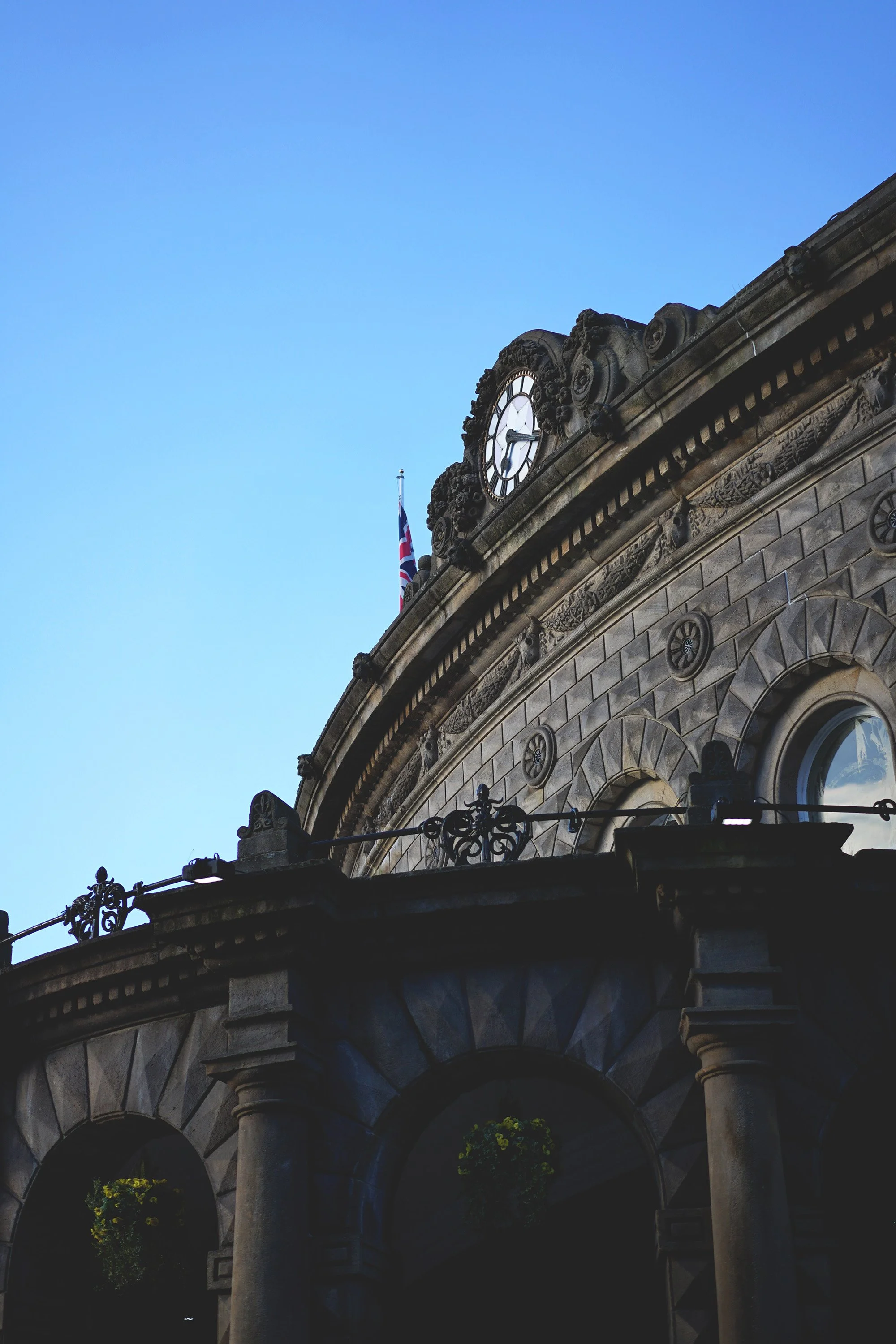
What happened next was messy. Following administration, North Brewing Co’s assets were acquired by Kirkstall Brewery. Shortly afterwards, the North brand and some intellectual property were sold on to Keystone Brewing Group, a portfolio of regional beer brands owned by investment firm Breal Capital.
Keystone had earned a reputation for “picking over the assets,” as Glynn Davis of Beer Insider put it, of struggling but beloved Yorkshire breweries, including Magic Rock and Black Sheep. As a result, North had expressly, forthrightly, ruled out any deal with Keystone.
“Pre-admin, we worked very hard to keep out of the clutches of Keystone,” John says. “Even signing a trading agreement for them to back off and let us do the deal with Kirkstall. So then 10 months later, when Kirkstall then sold North to Keystone, it was pretty galling.”
The outcome left North’s estate divided. John and Christian retained control of several bars, including sites in Yorkshire and Manchester. North’s Springwell brewery remained with Kirkstall, while the brand now belonged to Keystone. Needless to say, it was a lurching ride for staff and customers.
“We underestimated the damage we did taking customers on that journey,” John admits. “Because we’ve never been able to tell them exactly what happened. There’s confusion over who owns who—Kirkstall owning North, North sold to Keystone, Keystone brewing North. No one really knows.”
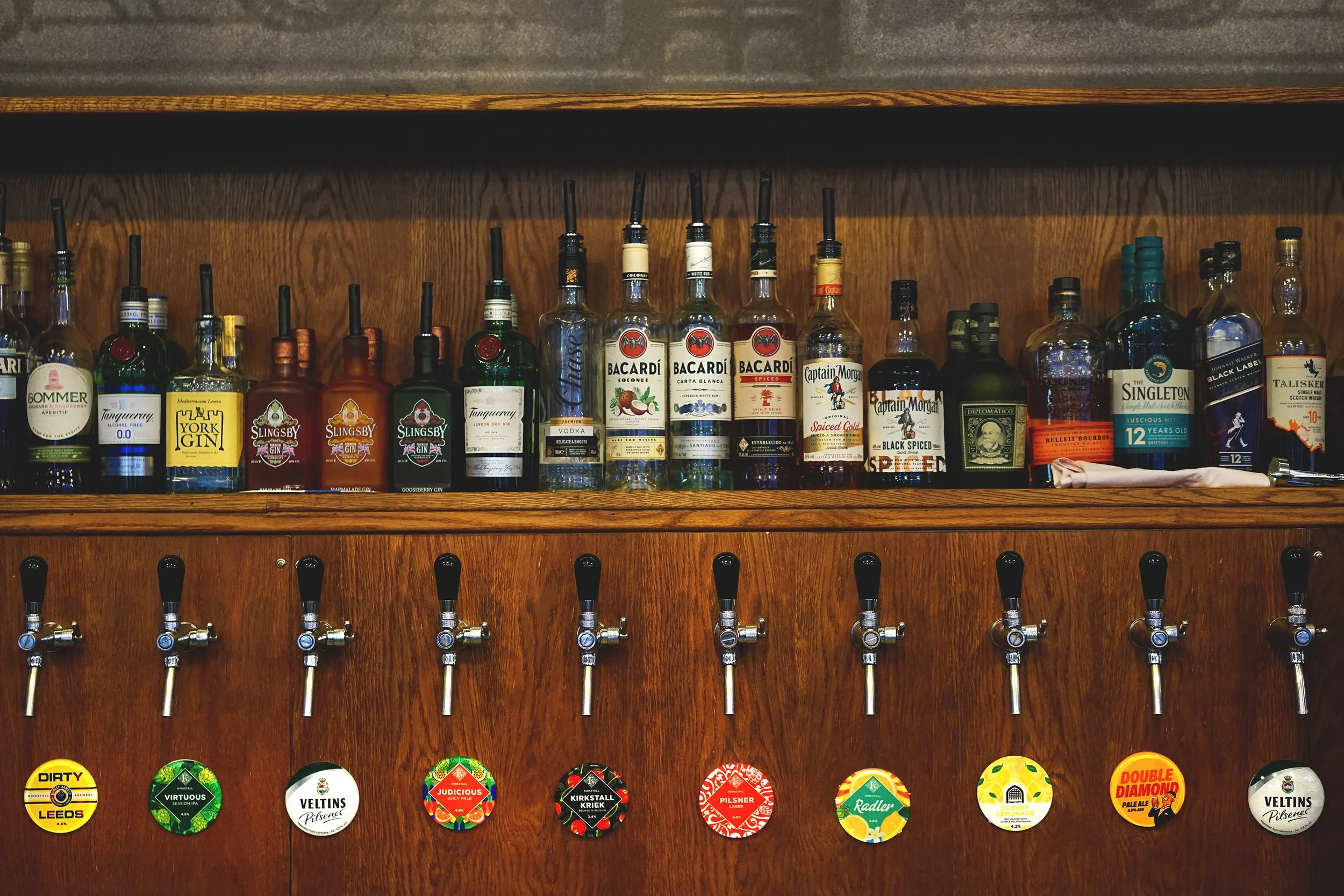
Nonetheless, John sees the North saga as part of the cynical nature of business. “Everything’s cyclical. Big swallows small. Then big sells to bigger. Then bigger eats itself,” he explains. “I’ve had conversations with ridiculously wealthy individuals who think they can play the craft game and think they can buy up a cool craft brand—but the moment that happens, the cool craft brand is worthless.”
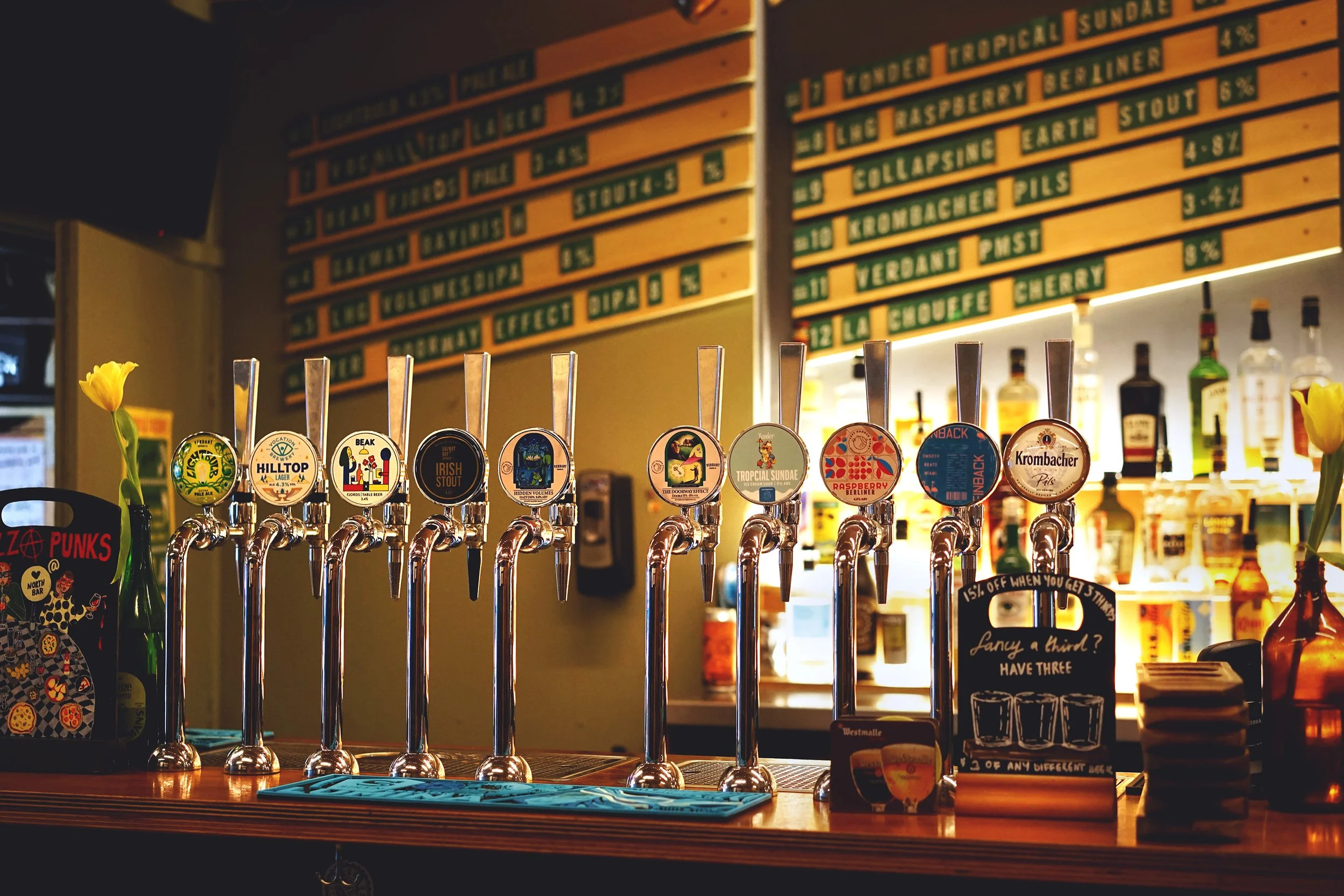
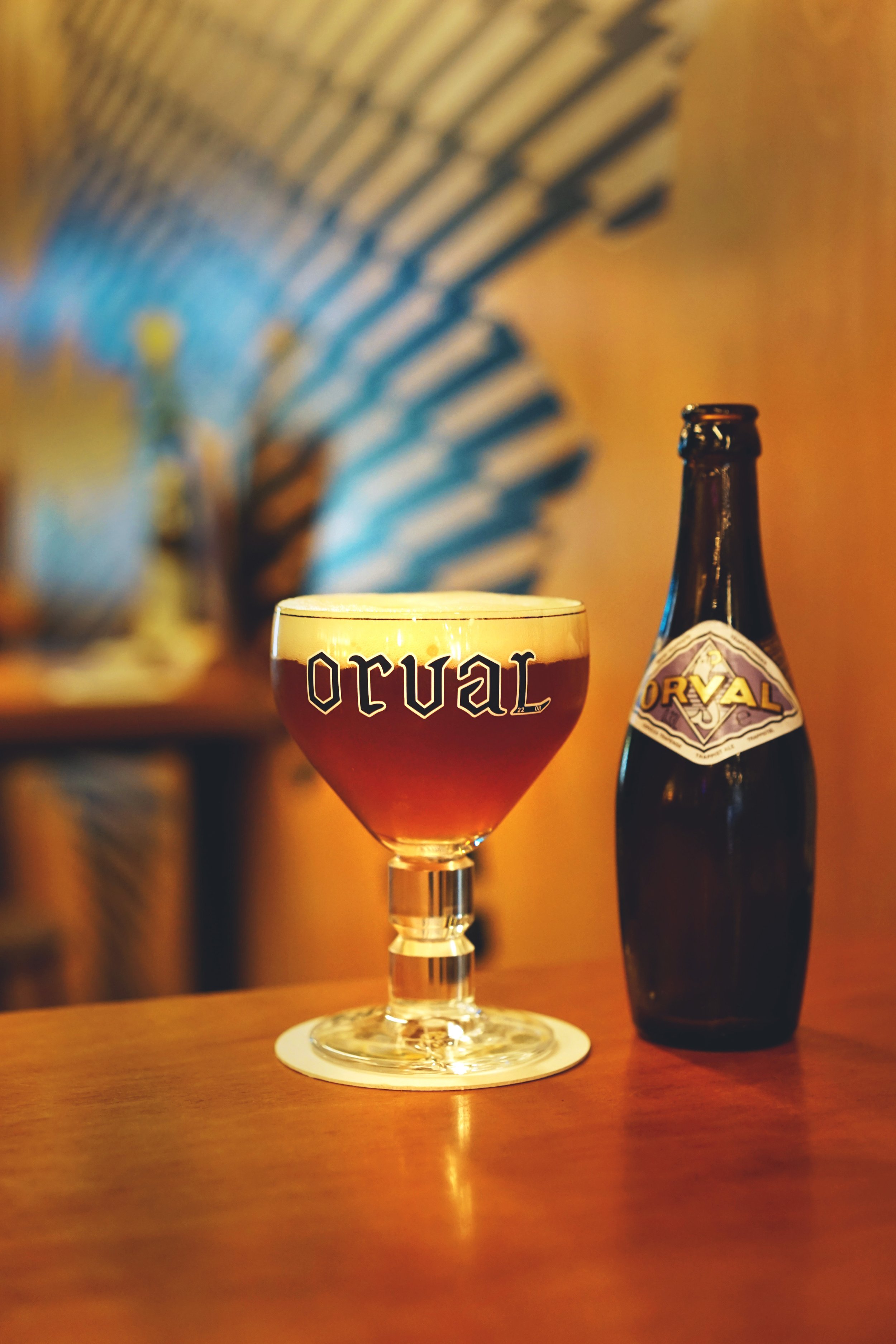
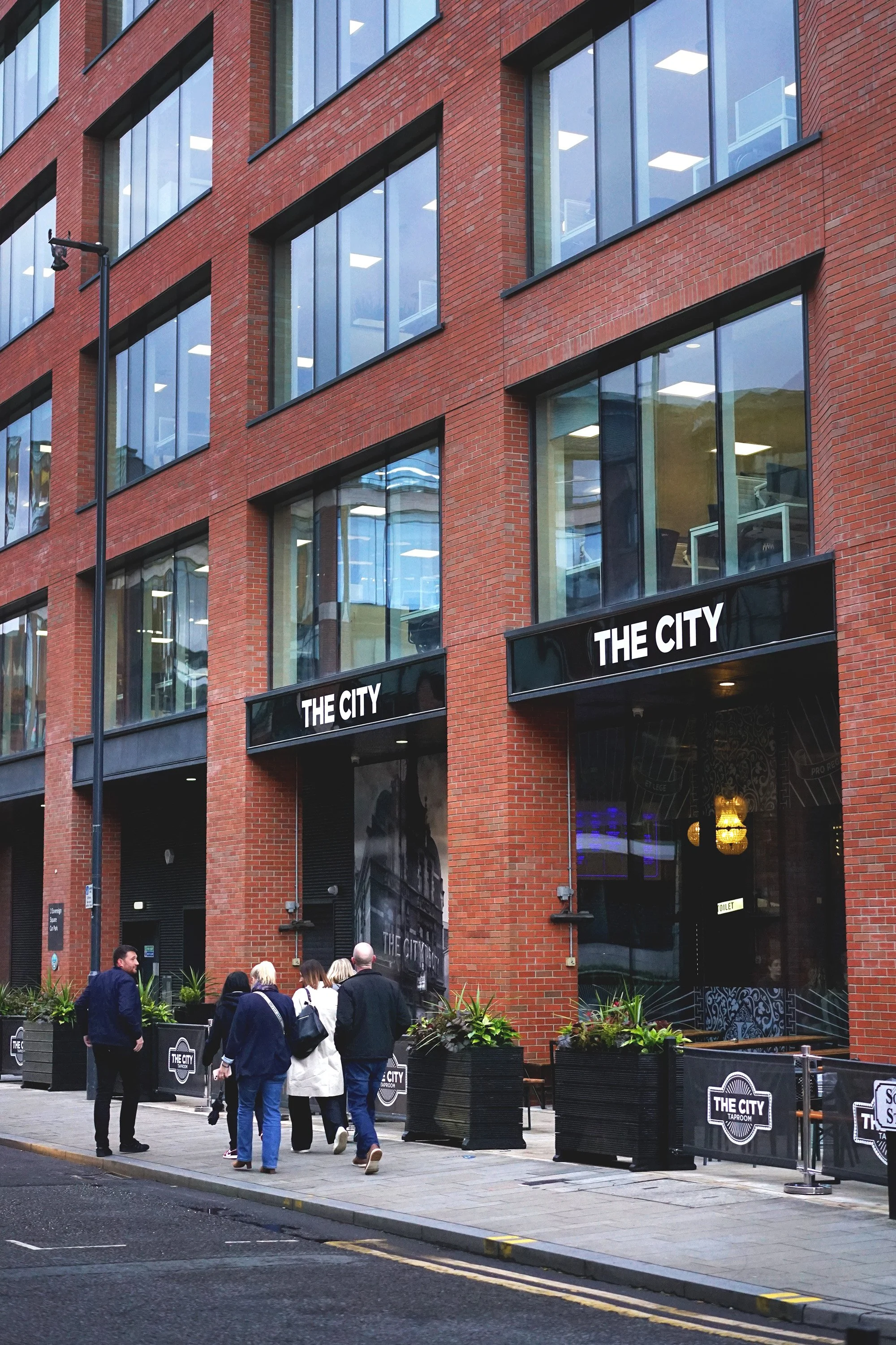
Back at North Bar, the taps now reflect something closer to its earlier, pre-brewery incarnation: a broad mix of imports and independent breweries, with a fridge full of Trappist beers. There isn’t a single North Brewing Co beer for sale. Meanwhile, the former North Taproom on Sovereign Street—one of the venues John and Christian seemingly lost in the buyout saga—is now a Kirkstall venue, known as the City Taproom.
***
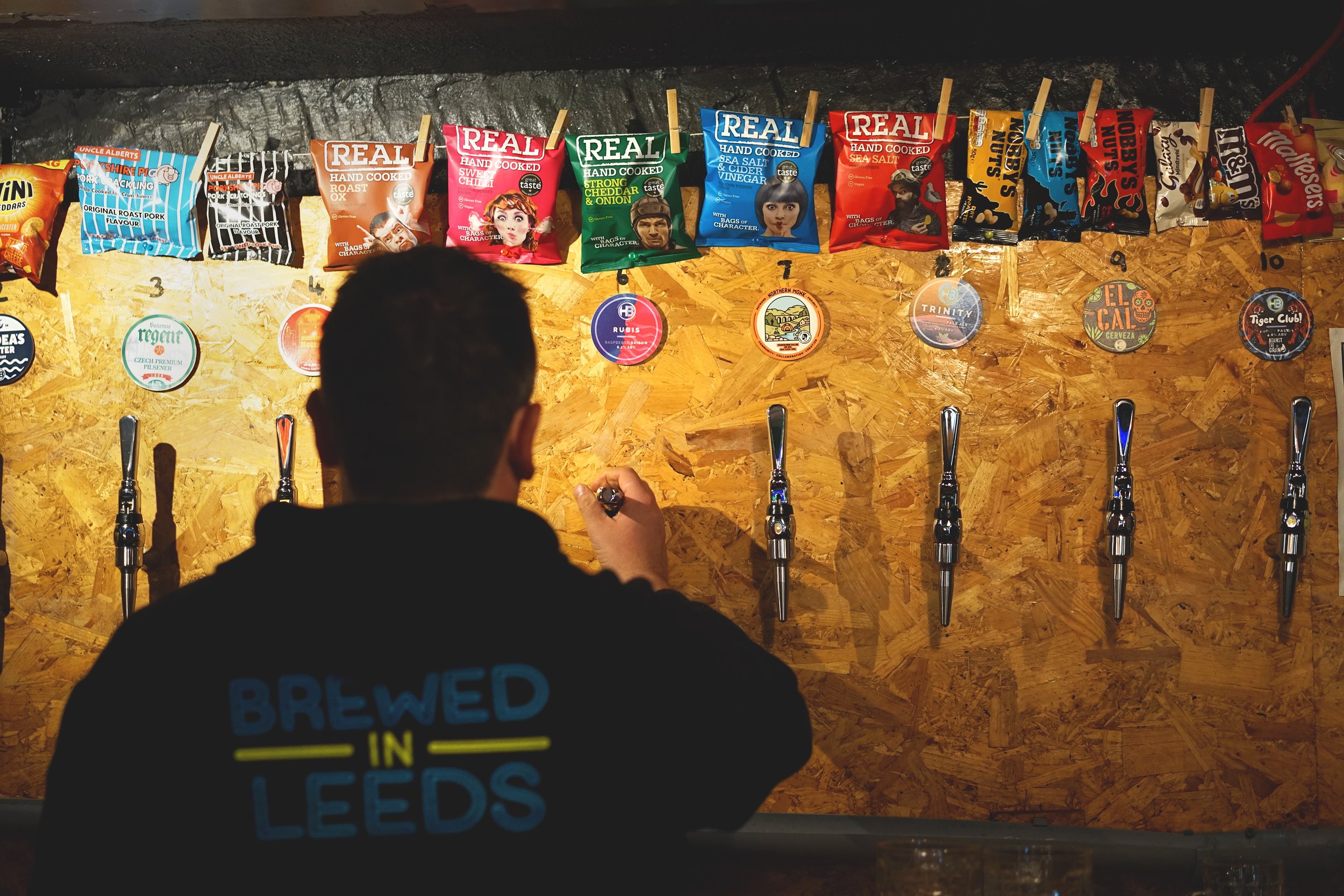
A new fixture on the North Bar roster is Horsforth Brewery. Its owner, Mark Costello, is on a mission. Mark runs Brewed in Leeds, an alliance of small breweries including Tartarus Beers, Amity Brew Co, Bini Brew Co, Piglove Brewing Co, Wharfedale Brewery, and others. Its aim is to campaign for wider, more diverse tap selections in the city centre.
Catching a taxi out to Horsforth from the city centre on a blisteringly cold, blindingly bright winter’s afternoon, I spot the prominent Kirkstall Three Swords pub across the road. I almost miss the entrance to Mark’s taproom, which is hidden behind a single door next to a hairdressers.

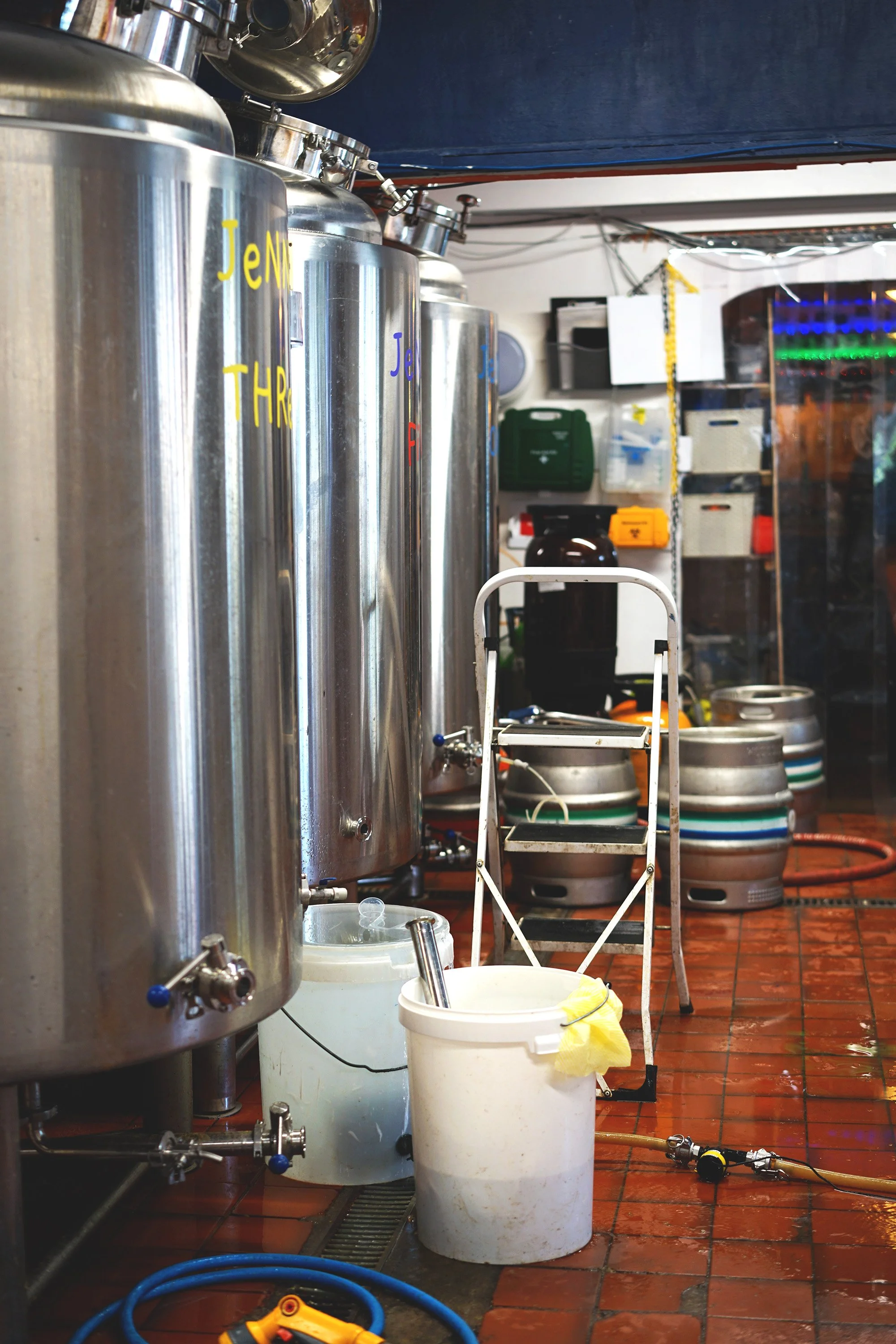
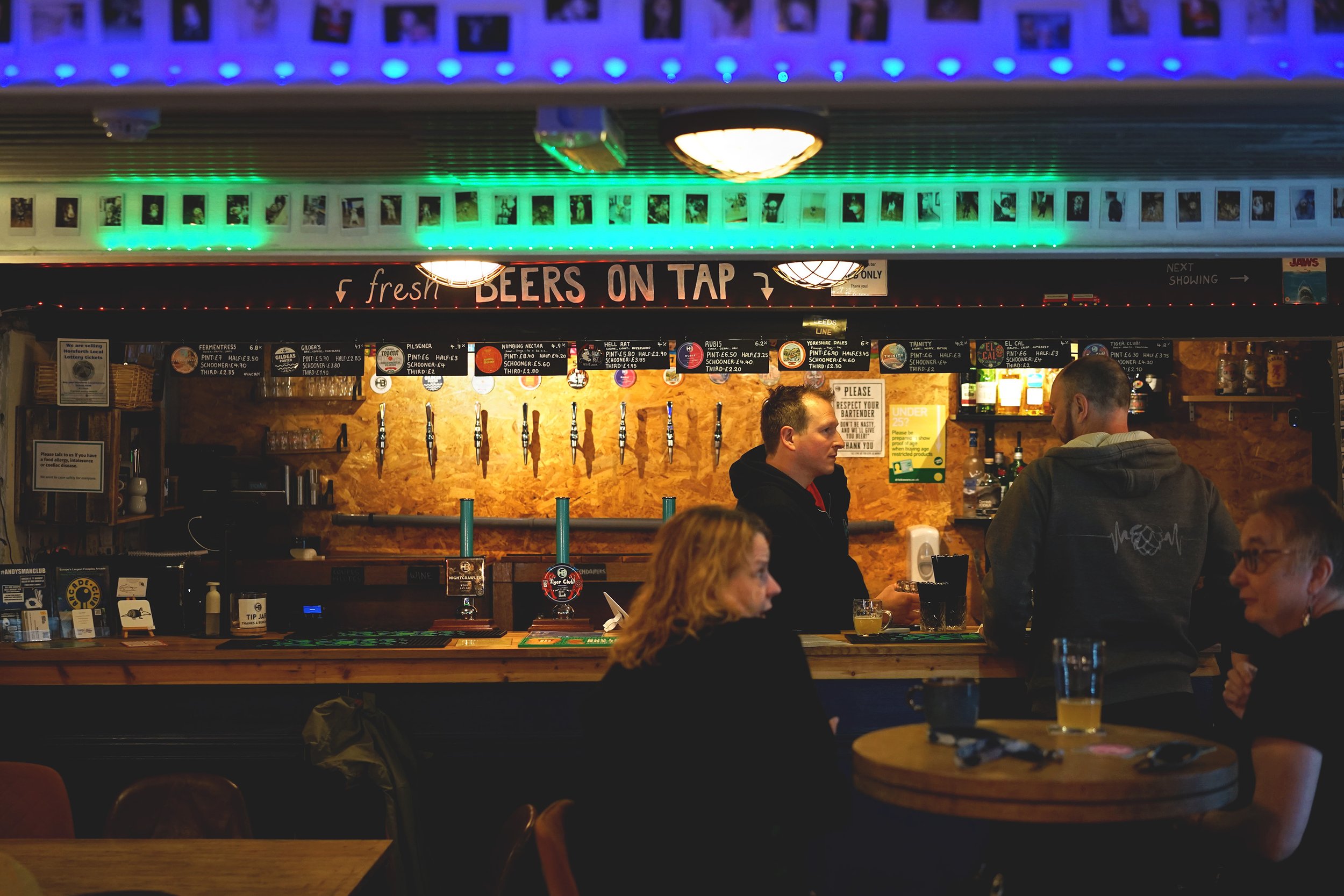
Inside, the brewery is ramshackle but charming. Brewers and delivery drivers in hi-vis stand amongst the mismatched stools and low tables. Like me, a couple arrive at opening time—4 p.m. sharp—and are poured pints with names like House Trousers and By the Hair of Ernie.
When I sit down for a pint of Horsforth’s flagship Trinity American Pale with Mark, who’s fitting me in between brewery and childcare duties, he maintains a laser focus on his key argument: Leeds drinks well, but it drinks narrowly.
“There’s no point of differentiation between so many of the bars in town because their craft option is Virtuous,” he says. “And as a consumer, that’s boring.”
He agrees that Kirkstall brews excellent beer, but that hasn’t stopped him from asking: Why does one of the leading beer cities in the country feel like a closed shop for small breweries? He believes the answer lies in a range of factors, from private equity and risk-averse small venues to the squeeze that comes with consolidation.
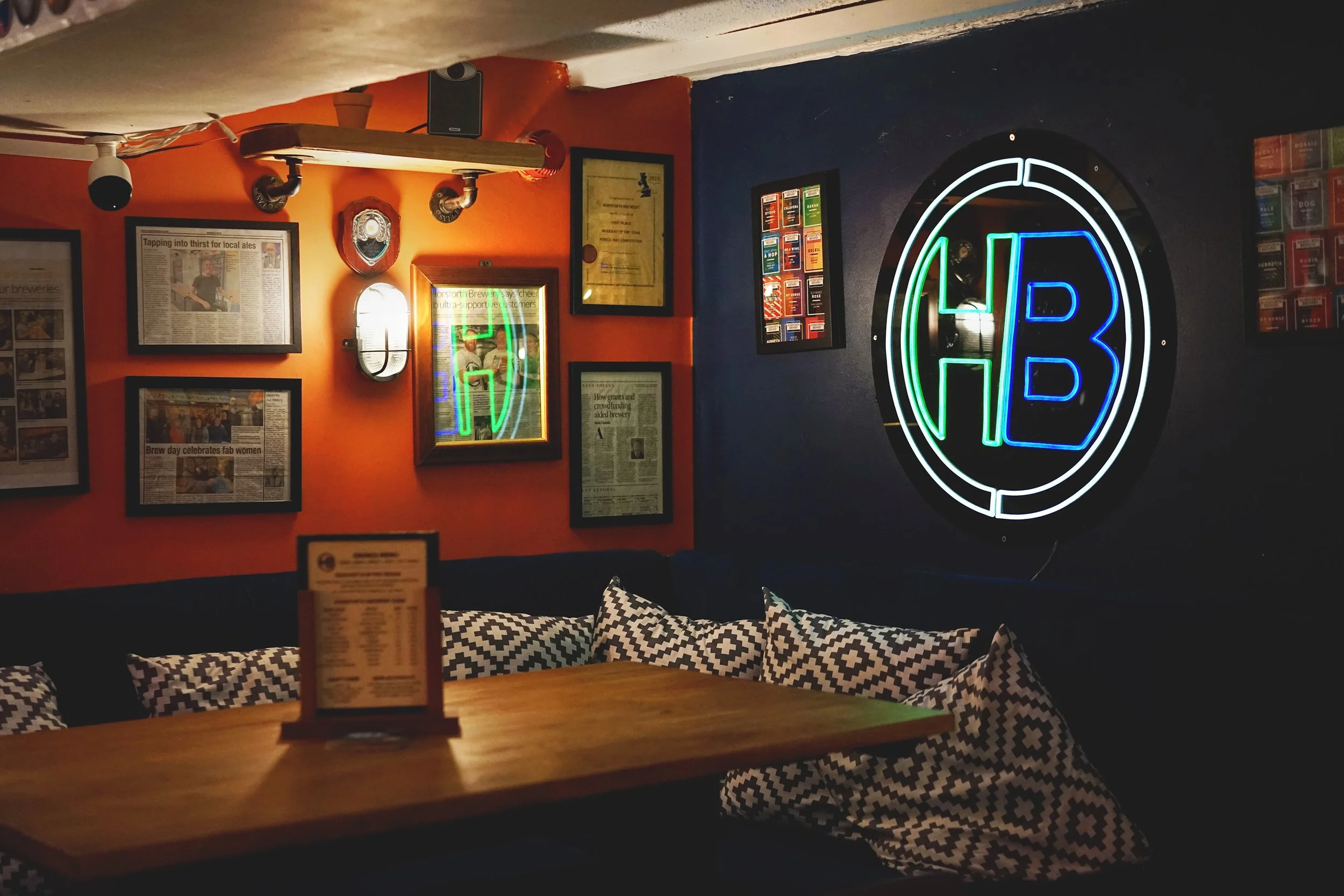
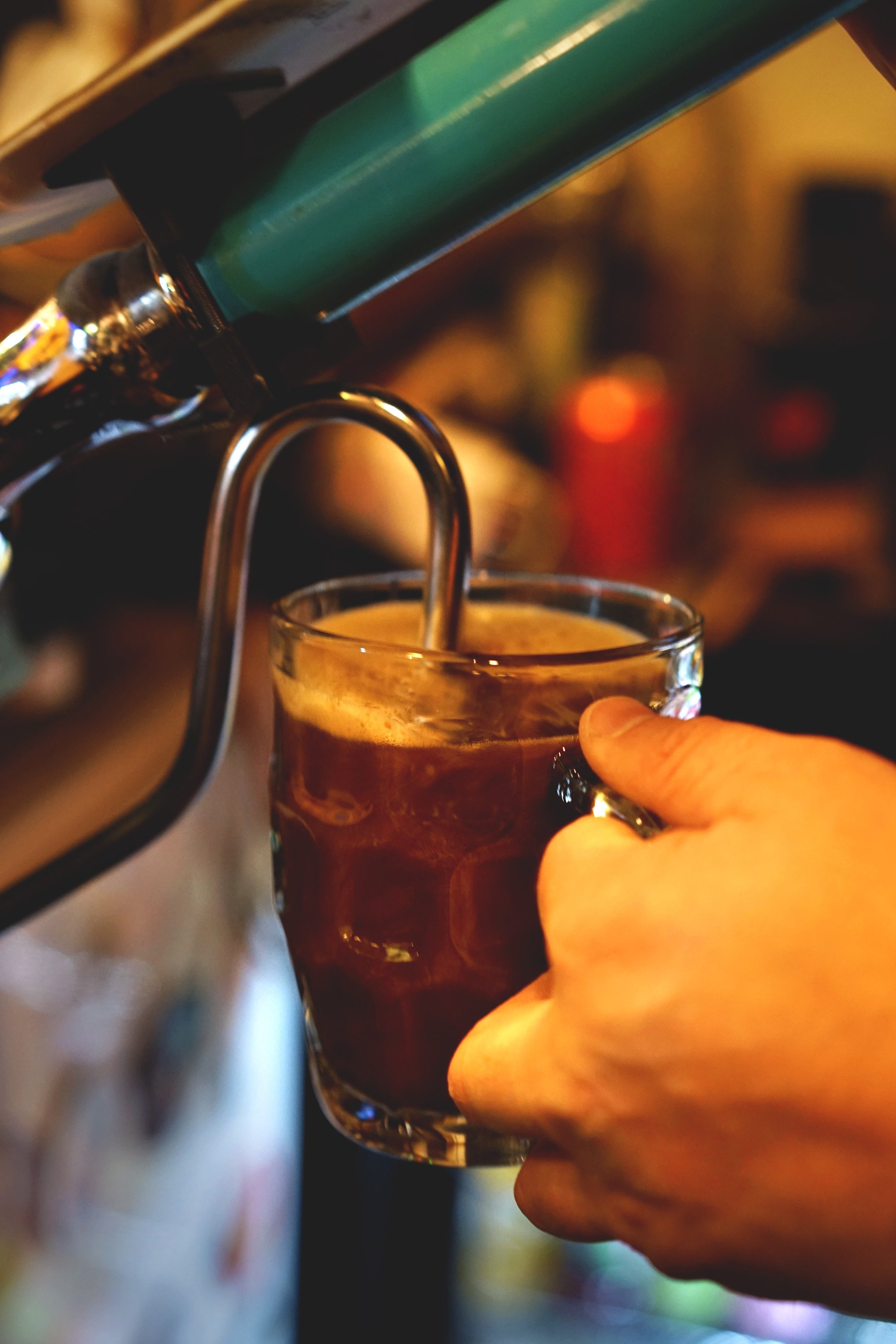
Mark believes he’s facing a losing battle across Leeds for access to lines. He regales me with tales that would make a small brewer’s hair curl, including farcical stitch-ups where he has personally installed Horsforth lines at restaurants, only to find them switched to Kirkstall within weeks. (He is clear that Kirkstall itself had no blame in this.)
As a small business, there’s also the inherent peril of brewing a highly volatile, live product and selling it at a competitive price. Big brewers take advantage of that fact by undercutting businesses like Mark’s with £50 casks that all but guarantee continued access.
““There’s no point of differentiation between so many of the bars in town because their craft option is Virtuous. And as a consumer, that’s boring.””
Mark’s perspective is nuanced, and somewhat ideological. He maintains that larger breweries, rather than being guilty of specific or overt foul play, are withholding opportunities for smaller brewers to make an imprint in the city. When I ask him how he would conduct business if he were in Steve Holt or Ed Mason’s shoes, he is unequivocal.
“If I could sell beer across Leeds, I would—but I’d take people with me. The door’s being closed behind.”
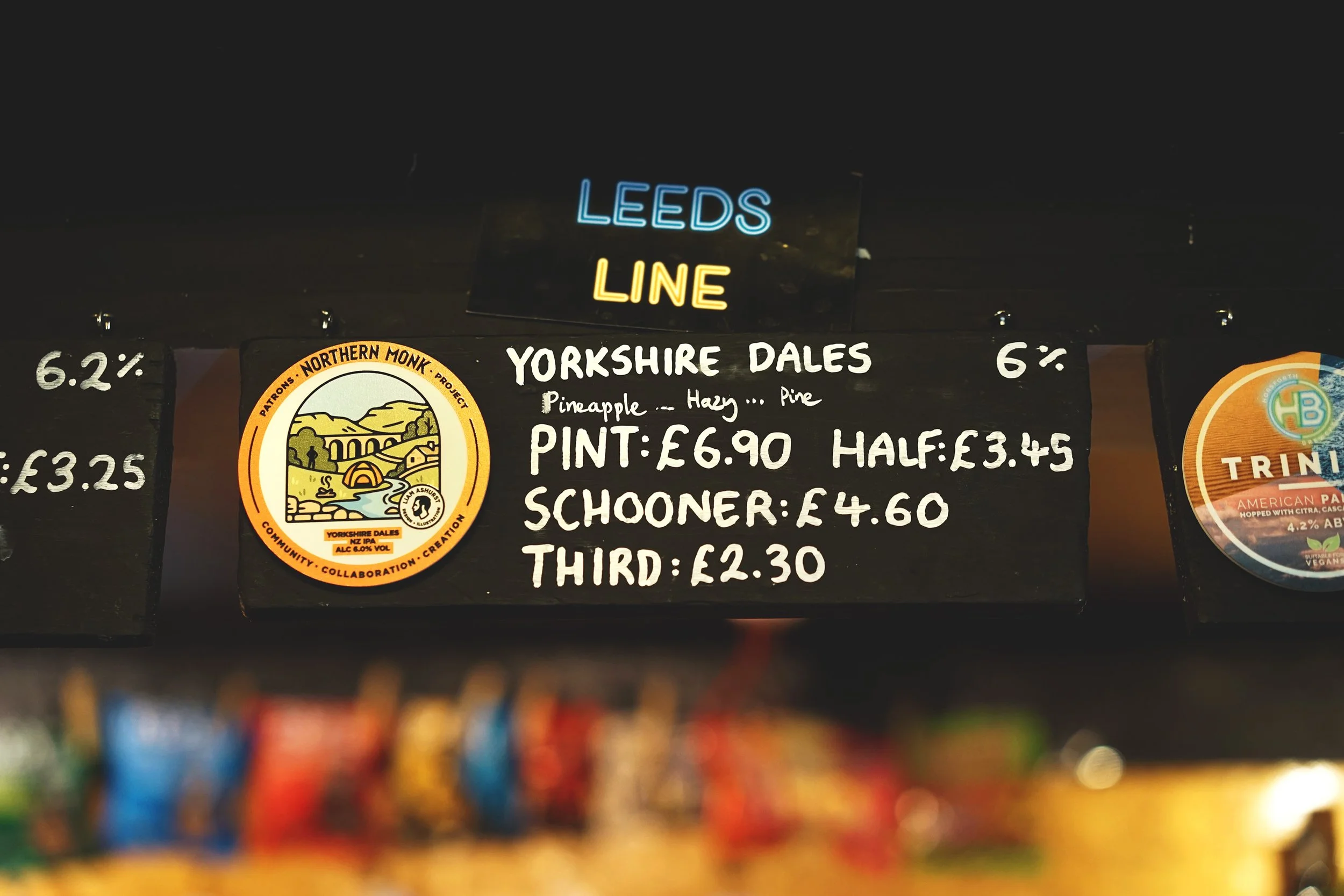
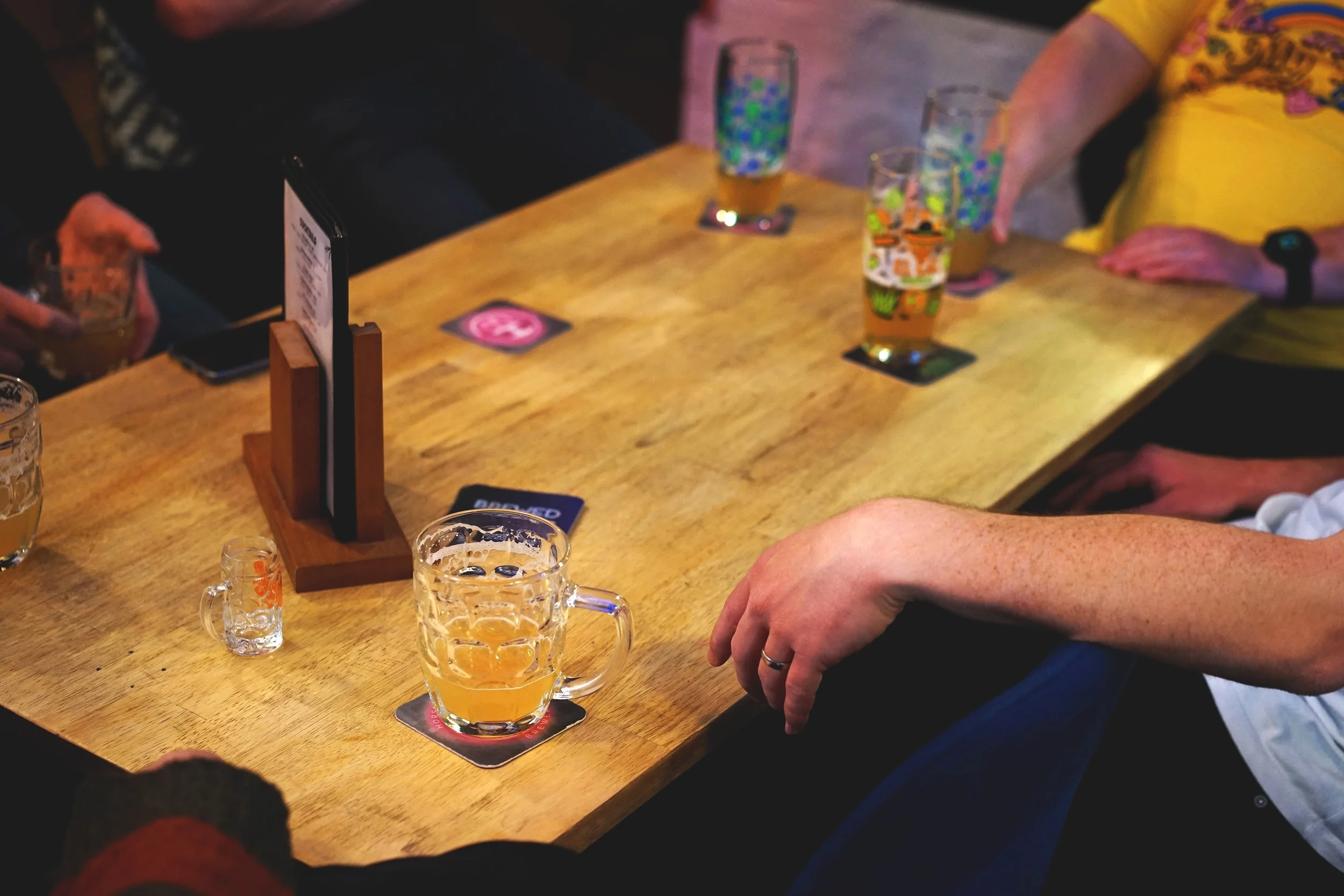
His proposed solution is a “Leeds Line” of rotating beers from local indie brewers like his. But for many city-centre venues, the cut-through isn’t quite as he’d hoped. After all, the likes of Kirkstall and Northern Monk are tried-and-tested favourites, brewed locally. Why should they take the gamble on a lesser-known operation?
One workaround has been to look farther afield for opportunity. “People outside the city care more about Leeds beer than Leeds venues do,” Mark says, pointing to the many indie beer strongholds outside of the city—Sheffield, Liverpool, Bradford, Newcastle among them—that he says are more willing to stock Horsforth beers.
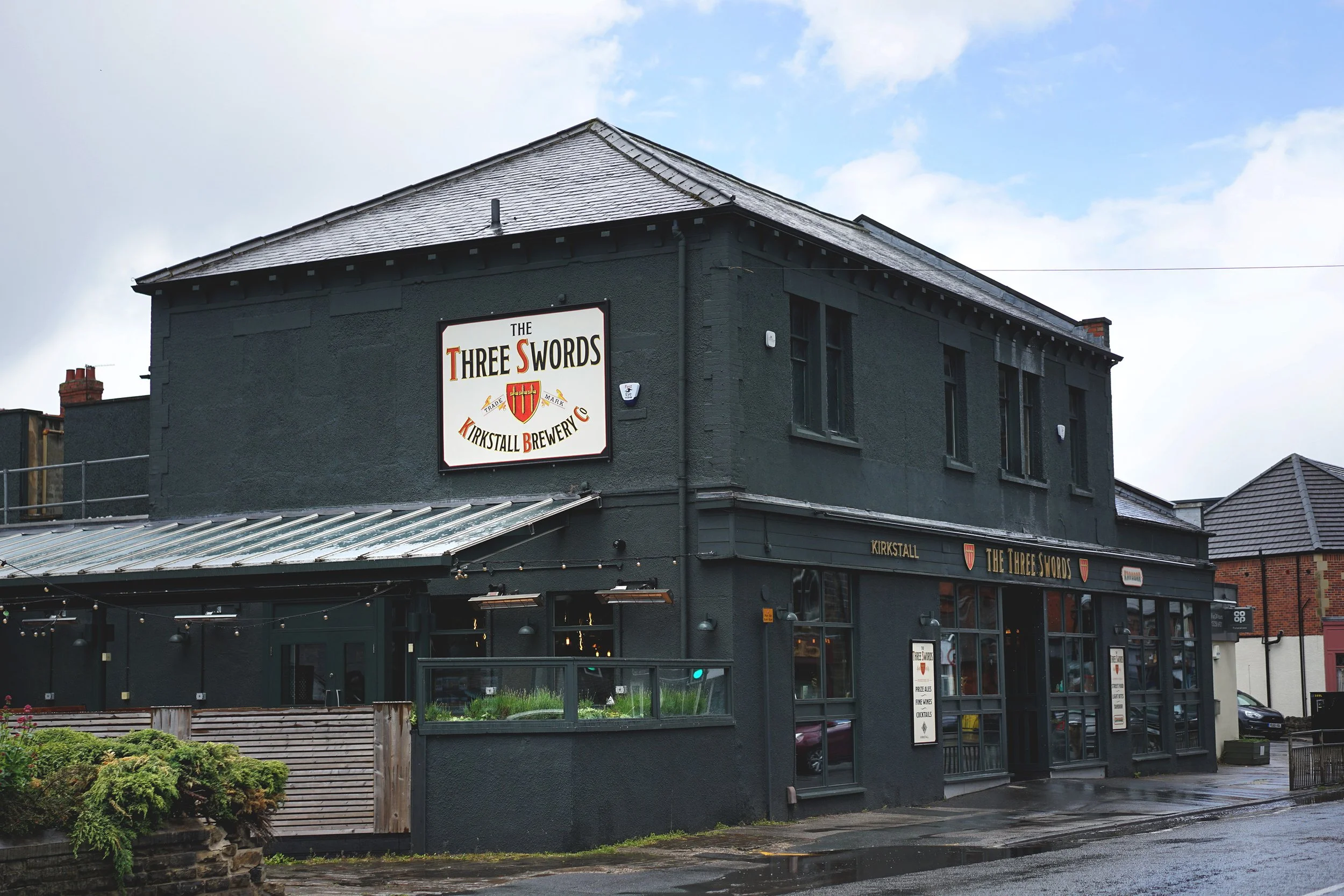
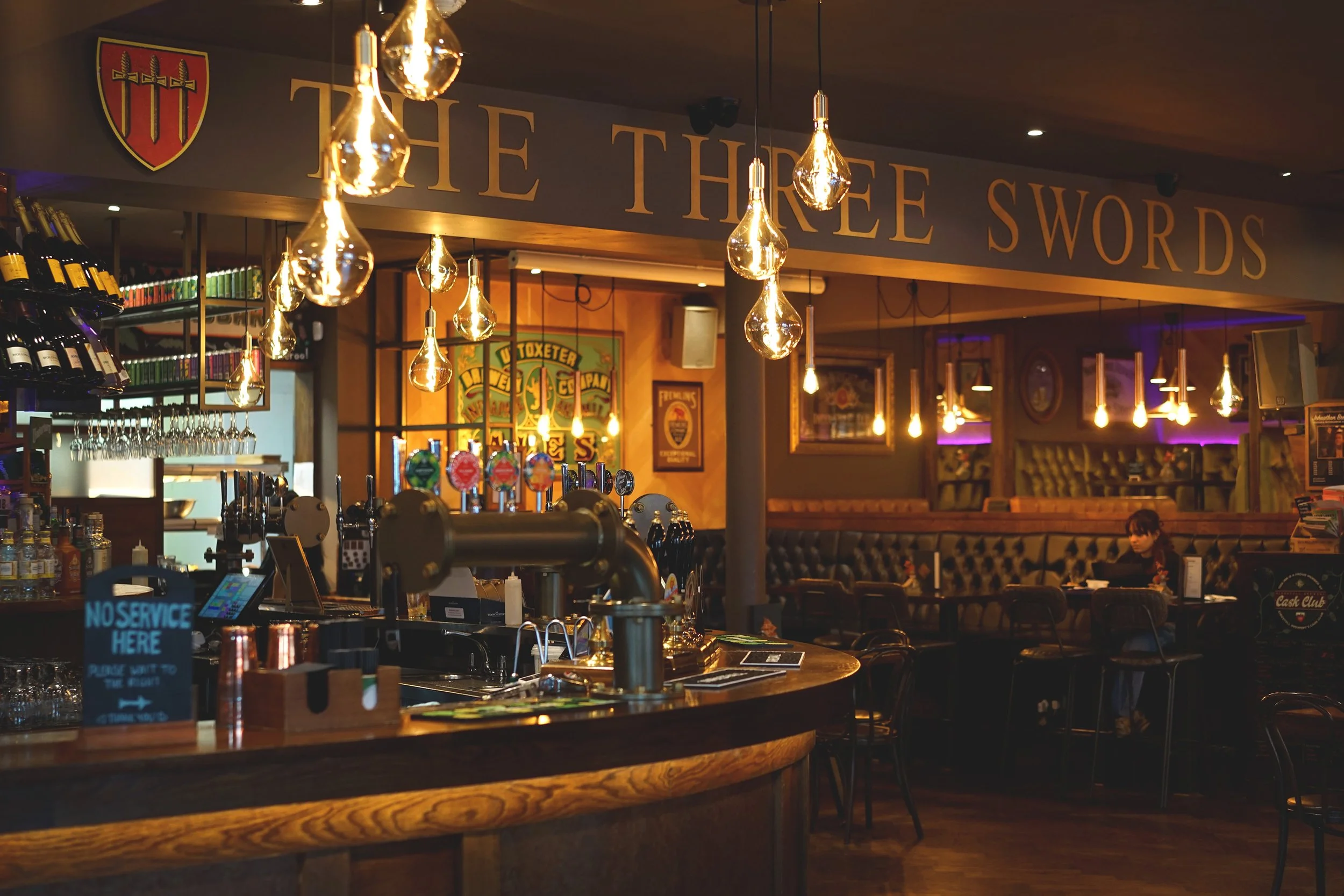
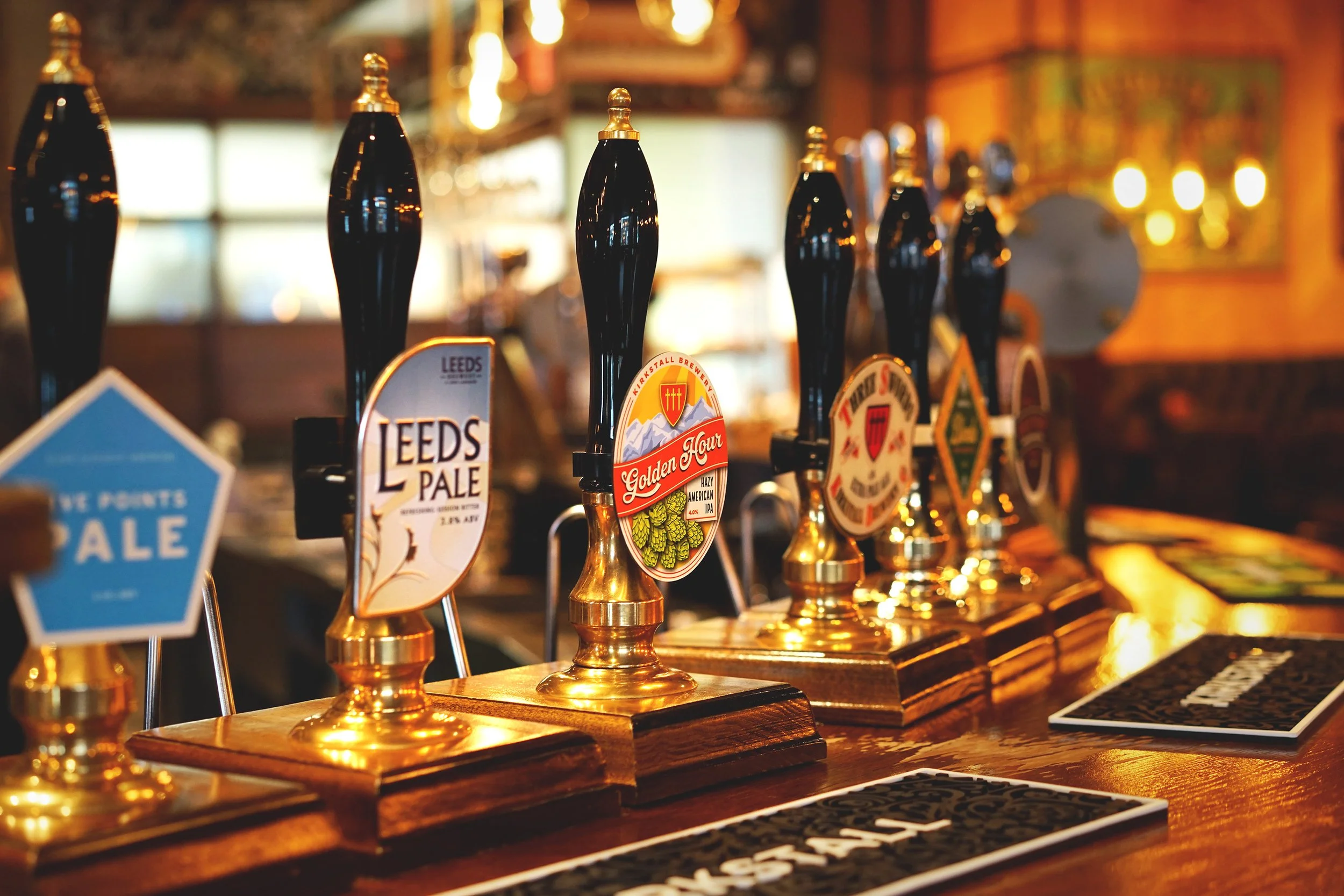
After one more pint at Horsforth Brewery’s taproom, I decide to nip over the road to the Three Swords for a quick half. The pub is full of punters, many more than back over at Mark’s spot. Browsing its 20 tap lines, I settle on a Kirkstall Bitter and wait for my taxi back to town.
As always, it’s a lovely drop. But it’s a pity The Three Swords can’t put a few Horsforth beers on the lines too, seeing as you could probably roll a barrel from one door to the other.
***
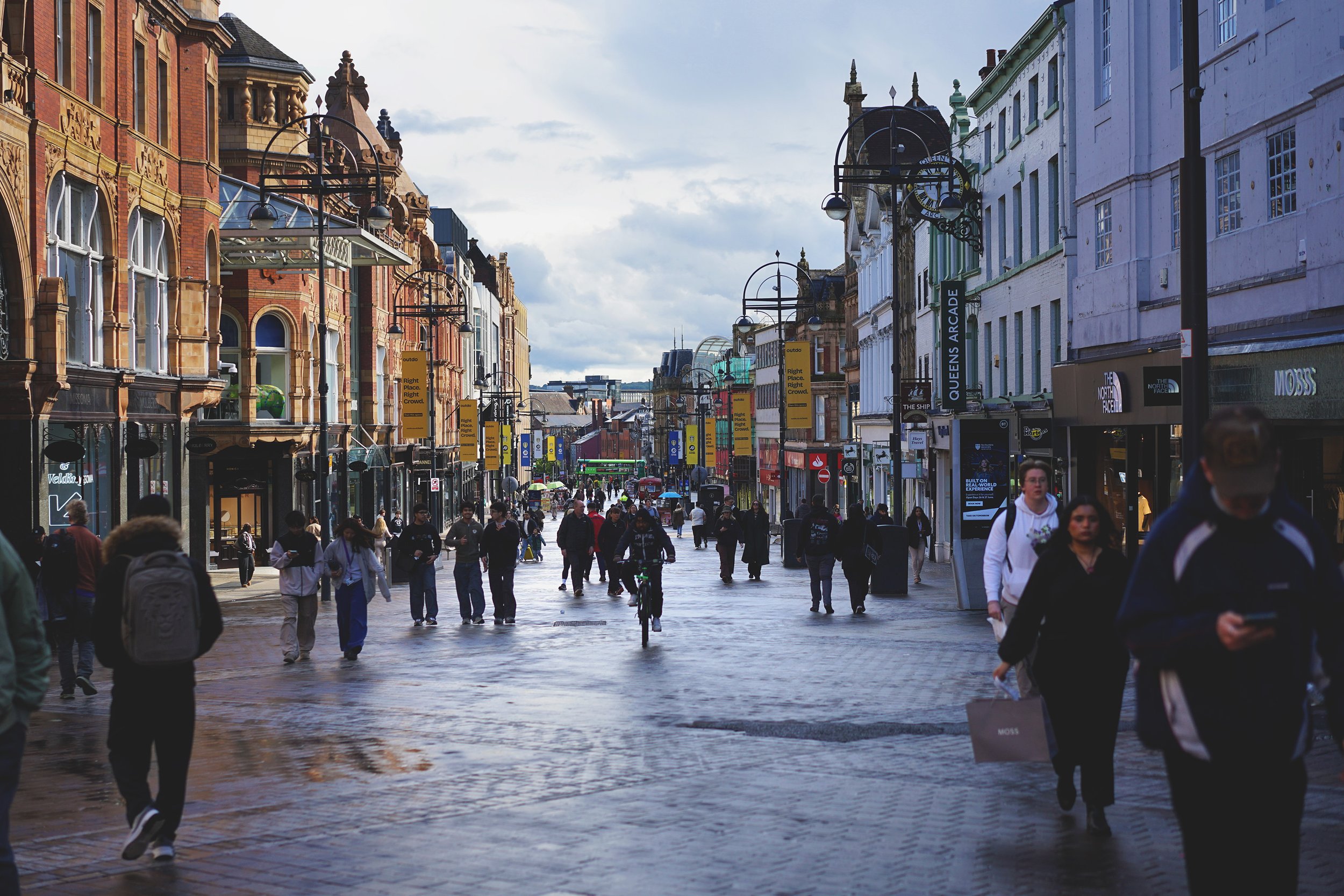
If you follow the River Aire east beyond the Docks and Royal Armouries, the built-up city centre peters out and gives way to a scattering of stately old mills converted into luxury flats. There’s the odd industrial estate, and a new development for sustainably minded homes and businesses called the Climate Innovation District.
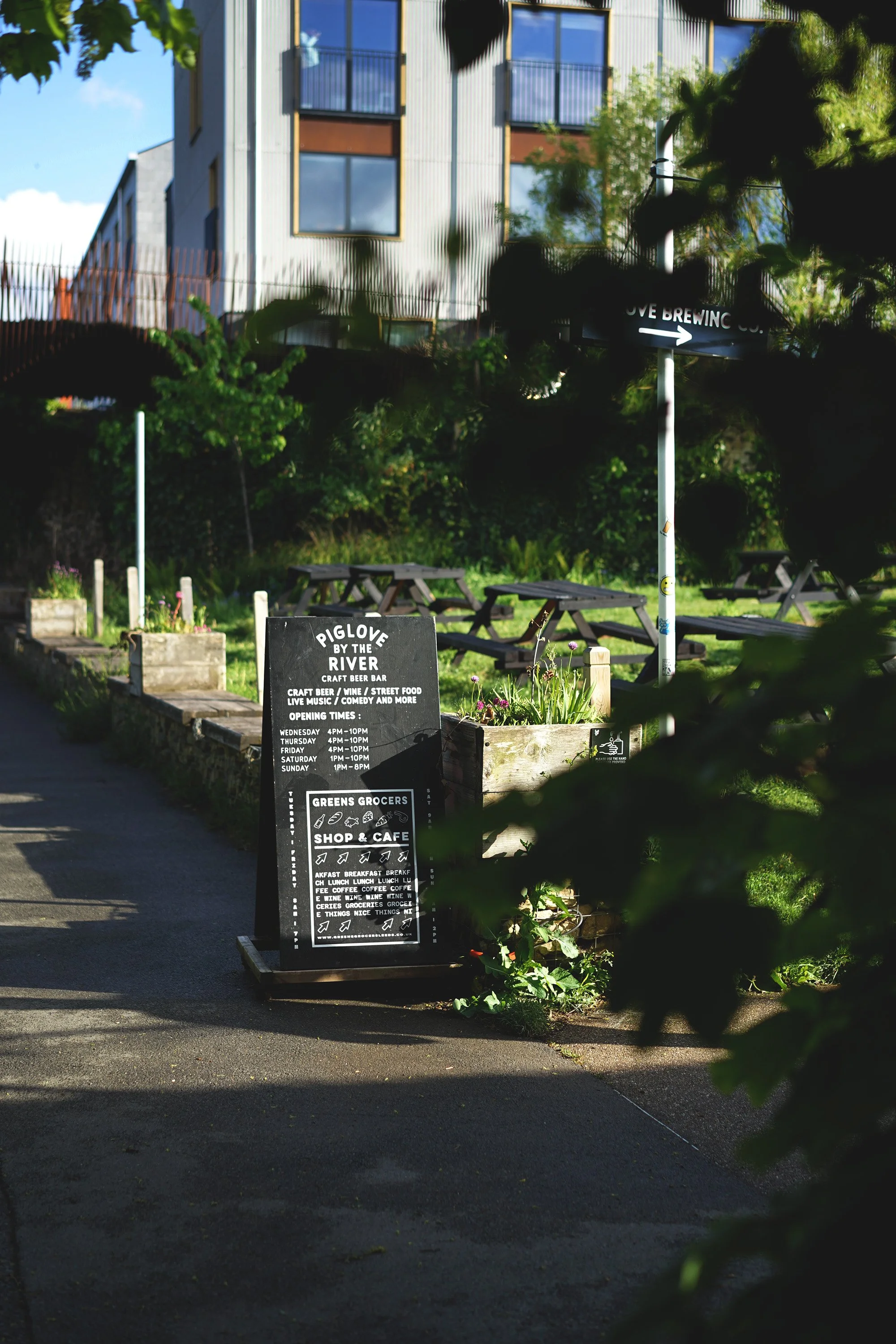
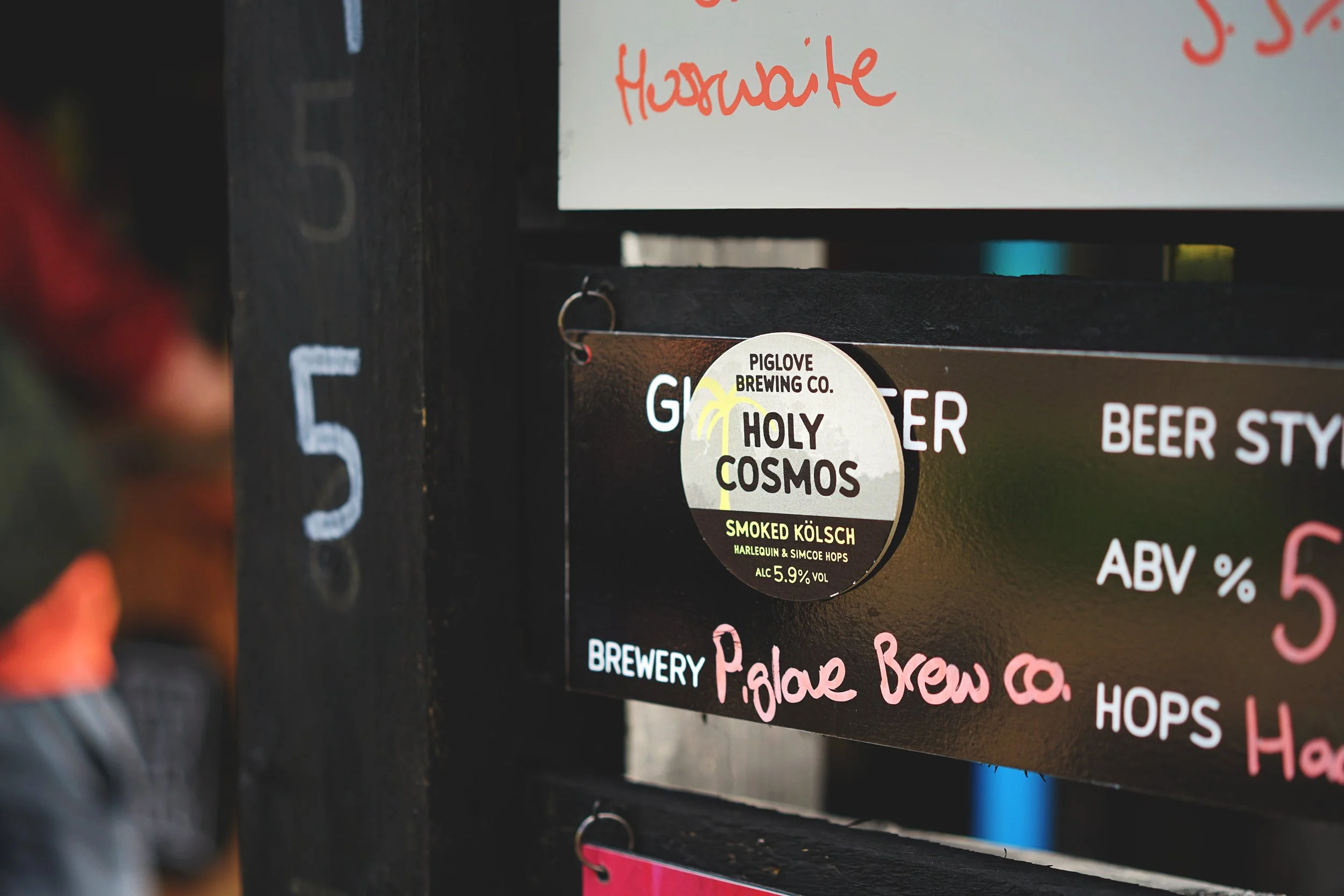
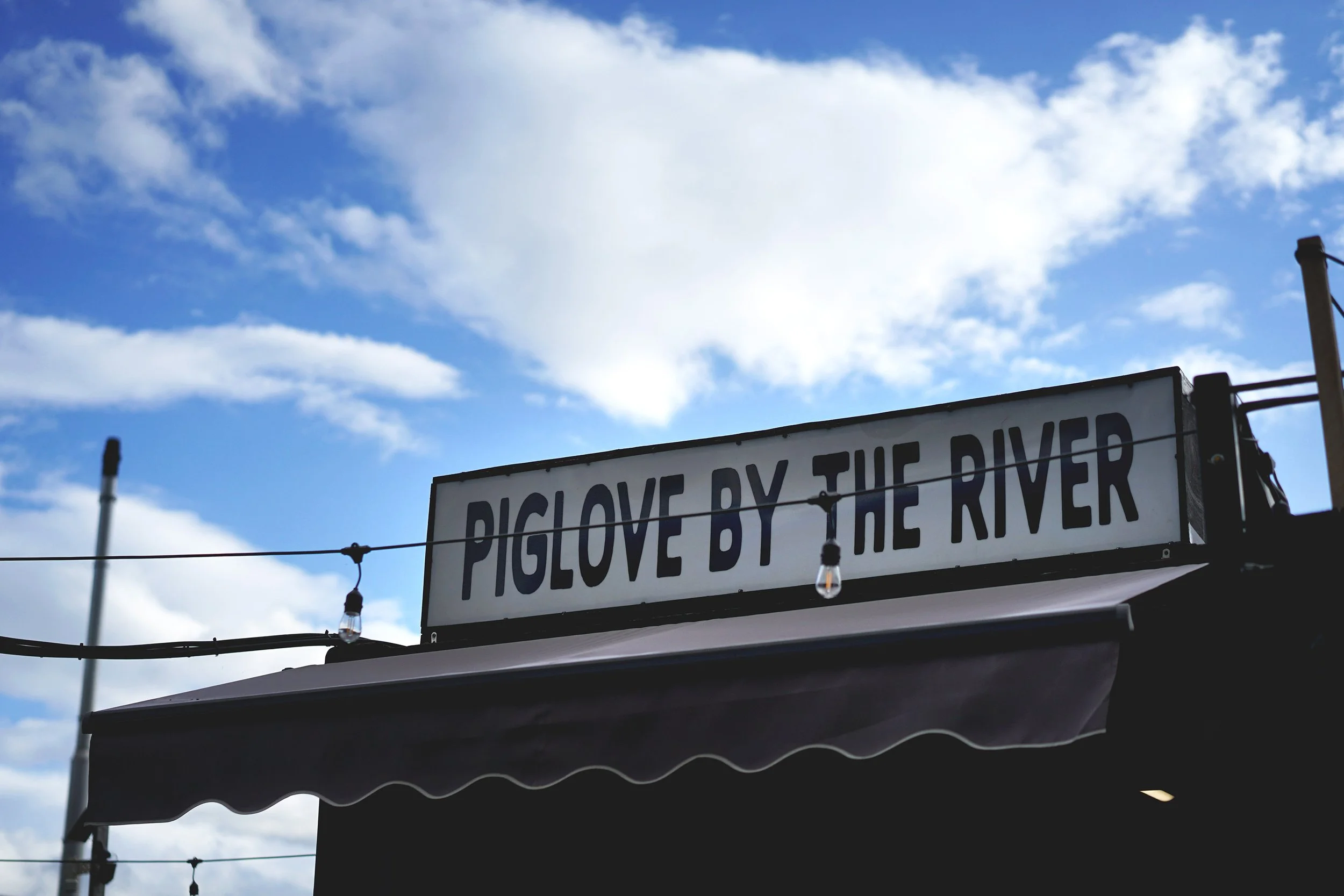
On a sodden January evening, I tread gingerly through puddles blocking the towpath, making my way to Piglove by the River, a small but popular brewery tap that made a name for itself in summer 2025 as one of the best outdoor drinking spots in the city. Amidst the glam, grit, and grunge of Leeds, Piglove brings an unhurried, perma-festival vibe closer to the Cornish coast than Chapel Allerton.
But today, it is freezing. I sense I am not seeing the stylish gardens of copper, wood, ferns, and grasses at their best. Nonetheless, I’m greeted warmly by Piglove’s owner, Marcos Ramirez, and his bar manager, Lewis Slater. The bar is closed for most of the month, and nothing is on the taps, but they hand me a Yarima Breeze IPA—an excellent 5.5% West Coast-style number. We take a seat outside under the huge heated sailcloth tent. Marcos and Lewis have spent the day sanding tables inside, so the indoor “Sty” seating area is off-limits.
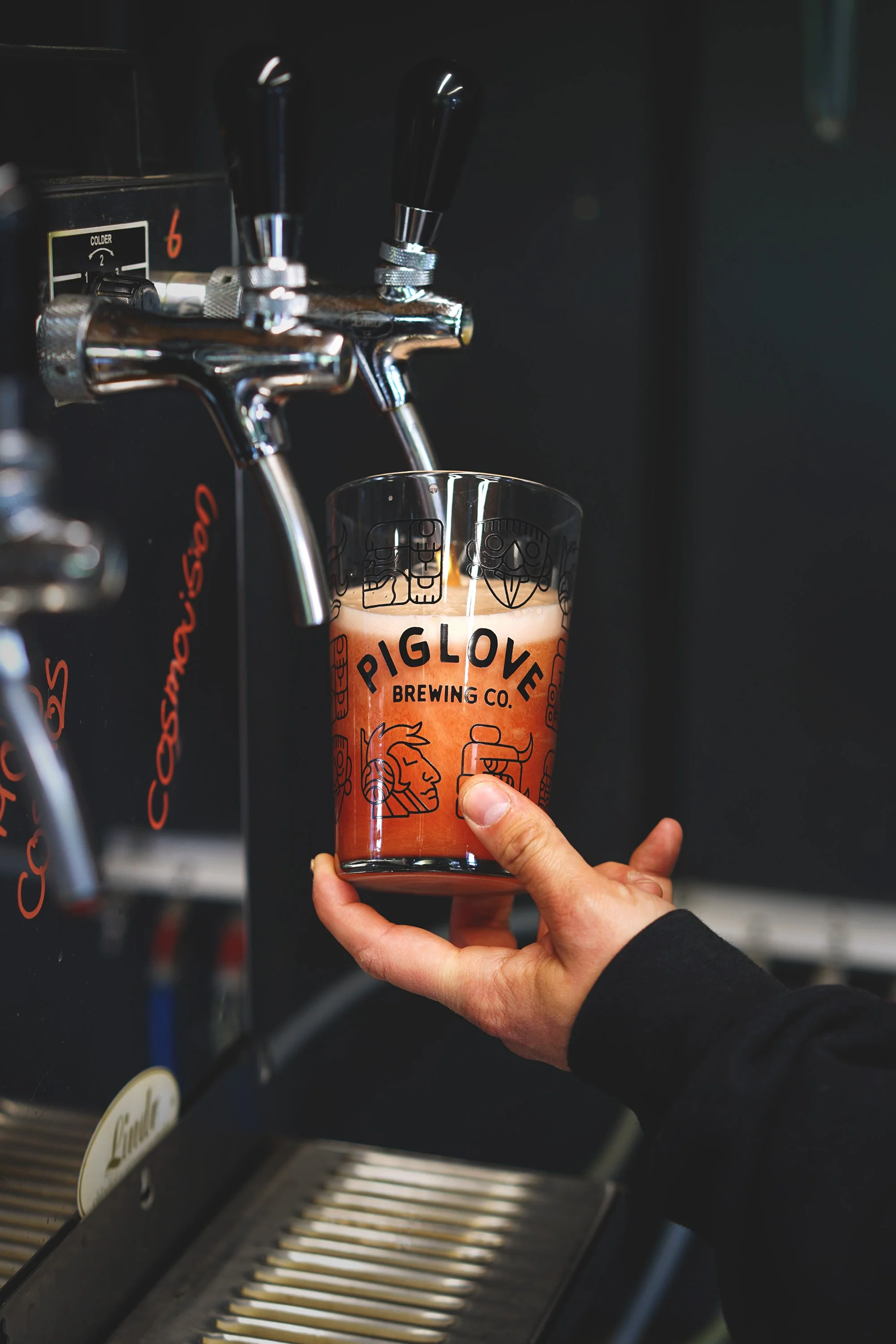
Marcos, an engineer by trade, moved from Venezuela to Leeds via a stint at university in London. What started as a homebrewing experiment inspired by American beers like Sierra Nevada grew into something more serious, and by 2019 he co-founded Piglove Brewery with his late business partner, Jesus Moreno. Today, Marcos is the sole owner, but the brewery’s ethos remains unchanged. The name Piglove comes from the Venezuelan expression cochino amor, meaning a love that grows so big, raw, and passionate it becomes filthy.
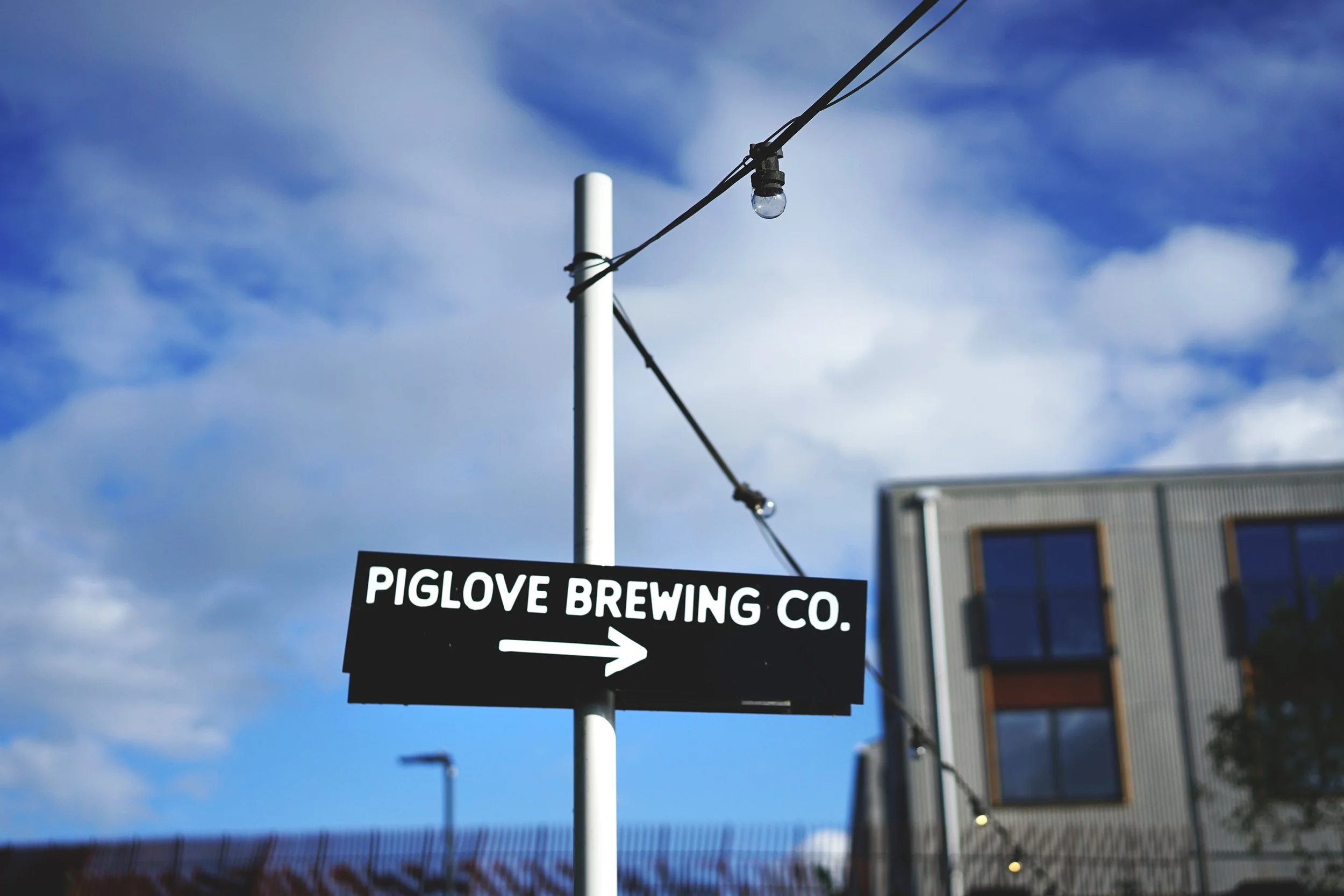
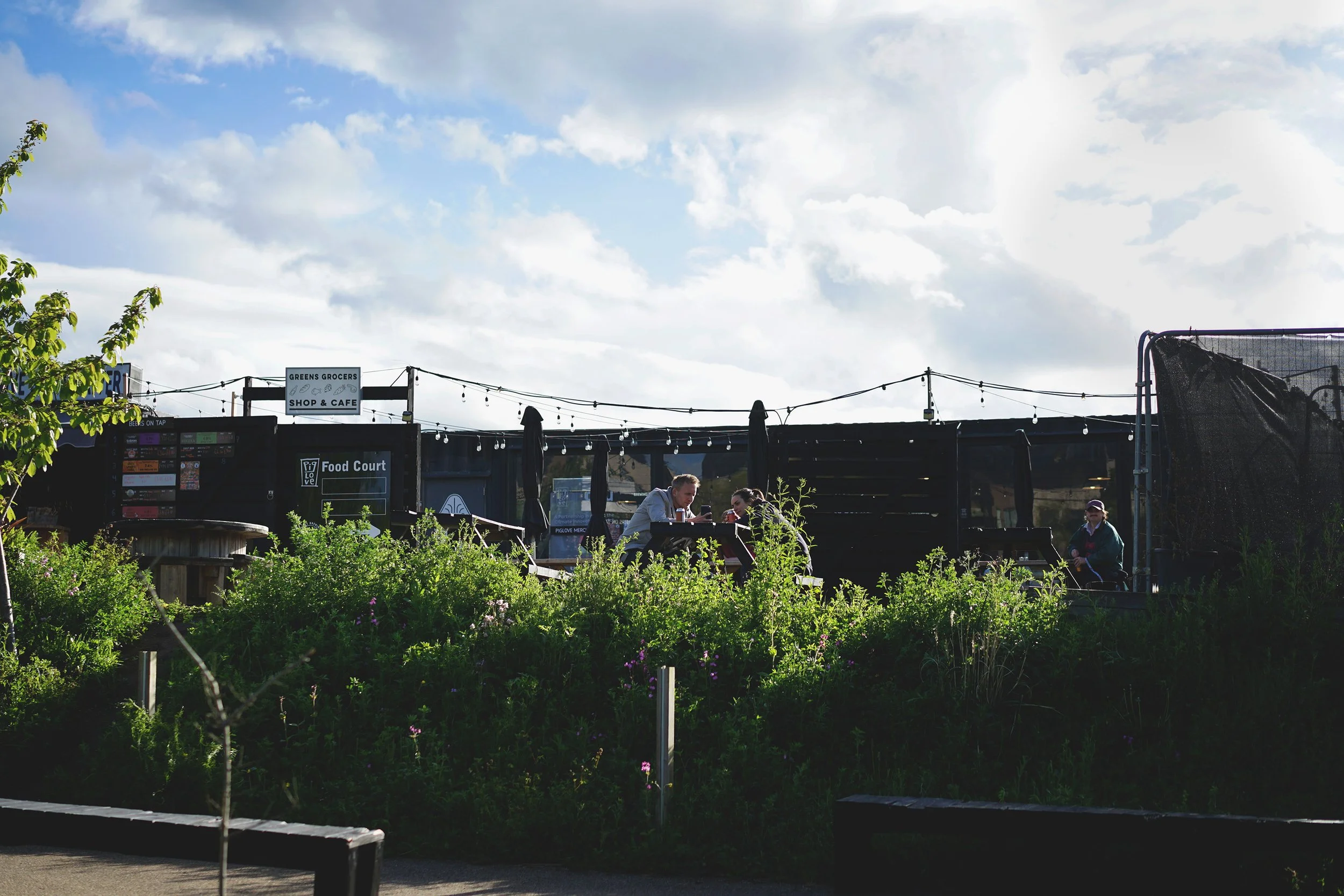
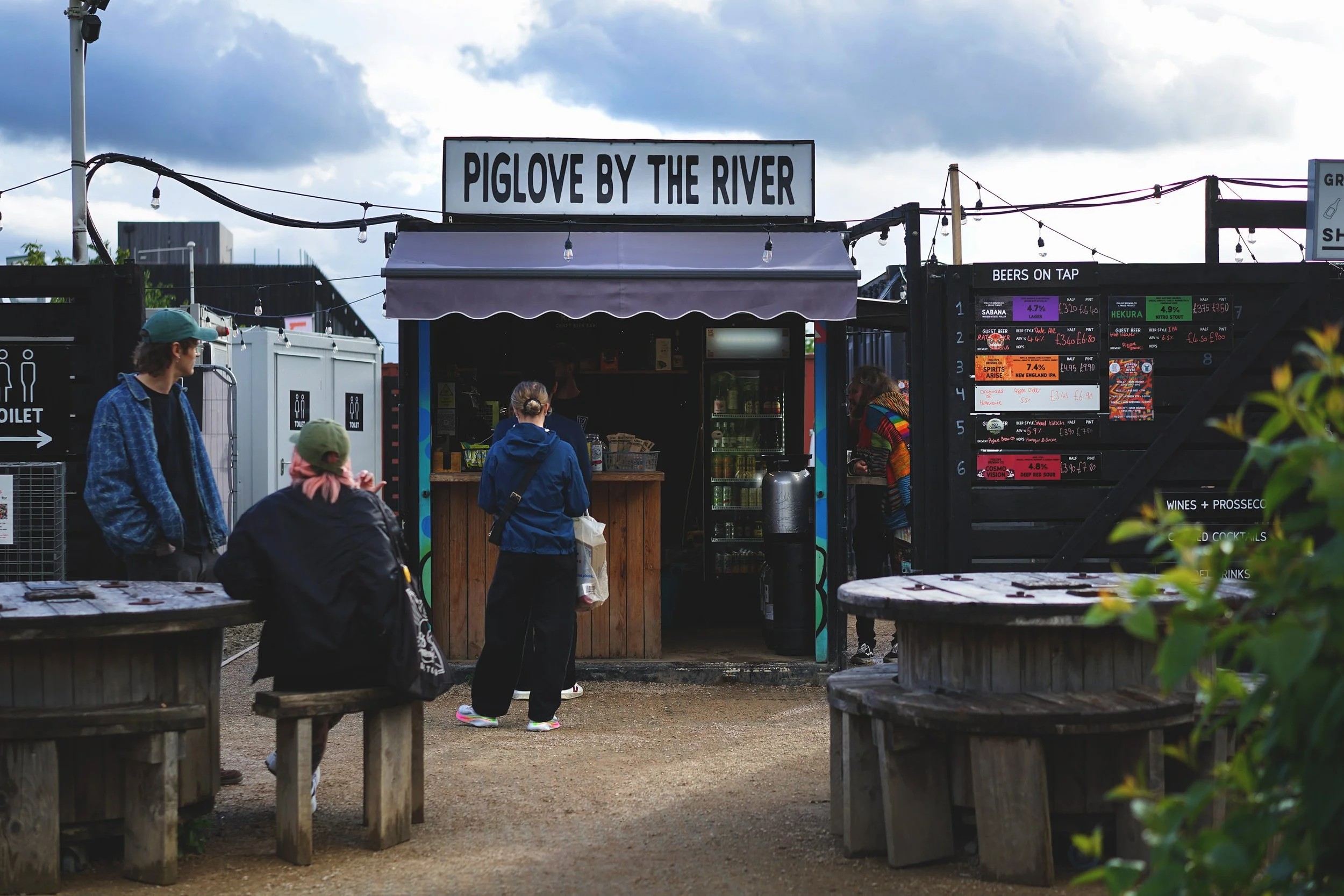
Marcos brews bold U.S. styles with Venezuelan ingredients—tropical fruit and agave, for example—inspired by his childhood and grandmother’s cooking. But his beers also draw inspiration from northern England, and our conversation frequently veers into Yorkshire’s rich beer culture and exceptional local products, from cask Jaipur (anticipating my pedantry, he clarifies that Jaipur is a Derbyshire beer) to a well-kept Timothy Taylor’s.
““Among small breweries, collaboration isn’t branding—it’s how you survive.””
Stiff competition indeed. But over the years, Piglove has carved out a name for itself not simply through its beers (though they are excellent) but as a fixture of a vibrant independent scene.
“Smaller breweries help each other,” he explains. “If I run out of beer, I can just call Mark at Horsforth and he can bring round a few kegs. Or if I want a guest line, I call Tarturus or Bini or Amity and say, ‘Hey dude, what’s going on? What do you want me to buy?’ Among small breweries, collaboration isn’t branding—it’s how you survive.”
It sounds like a nice vibe, a real community. I put this to Marcos, and he agrees enthusiastically.
“It’s supportive; we are in the same boat. And in reality, we don’t really compete with each other. Because if we change our guest taps regularly, we don’t compete, we collaborate. And we’re all feeding into each other’s breweries, and feeding into the same thing.”
But when it comes to the city centre, Marcos largely faces the same problems as Horsforth and other smaller brewers.
“Big companies like Heineken or Keystone, or big Leeds breweries, undercut us because they can sell at a lower margin. Even though we have loyal customers here, it’s easier to find our beers in Newcastle or Manchester,” he says. “But you know, Kirkstall and those guys have got the resources, they’ve got good products, and they have the money to move their products around. As a small independent brewer, we’re obviously affected by that. But all we can do is adjust or grow.”
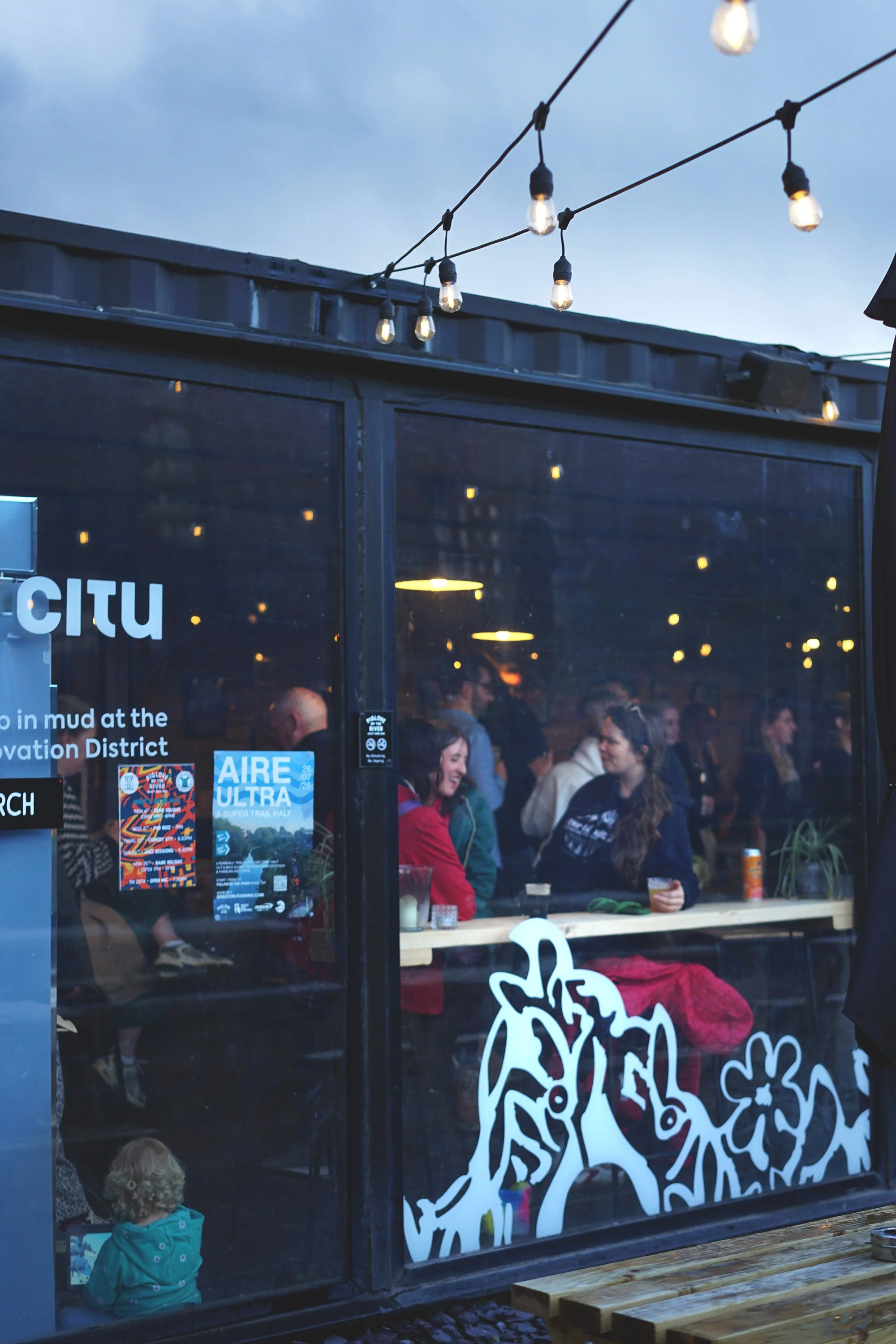
Leeds’ new Climate Innovation District is a converted brownfield site that will soon host 950 homes, a school, care home and much more. At the centre of this development, Piglove finds itself next door to several like-minded businesses, including Greens Grocers, a café, wine bar, grocery and provisions initiative from the team behind the fantastic Eat Your Greens organic restaurant.
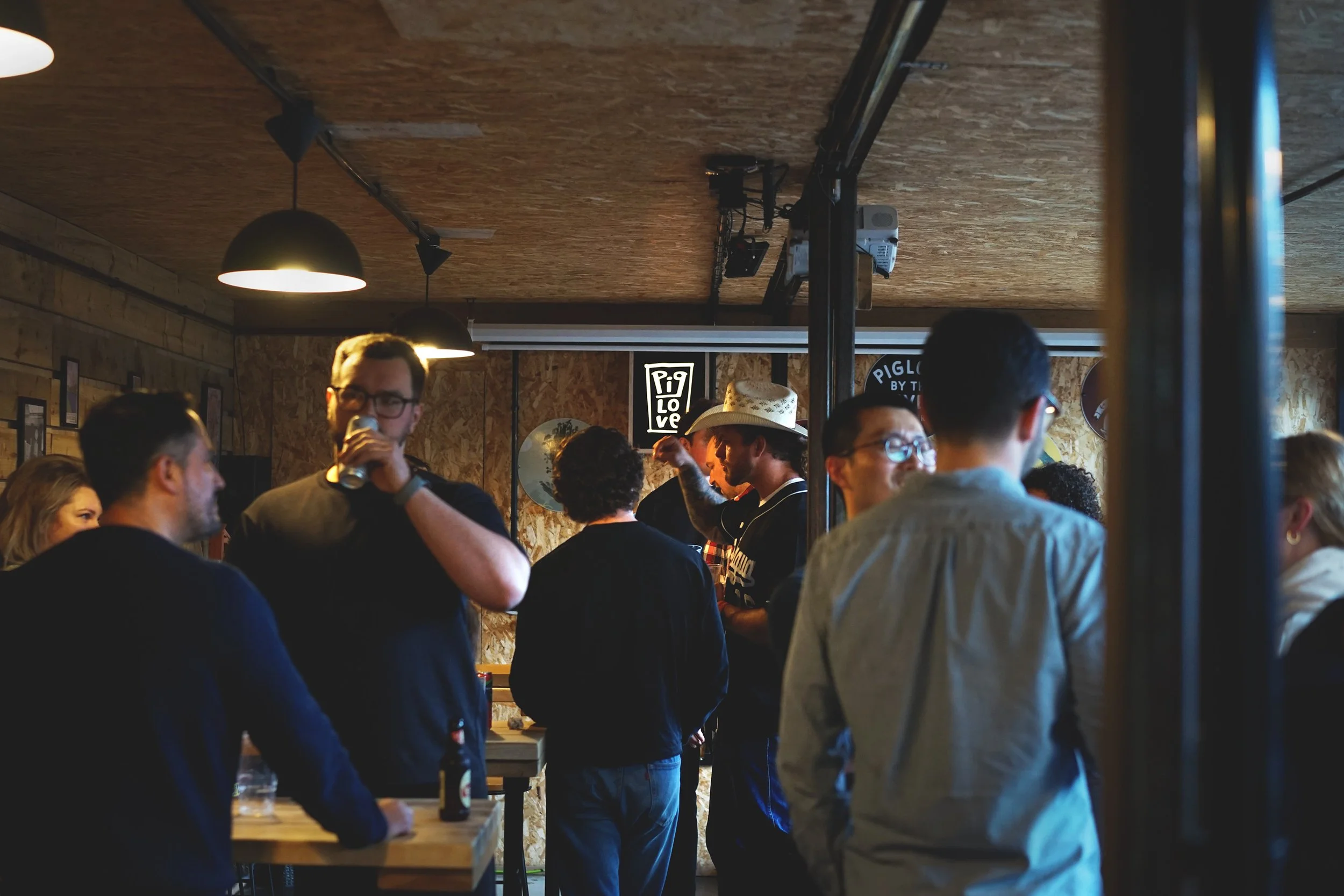
It’s a great spot, hitting the right notes for students looking for an Instagram-friendly afternoon pint, CID residents looking for a quiet drink in the neighbourhood, and East Leeds locals strolling down the towpath into the city on a Saturday afternoon.
40 miles south, Leah’s Yard in Sheffield has opened up similar avenues for small but well-loved operations, including Hop Hideout and Barks Wine. Kapital, from the team behind Two Thirds Beer Co., is in another new development nearby. Up on Park Hill, South Street Kitchen, Pearl, and Bench la Cave turn an otherwise residential area into a destination in itself (no doubt helping to shift a few units in the process for their developers).
Do these agile, hip small businesses fit better with these urban regeneration projects compared to larger ones? And if so, do breweries like Piglove have more of a future in cities like Leeds than the big beer stalwarts would have them believe?
***
At Piglove, Marcos has created a fantastic environment in which to drink his excellent beer. But it’s easy to see how venues like this might struggle in winter, when the warmth and familiarity of a traditional pub can understandably trump the desire to seek out a more rough-and-ready brewery tap.
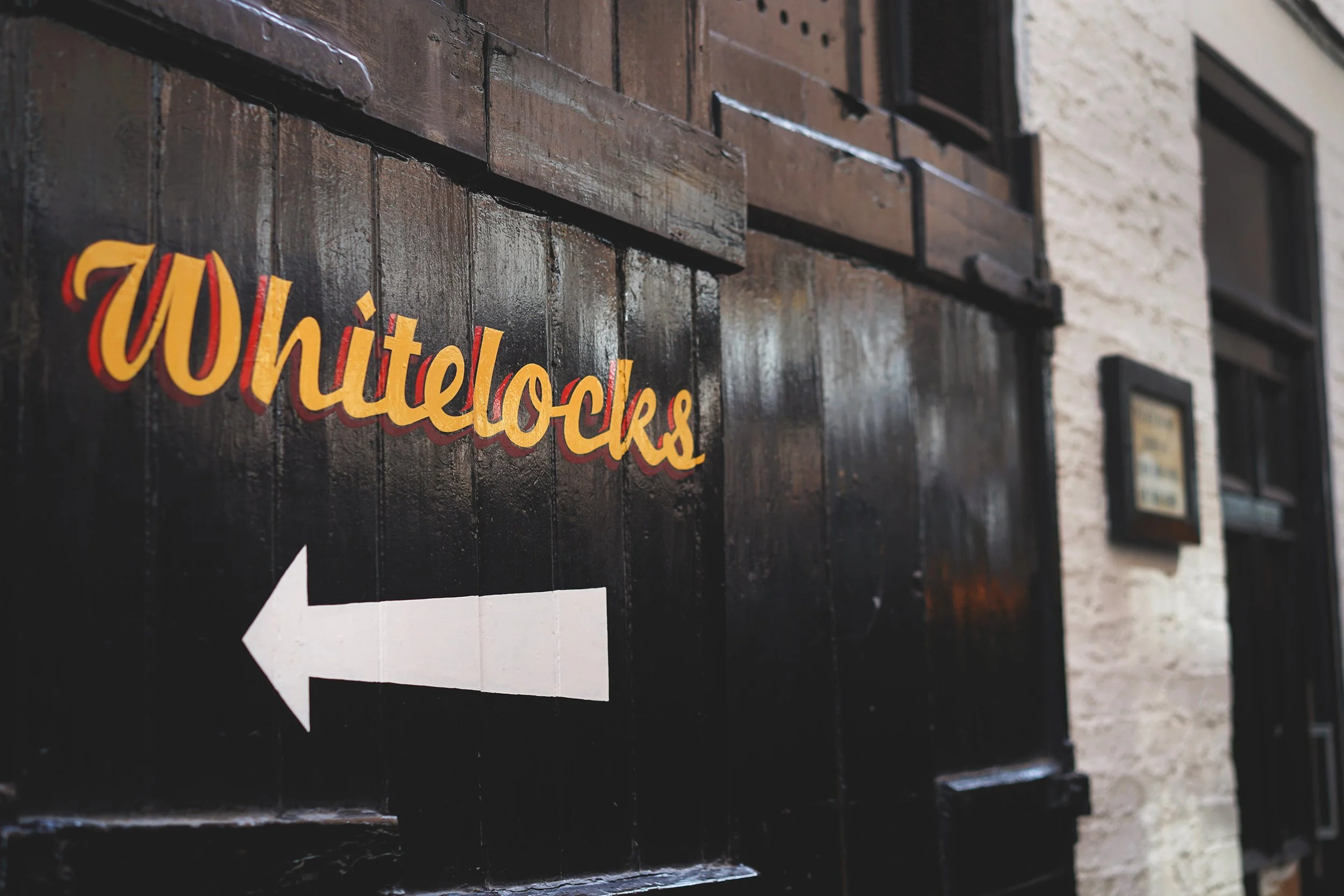
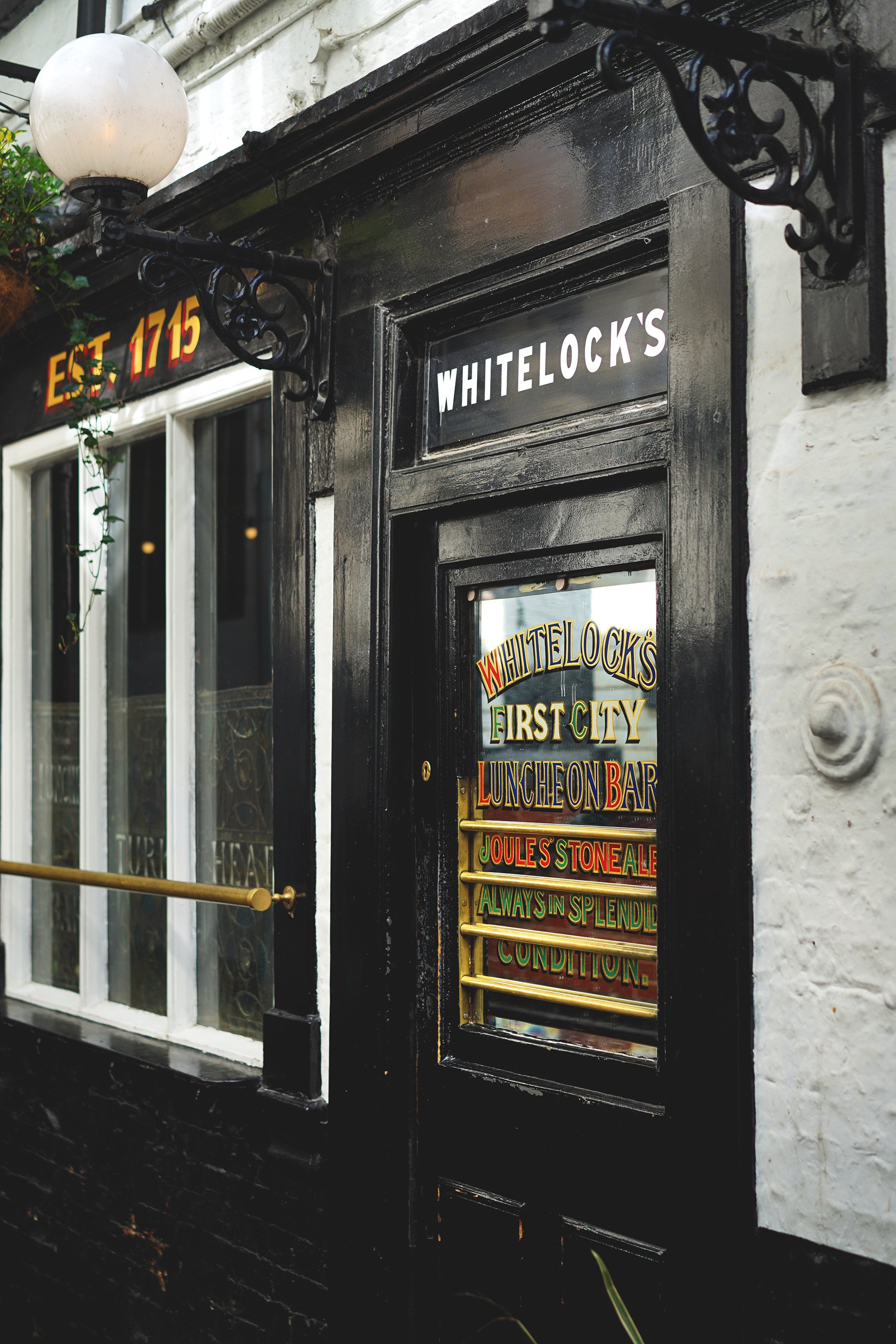
Whitelock’s Ale House, by contrast, offers exactly that comfort. When I meet Ed Mason in early January, the fire is blazing, the stained glass glowing, the fixtures freshly Brasso’d. Sitting in the Luncheon Bar, we talk about pubs and pints, old and new.
From Ed’s perspective, the U.K.’s independent beer scene hit its apex around 2018, with consumer fatigue setting in after Covid-19.
“There was a real peak of interest—tap takeovers, new breweries every week, people queuing for first pours,” he recalls. “For a number of reasons, that market has changed. If you’re paying six or seven pounds for a pint, people are less willing to experiment with a brewery they don’t know.”
Steve Holt, who I speak with over the phone a few weeks later, echoes this point. For him, the days when punters would schlep across cities and countries to taste innovative new breweries’ beers are “very much over … like any emerging market, once it becomes mainstream it loses some of that excitement. Today, people are less willing to experiment. They’re buying brands with reputation.”
Steve has a point. A viral beer today is more likely to be a well-poured, mass-produced stout than an esoteric craft brew. Tourists and influencers alike queue to wobble the head of a Guinness at Soho’s The Devonshire. The Prime Mutton continues his quest for Absolute Creamers in the pubs of Manchester and Dublin. Then, there are Instagram accounts like Jimmy McIntosh’s London Dead Pubs, which seeks out the depleting stock of no-frills, wet-led pubs in the capital, with nary a cask or indie beer in sight.
There’s the return and fetishisation of Boddingtons, Bass, Beamish, Stones, Double Diamond—old-school beers, served in warm, cocooning environments; a place to hide while the world falls to shit outside.
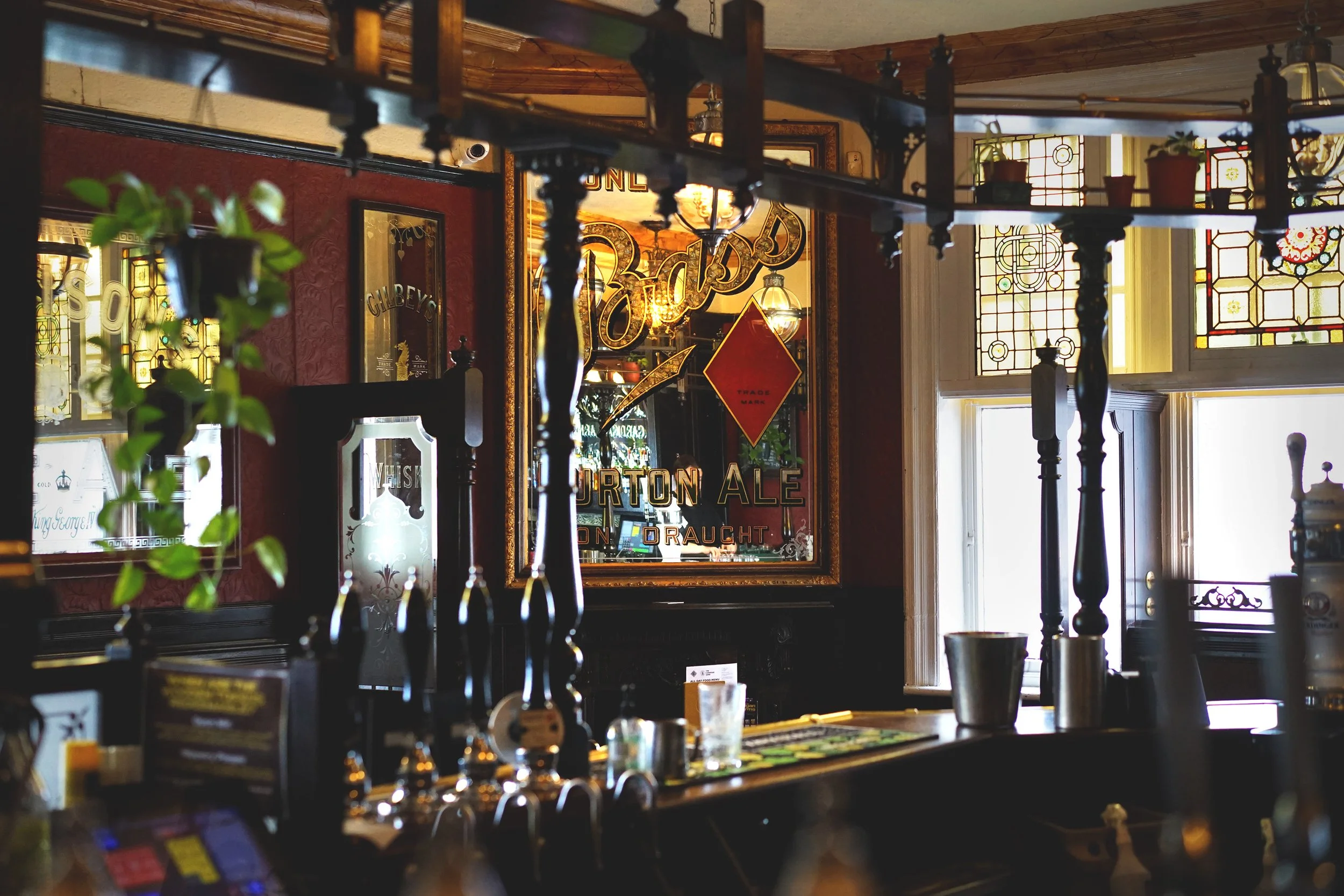
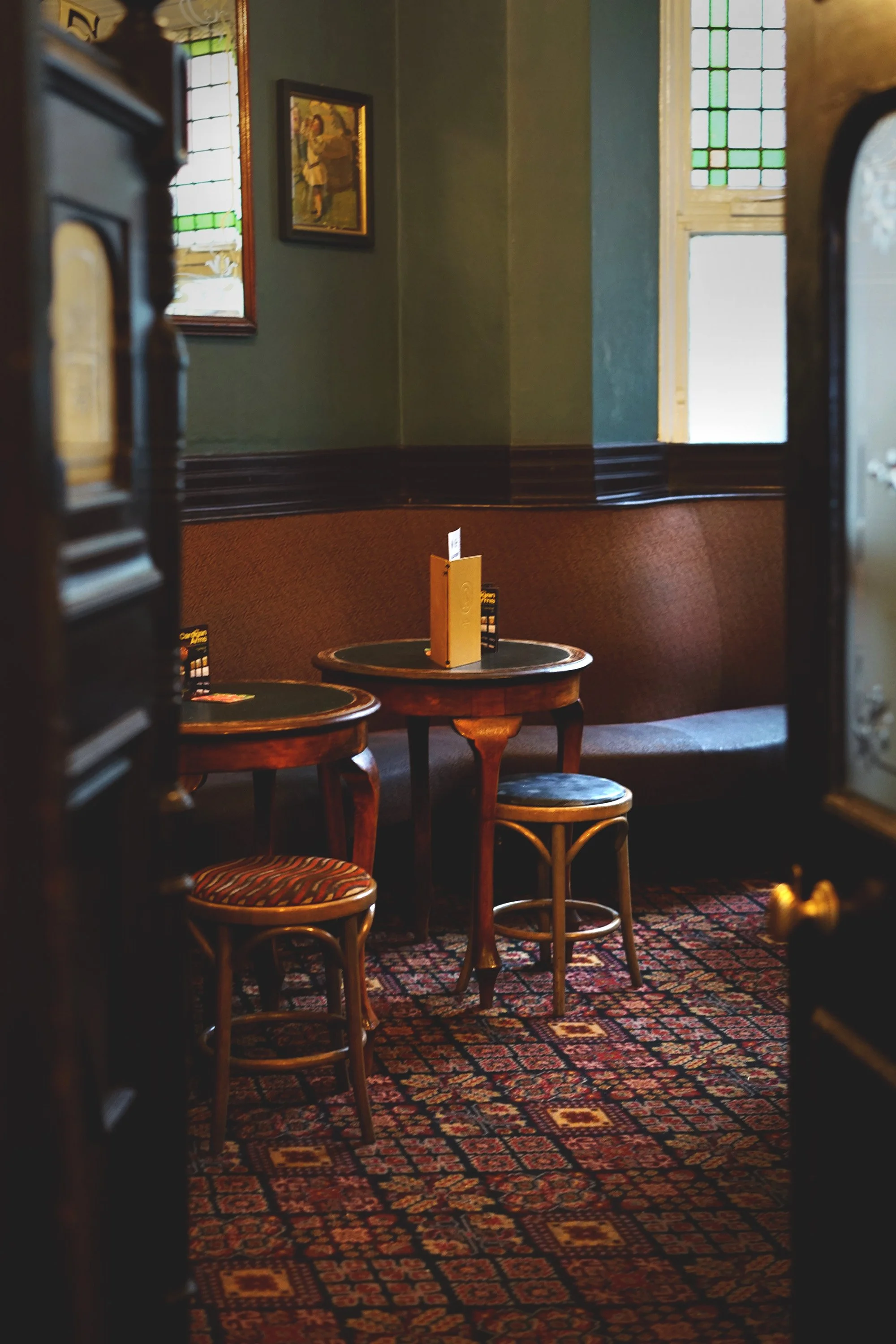
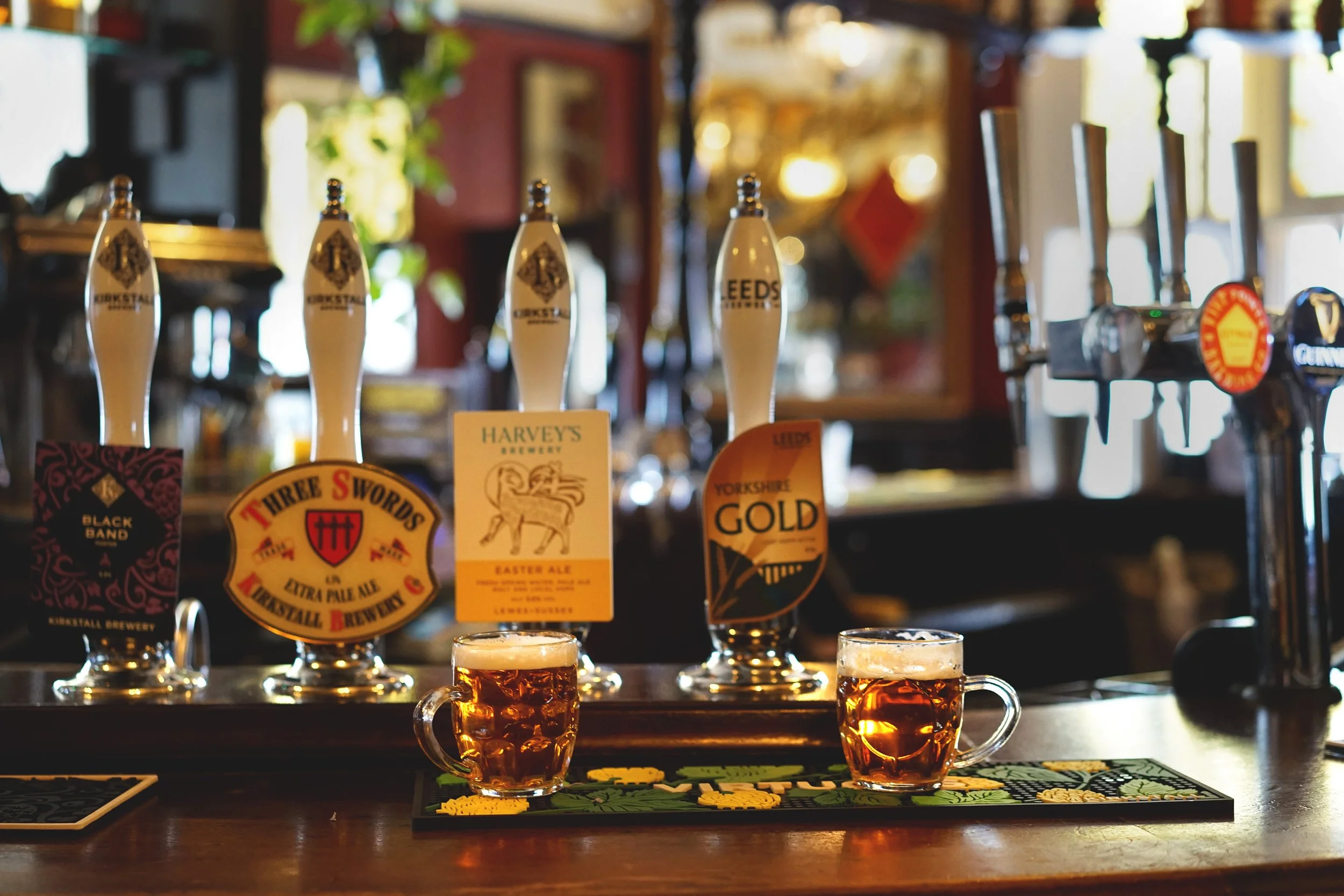
Ed and Steve seem to understand better than anyone in Leeds that nostalgia—liquid or aesthetic—is big business. At the end of February 2026, Whitelock’s hosted a “back to the ’70s” weekend. Punters could buy their first pint of the relaunched Double Diamond for a Three-Day Week-friendly price of £0.25, to be supped alongside a retro menu of gammon, egg, and chips, followed by swiss roll and custard.
““We have good relationships and there is a good community of brewers across the city.””
It’s a fun marketing idea, and punters were understandably thrilled at the prospect of timewarp pricing and school dinner ribstickers in an era of war, despondency, stagnation and energy crises that certainly evokes the 1970s. Such was the buzz around the event that the council caught wind, and complained that the £0.25 price point was irresponsibly cheap. Ed somehow managed to get the council to agree to let them continue by giving away the pints for free instead.
It was a great example of Ed and Steve’s collaborative relationship: Double Diamond is now brewed by Kirkstall and distributed by Vertical Drinks (albeit under the original Allsopp’s brand), and ties in beautifully with Whitelock’s vintage interiors and cultural cachet as a timeless Leeds pub.
Indeed, the strong bond among Kirkstall, Five Points, and Vertical is the reason that it can be difficult to find many other independent beers outside that stable in Ed and Steve’s pubs.
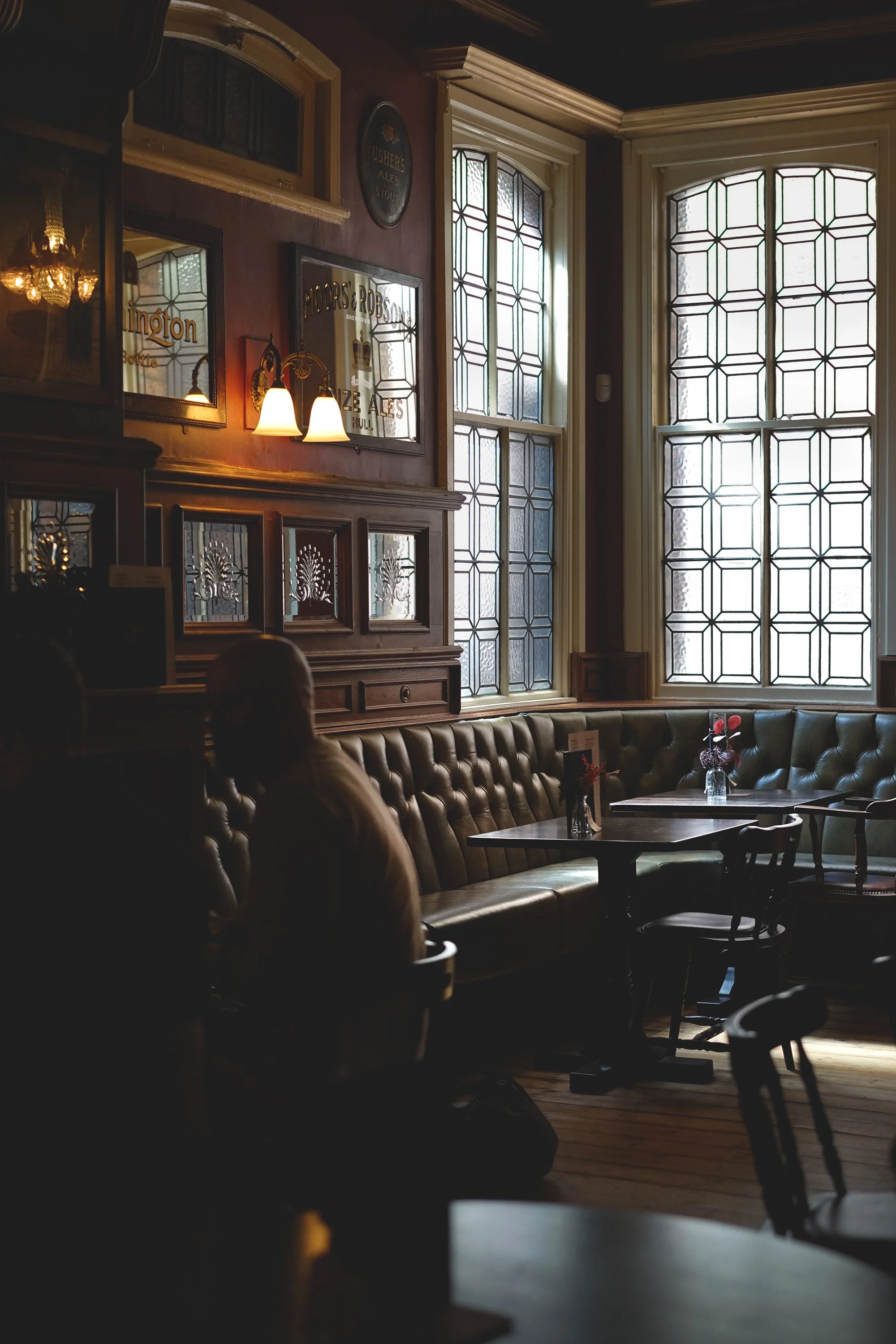
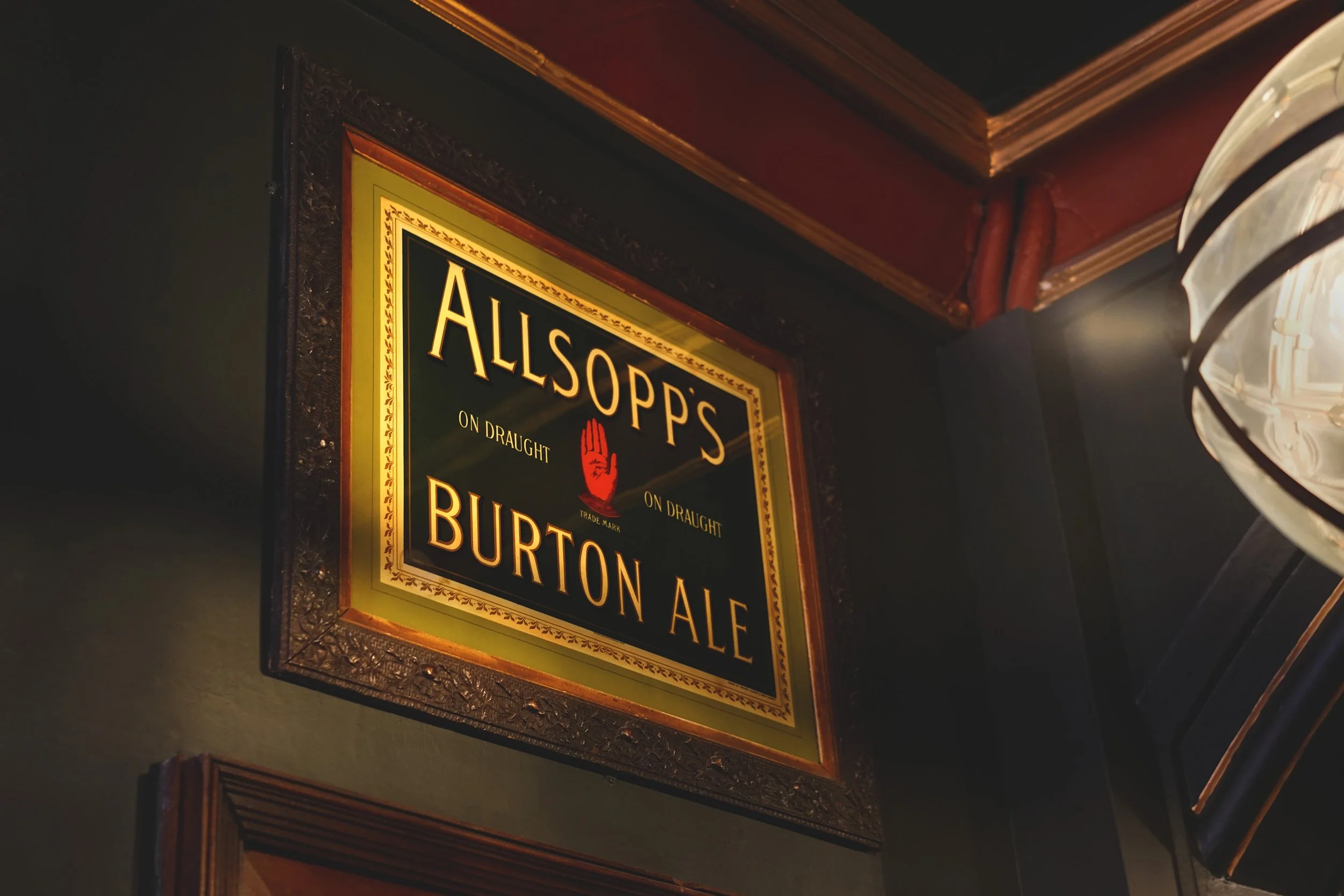
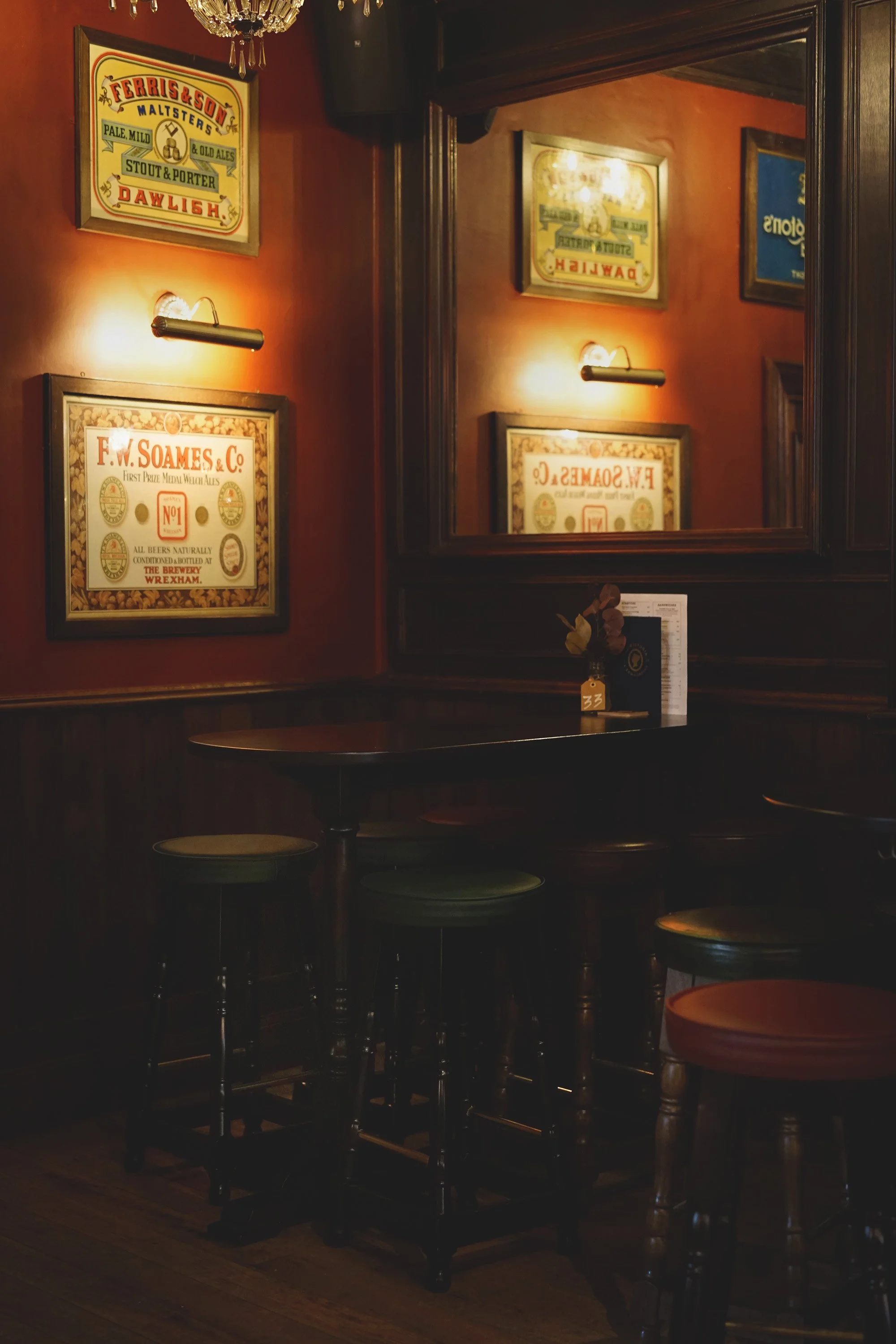
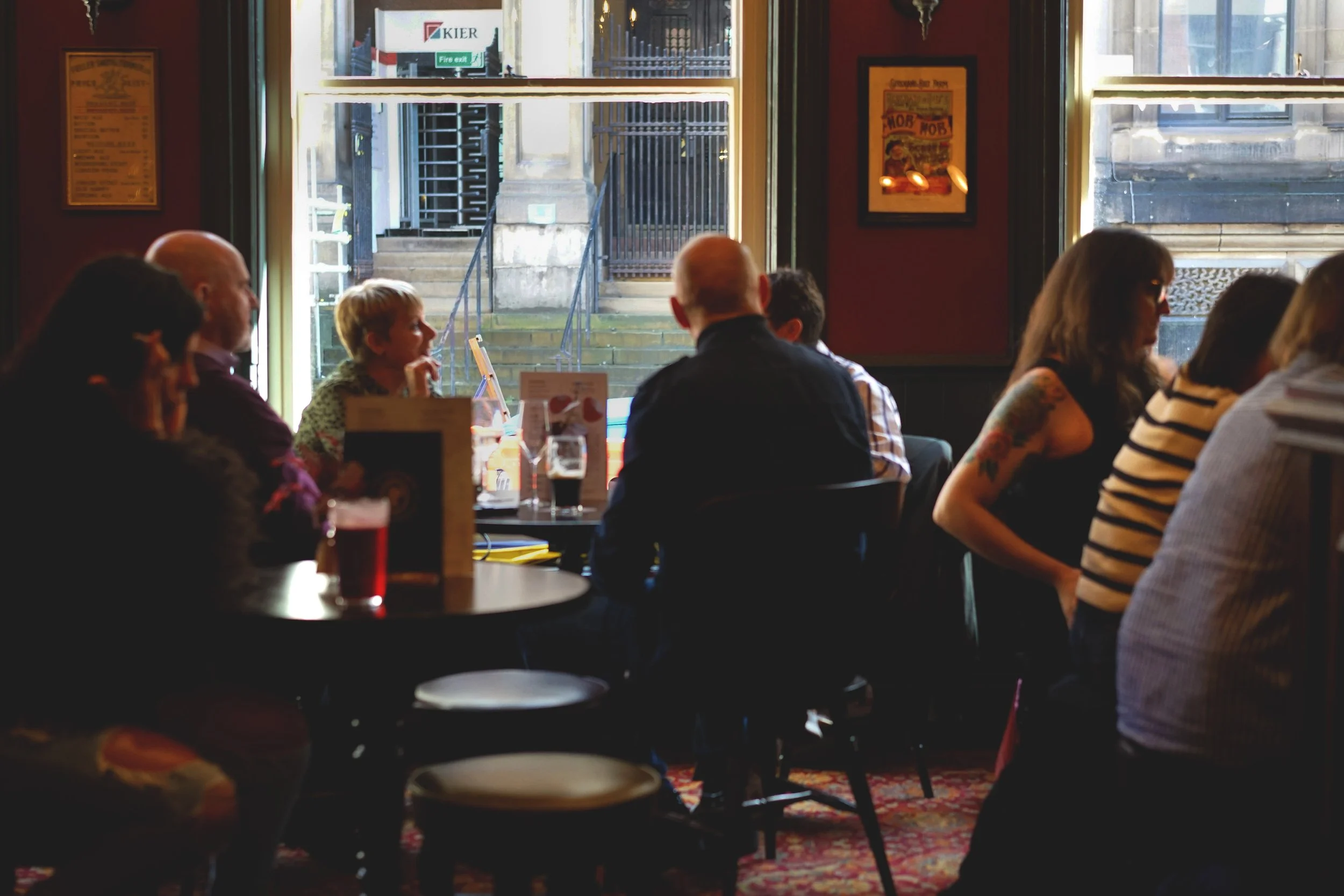
Considering the prevalence of Ed’s and Steve’s brands across the city, shouldn’t the pair return the favour by showcasing other brewers, too? “Supporting other independent brewers has always been a key part of what we do,” Ed explains. “There will never be enough taps for everyone, but it matters.”
In Kirkstall venues, the beers are all largely drawn from their own roster. When I ask Steve whether distribution through Vertical is required to appear in his pubs, he says no, pointing instead to “longstanding relationships” with the brewers he stocks.
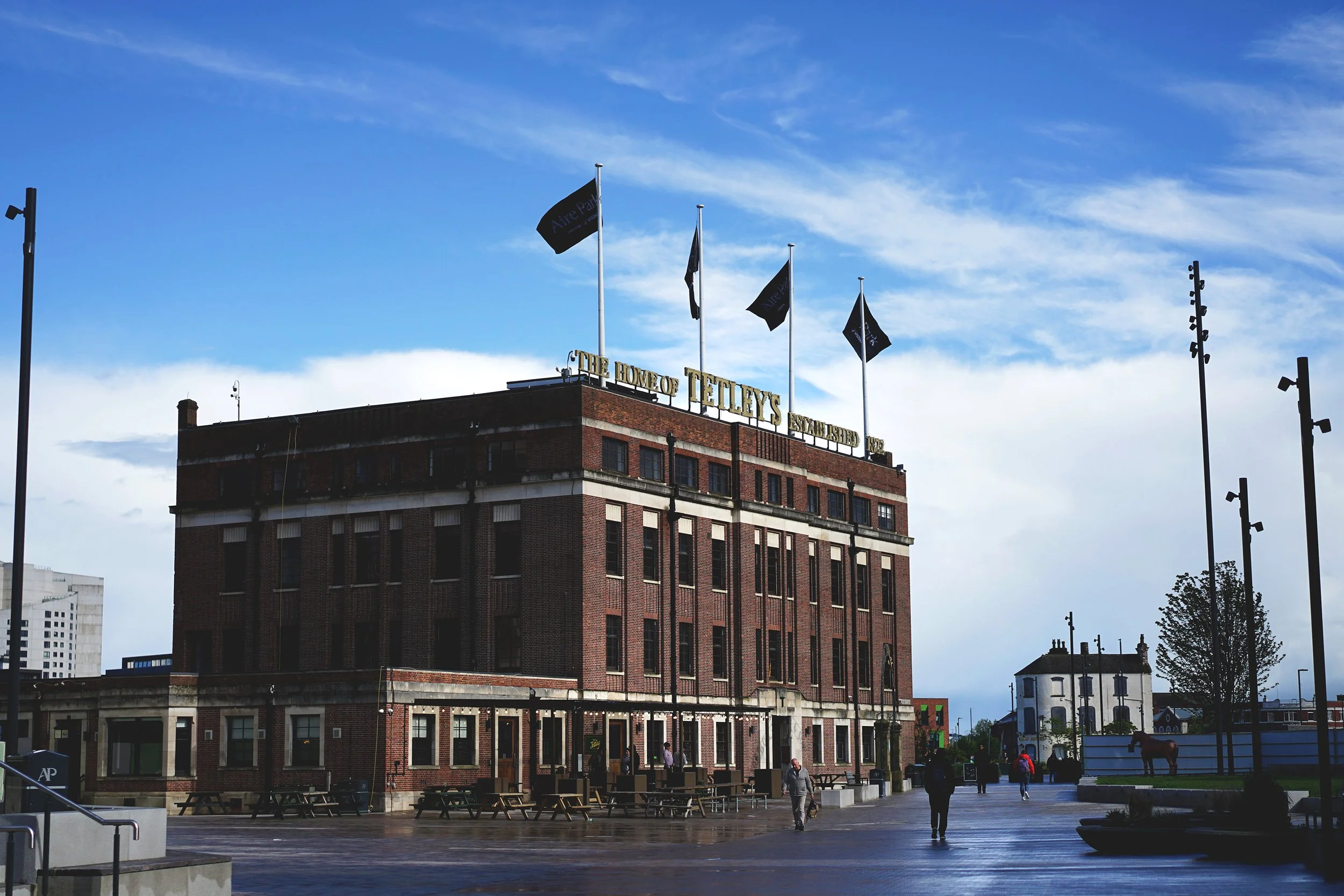
“We have always supported emerging local breweries,” he tells me. “They are invited to our annual beer exhibition held at the brewery in May. We have good relationships, and there is a good community of brewers across the city who often share ideas, loan equipment and materials.”
Kirkstall’s Great Exhibition of Prize Ales, held this year at The Tetley, does support smaller brewers, along with many established ones, too. But how easy it is for newcomers to access Steve’s pubs and distribution networks remains about as clear as a pint of Verdant Putty.
***
“You can dominate a city on price if you want,” North Bar’s John Gyngell says. “Why wouldn’t you? At the end of the day, that’s business. But it’s quite a sad journey I think, from where we were to where we are now. Because the access and the selection we had in Leeds seven years ago is just not there anymore.”
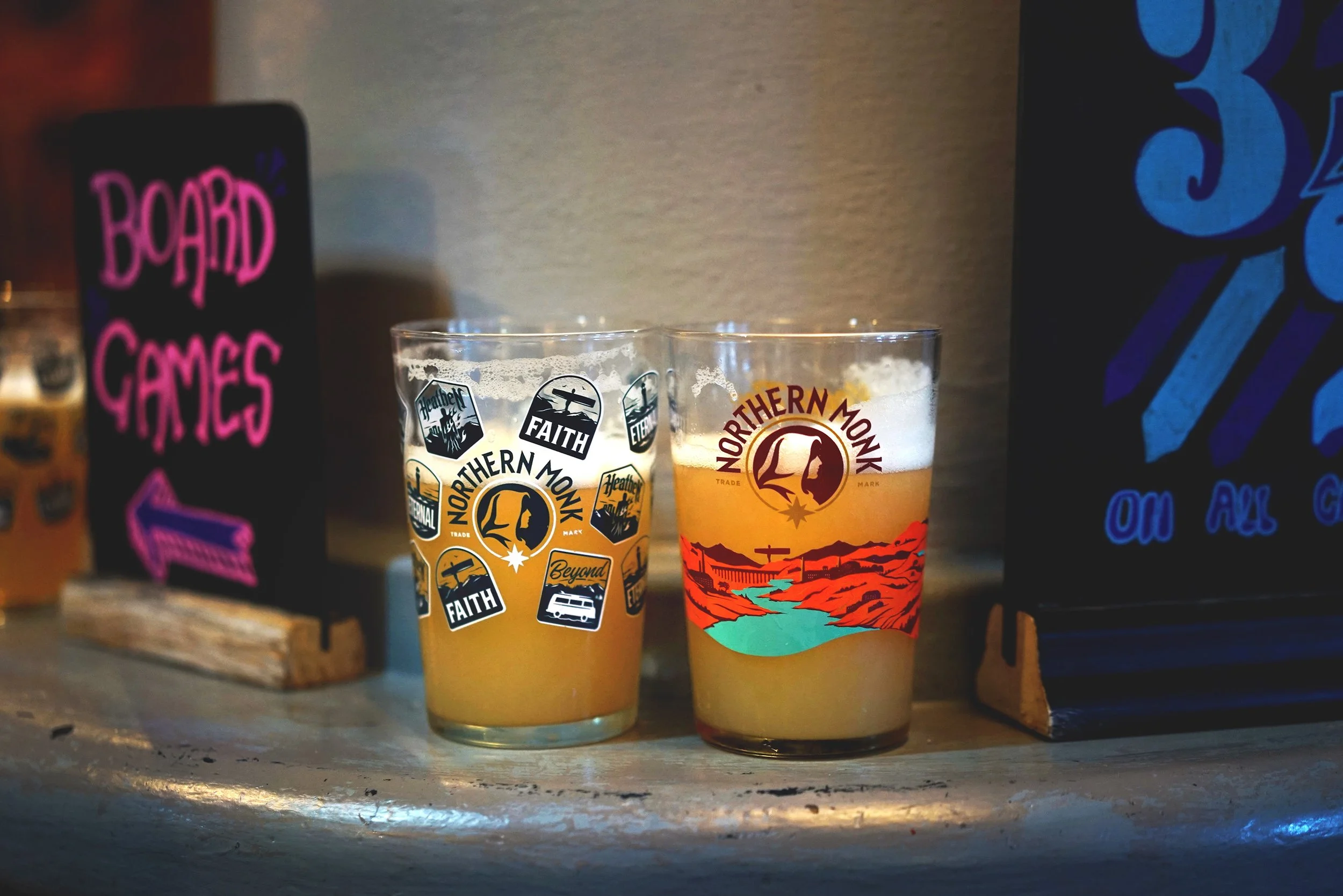
There are many great breweries waiting in the wings. In addition to Horsforth and Piglove, Anthology Brewing Company, Amity, Tartarus, Bini Brew, Wilde Child Brewing Co., Wharfedale, DMC Brewery, Quirky Ales and many others are just as deserving of support.
But if the city feels different to how it once did, it may be less about exclusion than survival. Pubs need beers that guarantee sales and turnover. Drinkers want quality without risk. The collaborative ideal of Leeds beer’s independent heyday now clanks against a stubborn commercial reality.
When I ask Northern Monk’s Russell Bisset about consolidation in Leeds beer, he shrugs off the hand-wringing with a pragmatism that feels increasingly common. “Look, if you run a really good pub, you’re doing pretty well. Long live the pub.”
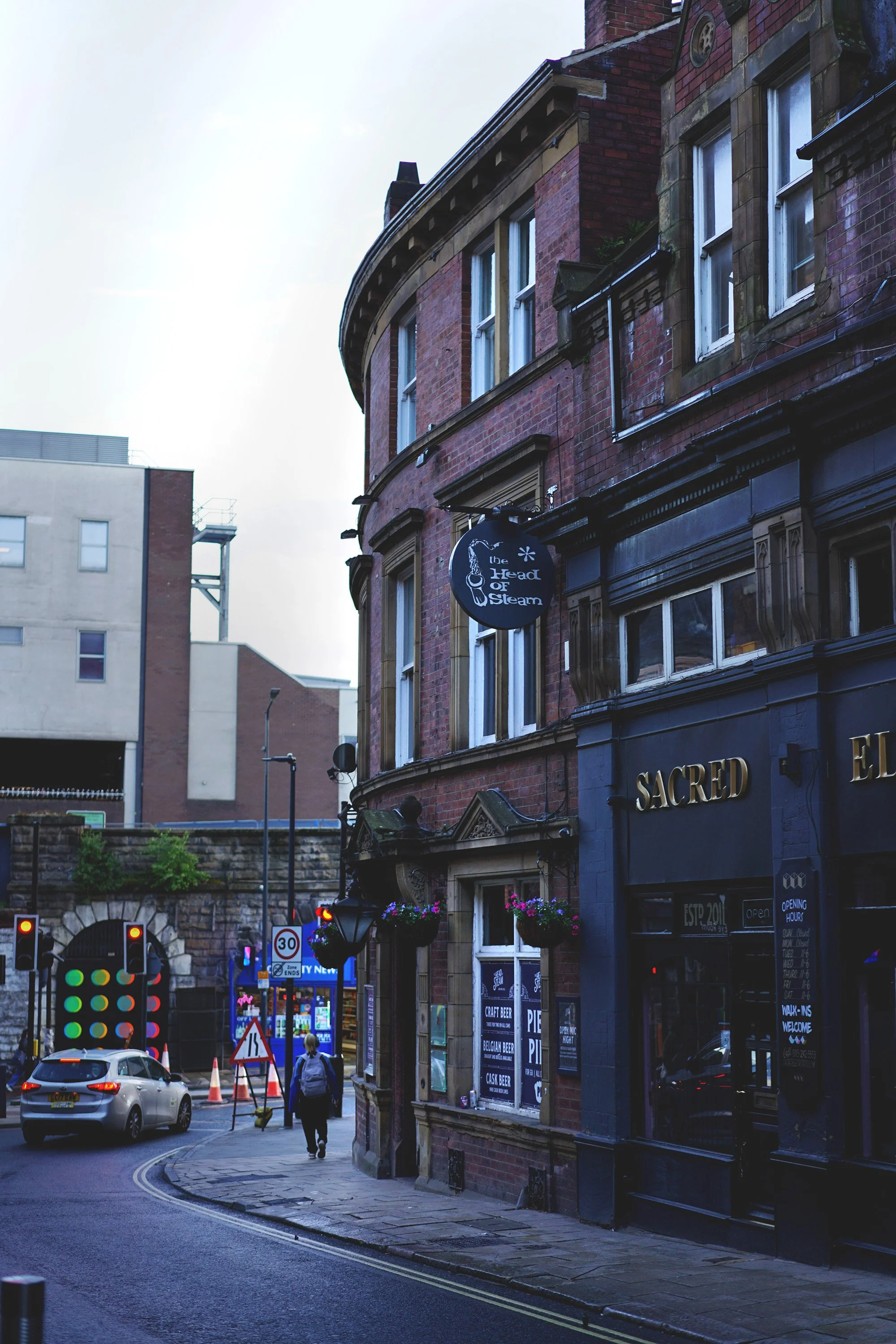
Back in the pubs themselves, the arguments feel less important among everyday punters. For most, any distinction between indie and big beer blur once the pints start flowing. What people want, more than anything, is somewhere dependable, somewhere that feels like it belongs to them, and they to it.
Leeds’ independent spirit is very much alive in its suburbs. Taprooms still function as social hubs, and brewers still share equipment, ingredients, and advice. The collaborative energy that defined Leeds’ earlier independent beer boom hasn’t disappeared—it’s simply less visible from the main drag.



As small businesses struggle with high rents, prolonged road closures, and a council that seems to prioritise student housing and big-brand retail over independents, the city centre is struggling. In this context, the “collaborative energy” and “independent free trade” Russell recalls from Leeds’ earlier beer boom is now looking rather cagey and protectionist.
For some punters, this may mean fewer options and perhaps less excitement—at least for now. But an antidote could be close to hand, if the major hospitality players are willing to reach for it: Follow the examples of Sheffield, Manchester, Liverpool, and Newcastle, and get behind the wealth of excellent producers the Leeds independent beer scene has to offer.