
Do You Play Flamenco? — Music, Dancing, and Sherry in Jerez’s Tabanco Bars
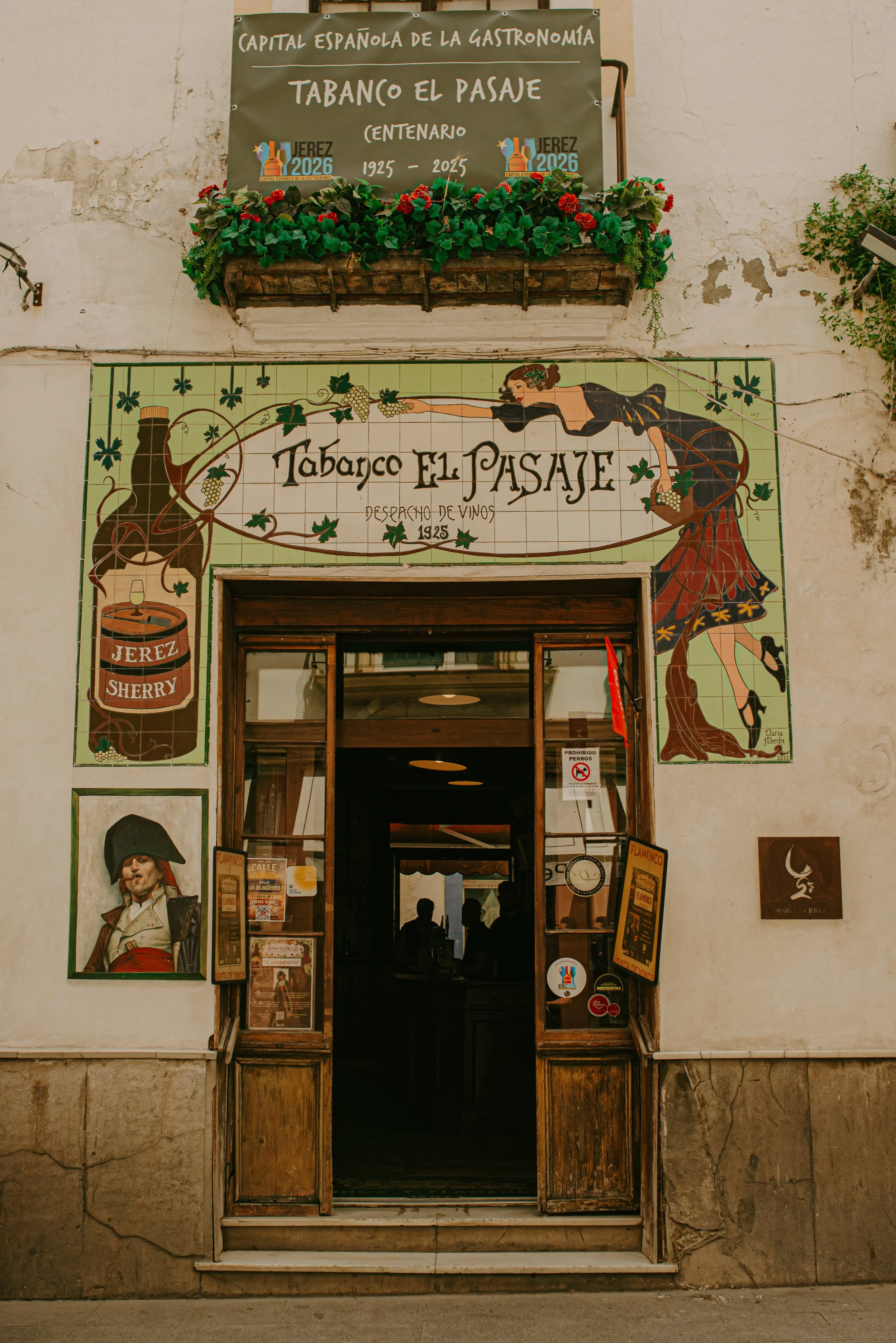
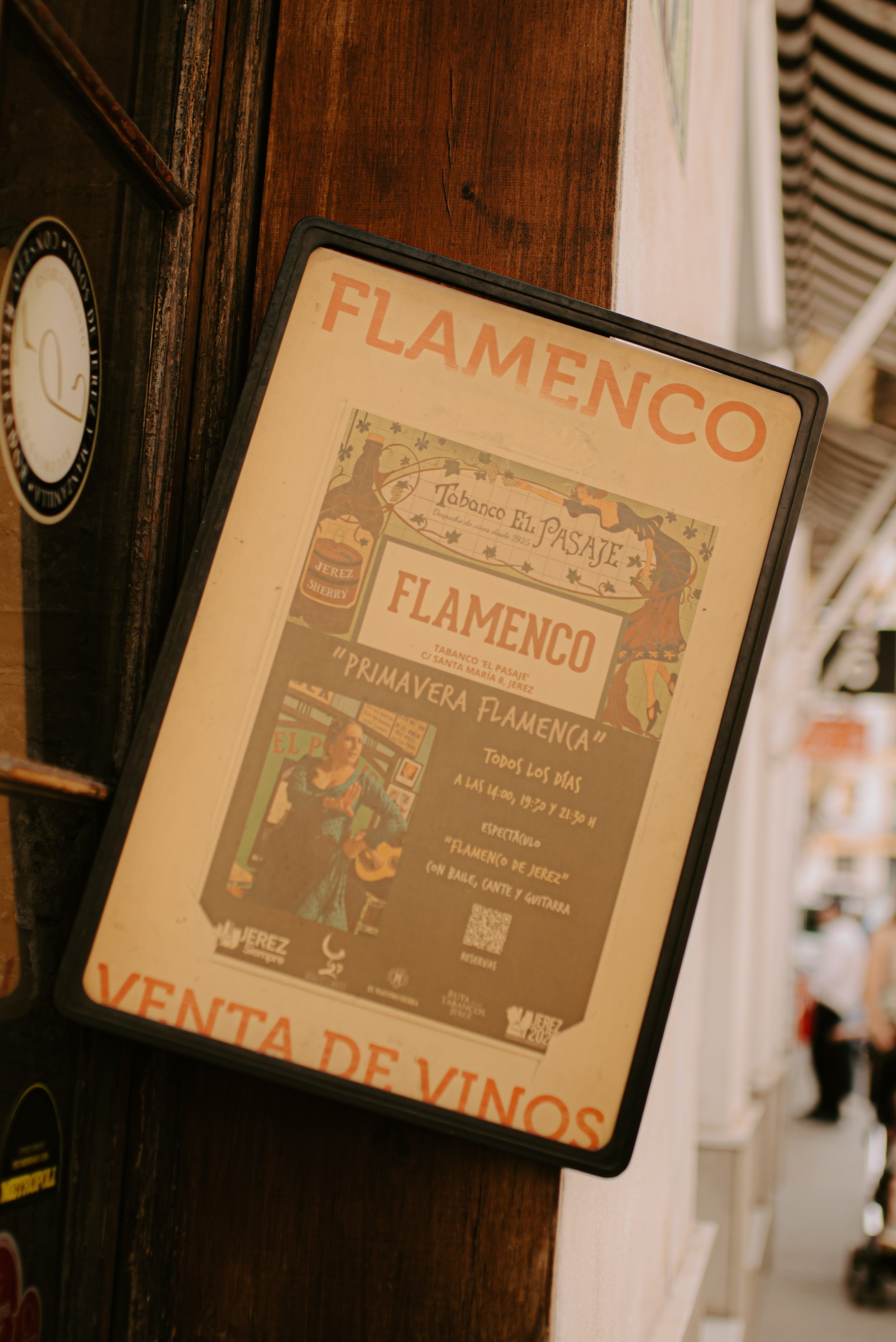
In the early 20th century, a space between two narrow streets in the city centre of Jerez became a meeting place for local waiters and bartenders where they’d gather to drink sherry by the glass, purchase cigarettes, and take bottles of wine to go. José González Navarro, already in the hospitality business, saw an opportunity. On December 16th, 1925 he opened the doors of his new bar; he called it El Pasaje—The Passage—in reference to its entrances on either side. It is now considered the oldest tabanco, or traditional Andalucian tavern, still operating in Jerez.



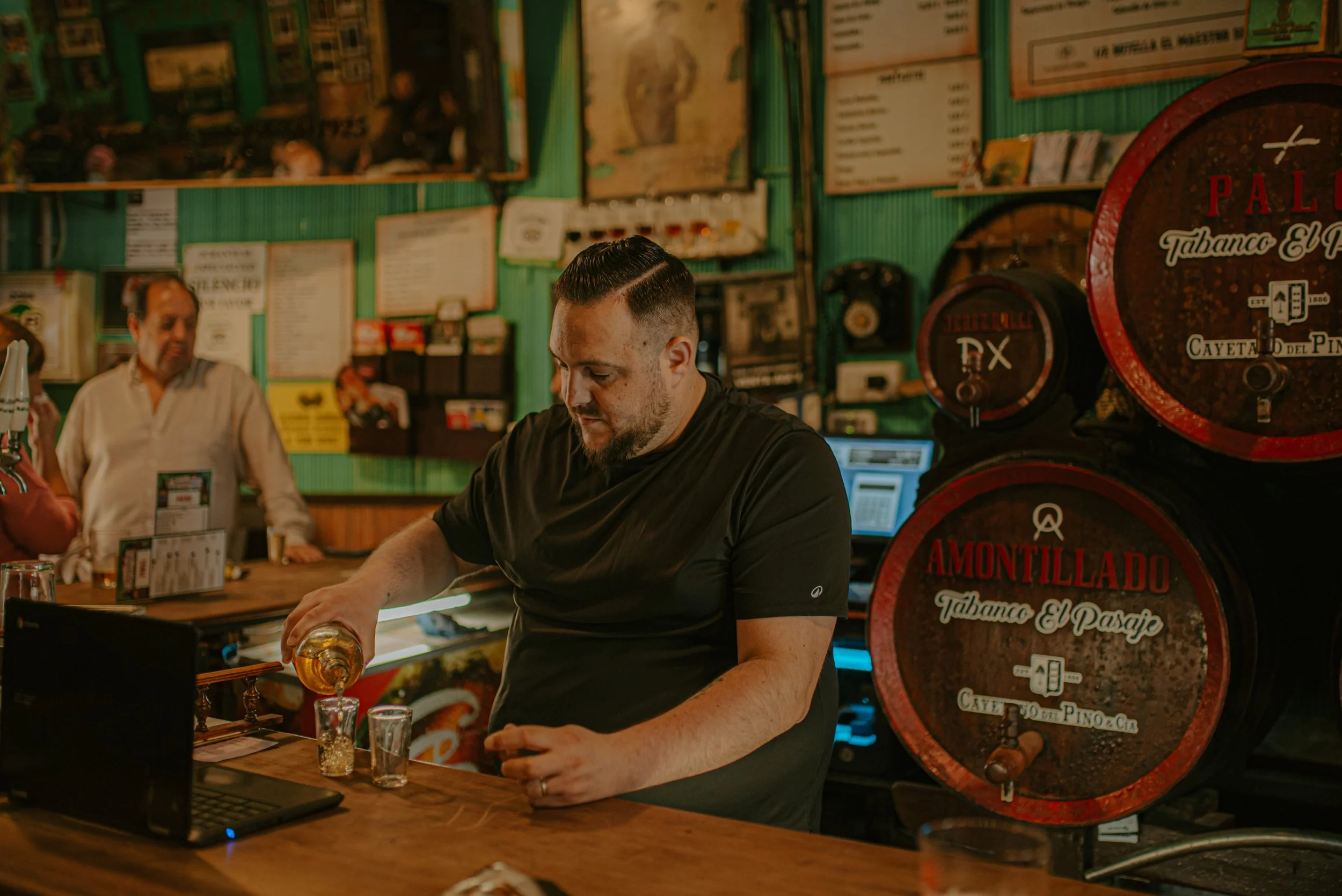
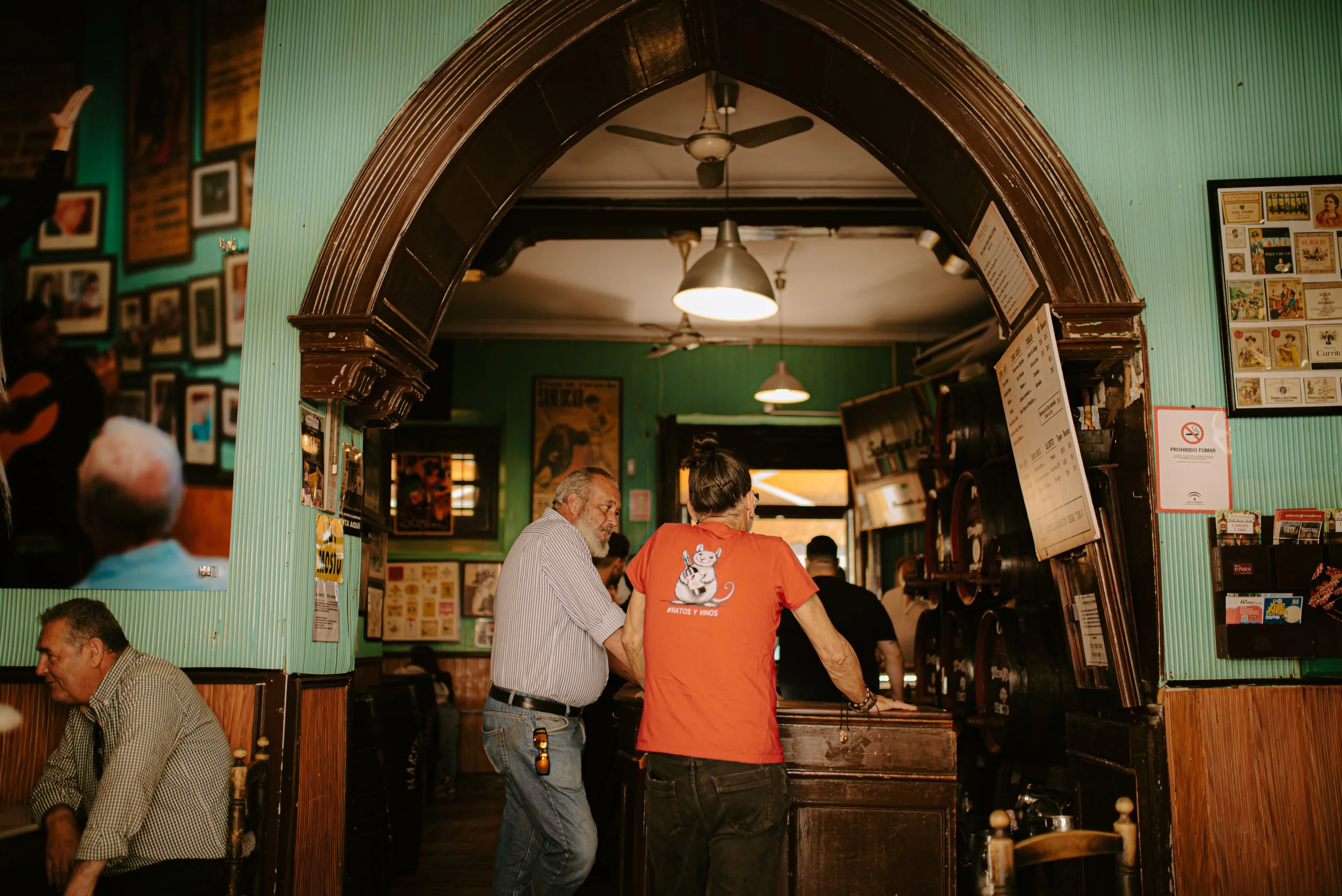
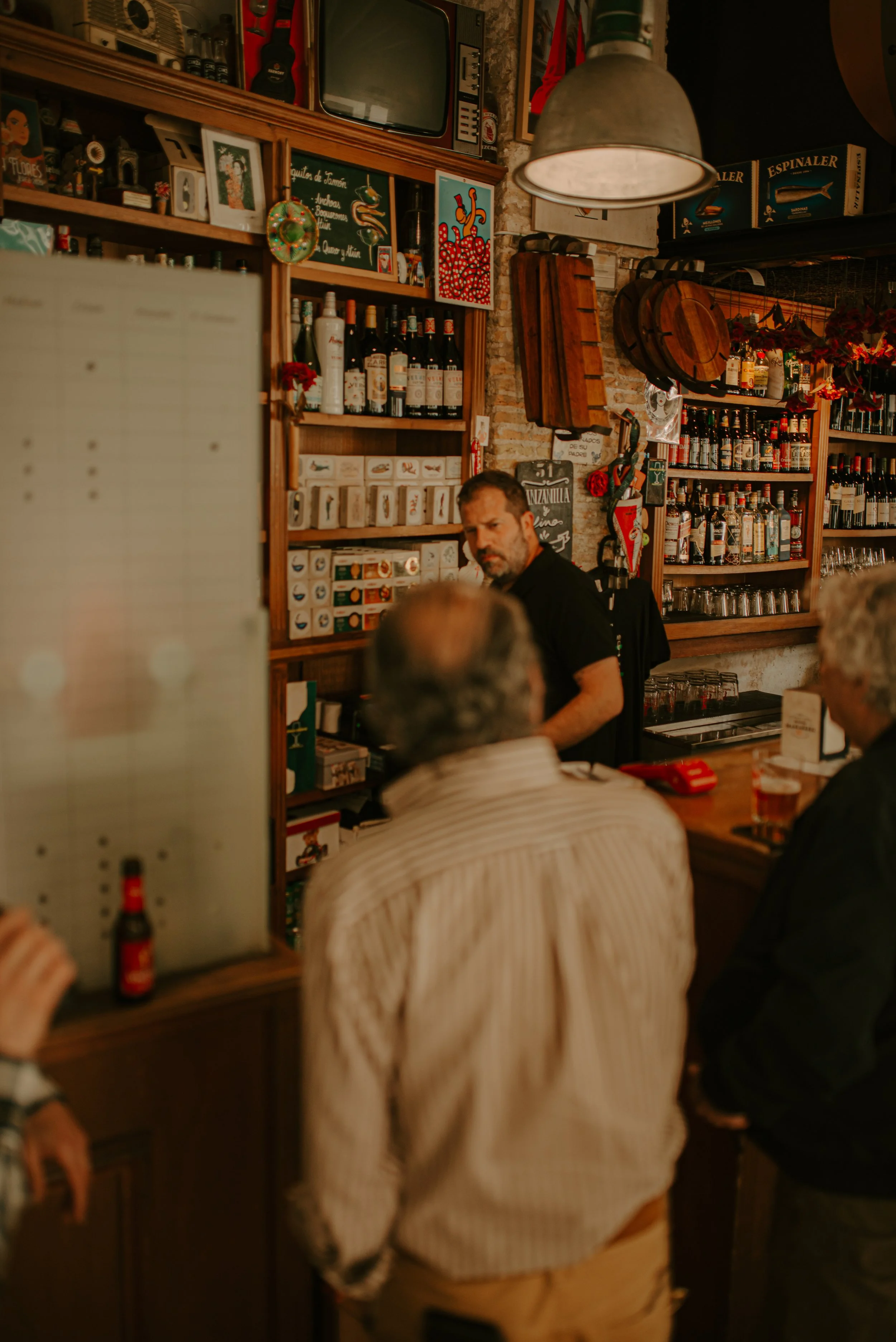
I arrive at half past one on a mild spring afternoon. Javi, the bartender, taps his knuckles on the old wooden bartop, a bulería—the last act of a flamenco show—still sounding in his ears.
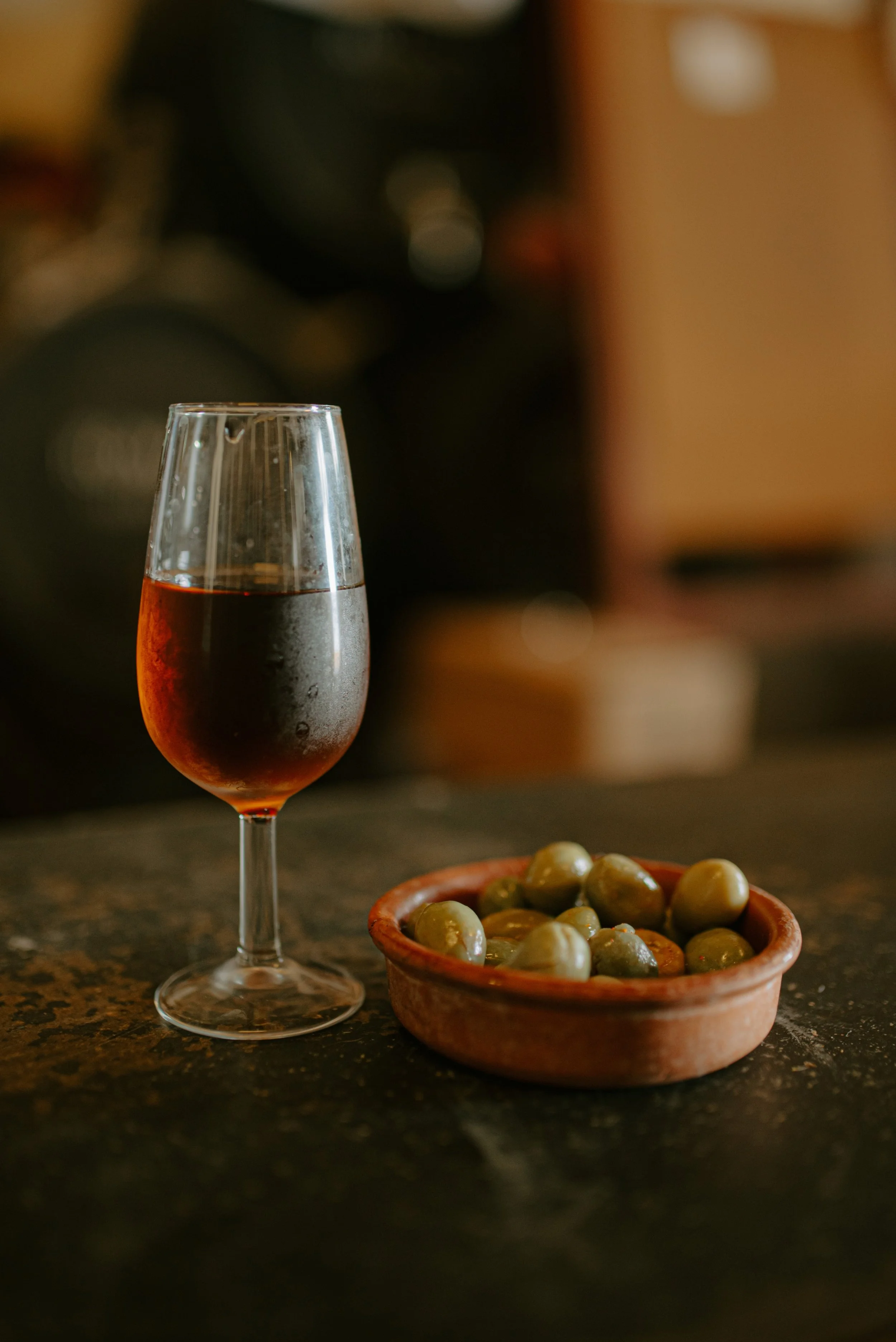
“Copa de fino, porfa,” I ask. I’m a bit early and the impending rush has not yet begun. For the moment, it’s me and a group of three Spanish guys, content with drinks in their hands after slipping out of work early. Some traditions haven’t changed.
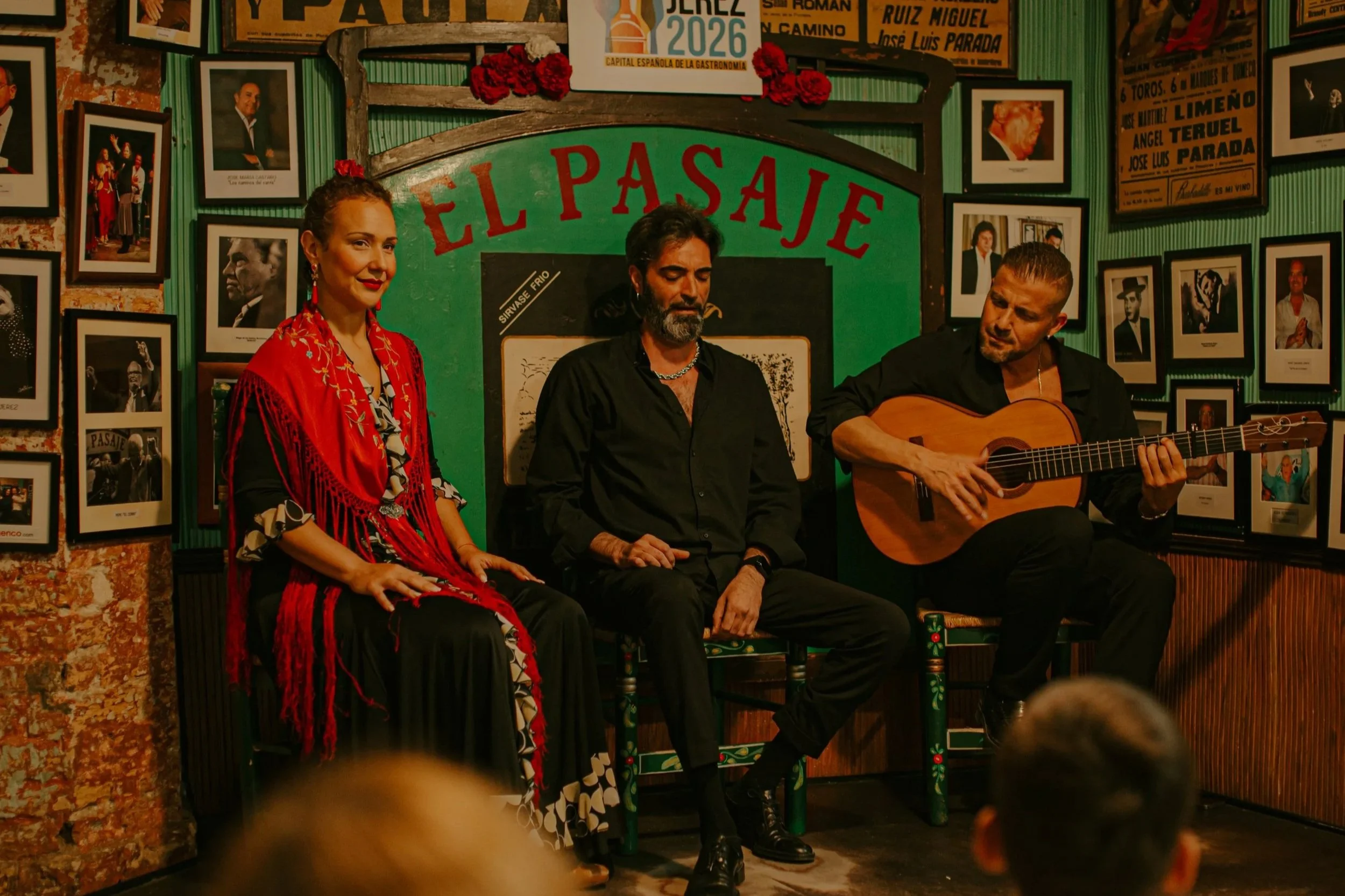
The walls are decorated with metre-high posters of bullfighters and portraits of great flamenco singers from decades gone by, alongside religious imagery. The Virgin’s weeping eyes stare back at me as I sip fino from my small vasito.
Photography by Teresa Gutiérrez
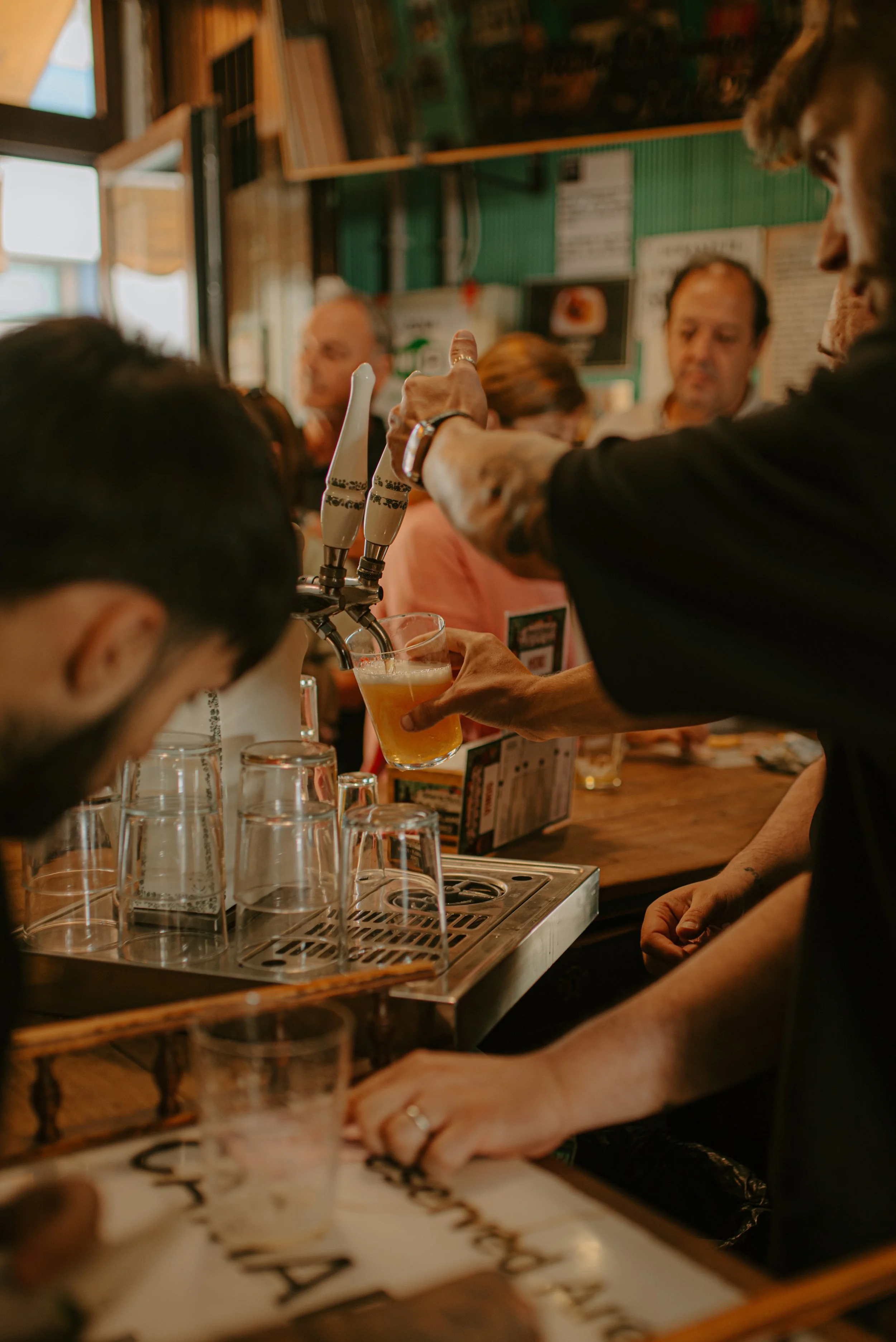
The tourists arrive in their shorts, hiking shoes and sporty fluorescent windbreakers, cameras charged and backpacks full for the day trip. There is a menu, but the locals don’t bother with it. They simply shout their orders upon arrival. An older German couple beside me skim through it with uncertainty before settling on beer.
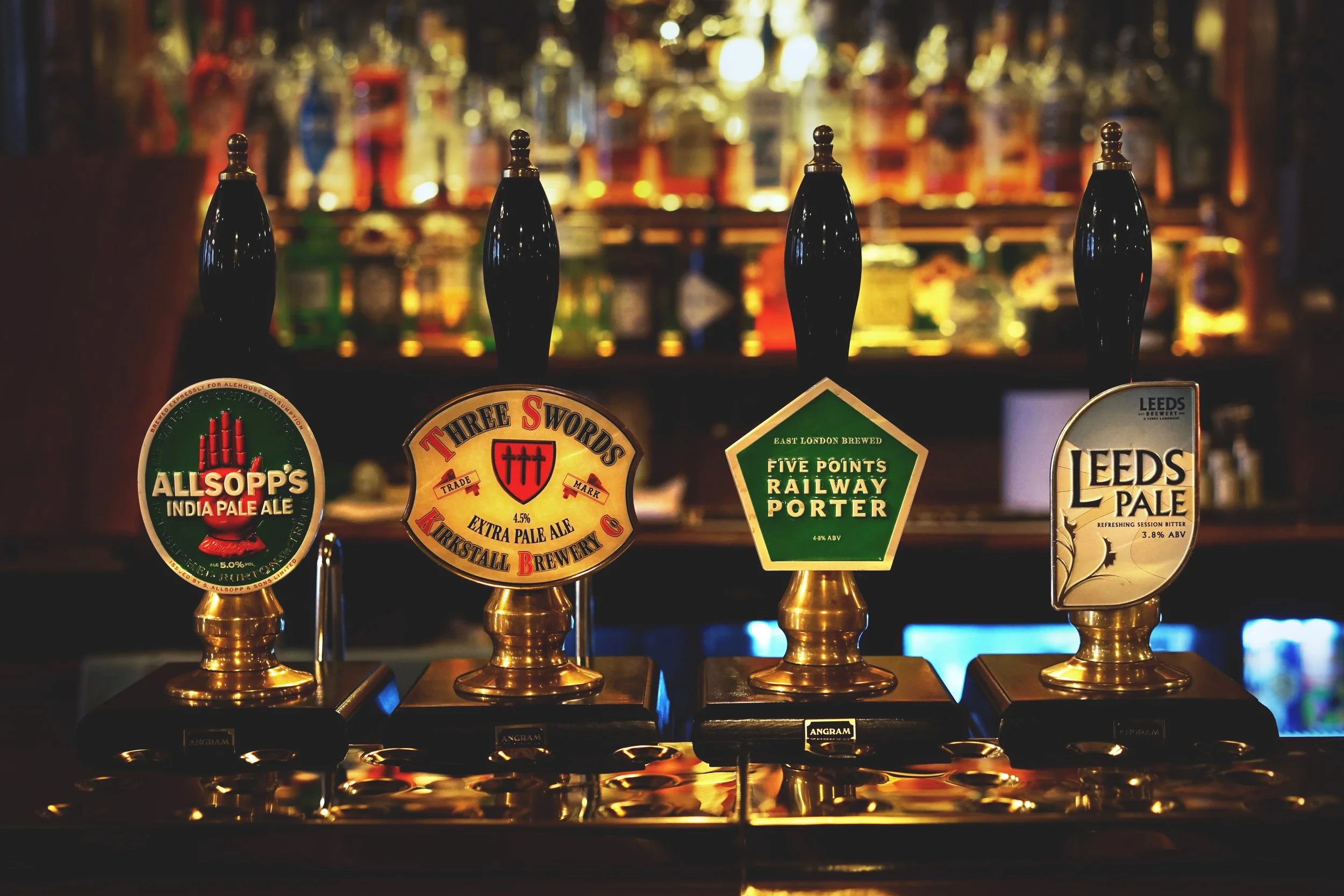
On tap is Cruzcampo, an easy-drinking lager from nearby Seville and the only draft option. Despite not having a local brewery, most Jerezanos are quick to express their distaste for it, fuelled by rivalry rather than the actual flavour. If given the choice, many would opt for Granada’s Alhambra instead.
““Sherry is the real point.””
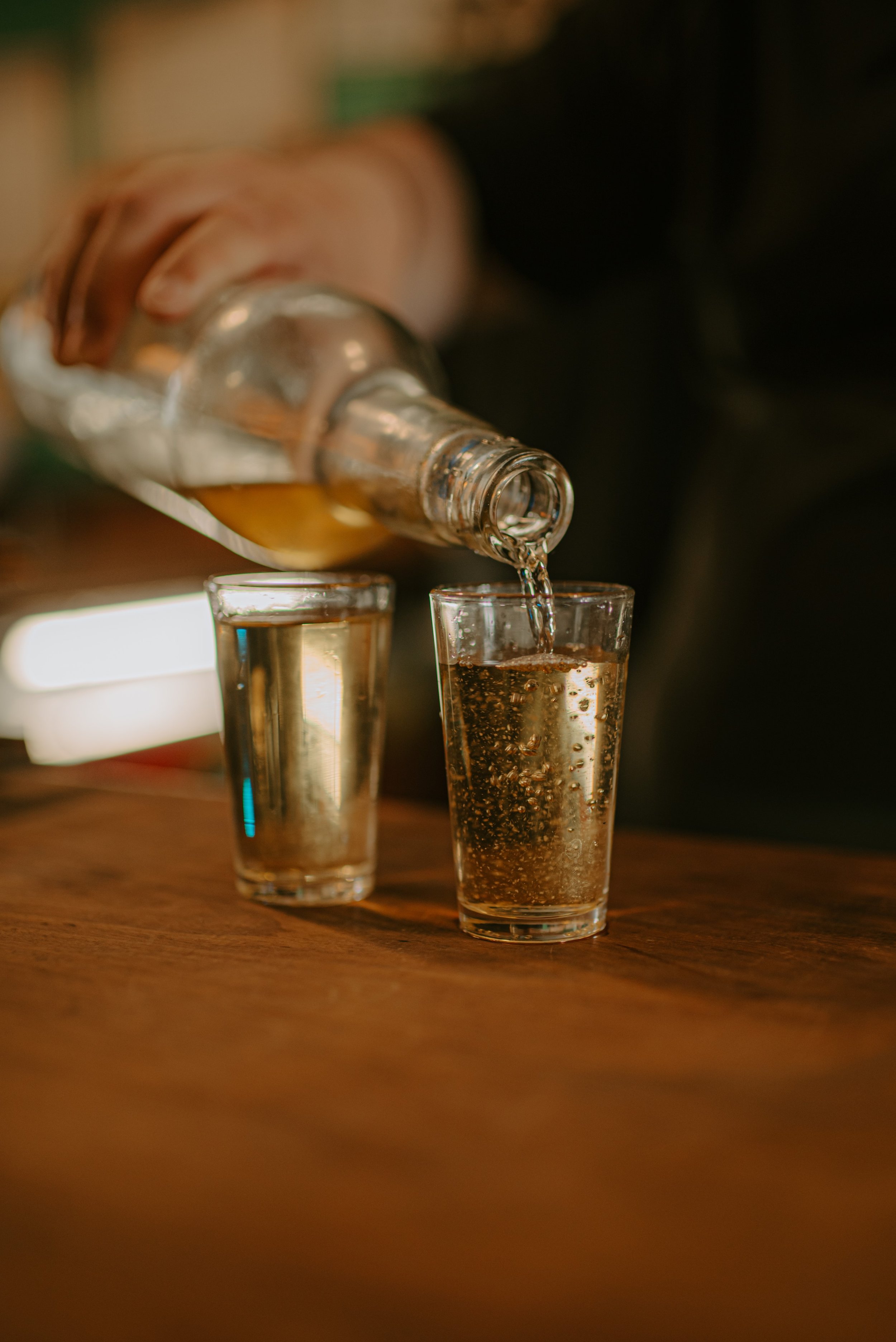
Javi casually slides a wide, rounded glass across the wood, filled slightly over halfway. He’s met with a strong look of confusion from the two Germans. The half pour is a bit unnerving. A media maceta, it’s called—the standard here. But sherry is the real point.
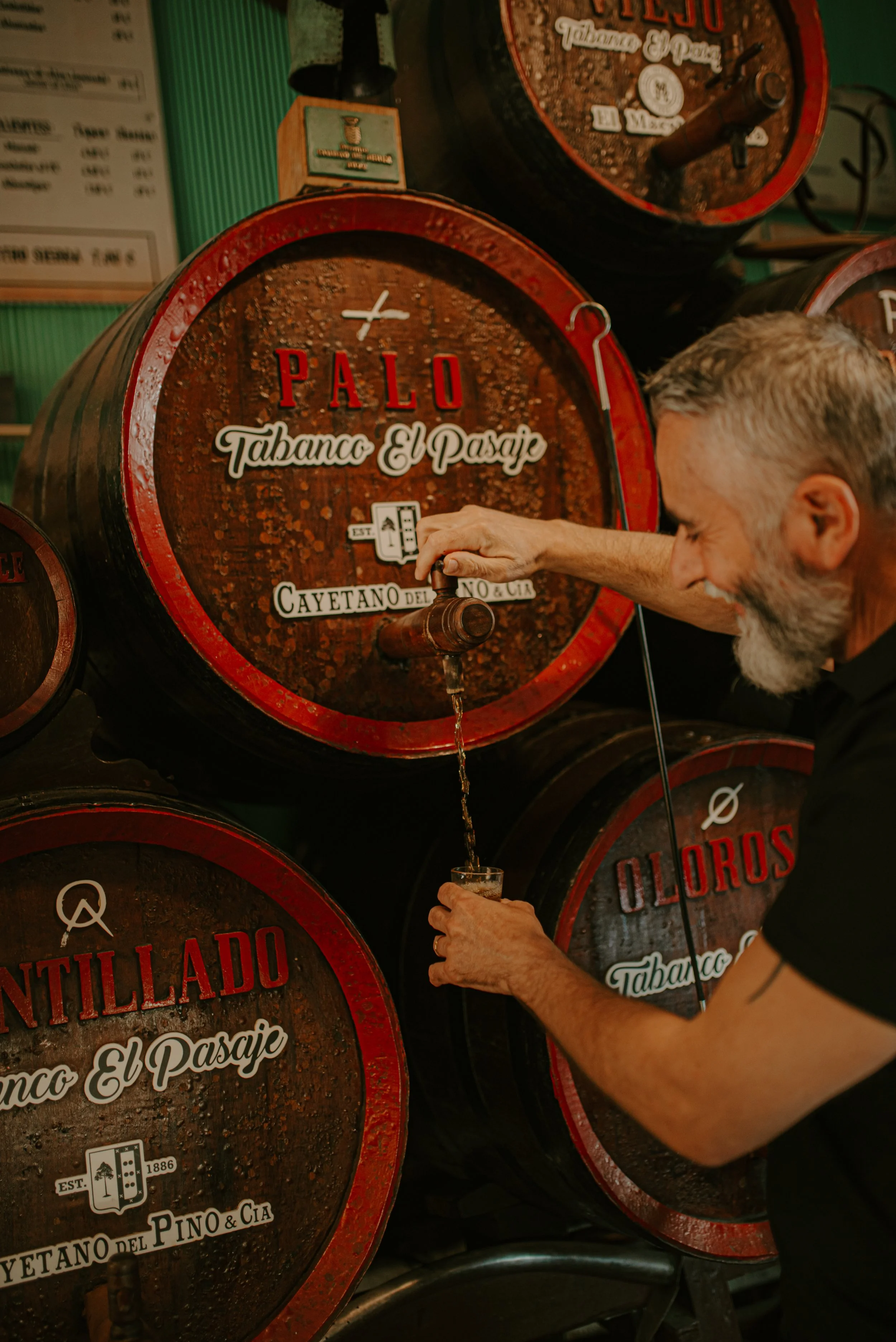
The tabanco is historically linked to the selling of sherry in bulk. As the modern industry began to take shape in the 18th century, local bodegas became the principal suppliers. The tradition continues at El Pasaje, which is supplied by three nearby bodegas: Cayetano del Pino, El Maestro Sierra, and Díez Mérito. A true tabanco should sell 60 to 70% of its sherry this way.
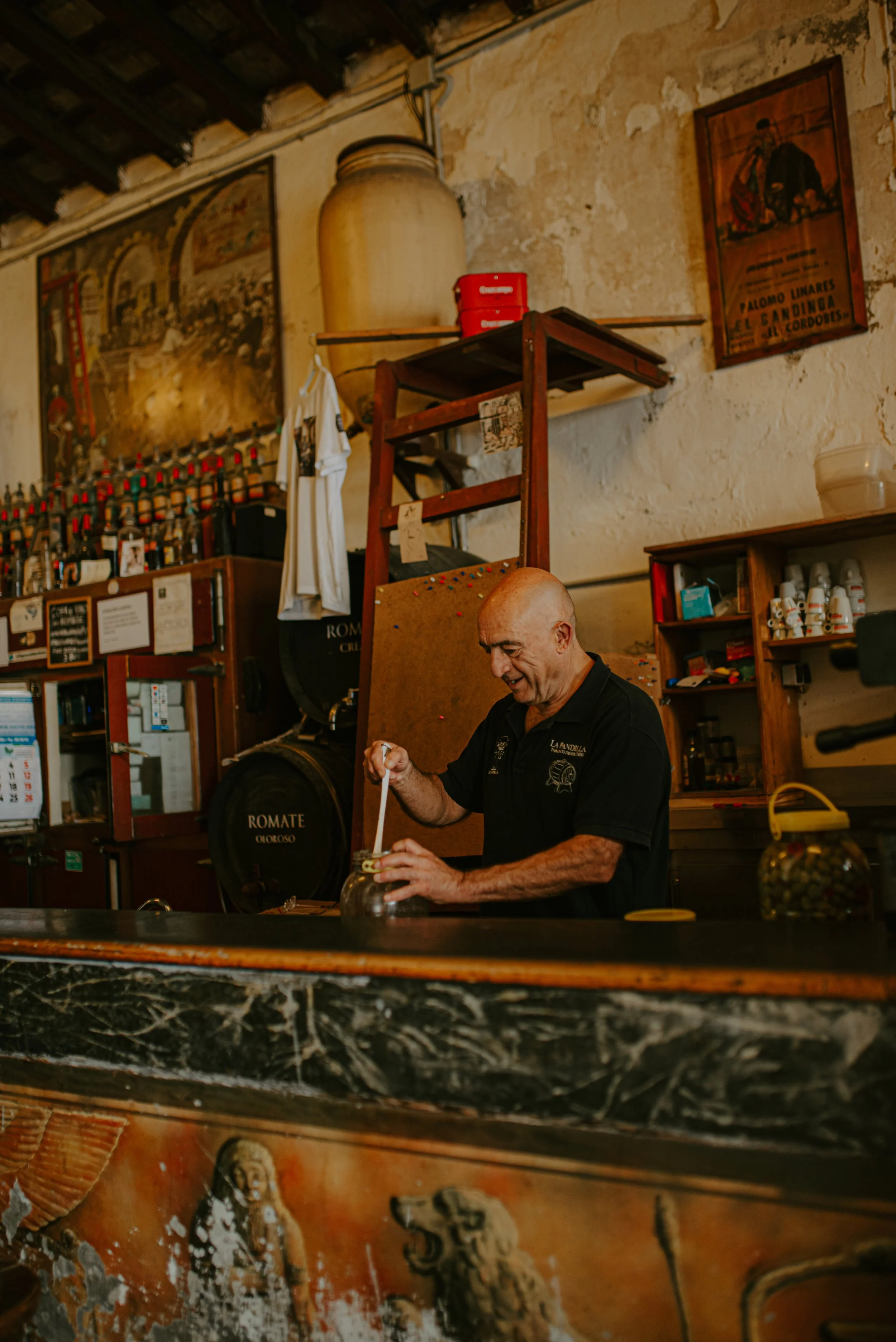
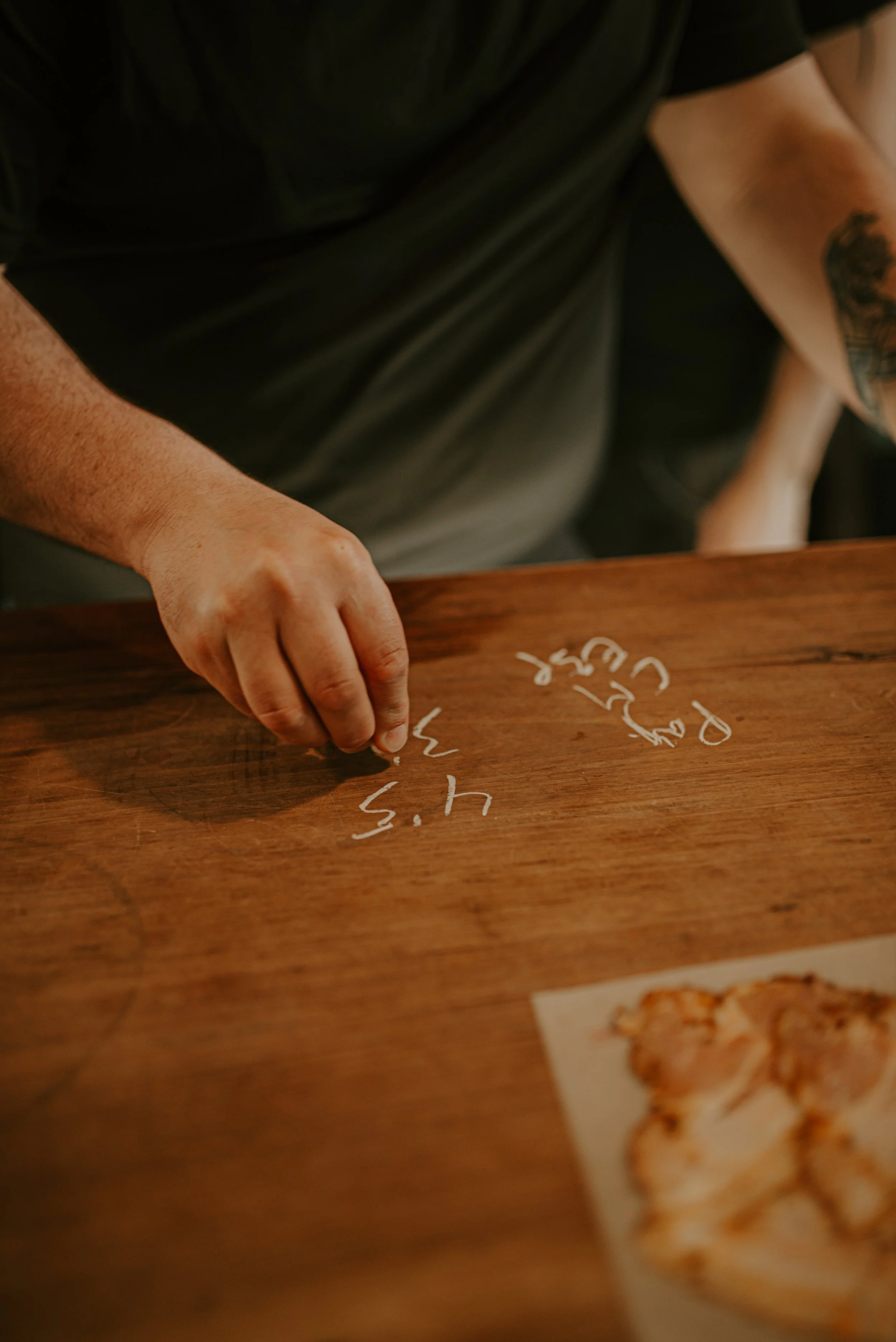
The orders pour in and the chalk comes out. Javi and his team of three scribble shorthand directly onto the wooden bar to keep tabs on who’s having what. People move and join tables, but even amidst the chaos, the bartenders don’t lose track.
The hum of conversation fills the room until a pointed “shh”—the cue that music is going to begin. Unlike the flamenco theatre, the tablao, which hosts organised shows with elevated stages, costumes, and dramatic lighting, there’s no amplification in the tabanco. No speakers and no microphones. If you want to hear it, you need to be quiet.
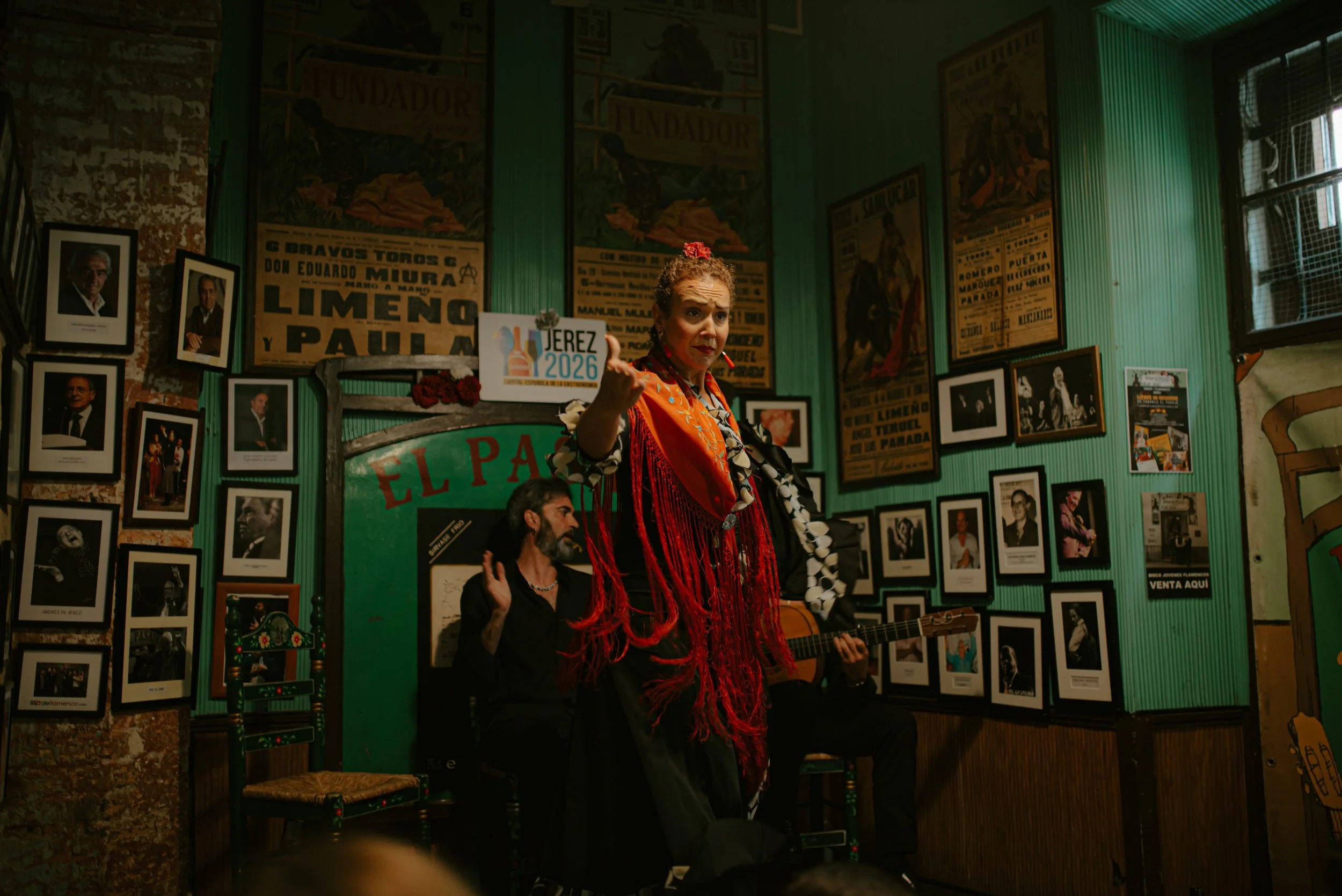
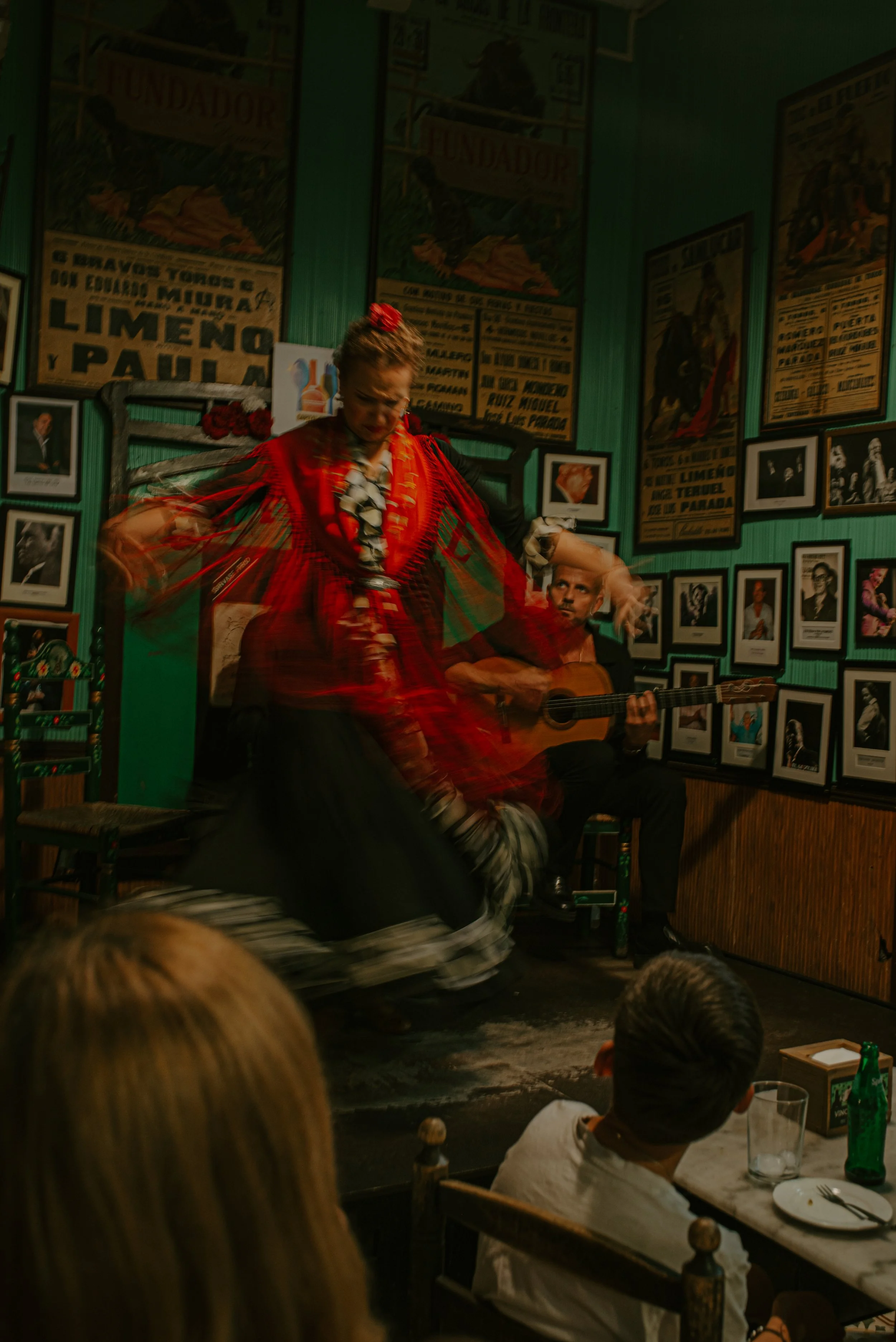
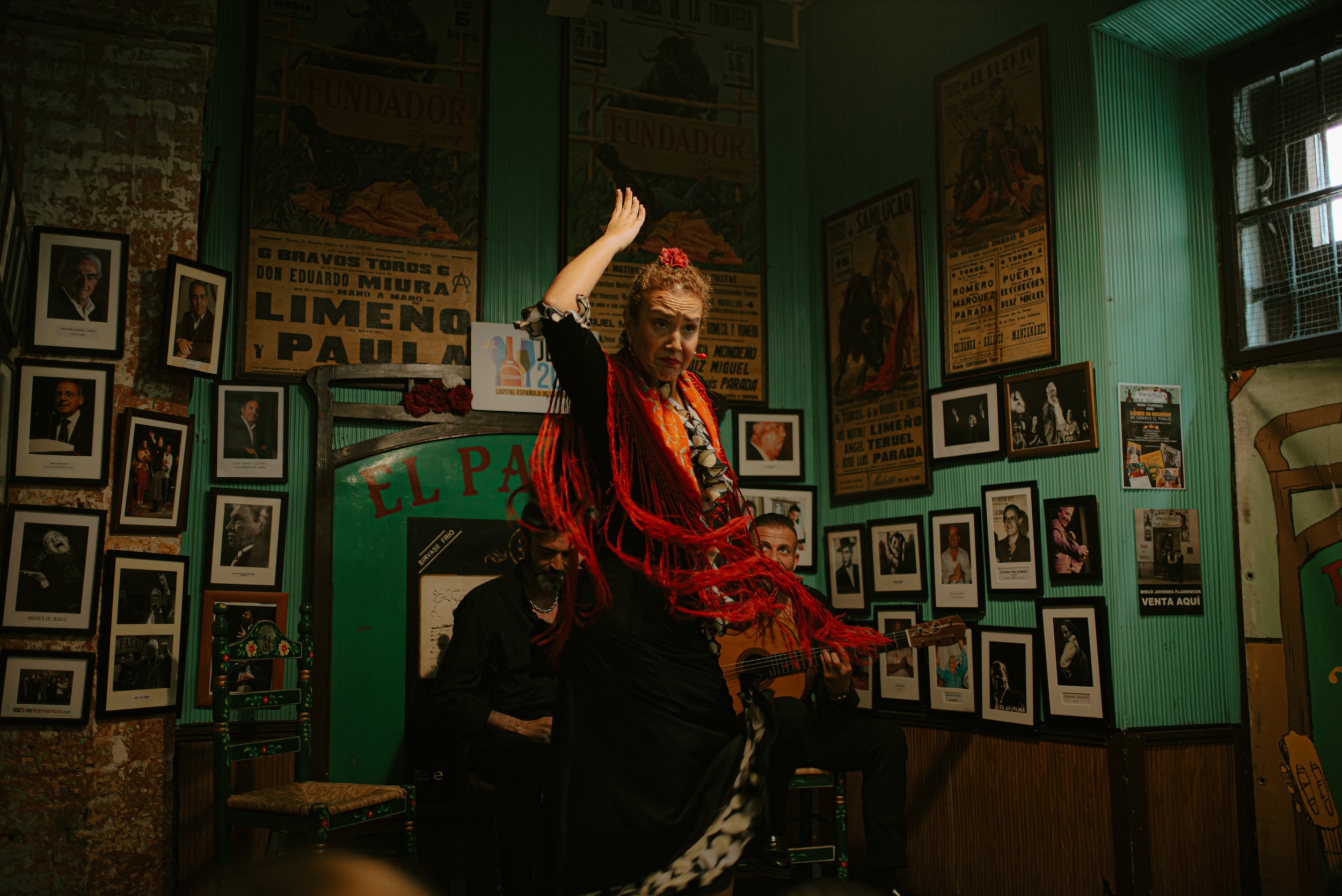
Flamenco can happen at any moment. After a few sherries, a rhythmic tapping starts on the table in the corner, then palmas, and suddenly a singer enters with a letra.
“This is why I could never leave Jerez,” says local guitarist Santiago Moreno as we enjoy the nutty, oxidised flavours of the Amontillado in our glasses. “If you’re not in Jerez, you lose that, the essence of what makes flamenco special.”
Behind me, a woman excitedly starts clapping along. Momentarily the centre of attention, she quickly gets the message.
One Sunday afternoon, I was on a tabanco crawl with some dancers. After multiple sherries, they decided to quiz me on my knowledge of flamenco. Feeling confident, I clapped with the performers only for the singer to call out at the end of the song, “thanks to the palmero in the back!” There was enough humour in his voice that it only took two weeks of embarrassment before I felt comfortable showing my face there again.
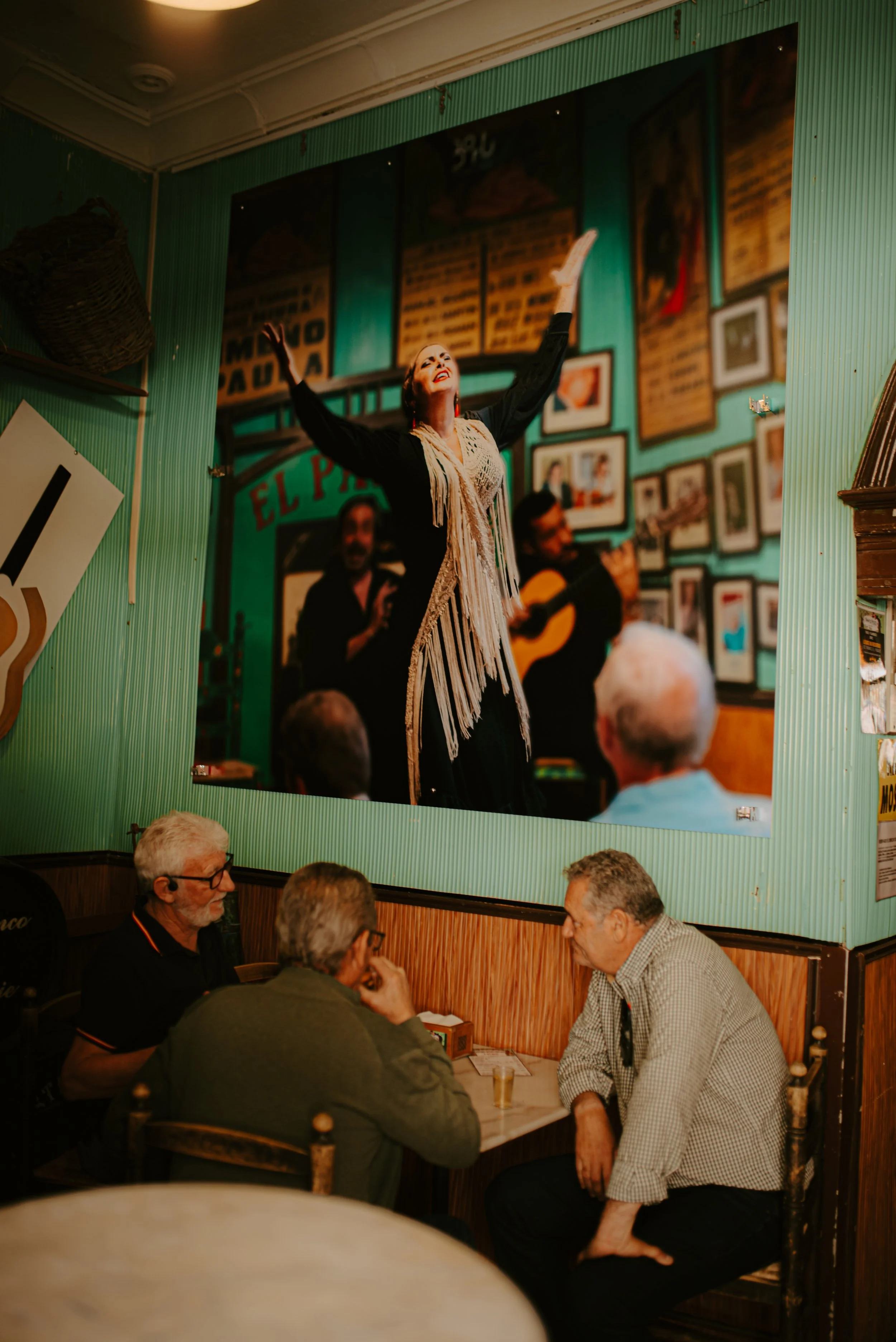
“Flamenco in tabancos was prohibited for a time,” Santiago says. “With excessive drinking as the night went on, it often got out of hand.” Now, tabancos like El Pasaje organize flamenco with set times and hired artists.
“At what point is it another tablao?” He ponders.
***
Tucked away a few streets from El Pasaje is Tabanco La Pandilla, a former sherry cellar built between centuries-old houses that hasn’t changed much. It’s marked only by a weathered, barely legible sign; I still stop and do a double take in case I’ve passed it.
On a Friday night, it’s filled with locals. Older men sip Oloroso and lean against the bartop, families sit together at tables as their children run around the old bodega, and large groups of friends dress with near-identical coordination. Two twenty-somethings behind me celebrate. They’re wearing almost the exact same white-striped-collared-shirt-and-blue-sweater combination.
“Pijos,” mutters Nieves, one in our group, beneath her breath.
The label refers to the conservative upper-middle class, always dressed as if they were about to attend Sunday service. Dark brown loafers, khaki trousers, collared white shirts with sweaters pulled neatly overtop—smart, crisply ironed, and somehow, despite the blues and greens of the knitwear, impressively beige.
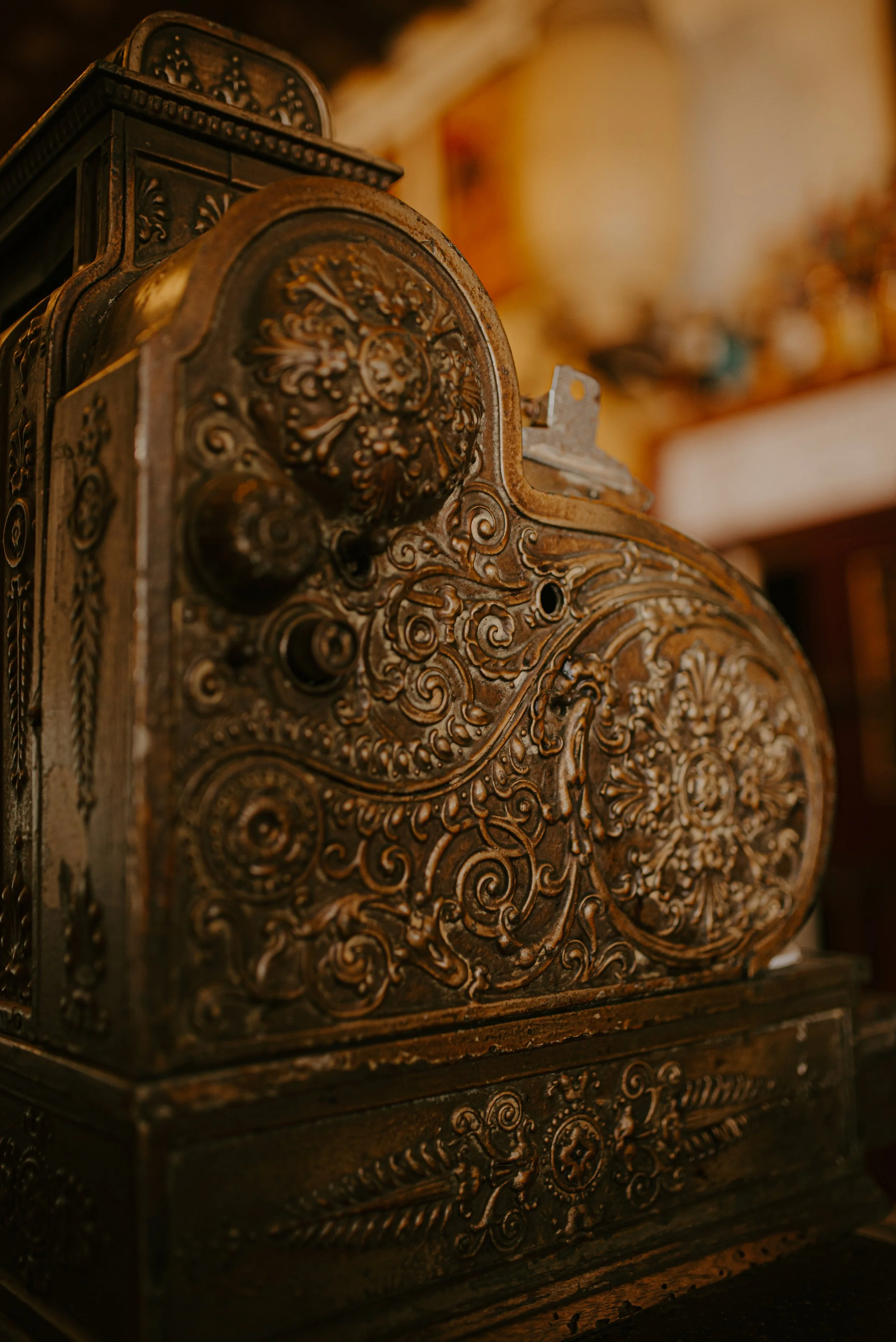
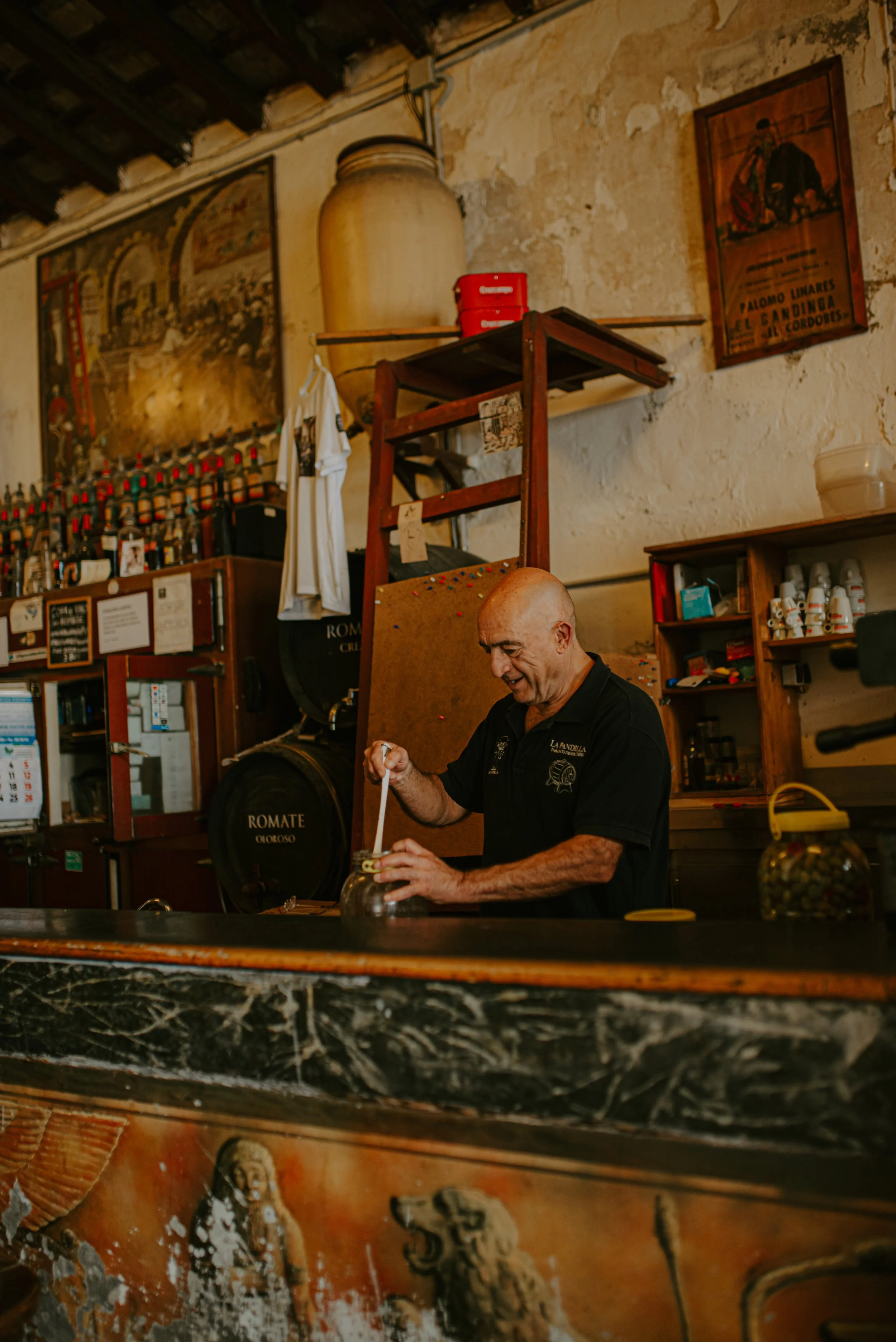
On the bartop sits a 19th-century cash register. Images of Dionysus slowly chip away from the painted walls, and dust-covered sherry casks suggest there haven’t been any major renovations since the tabanco opened. Orders are written on Post-It notes and pinned to a corkboard beside a small toaster oven that acts as the bar’s kitchen.
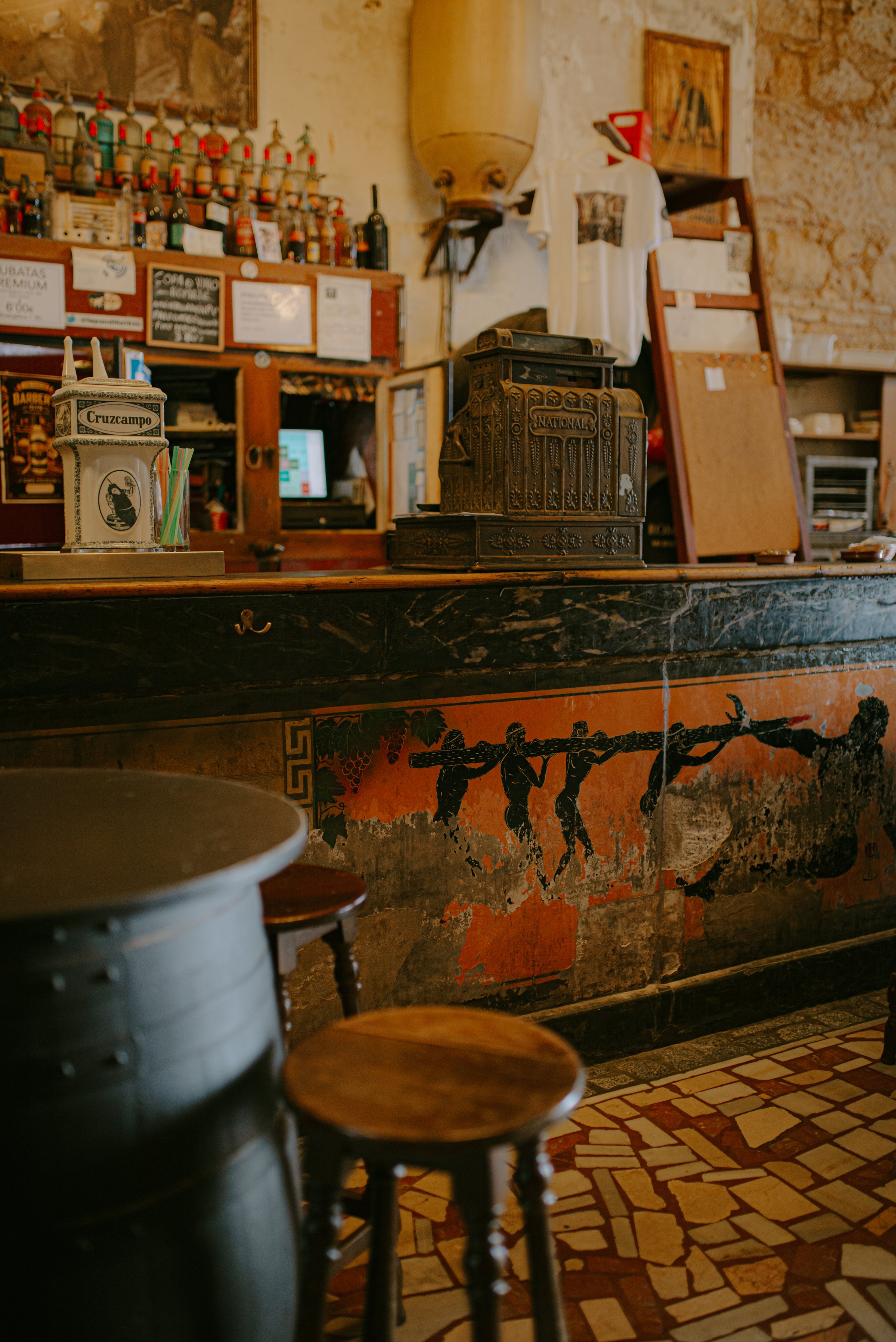
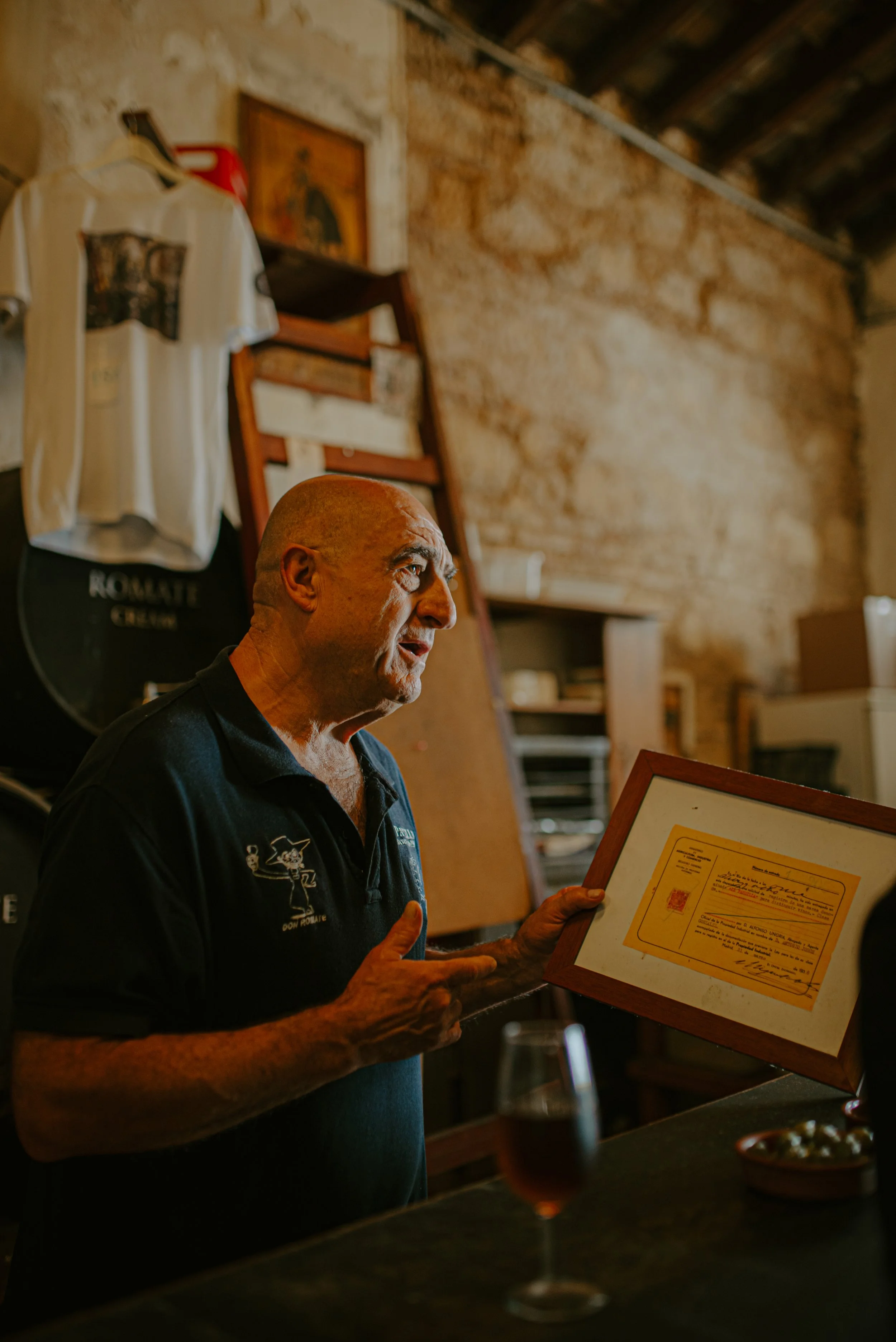
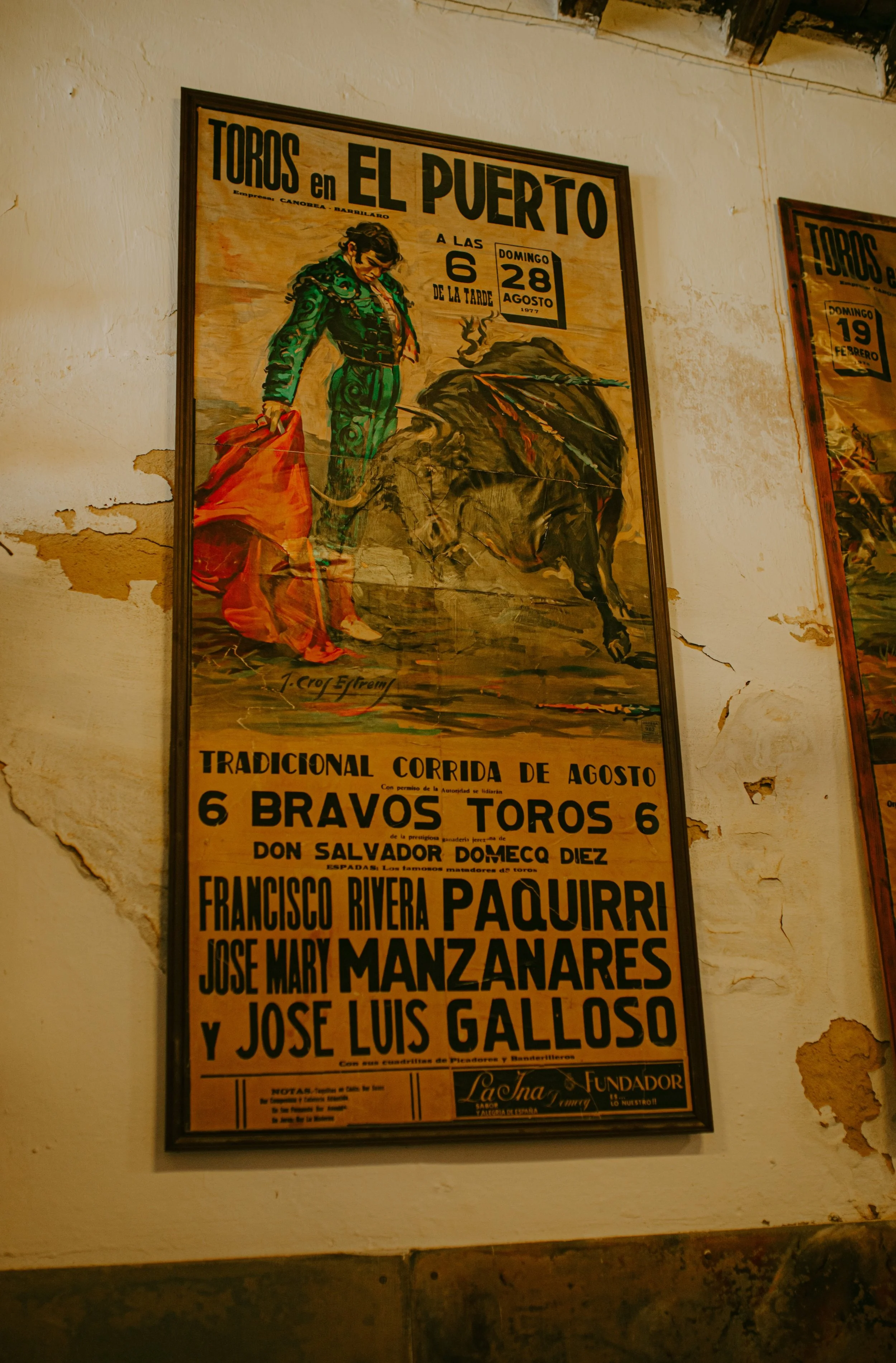
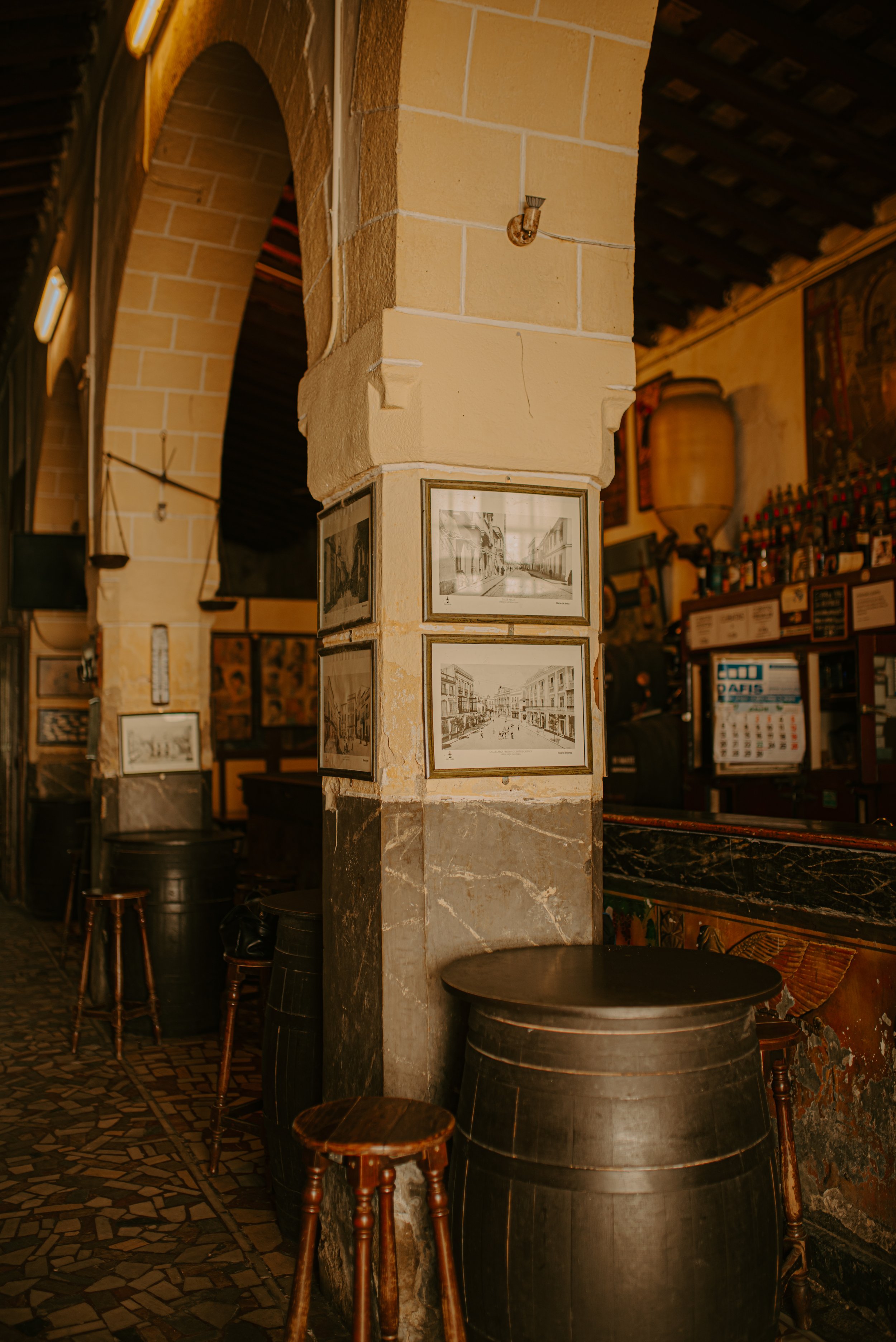
The tabanco was supposedly established in 1936, and has been under its current ownership since 2013. Managing director Bosco Delage says he’s found old newspaper clippings referencing the tabanco before its official founding date.
Whatever the truth, it smells aged. The combination of airborne dust, fungus on the walls, and sherry slowly evaporating from the barrels is reminiscent of cracking open an old library book forgotten in the stacks.
In the back, traditional 600-litre botas are stacked in rows, in the style of soleras and criaderas, the region’s system of fractional blending. La Pandilla has a noticeably large number of sherry casks, supplied by Bodegas Sánchez Romate five minutes up the road.
“Originally, winemakers offered excess wine by the cask to tabancos for next to nothing,” Bosco explains. “The quality was too poor to bottle but the local tabanco patrons happily drank it for cheap.” With the conversion from the Spanish peseta to the euro, it’s difficult to say what a glass would have cost in 1936, but the consumption of inexpensive sherry carries on.
Nieves orders an Amontillado. “One Euro eighty,” says the bartender. “One Euro eighty!” Nieves responds in disbelief. “How can that be possible?” Unsure of her meaning, he goes on to explain they’ve had to increase their prices due to inflation, and points to a sign behind the bar.
***
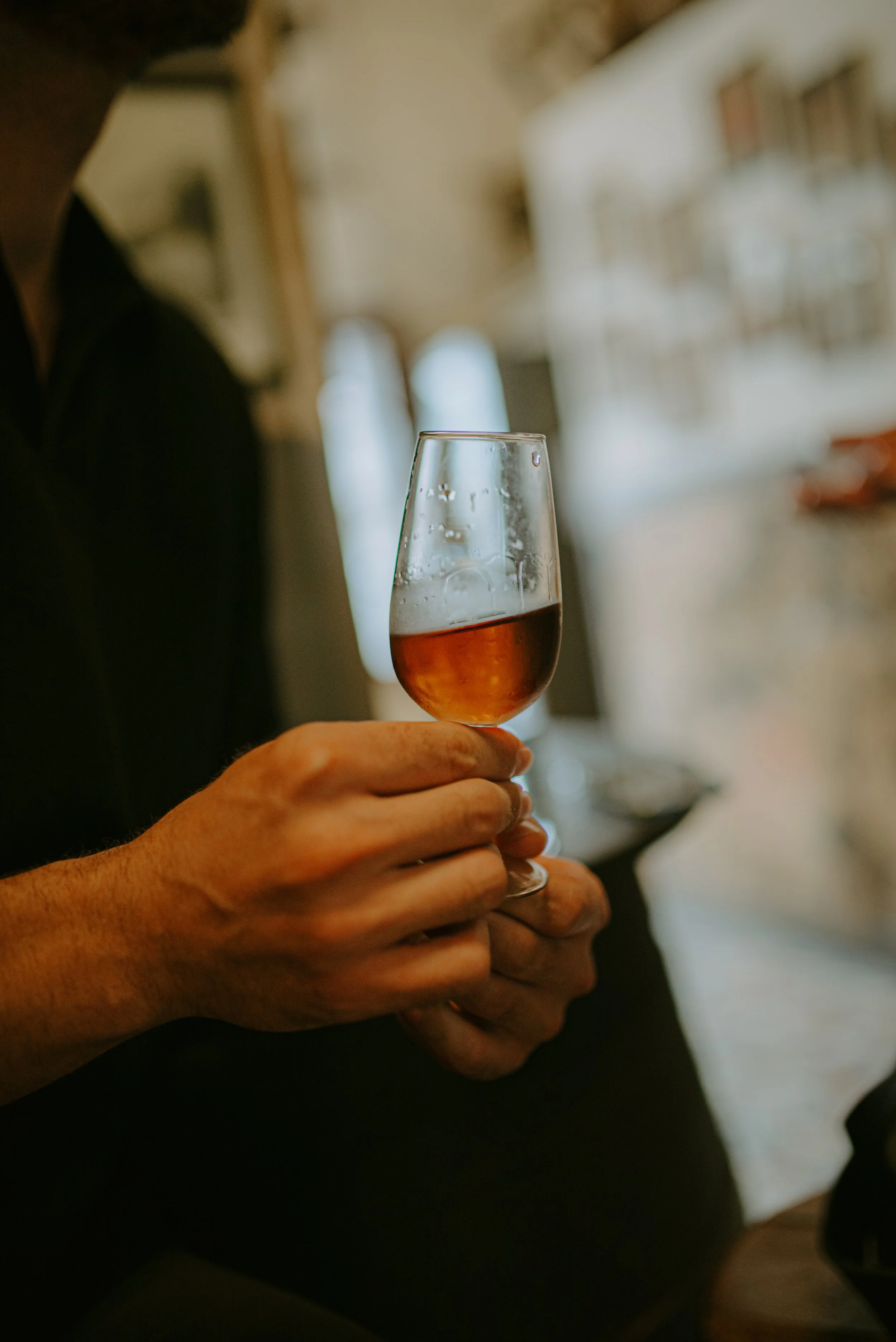
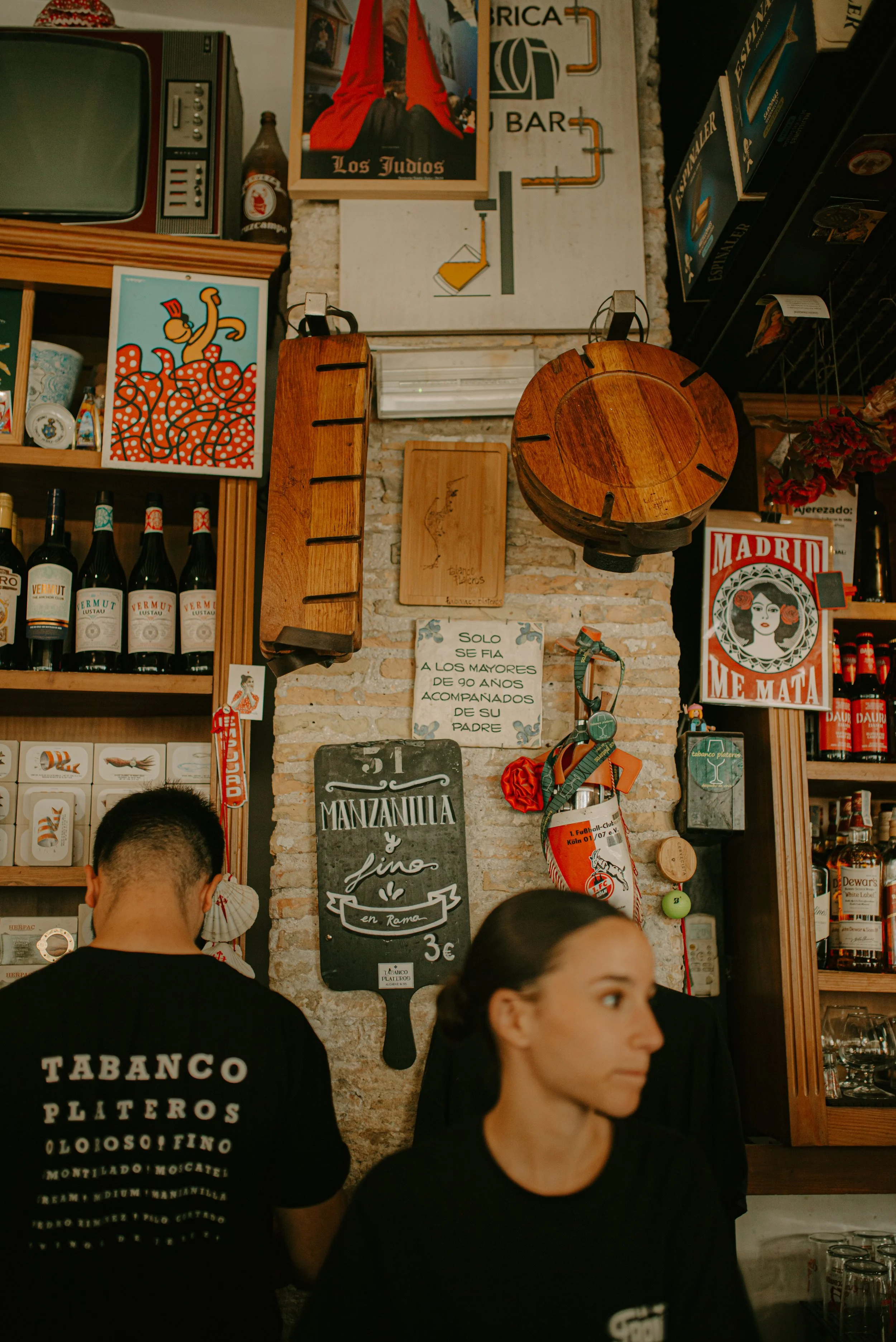
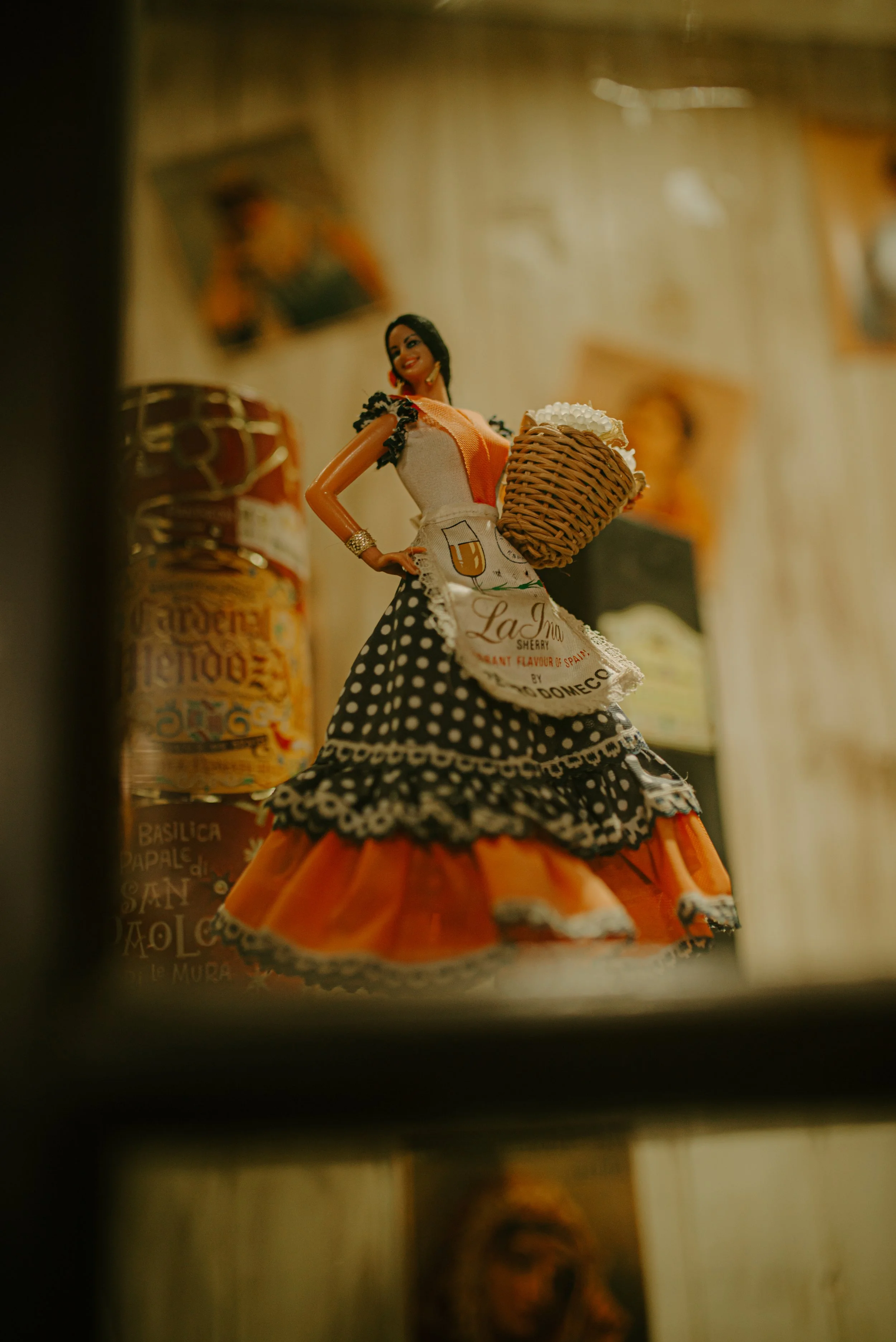
“Oye, pisha!” I’m greeted as I arrive through the back streets of the city centre. Sherry bottles line the walls of Tabanco Plateros, where wine is served in crystal stemware rather than vasitos. Barrels stacked to resemble a small solera sit on the bar; these supply the tabanco’s traditional by-the-glass pours.
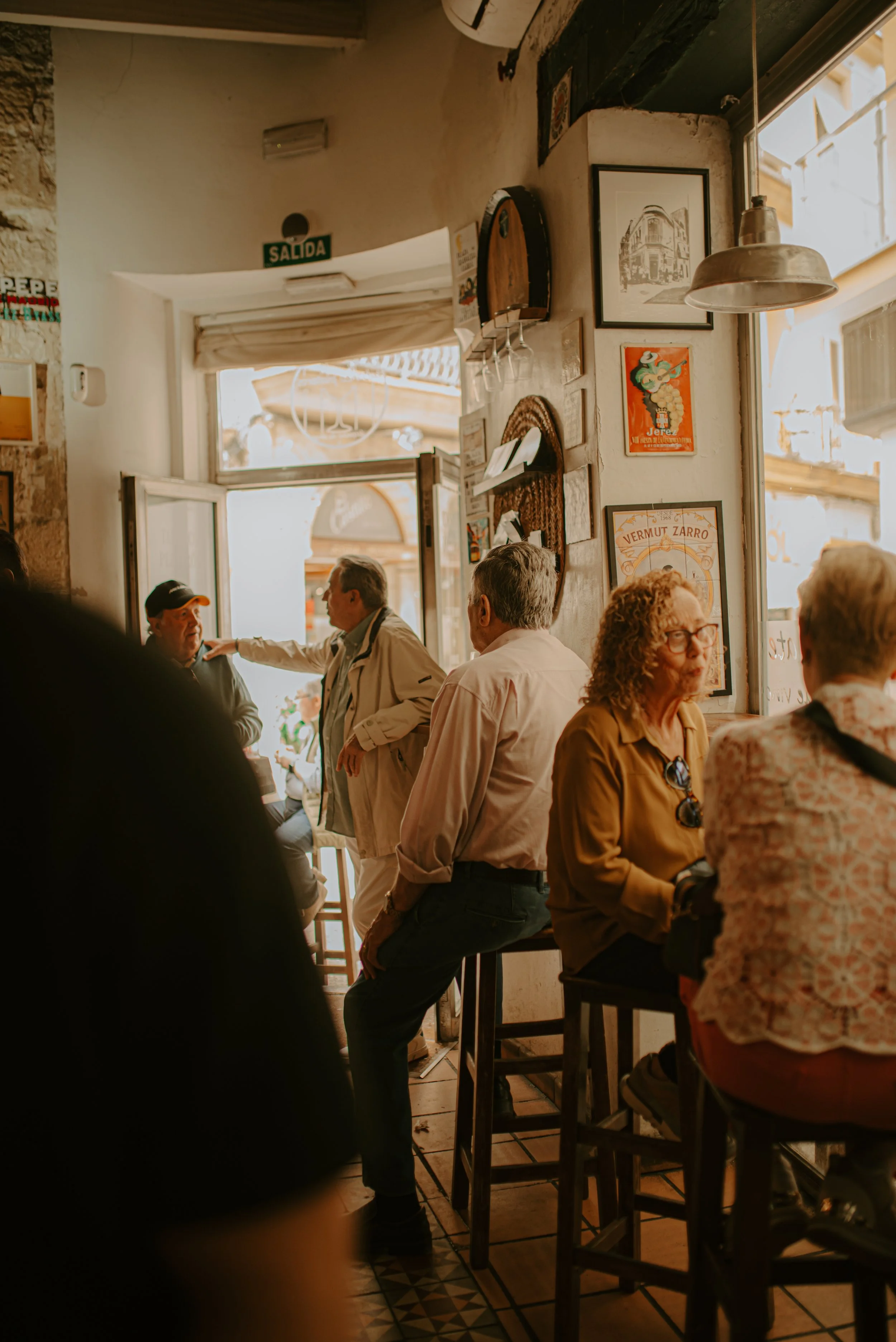
“Now that you’re a local, you’re going to have to learn to speak faster,” Paco, the waiter, says to me jokingly as he darts between tables. “Andaluces have a lot to say.”
Tabanco Plateros opened in June 2011 and became a pioneer of Jerez’s new wave of tabanco revivals. Proprietors Luz Saldaña and Jaime Jiménez kept to the old rituals while creating a bridge between the traditional sherry tavern and the contemporary wine bar.
““We offer wine tastings, sherry flights, gastronomic tapas and conservas. The traditional tabancos never went that far””
“At Plateros, we offer wine tastings, sherry flights, gastronomic tapas, and conservas. The traditional tabancos never went that far,” Luz explains. The crowd, as a result, is younger, and features a mix of locals, Spanish tourists, and international guests.
Alongside bottles from IGP Tierra de Cádiz and D.O. Jerez-Xérès-Sherry, Tabanco Plateros still sells a significant amount of wine a granel, drawn from the cask rather than poured from a bottle. Sourced from Cooperativa de las Angustias, a large facility near the outlet mall just outside the city centre, it keeps alive one of the tabanco’s oldest traditions: inexpensive local sherry.
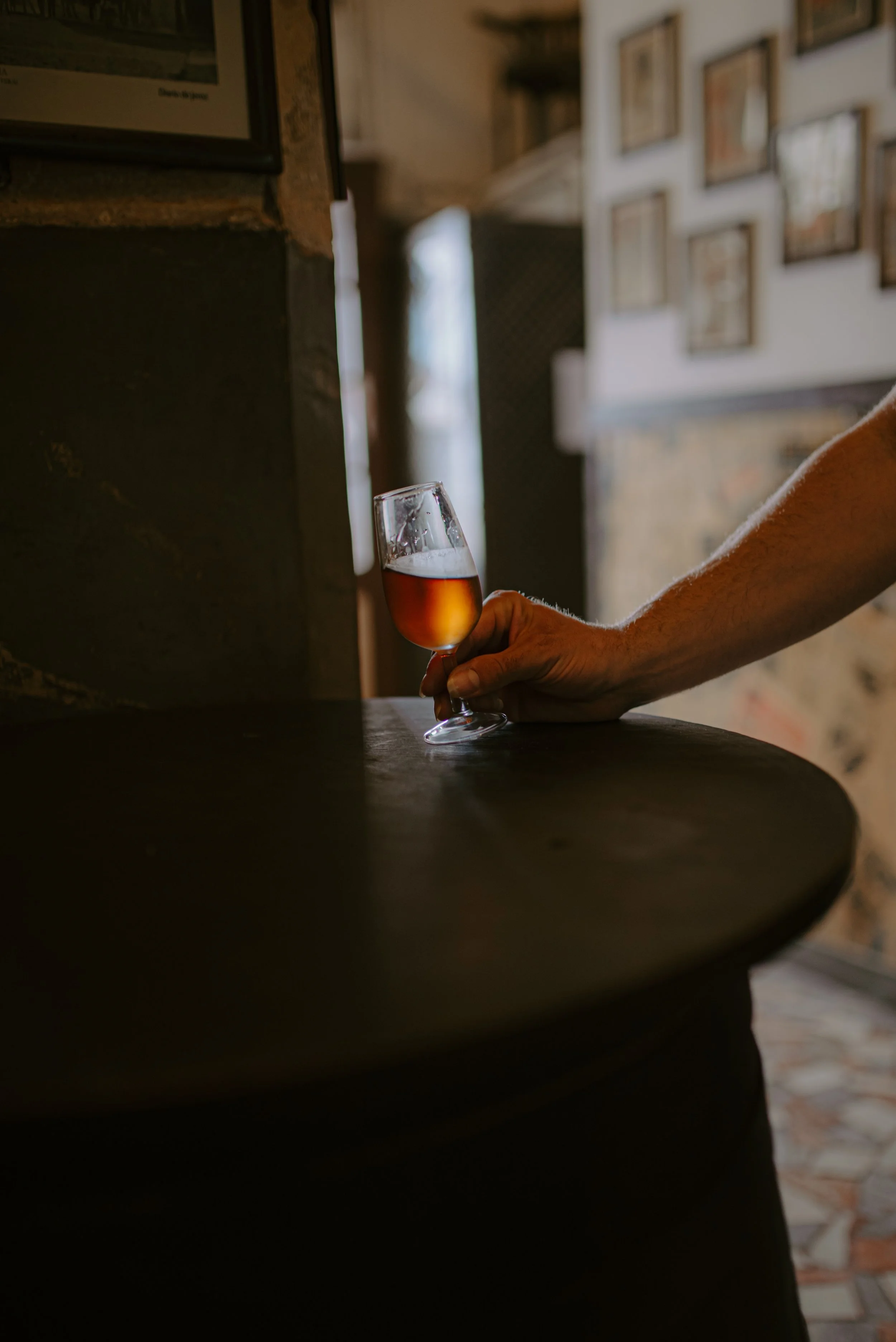
I squeeze my way to the front of the bar to order another round. As the night continues, the space somehow absorbs more people. There are no lines, and little organisation. New arrivals yell their orders from behind me, reaching over to grab their drinks before I’ve had the chance. Somehow, everyone gets what they want.
***
If you search for a “tabanco” in Jerez, a number of places appear—fewer than there used to be, but the name still carries weight. For Jerezanos, there’s a sense of pride in their local bar culture; it’s inseparable from the city. But not all places are considered equal. It raises the question: What’s real and what’s interpretation?
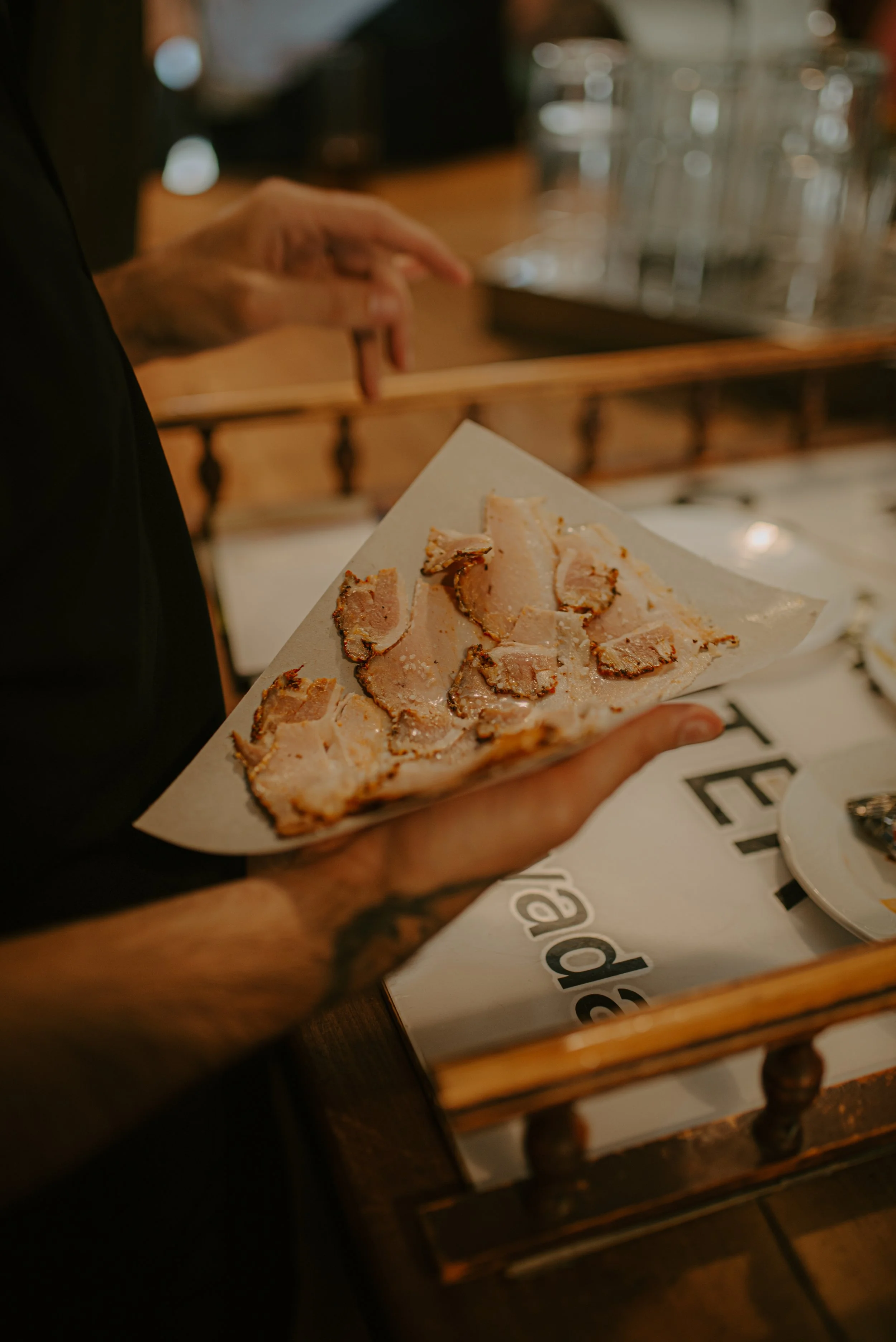
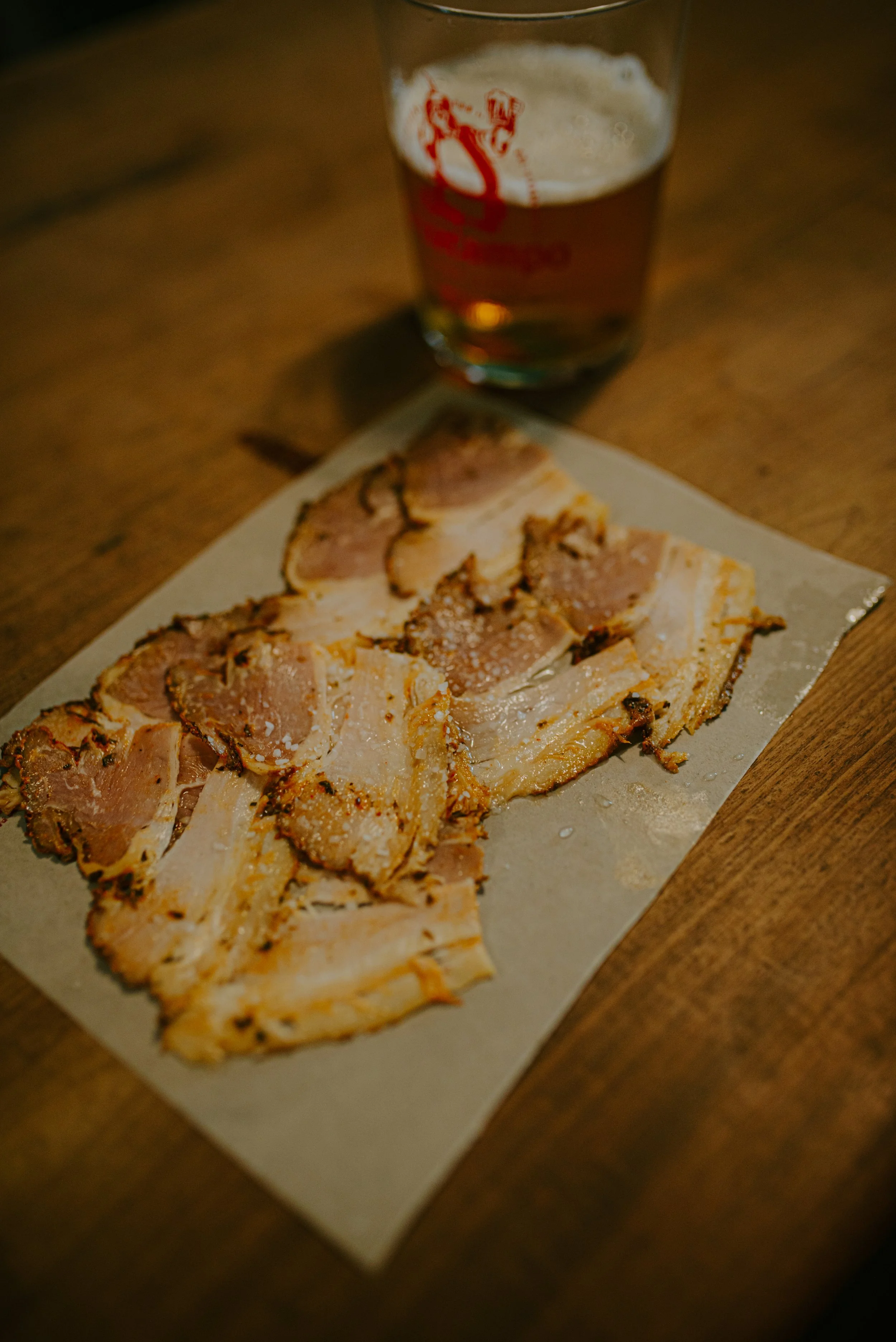
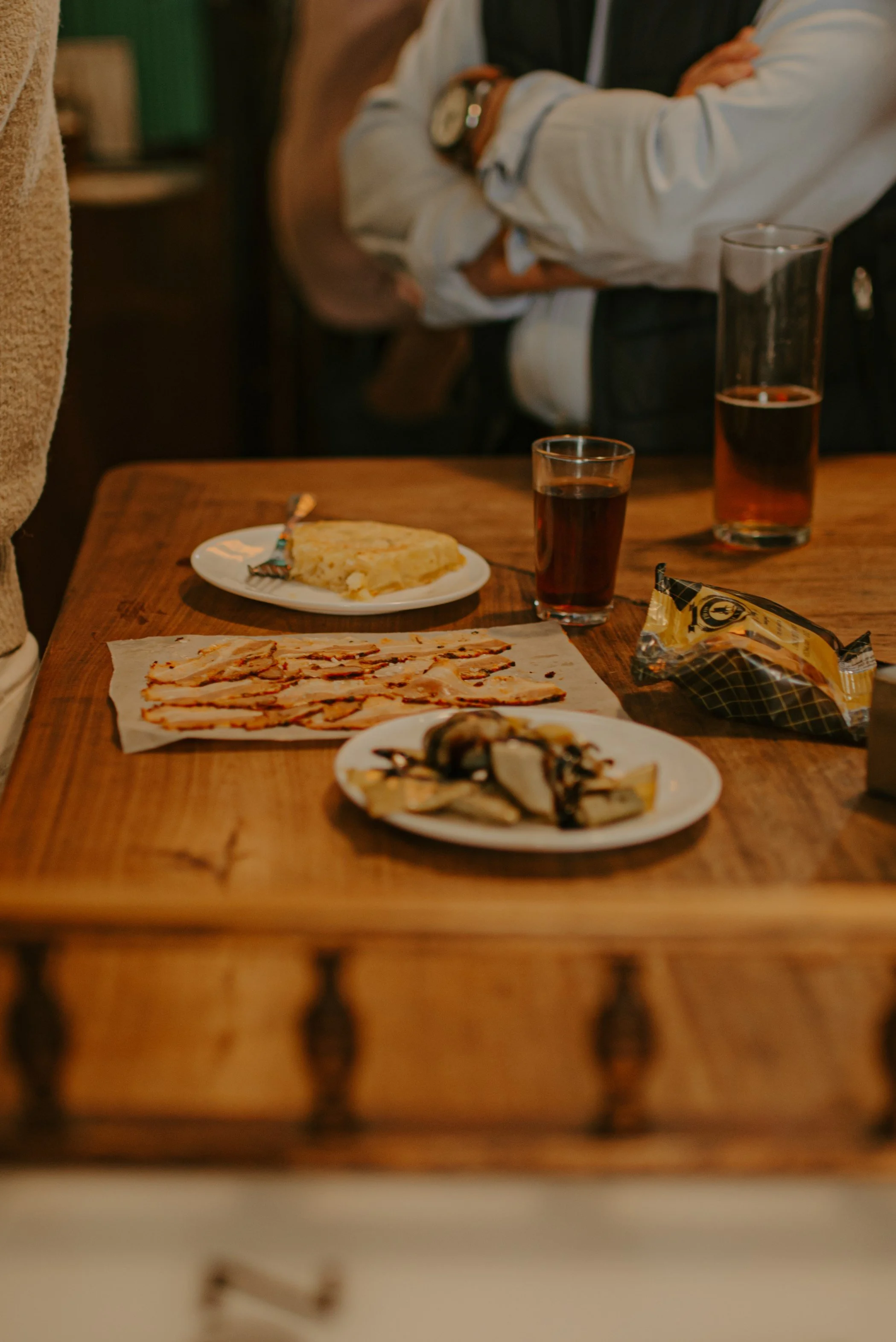
Some say it’s history that defines a tabanco’s authenticity. The city may change, but the space has stayed largely the same. Others lean into the performance, serving simple, quickly prepared tapas from behind the bar on sheets of wax paper and bottling wine to go, recreating the original experience.
“There used to be dozens of tabancos in every neighbourhood,” Santiago explains. He recalls a time when his father would pop out for a quick sherry and a conversation, and return home with a few bottles for dinner, drawn directly from the barrel.
There’s a small tabanco near my flat, a tabanquito. It’s a gathering place for residents of the Barrio de Santiago, a working-class neighbourhood famed for its connection to flamenco, and an example of what Santiago Moreno remembers. Every day I walk by, thinking I should go in, but I never summon up the courage. With a few seats at the bar and half a dozen tables outside, everyone is a regular.
It’s different from other tabancos. It’s not performative, it’s not a revival, nor is it listed on the official Ruta de Tabancos. It has a sense of continuity.
Some days I pass by with a guitar on my back. “Tocas flamenco?”—Do you play flamenco?—one man yells, seemingly forgetting the same interaction we had just days before. “Estoy trabajando en ello,” I answer back. I’m working on it.
““Multiple empty sherry glasses accumulate by noon, and by evening, their clapping rhythms of flamenco and weathered voices carry through the neighbourhood.””
In the morning, patrons drag tables and chairs to the other side of the street and place them in the sun. Multiple empty sherry glasses accumulate by noon, and by evening, the clapping rhythms of flamenco and weathered voices carry through the neighbourhood.
Neighbours above open their windows and have full conversations with the people seated at the bar below. It’s not that there aren’t tourists nearby nor is this a members-only establishment—there’s just a level of access here that’s earned through time and familiarity.
In the morning, I think: Just grab a coffee. On my way back from work, I could stop for a quick sherry, maybe two. Strike up a conversation. Learn to speak faster, like a true Andalus. But I hesitate, not because I’m not welcome, but because it feels like interrupting something already in rhythm.



I could pull up a chair, and they might even be excited to have a foreigner who wants to be a part of their world. But I’m not sure I know how to exist there yet.
I still haven’t gone in.