
Let Them Eat Brioche — On French Butter and the Craze For Distinction
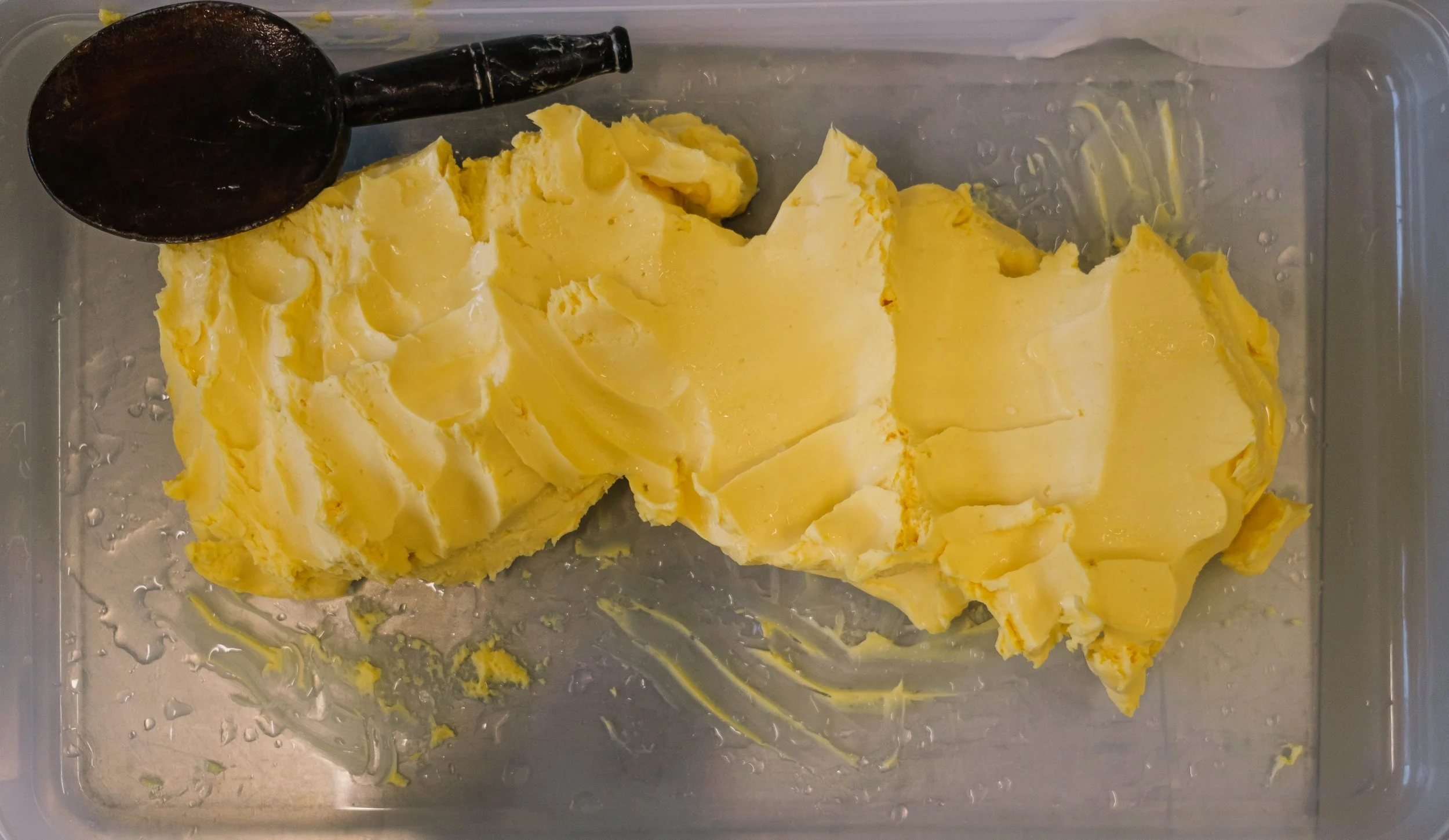
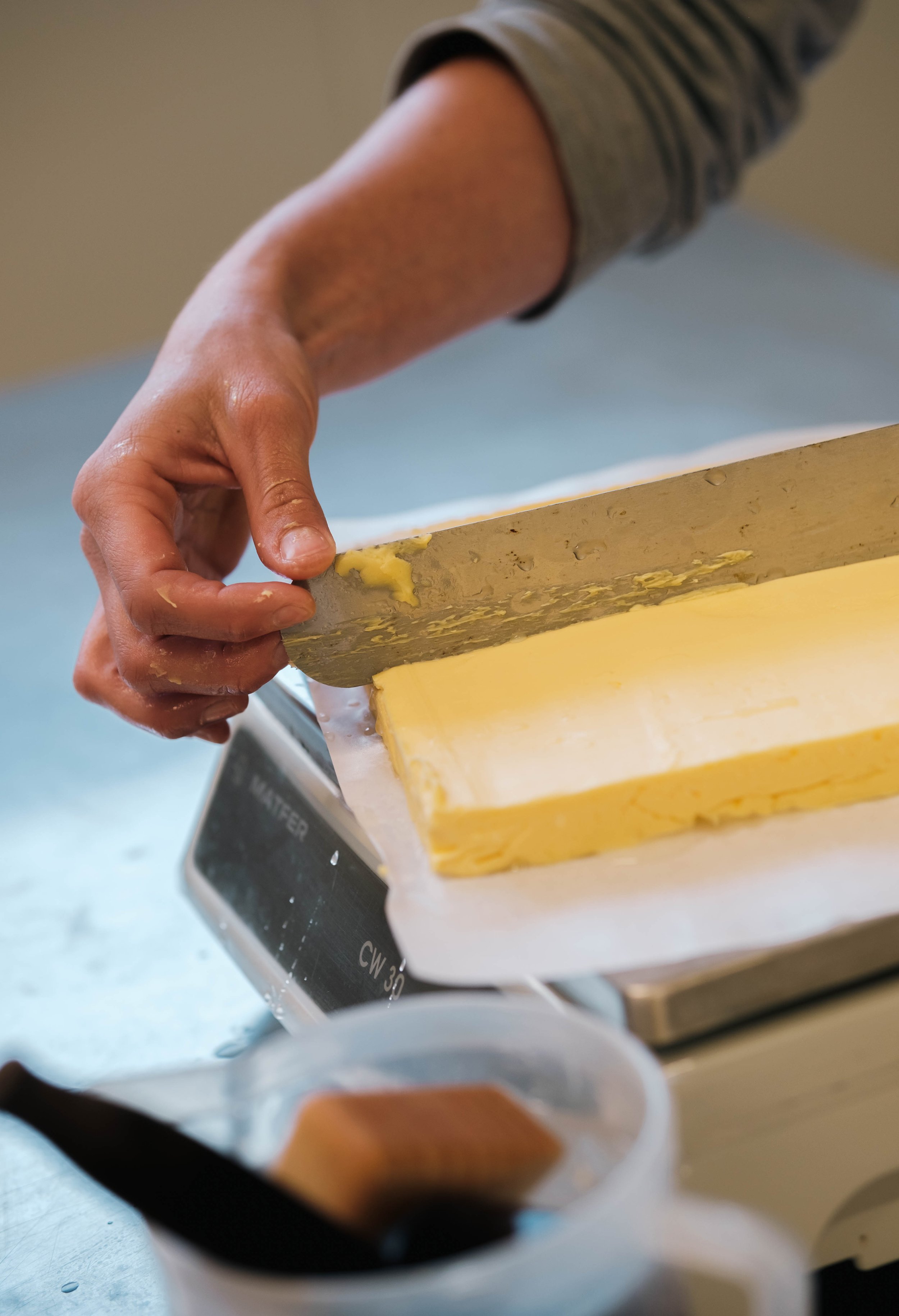
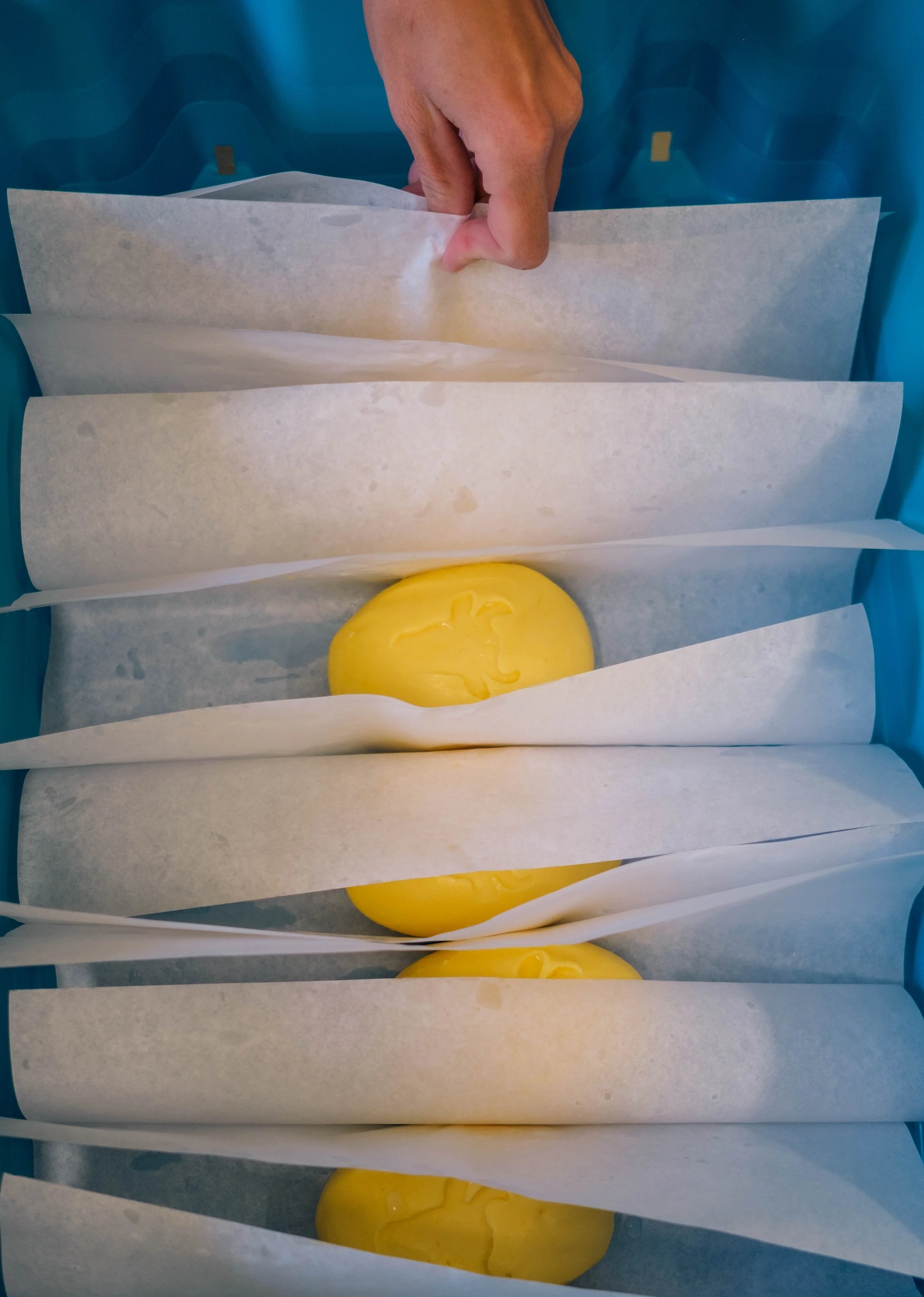
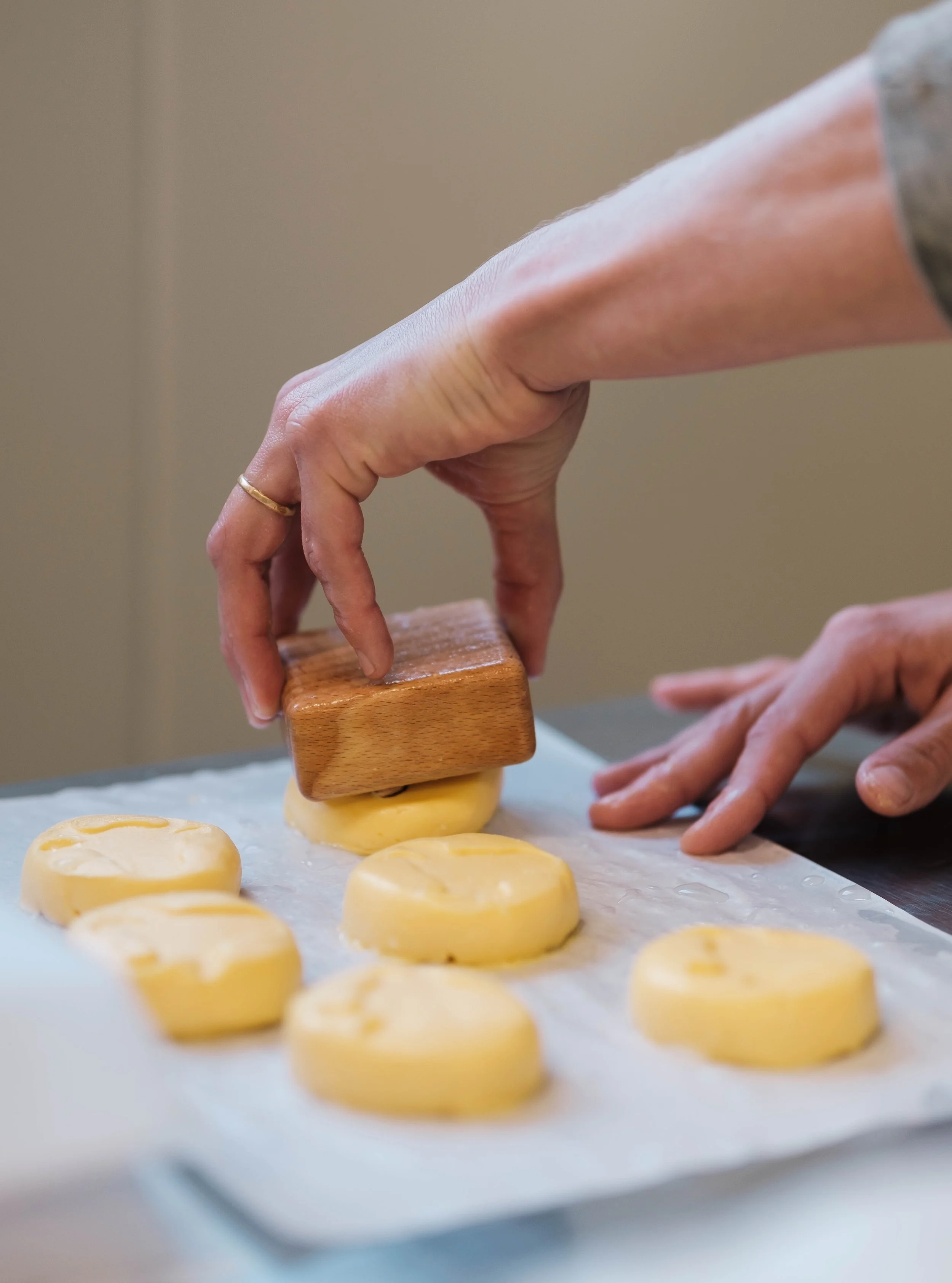
Bright buttercup yellow, it catches the eye, even through the shop window. A woman digs into the generous, fluffy mound of butter and scoops a piece onto the scale. With the help of two notched wooden paddles, she forms it into a perfectly rectangular pat while a studious, delighted audience watches. The butter is then carefully folded and wrapped in a sheet of white paper, like a gift.




This perfected choreography has been going on since La Maison du Beurre opened in 1927 in Saint-Malo, northern Brittany. First owned by the Roudouin family, the crèmerie mastered the art of kneading and shaping butter. It passed down from one owner to the next, until Jean-Yves Bordier took over in 1985 and founded Maison Bordier.
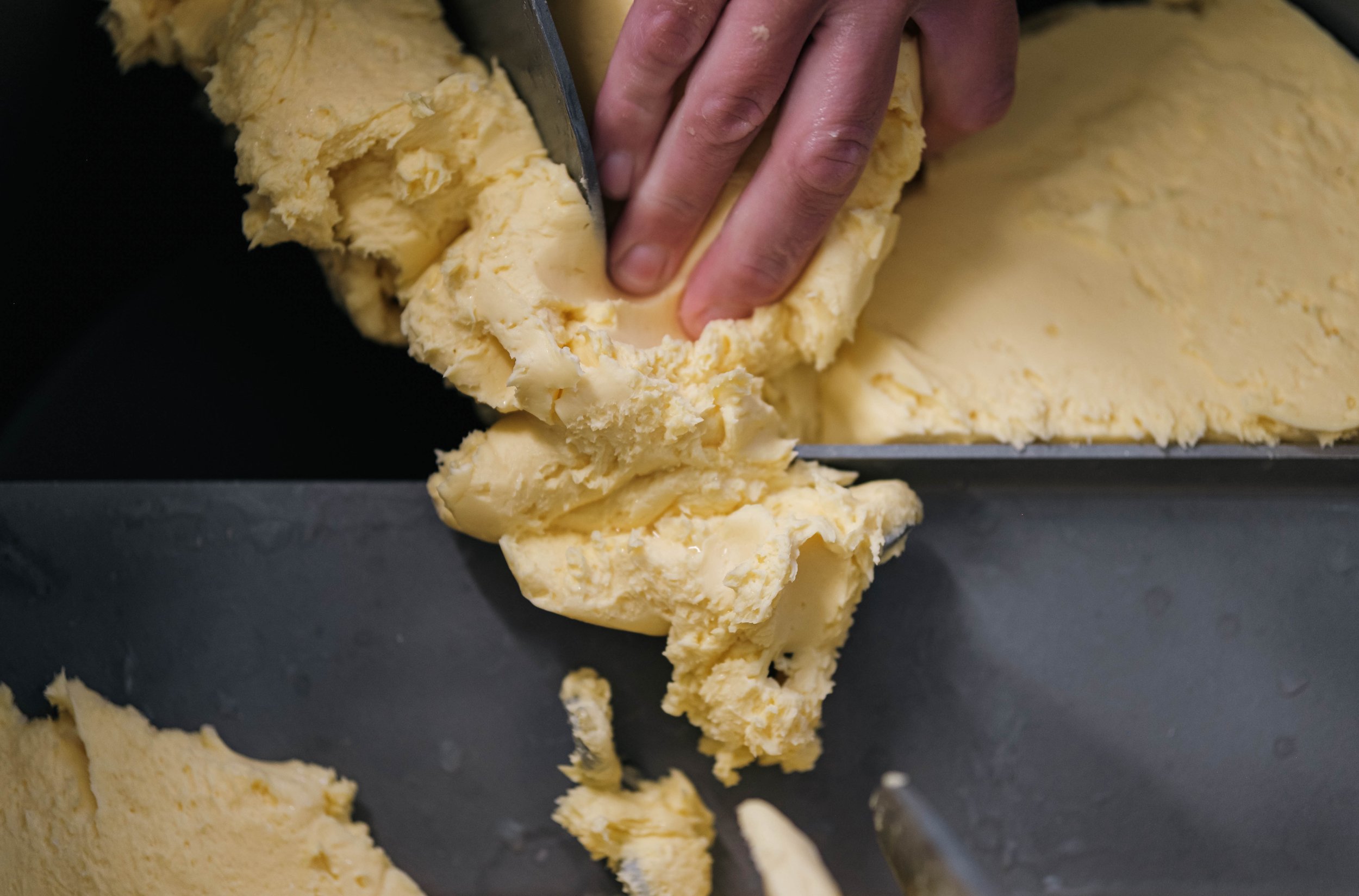
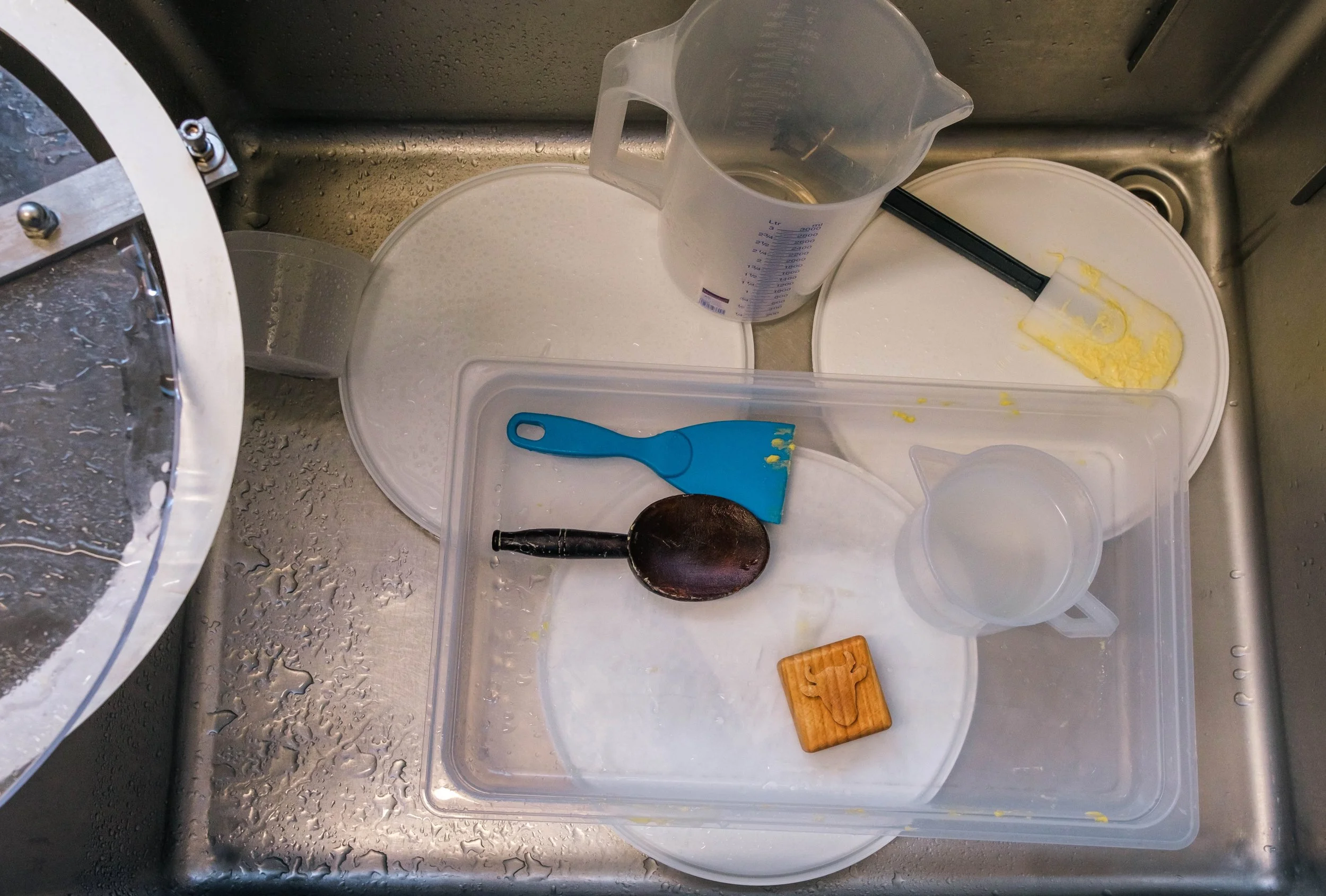
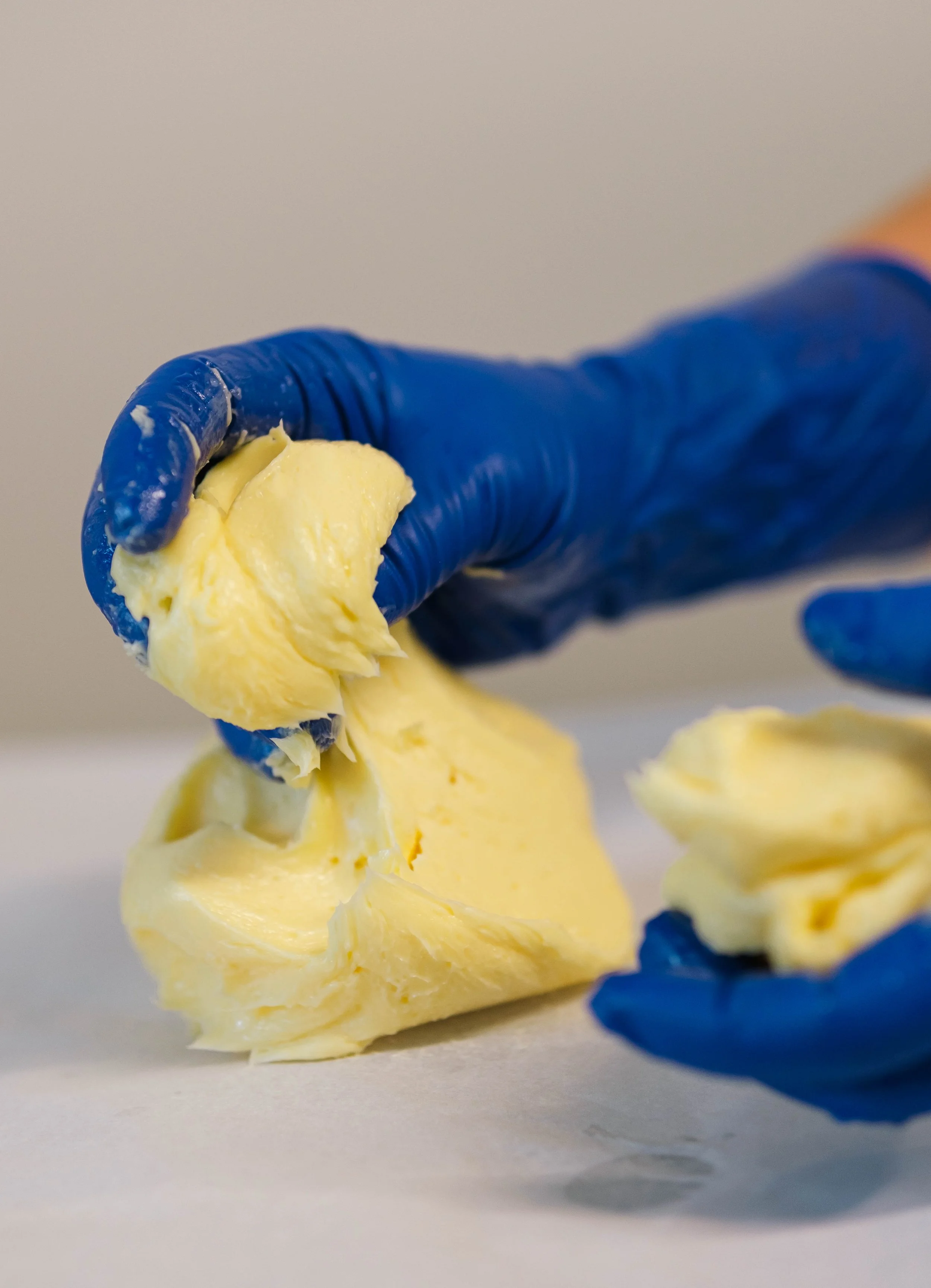
The company doesn’t technically produce butter, but reworks a butter that has already been made, using a unique double-kneading technique. The whole process, from malaxing to shaping and packaging, is done 100% by hand.
Photography by Claire -Marie Luttun
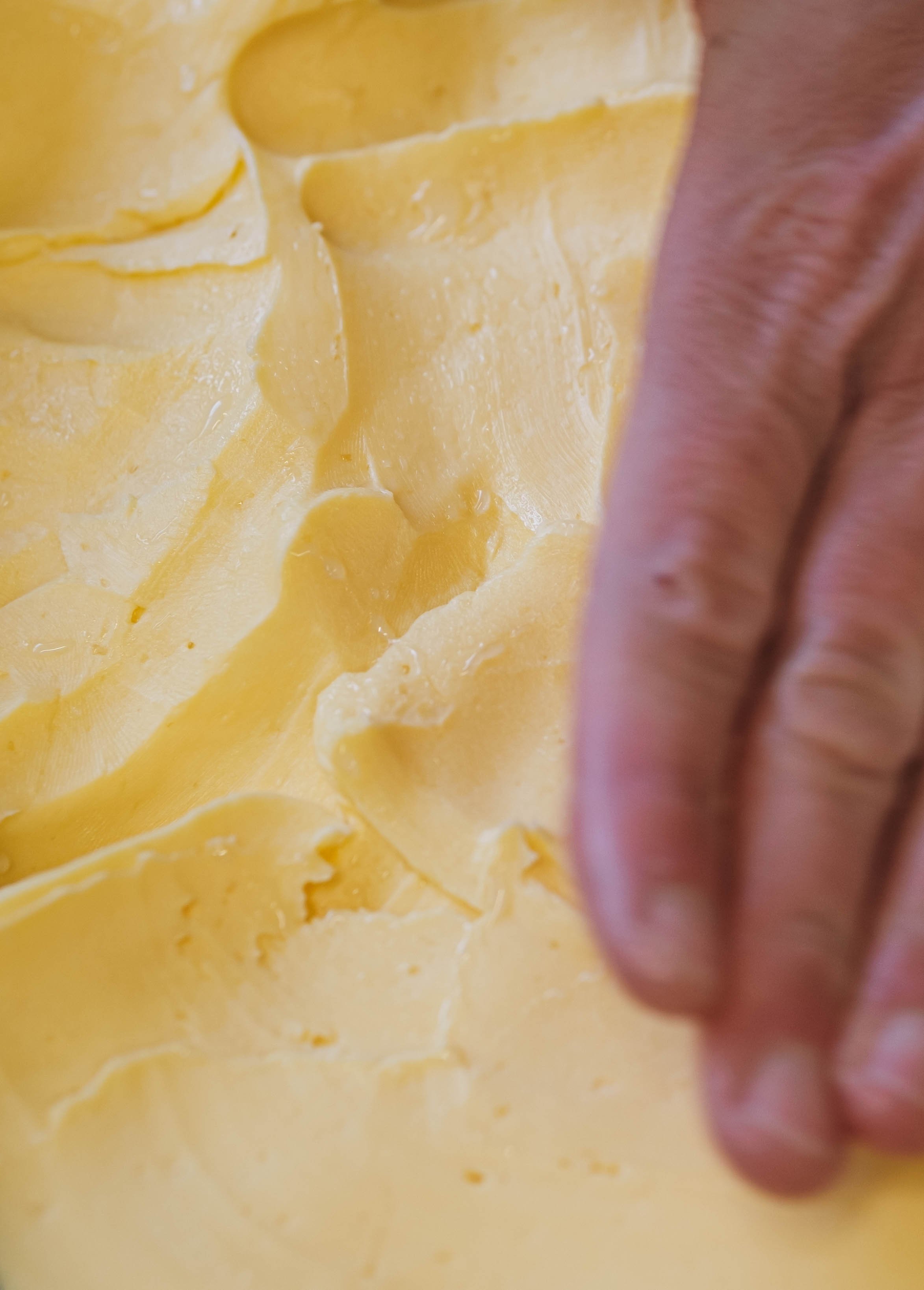
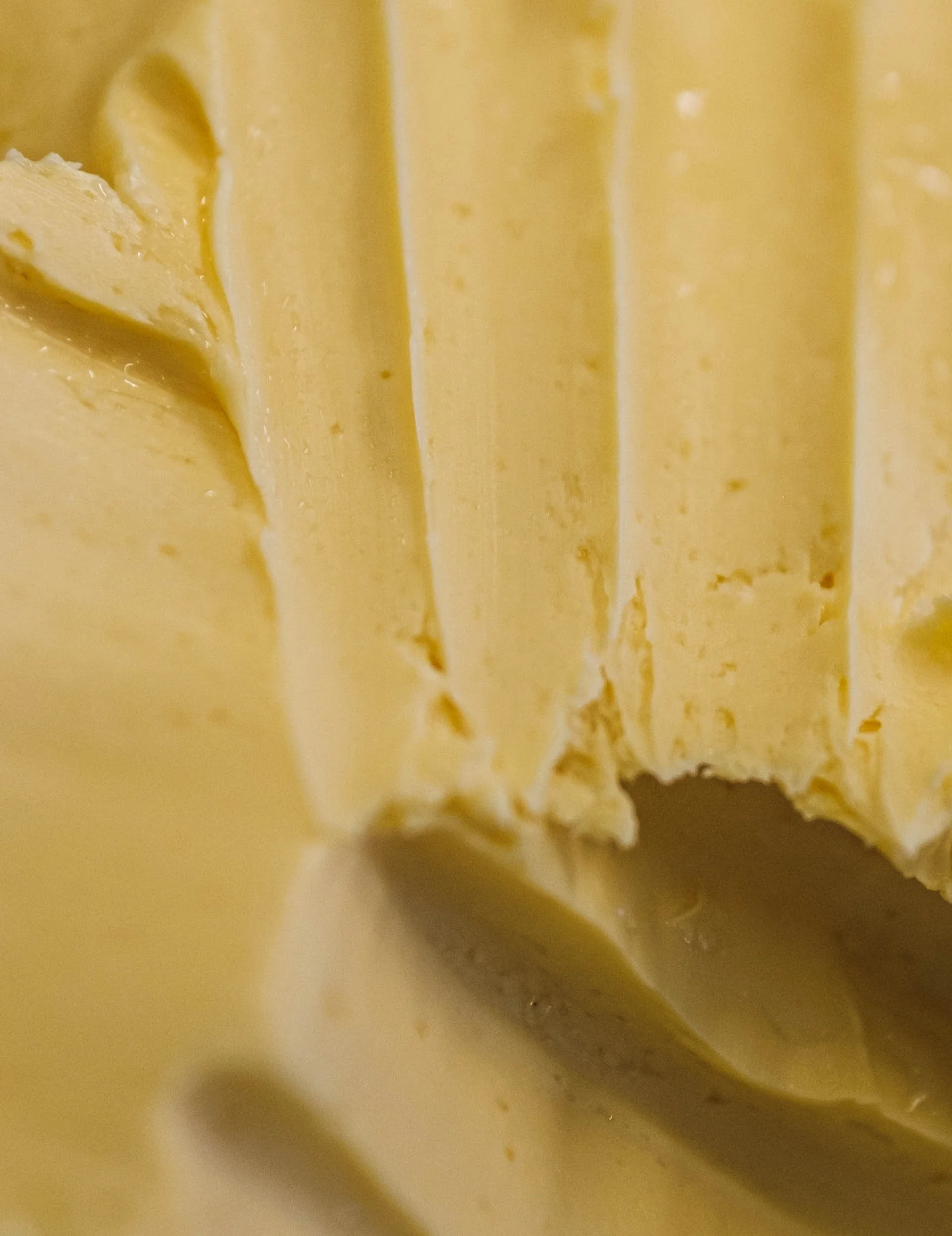
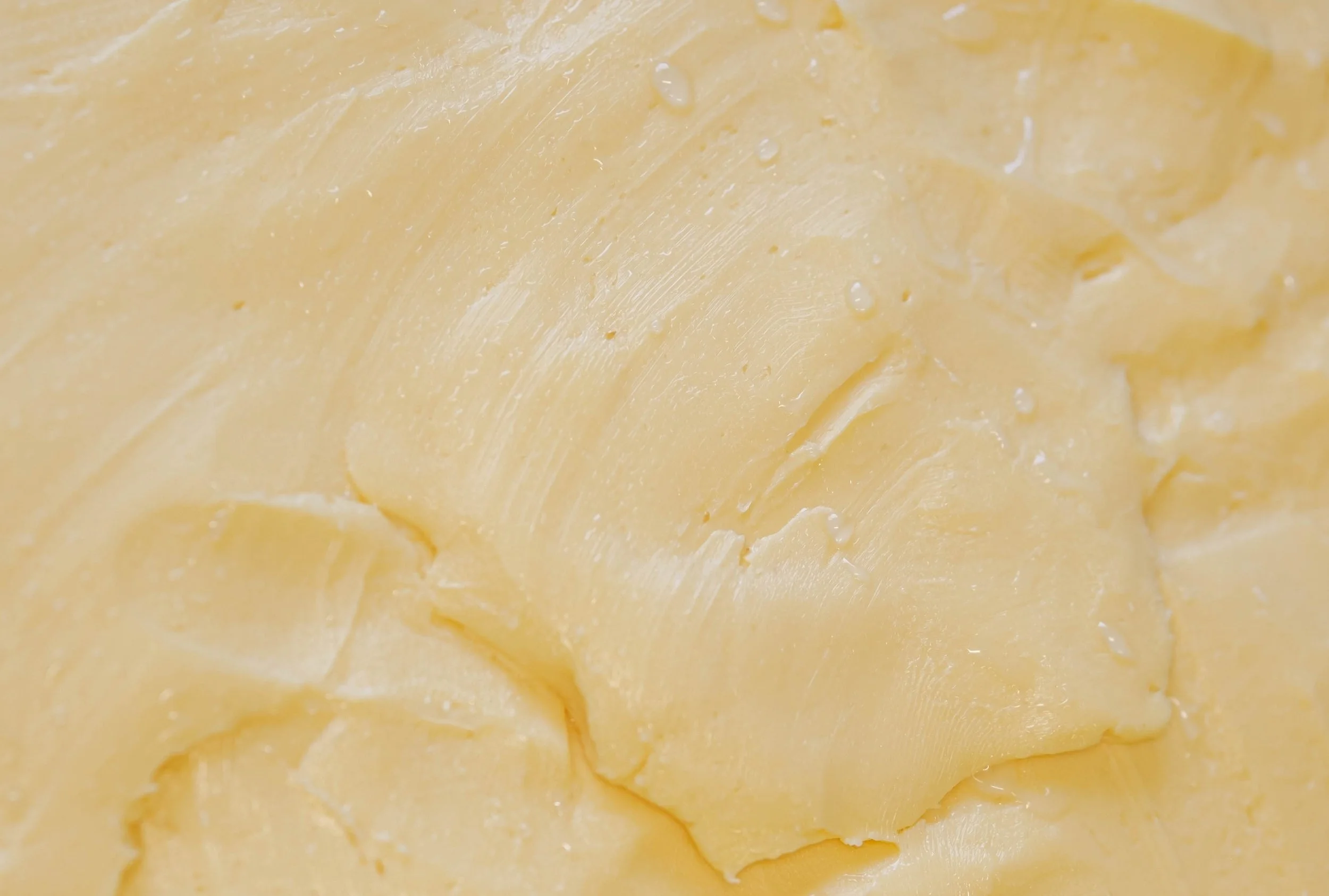
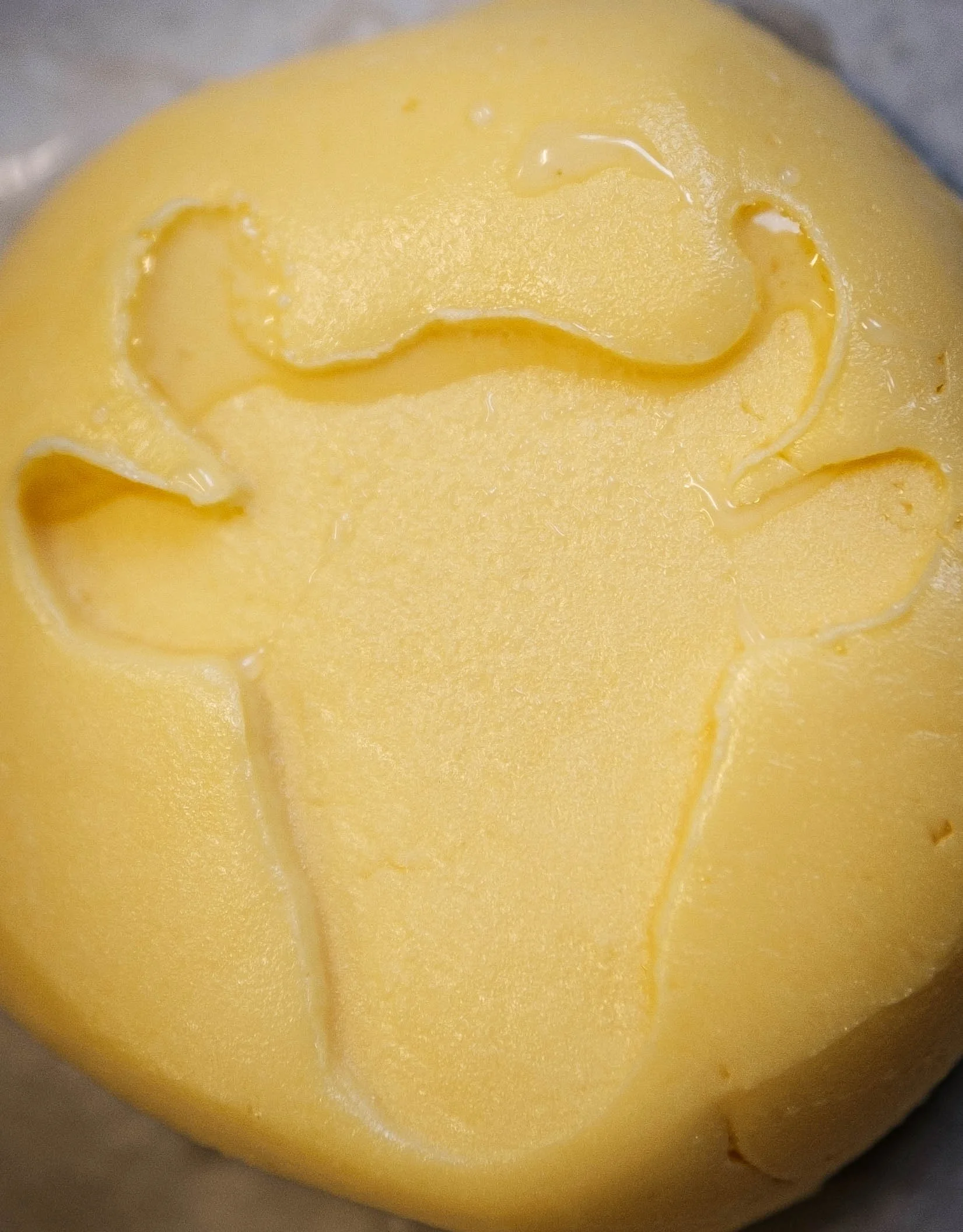
“Its deep yellow colour is the result of oxidation during the hand-working process in the open air,” says Julie Sugliani, Bordier’s head of communication. “Hand-working also gives the butter its smooth, spreadable texture and its distinctive flavour, with notes of fresh cream and hazelnut.”
Today, Maison Bordier makes one of the country’s most sought-after butters—even though it only accounts for 0.01% of France’s annual butter production of 400,000 tonnes—by both fine-dining establishments and hungry tourists. On social media, hundreds of people share their discovery and tasting of Beurre Bordier each month, along with Beurre d’Isigny from Normandy or Beurre Dupont from Northern France.
In Paris, a famous gourmet food shop called La Grande Épicerie sells 200 different brands of butter; in two years, sales have increased by 300%. In July of this year, The Butter Shop opened in the 15th arrondissement, its owner deliberately choosing an English name to appeal to tourists. Both stores have capitalised on the trend by offering to vacuum-seal the butter so it can better withstand the flight home.
This craze is no surprise. France is indeed known for its decadent buttery cuisine, from brioche, croissants, and pains au chocolat to snails baked in garlic-and-parsley butter or beurre blanc (a classic sauce with butter, white wine, and shallots). But behind the worldwide obsession with French butter lies a simple farm good: a byproduct of milk that has long been disregarded because of its ties to peasant life and poverty.
If French butter is now considered la crème de la crème internationally, it’s only because the French made sure it became so.
***
The end of June is peak season for butter production at Les Vaches à Laezh, a small dairy farm in Finistère, Brittany. 20 kilograms are made each week, from roughly 400 litres of milk. Hauteclaire Le Merrer took over the farm in 2022 with her husband, Bastien. Their intention was respecting seasonality and, in her words, “developing a herd adapted to Brittany’s grassland and climate, using only what the farm itself can produce.” As a result, production halts during the winter months.
Hauteclaire has also brought back domestic cow breeds to Finistère that had almost disappeared, their milk production deemed too low for the dairy industry. One such breed is Froment du Léon, a small cow with curved horns that is indigenous to Brittany, and which only produces 2,000 to 3,000 liters of milk a year (compared to the black-and-white Dutch Prim’Holstein, which yields 10,000). During my visit, I meet Brioche: a gorgeous, caramel-coloured cow that Hauteclaire pets whenever she passes by, one of six Froment du Léon cows within the farm’s mixed herd of 40.
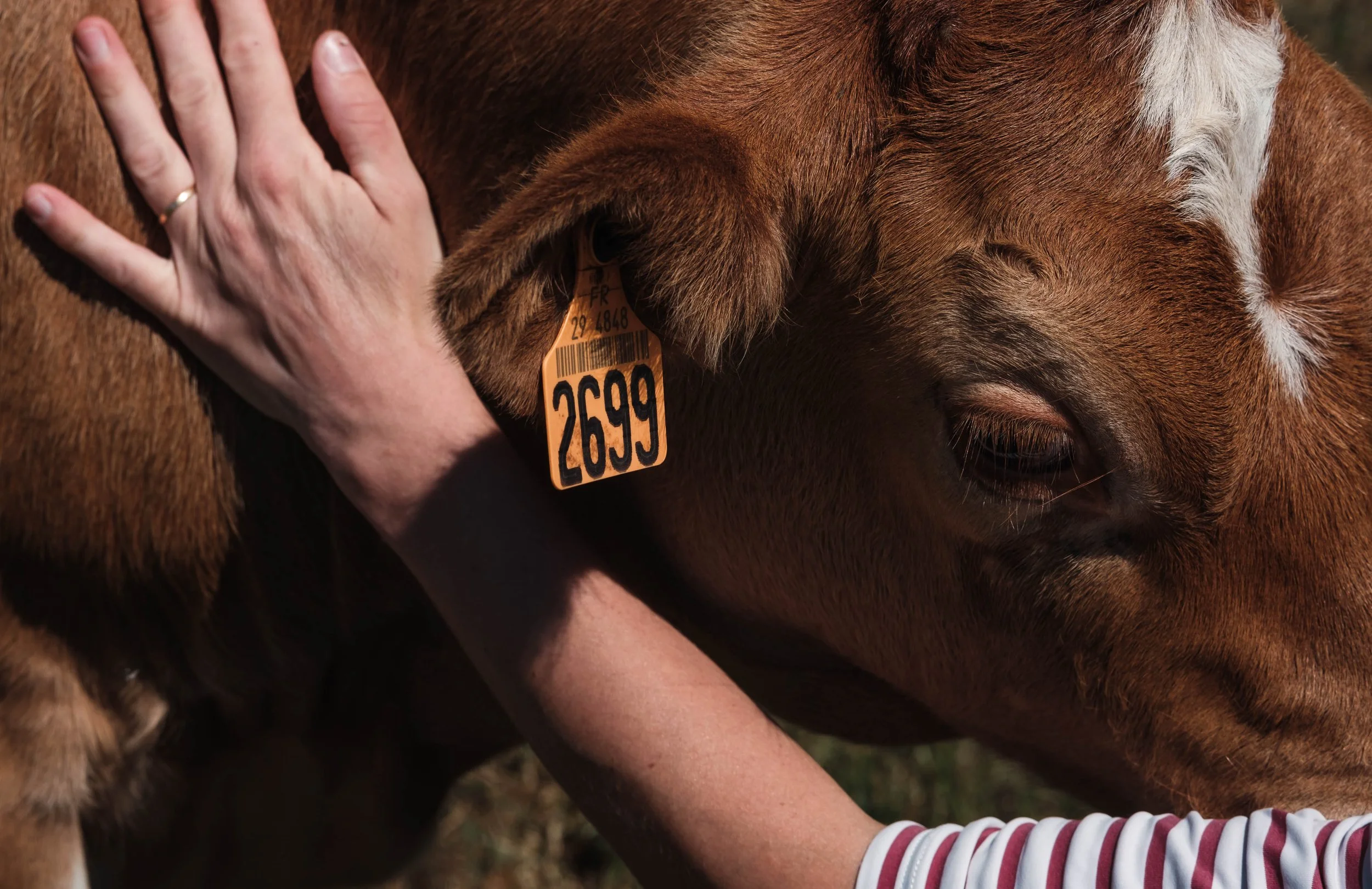
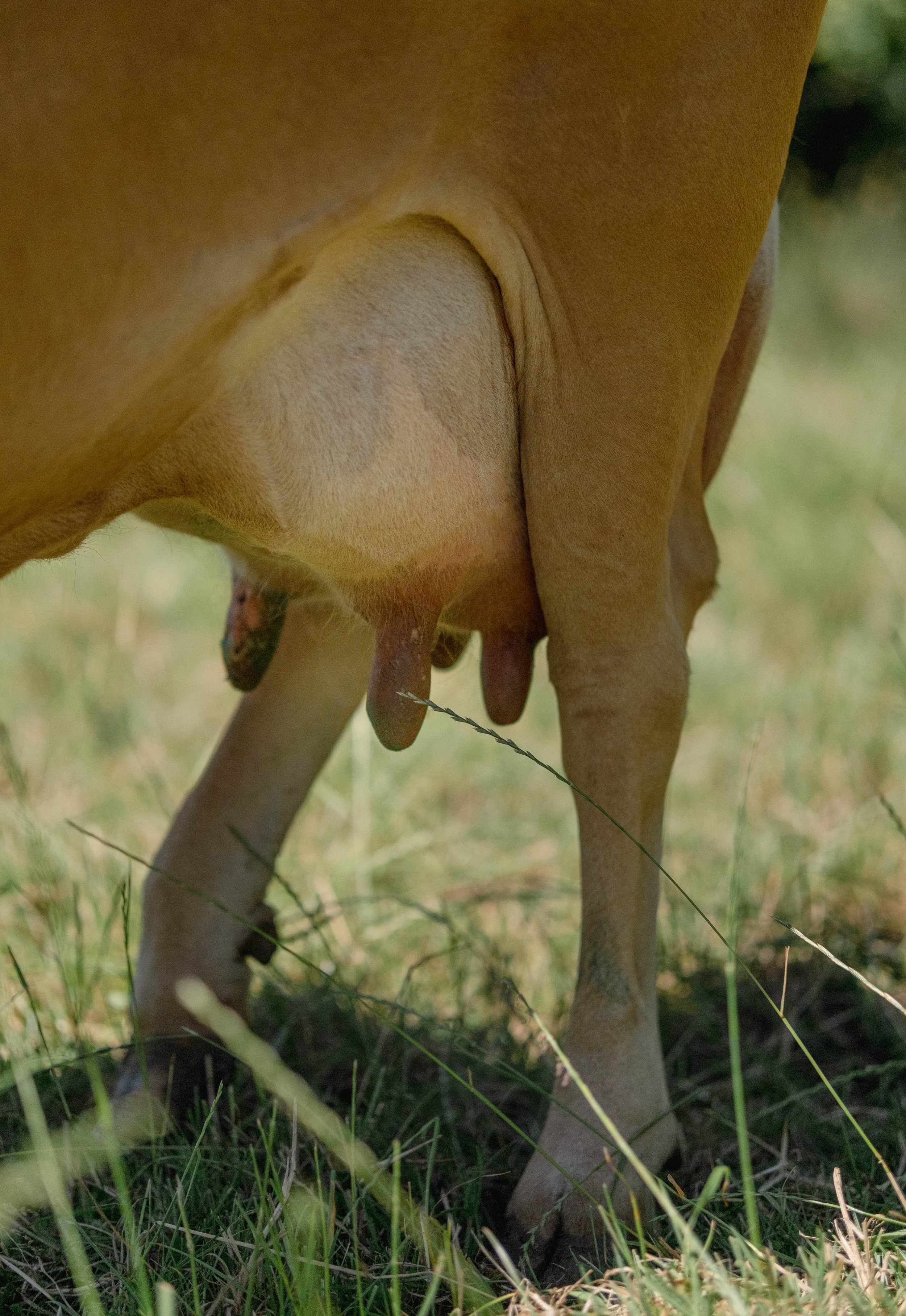
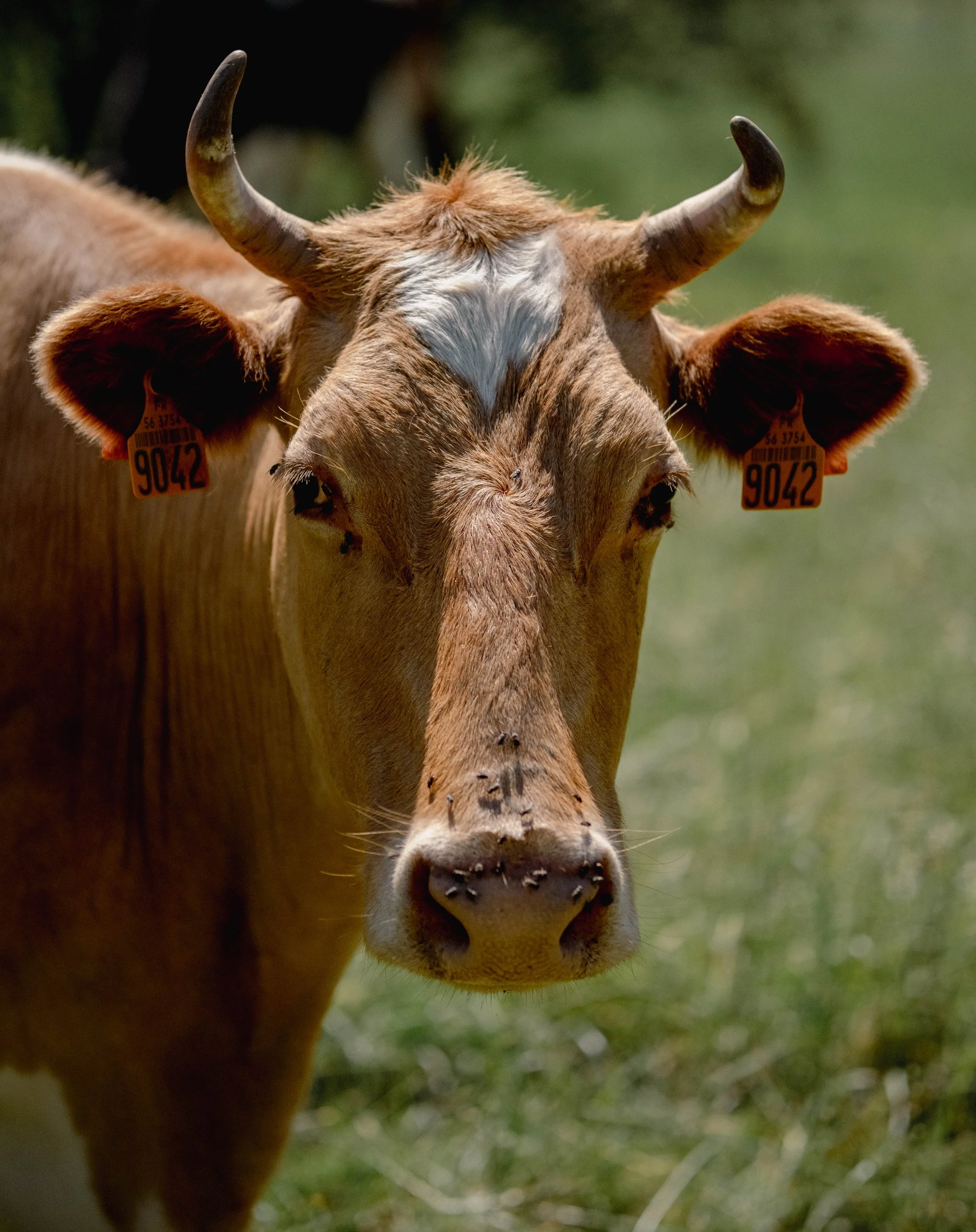
“Froment du Léon were kept and walked along the coastal paths by women while the men were at sea,” Hauteclaire says. “That’s where they learned to make the most of poor grazing, happily rummaging through hedgerows, eating brambles, gorse, and whatever else they can find. Most cows are content with grass and hay, and that’s about it.”
Their milk makes for an exceptional butter, even more yellow than Bordier’s. Froment du Léon cows are able to store the beta-carotene found in grass in the fat of their milk, giving the butter its distinctive golden-orange colour.
Maison Bordier and Les Vaches à Laezh have a lot in common, including the fact that they’re both located in Brittany, France’s top butter-producing region. The French are already the world’s number-one butter consumers, eating around 8kg per person each year. That number rises to 12kg in Brittany. And the only butter worth eating in Brittany is salted.
““Salt makes butter more complex, more appetising and, frankly, much harder to stop eating.””
“Unsalted butter is not really interesting,” Julie says with a laugh. “Salt enhances flavour just as much as butter does, which is why the two work so well together. Salt makes butter more complex, more appetising and, frankly, much harder to stop eating.”
That culinary preference and source of Breton pride—right down to Brets’ salted-butter-flavoured crisps, named “La Bretonne”—results from local history. Since the coastal region also produces salt, Brittany demanded exemption from gabelle, a royal tax on salt levied during the medieval era. This became one of its major bargaining chips during the negotiations to make the independent region part of France, in 1532. Salt was inexpensive in Brittany compared to almost anywhere else in France, which led the Bretons to put it everywhere in their cuisine—starting with butter.
At that time, though, salted butter wasn’t seen as the fancy treat that it is today.
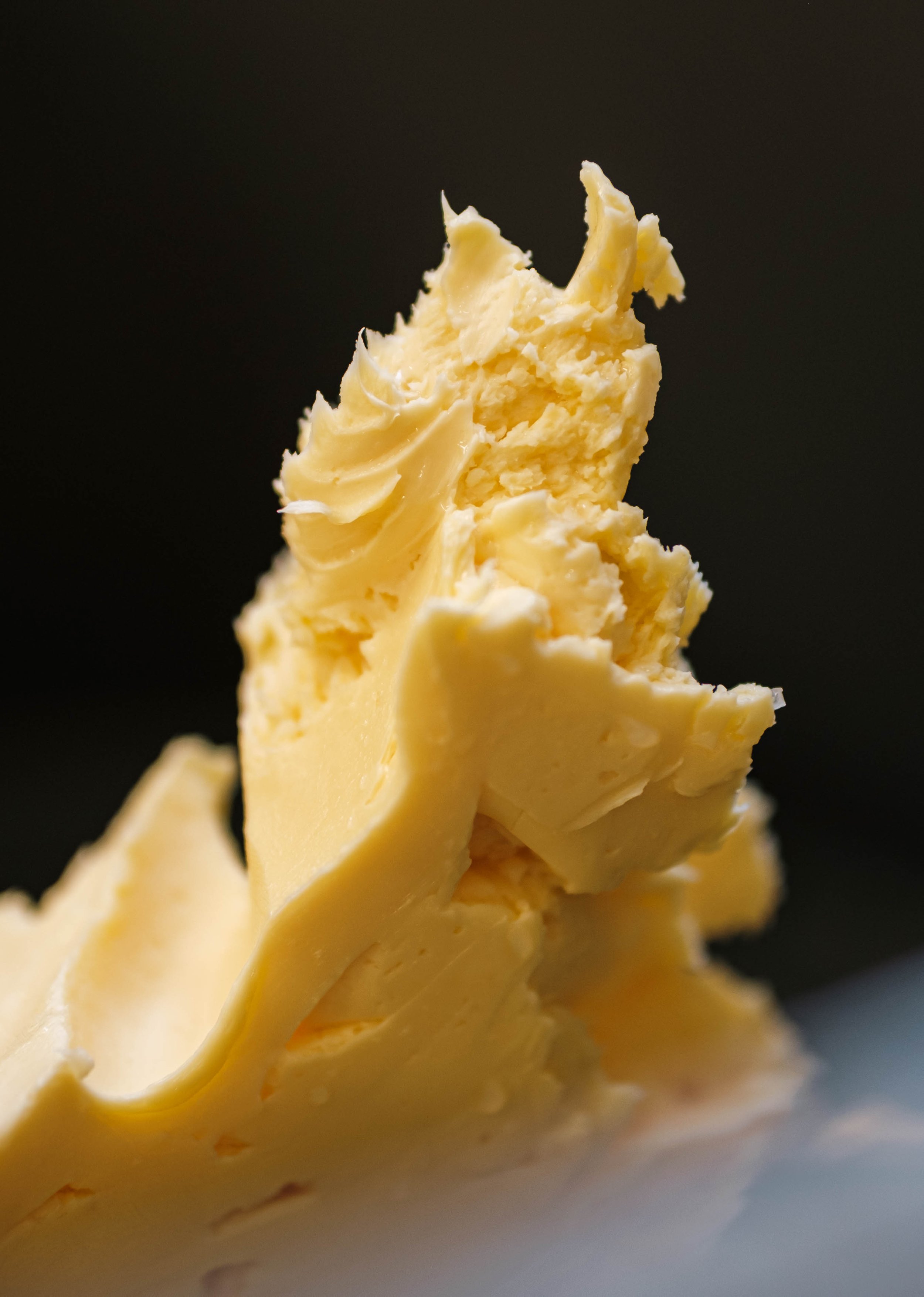
“Salted butter was associated with poverty,” Hauteclaire says. “Salt was used to preserve butter, meaning it wasn’t always made from fresh butter. The king and Parisian aristocrats demanded unsalted butter from Normandy—its freshness was considered a luxury.”
***
Associating butter with luxury is relatively new, as is the French cuisine au beurre. The modern recipe for the rich and flaky croissant was invented by Sylvain Claudius Goy in 1915, based on a recipe from 17th-century Eastern Europe, while beurre blanc was created by Clémence Lefeuvre in the 1890s. Kouign-amann, the greasiest Breton viennoiserie you’ll ever encounter (its typical ratios are 250g flour to 200g sugar and 200g salted butter), was thought to have been first baked around 1860.
Only the brioche goes back to medieval times, though its prestige rose in the 17th century, when it entered the king’s court.
“Until the 16th century, haute cuisine in Europe was heavily influenced by the eastern Mediterranean and Asia,” says Nicolas Kayser-Bril, journalist and author of La Guerre du Gras (The Fat War). “What people ate then probably had more in common with what you’d eat in a Thai restaurant today.”
Sauce cameline, a French recipe from the 14th century, is a good example of this trend—it has no butter or cream, but does contain vinegar, cinnamon, ginger, and sugar.
At the time, the great empires of the East were regarded as the pinnacle of civilisation. Later, after France colonised massive parts of the world, it deemed it unnecessary to copy anyone else’s cuisine. Instead, it strove to prove and assert its own power by creating a unique identity, which included food.
Spices and ingredients like rosewater were accused of masking the true taste of food, and replaced by local aromatic herbs like parsley and chervil. Butter came along as the fat of choice for this new regime—with its not-too-powerful flavour profile, it fit a cuisine whose excellence was predicated on being a bit bland.
““...Rich people did what they always do with proletarian culture: they premiumised, romanticised and appropriated it.””
This is the history of French cuisine from a bourgeois point of view, however. Given France’s long tradition of dairy farming, butter was already consumed in the country. For a long time, butter was called “le gras du pauvre” (poor people’s fat), mocked, disregarded, and looked upon with disgust.
Then, rich people did what they always do with proletarian culture: they premiumised, romanticised, and appropriated it. Aristocrats played into the rural fantasy by building dairies and sheepfolds on their estates. It’s similar to how the political and cultural elite romanticise the countryside today, while remaining largely disconnected from the realities of farming.
But the quality of French butter wasn’t always good. If TikTokers were around in the 19th century, their reviews would not have been very complimentary. At the time, up to half of butter’s weight could consist of gelatin or water, and the product wasn’t controlled or packaged properly. This allowed artificial butter (such as margarine, invented in 1869) to thrive among the working class, since it was cheaper and sometimes nearly impossible to differentiate from true butter—some sellers even blended the two together.
The rich could not stand this. “Newspapers’ headlines were essentially saying that civilization was on the verge of collapse because the poor were eating artificial butter, people could no longer tell real butter from imitation, and margarine was leading society to ruin,” Nicolas says.
Some craved premium butter more than others, like the British. They loved to mimic the French way of eating, and were Europe’s biggest consumers of premium butter. Today, they remain one of Bordier’s top export markets.
“All the regulations governing butter quality, like the ban on mixing butter with margarine, were introduced to protect Londoners from being sold adulterated products,” he says. “But also to ensure they continued paying a premium for butter.”
Butter quality regulation allowed French butter to achieve its status, a distinction in the Bourdieusian sense: a form of reassurance for the bourgeoisie that they were not eating the same food as the poor. French butter is good, but it would be a lie to say that that same feeling of distinction isn’t prompted by pushing open the door of La Maison du Beurre, or buying a block of golden-orange Froment du Léon butter, today.
At the weekly farmer’s market where Hauteclaire sells her products, she enjoys playing on that appetite for authenticity. Since her clientele is largely made up of British and Parisian tourists, many of them still ask for plain butter, a little hesitant to try the salted version.
“I lean into the local heritage,” she says. “I tell them the story behind it and say ‘If you try salted butter, you’re getting a taste of Breton culture, you’re eating like a local.’” Works every time.