A Science and an Art — Maisel’s Weisse Alkoholfrei
Upon arriving at Maisel’s Brauerei in Bayreuth, Franconia, it becomes immediately clear that this is not your typical Bavarian brewery. A huge steel sculpture of Mother Earth, wearing a crown of hops and extending a single hand holding a seedling, stands guard at the entrance. Within, a Pop Art–style mural fills one wall of the brewery building. A succession of graffiti-inspired pieces climb the red-brick chimney, transforming it into a vertical art installation.
This lack of adherence to tradition is more than aesthetic; it also extends to the beer that Maisel’s produces. True, the brewery is celebrated for its classic wheat beers, including a weissbier, dunkel, and kristallweissbier. It brews with just four ingredients—water, yeast, hops, and malt—according to the strict Reinheitsgebot, or Bavarian beer purity law, which still applies here.
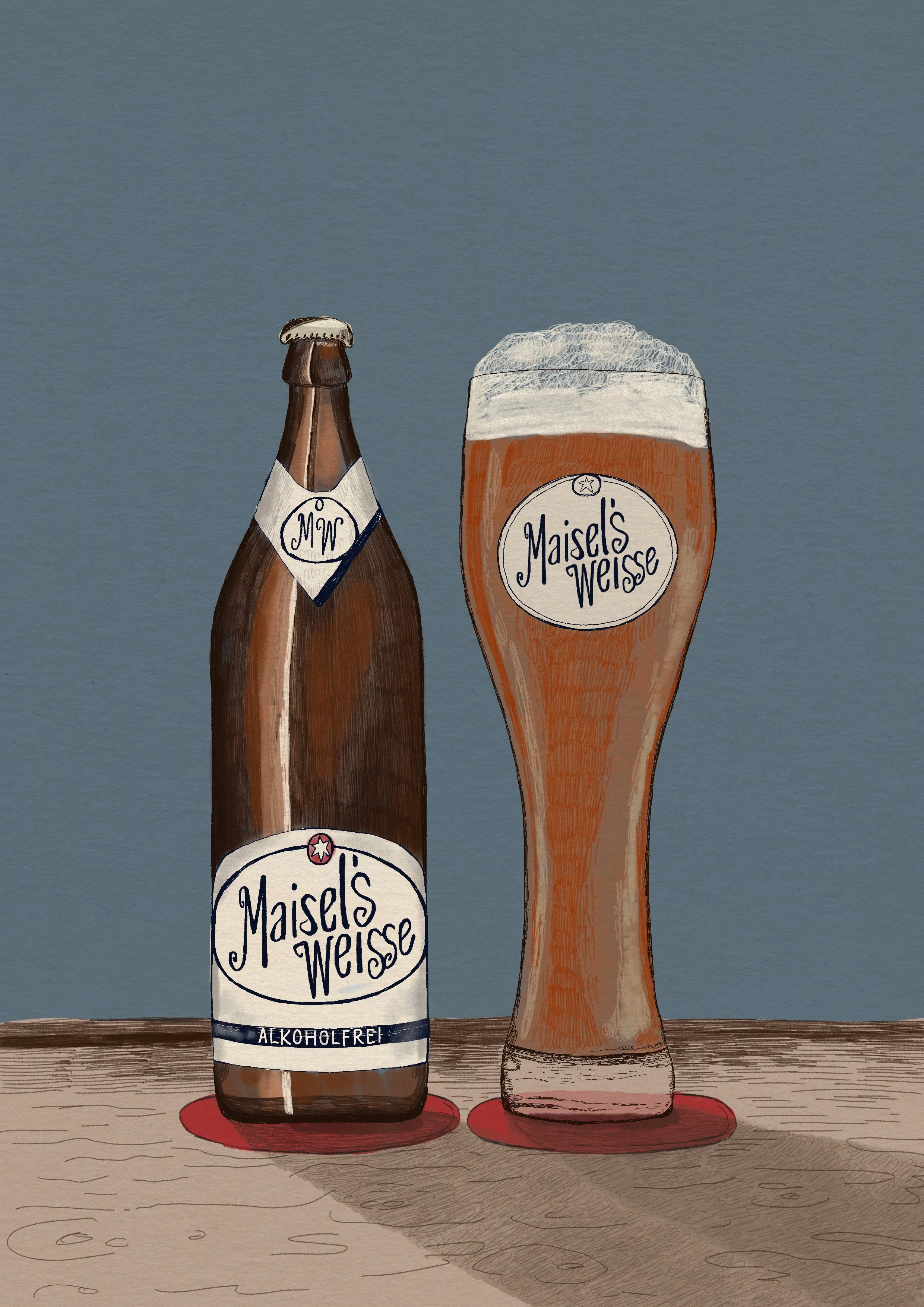
But just four ingredients can create virtually any flavour, just as four colours can create any other hue. Suddenly all these splashes of paint make perfect sense. In turn, Maisel’s most notable release, one of the world’s most-awarded beers, is the result of creative problem-solving. It differs from the rest of its range in one key way: It’s alcohol-free.
Maisel’s Weisse Alkoholfrei was first brewed in 2000, decades before the arrival of Dry January and wellness trends made alcohol-free beer big business. In the last seven years, it has racked up six European Beer Star gold medals, interrupted only by a silver medal in 2020, as well as two World Beer Awards. In many respects, it is an exceptional achievement and an exceptional beer.
And yet, there is something refreshingly humble in the brewery’s attitude towards its breakout star. Maisel’s Weisse Alkoholfrei wasn’t invented to respond to a trend or pressure from a marketing department. Rather, it was developed to solve a simple technical problem: how to offer something delicious, with all the characteristics of its famous weissbier, to those customers who choose not to drink alcohol.
***
Jeff Maisel, the fourth-generation owner of the brewery, has overseen the family business for more than 30 years. When he joined in the mid ’90s, times were tough for smaller breweries. German beer consumption had peaked in the 1970s, and by the 1990s had declined significantly. Intense competition and loss-leading pricing from discount supermarkets left the major brewery groups able to compete thanks to their size, but squeezed the regional breweries.
At the time, Maisel’s produced an alcohol-free pilsner called Kritzenthaler. Jeff wasn’t impressed by it, though, nor by the other alcohol-free options on the market.
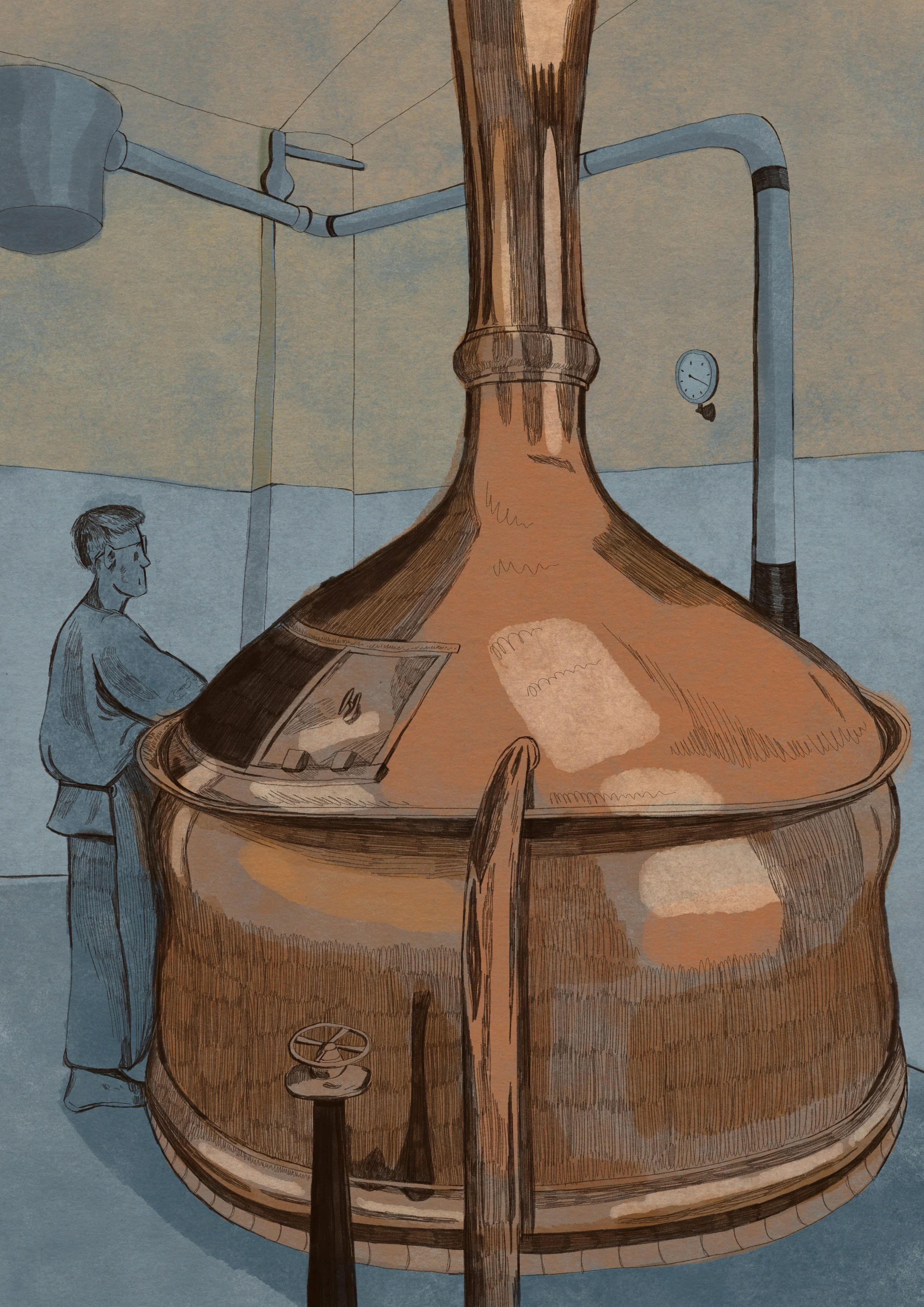
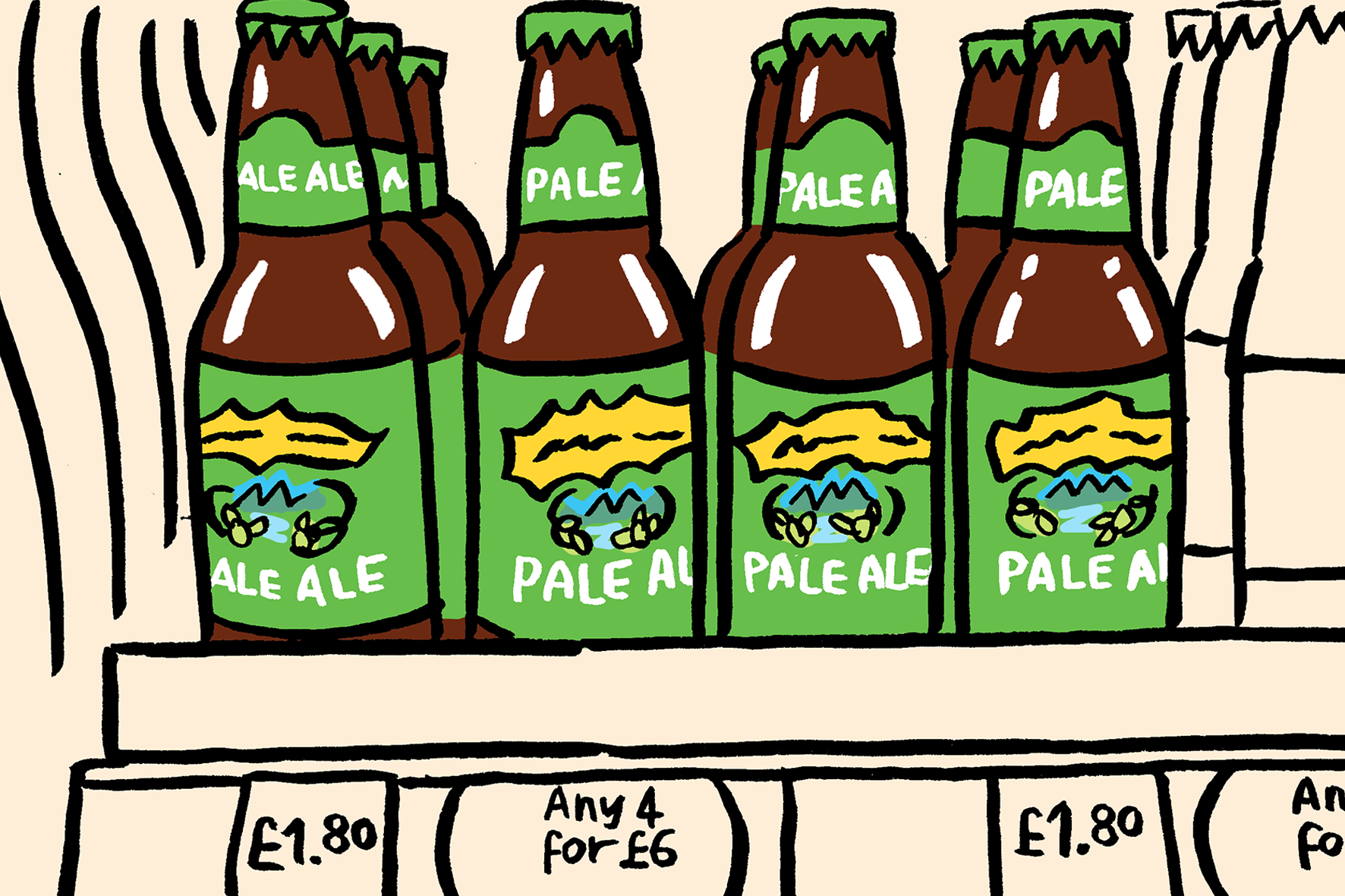
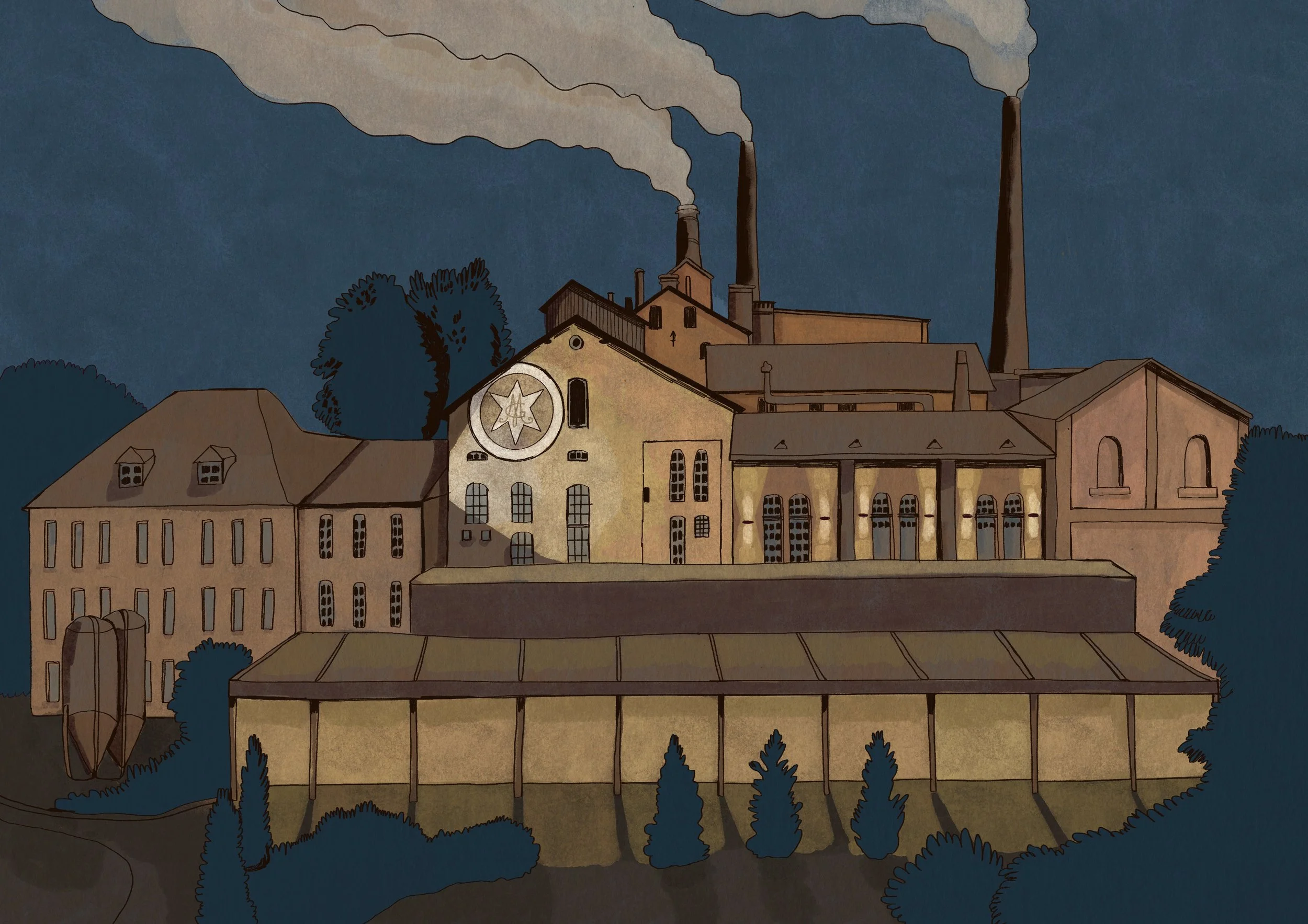
Illustrations by Laurel Molly
“You had this smell in it that we call ‘Leberkäse,’” he says, referring to a traditional Bavarian meatloaf; when used to describe beer, the term implies yeasty, doughy, slightly sulphury qualities. “We’re not satisfied with the product. So we had to start thinking, ‘How can we reduce the alcohol, but still have body in it, and [not] have the alcohol-free taste?’”
Pilsner-style beers dominated the German market, but this wasn’t where Maisel’s expertise lay. Instead, Jeff and his cousin Andreas set about creating an alcohol-free beer based on what they knew best: weissbier.
At the time, it wasn’t intended to be anything other than a niche product. “We wanted to have the typical Bavarian wheat beer, for the driver, for somebody who doesn’t want the alcohol—and also, the drink for the sportsman,” Jeff says. “That was the market then: You were either a driver or an athlete who took hydration and avoiding alcohol equally seriously.”
““That was the market then: You were either a driver or an athlete who took hydration and avoiding alcohol equally seriously.””
Maisel’s approach to making the beer was as elegant as it was simple. Instead of choosing between the two commonly used methods to create alcohol-free beer—removing alcohol by an industrial process, which is straightforward but can be harsh; or stopping fermentation early, which gives the beer a fuller flavour but leaves a sweet, worty taste—the brewery used both approaches. Today, two beers are brewed (one a dealcoholised version, and one a lower-strength version) and blended to create Maisel’s Weisse Alkoholfrei.
The beer is now roughly a third of Maisel’s business, and its surprise success has given the brewery new financial freedom. In 2007, Maisel’s bought out the minority share it had previously sold to a larger brewery group and returned to completely independent ownership.
***
Markus Briemle is the head brewer at Maisel’s, and the man who’s responsible for making sure that this award-winning beer continues to shine. He started at the brewery 10 years ago, as its laboratory manager, before moving to the brewing side and getting promoted to head brewer in 2019.
When it comes to making Maisel’s Weisse Alkoholfrei, “The main challenge is always the taste,” he says. “Alcohol still adds some flavour, some texture—the tough part is to make it taste like a good beer, so that it is very close to the original one.”
The process that Jeff and his cousin Andreas pioneered is Markus’ to manage now. He first brews a fully fermented weissbier using the same recipe as the regular Maisel’s Weisse. The alcohol is later removed via vacuum distillation, a process that also captures key beer aromas and reintegrates them into the dealcoholised portion.
““The main challenge is always the taste. Alcohol still adds some flavour, some texture—the tough part is to make it taste like a good beer, so that it is very close to the original one.””
Then, a separate batch of weissbier is brewed, though fermentation is stopped early. The result is a beer that retains natural sweetness, body, and fresh fermentation character. These two batches are then blended to create a beer that closely resembles a full-strength weissbier; it is just 0.5% ABV, which falls under legal “alcohol-free” limits. Markus won’t reveal the exact proportion of both beers in the final recipe—“This is one of our secrets, how much we blend together,” he says—but this balance is the key to its success.
As Markus explains, he doesn’t brew to a fixed recipe, but rather a fixed outcome. Limited by the Reinheitsgebot, he has just four natural ingredients to play with, all of which vary from batch to batch. Water is drawn from a well fed by the Franconian hills, and checked for consistency. Even the purest water can have minor variations over time, requiring small mineral adjustments to meet the target brewing profile. Its brewing yeast is its own house strain, passed on through generations. The hops are Perle and Herkules varieties, always grown in Bavaria, and the malt is locally grown and sourced by IREKS Malz in Kolmbach, which has a long-term technical partnership with Maisel’s.
A wet autumn or a hot summer can alter the chemical profile of the hops Maisel’s uses, Markus says, so he regularly makes minor recipe tweaks and brews test batches. The malt supply can also vary from one batch to the next, including slight differences in the colour, the starch content, or even how the enzymes behave.
But while the equations might say one thing, Markus still has the final say. “Yes, it’s scientific, but it’s also an art,” he says. “I calculate it, but still I have to taste it. So there’s always a little bit of adjustment. You have a little bit of Fingerspitzengefühl [literally, “fingertip feeling” in German]—we feel you have it in your fingertips somehow.”
***
The craft and scientific expertise that go into the making of this beer are obvious, as is the pride with which Jeff and Markus talk about it. But they aren’t the only ones who admire it. I have seen Maisel’s Weisse Alkoholfrei sold everywhere from Sweden’s government-owned Systembolaget shops to craft beer bars in Poland. Often, it’s the only Maisel’s beer that’s stocked, such is its success and notoriety.
It’s also become a staple across Germany, and corresponds with the country’s contemporary drinking trends. According to an International Wine and Spirits Record survey published in December 2025, 40% of German drinkers had consumed alcohol-free beer in the previous six months—the highest proportion of any of the 15 markets surveyed.
The success and widespread availability of beers like Maisel’s Weisse Alkoholfrei mean that many Germans consume alcohol-free beer not just for practicality’s sake, but also for reasons of taste. “Consumers are no longer choosing alcohol-free beer simply because they are driving,” as Jeff puts it. “They are looking for a flavoursome alternative to sugary soft drinks or tasteless water.”
Drinks industry professionals also esteem the beer. “Maisel’s Weisse Alkoholfrei comes closer to the classic version in a direct comparison than many other alcohol-free wheat beers manage,” says Daniel Halfar, a beer sommelier and brewer who performed a side-by-side tasting of Maisel’s Weisse, Weisse Alkoholfrei, and Weisse Leicht, the brewery’s light beer.
““[Maisel’s Weisse Alkoholfrei] is probably the only beer I keep in stock on a permanent basis, as pretty much the best, most consistent AF I have tried.” ”
“The typical aromas—such as banana, light clove and a soft, yeasty texture—are clearly recognisable, and give the beer a distinct stylistic proximity to the original,” he adds. “Overall it feels a little leaner, but remains harmonious and clean, with an impression that at times is closer to Maisel’s Weisse Leicht.”
Christian Klemenz, the founder and CEO of the online beer retailer Bierothek, backs up this claim. “Maisel’s Weisse Alcohol-Free is an absolute benchmark in its category,” he says. “The Maisel brewery in Bayreuth has mastered the art of brewing a well-balanced and very full-bodied alcohol-free wheat beer.”
The U.K.–based alcohol-free beer enthusiast Neil Gibson agrees. “[Maisel’s Weisse Alkoholfrei] is probably the only beer I keep in stock on a permanent basis, as pretty much the best, most consistent AF I have tried,” he says. “I do remember having it at the North Westward Ho pub in Manchester for the first time and I was blown away. I was only two months into sobriety and since then I have never been without it.”



What is striking in all this praise is its matter-of-factness. This beer isn’t a curiosity because it happens to have no alcohol; it doesn’t warrant exceptional treatment. It is simply a beer that is outstanding in its category, and is rightly applauded as a result. Maisel’s Weisse Alkoholfrei is an undoubtedly elegant solution to the problem of making a great weissbier without alcohol present. It is worthy of praise—but not beyond any other beer that Maisel’s brews.
“As my grandfather used to say, brew the beer you want to drink,” Jeff Maisel says. “Because if you try to sell it and it doesn’t work, at least you’re left with a beer you’ll still enjoy.”