
The Art of Shinrin-Yoku — Why We Love Wood in Pubs
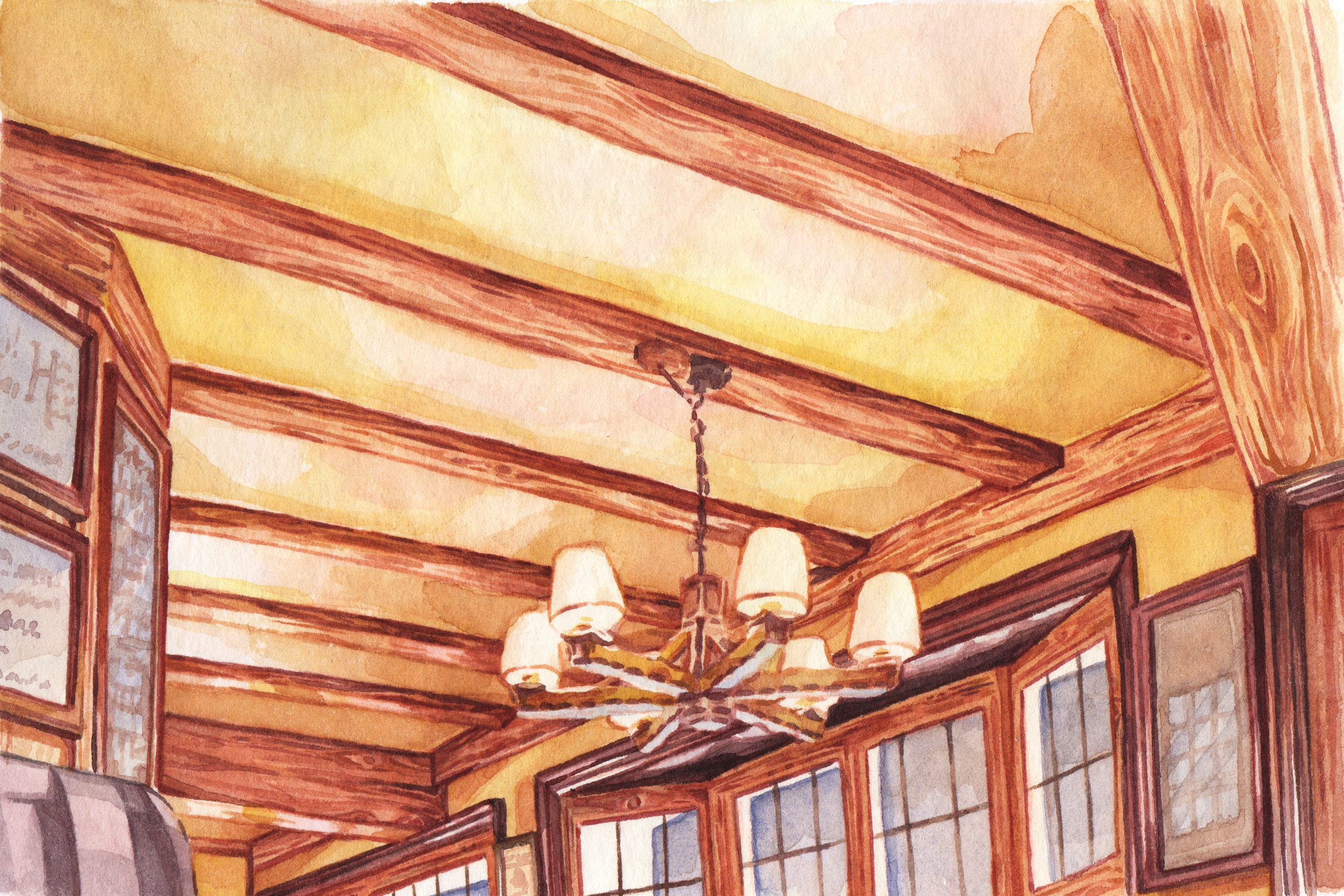
I’m cradling a pint of Harvey’s Sussex Best while admiring the glorious interior of the Blythe Hill Tavern, a South London institution. Painted panelled walls alternate between black and ochre, and a thick, diagonal beam arrows across the intricately carved ceiling of the main bar room. Above the handpumps, mahogany timber units stock clean pint glasses, while behind the bar, a vintage mirrored cabinet houses spirit optics.




There are many qualities that make the Blythe special, from its famously good Black Stuff to its besuited, endearingly professional, yet nonetheless affable bar staff. But without its abundance of beautiful timber, it would be nothing special.
If there’s one thing that virtually all great British pubs have in common—from ancient inns like The George in Norton St Philip to ornate urban gin palaces like The Vines in Liverpool and austere, interwar boozers like the Rose & Crown in Oxford—it’s wood.
In my view, there’s a direct correlation between how timber-heavy a pub interior is and how appealing the space is to the drinker. Wood is not just functional. Its materiality evokes a deeper sense of security, a welcoming warmth, a feeling of being part of something much older than you.
Wooden beams or panelling might not be the first features that punters consciously register upon entering a pub. But they will certainly feel their impact—or their absence—on its atmosphere.
***
“There is definitely an aesthetic and cultural and financial value that has been placed on timberwork,” says Dr. James Wright, a buildings archaeologist, pub enthusiast, and author of books like Historic Building Mythbusting. Today, a significant part of timber’s appeal is its ability to transport us back in time—often to Early Modern or medieval England, if our imaginations (and the marketing skills of the pub in question) allow it.
Despite the fact that many sumptuously wood-lined pubs appear age-old, however, James says that they often date to the 19th century. In that era, as he explains, art critic John Ruskin and the Pre-Raphaelites helped bring medieval and Gothic sensibilities back into vogue.
“This idea of exposed timber as this ‘merry old England’ antiquity vibe actually comes from the second half of the 19th century onwards,” James says. “I suspect those timbers would’ve [actually] been painted in all sorts of colours or designs.” As he notes, the modern penchant for restoring pubs by revealing beams and stripping out plaster is often ahistorical.
““There is definitely an aesthetic and cultural and financial value that has been placed on timberwork.” ”
Nevertheless, even if many wood-lined pub interiors don’t communicate medieval authenticity, that doesn’t take away from the feeling they impart. Timber in pubs still connects us to a pre-industrial past that can be felt humming through the walls, ceilings, and floorboards of our drinking spaces. Wood became such an essential part of the pub aesthetic simply because, for hundreds of years, it was by far the most readily available building material.
“When you see those old oak beams, and solid wooden tables that have worn and aged beautifully, and you can almost see the grooves where people’s arms have been; you feel connected to the past,” says Josh Young, who runs the Instagram page @lovely.pubs alongside his partner, Nicole England. “It makes me think: What was it like for this 18th-century sailor sitting here with a pint after his shift at the dockyards?”
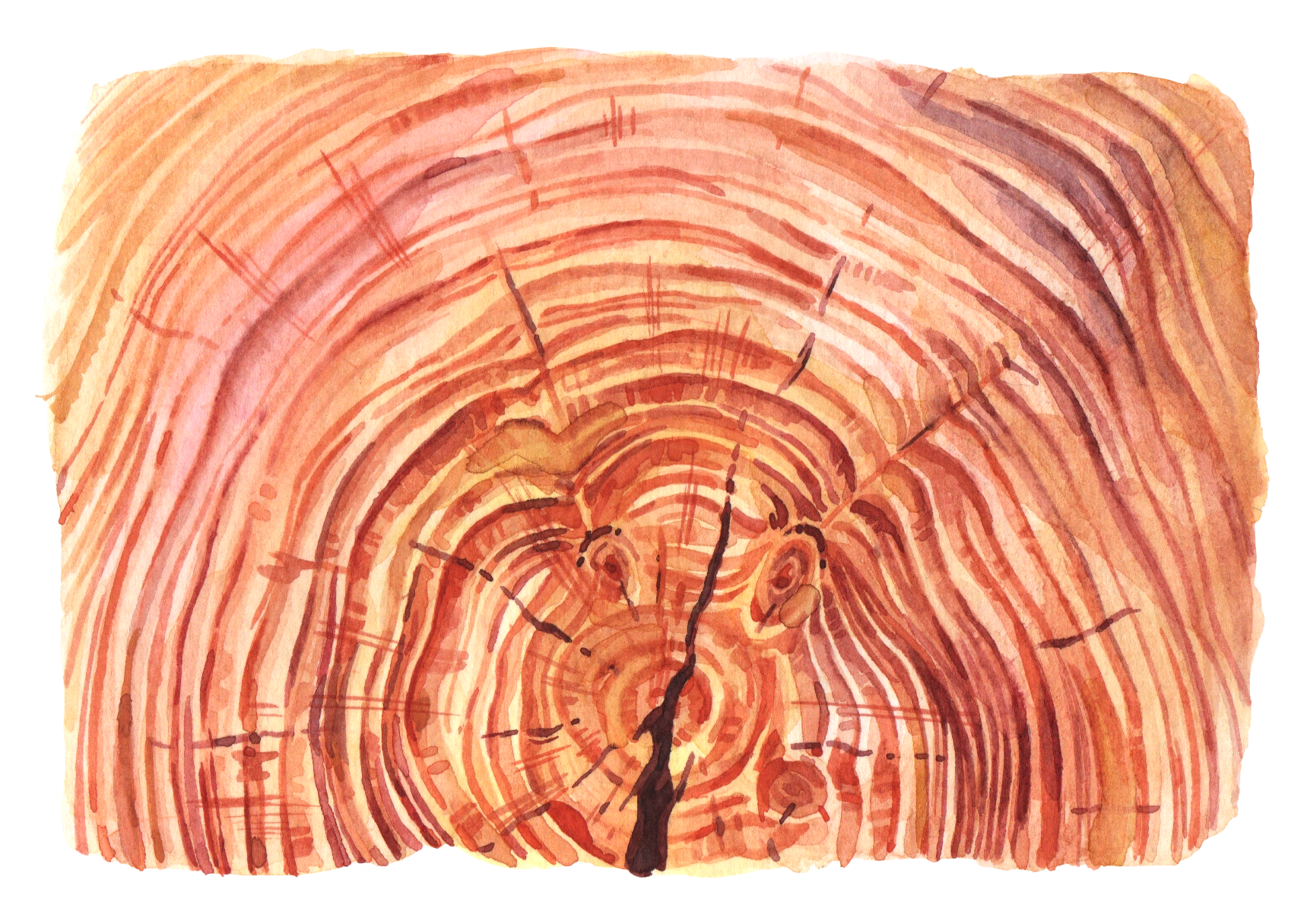
Nicole goes a step further by not just envisioning pubgoers of yore, but by imagining the wood’s own former life. “What I really like about old timber beams is that in some pubs, you know, they’re centuries-old, but those beams came from really old trees,” she says. “So it’s not just the age of the building—it’s the age of the beam, and the age of the tree it came from.”
Illustrations by Katariina Purru
Advances in dendrochronology (the precise dating of tree rings) have revolutionised the process of identifying a given pub’s architectural history. “You can get really firm dates for the felling of trees, which can take you down to a particular season—the winter of 1521–22, for example,” says James.
During that era, and for centuries on either side of it, pubs depended on freshly felled green oak, a material that is essentially still wet, making for an easier, more pliable building material. That eventually changed in the Georgian period, when two key developments took place. First, timber imports increased, with softwoods from the Baltics becoming cheaper to bring to Britain. Second, and even more importantly, new kiln technologies helped slash the costs of brick production, meaning “brick became de rigueur,” says James.
But by then, the interior design habits established by the dependence on fresh green oak were already entrenched. The wood-clad pub had long since taken hold in the popular imagination—and for many, still epitomises the romance of the pub today.
***
“Living in a city, there isn’t much connection to nature. It’s difficult to find time to stop and think away from your phone,” says Ali Ross, general manager of the Coach & Horses on Greek Street in Soho. When it comes to beautifully maintained timber interiors, her pub is easily one of London’s best: light oak panelling galore; tall, multi-paned wooden-framed window grids; a smoothly rounded bar corner jutting into the old standing bar, with its chequered tile flooring.
“Trees are beautiful, and they have this calming element,” she adds. “Being around natural elements is comforting. In a lot of new, modern bars, you’re surrounded by concrete and steel, and you don’t want to be there for hours and hours. A pub with leather seats and wooden panelled walls is an extension of the home.”
This connection to timber is more than just instinctive. Last year, I spent time reading about the Japanese concept of shinrin-yoku, which translates literally as “forest bathing.” First coined in 1982 by Tomohide Akiyama, director of the Japanese Forestry Agency, this term refers to the practice of immersing yourself in the environment of the forest, “using all your senses to experience nature up close.”
““In a lot of new, modern bars, you’re surrounded by concrete and steel, and you don’t want to be there for hours and hours. A pub with leather seats and wooden panelled walls is an extension of the home.””
In his book, Walking in the Woods, Professor Yoshifumi Miyazaki—a leading authority on forest medicine, who provided the first evidence backing Akiyama’s theory—writes: “When we come into contact with nature such as forests, parks and flowers, we feel relaxed. That is because our bodies (including our genes) were made to be adapted to nature.”
He argues that the process of global urbanisation that has taken place over the last 200 years has thrust us into a daily churn of stress and anxiety that our bodies haven’t yet adapted to. Shinrin-yoku seeks to transport us back to those natural roots—although interestingly, its benefits aren’t only felt in the wilderness.
“Wooden elements used in the home and workplace—in the form of furniture, fixings and features—can offer relaxation benefits when we look at the wood, touch it, or smell it,” writes Yoshifumi. “Even when wooden surfaces are treated to protect them against moisture, thereby reducing the effects of touching them, you will still benefit from looking at them.”
As Yoshifumi claims, and as several studies have shown, this exposure to wood can reduce prefrontal brain activity, lower cortisol, and decrease blood pressure. On a deep, unconscious level, wood has extremely comforting effects on us—even in human-made settings.
There’s no reason why these same principles wouldn’t apply to the pub. Perhaps that familiar sense of relief—that unwinding and softening of muscles that washes over you when you sit down in a familiar pub with a glass of something enticing—is about us accessing a more elemental version of ourselves. It’s a comforting thought.
“It’s all about the connection to the organic material,” says Nicole. “More and more in society, we strip all that away, and everything becomes more plastic. Original, preserved timber features—they take you back in time.”
***
There’s a prevailing sense that the high-quality carpentry that defines our best pubs is becoming a lost art. Facebook and Reddit are awash in posts from carpenters admiring historic public houses’ construction (a delightful rabbit hole to go down). According to Josh, modern comparisons often feel “a bit slapdash for no cash.”
“Bring back carpentry!” agrees Ali. “I think the manipulation of wood and natural textures is something we’ve been doing from day dot, and the pub is an extension of that. It would be nice to see more work done to make younger people understand these things are still really important. There have been so many jobs created in the past 20 years that are a bit meaningless and are not gonna withstand the test of time.”
One country that is unsurprisingly good at keeping these traditions alive—given its fierce reputation for revering and preserving its cultural heritage—is the home of shinrin-yoku: Japan.
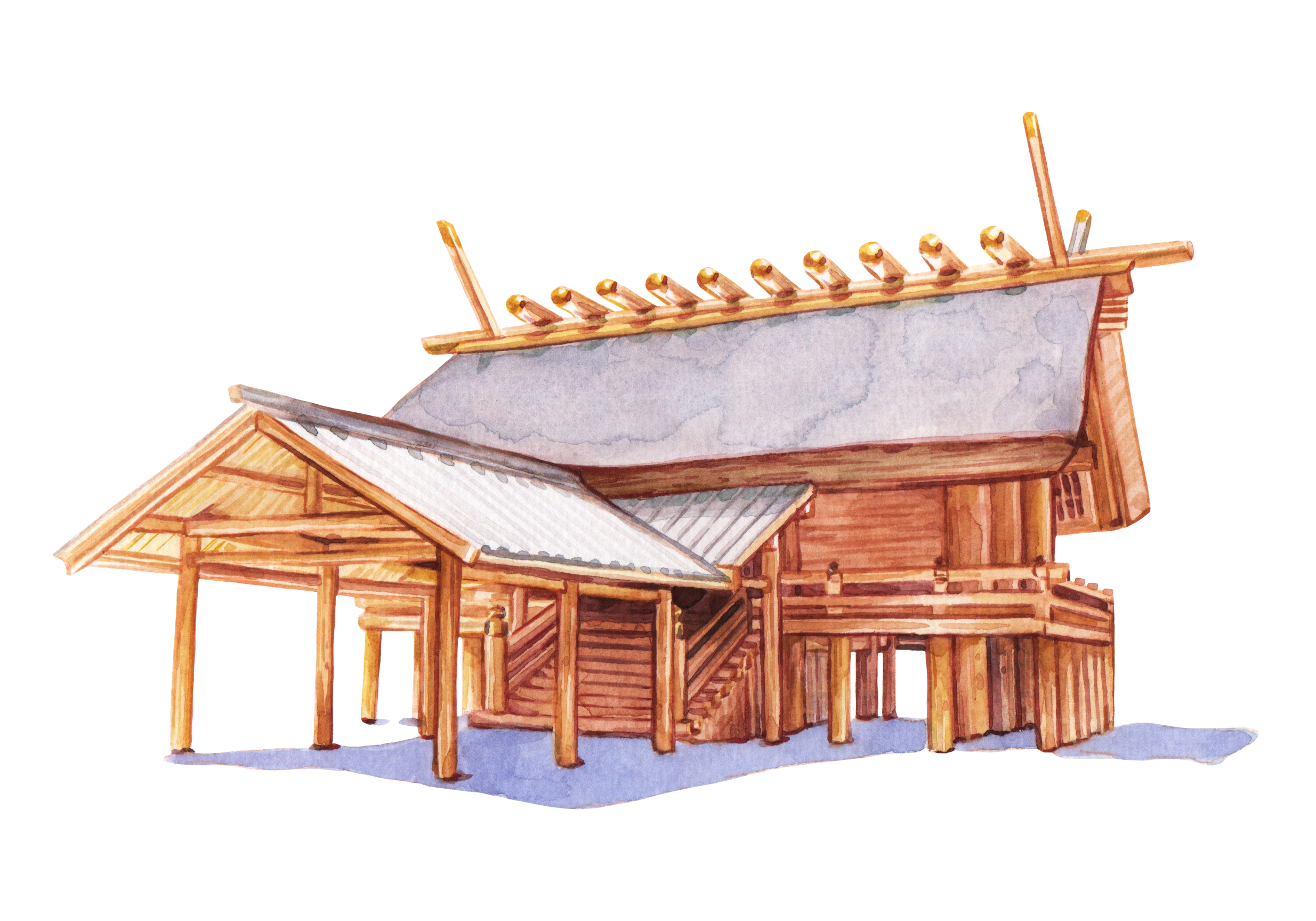
Look to Ise Jingu Shrine in the southern prefecture of Mie. As part of a ritual named Shikinen Sengu, this 1,300-year-old timber shrine is totally dismantled and reconstructed every 20 years, the rebuild observed by tourists and locals alike. Compared to the slow drain of master carpentry knowledge in the U.K., this custom ensures that complex traditional joinery skills are passed down, and that new generations remain in touch with this valuable, ancient process knowledge.
80 miles northeast, in the city of Kyoto, the alleyway izakayas of Ponto-chō are shaped by timber in a softer but no less beautiful way. Cypress (hinoki) wall panels and snug partitions help provide moments of solace, while Japanese cedar (suga) countertops are bent and planed over time by the elbows and forearms of sake sippers and yakitori munchers.
““You can see where people have sat at the wooden bar and hit the wood with their stools, and these are connections to the people that drink there, telltale signs of it being well-loved over a long period of time.””
Timber plays the same role in the beautiful, timeworn pubs of the British Isles. These spaces are uniquely capable of holding together the traces of all the people who have ever spent time in them, like fossilised insects in amber.
“In the Hole in the Wall at Waterloo, you can see where people have sat at the wooden bar and hit the wood with their stools, and these are connections to the people that drink there, telltale signs of it being well-loved over a long period of time,” Nicole says.
Timber is the vehicle through which we gather together with publy ghosts of the past. It helps us enter into this lineage, and take our place in a multi-generational chain of people that have sought out these spaces over the centuries. According to the proponents of shinrin-yoku, timber in pubs literally calms our brains, and connects us to a vestige of the natural world at a time when those relationships are so often severed.
In other words, there’s something about wood in pubs that seems to feed and enrich our very souls. If that’s not a good reason to go to the boozer, I don’t know what is.