
A Poetic Act — Zoigl, the Schafferhof, and the Making of Place
Communal brewhouses with gear-and-pully mash tuns. Brewing rights that stretch back to the Middle Ages. Wood-fired brew kettles and coolships. All this alone is enough to make Zoigl utterly unique.



But there’s something more, the essential ingredient that ties everything together: the Zoiglstube. It’s in these traditional taverns that the magical transformation of communal brewhouses and coolships into Zoigl takes place. Without the Zoiglstube, Zoigl is just another Kellerbier.
***
Billowing snow envelops us as we make our way toward the centre of Windischeschenbach, carrying with it the fragrances of toast and cookie dough. We follow the siren scent to the town’s communal brewhouse. The door’s ajar, letting a shaft of orange light escape into the purple twilight. We call a hearty “Grüß Gott” into the alluring glow.
Herr Andraschko zigzags down the narrow switchback stairs a moment later and welcomes us into the warmth of the brewhouse. Andraschko has been brewing beer at the communal brewhouse for Zum Posterer, one of the households in town with ancient brewing rights, since his retirement from a regional brewery.
A spry man in his seventies, Andraschko seemingly glides up the steep and narrow metal steps to show us the brewing vessels on the main level of the brewhouse, then up one more set of creaky wooden stairs to the dimly lit attic.
““...steam from the hot wort is rising up toward the rafters and out through a window open to the night.””
As our eyes adjust to the soft light we spy a relic of brewing times past in the centre of the attic: a shallow cooling pan called a coolship, where steam from the hot wort is rising up toward the rafters and out through a window open to the night.
It’s a cold evening a notch below freezing, the kind of night that was common 50 years ago. At this temperature, Andraschko says, he only needs to open one window in the attic to cool 30 hectolitres of wort from near boiling to 10 Celsius by next morning.
***
Tucked away in the dense woodland of northeastern Bavaria, the Oberpfalz is the cradle of Zoigl culture. Zoigl is more than a kind of beer. It’s an ethos, a resolute defence of a slower way of life in the face of our contemporary desire for on-demand pleasures.
Zoigl begins life in the communal brewhouse, a holdover from the late Middle Ages. More than seventy towns in the Oberpfalz presided over communal brewhouses in the 19th century. Today, only five remain: Windischeschenbach, Neuhaus, Falkenberg, Mitterteich, and Eslarn.
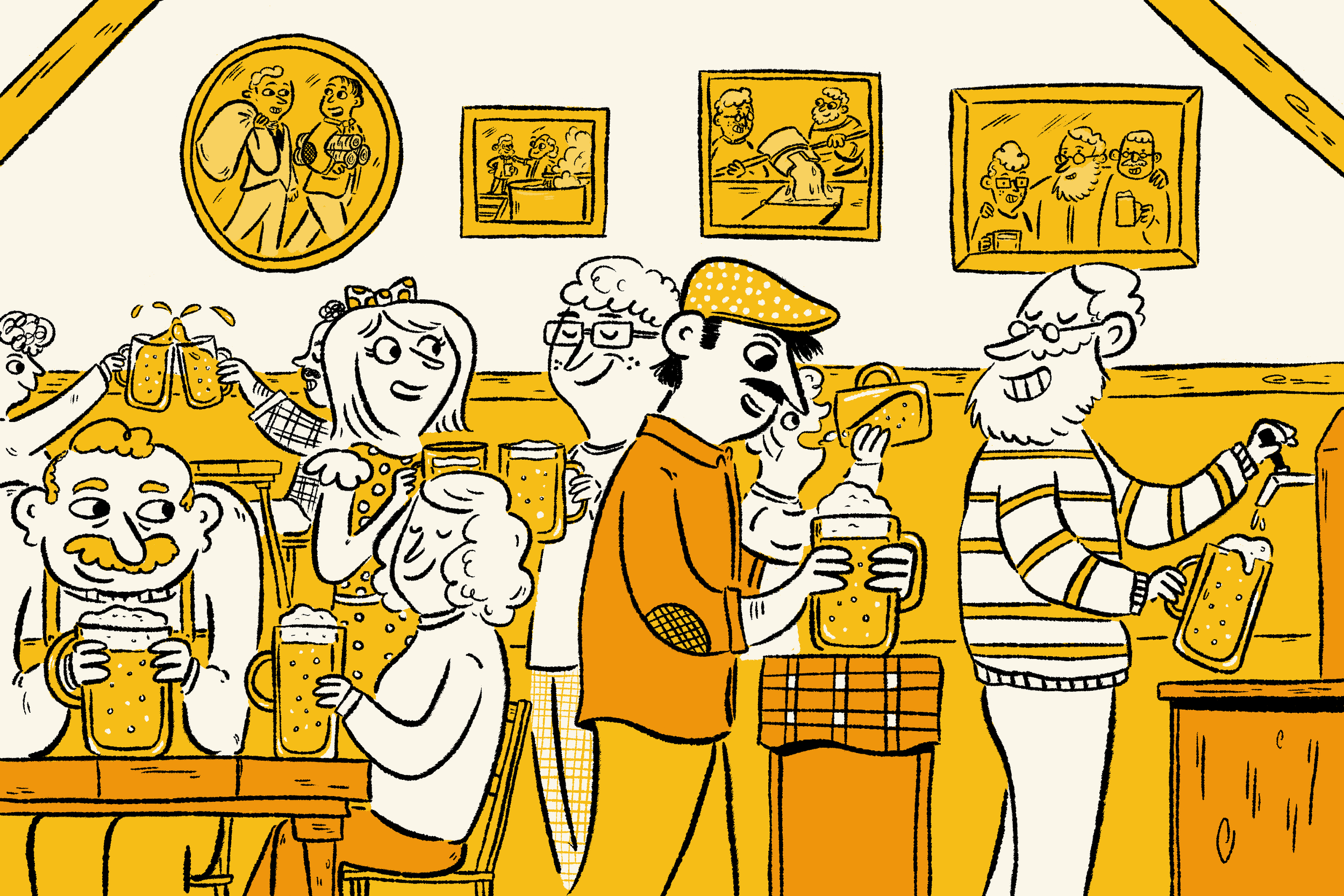
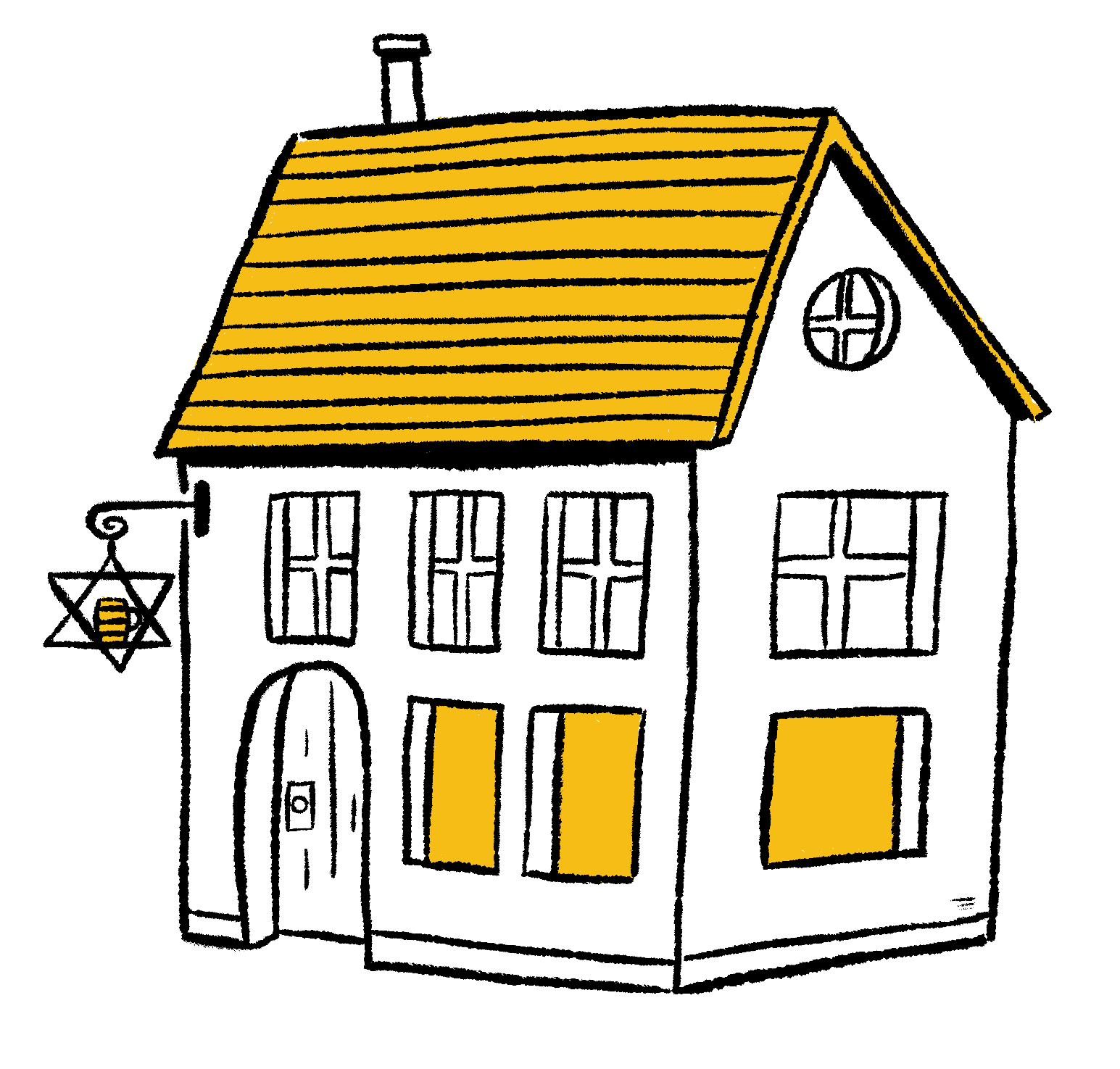
Residents in possession of historical brewing rights take turns from week to week brewing beer that they’ll ferment in their cellars and serve for a few days every month in their Zoiglstuben. You’ll know the beer’s ready when they hang a six-pointed Zoigl star from the façade.
The Zoiglstube was once the brewer’s kitchen or living room. These days, it’s a tavern that’s part of their home, but one that bears more resemblance to a living room than a beerhall. Townsfolk crowd in to catch up on the news of the day, gladly making room for all who pass through the door. It’s the kind of place where you’ll never drink alone.
***
I’ve lost count how many times I’ve walked from Windischeschenbach across the Waldnaab River, up the steep embankment, and past the watchtower to the Zoiglstuben of Neuhaus. I pass the statue on the market square depicting two people hauling Zoigl in a large wooden bucket balanced on a pole. Right into the 1970s residents helped brewers transport the wort from the brewhouse to the brewers’ cellars.
A few steps further is Beim Käck’n, where a simple six-pointed wooden star sways in the breeze to the same rhythm as the geraniums decorating the facade.
Inside, Ernst Schönberger is holding court amid the roaring conviviality of his Zoiglstube. Schönberger began brewing at the ripe old age of fourteen. When the brewmaster of Neuhaus passed away unexpectedly, young Ernst became the de facto head brewer of the Neuhaus communal brewhouse. He was sixteen at the time, and has been the doyen of brewing in the town ever since, mentoring folks like Reinhard Fütterer of Schafferhof along the way.
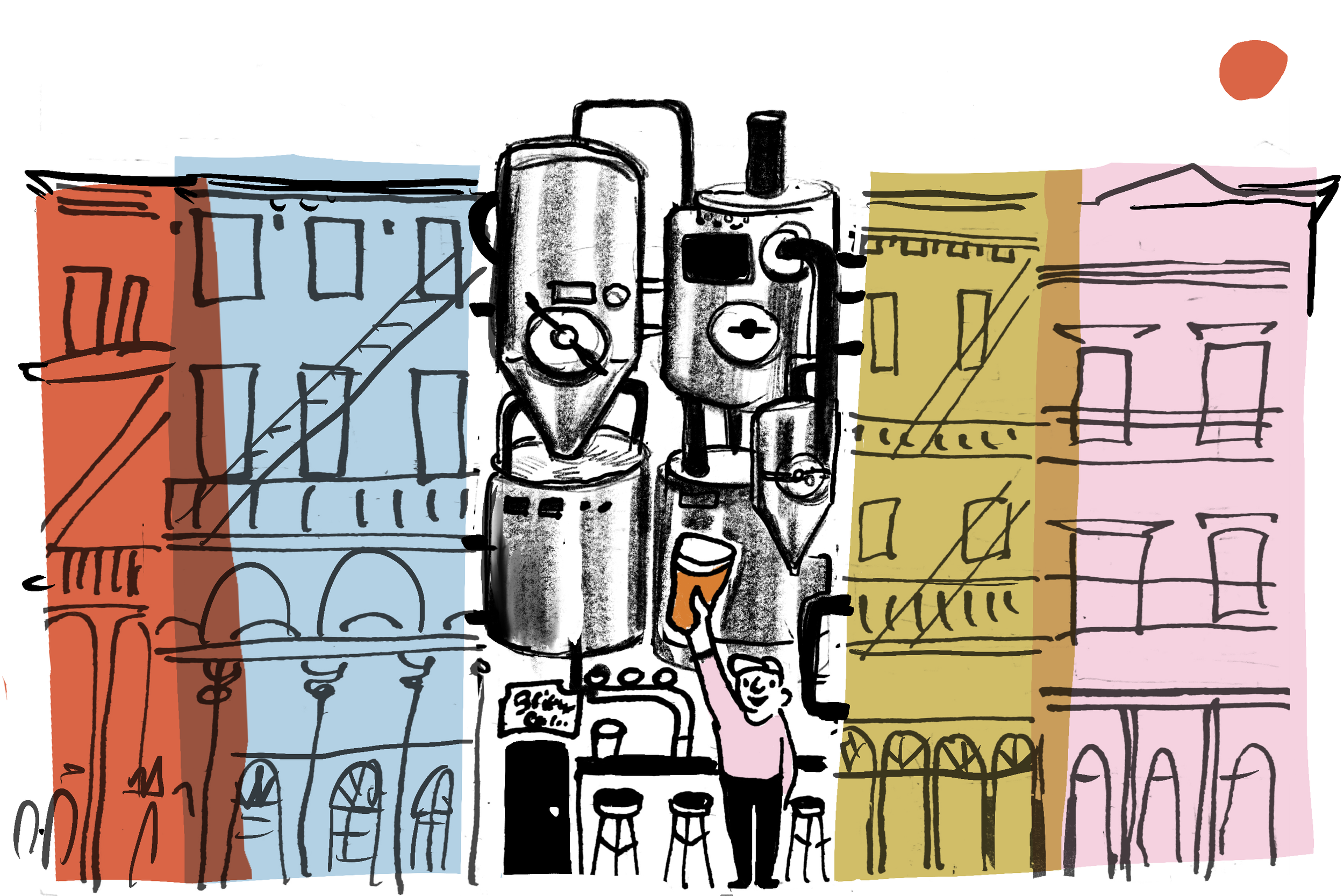
Illustrations by James Yates
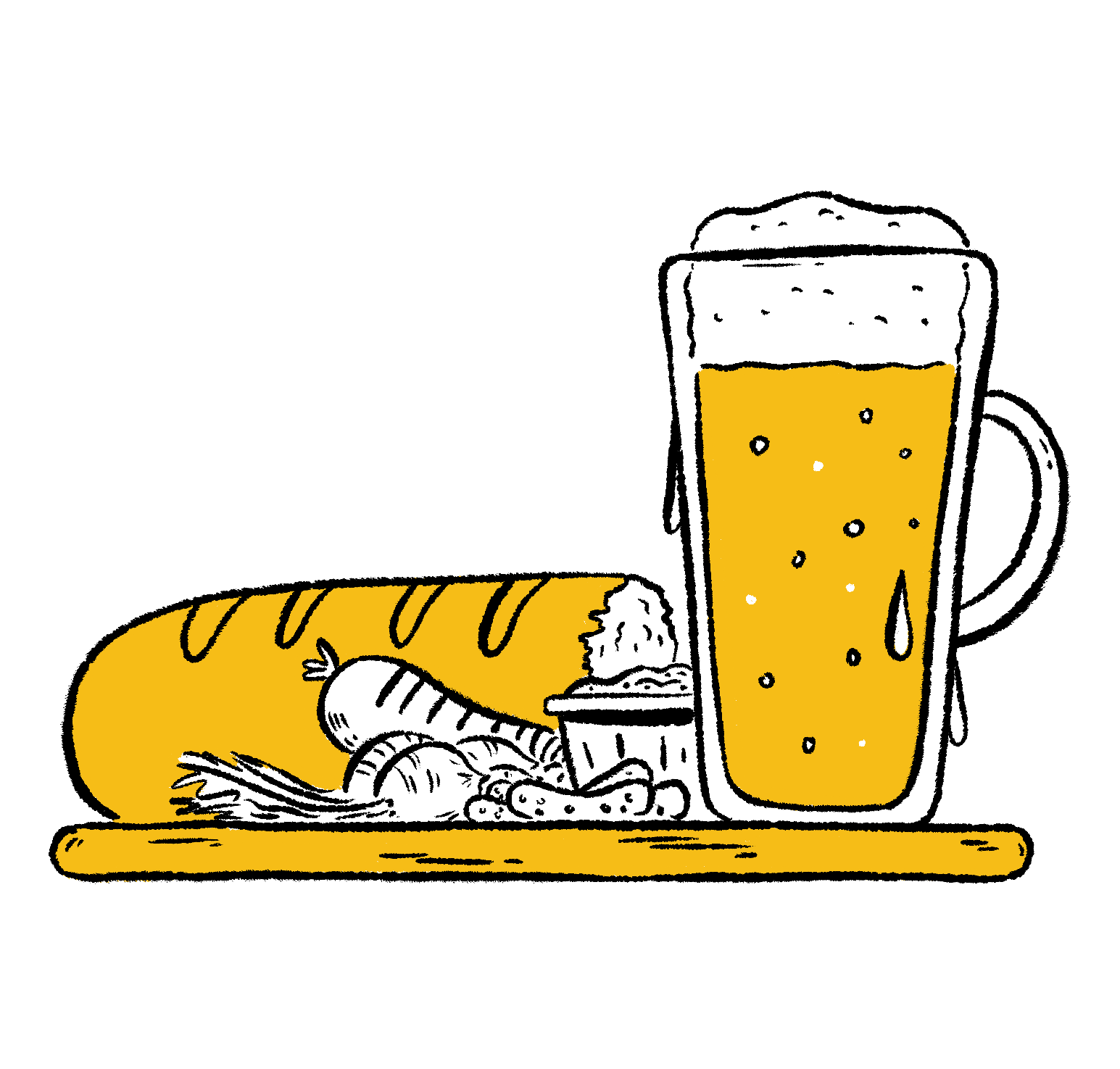
Like most Zoigl brewers, brewing isn’t Schönberger’s main occupation. He and his family preside over a farm with dairy cows, pigs, and chickens. His son Matthias is a butcher, and the one responsible for the delectable bratwurst that accompanied my Zoigl.
***
Zoigl is not a dusty set piece in an ethnography museum, but rather a living, vibrant beer culture. Indeed, Zoigl and the Zoiglstuben are a part of everyday life for the inhabitants of the region.
The German UNESCO commission recognised as much when it granted Zoigl nationwide immaterial cultural heritage status in 2018, noting that Zoigl culture is “a centuries-old tradition that has played a major role in shaping the identity of the local population.” The commendation went on to note that “Zoigl culture creates a space for meeting others, for exchange, and for the integration of newcomers and visitors to the region.”
Local historian Ferdinand Schraml recalls what it was like when Zoigl was still a kitchen table affair. When he moved to Windischeschenbach sixty years ago, the likes of Roudn, Fiedlschneider, and Binner set out extra chairs in their kitchens for thirsty townsfolk.
“The neighbours, the workers in their overalls, and the farmers sat together in the makeshift Zoiglstube after feeding the animals,” Ferdinand recalls. “There was simply a stove, a table and chairs, and a couch or bench. In the yard was a manure heap and behind it a gutter that served as a pissoir. That’s how it was.”
Over the course of the 1980s and 1990s, brewers began charging visitors a modest price to drink their Zoigl, eventually building homey taverns on the ground floor of their houses.
Yet Zoigl was still opaque to anyone but locals. Graham Lees, author of the Good Beer Guide to Munich and Bavaria, called Zoigl “one of the most mysterious and elusive of Bavarian beers.” Lees recounts anecdotes of futile searches in the 1990s while conducting research for his book. Back then, there was no online Zoigl calendar to guide people from outside the region.
***
These days you don’t have to roam the town in the dim hope of finding a Zoigl star hanging overhead. Still, you can’t just show up in the Oberpfalz and expect to visit all the Zoiglstuben. Not every Zoiglstube is open on a given weekend.
““If you’re a completist the format will drive you mad.””
Jack Anderton, the British writer behind The European Bar Guide, has set foot in over 4000 pubs across Europe. Yet it took a few trips to the Oberpfalz before he could finally visit Zum Roud’n, which topped his wish list. “If you’re a completist,” he says, “the format will drive you mad.”
But it’s not just the delightful randomness that attracts Zoigl fans from far and wide. “There’s a general friendliness that very few pubs in neighbouring Franconia seem to have,” explains Munich transplant Rich Carbonara, who leads beer hiking tours throughout Bavaria. “The best Zoiglstuben are the ones which truly resemble a home, a living room.”
***
It takes a certain perceptiveness to create places that draw in families for a meal alongside crusty regulars playing cards and curious beer travelers. It comes down to what Arjun Appadurai called “the social life of things.” The sickle at Kramer-Wolf, the plough at Schlosshof, the postal horn at Posterer—all of these things turn Zoiglstuben into unique expressions of place, creations that reflect both the culture of the region and the aesthetic sensibilities of the people who brought their Zoiglstuben to life.
One of these people is Reinhard Fütterer, the personality behind the Schafferhof. A lanky chimney sweep with a playful glint in his eye, Reinhard is an Oberpfalz ambassador, always ready to meet with out-of-towners and regale them with stories of Zoigl and much else besides.
Reinhard speaks with a rare passion about his calling. When he talks about what sets authentic Zoigl apart, he’s not just repeating platitudes from the marketing department. He grasps intuitively what philosophers, anthropologists, and cultural historians have theorised about how the abstract nature of space crystallizes into the intimate experience of place.
“It’s the beer brewed in the communal brewhouse up the road,” he tells me, “the food from the village farmer, and the Zoiglstube with all these things from the region” that link people past and present.
Reinhard’s day job took him to numerous Wirtshäuser (inns) in the region, some of which were no longer in business but, as he put it, “had all the furniture still set up as if waiting for the next guests.” When his work took him to taverns that had been blandly renovated during the 1980s—linoleum floors, table tops made of synthetic materials—he asked if he could poke around in the cellars and attics.
Those cellars and attics were like treasure troves. Reinhard found beautiful rustic furniture and an assortment of antique décor. “I began collecting furniture like others collect postage stamps,” he says. It wasn’t long before he needed a storage space for all that furniture.
While out on a walk one sunny winter day in 1999, he and his wife Gabi found something much better than a storage space—the Schafferhof, a rundown farmstead in need of some TLC.
***
I’m back in Neuhaus after another hike through the primeval forests of the Oberpfalz. I find a table at the Schafferhof with a group of regulars playing the Bavarian card game Schafkopf. A tablemate tries to explain the rules. In between sips of Zoigl, I absentmindedly run my hand over the roughly hewn table with its uneven ridges. The grain is coarse, with pockmarks that look like they were bored by some wood-eating insect.
I ask Reinhard about the table on a subsequent visit. “The holes are actually a testament to a time when zither players entertained guests with music. The zither had three thorns underneath it to anchor it so that it wouldn’t slide around.” As for the table itself? “It dates to around 1850.”
A cultural archeologist in spirit, Reinhard relishes the act of saving discarded objects from oblivion. He sees his Schafferhof as a “living museum,” one that evokes the Oberpfalz’s past through the antiques and heirlooms he has managed to salvage.
Yet Reinhard isn’t interested in the kind of heritage fuelled by a longing for the good old days. “I don’t want to hit people over the head with nostalgia,” he proclaims, preferring instead “to let the wood, the floors, and the furniture speak.”


And speak they do. “Objects anchor time,” writes geographer Yi-Fu Tuan. Those three words encapsulate the beauty of a well-wrought Zoiglstube. Each object is a “moment” in the story, and each individual Zoiglstube is a statement. Taken together, they tell a broader story through their artifacts. In this sense, the Zoiglstube is time made visible, a commemoration of everyday life in the Oberpfalz.