

The Generation Game — How Clerkenwell’s Sutton Arms Became the Quintessential London Pub
The door at the Sutton Arms swings open and six Americans come bounding in like cocker spaniels just off the leash. After securing a table in the corner, they send emissaries to the bar. Lunchtime food options (“I’ll do a minted lamb pie”) and beers, from pints of cask ale to a half of Vault City’s triple-fruited mango sour, are discussed, and promptly purchased.


Landlord Jack Duignan, who has stepped behind the bar to help out, takes in the scene. “Where are you from?” he asks, his gaze focused on the pint he’s pouring. “America,” one replies, perhaps a touch cagily. A pause. “Well I didn’t think you were fucking French!” Jack retorts. There’s momentary silence, then a burst of exuberant laughter, then clarification: Missouri, “right in the centre.”


Photography by Sean McEmerson
It’s a long way to come for a beer and a pie, but if these Americans were looking for a pub that exemplifies the best of modern London, they couldn’t have done better. In a city where breweries and pubs are still reeling from the aftershocks of Covid-19, this Clerkenwell stalwart shows what London pubs could and, some would say, should be: places that offer old-fashioned hospitality, perfectly kept modern beer, and tasty pies.
And Guinness. Lots of Guinness.
***
There are actually two pubs called the Sutton Arms in this part of the city. The other is a smart Victorian boozer owned by Fuller’s; in true London fashion, it’s just 300 metres away, give or take, across Charterhouse Square. There’s a solid reason for this doubling—Thomas Sutton, the 16th-century businessman, landowner, and all-round moneybags, lived around here—but it does lead to confusion.
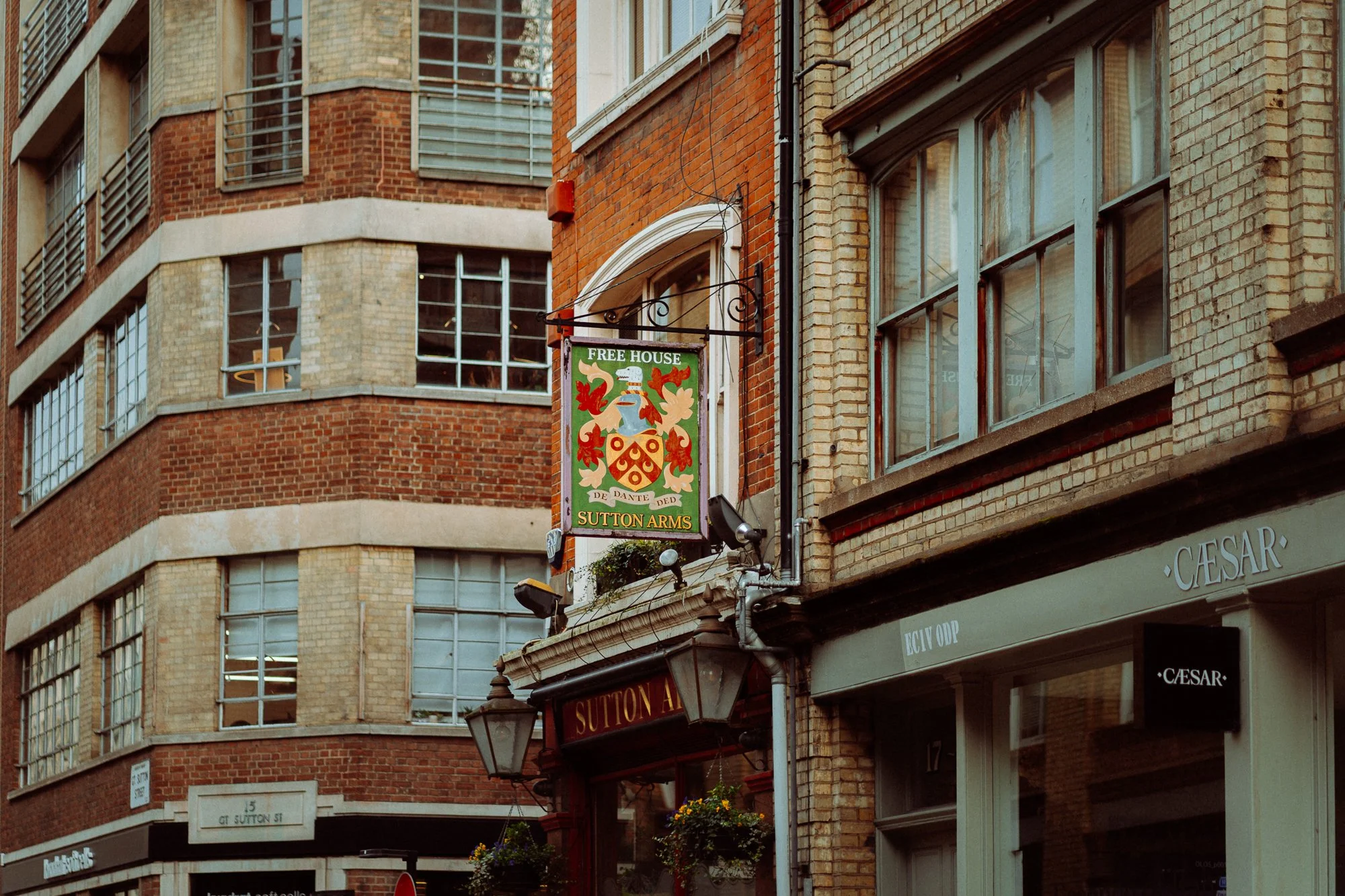

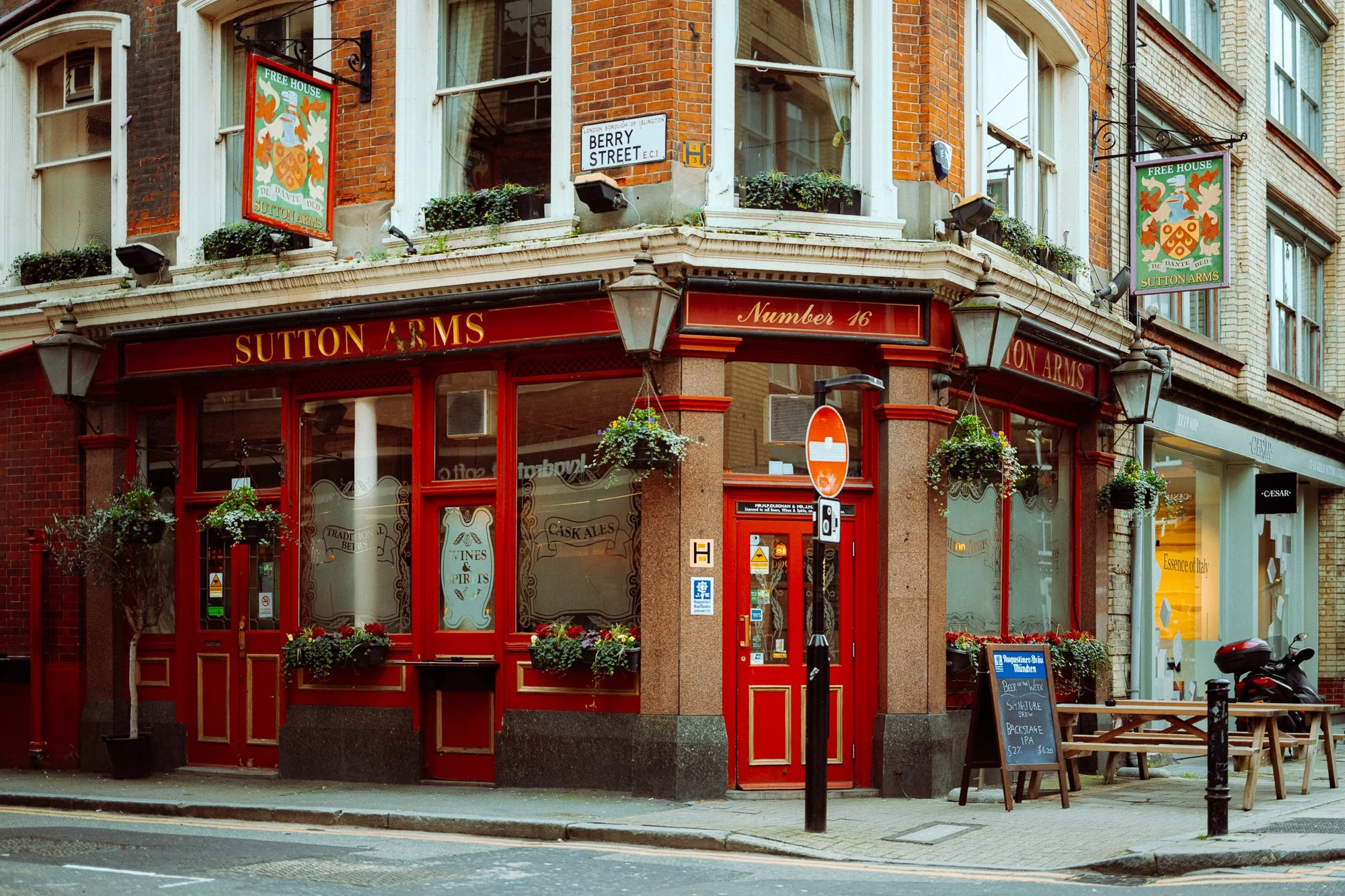
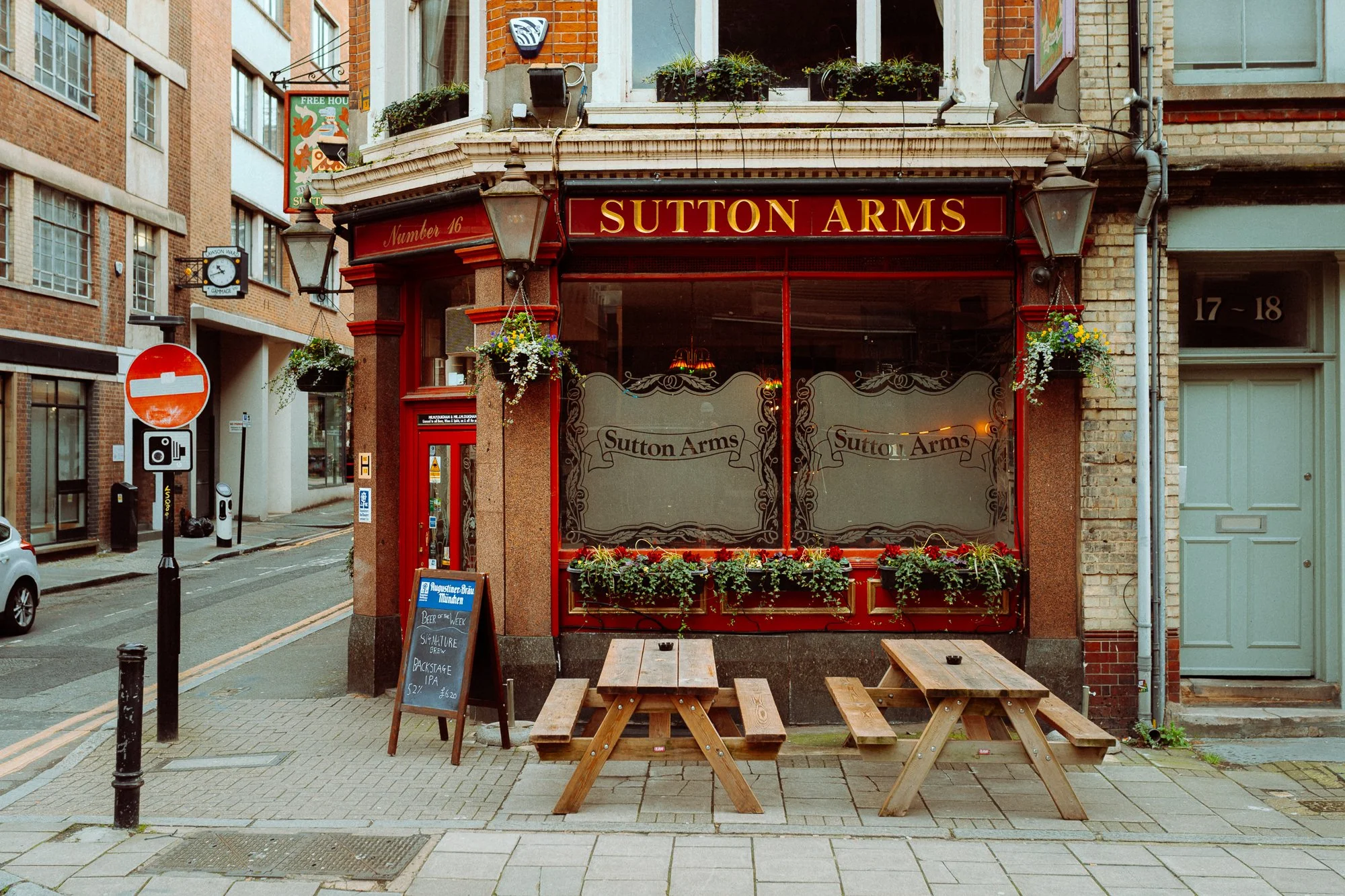
“People come in, look around, and you know immediately they’re in the wrong place,” Jack says. “‘I’m here for the arts and prosecco event.’ Yeah, that’s the other one. One Saturday we had 12 people who came to the wrong Sutton Arms.”
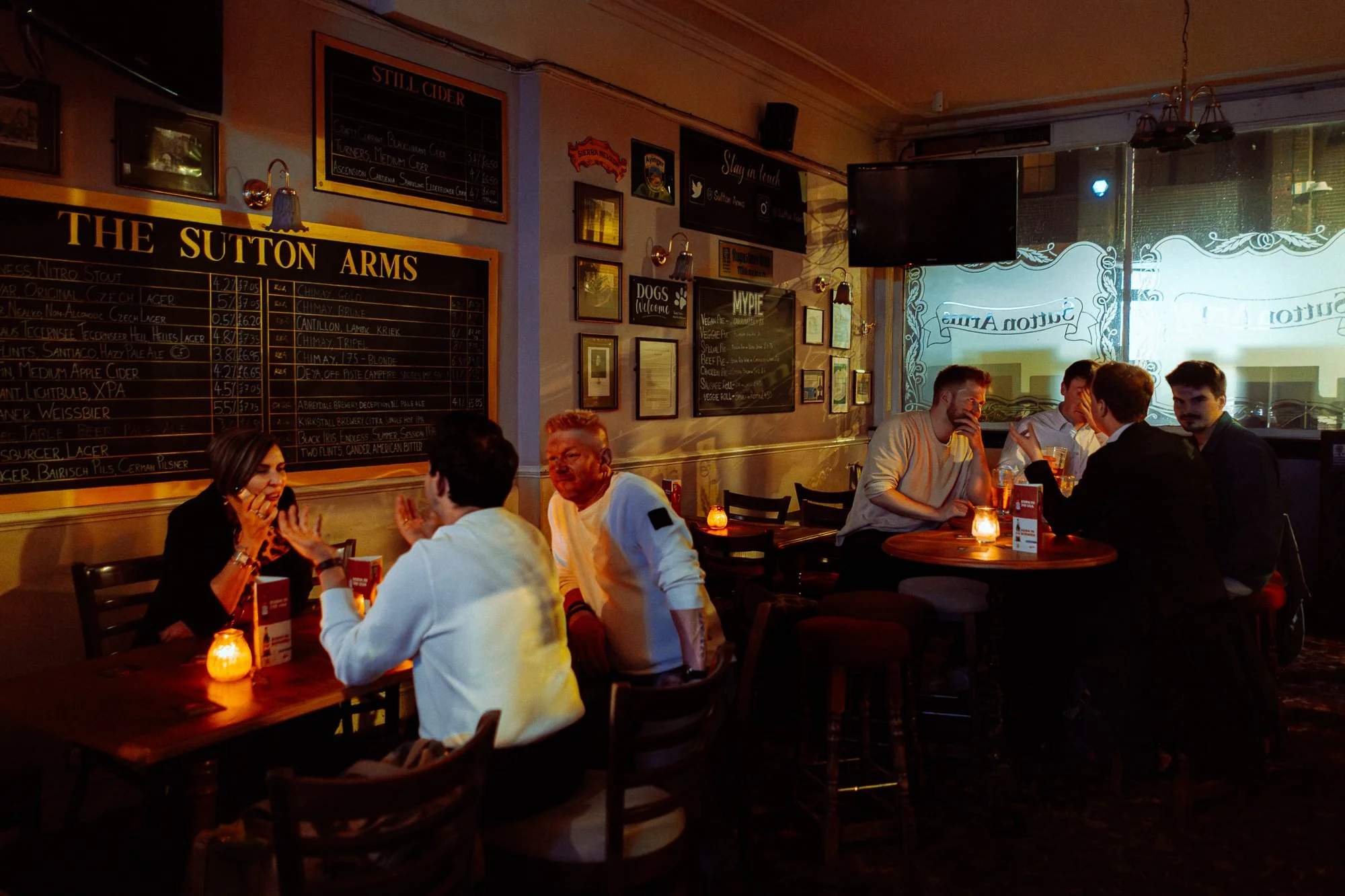
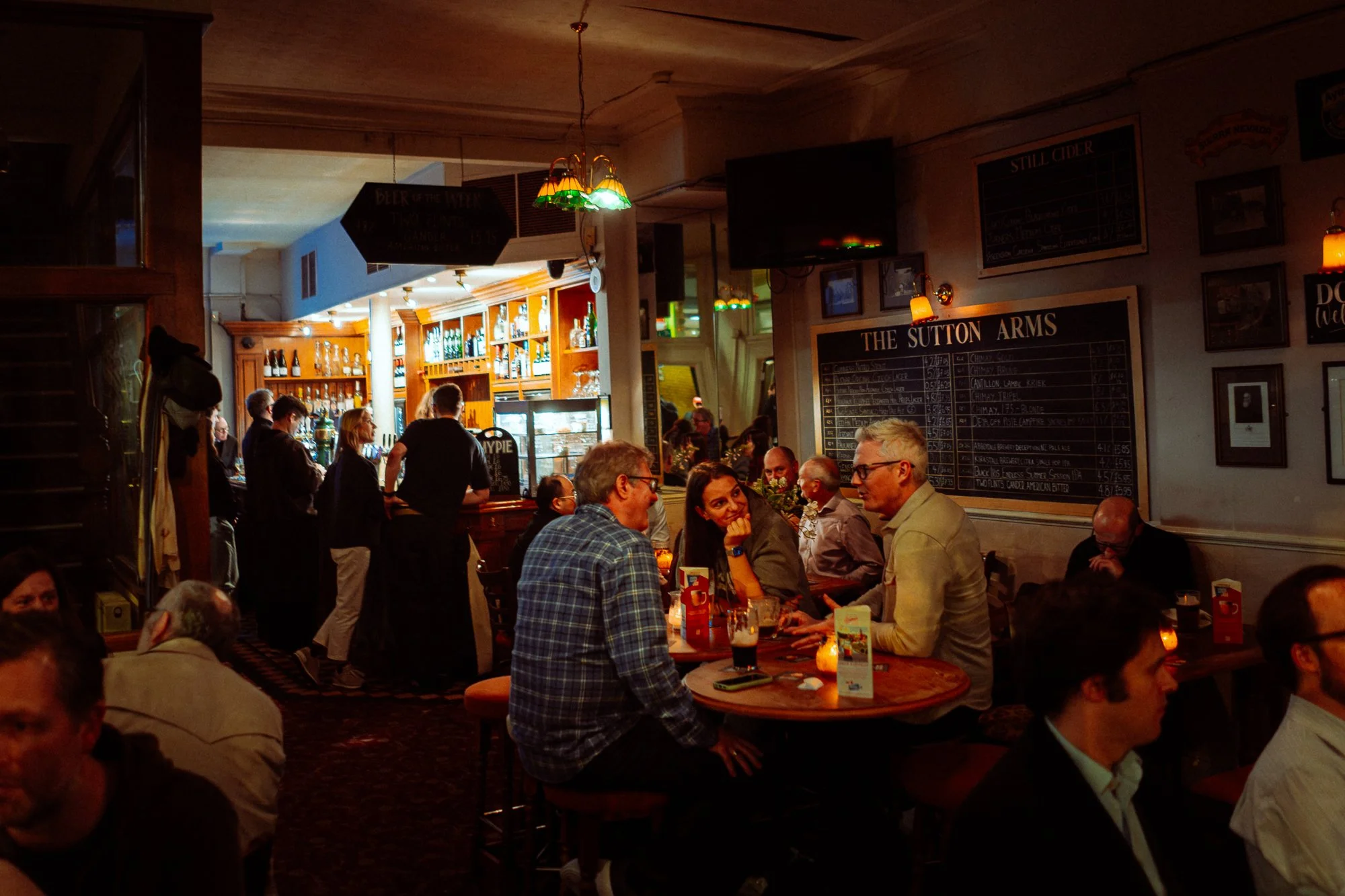
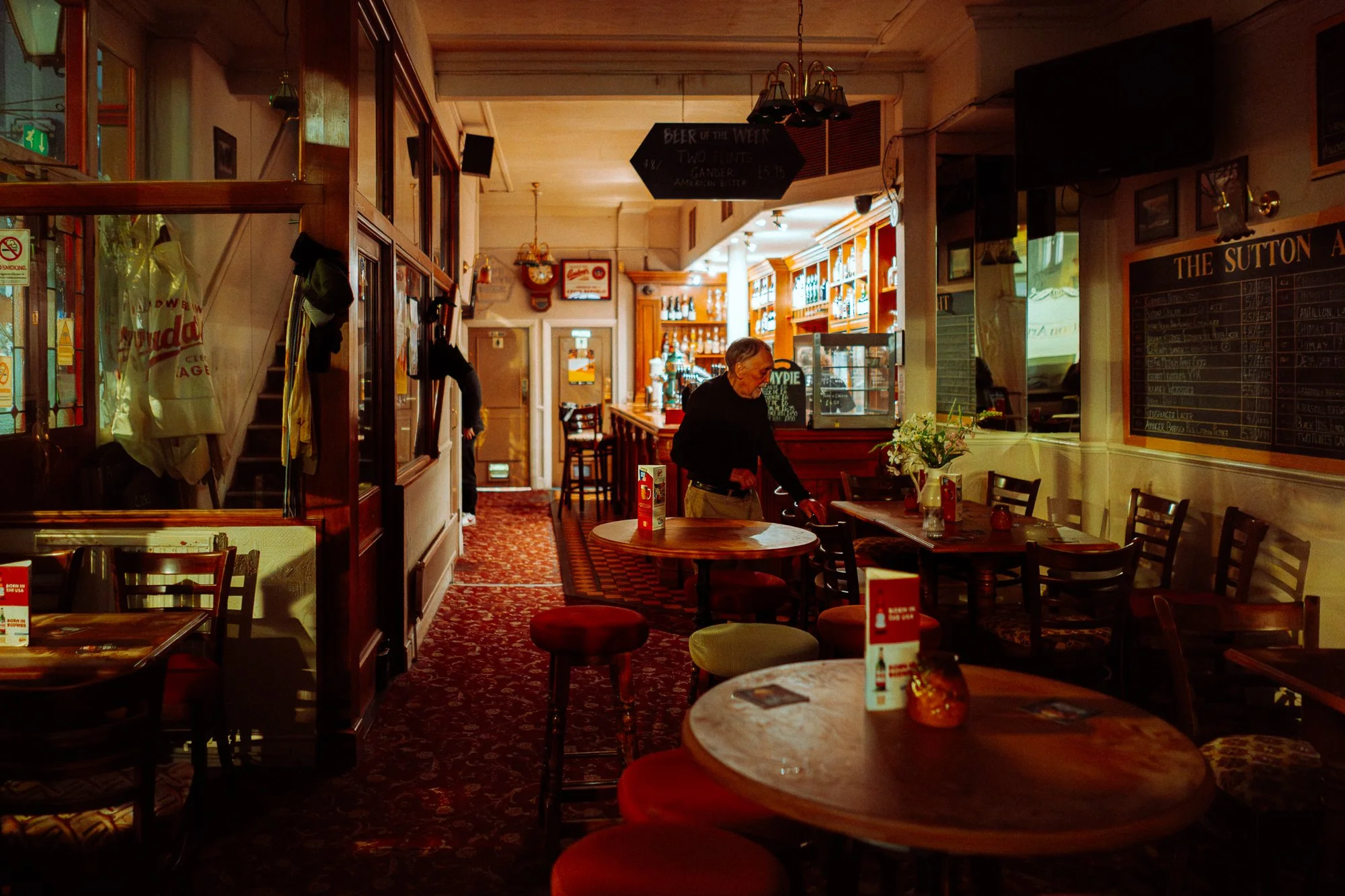
With its blood-red carpet, pie warmer atop the bar, white flock wallpaper, and framed photos of olde Clerkenwell, this street-corner pub is redolent of a time before fizzy Italian wine was a staple order.
“When it’s quiet, you hear people talking,” Jack says. “‘Look at the carpet, this is a proper pub, a sticky carpet, it’s all ripped apart.’ Leave my carpet alone! I’d love to have a wooden floor, because it’s much easier to look after—but I’m not going to.”

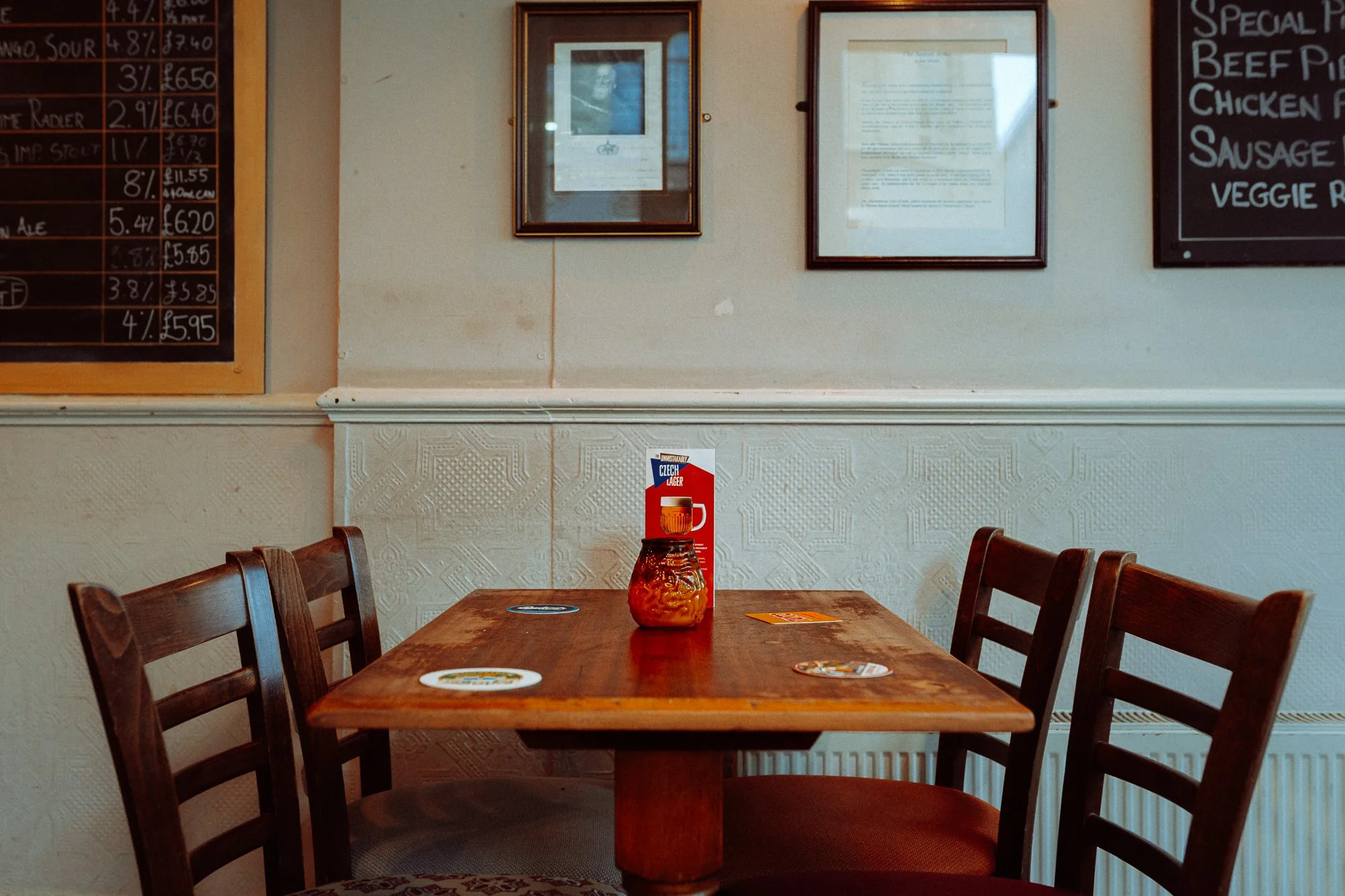
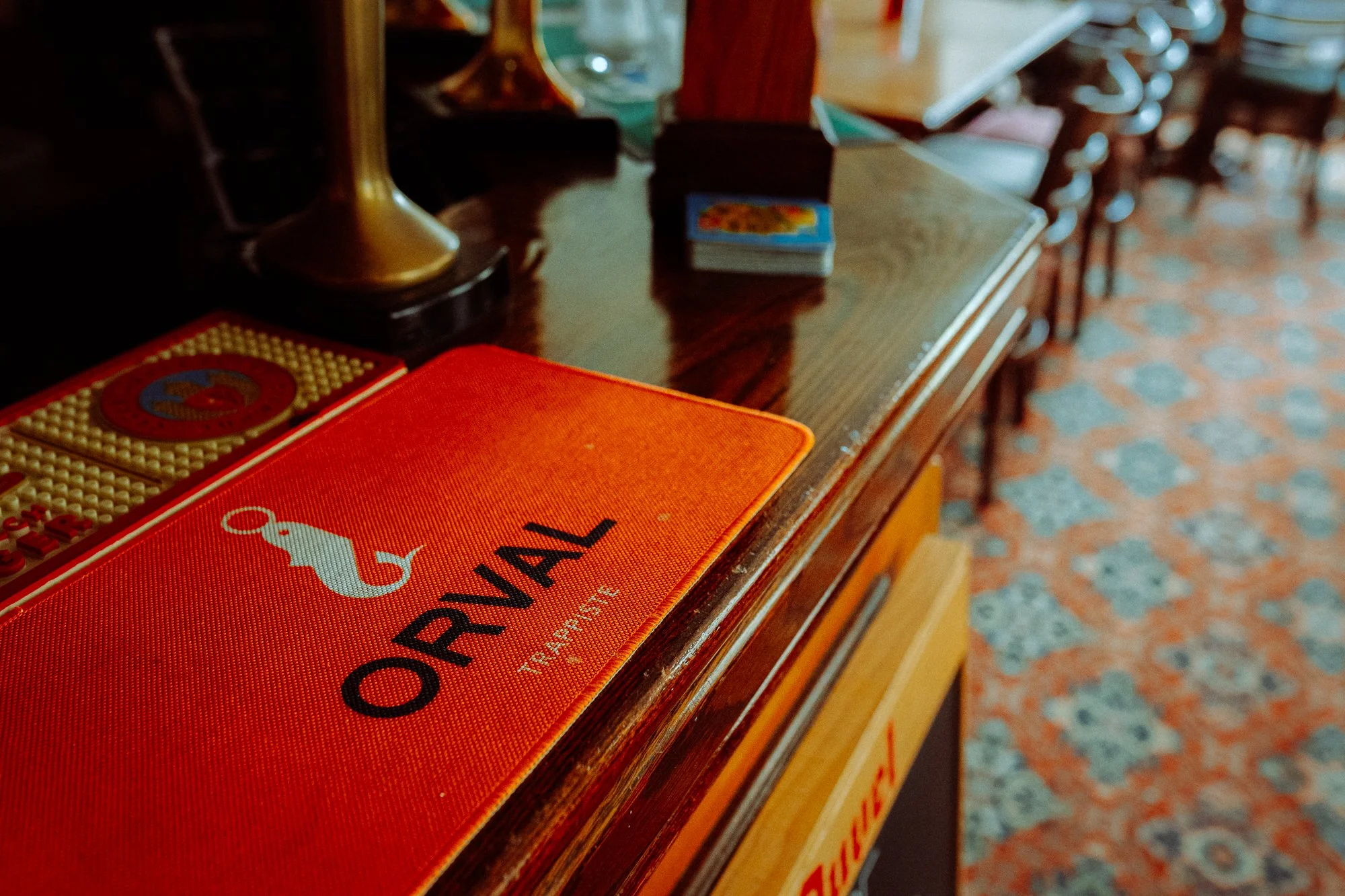

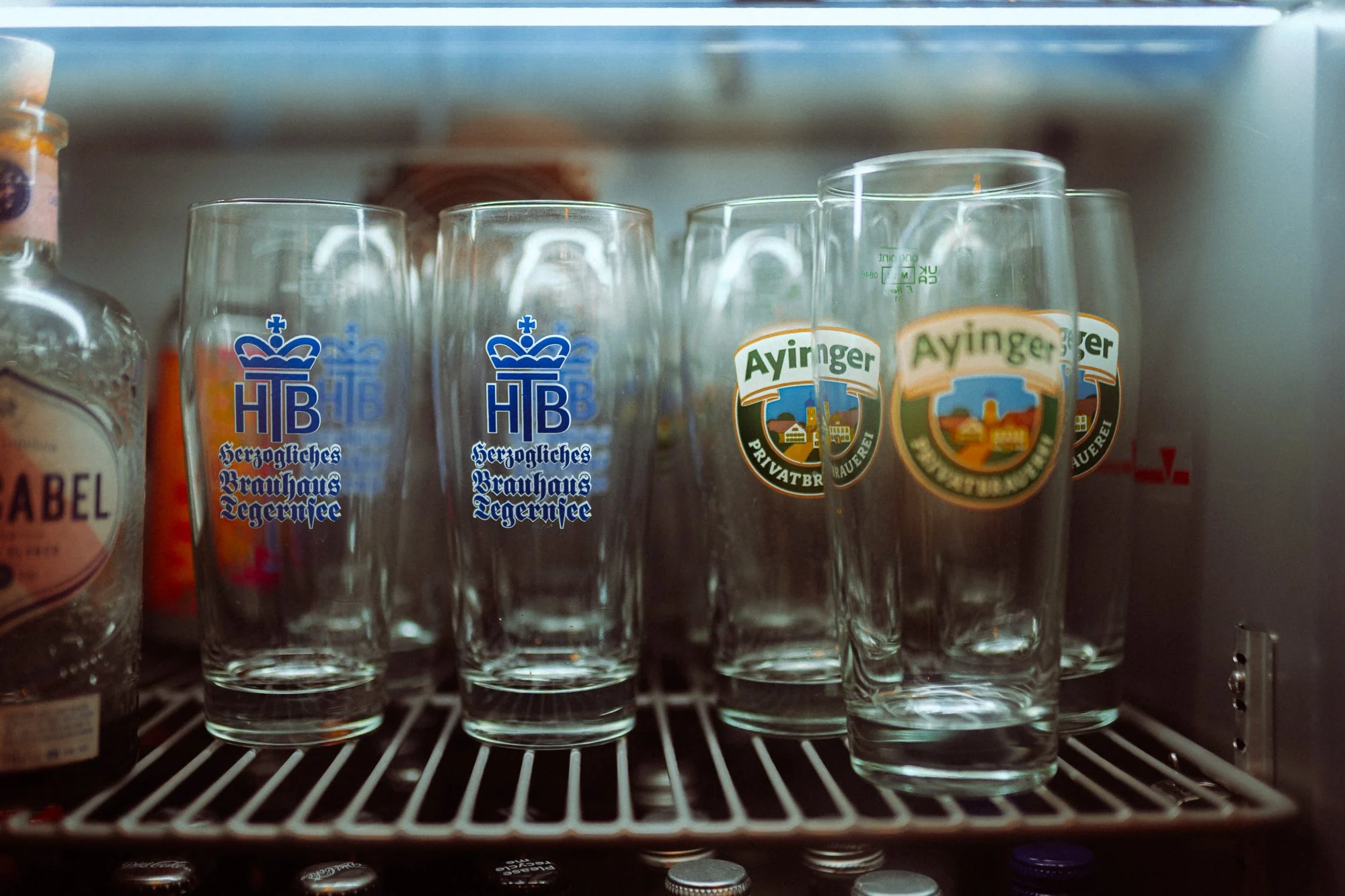

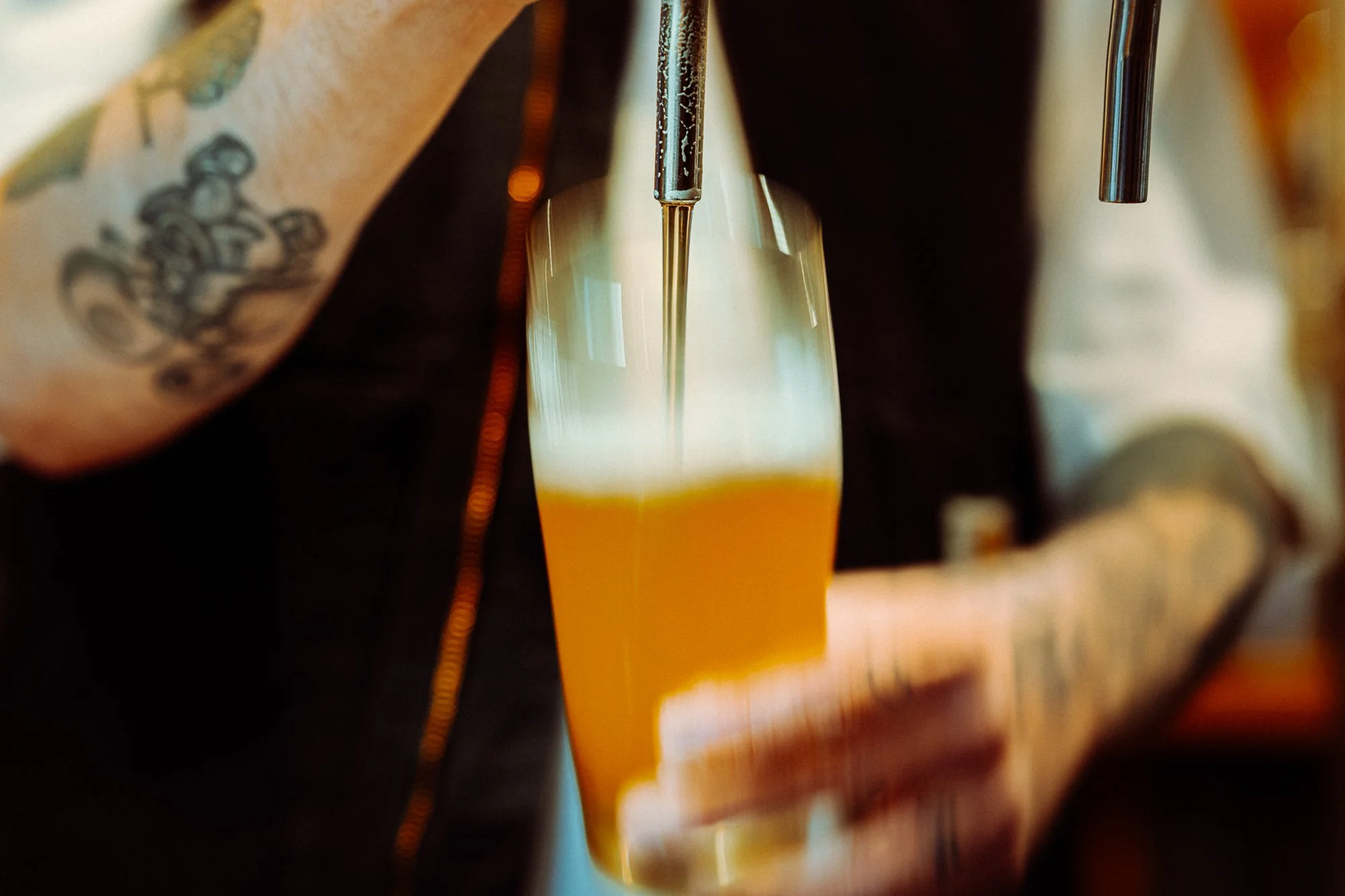
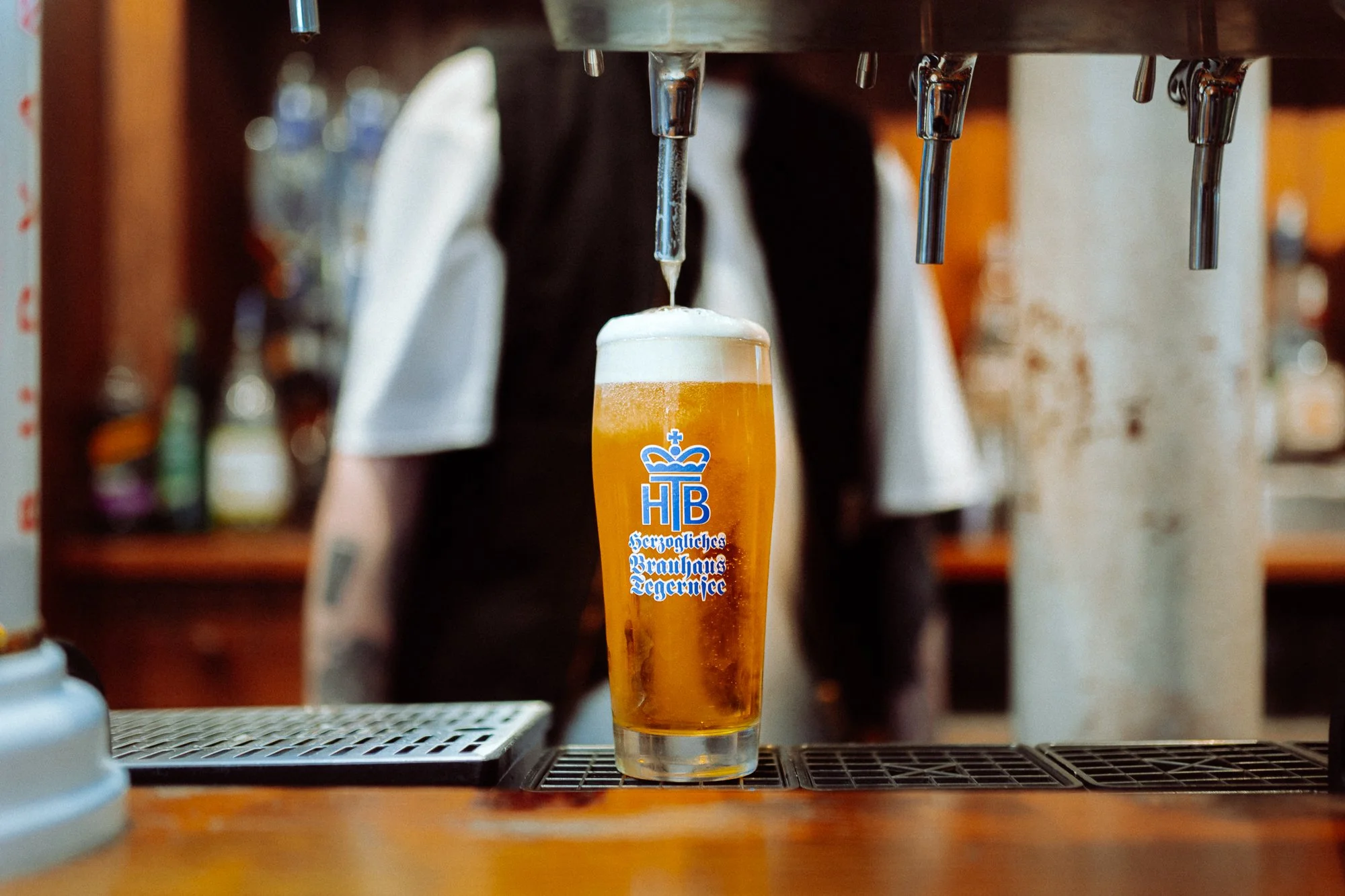
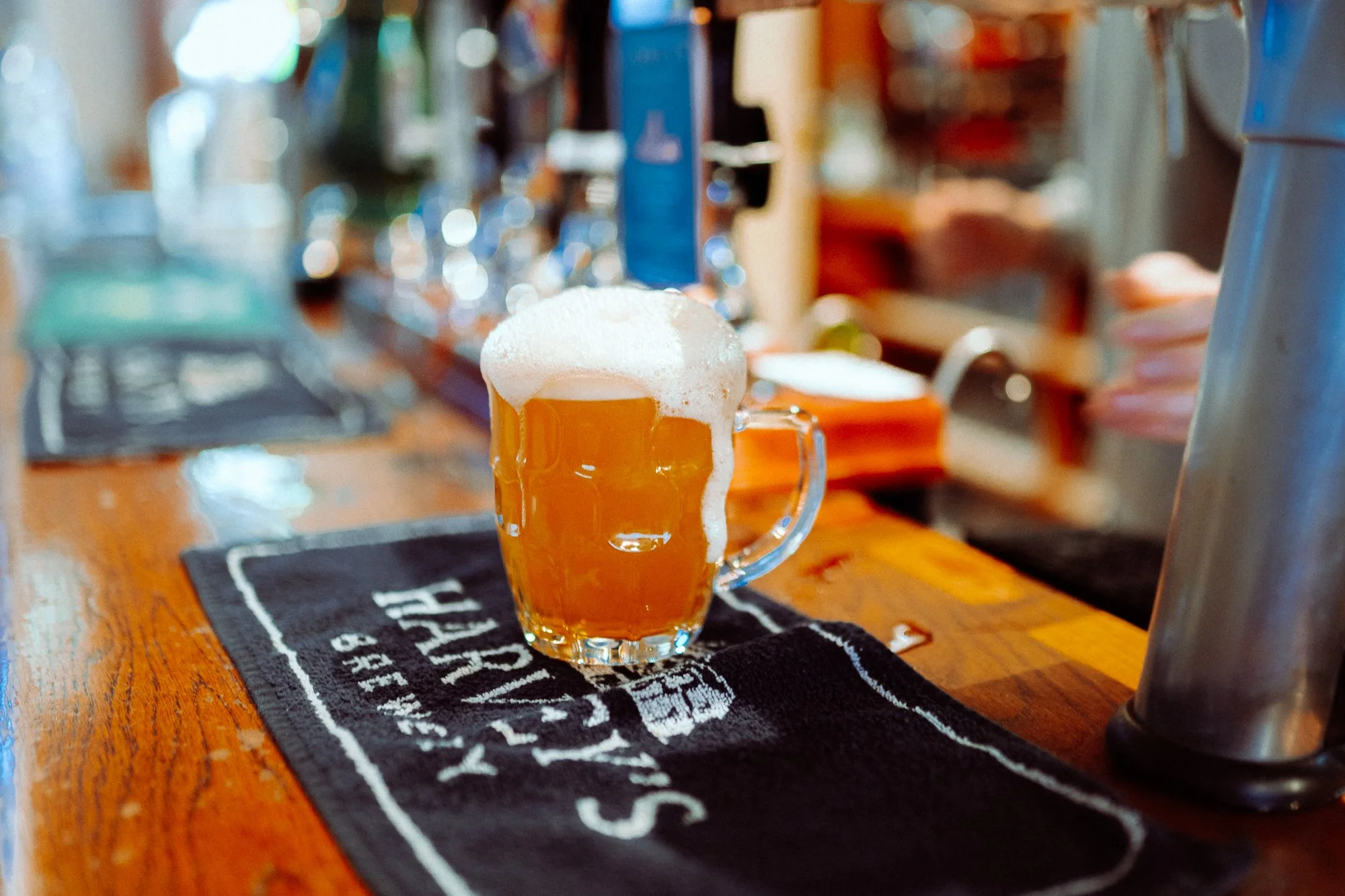
The carpet may be time-worn (it’s actually in pretty good shape), but the beer is largely modern, even if a recent visit coincided with the appearance of Harvey’s Sussex Best, probably southern England’s best-loved traditional ale, on the bar.
The reason for this combination lies with Jack and his father, Mick. Born in 1949 to Irish parents, Mick has been in the pub trade since 1979, when he took on the (now-closed) Hansler Arms in King’s Cross, a popular haunt for police and the villains they were ostensibly chasing. The Sutton Arms followed. Mick signed the lease just before Arsenal’s famous title triumph in 1989, when he showed the decisive Liverpool game on a TV propped up on the pub’s long-gone pool table.
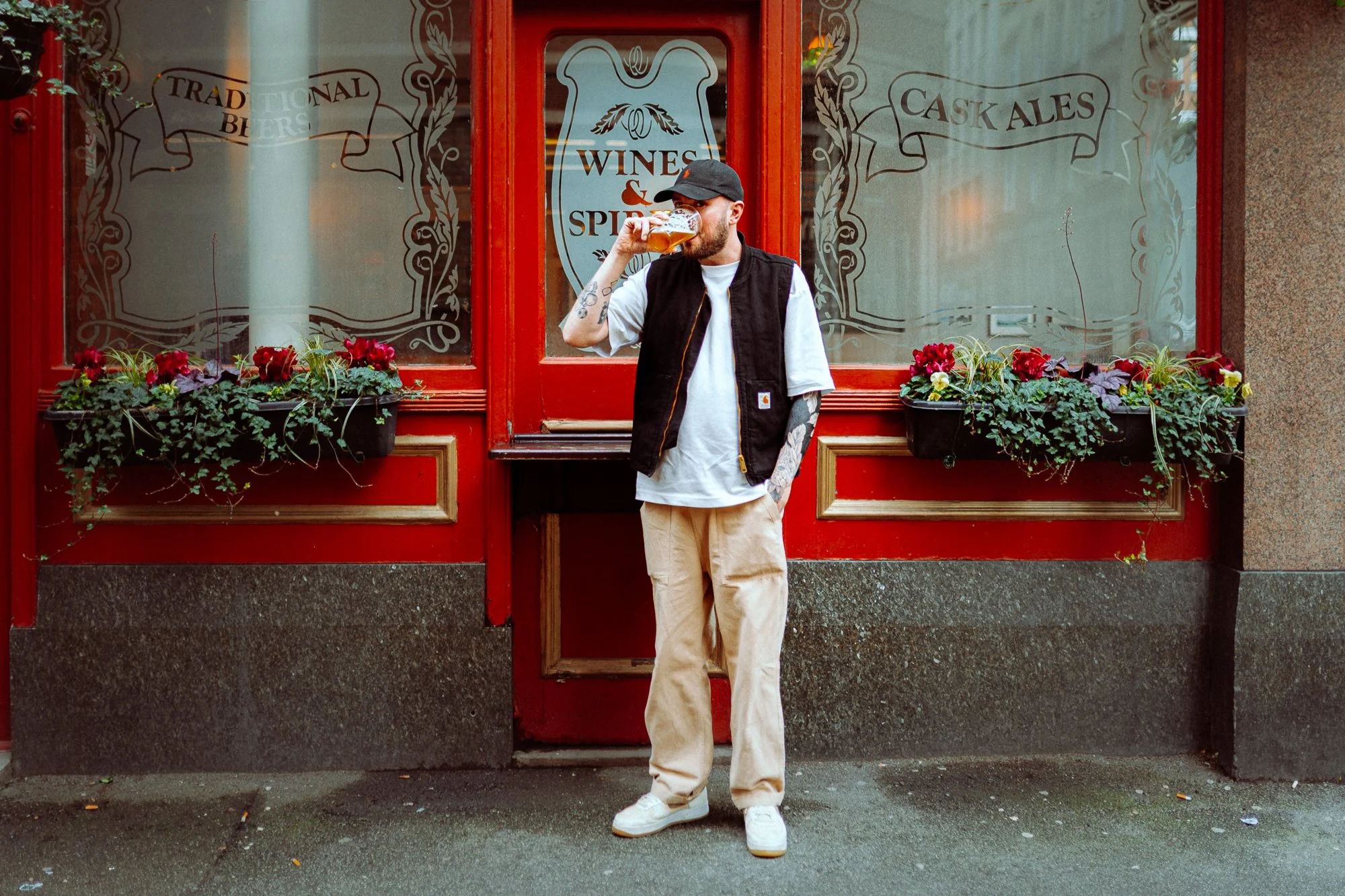

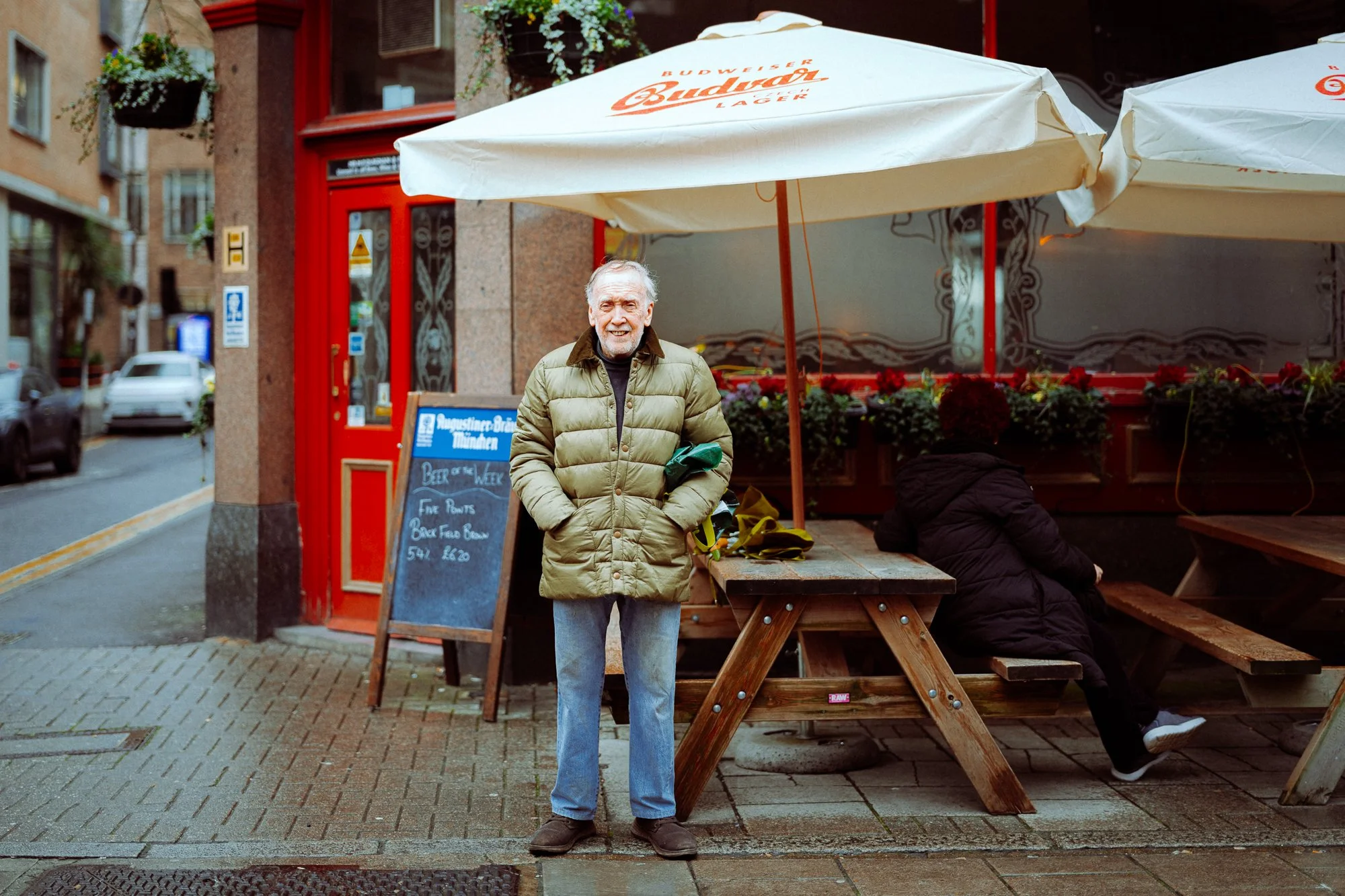
Inevitably, Mick was worse for wear the next morning. “I had a diabolical hangover, I was in a right state,” he says. “I was told ‘Robert De Niro’s in the bar, sitting on his own.’ Oh fuck off! But he was; his girlfriend at the time was working down the road, I think. He had half a bitter, the first one out of the pump that morning.”
De Niro wasn’t a fan of the beer. “He drank about that much [Mick puts finger and thumb together to show about half an inch] and brought it back. It was too warm. He had half a lager instead. He was much happier with that.”
““I was told ‘Robert De Niro’s in the bar, sitting on his own’. Oh fuck off!””
Mick still lives above the pub, but has since handed control to Jack. He’s full of stories like this. There was the time when Rod Stewart stopped in for a pint of bitter, or when Spitting Image puppets were accidentally left in the pub. He remembers, too, when Reuters journalists were the Sutton Arms’ main custom. Hospitality, and more than a drop of mischief, is in his bones. The day I interview Jack, Mick bustles in an hour later, spends 20 minutes chatting to customers—including those Americans—and then buzzes off on another assignment elsewhere.
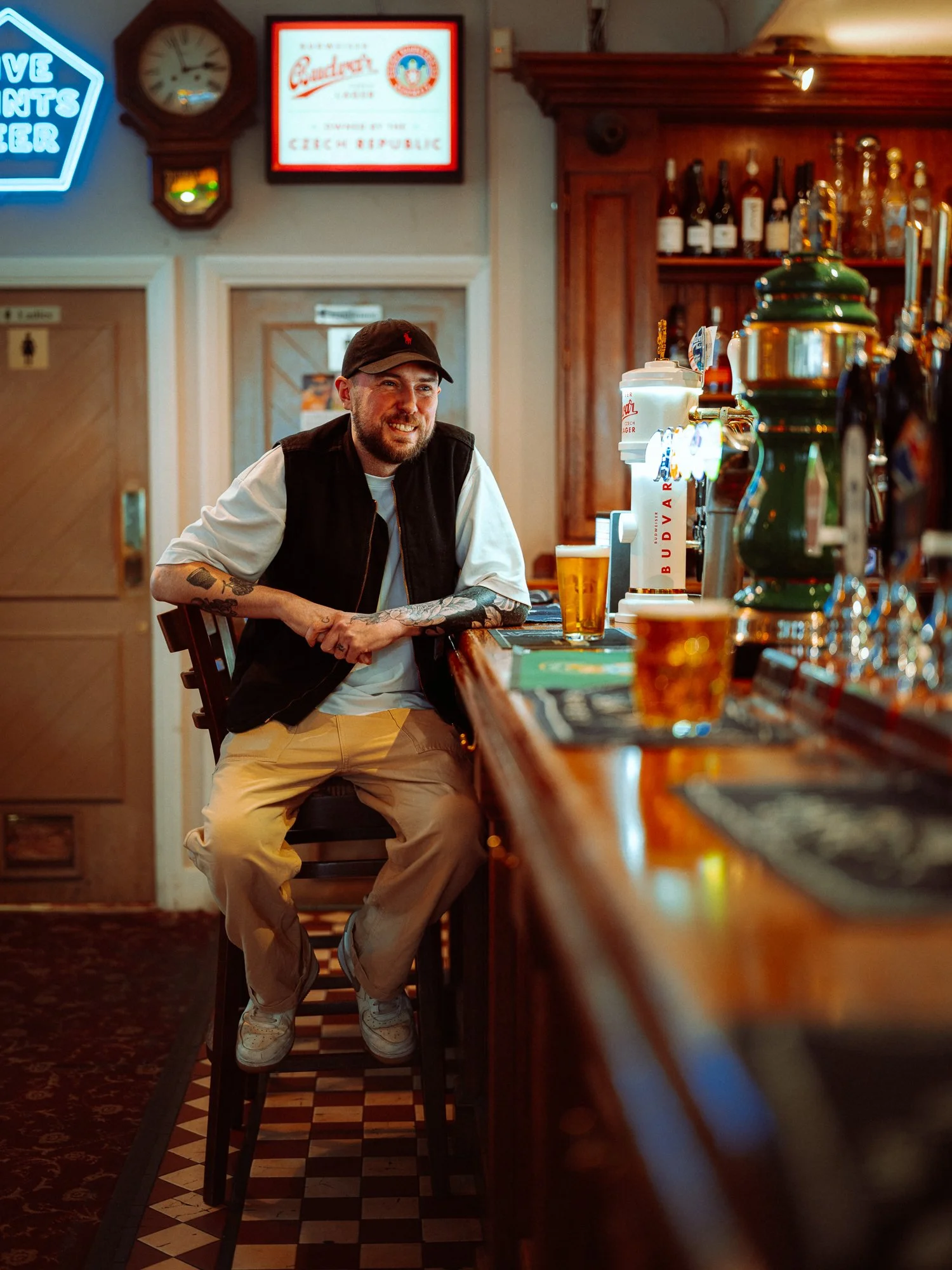

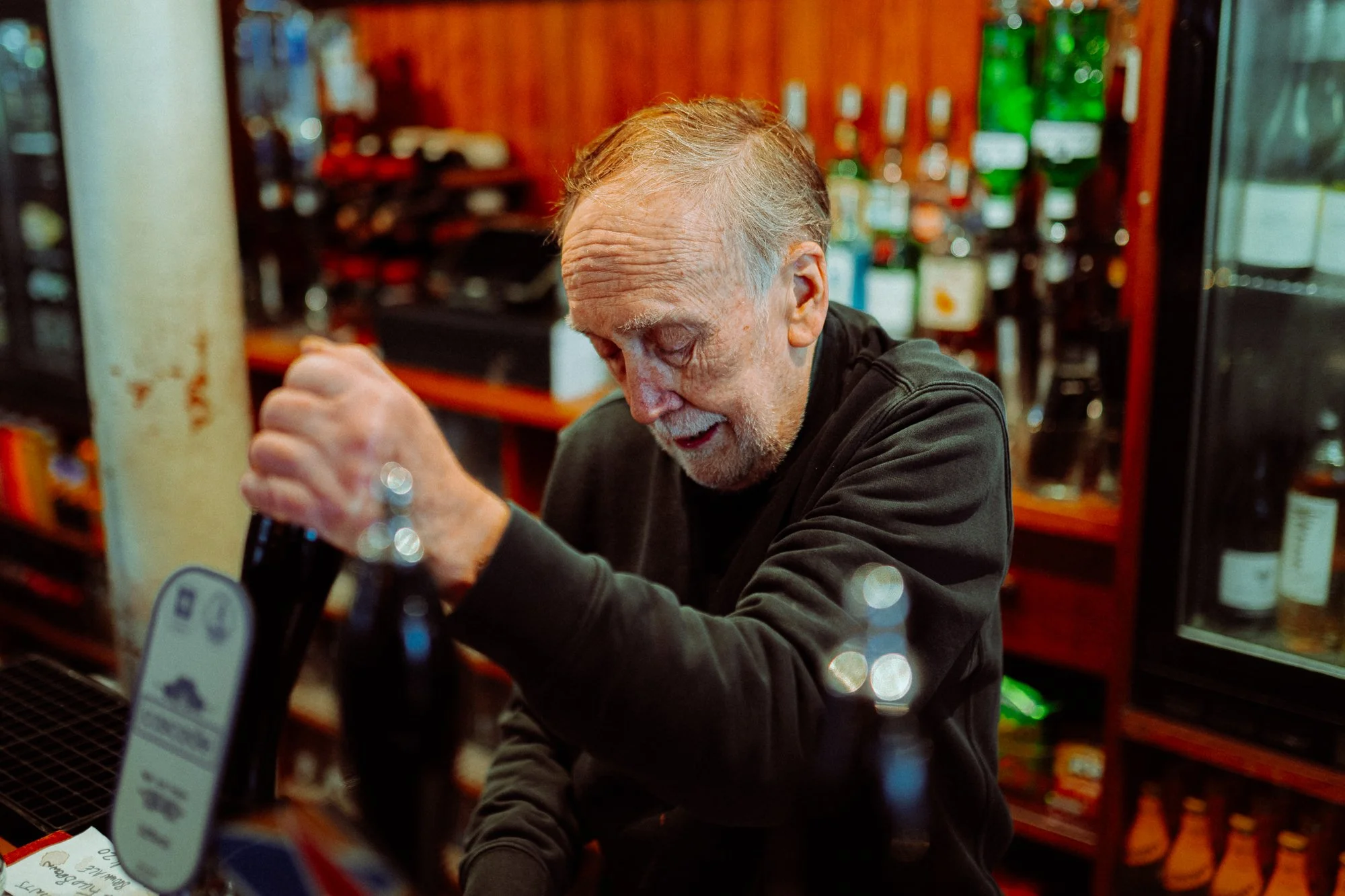

“People definitely come into the pub just to see him,” says Jack. “If he wasn’t round, we’d lose about 5% of the custom. A while ago, a bunch of ex-policemen came in; they used to be customers at the Hansler, and they’d read about him in the paper. When they left, they said, ‘Oh, we’re going to try and do this every few months.’ Some people might not know me, but they come to see my dad.”
Jack is more circumspect than his dad. He’s prone to anxiety, as he himself admits, but with that internal dialogue comes a wider vision of how pubs and beer are changing. His own route into hospitality was not inevitable—he was on West Ham’s books as a youngster and still supports the club, and says he “hated” working in the pub at first—but beer got its hooks into him. He convinced Mick to put Vedett IPA on the bar, and it did well. Things snowballed. There are now 20 different draft options, taking in everything from best bitter to Budvar to blackcurrant wild ale.
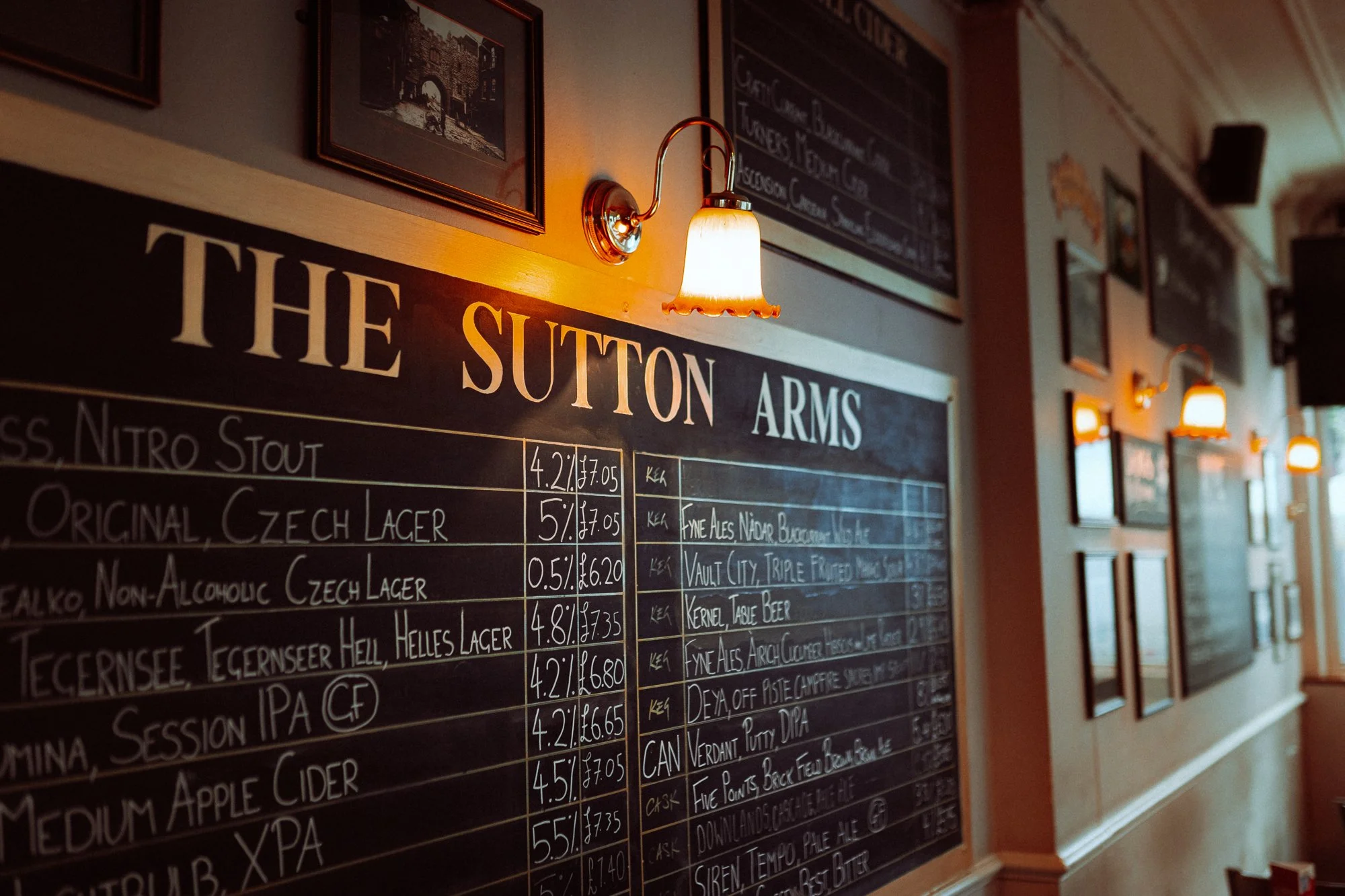
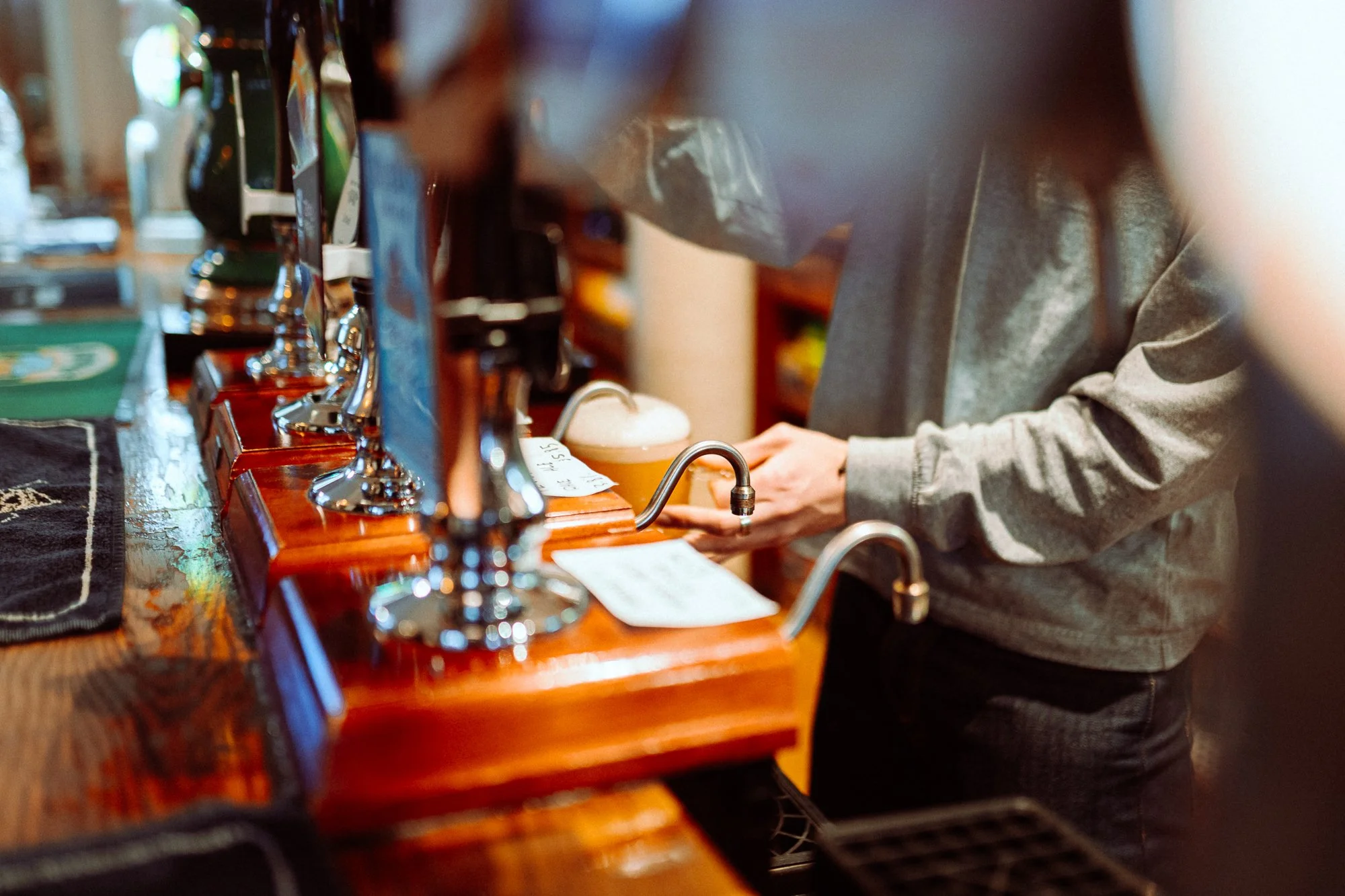


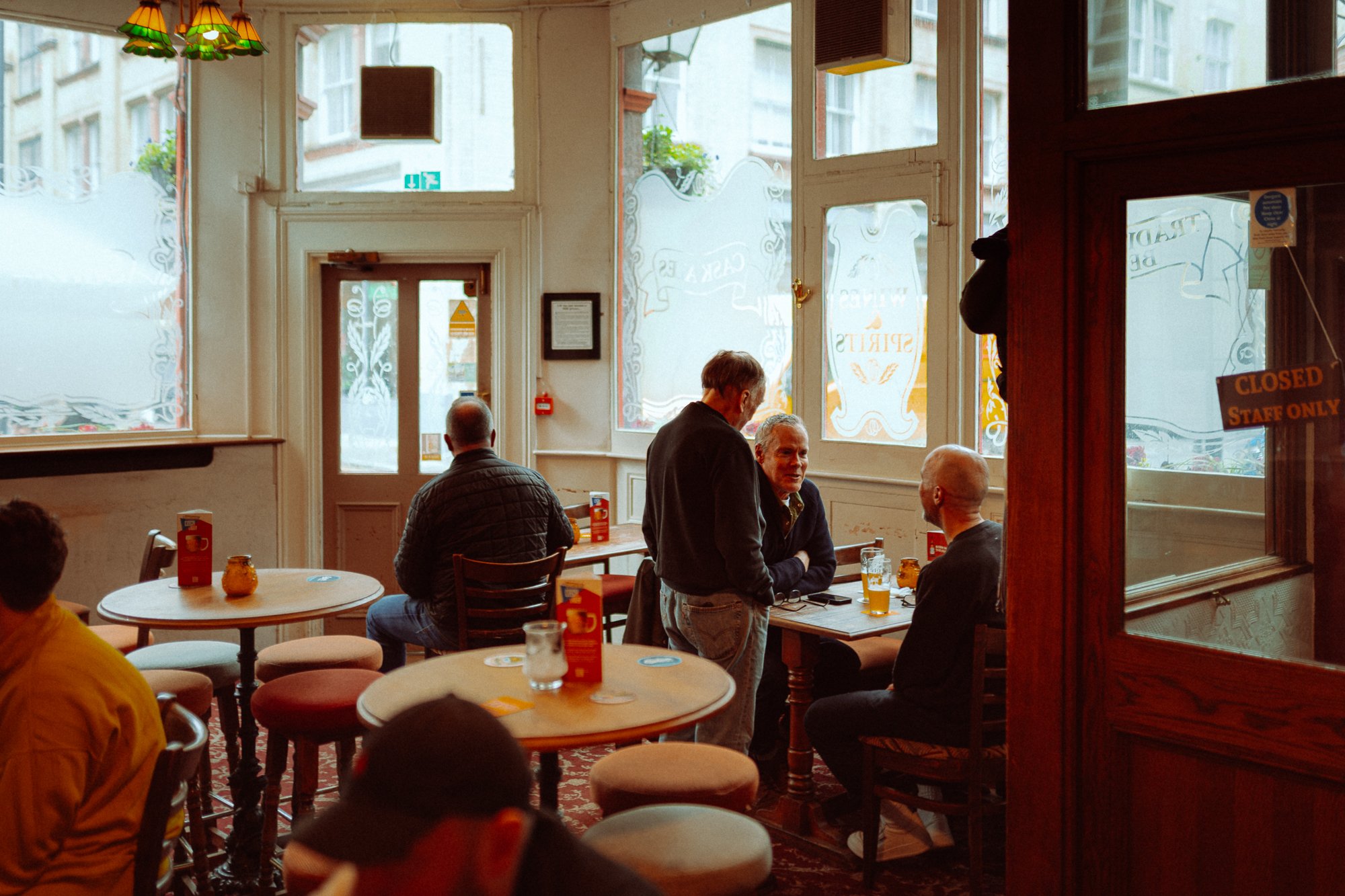
This combination—Mick’s hospitality, Jack’s foresightedness and willingness to take tough decisions (“I know I’m hard to work with … I want it to be right”), their shared attention to detail—explains the pub’s popularity. And it is popular. Some nights, particularly Thursday nights, it can be hard to get in the door.
“It’s just a properly run pub,” says Kien Tan, who’s been a regular for the past nine or 10 years. He doesn’t live in the area, but visits the pub at least three or four nights a month. “Mick will always ask me how I am, and if I’m meeting someone he’ll say, ‘Don’t worry, I’ll get you a table.’ And you know you’re going to get good beer; it’s reliable and it’s never boring. You don’t go in there knowing what you’re going to drink.”

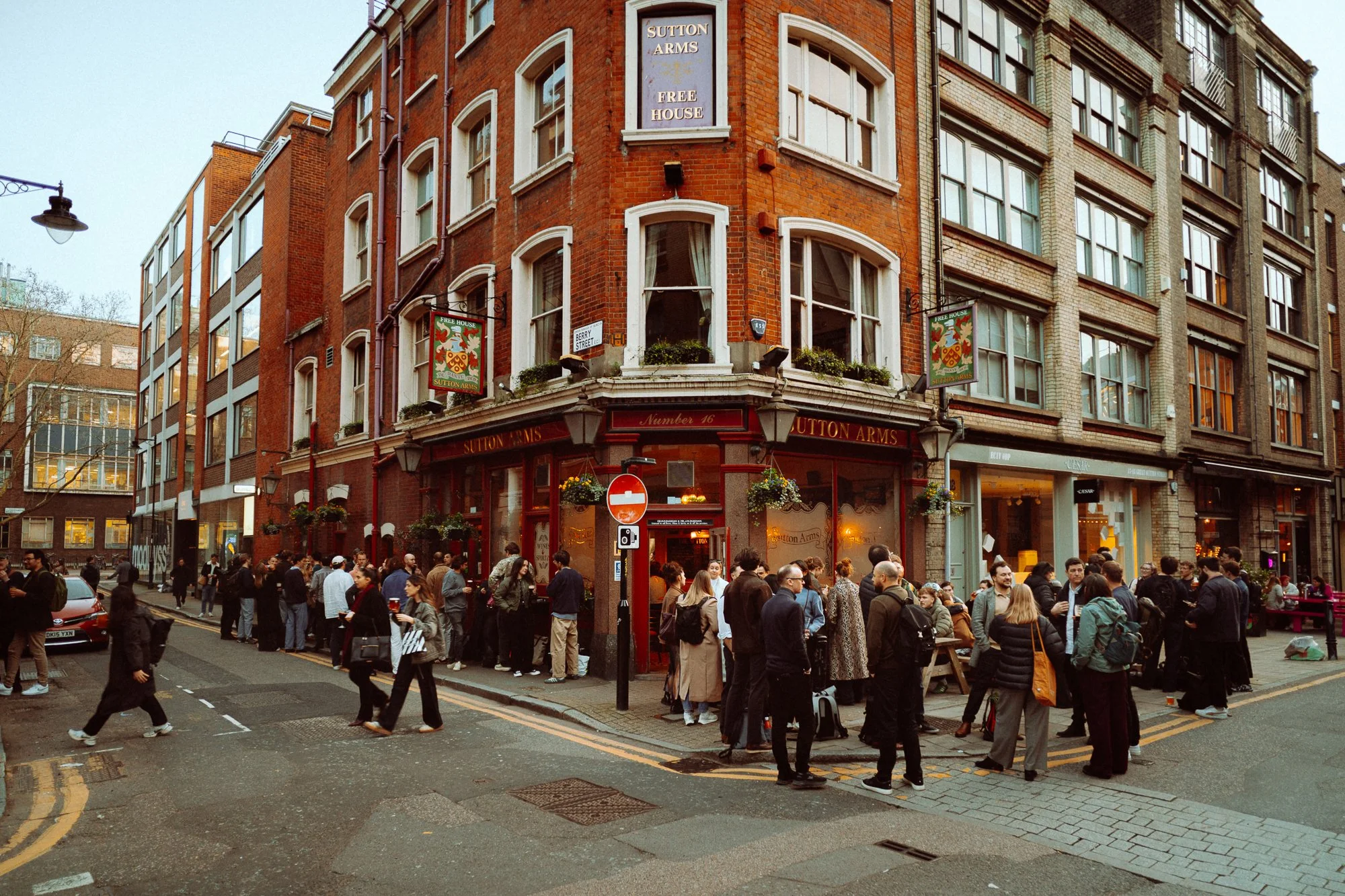
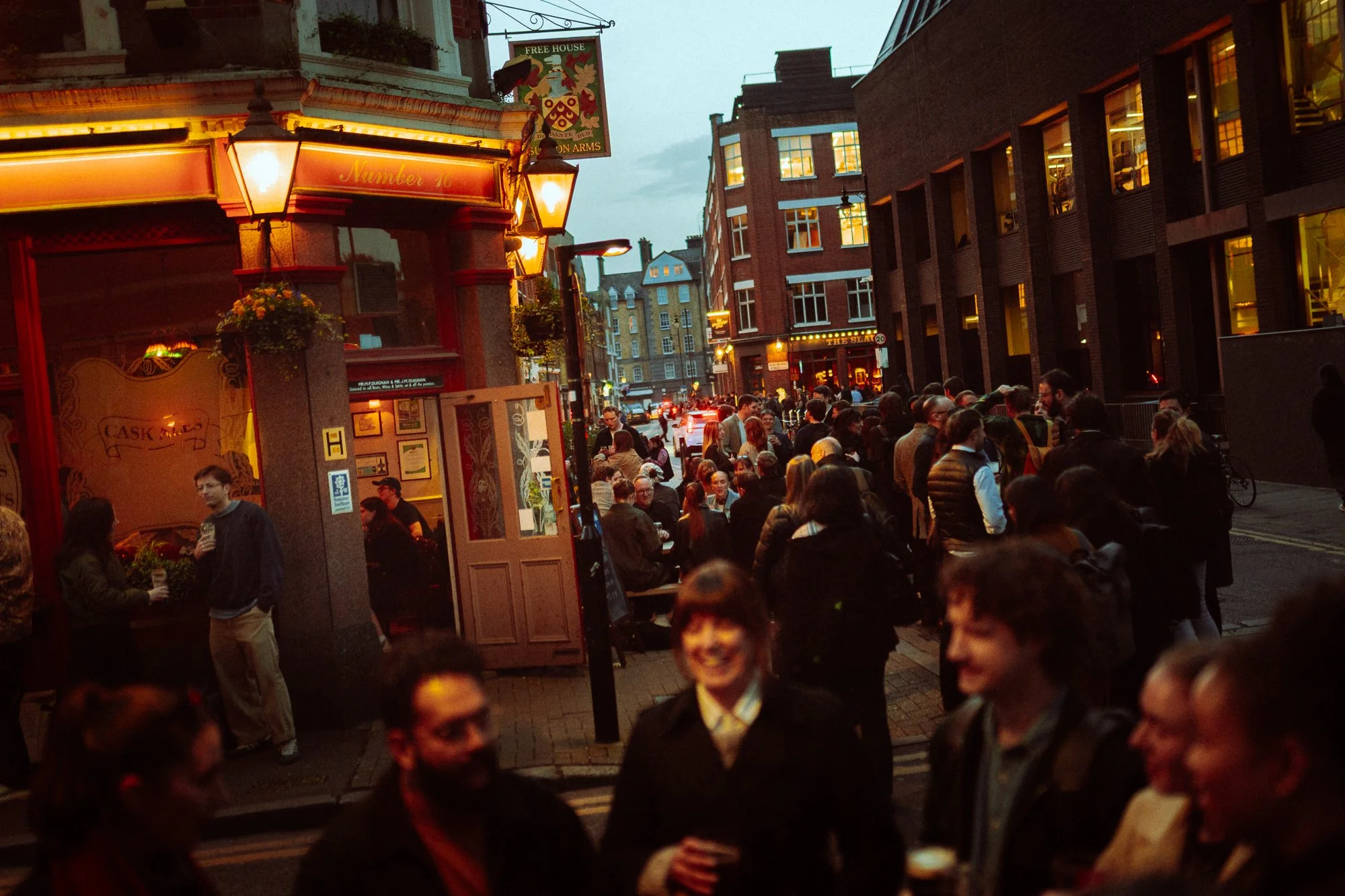


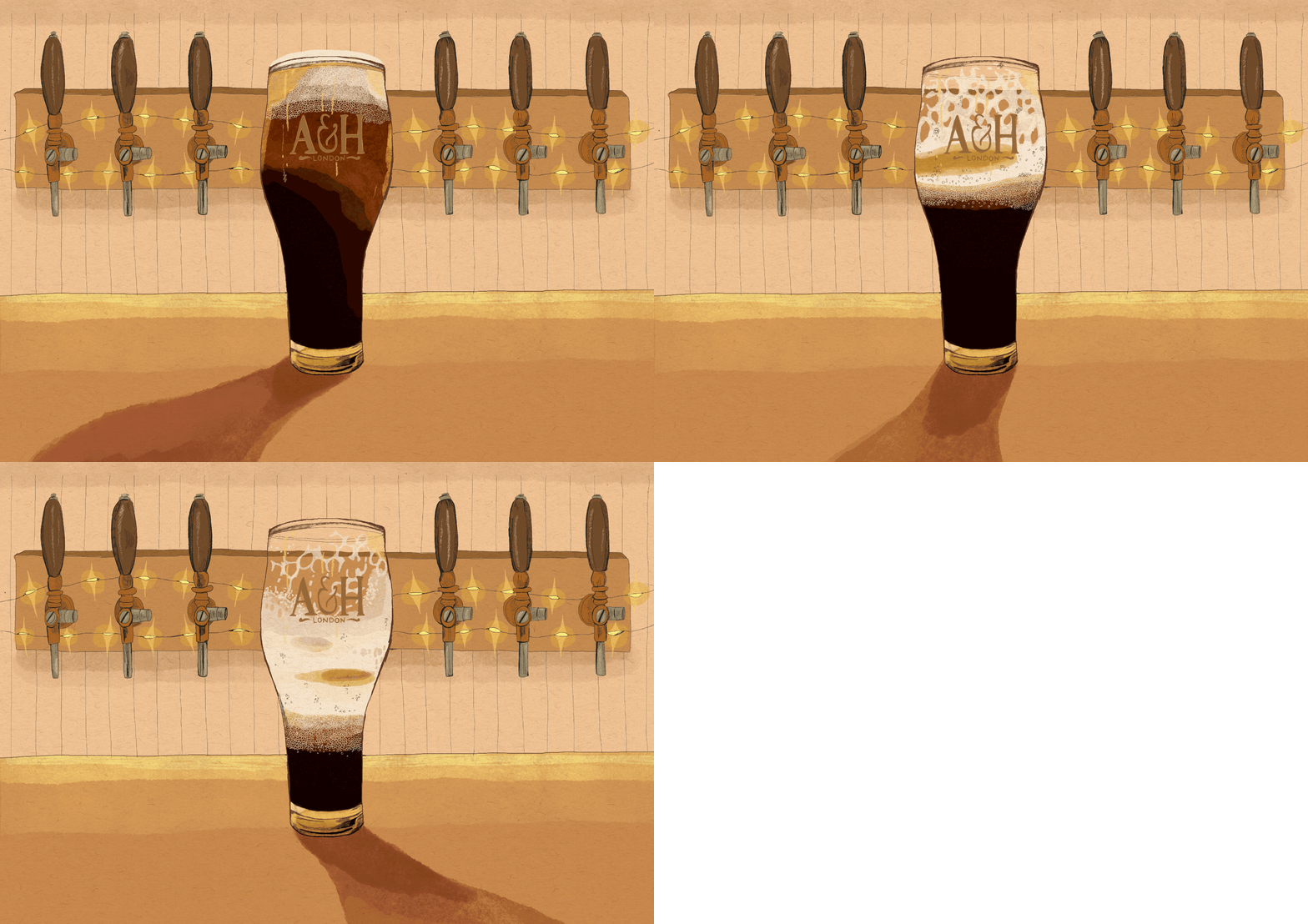
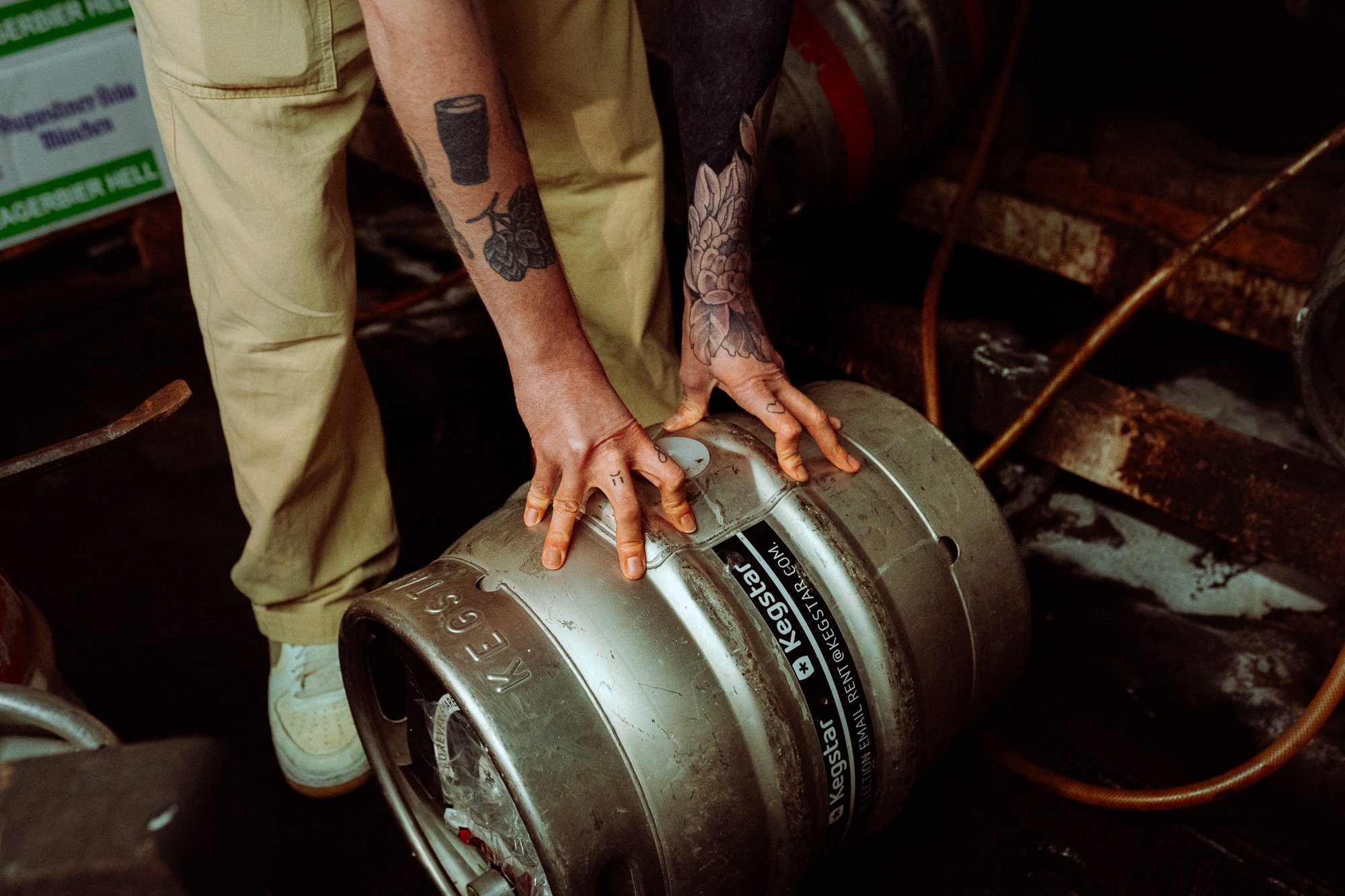
Some drinkers, though, know exactly what they’ll have. Today, Guinness remains the most popular beer on the bar. At one stage, Jack introduced Anspach and Hobday’s London Black, which has thrived elsewhere, but it couldn’t compete. The pub sells between six and eight 50-litre kegs of Guinness a week. “Customers come in and say, ‘Do you have Guinness non-alcoholic?’” says Jack. “We don’t, but we do have Budvar non-alcoholic, and it’s good. But nine times out of 10, they’ll just have the normal Guinness.”
““I’d love to have a wooden floor, because it’s much easier to look after—but I’m not going to.””
It’s the one beer Jack can’t take out, the last remnant of the old Sutton Arms—not that he’s a beer snob. “I’ve got a soft spot for Bud Light,” he says with a grin. “I’ve got two cases in the cellar that someone bought me as a joke, but I love it. Sometimes you just need a weak, ice-cold lager.”
***
Covid-19 changed London in many ways, and it impacted pubs profoundly. The financial problems made independent operators less likely to take a punt, and much happier to take the easy option. Multinational beers proliferated on bars across town; cask pumps went suddenly unused; beer lists shrank, and small breweries suffered.


There is a resistance to this homogenisation, though, and the Sutton Arms could be its epicentre. A small group of operators, spread out across the city, are running pubs that offer a similar combination of old-fashioned atmosphere plus the best modern beer. “We all get along,” says Jack. “There’s people like Oli [Carter-Esdale] at the Traf [in Wimbledon] and the Hand & Marigold [in Bermondsey], or Adrian Kinsella, who runs the Coach and Horses in Stoke Newington. I had a tremendous beer from Burton Bridge there… [the connection is] we’re really passionate about beer.”
Covid’s impact was complex, and one of its silver linings was a renewed public desire for “real pubs”: carpets, atmosphere, Guinness, food no more pretentious than a sausage roll. That’s been good for the Sutton Arms, naturally enough, but Jack says the pub benefited in other ways, too. He built relationships with small breweries, and a new audience came to buy beer at the door—an audience he says has stuck with the pub ever since.
There’s a similar crowd at the King’s Arms in Bethnal Green. Jack bought it from the independent London pub group Grace Land—which also runs Saint Monday Brewery in Hackney—in 2025. There’s no Guinness (its equivalent, Beamish, is the pub’s bestseller) or carpet, but otherwise it’s not a million miles from the Sutton Arms. Still, it’s decorated to Jack’s taste rather than Mick’s, including with 1940s magazine adverts for everything from cigarettes to Gordon’s Gin.
As for the future? There might be another pub. There could be a house move: Jack lives in Leyton with his two Boston terriers, Ludo and Manny, but wants to be closer to the pubs. There’ll definitely be the London Marathon, which Jack is running in April, while livelier Saturdays mean opening hours will increase down at the Sutton Arms, which closed on weekends until quite recently. London’s patterns of socialising, upset by Covid-19, are still in flux, and the old assumption that the City will be quiet on weekends no longer holds.



All seems set fair—and given how much hard work has gone into it, why wouldn’t it? Back at the Sutton Arms, those American customers are discussing a second round. Beer? Definitely. Pies? What about the lamb pie? “It’s good, it’s really good.” You can say that again.