
You’ve Got the Money, I’ve Got the Soul — Scotland’s Enduring Love for 80 Shilling
When Nathan Vickers was a student, he lived in what he describes as a “horrid” student flat in Edinburgh. Its only saving grace was that he could go downstairs in his slippers and walk directly into the Athletic Arms—one of the finest pubs in the city.
“I remember looking around, not really knowing anything about beer,” he says, before running through the conflicting thoughts that entered his head as he encountered the bar for the first time.
“‘Oh, this one’s the pub’s own beer. I should probably have that one. Oh, it’s brown. Oh, but it’s quite tasty. What is this? ... Oh, this is very different to what I’ve had before.’”



Nathan calls that first taste “one of those total culture shocks,” and many more pints followed. Soon after, he quit studying electrical engineering and took a place on the world-renowned brewing and distilling course at Heriot-Watt University.
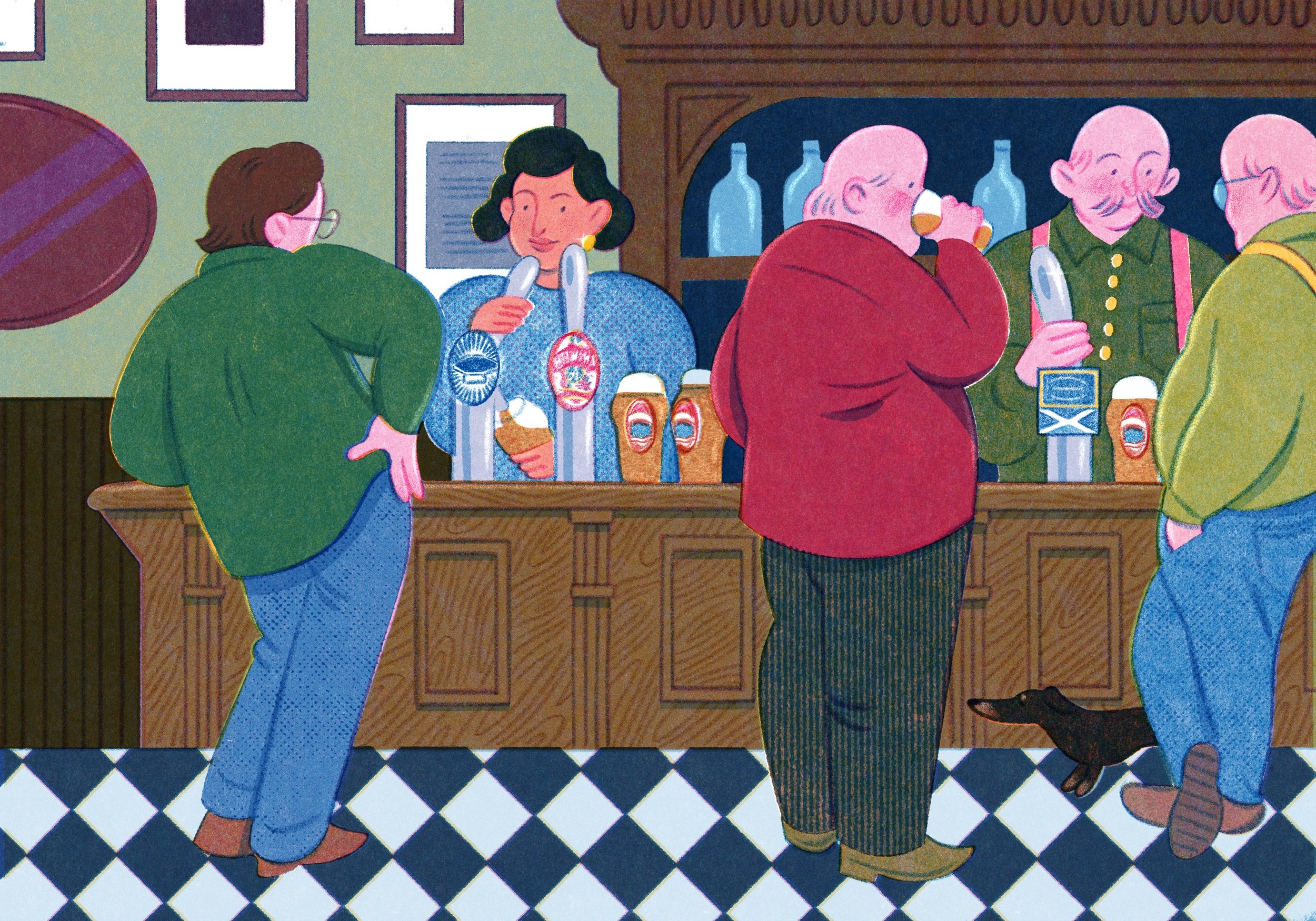
What he had discovered was a style of beer called 80 shilling, and he had just so happened to find the ideal pub where he could be introduced to it. The Athletic Arms—better known as The Diggers, because gravediggers from the two nearby cemeteries would drink there—is a beautiful Victorian corner pub near Edinburgh city centre, with stained-glass windows and a white-marble-topped bar dominating the room. Despite the opulence, it’s a real local’s local, where prices have been kept low. It’s the kind of place where landlord Kev McGhee knows his regulars by name, often pouring their drinks before they’ve even asked.
Many of these drinkers are served 80 shilling, commonly written as “80/-”. It’s a rich, slightly sweet and malty pint. Nathan uses words such as “raisin,” “fruit loaf,” and “toffee” to describe it, and notes its “slight smoky roastiness on the edge of the palate.”
“[These qualities give it] all of the traditional properties that mass-appeal beer shouldn’t have,” Nathan tells me. “But for some reason, it’s still really popular in Scotland.” While a number of Scottish breweries, including the Greene King-owned Belhaven Brewery, produce it, particularly on the eastern side, 80/- is almost unknown south of the border.
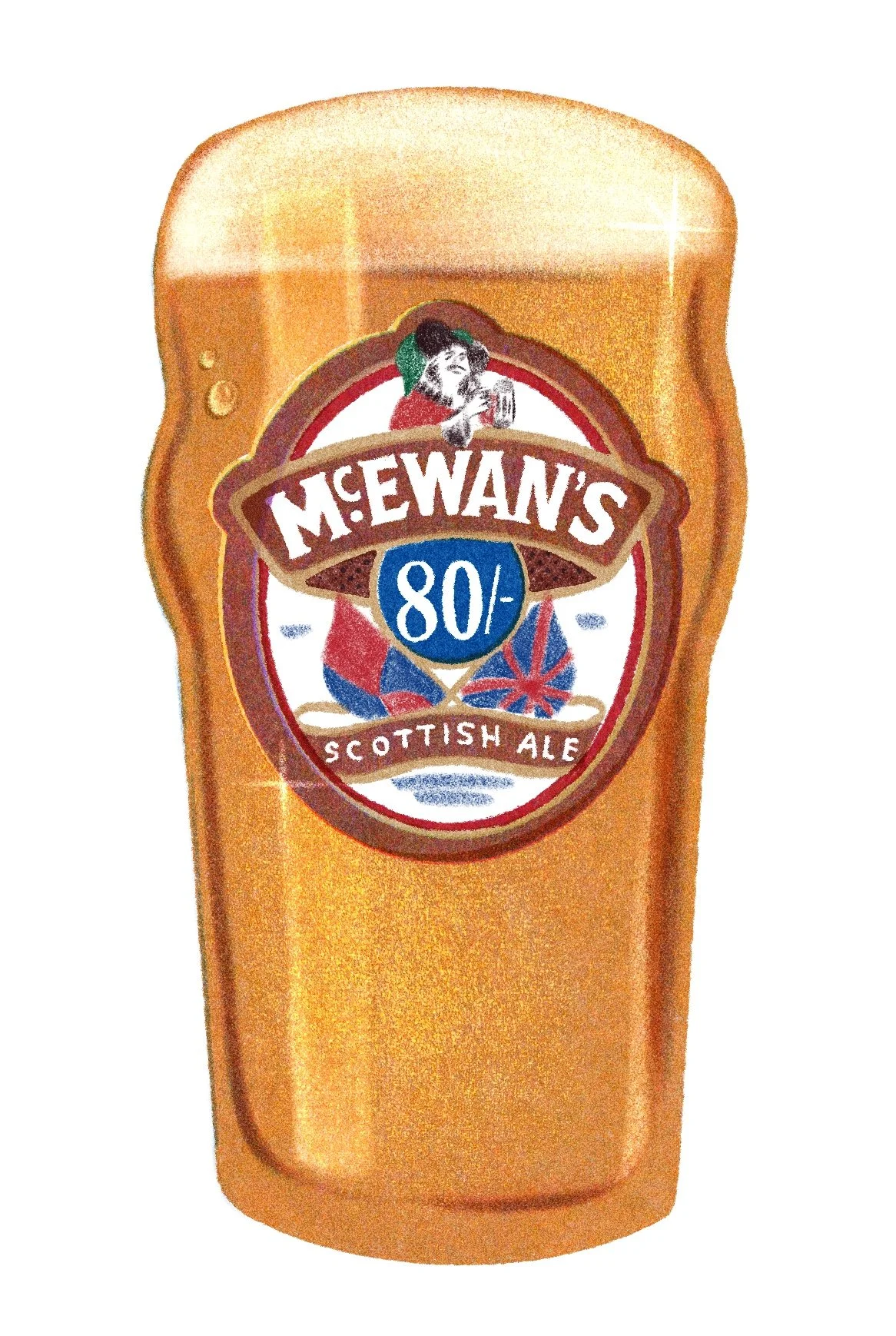
Illustrations by Agnes Xantippa Boman
The Diggers has a deep and proud history with 80/-. The Scotsman stated in 1983 that it was so good, it made “the eyes of grown men grow dreamy; a smooth, memory-sapping liquid which is described by restrained connoisseurs as the best 80/- ale in the world.” Rumours swirled that it must have been piped in directly from McEwan’s Fountain Brewery, which, before it closed in 2005, was just a few minutes’ walk away.
In actual fact, it was so good simply because the throughput was so high and the pipes were kept clean. A 1981 article in The Daily Record claimed that in its busiest times, the pub could “shift 280 pints in 15 minutes.”
Older patrons remember being able to walk through The Diggers’ corner door and hold up their fingers to one of the 10 bar staff. By the time they had fought through the crowd to the bar, the requisite number of dark-caramel pints of McEwan’s 80/- were waiting for them.
McEwan’s was once phenomenally successful, and dominated eastern Scotland’s beer trade for decades, thanks in part to its 80/-. (Glaswegians were more partial to a Tennent’s Lager.) So when the brewery, or perhaps its accountants, decided to stop brewing it on cask in the mid-2000s, there was uproar among The Diggers’ regulars—which included many of the brewers at the Fountain Brewery.
“A lot of these guys, it’s all they drank,” Kev tells me from behind his bar. “They’d be drinking at work while making the beer, and then come to the pub afterwards to drink even more.”
““They’d be drinking at work while making the beer, and then come to the pub afterwards to drink even more.””
According to Kev, The Diggers “bought every cask that they had,” expecting the 60 or so casks to last a few months. Within weeks, they were finished, as hordes of people came through the doors for one last pint of McEwan’s 80/-.
Worried they would lose a large chunk of their trade, The Diggers auditioned replacements from a handful of local breweries. They let the public decide—and the most popular edition came from another Edinburgh brewery, Stewart Brewing.
This was the version that Nathan discovered in his student days, and it is Stewart Brewing where he has worked ever since graduating from Heriot-Watt.
“It’s sweet to me, it’s quite indulgent,” he says of the beer. “I really enjoy a beer where it’s complex, and you can sit there and pick it apart, and look for all the different flavour profiles, and the different notes going on. But you can also just have a few and not have to think too hard about it.”
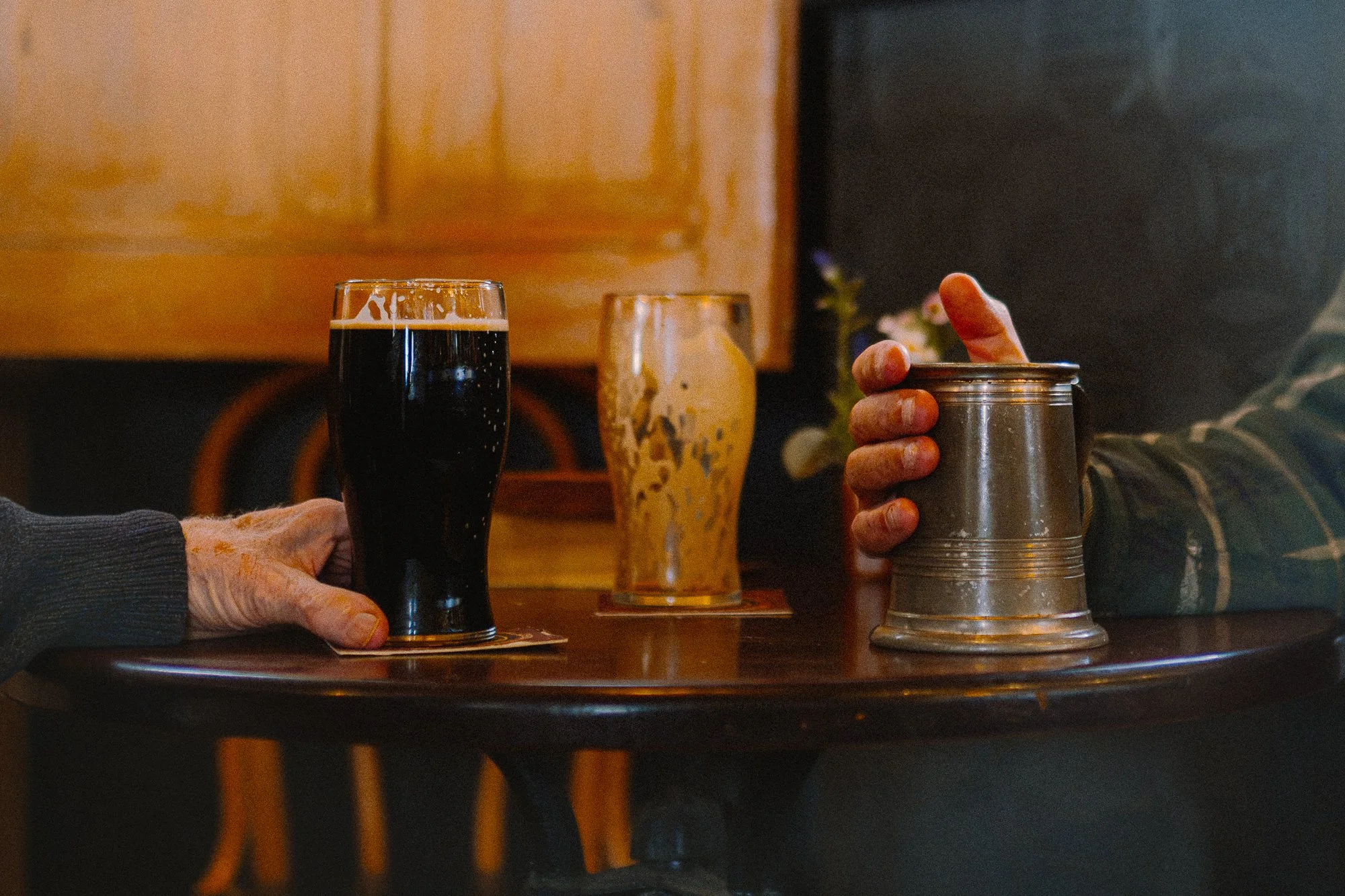
80 shilling is a style that lives in the pub to be enjoyed with others, as it has done for generations. “I think there must be that element of nostalgia,” Kev reckons. It’s something Scotland has a tendency to lean into.
***
To go into the history of shilling beers is to enter a labyrinth of price controls, tax, gravities, and ABVs. In the 19th century, many beers in Scotland were named after the wholesale cost of a cask, which varied depending on the strength of the beer inside. This meant beers could range anywhere between 28/- to 200/-, though the name could change even depending on the size of the cask. The same beer in a 36-pint barrel would be priced differently when it was bought in a 54-gallon hogshead.
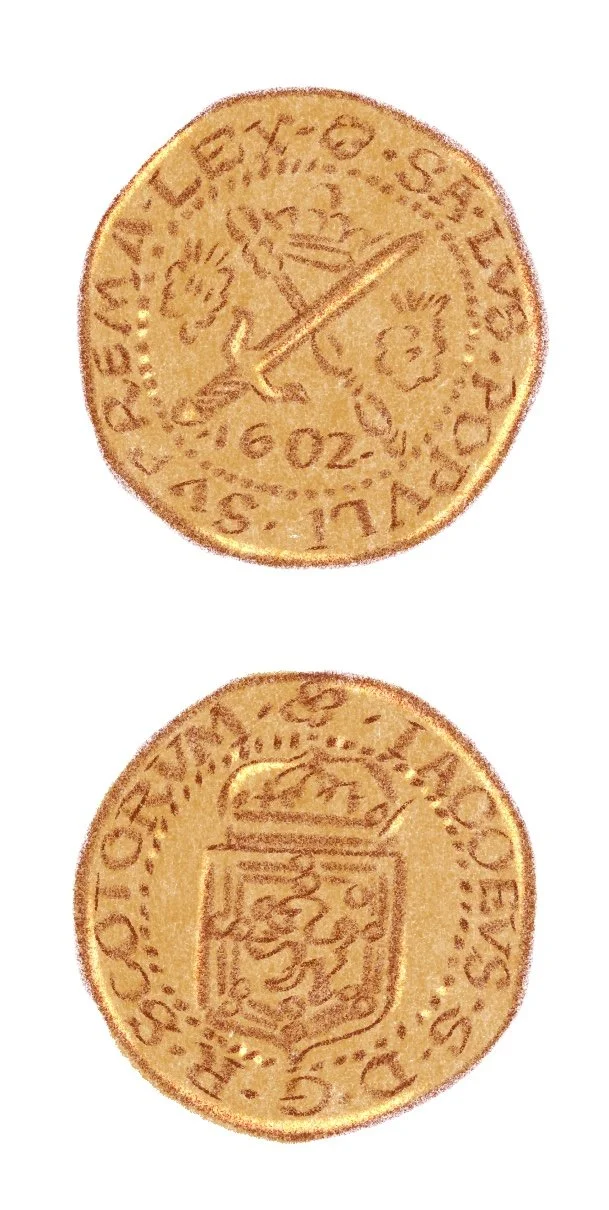
For a long time, according to beer historian Ron Pattinson, this wasn’t really an issue—for a couple of reasons. Firstly, beer prices were remarkably stable. “[From] the 1870s till 1914, beer prices didn’t change,” he says. Secondly, Scotland only really brewed beer from one recipe. Shilling designations were “all just different-strength pale ales, albeit ones that [weren’t] very heavily hopped,” Ron adds.
The problem with committing to a system that names beer after its cost is that prices do eventually move. Price controls and tax changes in both World Wars meant that by the second half of the 20th century, the beer coming out of a pump labelled 80/- bore little relation to its pre-war style. It’s now something closer to an English mild (although you’d be hard-pressed to find a Scot who would admit to such a thing).
Did that stop the Scots from using the nomenclature? Of course not. At the point that shillings stopped being used as currency in Britain, the names had stuck, even if the styles had not. Nowadays, a 60/-, 70/-, or 90/- can range vastly in flavour—from a light, thin pale to a variation of a mild to a heavy ruby ale—with the name only providing a clue as to the beer’s strength.
““It is part of our drinking culture, it is part of our history, it’s part of our heritage.””
But it’s the 80/- that has endured as the most popular style. Modern breweries lean into its Caledonian heritage: Broughton Ales calls its version Wee Jock, and Tempest Brewing Co. goes with Lowlander. Newbarns Brewery’s 80/- cans are adorned with a ring of tartan. The label on Cromarty Brewing Company’s version depicts a fisherman wearing a traditional tam o’ shanter hat. Earlier this year, English brewery Abbeydale included an image of Walter Geikie’s etching of Edinburgh Castle on its can of special-edition 80/-.
“This is a traditional style of beer that’s been drunk in Scotland for decades,” Nathan says. “And it is part of our drinking culture, it is part of our history, it’s part of our heritage.”
He imagines a local resident from the past with a completely different life, growing up in different circumstances, drinking the same beer as him. Nathan leads Stewart’s pilot recipe program, allowing him to experiment with ingredients from gorse flowers to peaches. This more leftfield school of brewing aside, Nathan cites 80/- as the rare drop he can enjoy with his dad and grandad. “I just like that image of three generations on the same beer,” he says.
He laments the loss of so much brewing heritage in Edinburgh—McEwan’s keg 80/- is now produced by Carlsberg Britvic south of the border in Northampton, and shipped back up—but can’t see a future without this particularly Scottish style in pubs. Even craft beer bars will take a cask now and again.
“Scotland has a really great living culture, in my opinion, where we don’t just do cultural things to preserve them—we actually enjoy doing them,” Nathan says. “Everyone will wear a kilt at a wedding, everyone will go to ceilidhs. People do Burns nights, and it’s not an uncool thing. And we drink 80/-.”



“It’s kind of bucking the trend,” Kev says. In fact, it is now more popular in The Diggers than it was when McEwan’s stopped producing it. As well as his regulars, Kev sees it being drunk by a wide range of people, including tourists keen to try something unique to Scotland. “You know, it doesn’t need to sell down south, because if you’ve got a good enough product that sells up here, you’ve got enough drinkers here who’ll drink it.”
The 80/- has a long history, and hopefully a long future. “It shouldn’t work according to all trends of macro lagers and macro beers. It flies in the face of everything, but people like it,” Kev says. “People drink it a lot … I think that’s pretty remarkable.”