
The Funeral Party — On Wakes and Pubs
When my local pub, The Roebuck, sadly announced the untimely death of landlord Michael Robinson this summer, the tributes poured in. He was a kind and warm man who made anyone who worked or visited the Victorian pub in SE1 feel at home. During his wake at the pub, which he and his Parched co-owners had called theirs since 2003, there were so many mourners that they spilled out of doorways and onto the pavements.


I found myself straining to hear the tributes being paid to the man who had been my landlord for the best part of 18 years. It was a true testament to the power of a community coming together in grief, yes, but also respect—a sight that, under The Roebuck’s lofty ceiling, I won’t be forgetting in a hurry.
Wakes in pubs are part of our culture. For centuries, the public house has served the memory of its people through pints, sausage rolls, and singalongs in a final act of hospitality. They’ve wrapped their oak panels around mourners shrouded in grief and, in return, have been filled with stories of the recently departed.
These events can be sombre affairs or glassy-eyed celebrations, simple ceremonial necessities or purposefully party-like in their pageantry. Most are respectful; occasionally, they get raucous. Whatever the vibe, the pub has seen it, warts and all—and will continue to, given death’s inevitability.
***
Death and pubs have long been macabre bedfellows. From the hangings of prisoners on the shores outside Wapping’s Prospect of Whitby in the 1600s to the ancient graves discovered underneath the 12th-century Ancient Ram Inn in Wotton-under-Edge—plus pubs like Dublin’s John Kavanagh, nicknamed “The Gravediggers” in honour of its spade-wielding custodians—the grim reaper has regularly graced their thresholds.
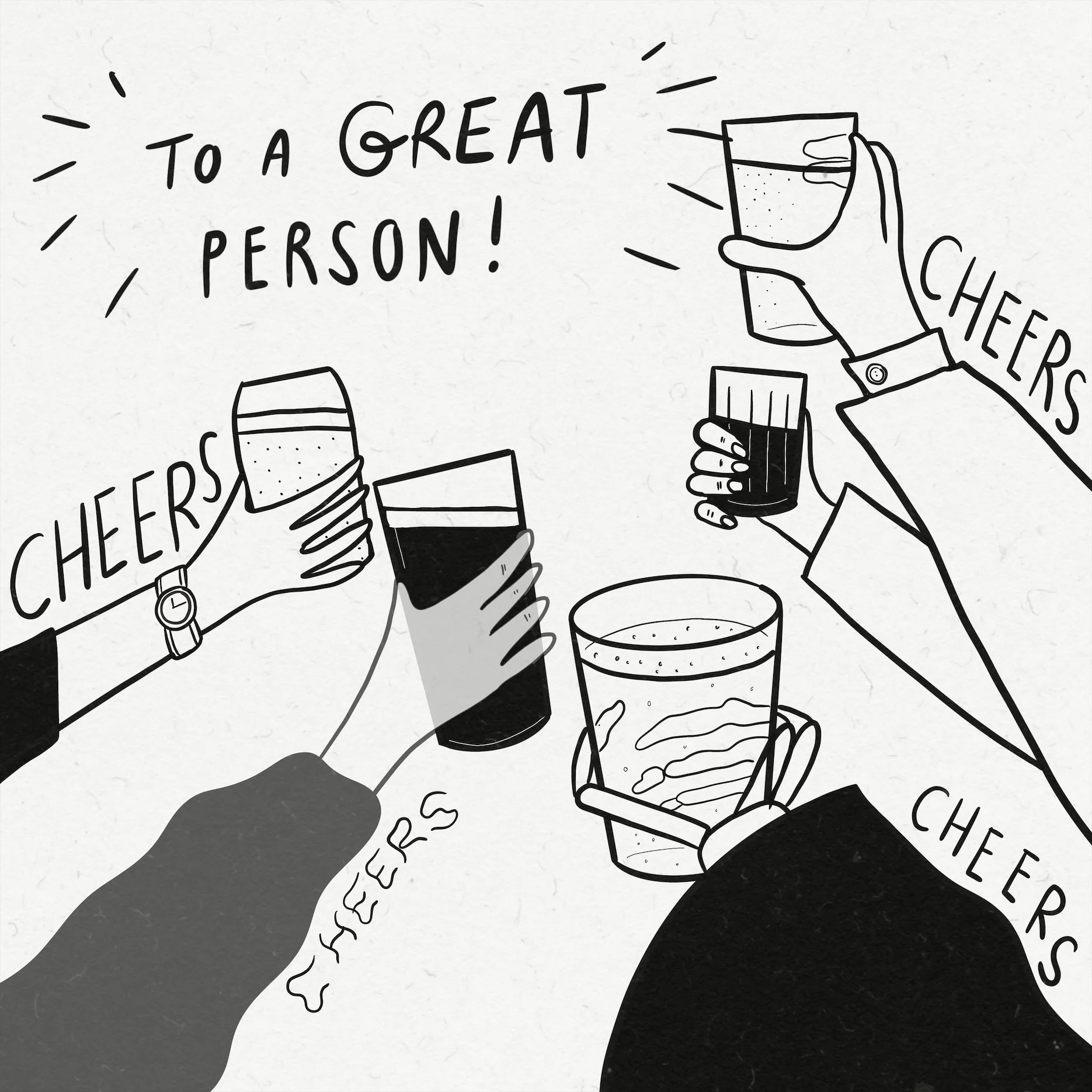
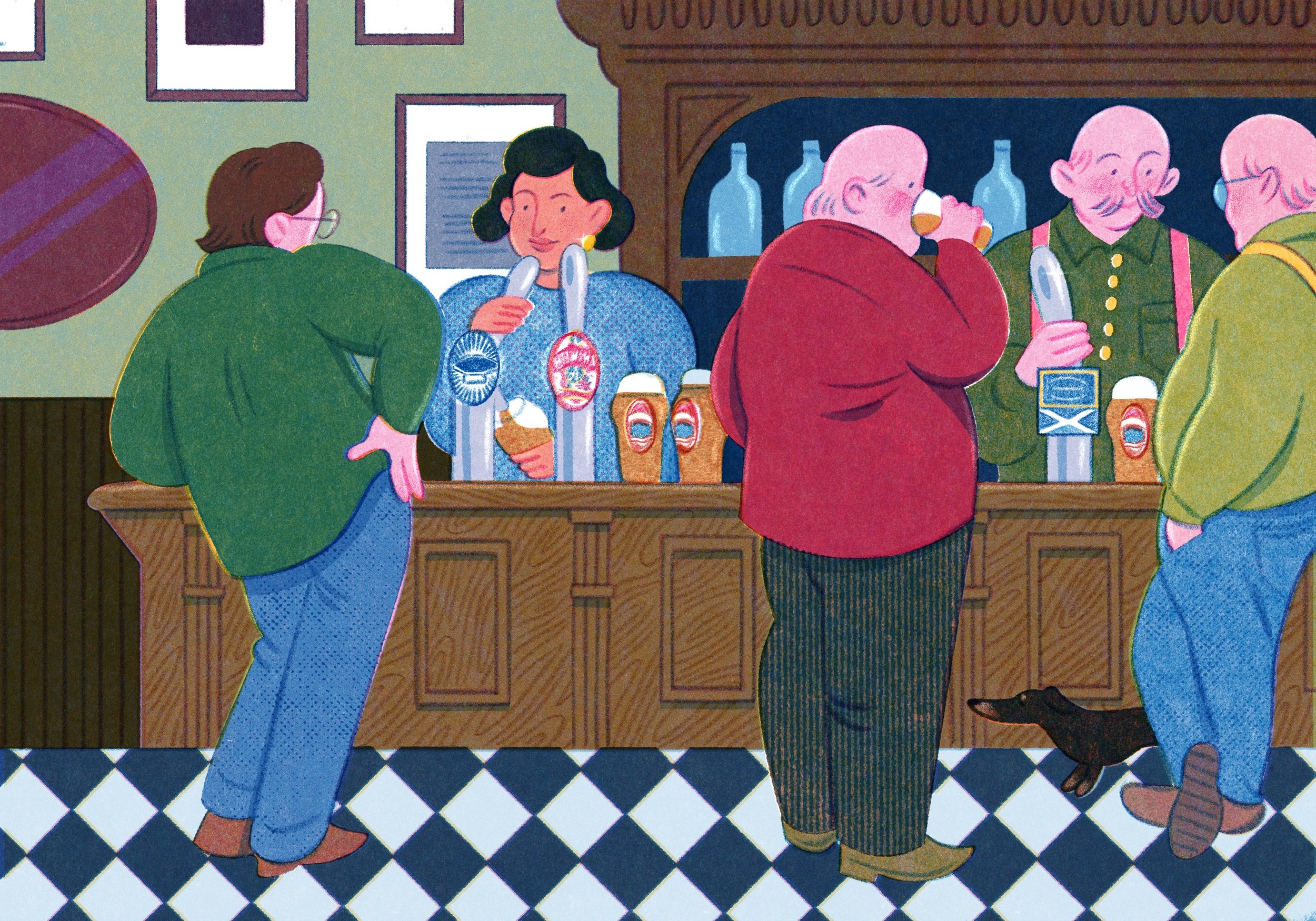
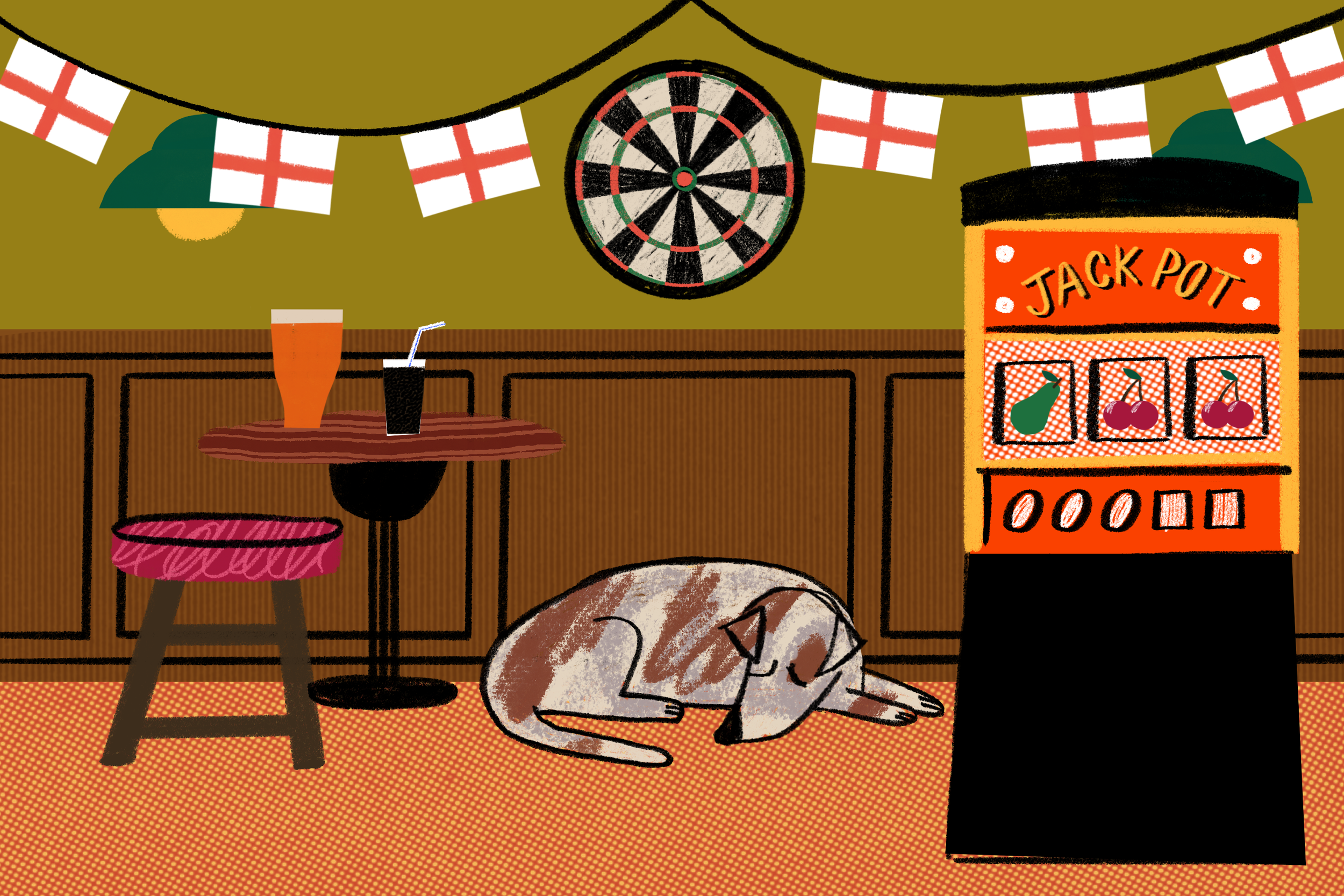
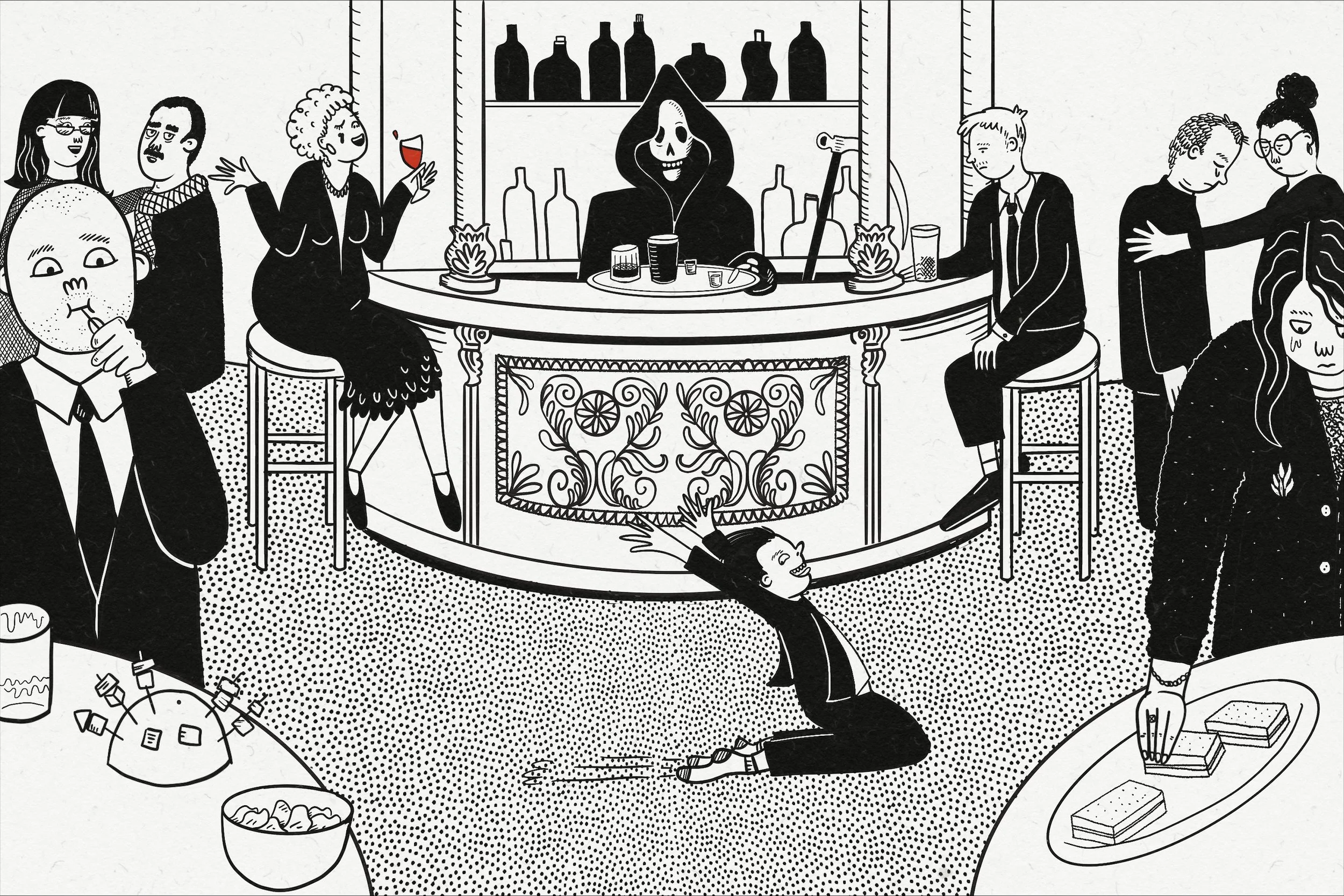
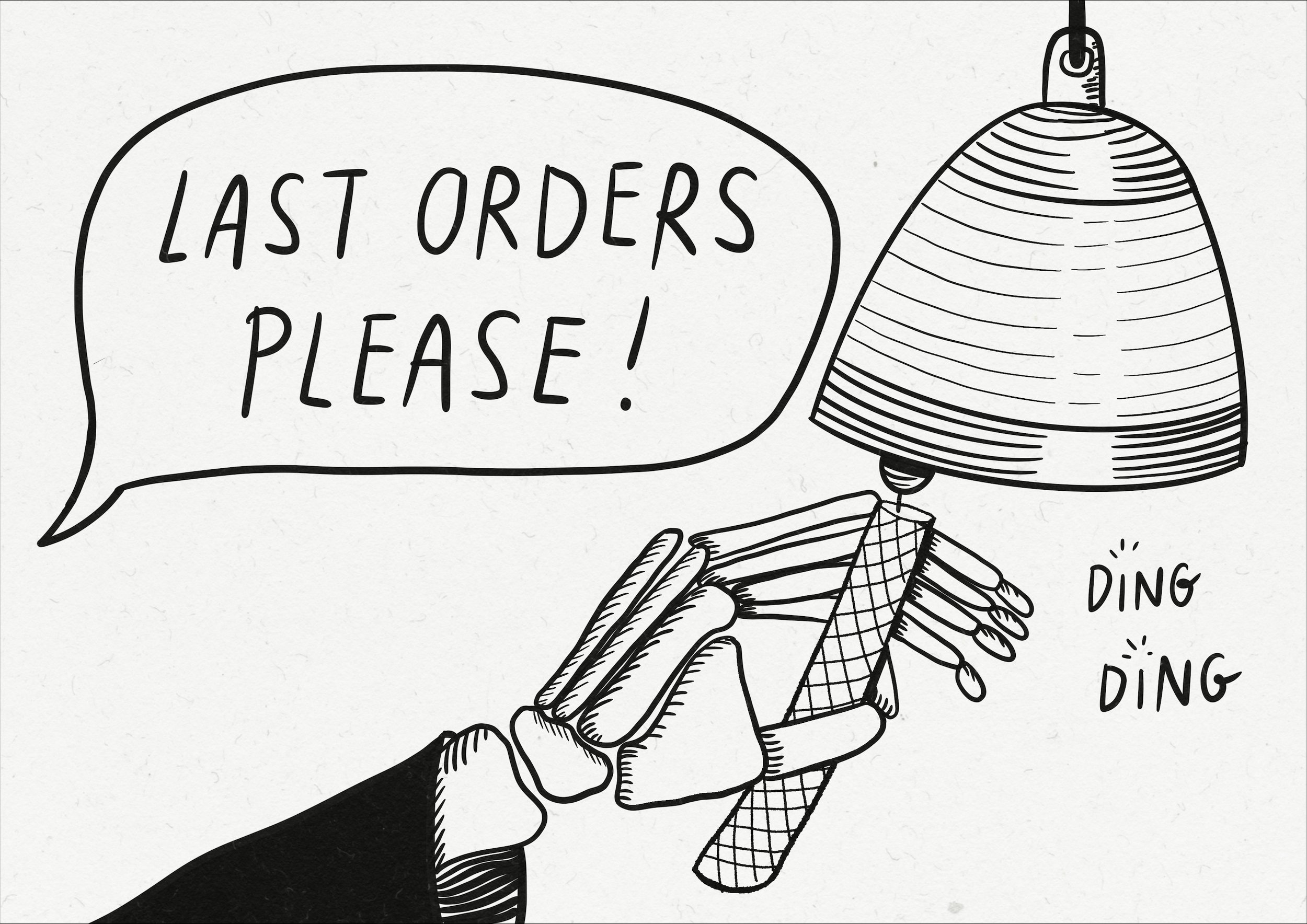
Illustrations by Jessica Wild
But their role in the act of remembrance goes further than the ghosts that are said to haunt them. The Coroners Act of 1846 decreed that dead bodies were to be taken to the nearest public house and stored until an inquest could be held or a funeral arranged. This seemingly bizarre practice came at a particularly devastating time in Ireland, which was seeing an increase in deaths from the Great Hunger. When mortuaries were overwhelmed, the cooling beer cellars of a pub were the next best thing.
“Irish wakes have gone through lots of changes,” explains Cliona Purcell, head of curation at Waterford Treasures, which counts the Irish Wake Museum as one of its kookier offerings. “One of them was the use of the pub.”
While more traditional wake customs revolved around the home—customs which still exist, to some extent, in the countryside today—the pub’s role eventually extended beyond housing the bodies. They started hosting the wakes, too.
““In the late 18th and 19th centuries ... if you’re living in a tenement building, you don’t have the same kind of space to host people, so instead pubs became a centre of community and a great place to host them.””
“In the late 18th and 19th centuries, people are leaving home for the first time and migrating into cities,” says Purcell. “If you’re living in a tenement building, you don’t have the same kind of space to host people, so instead pubs became a centre of community and a great place to host them.”
As a result, more and more pubs opened as multi-business operations, marketing themselves not only as places for a pint and perhaps a pillow for the night, but also as undertakers. It was, as Purcell explains, the beginning of the professionalisation of the funeral industry.
Today, few such pubs still exist, the most famous being McCarthy’s Pub, Restaurant & Undertaker in Tipperary’s medieval town of Fethard. Run by fifth-generation owner Vincent “Jasper” McCarthy, it still operates as a working undertaker while continuing to serve locals and visitors alike. Reports of a hearse parked in the livery stables and a funeral ledger recording deaths gone by are nods to its more morbid operations.
In England, some of the last-recorded instances of pubs serving as temporary homes for the dead date to the early 1900s, according to the St Albans Civic Society. The Licensing Act of 1902 stipulated that no pub was to be used for such activities after 31 March 1907, where other suitable premises were available.
Beyond their use as makeshift mortuaries—the changing of the Coroners Act in 1962 officially relinquished many from their morgue duties—pubs’ associations with wakes and death have continued. Location is a factor for many: A pub’s proximity to a place of worship or crematorium, for example, often bestows upon it the duty of hosting the congregation post-funeral. Countryside or village pubs serve local residents, and act as natural meeting places for those celebrating the life of someone who was part of the neighbourhood.
***
The choice of where to host a wake is, of course, deeply personal, and often relates to familial connections, shared memories, or the deceased’s status as former regular. A friend tells me of his father’s wake, which was held at The Hand in Hand just off Wimbledon Common—a pub he frequented, and treated as his canteen.
“We’d had a huge old turnout for it, as he died relatively young, and it was just an incredible energy,” he says. “It was literally the best of times and the worst of times. I was happy, I was sad. I met people I’d never known, but then felt like I’d known them forever. I often think of that day and try to revisit that pub whenever I can.”
Landlady Sara Jane Eichler spent 35 years managing some of London’s most notable pubs, from Islington’s Hope & Anchor to Clerkenwell’s The Three Kings. When her best friend died, they threw a massive party at the family pub where they had worked together during their early 20s, where she’d had her wedding reception and her 60th birthday, and where her daughters had worked, too. Forty years of memories and celebrations were memorialised one last time, in the place where it had all happened.
Hosting wakes for regulars was something Sara Jane particularly cherished during her time as a landlady. Having spent years hearing tales of the person’s family members and friends, being able to meet them and share stories of their mutual connection was a true honour.
“As a publican it’s a really special feeling when the family of a loved regular decides to hold the wake at your pub,” she says. “It’s always such a different feeling if you’re hosting for someone that was a regular, even if it was before your time—there’s respect there on both sides … The walls of pubs hold so many important memories, it can sometimes feel like the departed are still there.”
Pubs are, of course, also handy when it comes to providing sustenance for ravenous mourners. Feasting and drinking is, says Cliona Purcell, a very important part of an Irish wake. Families are often required to cater for hordes of people on whatever money they can afford.
“We drink poitín in the countryside, and I’ve heard of people buying a barrel of whisky so they know everyone would be covered,” she laughs. “Food would be finger sandwiches and funeral [vegetable] soup.” Fifteens—a nostalgic no-bake traybake—can sometimes be seen doing the rounds, too.
Funeral teas, or purveys, in Scotland generaly consist of sandwiches, sausage rolls, shortbread, and scones, while Wales’ wakes might see cawl (stew), bara brith (a speckled fruit cake), or Welsh cakes being served.
Back in London, catering to the culture of its clientele is an important part of the Prince of Peckham’s wake hospitality. Run by Clement Ogbonnaya MBE, this deeply community-centric pub offers its spaces free of charge for people grieving, and bends over backwards to make them feel at home.
“Because we are so in tune with our community, we really make sure everything is accessible,” explains head of bookings and promotions Beth Kulawy. Nigerian Guinness? Not a problem. Red snapper? They’ve got it. Understanding customs such as Nine Night in certain Caribbean cultures informs how the team communicates with families, too.
***
Alongside the moving stories of people who are commemorated at the pub are tales of madcappery. Irish author and historian Turtle Bunbury wrote about stumbling upon a cow’s wake at The Blackwater Tavern in County Kerry in 2015 for the Guardian. The Droimeann heifer in question was Big Bertha, a Guinness World Record holder for her advanced age at the time of her death, as well as her Olympian birthing of 39 calves. Her owner, farmer Jerome O’Leary, regaled him and his similarly bewildered compatriots with tales of his trusty Bertha while raising a glass or two in her memory.
““I remember one in the mid ‘80s ending up in a full-on cowboy-style brawl, all the men in ill-fitting suits throwing furniture at each other while the wives screamed hysterically.””
Combining grief, family politics, and alcohol can sometimes be a recipe for trouble. “My memories of wakes start with the uniform: the smarter the dress code of the mourners, the more trouble,” Sara Jane says. “I remember one in the mid ’80s ending up in a full-on cowboy-style brawl, all the men in ill-fitting suits throwing furniture at each other while the wives screamed hysterically.”
Today, living funerals, held by people who are terminally ill, are becoming more popular. A pub in Meliden, Wales, The Red Lion, recently reopened with the service as an option. Progressive funeral directors such as Exit Here (helmed by restaurateur Oliver Peyton) and Poppy’s Funerals are champions of making services and wakes more personal through decor, food, and the places in which we celebrate them—pubs included.
Derelict pubs, or those just on the brink of closure, are also increasingly living on in the form of funeral homes. One such place is The Rifleman in Nantwich, which is having new life breathed into it, fittingly, by the death industry—it is now home to Gavin Palin Funeral Directors. The circle of life.



Ultimately, though, how we engage with pubs explains their longevity as the places where we raise a glass to those we’ve loved and lost. They are our homes from home, our shared living rooms. This unflinching familiarity makes them safe and comforting spaces that can cushion us in our grief.
Their everydayness matches the—let’s be honest—mundanity of death. But the culmination of our smallest, most unextraordinary moments, often experienced at the boozer, are what really make a life. What better place, then, to celebrate someone’s than in the great, British pub?